Evolution of the Needle Case

This post will focus on the needle case as an example of a shift in our culture. My original object was a handmade needle case dated 1898, which was a cherished object. The stitching was meticulous, the materials special and it was significant enough to the maker for her to bequeath it to her grandneice.
Victorian roll up
The photo above is a “roll-up” needle case from the same Victorian era. This case was sewn by machine out of fine silk, velvet and leather, with hand-embroidered embellishment. The velvet ends serve as pin cushions; pin heads are visible in the photo. The unknown maker of this object took pride in her sewing skills, as did Ruth Broadwell. She made a practical item to hold pins and needles, but one that would be beautiful and a pleasure to hold and handle.
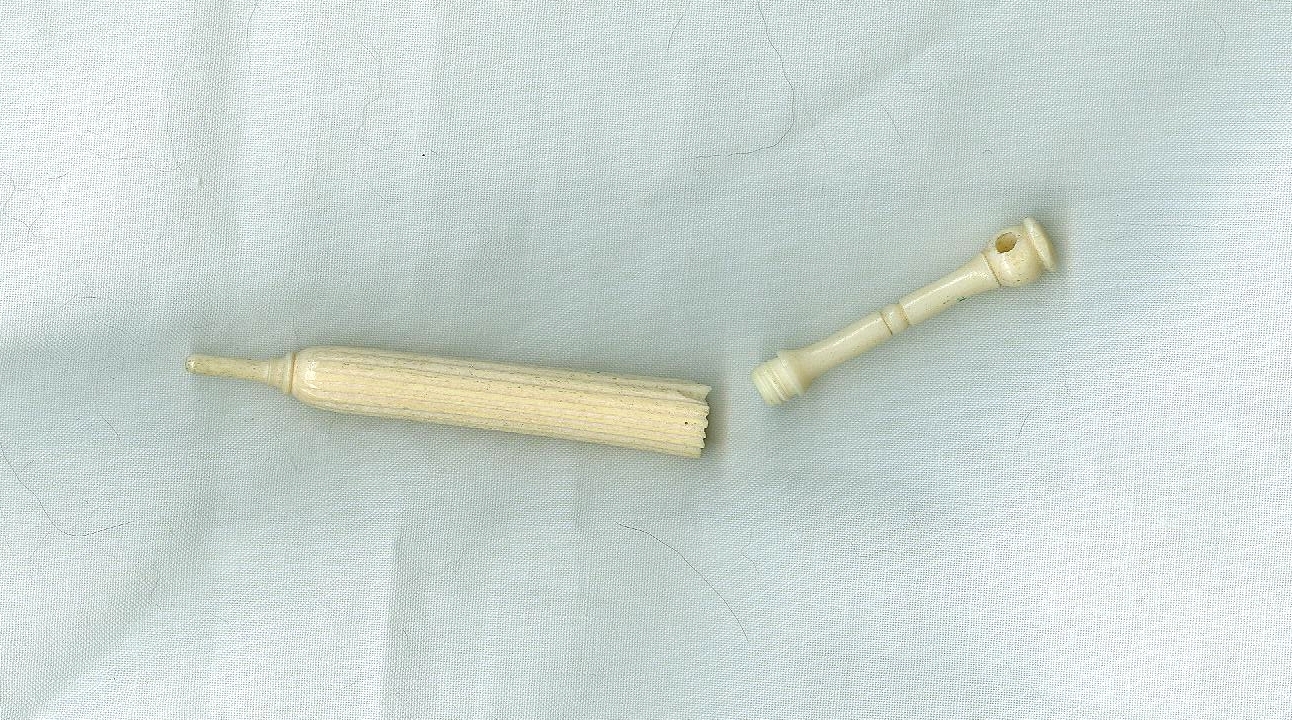
Victorian bone

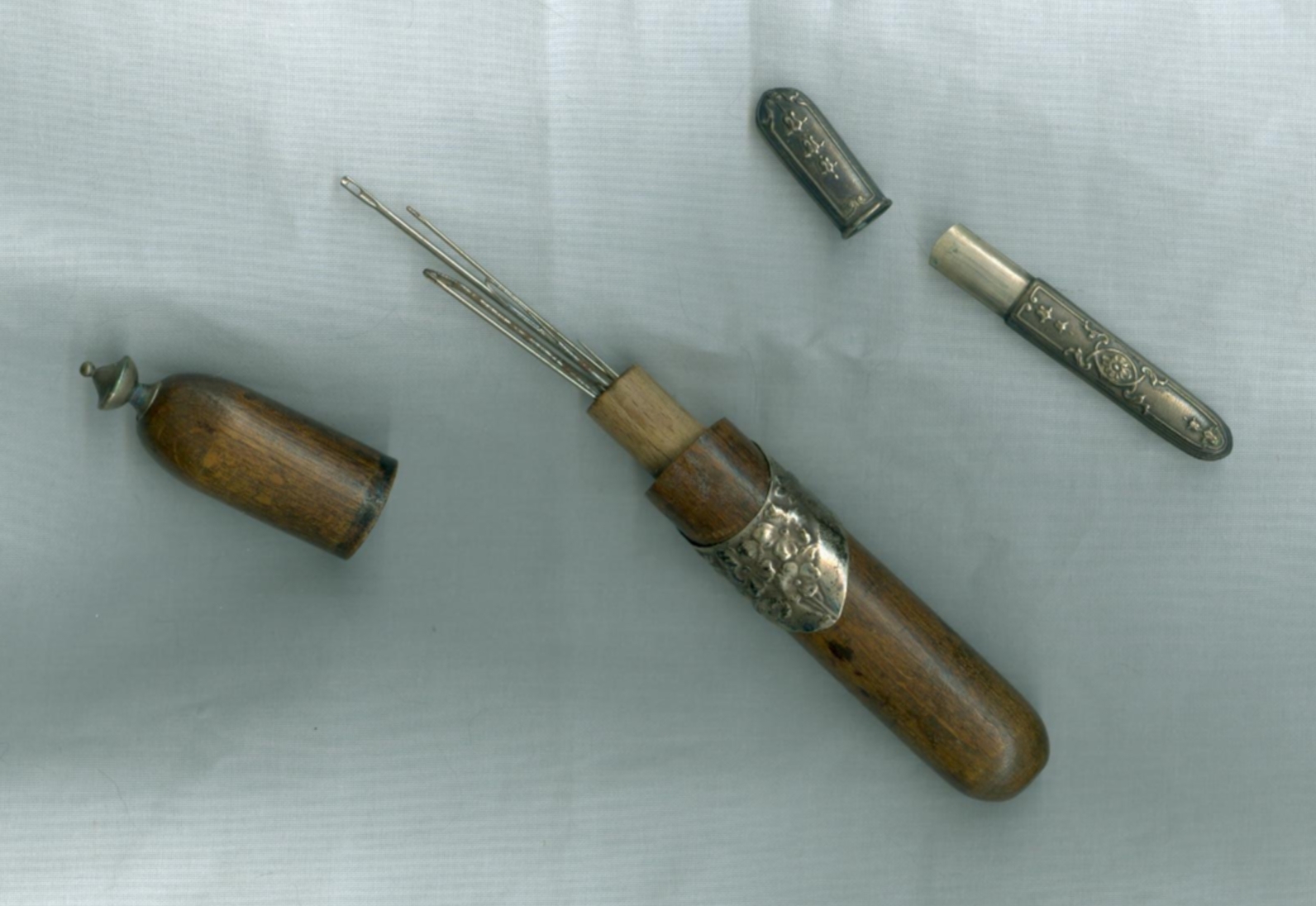
Victorian silver
Some women could afford to purchase sewing tools, as the 19th century industrial age ushered in a manufacturing boom. The two photos above show needle cases from the same time period as the homemade ones. Wood, silver and bone are the materials used; the beauty of the items are as significant as the function. I had thought that the hole in the bone needle case was for hanging on a cord, but found out while researching for this assignment that it originally housed a “stanhope,” unfortunately now missing. A stanhope is a miniature magnifying glass with an image inside. While fetching a needle for her project, the seamstress could pause and enjoy the image, wondering at it’s miniscule size, stopping to smell the roses.
1950s
The photo above is a 20th century paper needle book c. 1950. Needles were purchased in these, and they replaced the earlier elaborate needle cases to store needles in the home. I found images online of paper needle books with advertising and commemoration of special events. These objects would not have been considered precious in their day, but purely functional. They are now collected as examples of “retro” advertising art.

All of the above needle cases originated as practical tools to hold sewing needles for everyday use, but their function has changed to that of collector’s items. Today, I keep them in a drawer, occasionally to handle and admire. I am a sewer, but don’t use these antiques to house my own needles because I consider them too precious.
todays
Finally, above is the needle case I use today; it is made from cardboard and plastic. The plastic cover has an opening on the edge which allows a needle to be removed by rotating it, keeping the other needles in place. When it is empty, it will promptly be thrown in the trash. The evolution of the needle case from precious and beautiful, to cheap and functional, to ugly and disposable (sadly) represents a corresponding shift in our culture. It makes me think of a shift in communication from the handwritten letter, in beautiful flowing penmanship, to the telephone call, to the text message. Progress.

Curious Curiosities

Screen Shot 2013-02-14 at 7.27.32 PM


It’s a lamp. Believe it or not, its a lamp. It has sat beside the floral printed arm chair in my Gramma’s living room for as long as I can possibly remember. I called her to brain storm objects to write about for this assignment, she suggested the lamp and told me about it. And although I have seen, touched, turned on, and pondered about this lamp the entirety of my short life my reaction was “Oh thats what that thing is?!?”

This lamp has had a long and eventful life. So long in fact, that it wasn’t even born a lamp! It was originally a saddle makers bench. The two clamp like protrusions at the top were used to hold the leather for the saddle as it was hand stitched. Often times the saddle maker or even a farrier would build the bench themselves. This one in particular doesn’t have a known origin or creator. But after it served its time as a saddle makers bench, it fell into the world of antiques. The bench was purchased by a Marianne Secore, referred to by her maiden name Miss. Mitchell. Miss. Mitchell worked at my Grandpa’s food distribution company, Nichols Distributing, as a secretary accountant. The bench was in her care for some time, and during that time her husband converted the bench to a lamp. The reason for which survives only within his mind I am afraid.

In1963, Miss. Mitchell gave the now electrically illuminated bench to to Gramma and Grampa as a Christmas gift. I would foresee that as being an odd gift to receive from your secretary, but they must have liked it in some strange way because it hasn’t left their house since. Despite the fact that its ancient clamps are now being held together with a rubber band. They must have loved that thing so much that when Miss. Mitchell died, my grandparents adopted several more of her antiques from her estate sale. Perhaps they thought the bench needed company that reminds it of its previous owners, they ones that gave it light.

Screen Shot 2013-02-14 at 7.27.50 PM

(above: my uncle Nick at 10 at Nichols Distributing with Miss. Mitchell)

That bench has done something that no human being can. It has transformed from one thing to another. Taken on tasks that in its former life were unimaginable. And its transformation was not out of necessity, the bench did not become a lamp because it was obsolete. Although about 80% of saddles today are made by machine, 20% are still hand sewn. And many craftsmen from that 20% still work on a saddle makers bench just like this one. So why change it, why alter an object from its intended purpose? Maybe Mr. Secore just needed a lamp. Maybe he was trying to find a way to justify keeping the old thing. Or maybe he say that deep down, that bench was destined to be a lamp.

A Large, Music-Making, Decoration Displaying Wooden Box

Image

This is a Rudolph Wurlitzer piano. The Rudolph Wurlitzer Company, more commonly referred to as “Wurlitzer”, was established in 1856, with the intention of manufacturing stringed instruments, woodwinds, brass, and many other types of instruments. Over the years, they decided to produce only pianos, organs, and jukeboxes. The company continued doing so until 1988, when Gibson Guitars purchased it. This particular instrument happened to be purchased while the company was still in existence in 1976.

 This piano, like any other instrument, was manufactured with the intention of creating a pleasingly harmonious sound. Each key was designed to make a hammer hit a string, and each string was designed to vibrate in such a way as to create an invigorating sound. It was constructed in the hopes that someone, either beginner or expert, would place their fingers on the keys in a pattern, a rhythm, to create an arrangement of tones. Its intended purpose was to make music.

 For many years, this object did just that. My grandmother originally purchased it because my aunt was taking piano lessons and wanted to be able to practice at home. So, its first few years were dedicated to helping a young girl improve her music-making abilities. Throughout this time, my grandmother also gave it a function that it was not originally intended for. She used the flat wooden surface on top as a place to display her statue of the Virgin Mary. And from that day on, this piano was not just an outlet for music, but was also aesthetic. For many more years, it continued to serve its dual function as items were displayed on top and other children of the household began learning to play music.

Eventually, my grandmother sold her house and no longer had room for the large music box. No one being willing to let the instrument go, my mother took it and it found a new home in our living room. Although my brother took lessons for a few years, no one ever really pursued the art of playing piano. In this new home, the piano continued to serve a function by acting as a place for other objects to be displayed. It has held family photos, Christmas decorations, and other trinkets. Today, it ironically displays a new sound system, which produces high quality sound waves to evoke the feelings of a live performance.

 In my home, this instrument was hardly played with the intention of making music, it has acted as somewhat of a toy for the children growing up around it. As a child, I would play silly songs such as “Chopsticks” or “Mary Had a Little Lamb”. It would attract the attention of my friends, who would want to touch it; to feel the keys depress so that a sound could rise out. And now, my nephew of nearly three years enjoys smashing against the keys and swaying as if he were producing the grandest symphony.

I am somewhat sad to admit that this piano is soon to be a memory in my home. The lack of moisture and excessive heat that the wood-burning stove creates is a very poor environment for this thirty-seven year old wooden music box. It never stays in tune, and some of its keys have gone dead. It requires constant maintenance and has become more of a burden than a pleasure. However, it is to be donated to an organization that might be able to take better care of it, and use it for its intended purpose. Perhaps in the future, young children or elderly folk will have the opportunity to create music that they otherwise would have been unable to do. I believe this music-making object would be proud to have served so many functions, and end its days doing what it was always meant to do.

Thick and Thin

Since there were a few members of our seminar unable to make it to class this morning, I wanted to give a summary of a key part of our discussion. I hope this will be useful for the rest of us, as well, and please feel free to add your thoughts in the comments below!

We discussed a section from de Waal’s Prologue in which he describes a story he remembers his grandmother, Elisabeth, once told him about Charles Ephrussi, the art collector who first collected the netsuke. He imagines one version of the story he could write, one with “stitched-together wistful anecdotes” and “some clippings from Google on ballrooms in the Belle Époque” (15). But that narrative, he says, “would come out as nostalgic. And thin.” de Waal tells us, “I am not interested in thin” (15).

So we considered what it meant for a narrative to be “thin” or “thick.” Here are some summarizing points of that discussion:

Thin Narratives:

-Are nostalgic and melancholic–based on hindsight and the writer’s feelings about the past.

-Are therefore self-centered (literally)–mainly about the writer.

-Are clichéd, and tend to tell stories that are the same as other people’s stories (see de Waal on p. 151 discussing a moment where his narrative almost “thins” out).

Thick Narratives:

-Are full of “exactitude” (de Waal 16) and based on careful details.

-Reconstruct the places, things, and experience of a time: “I want to be able to reach to the handle of the door and turn it and feel it open. I want to walk into each room where this object has lived, to feel the volume of the space, to know what pictures were on the walls, how the light fell from the windows” (de Waal 16).

-Create an experience constructed out of multidisciplinary knowledge of the past. For instance, de Waal draws upon:

    • Architecture
    • Urban history and planning
    • Psychology and sociology
    • Art and Art History
    • Literature
    • Photography
    • Fashion
    • Intellectual History

-Are based on discovery and trying to find something new about the subject or history (rather than re-telling familiar stories)

-Are Connected to other stories and histories–move beyond the “self”

-Develop/Have an Arc

In summary, The Hare with Amber Eyes offers us a model for telling historical narratives both with and through objects. The text invites us to touch the netsuke and experience their history by placing them in a rich (“thick”) cultural history.

1939

100_4470

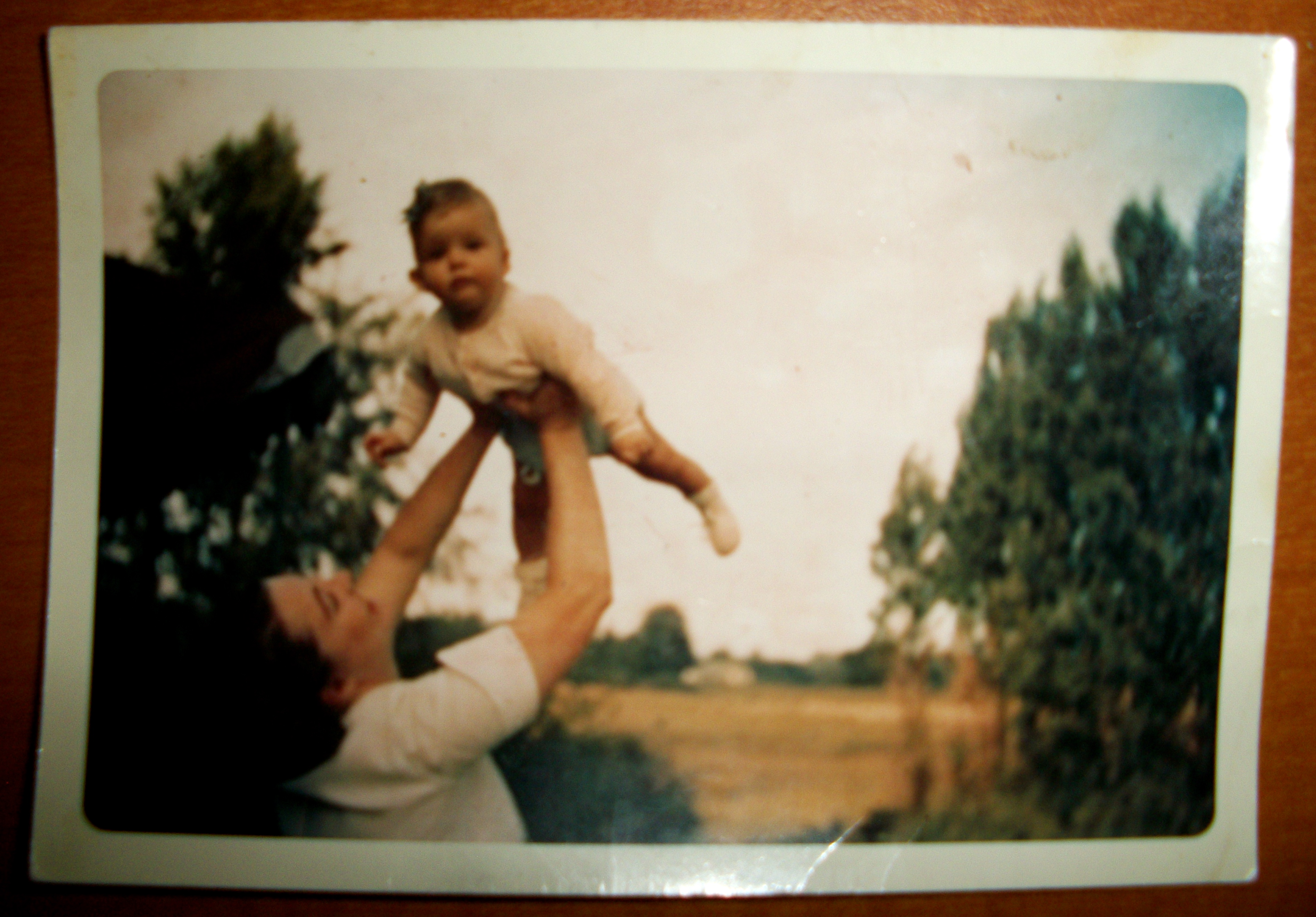
They say a picture says a thousand words…but this one seemed to have very little to say for quite some time. It was silent, sitting in a drawer, waiting for its moment to speak. I found this photo one day while I was rummaging through my Gramma’s boxes of photos looking for inspiration for an art project. I didn’t end up using it and I haven’t thought too much about it since that day. But this photo peaked my interest for this assignment, I had a sudden desire to end its silence.

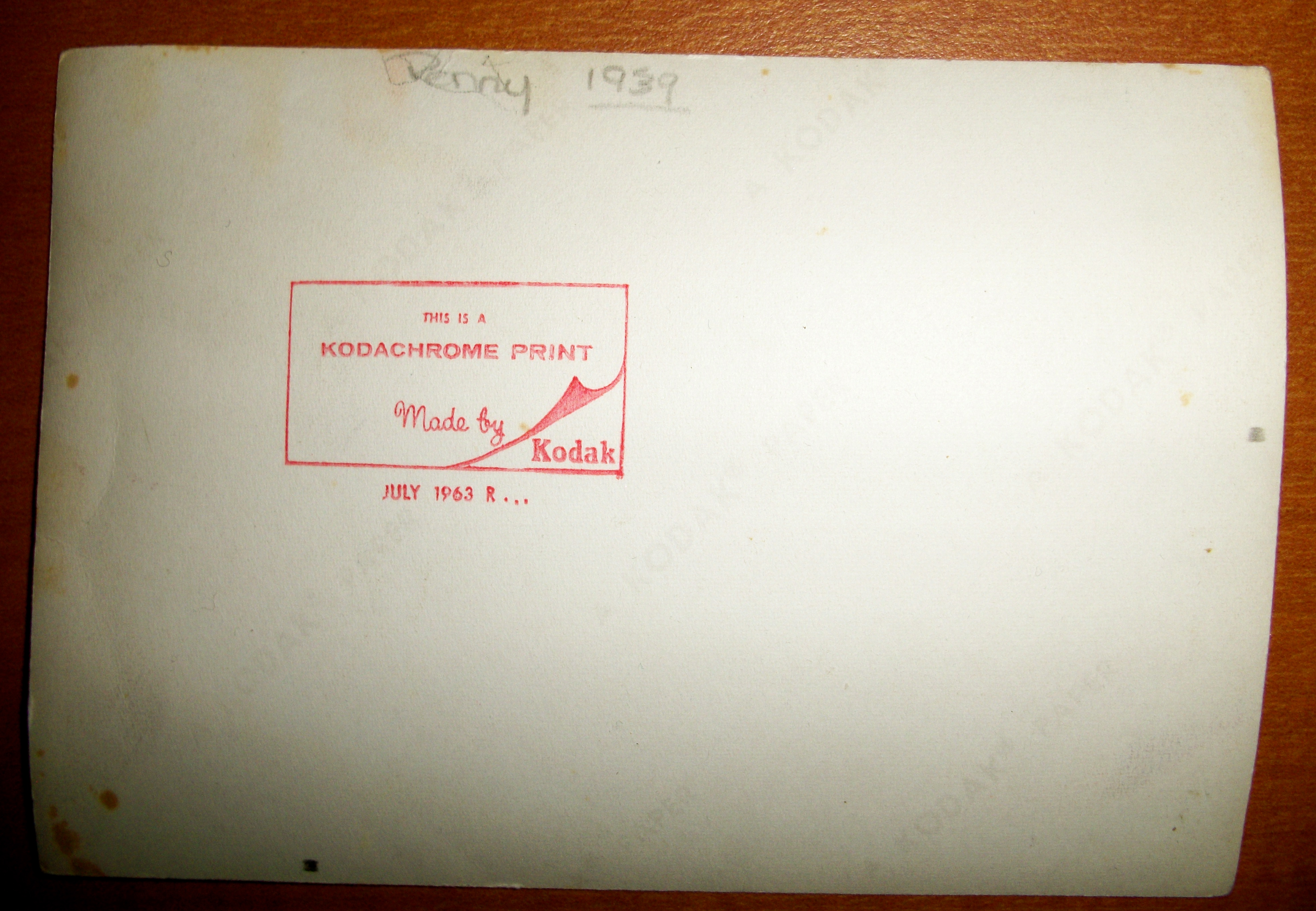
I began to develop my own theories about this photo, and scoured it for information . My Gramma had written “Penny 1939” lightly in pencil on the back. This was my first clue, the baby in the photo must be her. My Gramma was born in 1939, so this picture must have been taken before she was a year old. The back of the photo also reveals that this is a Kodak print, a “Kodachrome Print” to be specific. The Kodak company was founded in 1889 in Rochester New York, where my Gramma has lived her entire life. And a Kodachrome is a color reversal film that was introduced by the company in 1935, becoming one of the first successful color materials used for both cinematography and still photography. Its amazing to me that this technology was fairly recent at the time the photo was taken. Ironically Kodachrome was prohibited in the United States in 1954, the same year my Gramma got married. This photo holds some of Kodak’s history inside it I think. It represents how much has changed; not only the technology but also the status of the company. When this photo was taken, the Kodak company were innovators, the front runners of the industry, and now they are struggling to keep up the changing times. Perhaps this parallels a fate that befalls many people as we grow older.

100_4468

However, what truly intrigues me about this photo in not its association with Kodak. This photo is a window into a rarely discussed portion of my families history, and I had no idea about it until very recently. While studying this photo I naturally assumed that the women hoisting my Gramma up into the air must be her mother. Like most I have never met my Great Grandmother so I had no evidence to support my theory. But the joyousness of the scene and the love I saw in the women’s face seemed like an irrefutable claim to motherhood. But I was wrong, and when I learned the truth I watched the picture change before my eyes.

I asked my Gramma about this photo and she told me that the women holding her was not her mother, it was her nanny. It was certainly not uncommon for well off families like my Gramma’s to have nannies, so that did not shock me. Here’s what did…there are no pictures of my Gramma’s mother at all…anywhere. My Gramma’s biological mother has been intentionally erased from our families history. According to my Gramma she had an affair and despite the threat that she would never see her children again, ran off with the other man. Its amazing how an object as simple as a picture can show so much change. Somewhere between my Gramma’s birth and the moment captured in this photo, my families history changed forever. Just like the photo changes for me when I became privy to the truth of its story. What does that mean about my poor little photo? Is the love I say in it initially a falsehood? Does this photo mean betrayal and resentment in the eyes of someone else. I have had this photo for years, and now it means something so different then it once did. The meaning you feel for an object affects the entire way you preserve it. And when that meaning changes so does the object. The photo feels different between my fingers now, it looks different to my eyes that know so much. But my interest in the photo dramatically increased with the presence of this new mystery.

The thought of a mysterious Great Grandmother intrigued me. What kind of women was she and do I have any of her in me? But research is an amazing thing. My Gramma told me that years ago when I was young she found her mother and they began e-mailing. She won’t say much about it, in fact there is only one thing that stands out in my mind. My little brother has bright red hair, and for his entire life we had no idea where he got it from. As it turns out my mysterious biological Great Grandmother had bright red hair.

100_4265

mug – part II

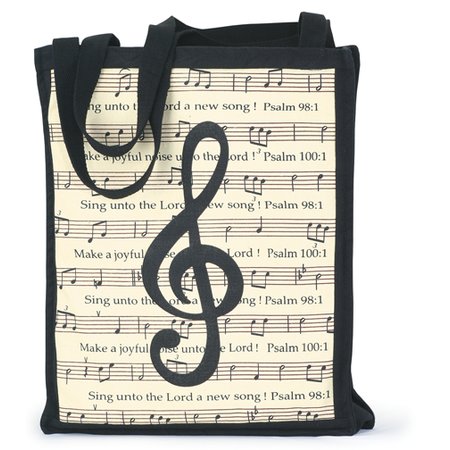
tote bag with details resembling the music notes on mug

tote bag with details resembling the music notes on mug

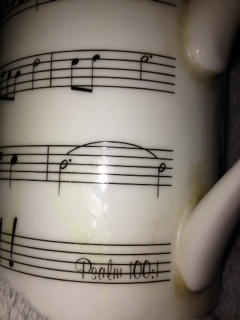
Psalm number

Psalm number

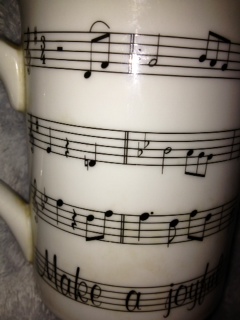
close up of the notes

close up of the notes

As I reflect on my mug for a second time I will be paying more attention to the musical significance behind it; particularly, the psalm imprinted on the object and why out of all the Bible verses, this psalm was placed on this mug. Psalms serve tremendously within a Catholic mass; they are typically done as solos by a cantor (one who leads the music of the mass) and are done between the first and the second readings which occur early on in the mass. They consist of one refrain and several verses. They are sung very reverently and holy and make the mass all the more spiritually serene and lovely. The psalm written on my mug resembles a verse of the psalm with the refrain: Sing to the Lord a New Song for He has Done Marvelous Deeds (Psalm 98:1). As I researched where my mother bought the mug I came to realize that another object she bought for me (a psalm tote bag) has the same musical notes imprinted on it with the same psalm verse (along with the refrain that I just quoted from chapter 98). I cannot take a picture of the tote bag as it’s at home with my family but I will attach the picture of it from the website so you can get an idea of what it looks like. As I researched the origin of the psalm’s other verses I found the full piece as written according to the King James Bible Version:

 Psalm 100:1-5

100 Make a joyful noise unto the Lord, all ye lands.

Serve the Lord with gladness: come before his presence with singing.

Know ye that the Lord he is God: it is he that hath made us, and not we ourselves; we are his people, and the sheep of his pasture.

Enter into his gates with thanksgiving, and into his courts with praise: be thankful unto him, and bless his name.

For the Lord is good; his mercy is everlasting; and his truth endureth to all generations.


These are the words of the entire psalm and now I moved to look at the musical notes on the mug. The music notes have a large range and its G-clef detail represents that is written for a female singer. However I could not mange to find a familiar tune to match up the notes with and so I searched the website in which the item was purchased (christianbook.com). Unfortunately, I could find no trace of the mug so I searched for the tote bag because it also has a musical staff on it and perhaps the description would have some information on the notes. Unfortunately the product description was not very informative and simply states that the bag’s detail has a G clef “against a musical score background”. Therefore I do not believe the music on the mug represents a particular song but rather music in general. This makes sense because psalms are written and sung in multiple ways in Catholic masses; traditionally they are sung slowly with organ accompaniment but others are sung with guitar or different types of musical accompaniment at a faster pace. Therefore, the significance of the musical background is simply to stress that one should sing praise to God through music. After reflecting on the words of the psalm one can sense the urge for people to be joyful because God is our creator and everything about Him is good. On a personal level this psalm is comforting to me because it pushes me to be happy even in my greatest struggle because I can be assured the Lord will not betray me – his mercy is everlasting. I believe my mother chose this object with these words for several reasons. First, and perhaps the most obvious reason is because I am a singer and it serves as a reminder to never stop praising or in my case, never stop singing. I have been singing for over ten years and music has made me particularly involved with my faith and so my mother uses this verse as a message to never lose this involvement and never stem away from your faith. I believe my mother also chose this object to serve as a representation for those memories of rehearsals, church concerts and first solos that I underwent throughout my time of church singing in my home parish. She wants me to have a reminder of all the happiness I have endured through my music ministry and to never forget that God gave me that talent. Psalms are the most holy part of the mass and they are the time in which the cantor truly can give thanks in her own personal way. When a psalm is sung it should be sung for God since it typically is coming from one voice, the relationship between God and the singer becomes that much more intimate. These words and the music on the mug represent a form of praise and thanksgiving and serve the psalm justice in a beautiful way.


Unexpected Irrelevancies

Image

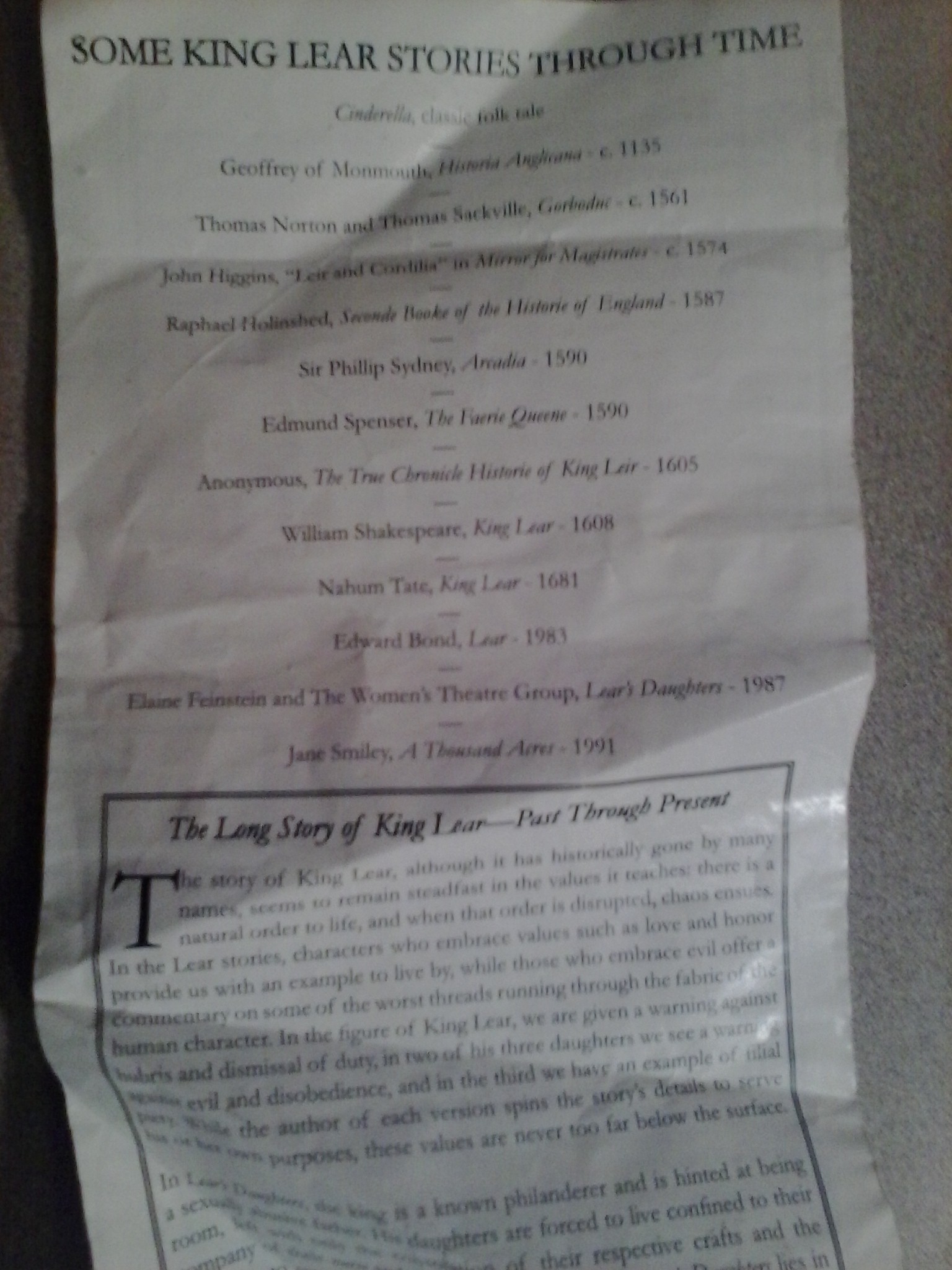
While searching for an object to date and chronicle the history of, I found this crumpled up play program of Lear’s Daughters. The front of the program lists the play’s title, director, dates, and a picture drawn by a New Paltz art student to fit the play. Many people who saw this program thought that the girl in the center of this picture was supposed to represent me. I did not know nor never met Jes Mackenzie, and I’m guessing she had never seen me either. The resemblance is just one funny coincidence that falls along the timeline of the assemblage of this object. There are a few other peculiarities that can be found through further describing the object.

It is fascinating that in describing this found object, I am also able to learn about its history:  its production, as well as the names of the people who helped produce it. The same cannot be said for many objects in this world, and I find this object not only fiercely existing as a memory in my life, but also a detailed chronicle of the amount of minds and efforts it took to bring the play, and even this program, into inception. Upon opening the program, one can see not only the cast and production crew, but also a list of six dramaturges that each contributed to this very detailed program. Lear’s Daughters was a collaborative production between New Paltz’s theatre and English departments. Needless to say, then, in-depth analyzation of the play was applied throughout its production, and is even inserted within the program itself. Upon opening the program all the way, one beholds seven mini-essays with a meticulous analysis of each character. These essays were provided by the hard work of the dramaturgy. Back to the front of the program, one can see the dates of the play on the 9th and 10th of April 2010. If anyone else had found this program, however, they would not have known it was printed two years ago; there is no year listed in the play’s production dates at the front of the program. I am so confident in my dating of this object because I was part of its production. I played the role of Cordelia in the play.

Image

I find it very interesting how the year-to-date of the program was irrelevant in this pamphlet’s production, as if the year would not matter to audiences. Admittedly, it is a little redundant during a then-current event. Yet I find it interesting how so much hard work went into this object, and yet no one thought to date it. It is as if it was constructed and thought to function only on the dates of the play, frozen in that moment and then soon tossed away at the end of the entertainment. Even more stunningly, on the back of the program is a list of King Lear stories throughout time, with exact dates, and yet the Lear’s Daughters production dates at the front of the program are left incomplete.

Image

I remember taking very many of these programs, so that I may remember being in my first play. Since then, ironically, I have completely forgotten about the folios and have no idea where they lie, except for this one crumpled escapee. I found it on the bottom of one of my suitcases. I guess at one point I felt it was essential to bring to a destination to which I also no longer remember traveling.

My Mother’s Shirt

Image

My mother’s shirt is made of a flow-y, cheetah print. The tag reads “100% Rayon”. There are five brown plastic buttons down the middle of the shirt. The collar is one of my favorite parts: it is long and pointed with black trim. Inside the shirt there are two semicircular shoulder pads, also in the cheetah print, and lightly stuffed with fabric.

My mother told me that she bought this shirt when she first heard she was pregnant with me. She is a high school teacher and thought it was appropriate to hide her “baby bump” for as long as possible. So in a way, I suppose I have worn this shirt before, but as a fetus, so I’m not sure that counts.

Every time I’m home for a break, my mother will have a pile of old clothes waiting for me to try on and possibly add to my own wardrobe. Sometimes I’ll take the garments to school with me, other times I leave them at my parents’ house and revisit the clothing later. The latter is the story of this particular shirt. This winter break, having worn other hand-me-down shirts to death, my favorite being the painted denim ones, I decided to give a second-string shirt a try. This one was in the back of my closet but the unique collar drew me in. It wasn’t until I tried it on did I realize how enormous the shoulder pads were!

Interested in the history of fashion and even more intrigued by the concept of shoulder pads, I started looking into its conception into the fashion world. When they first were introduced in the 1930s, shoulder pads were often triangular and stuffed with cotton or even sawdust. The style did not really take off until post World War II when women, coming off of doing men’s jobs during the war, adopted a more militarized fashion. However, the shoulder pad craze is most commonly associated with the 80s and even into the early 90s (this shirt being circa 1990 exactly.)

Now I think it is socially acceptable to wear these dated clothes (and maybe that is just my opinion.) I am grateful for this semi-recently-discovered source of clothing (my mother) and I enjoy finding ways to integrate her clothes into my wardrobe. I’d like to think I bring new life into the garments by the way I style them. People will sometimes ask me where I get these interesting pieces from and it makes me proud to say “I got it from my mama.”

Long, Carola, and Harriet Walker. “Shoulder pads: A history.” The Independent, 14 Oct. 2009. Web. 7 Feb 2013.

Victory Medal


get-attachment    get-attachment (1)

The item I decided to write about today is this medal/pendant I have that I wear often on a black string.  The reason I picked this object to detail is because I had absolutely no idea what it’s history is, perhaps I enjoyed the mystery of it, but perhaps it is also time to delve into it!

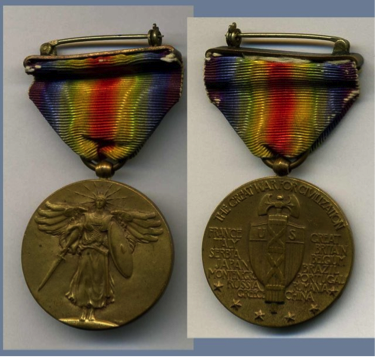
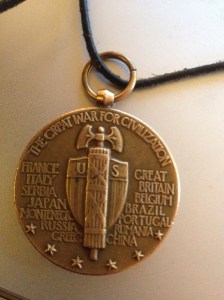
This medal is around the size of a half dollar coin.  It is a light bronze color and has a semi-heavy weight.  One side of the medal has the image of an angel on it.  The angel’s head resembles that of the Statue of Liberty.  It’s wings are spread apart and it is clad in armor.  In one hand it holds a sword pointing downward and it’s other arm is hidden behind the big shield it bares.  It stands face-forward on a small platform.  The other side has a logo that appears to be a code of arms with “U.S” inscribed on it.  The top of the coin states “The Great War For Civilization”, with the 13 countries France, Italy, Serbia, Japan, Montenegro, Russia, Greece, Great Britain, Belgium, Brazil, Portugal, Rumania, and China inscribed on the sides.  There are 6 stars on the bottom and a loop for attachments on the top.

I picked this coin up late 2nd semester of last year at the antique shop in town on Main Street.  I went into the shop with my friends one day because we were looking for objects to use in a rather odd art project we needed to do for Design Form.  I saw it through glass casing sitting under a shelf and was immediately intrigued by it, but I didn’t buy it or inquire further.

I found myself continually thinking of it shortly after, and decided to go back to buy it.  I went into town alone this time and inquired to the shopkeeper about the item.  I lied and said it was a present for someone so I could ask more questions about it.  Perhaps I thought it was silly to go into an antique shop alone and buy something so random for myself.  The friendly, albeit strange, lady handed it to me but did not know much about it.  We concluded that it must have something to do with World War I and left it at that.  I thought it was curious how the coin has an angel on one side, a symbol of peace and protection, and an inscription about war on the other.  I bought it for around twenty dollars and attached it to a black string.

I didn’t know why the coin was so compelling to me, or why I became so attached to it.  I hadn’t the slightest clue.  One of the more absurd thoughts that when through my head when I was trying to decide why this medal meant so much to me was that maybe this coin belonged to me in a past life (preposterous! I don’t even believe in reincarnation!)  I thought of the religious symbolism of the angel and that perhaps it speaks to my faith.  I am Jewish and believe in basic Judaic traditions and morals, however my personal beliefs are much more complicated than that and are grounded more in philosophy than religion.  It was while I was pondering about this that I came to the (semi-existentialist) realization that this medal is meaningful to me because I decided it is. I imbued it with meaning.  It represents the sometimes irrational or subconscious inclinations we have to find meaning or faith or mystery in life.  It has meaning to me because I decided thus, and that doesn’t make it any less meaningful.  Along with the representation of the side of me that is open to faith or meaning without reason, the coin came to symbolize my own inner strength.  I brought it with me to Europe and wore it on all of our travel days (there were a lot of them! Plains, underwater trains, boats).

Untitled


Sometimes I feel silly about giving this medal so much meaning in my life when it has no “real” significance for me.  It was not handed down to me from my ancestors nor a part of my history.  Yet I continue to hold it in my possession nonetheless.

I was reading this assignment and my eyes began to search for something in my room interesting to write about.  They immediately fell on this coin hanging with all of my other necklaces on my dorm wall.   I began to search for the coin online and found many like it, some clad with ribbons.
Untitled1

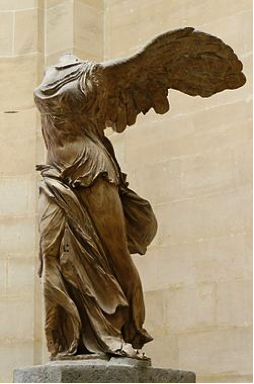
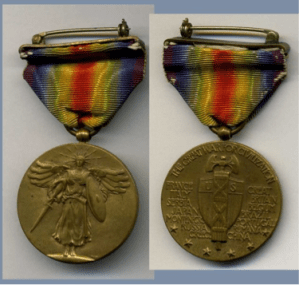
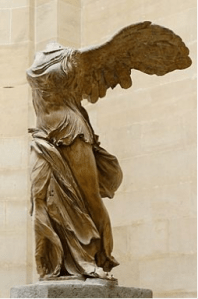
I discovered that this medal is a WWI Victory Medal.  The sculptor of the medal is James Earle Fraser (1876-1953), and it is said to be his most important medallic commission.  The design is based on the Winged Victory of Samothrace.
Untitledw

I have studied this statue before and have seen it in person and definitely see the resemblance to it, and the medals ancient Greek influences.  The goddess in the medal is pointing the sword downward as a sign of peace, the cessation of hostilities brought about by the Peace of Versailles.  The 13 nations on the sides of the coin are the allied nations, and what I thought was a code of arms is a double-headed battle ax surmounting a U.S shield with a bundle of sticks tied together with a ribbon, representing the unity of the Allied military.  The nob at the top allowed for attachment of a double-rainbow ribbon, representing renewed beginning.

The 36 millimeter bronze medal is composed of 90% copper and 10% tin. In addition to the U.S. Mint, A miniature version was also issued for wear on formal military attire.  Upon the end of the Great War, the victorious Allies decided to honor each other by making this medal a joint award.  Each nation created a similar medal with compatible designs.

It was commened on Feb. 3, 1920, at the U.S. Mint. The first medal was forwarded to President Woodrow Wilson by the Secretary of War on Feb. 11. General distribution to soldiers began on June 21.  It was the most widely circulated medal of its time.  The award was available to all officers and enlisted personnel for honorable service in the Armed Forces between April 6, 1917 (the declaration of war against Germany) and Nov. 11, 1918 (date of the Armistice).

It was fascinating to learn about the history of my coin, and I don’t feel that the mystery of it is taken away, as I still am not sure how it arrived at the antique shop or why I decided to buy it.  However, one aspect of it that possibly charmed me is its Greco-Roman influence.  I had not known that at the time, but I love studying art history and learning about ancient mythology and perhaps felt its cross-cultural/historical design when I noticed it. I still wonder how it acquired all of its scratches and nicks.

This class is making me realize how rich so many objects are with history, and how layered these histories are.  Just like geology and the earth, each time period an object endures is captured into the essence of the object, and we are adding to that very history by having them in our possession.


http://www.pcgs.com/News/Victory-Medal-Celebrates-Victory-Honors-Victors

Filofax 1999 Personal Planner

IMG_2416 IMG_2418 IMG_2419 IMG_2420 IMG_2422 IMG_2423


The object I decided to post today is a Filofax 1999 Personal Planner.

The planner measures a little less than 7 ½ inches in height (~19cm), about 5 inches wide (~13cm), and 1inch thick (~2.5cm). The color of the planner is a dark navy color, and it is made out of leather, giving it a smooth but textured feel. The inside of the front cover has eight slots for cards, credit cards, IDs, etc., and beneath the slots, there is a long pouch that can be used to store paper money. The inside of the front cover has the words “FILOFAX PERSONAL PICCADILLY REAL LEATHER” engraved in it. In the back cover of the planner, there is another pouch with a zipper attachment that can be used to store coins. The planner contains two rulers (one clear and the other black) and six sections/ dividers. These sections include: diary, notes, projects, information, financial, and an address section. The paper for every section except the ‘project’ section is labeled “Personal Filofax c 1999” (however, each section has a different reference number labeled to it). The ‘project’ section is labeled “BAROG BE- 1102.” The planner also contains a map of all the countries and capital cities and a map of the standard time zones for each country. Finally, the planner has a plastic pouch that hold six cards. The first few pages of the planner as well as the map attached to the back looks aged and a bit worn, but none of the paper inside shows wear

Before this post, I had no idea where this planner came from, when it was made, where it was made, and what the name of the brand even was. I came across it one day when I was bored and I was searching through a drawer of old items that my mom had kept throughout the years. The drawer contained old ID cards, credit cards, some jewelry, a nice handkerchief, and among other items, it contained this planner. Never used, never written in, the only signs of age came from some dust accumulated in the covers of the planner, as well as the worn look of the first page.

I love notebooks, planners, sketchbooks, paper, journals, diaries, and anything else that offers a clean slate for ideas, thoughts, doodles, and drawings. At home I have 26 journals/ diaries/ notebooks in all shapes and forms. The first one dates back to 1996 and the journals follow me through till present. I finish anywhere from one to three journals per year. The penmanship in that first journal is horrible and the content is actually really funny. I think I write that my brother is being a “pane in the but”?  I keep all my journals in a special shelf made out of cardboard that has doodles all over it, deep in my closet at home.

Paper just draws me in, and there is something about fresh notebooks or journals that just make me want to grab a pen and fill it with words or pictures. So when I saw that this really nice leather sophisticated planner was unused, I asked my mom why it wasn’t touched. She told me she just never had any need for it and that I could keep it if I wanted to. Over break my mom saw how well I was using it and told me she was glad; she hadn’t wanted to see it go to waste.

In order to find more information about the product, I tried a Google search on the brand name. There were a lot of similar planners on the website, but there were none from 1999, which is when this one seems to have been made.  The brand name of the planner is called FILOFAX and they make organizers, planners, diary refills, paper/ essentials, pens, bags/ briefcases, leather accessories, folders/ folios, and more. The merchandise is available worldwide from the United Kingdom, to Taiwan, to the United Arab Emirates. It seems the website was created in the year 2001 and the registered office is the Royal London House in England. The products seem to be made in Britain, Scotland, and Asia. The products are mostly made of leather and the price range for these products includes $29.99 to $2,300+ (the most expensive planner is made out of alligator skin).

According to the English Dictionary (http://www.collinsdictionary.com/dictionary/english/filofax), the term Filofax means “a type of loose-leaf ring binder with sets of different-coloured paper, used as a portable personal filing system, including appointments, addresses, etc.”

I actually finally did find the same exact planner that I have. I found it on ebay and I found pictures of the same planner on flickr. The title for the ebay website is “Filofax Personal Organiser: Piccadilly, black leather.” The pictures on ebay match my planner exactly and the price in US dollars is about $103.13. And here I thought the planner was worth only twenty bucks.

I love my planner very much. It contains all my different cards, IDs, and it is full of written schedules, lists, post-its, and drawings. I just know that if I ever lose it… 😦