I have been staring at these eggs for days. It’s entirely my fault though, I’m mesmerized. It’s not that I didn’t expect to end up where I did, it’s just that it’s better than I imagined.
I tried to find information on Kingspoint Designs, but had no luck. Google gave me no website and the address to a closed location. However I did find a pintrest post selling the same egg I have, and another eBay listing selling a different Kingspoint Designs egg. Though the egg was a different design, the box in the picture for the eBay listing looked very similar, and had a sticker reading “made in China.” I didn’t know this about my egg, but it wasn’t very surprising. The pintrest post also identified my egg as a quail egg, which is nice to know. Two other websites also appeared when I googled Kingspoint Designs, each selling decorated eggs. I thought it was kind of weird that Google pulled up both sites when neither identified their egg’s manufacturer. The item numbers of the eggs on one of the websites have the same format (#XXXX) as the item number on my box. I tried calling both sellers, but neither answered. What I did learn from these websites is that the eggs are decorated in the Fabergé style, and this is where the fun began.
Egg decorating and gifting is a long standing Slavic tradition, originating in pagan times, and then adapted into the Christian tradition. According to this tradition, the first real Easter Egg (basically just an egg) was given to the Roman Emperor Tiberius by Mary Magdalene. When she told him of Christ’s resurrection, Tiberius said “Nobody can rise from the dead ….. this is as hard to believe as it is to believe this egg can turn red!” The egg turned red, and so comes the possible origin of the egg painting tradition. Even before this event, eggs had been a symbol of life and renewal.
The story goes that Tsar Alexander III wanted to give his wife, Empress Marie Fedorovna, an Easter egg inspired by one once owned by the Fedorovna’s aunt, which she had admired as a child. Easter was the biggest holiday of the year in the russian Orthodox Church, prompting the highest echelons of St Petersburg society to present jeweled gifts to their loved ones. In 1885, the Tsar goes to Peter Carl Fabergé, a world renowned jeweler, with the idea of a precious Easter egg as a surprise for Fedorovna. Here’s the result:
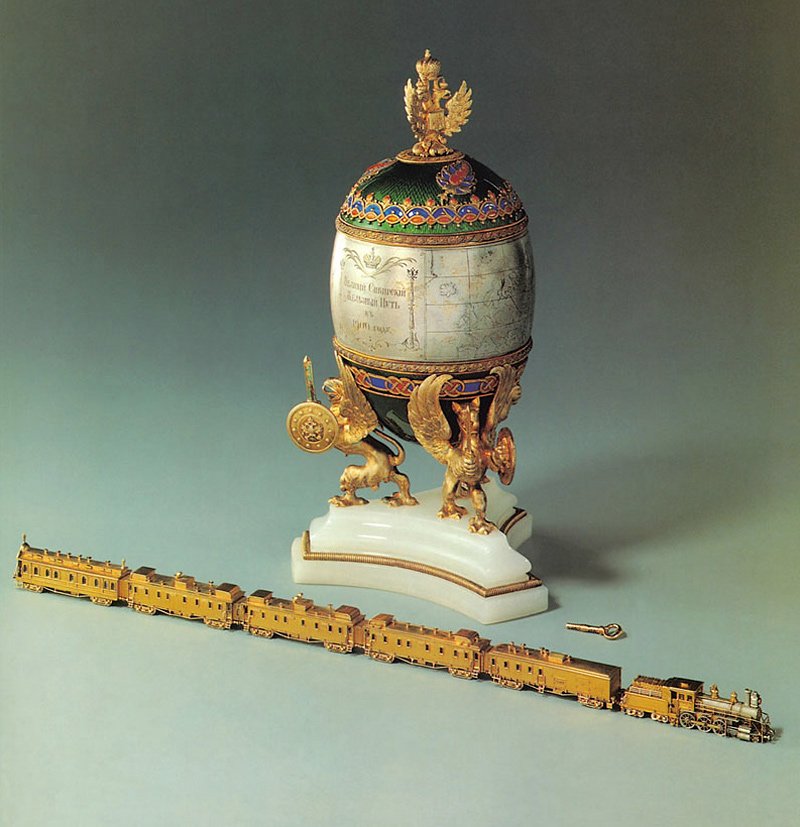
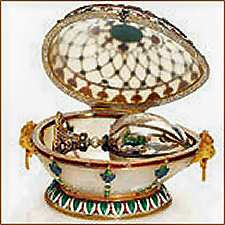
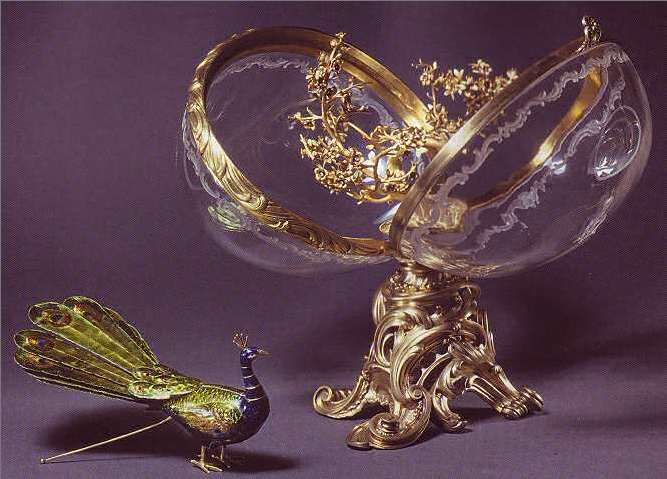
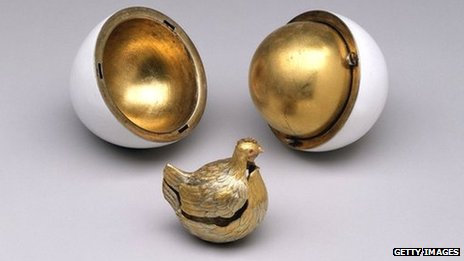 If a gold egg coated in white enamel with a gold yolk and a gold hen with ruby eyes inside isn’t enough for you, then maybe you feel like Tsar Alexander III because the hen originally contained a gold and diamond replica of the imperial crown with a separate ruby pendant suspended inside. The Empress was so happy that she received an egg ever year after. The tradition continued for fifty years until Tsar Nicholas II and Empress Alexandra were killed in the Russian Revolution. After the first egg Fabergé was given full range as to the eggs design, the only rule was there had to be a surprise. I found this part particularly interesting because it explains why my egg opens even though it is so small. It simply continues the tradition of being a vessel for a surprise. The other imperial eggs are super ornate and cool and some, like the Trans Siberian with it’s wind up train on the top left, have automated parts. I am dying to touch one of these eggs, feeling the small details and getting to know them better like DeWaal does with his netsuke, but alas I only have pictures. You can see them here if you’d like: http://www.mieks.com/eng/eggs.htm
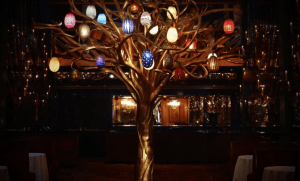 What I find funny is that my sister and I have always had this, appreciation let’s say, for gaudiness and excess. We fell in love with high tea and went to the Russian Tea Room, which is why I wasn’t surprised to find Russia in my egg’s ancestry; upstairs in the tea room I remember seeing this almost horrible gold tree with glowing glass eggs hanging off it (on the opposite side of the room is a large glass bear juggling these four metallic balls, it’s pretty hysterical). So in hindsight, my pink egg seems to be the start my sister and I developing our sense of taste together, while also starting the tradition of her always getting me birthday presents, and me always forgetting. Maybe one day I’ll get her a real Fabergé egg and that’ll make up for it.
 I left off my last blog with the intention of communicating with two sisters, my great aunts, Germaine and Rosemary Door– Two women that practically hold the key to my heritage. I obtained their number and was able to briefly speak with Rosemary this past weekend. She is 93 years old and currently living in Detroit, Michigan with her sister Germaine. They are quite remarkable. They still Ski and tend to their horses; she told me that there was not a day that passes where her age dictates the way she lives. What a treat it was to speak with her. She was able to provide some additional information off the top of her head, which I will share here. However, she plans to mail me more information from her archives she has stowed away that will hopefully arrive this week. I am excited to learn more about Paulina Byllott as well as other figures of my family. Furthermore, I am excited to learn more about Rosemary and Germaine themselves and continue to develop this new found familial relationship.
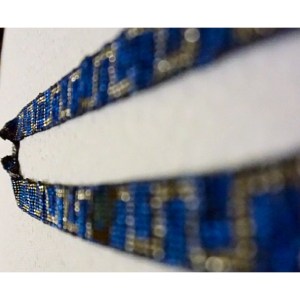 nd directly to the spiritual and other basic needs of the people, especially those of the poor and disenfranchised, promoting justice for all. Apart of their mission was “partnering,” which supported the idea of sharing gifts and responsibility to fulfill the mission of the monastery. With that said, Rosemary believes that the monks gave this necklace to her in gratitude for her faithful dedication and monetary donations. The significance of the beading pattern is still a mystery. I have searched high and low to figure out what the particular name for that beading design or it relationship to anything sacred importance, but I have come up empty handed. Along with this necklace, August and Paulina’s name was engraved on a plaque and placed above one of he windows in St. Josephs church, which was attached to the monastery. Unfortunately, I do not have any photographs of that.
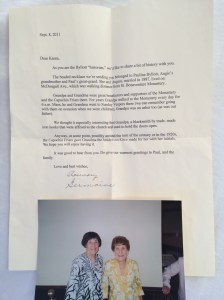 wear it at all? How did she react when she first received it? Why was this necklace given to Sophie, then to Rosemary and finally to my mother and not originally to Rosanne her other daughter? Did she receive any other merit for her dedication? I could probably pose another handful of questions that will remain unanswered.

 The Materials of History, Thought, and Art