As a closing from Part III of The Hare with the Amber Eyes I would like to introduce another book I own. Its importance lies in the controversy of its existence, as well as my ownership of it. I do not cherish such an item, but I allow it to have a place in the world, as reminder of how mere words, and well-advertised ideation can influence an entire planet. I myself am conflicted with it, which is the very reason this uncomplicated chain of ownership exists. It is very arduous to view it objectively.
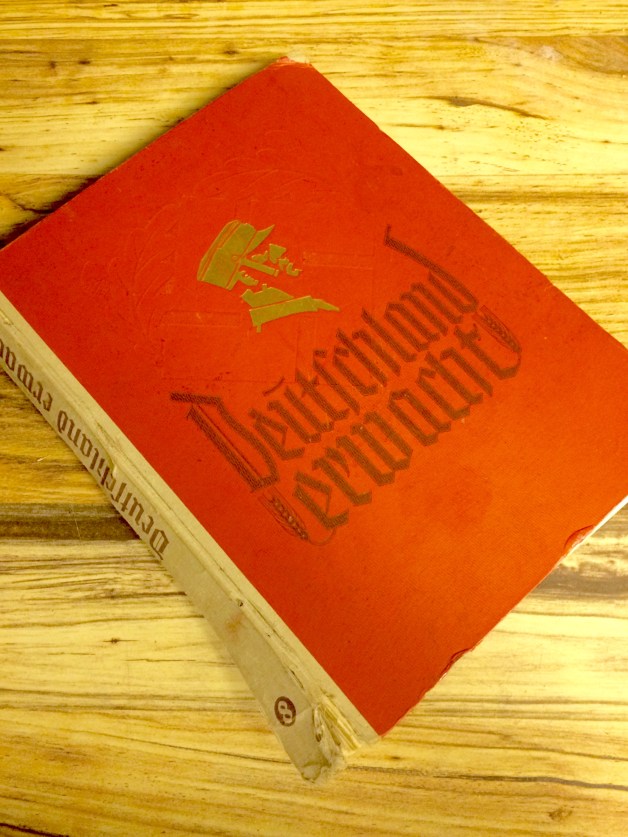
As one might set eyes on this object, it is clearly a book. It measures 10-3/8” by 12-3/8”. The cover is a red leather-like material, punched into the material is a swastika surrounded by large leaves and acorns (which is barely visible to the naked eye and very difficult to photograph), a profile of a soldier’s bust embossed with a gold leaf, and lettering in a darker red, which reads, “Deütschland erwacht,” including two stalks of grain. This translates to “Germany Awakened,” the contents are the rise and accomplishments of the NSDAP party, from beginning to the year of publication, which conveys that they are Awake at this time. The binding is a woven beige cloth material showcasing the title in the same dark red lettering as the front cover along with the number eight, or an infinity symbol in a circle of red. There is no indication of the meaning of the “8”. The binding is falling apart, the glue is losing its hold on the pages. There has been no care in preserving this particular book. I have looked through it few times, and it loses a section from the glue on each occasion. The binding has broken in several places and comes apart easily. Despite its regal outer cover, it has fallen apart in several semantic ways. The pages have yellowed and there are quite a few pages in which it looks like there are cigarette burns.
I have looked it up online to find that a well-maintained copy shockingly sells for $174.99, used, on Amazon, as well as collector’s aging websites. Through my research, this piece of putrid propaganda was published in 1933, and this unscrupulous copy is a first edition. The only first edition I do not proudly display, rather, it stays in a musty plastic bag of unknown origin, in a container full of family documents and death certificates, under several other containers, in the back of a walk-in closet. I prefer it to live there, as I do not have a deeper hiding place. It was published by Cigaretten Bilderdienst Altona Bahrenfeld, Berlin. This book is a cooperative distribution by the Altona Cigarette Company and Hitler’s private photographer, Heinrich Hoffmann. The book originally came with just text, completely and elegantly printed in the German language using the font Deutsche Schrift, a favorite of the NSDAP. Initially it had placeholders for the owner to insert photos. As an exchange, one would cut out the proof of purchase from the Altona cigarette packages or cartons and mail them, the photos would have been delivered from the cigarette company by mail, on what I recognize as cheap, thin, easily torn glossy card-stock paper (printed at a high quality, but not actual photos). This allows the owner to create his own personal coffee table book, inserting memories (photos) of the “Werden, Kampf und Sieg der NSDAP,” as the interior subtitling states: The Struggle and Victory of the Nazi party. There were roughly two million printed in the entire run.
In 1958, a young infantryman who specialized in mechanics visited Germany during his tour of duty. This man’s name is Donald, and as the story was told to me, he stole this book from a home, presumably of someone in support (past/present) of the Nazi regime, considering this copy is complete with all photos collected and intact. He smuggled it into his rucksack, and on November 8th, 1958, he mailed it to my great grandmother from Luxemburg. On August 21st, 1959, he died in a motorcycle crash while home on leave, and Eleanor became the owner of a book that would not see the light of day again until her death on August 1st, 1995. It is at that point my grandmother, Cheryl, took possession of all of her mother’s belongings, as well as the lingering effects of her brother Donald. It is at this time, she combs through the book her brother was scolded for mailing when she was a girl of 15. It was viewed in her recollection, twice in its existence (other than to move and place items on top of it). In coming to terms with her fate, she instructed me to consider it her only real possession of her brother’s that had any connection to his year in Germany, and that is why we own it, and to that right, why I will now own it. She understands my mother’s aversion to collecting dusty items she has no connection with and entrusts me with this horrifying printing stating that I am, “never to show or allow anyone to see it.”
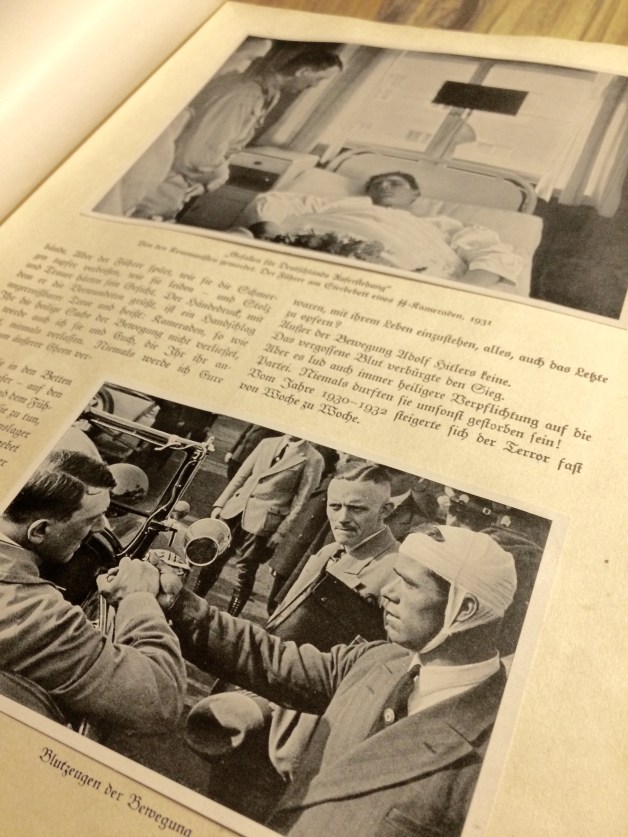
Top: Sympathetic Hitler stands concerned at the bedside of a man in a hospital; and bottom: to thank a wounded German veteran for his services. The portrayal of his hard leadership, and soft candor is the story all of the pictures tell, as if to say, “He is just a man.”
I am breaking this oath to provide a grim picture of how our things and the display of them define us. Although it paints a picture of an advantageous young man (my great uncle) with a possible inheritance of kleptomaniacal tendencies, it also speaks to who I am as an owner. My last name is unquestionably German, and with little research I have come to find that my family has been brewing beer in the same building in Bavaria since 1679. I am ashamed in certain ways about this, although one has absolutely nothing to do with the other. I resemble the Gypsy Polacks (who surprisingly found a home in America in the year of this book’s publication), and Presidential Irish of my mother’s heritage (née Filmore), the branch of my family that gave this book a home in New York. If I displayed this in my home like I do my other first editions, one may think differently of me. My former Jamaican spouse would have been in the same conflicting relationship with me, as I am in with this book. Although it reserves my views as a stark contrast, it preserves the power of influence, and what generations of my family have hidden. That we are human, and this fallacious material is a necessity to culture, as it is a history most people would like to avoid repeating.
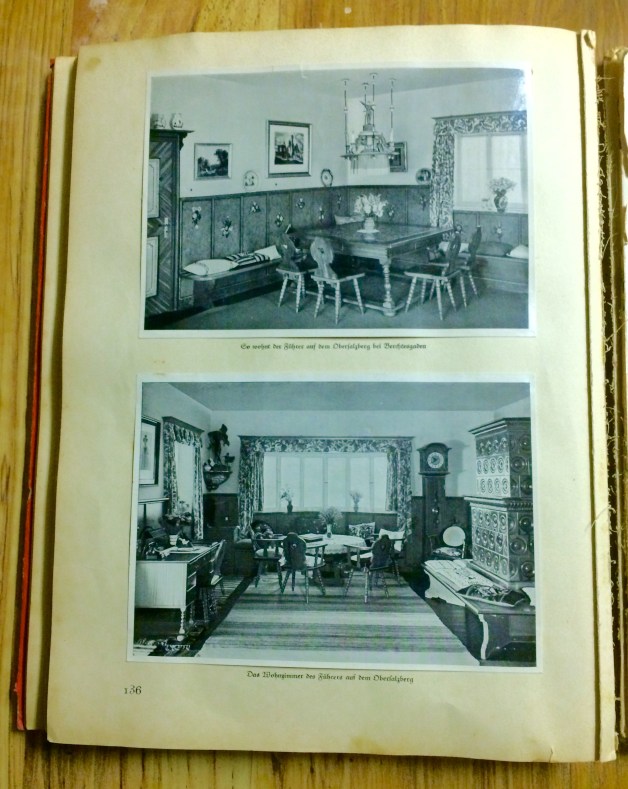
I chose to include this picture, because of Miller’s homes, and because the creator of this book felt it necessary the average man have a private view of Hitler’s home, allowing the reader to equate his humble daily life to theirs.


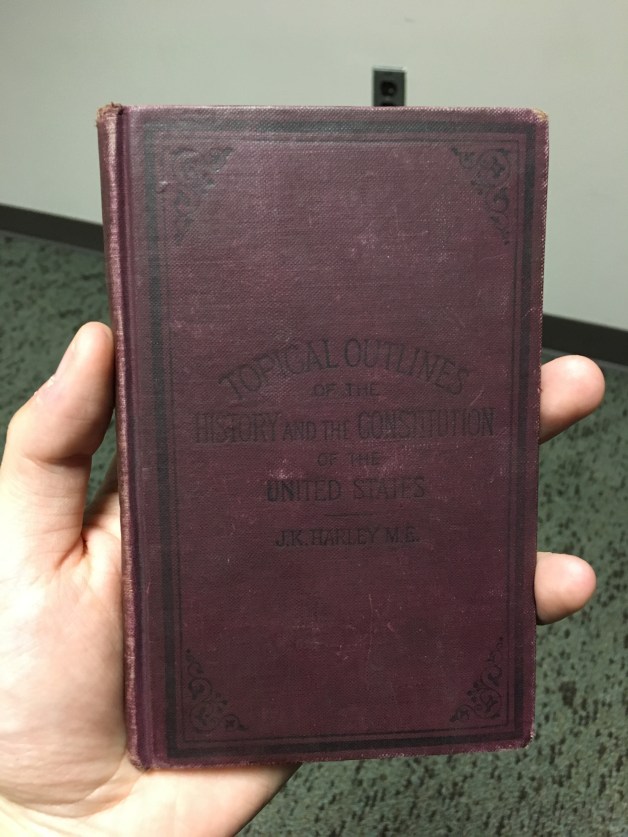
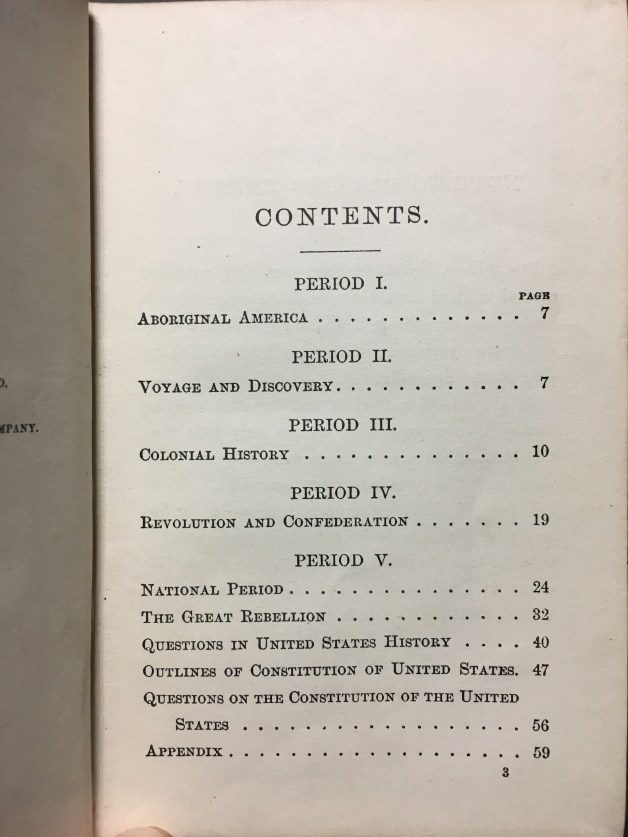

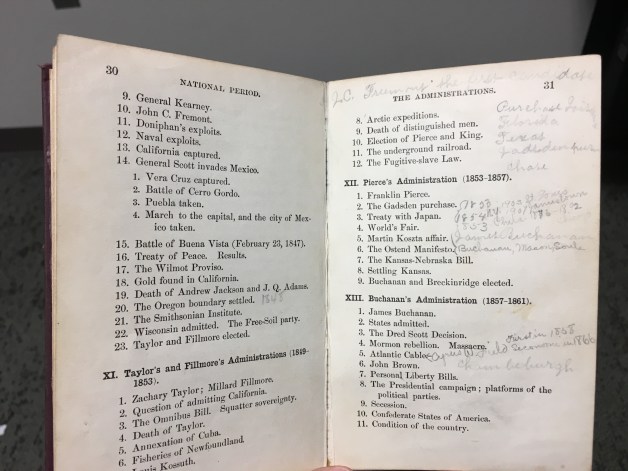 On to the history of this book. I purchased it for a dollar at a massive book sale at our campus library last semester; before it was there, it had been in the possession of the Gardiner Library, as far as I am aware. I am pretty sure that Gardiner may have collected books from various local libraries for this sale. Before Gardiner had it, however, I have no idea, so we will need to jump back in time to find more information. It is likely that this book was owned by a single student (the handwriting is consistent throughout, which leads me to believe it was not owned by any other students). As can be seen in the above pictures, the book is littered with scribblings and notes and dates and such. However, at the beginning of the book, on the first page, is the name of a person, written in ornate script; what looks like the name of a place, perhaps a school; and a date below it—April 3rd, 1907. These names and the date are written differently and in much larger print than any other handwriting in the book, and their position at the front and the style in which they were written leads me to believe that this is the name of the owner, the place or school s/he lived or attended, and a date that, for some reason, was noteworthy to the owner; I will assume that this is correct, otherwise I won’t be able to proceed. So, 1907. A hundred and ten years ago. The owner of this book was to the Civil War as we are to Vietnam. The name is oddly written and a little hard to read, but I think it says “Otta S. Robley:”probably a female name. The place/school seems to read “Mapleton Depot,” but it is hard to make out. However, if my reading is correct, then it is possible that this Otta girl lived in Mapleton, PA, about five hours away.




 The Materials of History, Thought, and Art