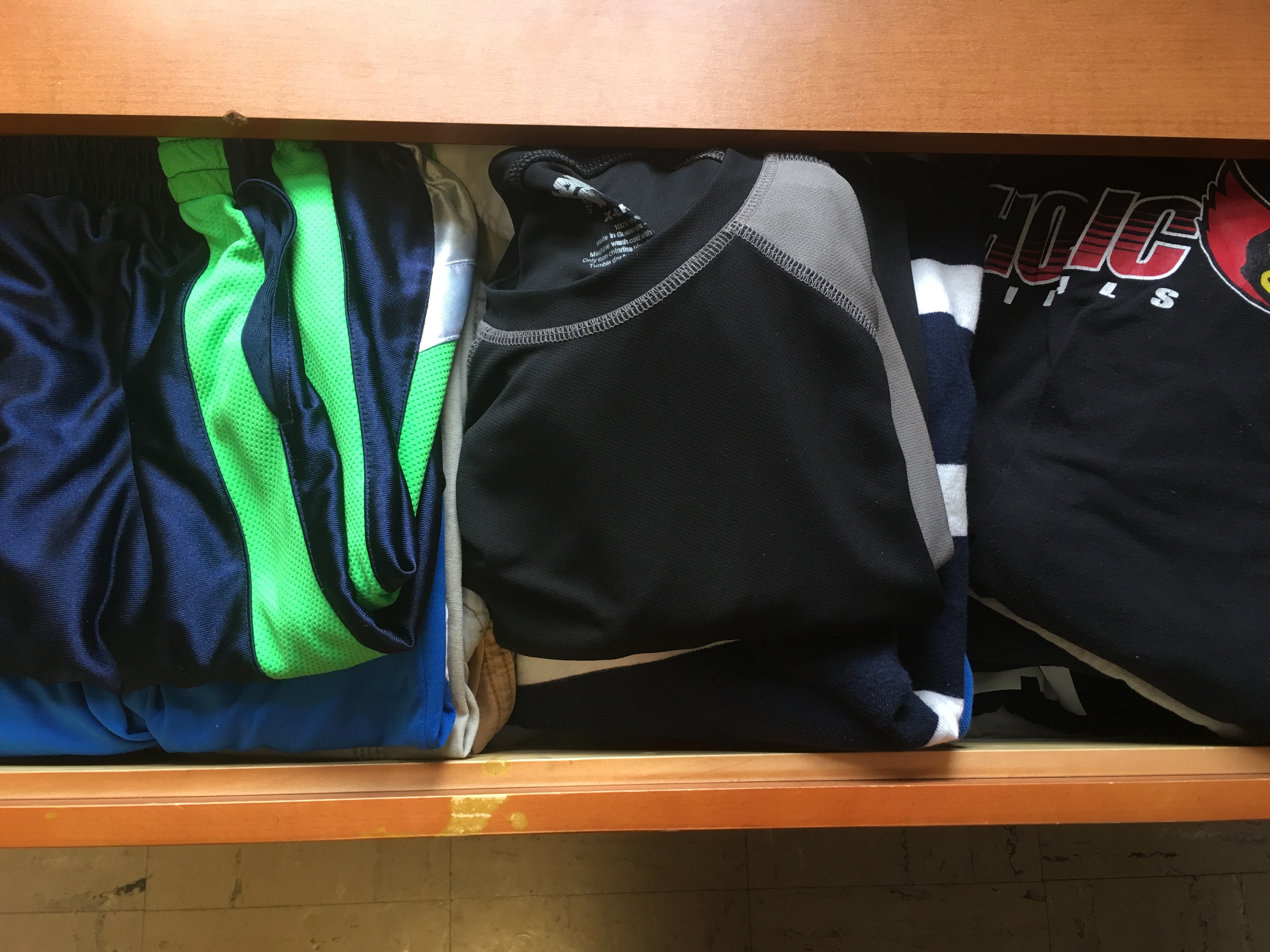
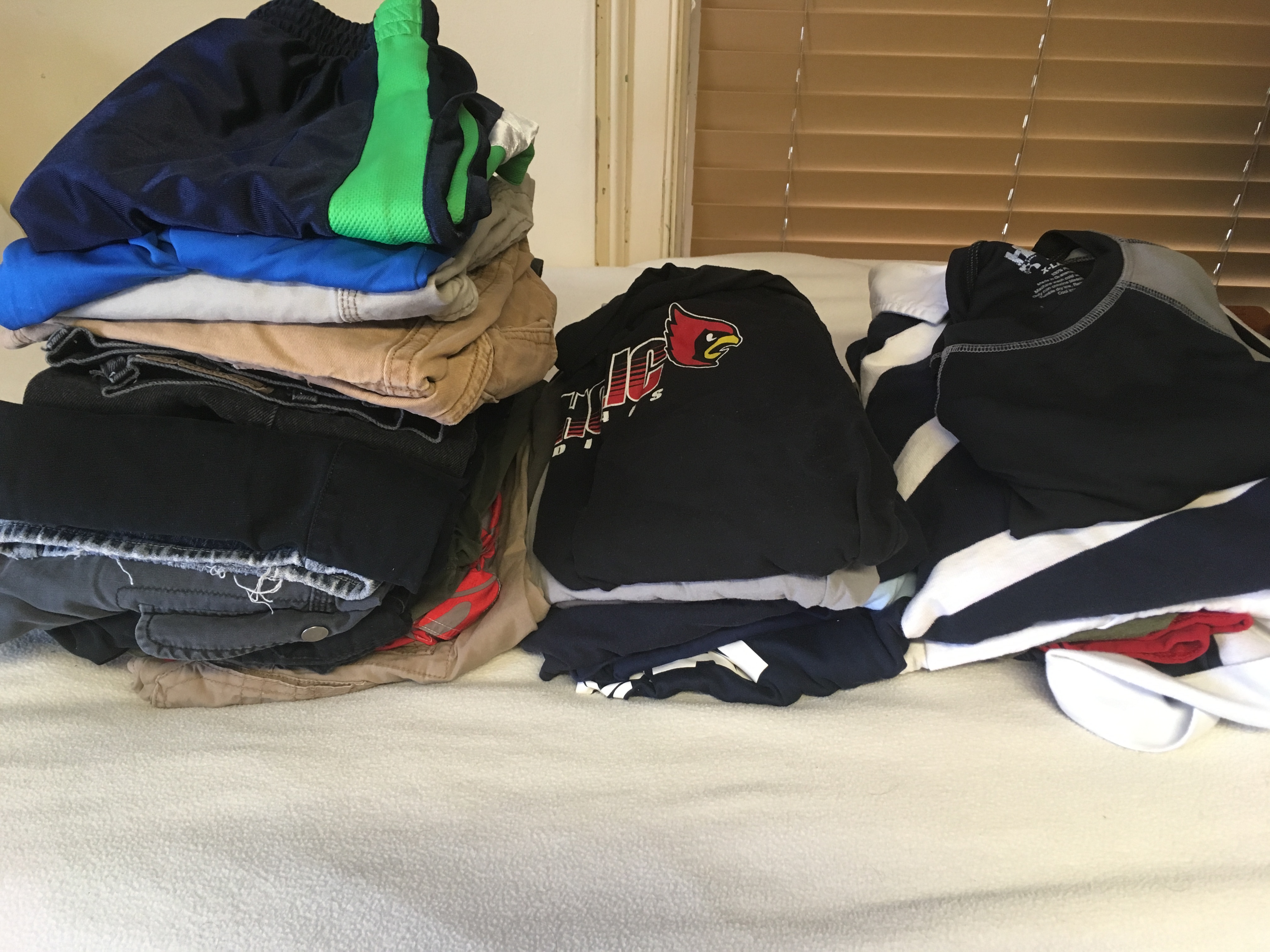
Being consistent with the first step in Marie Kondo’s The Life-changing Magic of Tidying Up, I decided to organize my wardrobe. Initially, between my summer and winter belongings, I began with nearly 50 articles of clothing. This may seem like a significant amount, but when all the clothing was neatly tucked away, it was difficult to place a definitive number on how much clothing was in my room (reference figure 1). Once I removed all my clothes from my wardrobe, it was easier to understand how much clothing I had brought from home, proving Kondo’s point that for an individual who is serious about tidying up, they need to place all their belongings from one category – in this case, it was clothing – in one location before applying the joy test (reference figure 2).
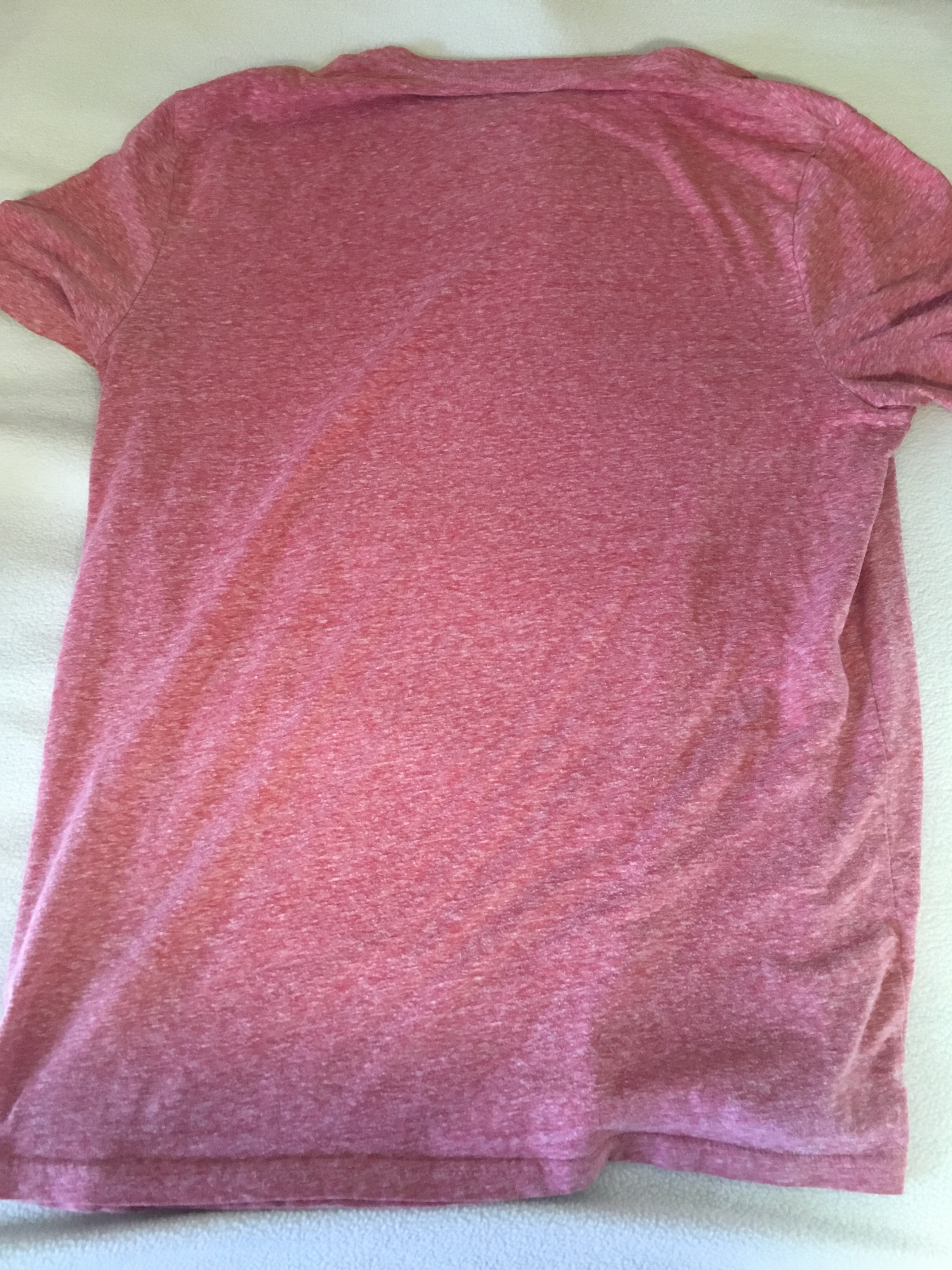
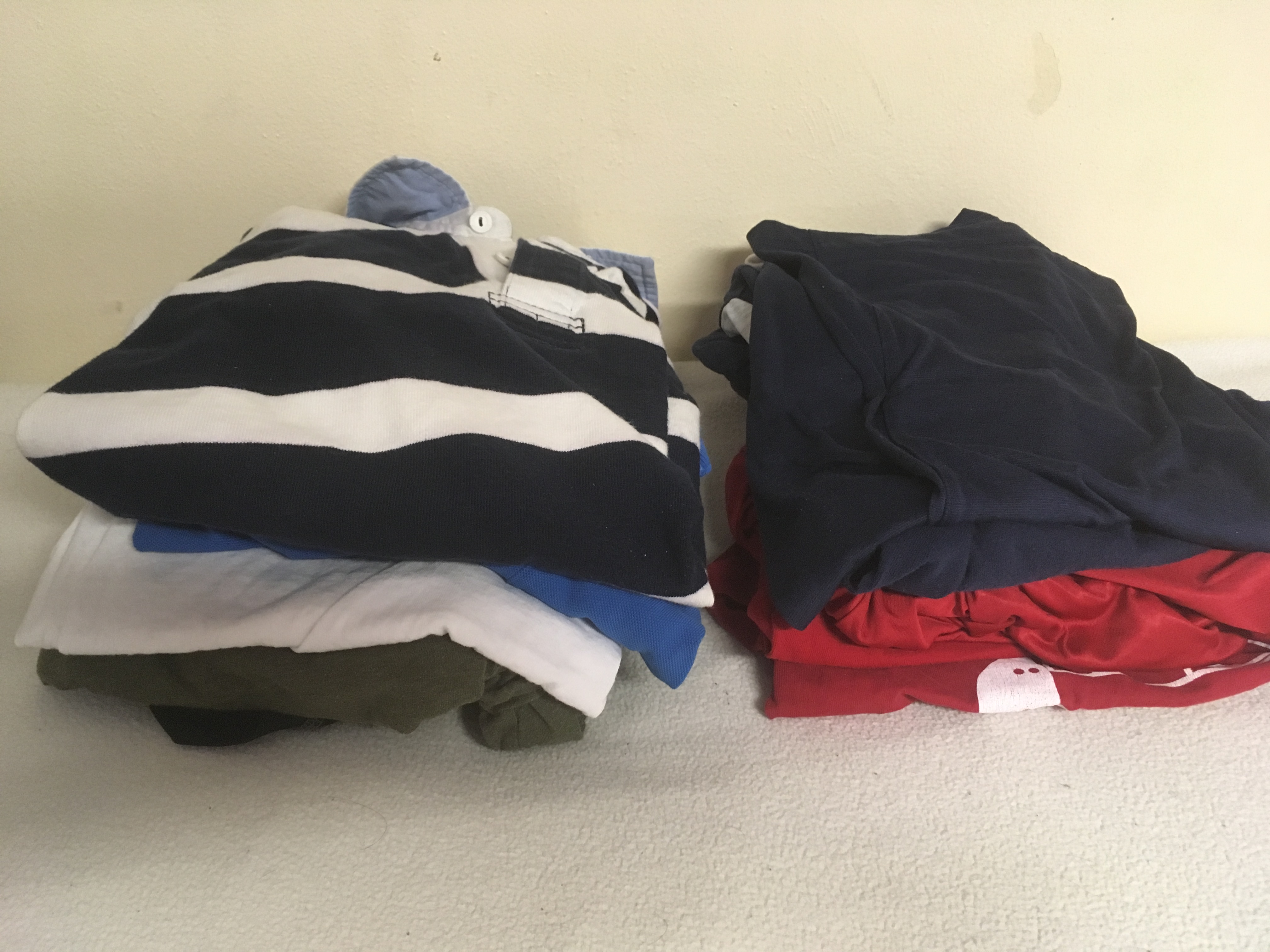
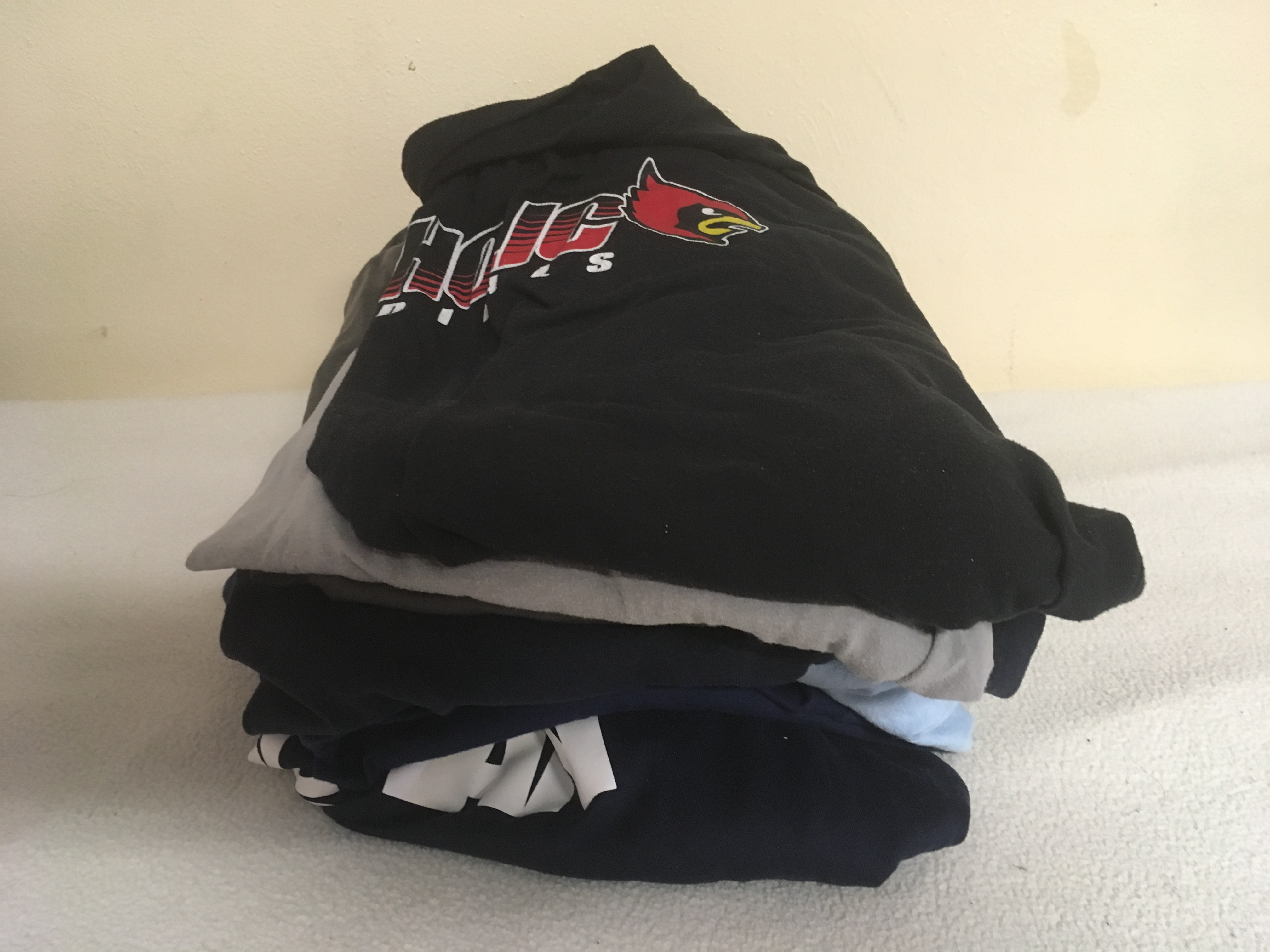
I began with separating shirts into two piles: one discard pile and one save pile. I quickly realized that I had no emotional connection to shirts which had no text associated with them. For example, in figure 3, there is a photograph of a salmon colored shirt. While it might go well with other articles of clothing in my wardrobe, it did not flood my mind with wonderful memories like the myriad of New York Yankee shirts I own. As a result, I could not compel myself to discard even one New York Yankee shirt because each shirt is like a time capsule, containing wonderful memories which stretch over a period of four years. Once I finished filing through my pile of shirts, I ended up discarding eleven out of a total of nineteen (reference figures 4 and 5). Surprisingly, I did not feel any regret in placing so many shirts I had worn frequently for years in the discard pile; instead, I felt a sense of happiness knowing that the shirts I decided to keep held sentimental value.
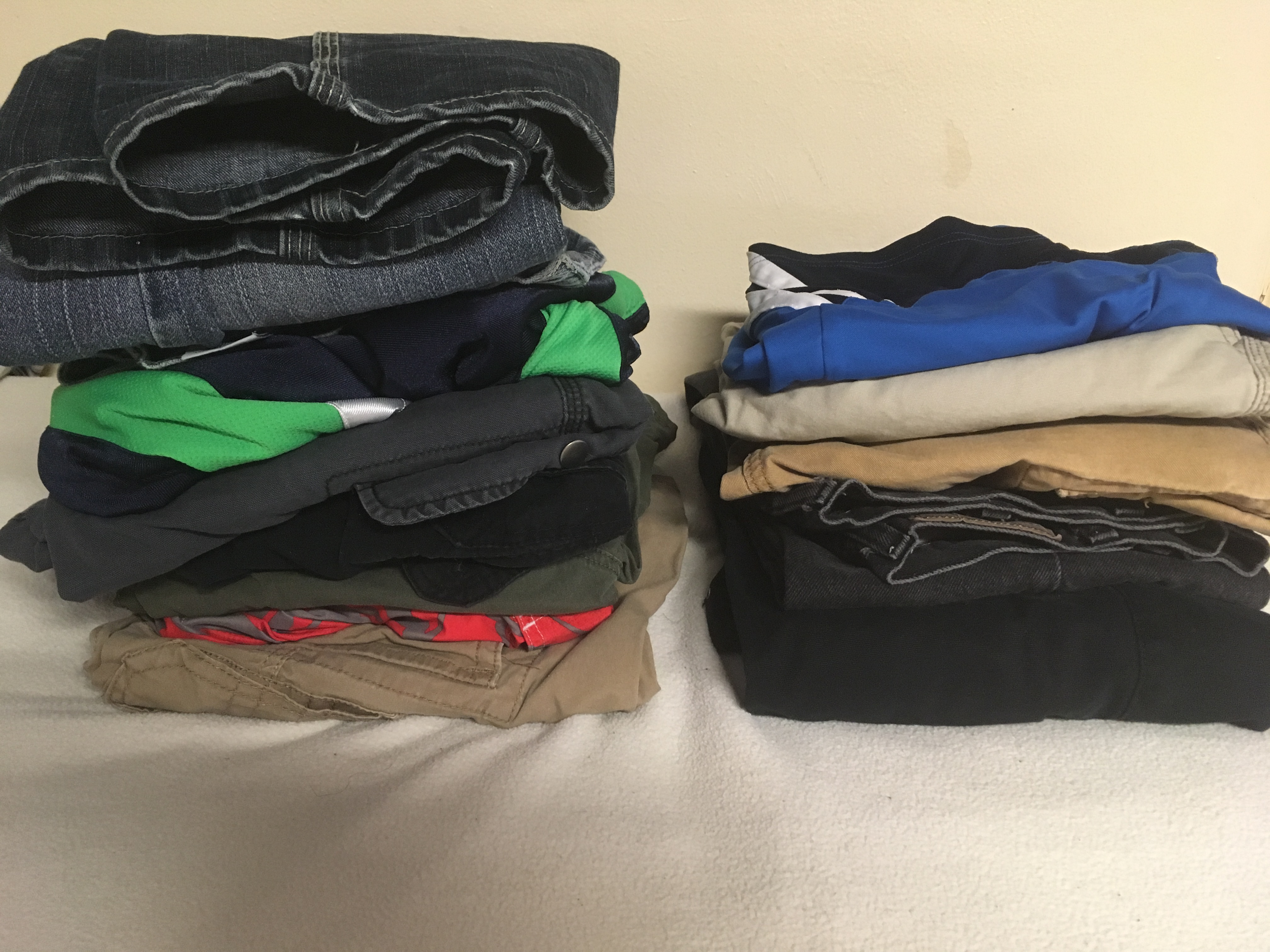
The next sub-category of clothing I searched through was my collection of pants. I began applying the joy test to my gym shorts, and I noticed that I was discarding the gym shorts which did not have any pockets. To be honest, I do not know why I purchased these types of shorts in the first place. In addition to not providing any sense of excitement when holding each pair of shorts, they did not provide an essential function of housing my phone while listening to music and exercising. However, organizing my other pants – cargo shorts, jeans, and running pants – was a different story. In stark contrast to my gym shorts, there is little differentiation in color and design between my jeans and cargo shorts. They all fulfill the same purpose each day, so I wondered why I had purchased so many similar pairs of pants. I ended up keeping two pairs of jeans, two pairs of cargo shorts, and one pair of gym shorts, whereas I started with four pairs of jeans, six pairs of cargo shorts, and three pairs of gym shorts (reference figure 6). The pants I discarded I felt did not carry any experience with them. In other words, I did not have any distinct memories with the pants I removed from my wardrobe, so I did not have any feeling of regret. The pants I decided to keep held some sentimental value, bringing back fond memories of past work-related experiences, entertainment events with friends, and competitions in high school sports.
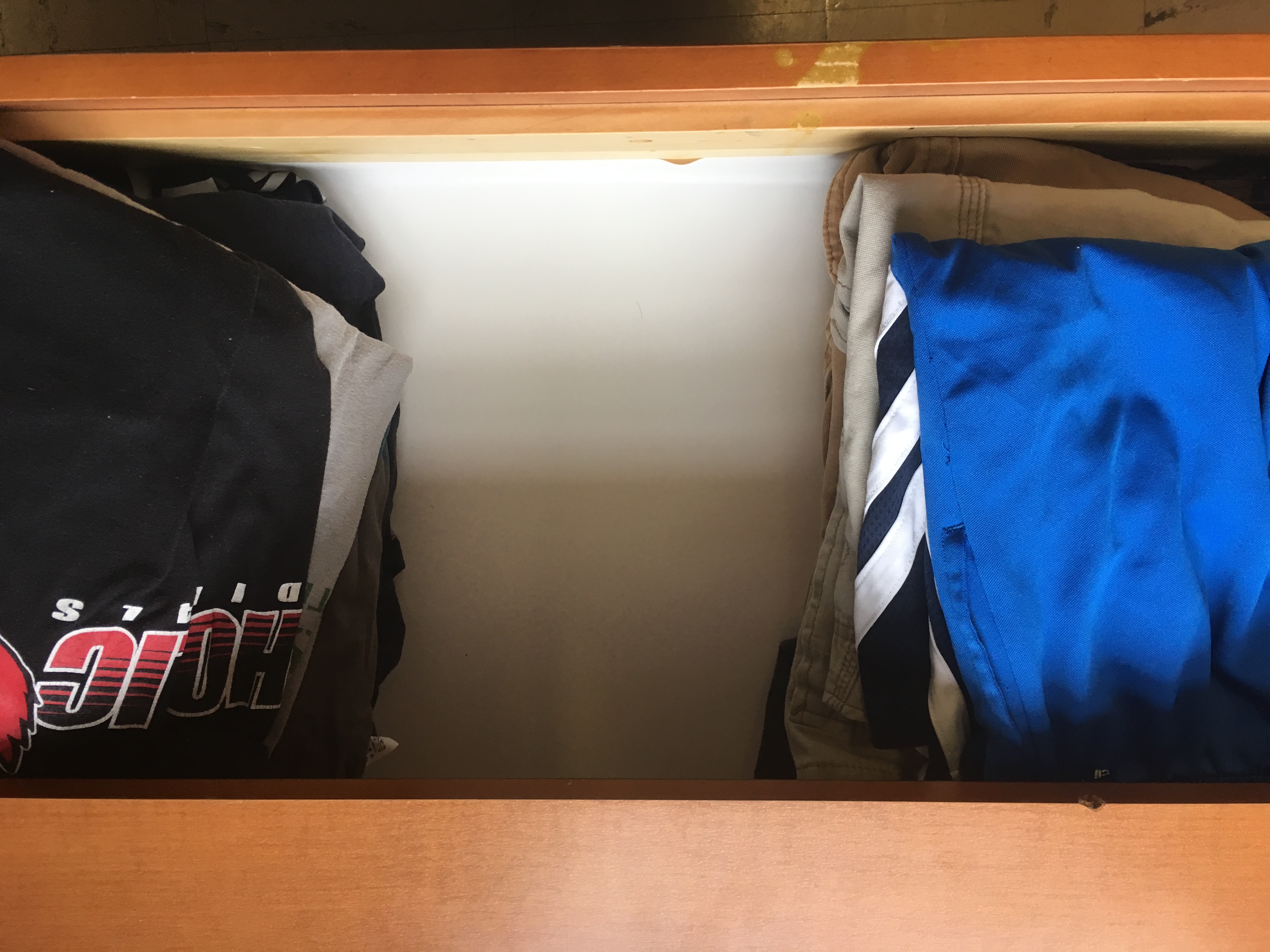
After reading The Life-changing Magic of Tidying Up, I was skeptical of whether this method would work in an experiment with clothing. I initially thought it would be difficult to part ways with a lot of the clothing I had brought to school, but it turned out to be a simple task. Marie Kondo’s method for sorting through personal belongings also helped me in an indirect way: as an engineering student, I am always looking for new efficient methods to organize my personal belongings, and while I felt that I had a nice organizational system for my clothes where I was utilizing every inch of space in my wardrobe, by employing Marie Kondo’s method, I ended up creating more room in my wardrobe (reference figure 7). This brought joy to my face, knowing that I had kept the meaningful items in my life, while downsizing and removing the clutter which had taken up valuable space in my wardrobe. This lesson taught me that there is a different relationship and story with each item I save.
 The Materials of History, Thought, and Art
You must be logged in to post a comment.