I decided to tackle the clothing category for this assignment. I partially chose this category because it is the first one discussed in Marie Kondo’s book. I also believe that tidying up my clothing made the most sense, as I do not have most of my books or sentimental items with me at school. As for papers, I finally decided to start throwing them away after finals last semester, when I had the realization that I have never looked at any of the papers I had kept from both freshman and sophomore year.
Prior to attempting the KonMari method I was feeling a little bit nervous. I’ve tried to organize and minimize the amount of clothing I have many times. Usually I have a lot a trouble getting rid of clothes and keeping them organized. I often make excuses for keeping clothing, such as, “I may need this one day”, “I’ll wear it soon”, “I’ll wear it when it gets warmer”, etc. It took me a while to finally dive into my clothing, as I expected it to be a long and daunting task. However, once I began, I found myself sorting relatively quickly what items I wanted to keep based on the joy test.
I started with many more items than I anticipated (I had no idea my closet could fit so many clothes) and ended with several empty hangers. I went from around 70 items to about 50. While going through the clothing, I felt as though I lacked any sentimental feelings towards any of the items. There were two exceptions, a green jacket that I found in a thrift store that reminds me of the television show Freaks and Geeks and a shirt I received for being initiated into an organization. I believe this lack of attachment was mainly because I only went through a subcategory of clothing (jackets, sweaters, and what I categorize as ‘nice’ shirts). I have a plethora of t-shirts and a few sweatshirts that hold a high sentimental value.

A pile of clothing I started with 
The clothing that sparked no joy
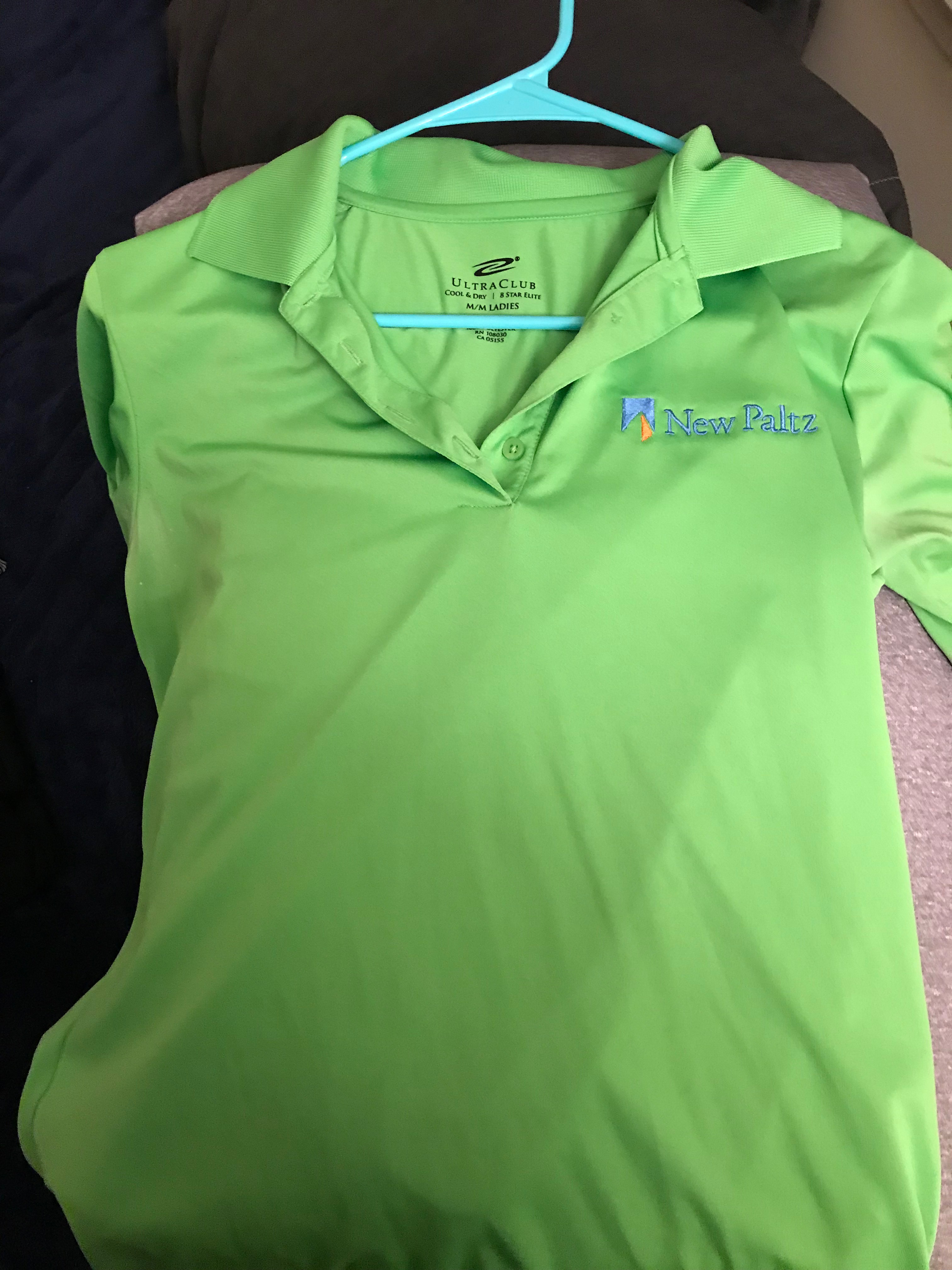
I found the joy test to be helpful when it came to certain items, however, there are items that are necessary for me to keep regardless of how I feel about them. For example, I have two polos that I need to wear when I work certain events. One of the polos is particularly ugly (pictured). While this item certainly brings back fond memories and makes me laugh, I have no reason to keep it when I no longer work the job that requires it. I also found myself keeping items that failed the joy test when they were things that I wore frequently, such as plain black or white tank tops. I found that with items like the tank tops, functionality outweighed joy when it came to deciding what to keep.

It was definitely a nice experience to go through the clothing I have at school and I intend to try this method again when I return home. Most of my clothes for the warmer weather are not here and I think that I could tidy up much more when I have access to them. I enjoyed thinning my closet and making it easier to find the clothing I chose to keep through reorganization. I would like to try a more thorough version of the KonMari method in the future.
 The Materials of History, Thought, and Art
When sorting through my clothes, I come up with those same reasons in my head as justifications to keep items, all contingent upon the “what ifs” that we can endlessly conjure up in our minds. I commend you on getting rid of old papers from previous classes–this is something I struggle a lot with. But, seeing how you clearly state that you haven’t looked at these items since, helps me confront that I need to get rid of the old notebooks and papers that I haven’t looked at in years. I also think your experience with this is really interesting–the fact that you went through clothes, such as your “nice” shirts, that don’t have much sentimental value. I feel like I would have had a similar experience if I went through my “nice” blouses that I would wear to professional settings, such as an internship. They definitely don’t stand out as much as some of my favorite t-shirts. I also think it’s interesting the way you talk about functionality over joy. My black, blue, and gray tank tops don’t necessarily spark joy, but I wear them almost every day in the cold months. This leads to an interesting point and question–can we have an item that feels like a necessity, that we use almost every day, and have it not spark joy? I feel like one would think that if you use something that much that it would make you feel more excited about it, but in this case, perhaps not.