
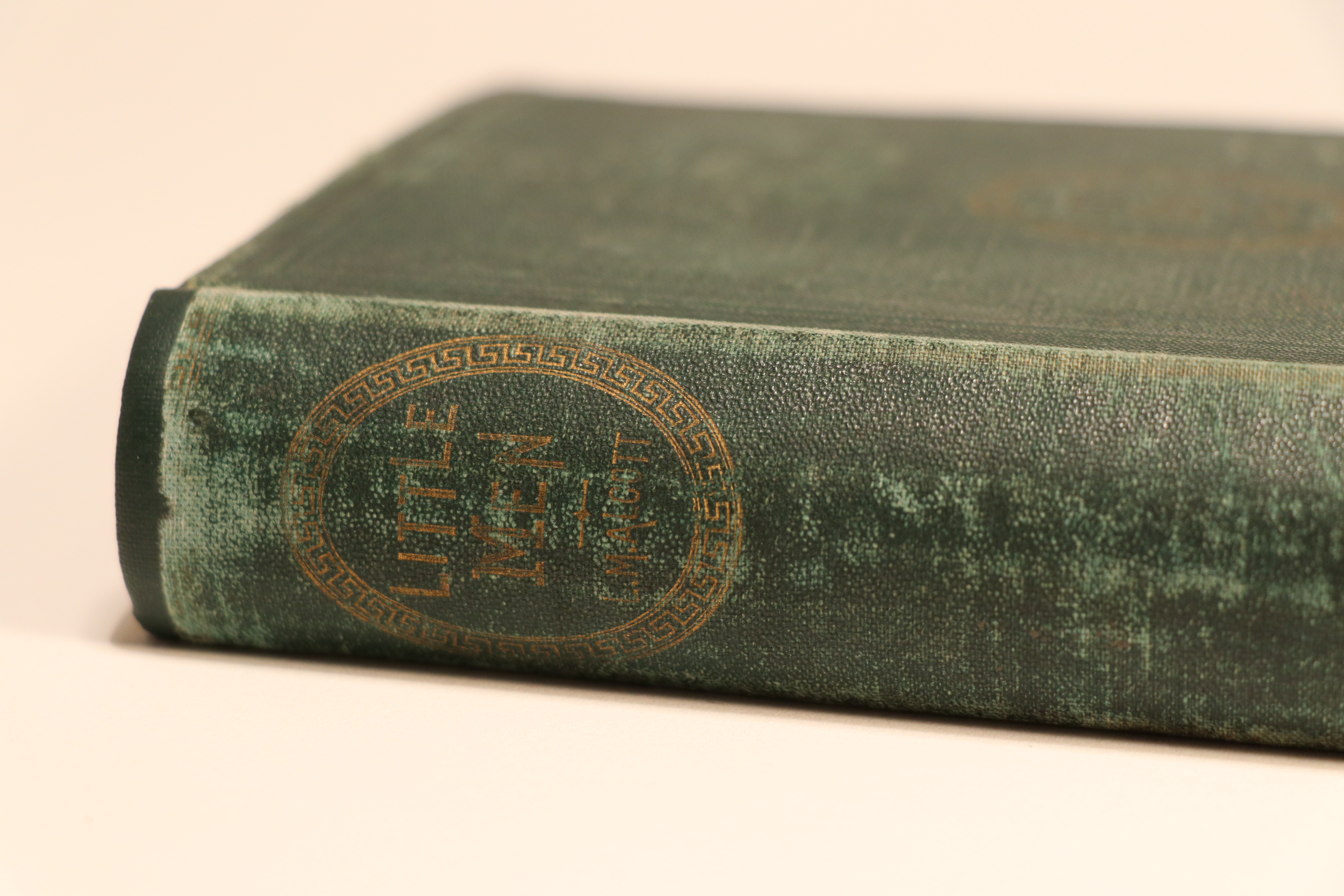
The object I have chosen to describe is my first edition copy of Little Men by Louisa May Alcott. My fascination with her novels and life started in sixth grade when I first read Little Women. I then started collecting nineteenth century editions of her books, many of which have come from New England–including her hometown–though some have even been sent to me from family in the South. This specific edition was printed in 1871 under the full title Little Men: Life at Plumfield with Jo’s Boy’s, making it the second oldest book in my collection. However, this book holds a special significance in that it is also one of my favorite stories in my collection. Additionally, it is of the same author and publishing company as most of my collection–the Roberts Brothers, located in Boston, Massachusetts. The book is five inches wide, six and three quarters inches tall, and one and one quarter inches thick, with 376 pages in total. It is a green clothbound book, though there were also purple and terra cotta books released in the first edition printing. Unfortunately, I do not remember where I acquired this specific book as I currently have 20 titles by Alcott, 12 of them under the Roberts Brothers publication.


Little Men is the second book of Louisa May Alcott’s (unofficial) trilogy, proceeded by Little Women and followed by Jo’s Boys. The narrative follows Jo and Friedrich Bhaer’s life at Plumfield Estate School where they raise and school a grouping of children–both those in the family as well as orphans. This specific edition has only one illustration found opposite the title page, which gives a portrait of each of the characters introduced in the novel.
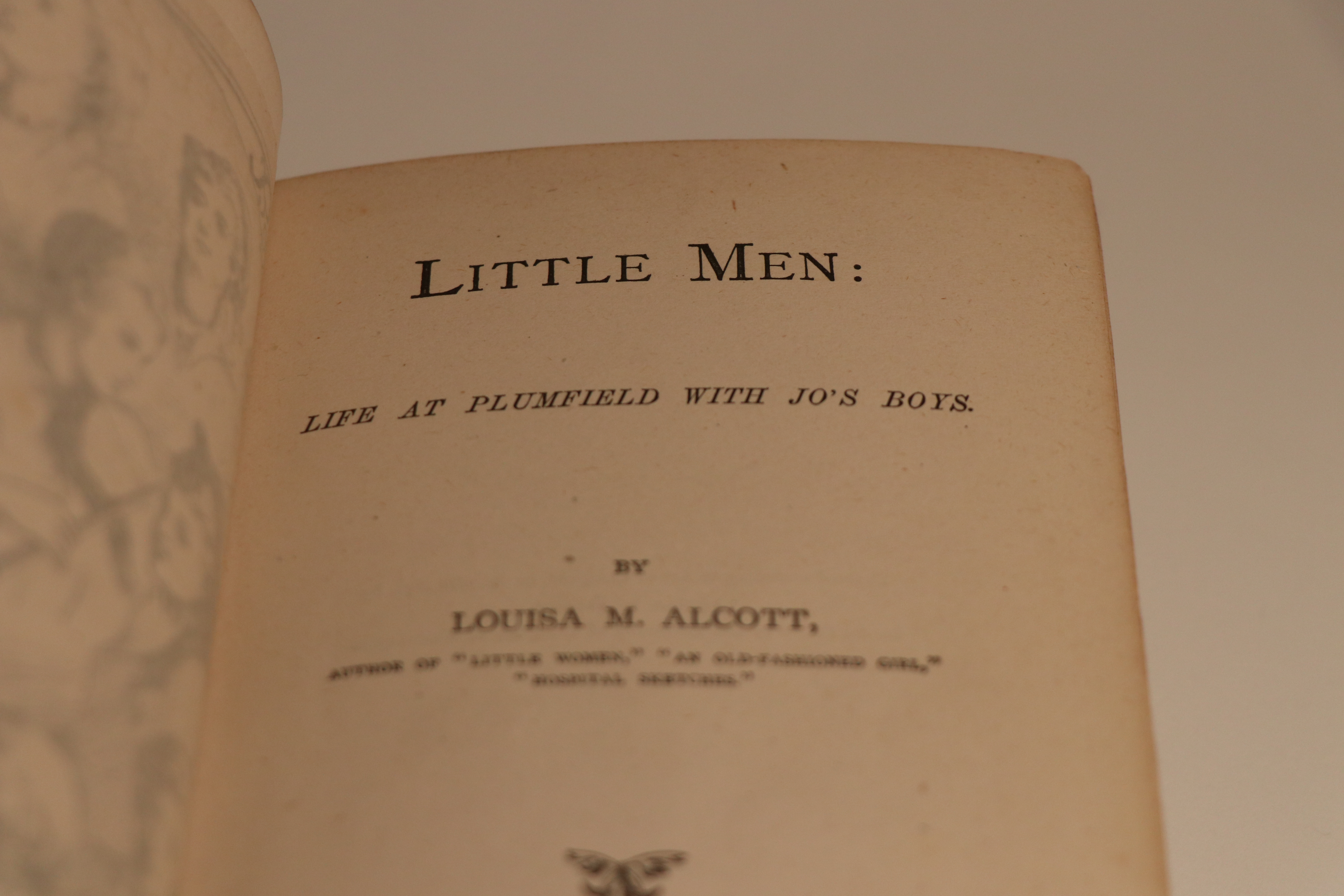
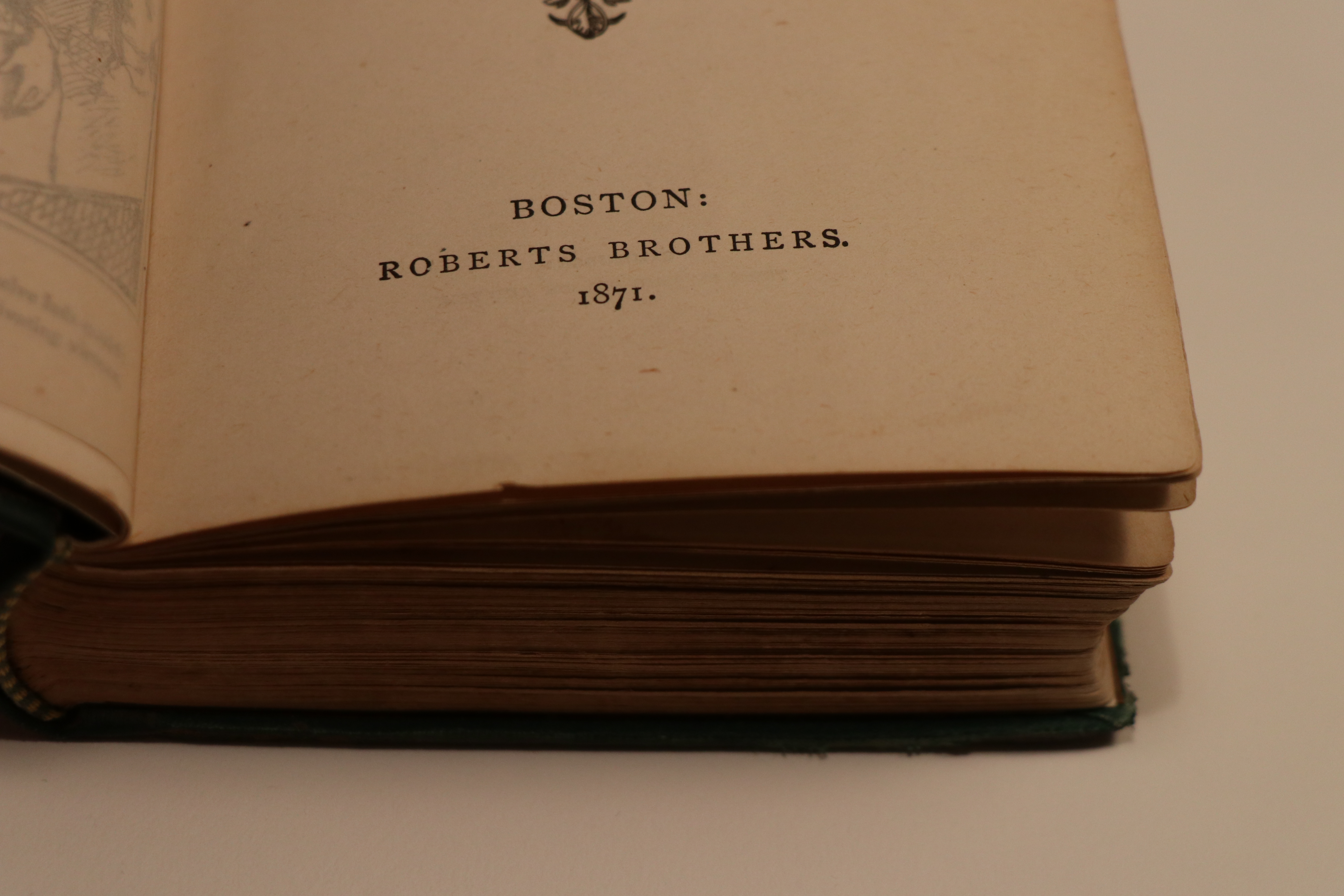
A few other details found in this edition which I like are the advertisements printed in the first four pages. They list three of Alcott’s other books, Little Women, An Old-Fashioned Girl, and Hospital Sketches and Camp and Fireside Stories, accompanied by their prices (each are $1.50) and reviews and press statements of each novel. On the fourth page is an announcement for the “nearly ready” Harriet Beecher Stowe book called Pink and White Tyranny, also from the Roberts Brothers Publishing. I find these advertisements interesting as in most of my other books of this era and publishing, the advertisements are found at the back of the book.

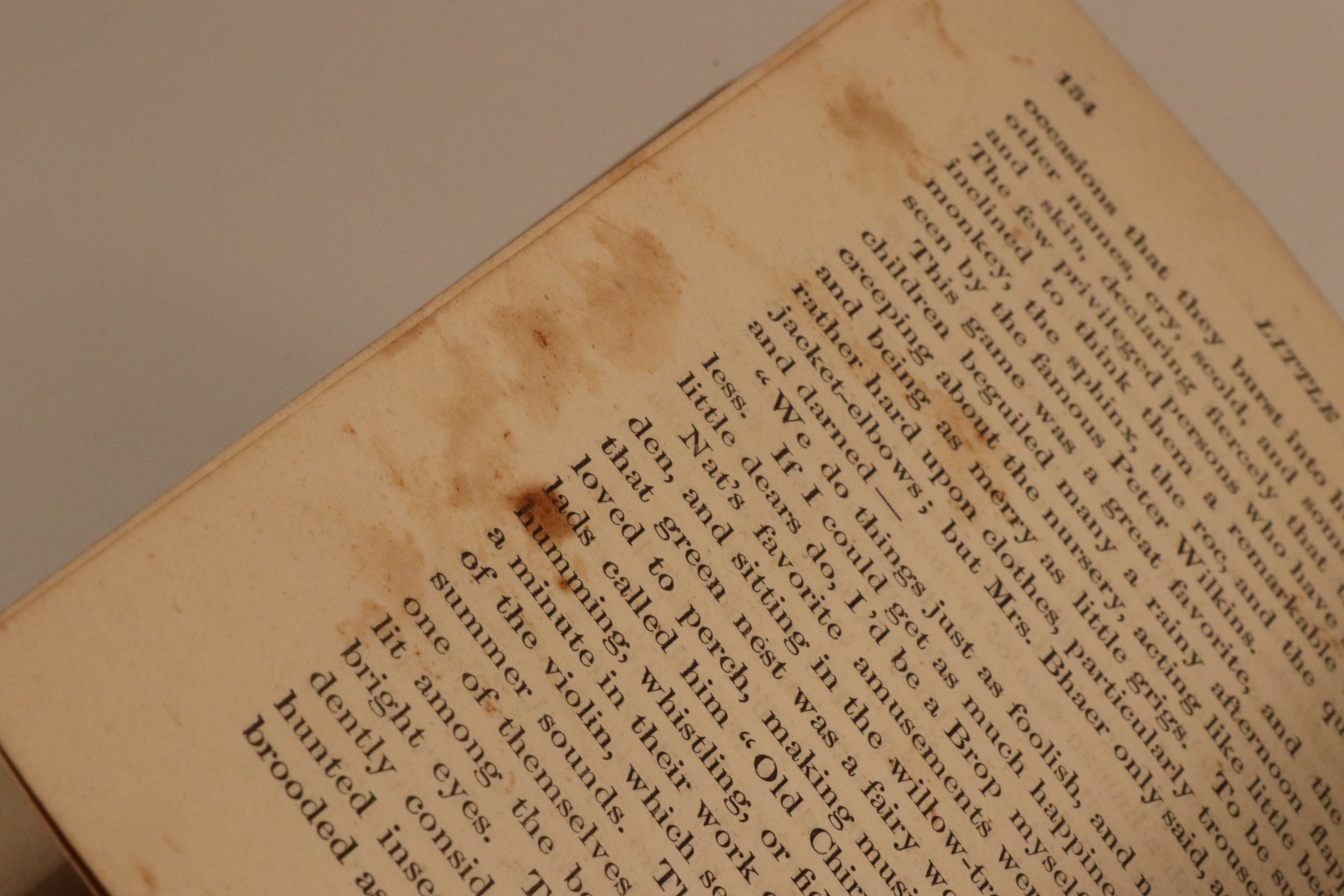
As it is nearly 150 years old, this book has some wear and tear found along the binding and along the front and back covers. There are also a few markings on the inner pages, ranging from writing by previous owners to other various stains on the pages. However, I find this book to be in surprisingly good condition for its age and popularity. Despite most collectors’ desire for their books to be in the best condition possible, I find the unique markings and acquired defects on old books to be some of the most interesting parts as it shows how the book has been passed down, used, and enjoyed. They often create a history of their own.
 The Materials of History, Thought, and Art
While my book collection does not consist of 19th century classics, I do appreciate your dedication towards acquiring novels written by Louisa May. It’s truly remarkable to see how the binding is still in great condition, considering some of the books I own, which have been printed within the last twenty-five years, are falling apart because the spine of the book is collapsing. Additionally, when I file through assignments from last semester, I’ll find printed items where the ink has already faded, so it’s incredible how the ink appears to have kept a fresh look over the course of its one-hundred-and-fifty-year life span. I also found it fascinating how you prefer to see a little wear and tear in the books you collect. I never thought about each stain, tear, or pencil marking from another owner to describe the book’s own history. When I think about it that way, it adds a whole other element to a book’s value. Well done!
I love how you can see the markings of history in your copy of this book. Your description and photos are so vivid that I feel as though I could have been holding it right in front of me. Something I find incredibly fascinating is the printing of the price of the other books, “$1.50”. While I know the value of money has greatly changed over time, I do not believe it has changed drastically enough to make the $1.50 equivalent to the price that books such as this one now go for. I did a quick google search and in the small amount of copies of this book for sale that I found, they were selling for anywhere between $75 and $400 depending on the books condition. I feel as though this value increase is a pristine example of how age can make objects more monetarily valuable..