It’s a bowl. It sits on a shelf in my library, catching a son’s pants pocket contents. Weighing in at three pounds, it is approximately nine inches in diameter and three and half inches deep. The vessel started as a block of brownish red clay, shaped into a circle. Not created on a pottery wheel, it was formed by hand with coils of clay, rolled out and wrapped on and upward from the slab, added two to three rounds at a time, then covered in plastic wrap to stay moist. When the desired height was achieved, the ropes were smoothed by hand. With a day’s worth of drying time in between, the bowl took about a week to form. Once the desired shape was completed, the piece was thoroughly dried.
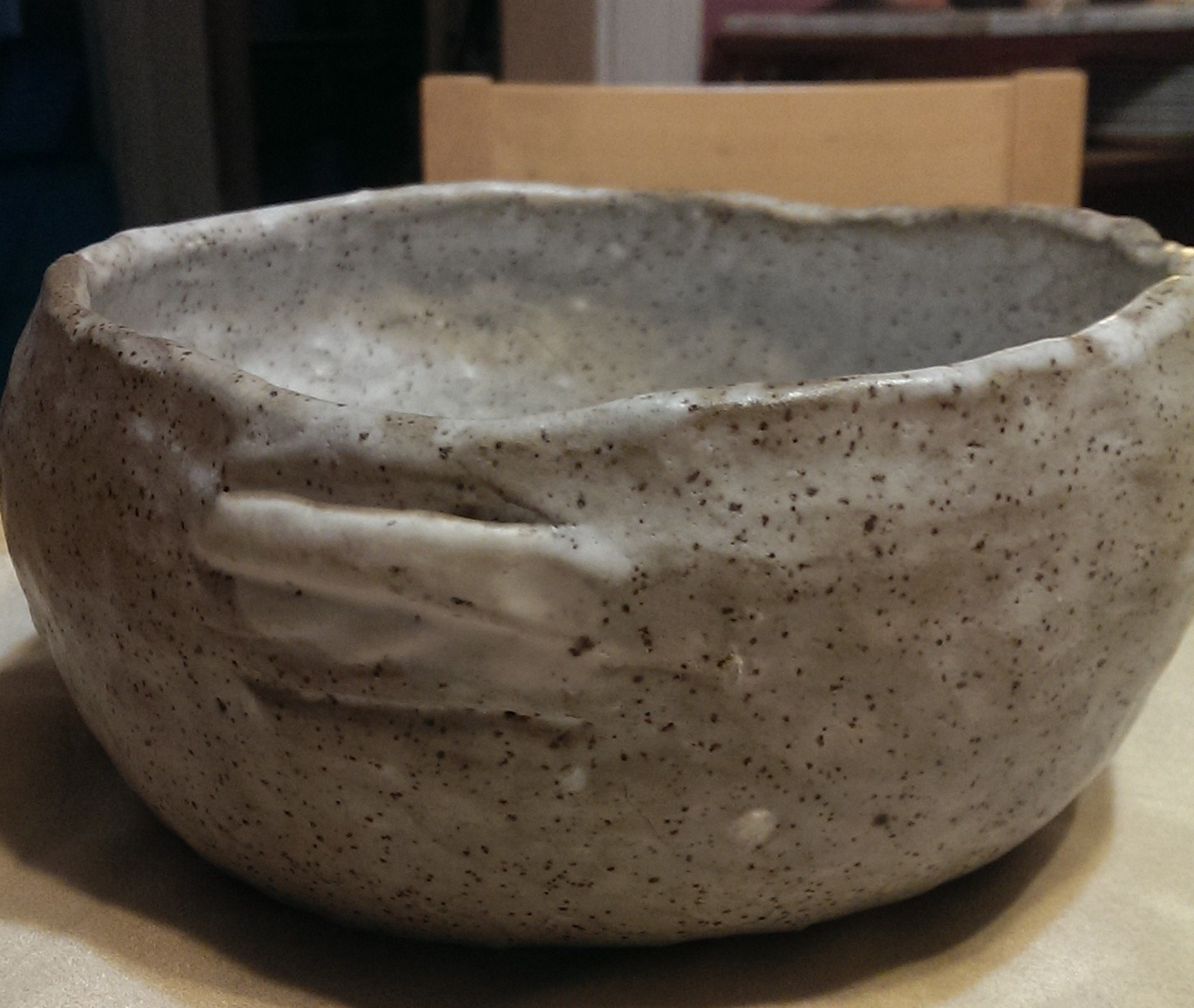

With this step completed, a glaze was chosen which was made of lime, talc, manganese, feldspar, zinc, and tin, the last ingredient making the glaze white. Everything was mixed together in a bucket. The bowl was dipped one half at a time. With the clay being so absorbent, one needed to move quickly in the application, wiping off the liquid so it didn’t coat the vessel’s base. The lead free glaze ensured the bowl would be food safe. The piece dried for one to two more weeks, kiln fired for 24 hours, cooled for another day, then removed from the oven. Although the surface was dull, the final result was similar to a glass coating.

Upon closer inspection, the bowl definitely looks handmade. It is quaint and rustic. It’s finish is uneven: a little white, a little beige, with darker brown speckles. A small area by the rim has some of the coils peeking through a whiter, glazed area. Running one’s hand over the bowl, it feels cool and a little uneven. There are no chips or areas of wear. It is sturdy but would break if dropped.
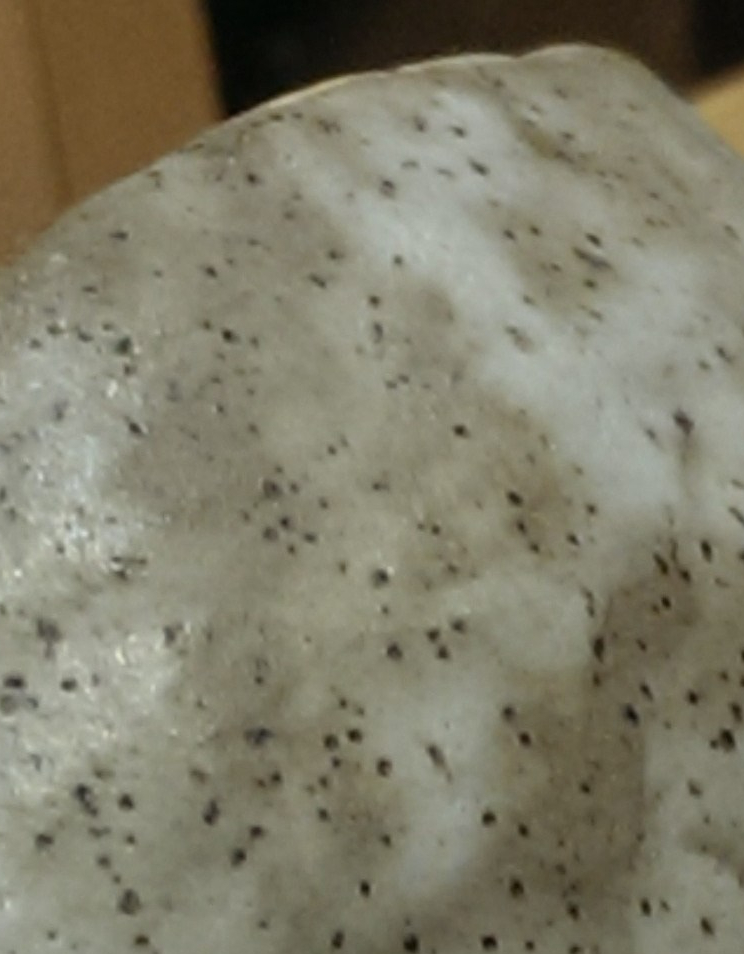
So you might be wondering, why write about this piece of pottery? What makes it so special? The thing is, it was made by my late mother, Ute. She left very few things behind when she died. This bowl is precious to me because it came from her hands. As she smoothed the clay roping, she left imprints of her fingers in the surface, especially around the base and the rim. This is similar to hand forming the edge of a pie crust. The added bonus is her signature in its base.

I was able to gather this information about how this bowl came to be during a visit with my mother’s best friend Lynne, on what would have been my mom’s 77th birthday. Lynne is a professional potter. For the last four decades, she has created pieces in clay and porcelain almost daily. The quality of her work is truly extraordinary and art gallery worthy. She taught my mom all facets of this craft and happily shared her recollections. We laughed, cried, and remembered just how one-of-kind Ute was. This vessel holds more than odds and ends; it overflows with memories. I hope it ends up with one of my children, a gentle reminder of a grandmother they never got to meet, but who’s known to them through stories, photos, and a lovingly handmade earthenware bowl.
 The Materials of History, Thought, and Art
You must be logged in to post a comment.