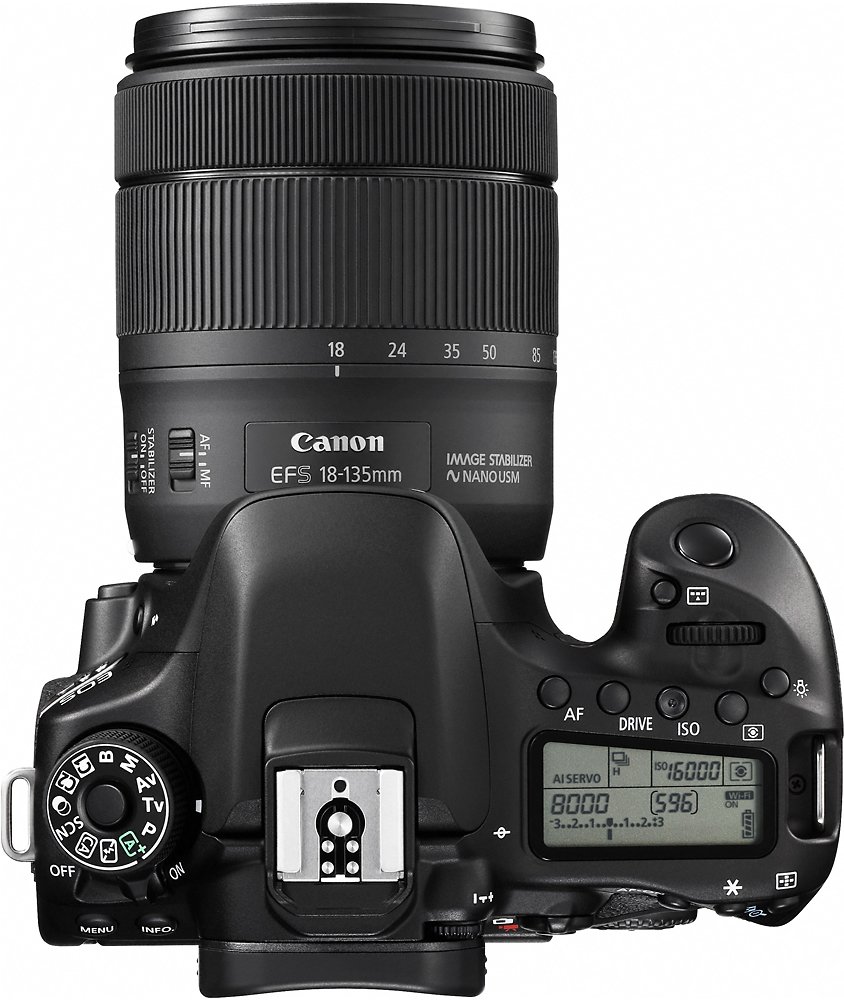
A few months ago I made the decision to upgrade my DSLR. I had previously used a Canon t3i which I bought in 2013. Though this was a great beginner camera for me, I started taking more advanced photo and video classes and wanted to have more control as well as more advanced video capabilities. I had already researched many Canon cameras for the last year or so and I basically knew which one best fit my needs- and was closest to my price range. This was the Canon 80D, a 2016 model but the newest and most advanced of its series. It is still not considered a professional grade camera, but rather an “enthusiast-level” DSLR, with 24.2 megapixels and ISO capabilities from 100 to 16,000.
The specific camera I bought was from Best Buy and was part of a package deal from Canon which included the camera body, an 18-135mm lens, a battery, charger, and a generic strap. This package does not include a memory card, which is necessary to use the camera. In this post, I will primarily focus on the camera body. It measures 5.47 inches wide, 4.14 inches in height, and 3.09 inches in depth. The body weighs 1.43 pounds–which I will admit is one of the negatives about the model, especially with the lens attached. It is a significant increase from my last model and leads to quicker arm and hand fatigue, especially in more difficult shots or angles. The body is made out of plastic, metal, glass, and rubber.
Canon was founded in 1937 in Tokyo, Japan. Canon currently leads as top camera manufacturer, and most of these cameras are made at the manufacturing facility located in Oita, Japan.When researching where and how my camera was made, I struggled to find specific information. The Canon website, both USA and international, has a lot of information on their corporate mission statements, environmental social policies, and how their products cater to a multitude of lifestyles and industries–but very little information of their own factories and workers. On the global website, Canon describes its manufacturing as a “globally optimized production system in which we determine ideal production locations based on such factors as costs, taxes, logistics and labor.” They also speak about the importance of building employee skill sets. While I was initially a little suspicious of their lack of transparency in their specific operations, I was able to find PDF downloads available on their website which described their extensive policies and records on labor, sustainability, and other responsibilities. Though I still cannot find information on the exact process of manufacturing one camera, I do respect their environmental efforts and commitment to their customers with each product developed. Many other large corporations use their power and resources to get around certain ethical practices such as labor environmental standards, let alone prioritize and have pride in them.
While this research exercise did not give me all of the answers I was looking for, it made me more cautious and aware of where my products come from and the morality of each purchase, as well as all of the work and research that goes into each Canon camera as well.
Sources:
https://global.canon/en/index.html


 The Materials of History, Thought, and Art
I love photography too and I wished I owned a DSR camera! i really loved your description about the background of the camera and how it was upgraded for you. It’s cool to see a company develop a camera that they know many people will use so they make sure it’s affordable and it’s made well.
I really enjoyed your post! It was interesting to learn more about the background of these types of cameras. Very cool to learn more about the company!
I would really like to buy a nicer camera one day and so I appreciated your description of this one! I did also like how you discussed how it was difficult to find all of the information you were looking for about the product’s manufacturing process; while I was researching a company for my own post, I was only able to find “good” things about the company, like how they do charity work and are environmentally conscious, but I doubt that there are no negative aspects. While it is obvious that all large industries definitely have details that they want to hide, I do find myself being more aware and even suspicious of the companies I buy from.