Carly Walsh, Olivia Porcari, Helen Zhang, and Ellie Condelles
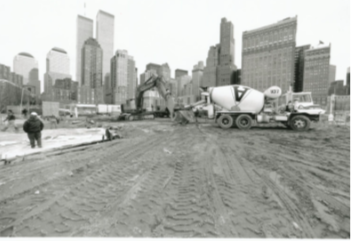
The Museum of Jewish History began construction in 1994, after years of planning, designing, and gathering materials for the collection. Located in Battery Park in new York City, the museum is close to the statue of liberty and the world trade center memorial. Elie Wiesel was an honorary chairmen of the collection and part of the dedication ceremony on September 11, 1997. His contributions to the collection as a Holocaust survivor were a true inspiration to the museum, and continue to inspire after his passing in 2016. Wiesel’s memory was also honored during the museum’s 2017 International Holocaust Remembrance Day, where they paid him tribute through a live streaming of his book, Night. The Museum of Jewish History opened officially on September 15, 1997, with the mission to continue to educate others about Jewish life before, during, and after the Holocaust, focused on teaching the painful ways of the past to guide visions towards a worthy future.

The museum’s original cost was over $20 million dollars, not including expansions made to the collection over the years. Funded by generous supporters including, Heritage Members, Benefactors, Patrons, and Sponsors, the museum has a strong connection to the community. Tickets range from $8-$25 depending age category, whether or not you are a museum member and type of tour, providing visitors with a variety of options to choose from when planning a visit.
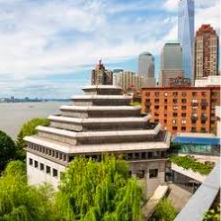
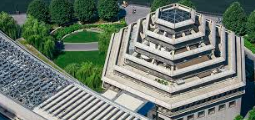
Every aspect of The Museum of Jewish History is designed to tell a story. It’s expertly crafted architecture speaks to the museum’s commitment to Jewish life and culture. The building’s six-sided shape and six-tiered roof rising 85 feet in the air are reminders of the six million Jews who perished in the Holocaust, as well being reminiscent of the six-pointed Star of David. The location and physical environment of the museum were carefully chosen and planned: the museum overlooks the Statue of Liberty and Ellis Island (a reminder of American values) and is only minutes away from the 9/11 memorial (an ode to other tragedies). Wagner Park, adjacent to the museum, is conducive to the Hudson River landscape while still reflecting the Jewish concept of mysticism. Inside, the core exhibition is separated into three distinct parts, organized chronologically: Jewish Life A Century Ago, The War Against the Jews, and Jewish Renewal. The first floor explores vibrant and multifaceted Jewish life in the late 19th and early 20th centuries; covered such topics as life cycles, holidays, community, occupations, and synagogues; the second relays the history of the Holocaust from the point of view of Jews who lived through it, using their own artifacts, photographs, testimony, and historical footage; and finally the third focuses on how Jewish individuals and communities rebuilt their lives after the Holocaust and continue to thrive in the 21st century.

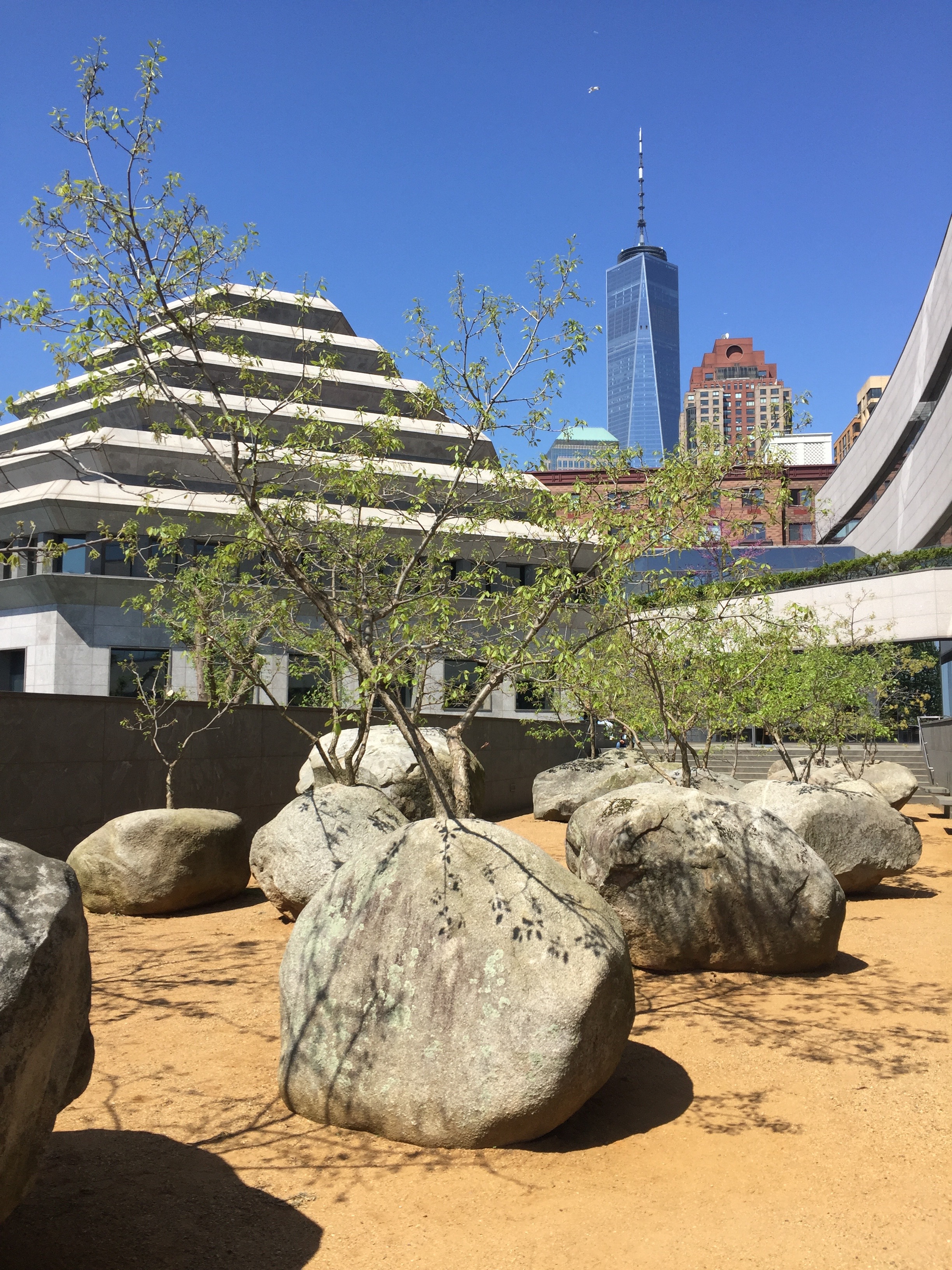
The Garden of Stones is the most popular collection piece at the museum. Andy Goldsworthy wanted Holocaust survivors to see that there is still life and beauty after a genocide. The display is visible from every floor of the museum and has been placed outside on the terrace. Each rock has drill holes, where young dwarf trees are growing. They can grow up to 12 feet over a period of a decade. The trunk of the tree has molded itself into the stone, making it one and the same. When you look inside the hole, it’s not hollowed out, but rather the roots of the tree have inserted itself into the other parts of the rock. Andy Goldsworthy wanted his audience to see something impossible, like trees growing out of rocks. For a tree to grow out of a non-living thing, illustrates the ability for Holocaust survivors to grow even after what they have been through. A quote from the artist, “Amidst the mass of stone, the trees will appear as fragile, vulnerable flickers of life — an expression of hope for the future. The stone is not mere containers. The partnership between tree and stone will be stronger from having grown from the stone.” In other words, Andy Goldsworthy knew that trees can be seen as this vulnerable living organism, but it’s a living thing and therefore, it brings hope and life for the future. The stones are not just containers for the display, but rather supporters of the tree. Together they can be stronger, since they grew from each other. Andy Goldsworthy also meticulously chose the place of display outside the museum because in the distance, visitors could see the Statue of Liberty and remember the rush of immigrants into America, while remembering the lost lives in the building behind them. He wanted the visitors to see that there’s still happiness in mourning.
Eyewitness: Photographs of Holocaust Survivors is a collection of portraits of survivors who live in New York City. There are 31 photographs in the collection, which was the museum’s first public art installation. The images are all between four and thirteen feet high, filling the outside windows of the museum as well as the windows along the Reflection Passage on the third floor. The people in the images are members of the Museum’s Speakers Bureau and also served as the Gallery Educators. The first photograph is of Leon Gleicher, who survived the Holocaust, but lost every member of his immediate family: his mother, father, two brothers and younger sister. He was able to escape from a ghetto in Poland and ended up fighting with Russian Partisans. This photograph is an important part of this collection because it exudes notions of strength. The man in the photo is choosing to wear his yarmulke; he is choosing to reclaim his Jewish identity in a way that many may have been afraid to do. The smile on his face suggests contentment, and the wrinkles are the result of a life full of hardship and loss. The second photograph is a portrait of Inge Auerbacher. She is wearing the star of David, perhaps the star she was forced to wear doing the Holocaust. This star seems to be part of her identity. Her choice to wear the star after all these years speaks volumes to what she has experienced. During the Holocaust, she was forced to wear it as a marker of exclusion, isolation, and difference. Now, she wears it by choice to outwardly present her Jewish identity in a way she can be proud of. There are many more photographs, but we have decided to focus on these two.


The Museum of Jewish Heritage is a museum we recommend others to check out the next time they are in the city. There are lots of windows and natural light shining through, even though the lower levels are darker than the upper levels. Last time one of us went to visit the museum, the tour guide told us to be aware of our surroundings and how the light will change as we go up in the museum. The first floor was dark and had many artifacts and objects that were left from the Holocaust, people’s belonging and pictures of the concentration camps. As we ascended to the second floor, there was a little bit more lightening. When we got to the third floor, there was natural lighting and a few spotlights on certain photographs. The tour guide pointed out that the museum wanted to show that even though things were tough and ugly, eventually it got better, people survived and were able to tell their story to those who listened. On the third floor, there were artifacts and photographs from other genocides and how they were just as cruel and horrible. At one point, the third floor had wall to wall glass windows and doors where visitors could step outside to see the Garden of Stones. There was even a cafe where visitors could buy Jewish baked goods and sit and watch the Hudson River and the Statue of Liberty in the distance. It was peaceful and quiet on this floor and when visitors step out into the Garden, it’s a whole new space, that’s open and inviting. The Museum wanted visitors to see the devastation that the Holocaust had bought to many, but also the life it can bring when life goes on.
Bibliographies:
“Current Exhibitions.” Museum of Jewish Heritage, https://mjhnyc.org/current-exhibitions/.
“Eyewitness: Photographs of Holocaust Survivors by B.A. Vane Sise.” Museum of Jewish Heritage, https://mjhnyc.org/exhibitions/eyewitness-photographs-by-b-a-van-sise/
Rosenberg, Jennifer. “Museum of Jewish Heritage: A Living Memorial to The Holocaust.” 2 April 2017. https://www.thoughtco.com/museum-of-jewish-heritage-living-memorial-1779672
Shapiro, Benjamin. “Andy Goldsworthy’s Garden of Stones.” Museum of Jewish Heritage, 30 November 2017, https://mjhnyc.org/andy-goldsworthys-garden-stones/
 The Materials of History, Thought, and Art
You must be logged in to post a comment.