The Estate of Cornelius DuBois from 1816 details the belongings from his farm and farmhouse in New Paltz New York. A descendent of Cornelius DuBois, Jennetje, a granddaughter of Cornelius married Jacob Hasbrouck. The Hasbrouck family has ties to the original Huguenot settlers in New Paltz. Cornelius DuBois helped build the DuBois Stone House on 347 Main Street in Catskill New York which is now a historic house in the area. The DuBois family was also part of the early settlers in the area. During this time it was very common for farms to have slaves and the DuBois family was no exception. Part of the Estate details specific slaves that were considered property of Cornelius DuBois.
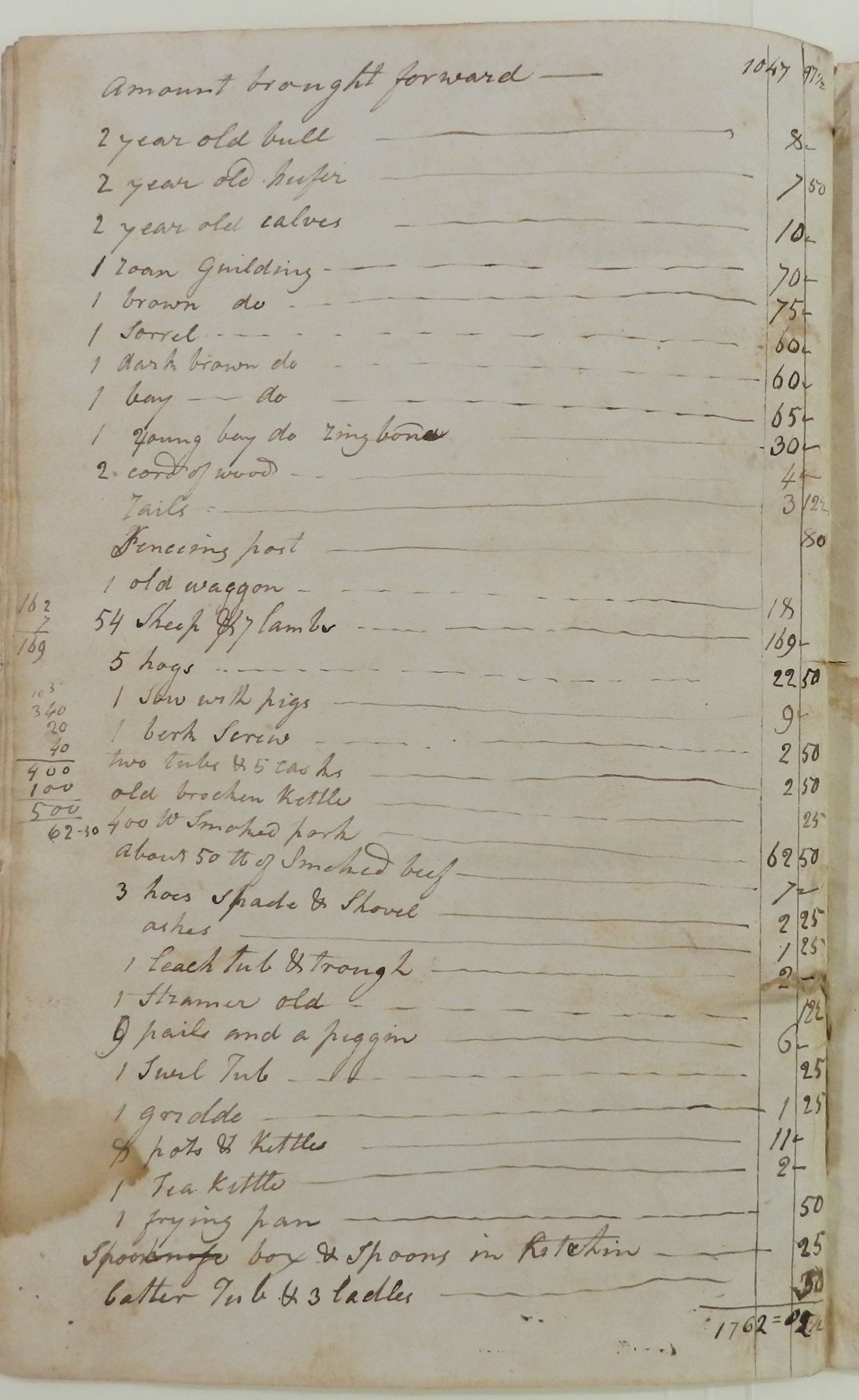
The itinerary of the estate includes a vast number of belongings from horses to broken tea kettles. The objects included in the estate give insight into the ins and outs of farm life in New Paltz during the 1800s. Agriculture has long been a prominent system in New Paltz and continues to provide many inhabitants with economic stability. Farms in the area were established early on which meant the designs were outdated in comparison to areas that were settled later. The structures on farms were geared toward drying wheat and then started to be remodeled in the mid-1800s to accommodate more hay that was demanded with the growth of many farms. The DuBois estate had some cattle but more horses at the time of Cornelius’ death. This fit into the period of New Paltz history when horses were needed for almost all day-to-day tasks that humans could not complete. With the invention of tractors and other machine-powered equipment horses became less prominent.
In the document, horses are listed as a “do” which means horse. Several dos are seen throughout the estate with varying price tags. A “dark brown do” was priced at 60 dollars while a “brown do” was priced at 75 dollars. The health of the two animals likely played a role in their pricing. A sorrel is also listed which describes the coloring of the horse’s coat. These horses usually have a reddish color with little to no black coloring. The document provides no insight into what each horse was used for, but their prices are good indications of their age and health.
The structures on farms are dictated by the animals and crops being utilized on the property. Larger farms often included structures used for appliance maintenance and machinery storage. In the document, many of the items probably resided in the barns like the harnesses for horses that are listed. They are a pivotal part of making use of the animals in that they attach to plows and wagons used on the farm. The harnesses were priced at 6 dollars which shows the high quality of the equipment. These farms had shops and garages that required the construction of new structures. Stables continued to be needed in that horse-drawn carriages were still utilized by many families in their endeavors. The remodeling came a bit after the death of Cornelius DuBois, so they were not found on the particular estate.
Hay production on farms in New Paltz was a major source of income for many farms. In the estate, hay barns make up a fair sum of money. The “hay in the barracks” was listed for 27 dollars which probably accounted for a large amount of hay. While the “hay in small hay house” was listed at 3.50 dollars which likely is a small amount but it held some value so it was put in the estate. Structures on the property were also geared toward the storage of hay. As mentioned, there was a small hay house and a large hay house both of which contained the valuable commodity. The demand for hay in New York City grew as the city developed. Hay was used to feed horses and when railroads were getting laid in the area the demand for hay grew. Horses were a massive part of the community in that they dictated the crops grown and allowed daily operations to be run smoothly.
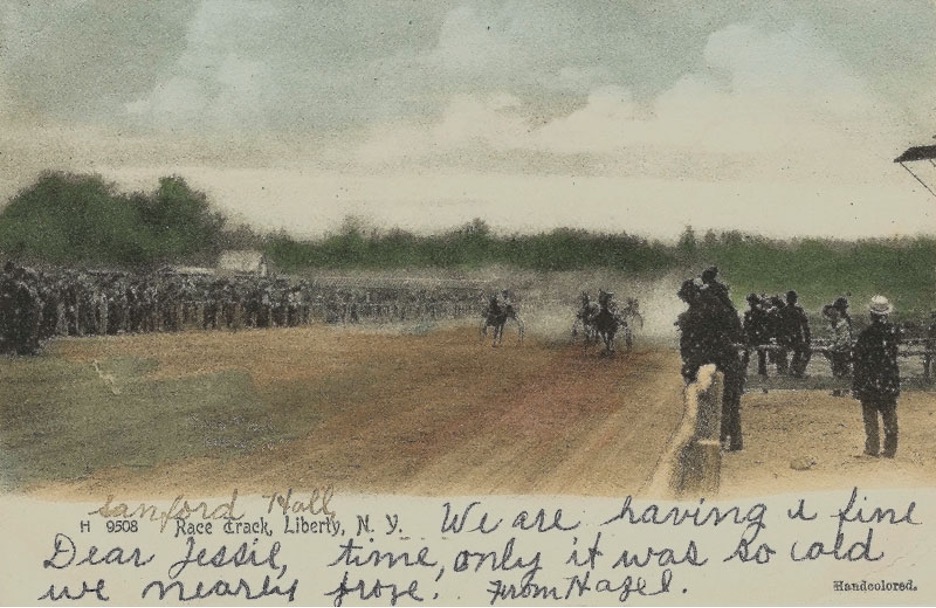
Horses were also involved in entertainment during this time in the form of a racetrack. The racetrack in Wallkill is thought to have begun on July 5, 1897, according to Historian Klinkenberg. It was a half-mile track that ran during the summer where thousands of people often congregated. The horses listed in the estate most likely did not race at the racetrack but instead were used on the farm.

Sources
“Dubois Family Association.” DuBois Family Association, Historic Huguenot Street, https://www.huguenotstreet.org/dubois.
Larson, Neil. “Village of New Paltz Reconnaissance-Level Historic …” Reconnaissance-Level Historic Resource Survey, Village Historic Preservation Commission New Paltz, New York, https://www.villageofnewpaltz.org/download/historic_preservation_commission/Historic_Preservation_Documents/I-Overview.pdf.
Wadlin, Vivian Yess. “Racing Hearts.” Abouttown, Abouttown Ulster, http://abouttown.us/articles/racing-hearts/.
 The Materials of History, Thought, and Art
You must be logged in to post a comment.