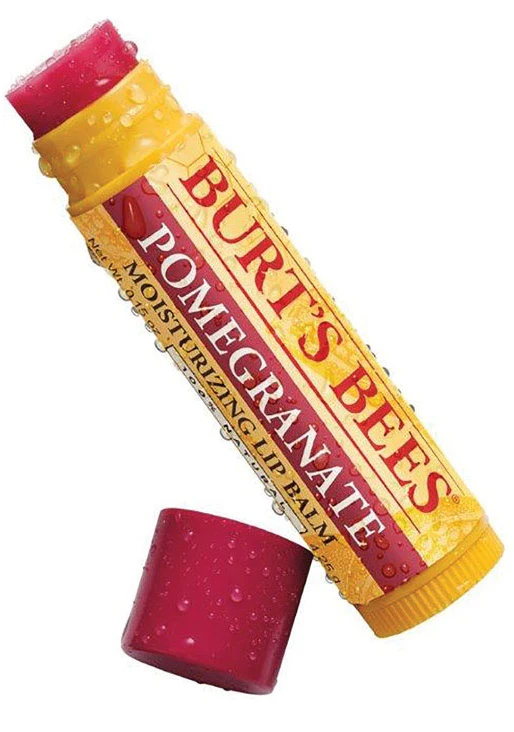
The annual struggle of frustratingly cracked lips has come to fruition as the seasons shift and the cooler air brings a dryer climate. And so I found myself in Top’s Market, digging through a small bin of chapstick to find my beloved Burt’s Bees pomegranate balm. The company claims to be founded on the idea that “bees are magical”, and what could be more magical than learning about the environmental impacts of your favorite products?
Burt’s Bees chapstick gets its charm from its use of “all-natural” ingredients, specifically beeswax, coconut oil, sunflower oil, vitamin E, rosemary leaf extract, and peppermint oil. The company prides itself on uplifting communities and its ambitions to improve sourcing practices, claiming 63% of waxes, butters, and oils to be “traced to origin and verified by on-site visits” (2022 Progress Report). Possibly the most iconic of these ingredients is the balm’s wax, being a heavily aestheticized and marketed part of this product. The company’s wax is sourced from Tanzania, whose opportunities in beeswax production and processing have attracted many buyers, most notably the European Union member countries, the United States, and Japan.
The Tanzanian beekeeping industry is estimated to employ 2 million rural people. The industry has such a presence that the Tanzania government developed the National Beekeeping Policy in 1998 to increase beekeeping’s contribution to the sustainable development of Tanzania and manage the conservation of the country’s natural resources for “the benefit of present and future generations” (Mwakatobe & Mlingwa, 2006). Here we see traces of the company’s claims; local workers continue to harvest the wax in traditional ways and are monetarily supported by the company’s donations. The journey of the wax is certainly taken for granted by consumers, as we have still not found the product’s final resting place.
Upon being harvested in Tanzania, the wax is shipped to a Burt’s Bees factory in North Carolina. Here machines mix the wax, add the other ingredients that were previously stated, and separate the mixture into the iconic honey-colored plastic tools.. According to their website, 100% of Burt’s Bees packaging is recyclable and the company is certified as carbon neutral. Beginning in 2021, the company switched to being powered by renewable energy and joined three different climate action communities.
Although the company’s website offers plenty of information on the recyclability of its packaging, information on where they source its plastic is lacking. According to Plastic Euope’s article on the process of plastic production, the material comes from “organic materials such as cellulose, coal, natural gas, salt and, of course, crude oil.” The dependence on crude oil for these productions may, unfortunately, cancel out the environmental efforts the Burt’s Bees company has made; oil production releases tons of pollutants into the air and oceans, causing things like ocean noise, habitat degradation and destruction, and interference in the lives of the people who are indigenous to the regions where oil is extracted (“Oil and Gas Development | Threats | WWF”).
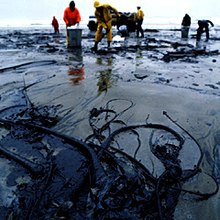
Oil spills are a frequent consequence of oil production, with an estimated 150 spills happening each year in U.S. waters alone. These spills are not just disruptive to the lives of animals but to humans, ruining public natural resources and causing detrimental impacts on local communities. Although the Burt’s Bees company has made efforts—much more than many other companies in the cosmetic industry—to reduce their environmental impact, tracing each aspect of the product reveals some not-so-magical effects of production.
Oil spills are a frequent consequence of oil production, with an estimated 150 spills happening each year in U.S. waters alone. These spills are not just disruptive to the lives of animals but to humans, ruining public natural resources and causing detrimental impacts on local communities. The United States makes up most of the world’s crude oil production, creating jobs for many working-class Americans, but we must ask ourselves the cost of this. Although the Burt’s Bees company has made efforts—much more than many other companies in the cosmetic industry—to reduce their environmental impact, tracing each aspect of the product reveals some not-so-magical effects of production.
Works Cited
“How Burt’s Bees Lip Balm Is Made | How Stuff Is Made.” Youtube, Refinery29, 27 6 2018, https://www.youtube.com/watch?v=bxnNdNzvp8M&ab_channel=Refinery29. Accessed 4 10 2024.
“Largest Oil Spills Affecting U.S. Waters Since 1969 | response.restoration.noaa.gov.” NOAA’s Office of Response and Restoration, https://response.restoration.noaa.gov/oil-and-chemical-spills/oil-spills/largest-oil-spills-affecting-us-waters-1969.html. Accessed 4 October 2024.
Mwakatobe, A., Mlingwa, C., 2006a. . “Tanzania-The status of Tanzanian honey Trade- Domestic and International Markets”.http://www.tanzaniagateway.org/docs/the_status_of_tanzanian_honey_trade_markets_nov2006.pdf (accessed 10.4.24).
“Oil and Gas Development | Threats | WWF.” World Wildlife Fund, https://www.worldwildlife.org/threats/oil-and-gas-development. Accessed 4 October 2024.
2022 Progress Report. July 2020-June 2022 ed., Burts Bees, 2022, https://assets.ctfassets.net/96vm5wjuyy9f/BuxfFMaAhcZ2GmcukZaGh/485cc2b1722b49554109106cdcb98aaf/2022_BB_ProgressReport__1_.pdf.“Which country is the largest producer of plastics?” Milan Polymer Days, https://www.milanpolymerdays.org/blog/which-country-is-the-largest-producer-of-plastics. Accessed 4 October 2024.
 The Materials of History, Thought, and Art
Hi Makayla! This is a really awsome piece, I really enjoyed your use of tone and narration throughout. This writing was very insightful and full of important research and information that I myself never really set my sights into. You have definitely opened my cursiosity to take a further look into health/ beauty products that I myself use.
I felt this was a great object as lip balm is designed for anyone that wants to address a common need of dryness. Being more transparent would benefit the company. As they are a more expensive lip balm company because of their focus on natural products they consumer should know this information if they are paying more money for the product.
Hi Makayla! I love this piece and the research you put into it. I’m guilty of having a Burt’s Bees collection myself, so it’s crazy to see the impact the company and production of the chapstick has on the environment.
Hi Makayla! This was so well written and intriguing to read. It’s disappointing to see the factors that have canceled out Burt’s Bees attempt to increase their environmental efforts. I love how much research went into this and it was truly organized well!