Colonial Revivalism in the Deyo House: The Purpose of a Print

IMG_1716

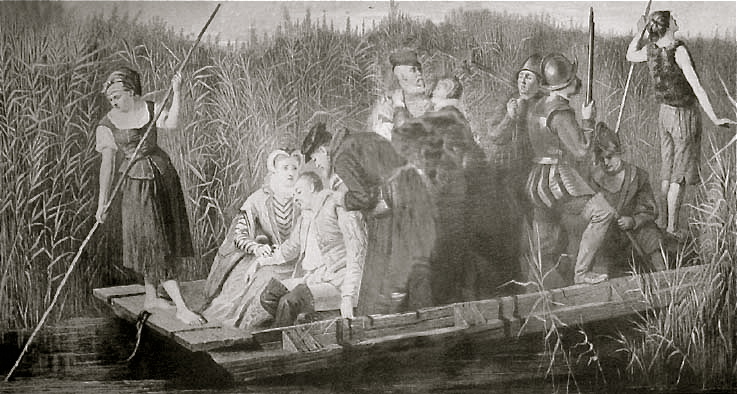
This late 19th century print depicts a romanticized scene of the Huguenots as they fled religious persecution in France. It is one of three such images in Abraham Brodhead’s office that act as a visual reminder of his cultural participation in the Colonial Revival movement that once swept through the Hudson Valley. (Personal Photo)

“Escape of a Huguenot Family after the Massacre of St. Bartholomew”

London published June 1st 1880 by Henry Graves & C° the proprietors publishers to HM the Queen and TRH the Prince & Princess of Wales, 6. Pall Mall – copyright registered. Entered according to Act of Congress in the year 1880 at the Library of Congress in Washington.

Engraved by J. Scott

Printed by Holdgate Brs.
boatpicture

“Escape of a Huguenot Family after the Massacre of St. Bartholomew” (Courtesy of betheafamily.org)

Caption: This late 19th century print depicts a romanticized scene of the Huguenots as they fled religious persecution in France. It is one of three such images in Abraham Brodhead’s office that act as a visual reminder of his cultural participation in the Colonial Revival movement that once swept through the Hudson Valley.

Physical Description: Hanging on the north wall of Abraham Brodhead’s small second story office is a 25.5 in. x 34 in. print, set within glass and against a 3 in. linen mat. The frame is ornately carved wood, about 2 in. thick and decorated with gold colored paint. The prints’ somewhat ostentatious frame very much reflects the propagandistic nature of the scene, and both serve to catch the visitors attention almost immediately. The composition pictures a young peasant woman standing at the back of a raft, steering it through tall reeds while the elderly woman sitting next to her looks worried as she consoles the disheveled elderly man leaning on her shoulder. Behind the couple are two bearded gentlemen, one who leans down to aid them, and another who stands proudly turned towards the front of the raft while a woman wraps her hand around his neck and gazes desperately at his profile. Just in front of them are two men wearing armor, one faces frontally while the other looks back towards the party sympathetically. Lastly, two young peasant boys crowd the front of the boat, one attending to his weapon, and the other standing with his head up, looking eagerly towards whatever might lie ahead.

IMG_4297

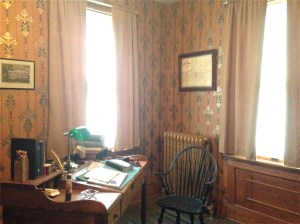
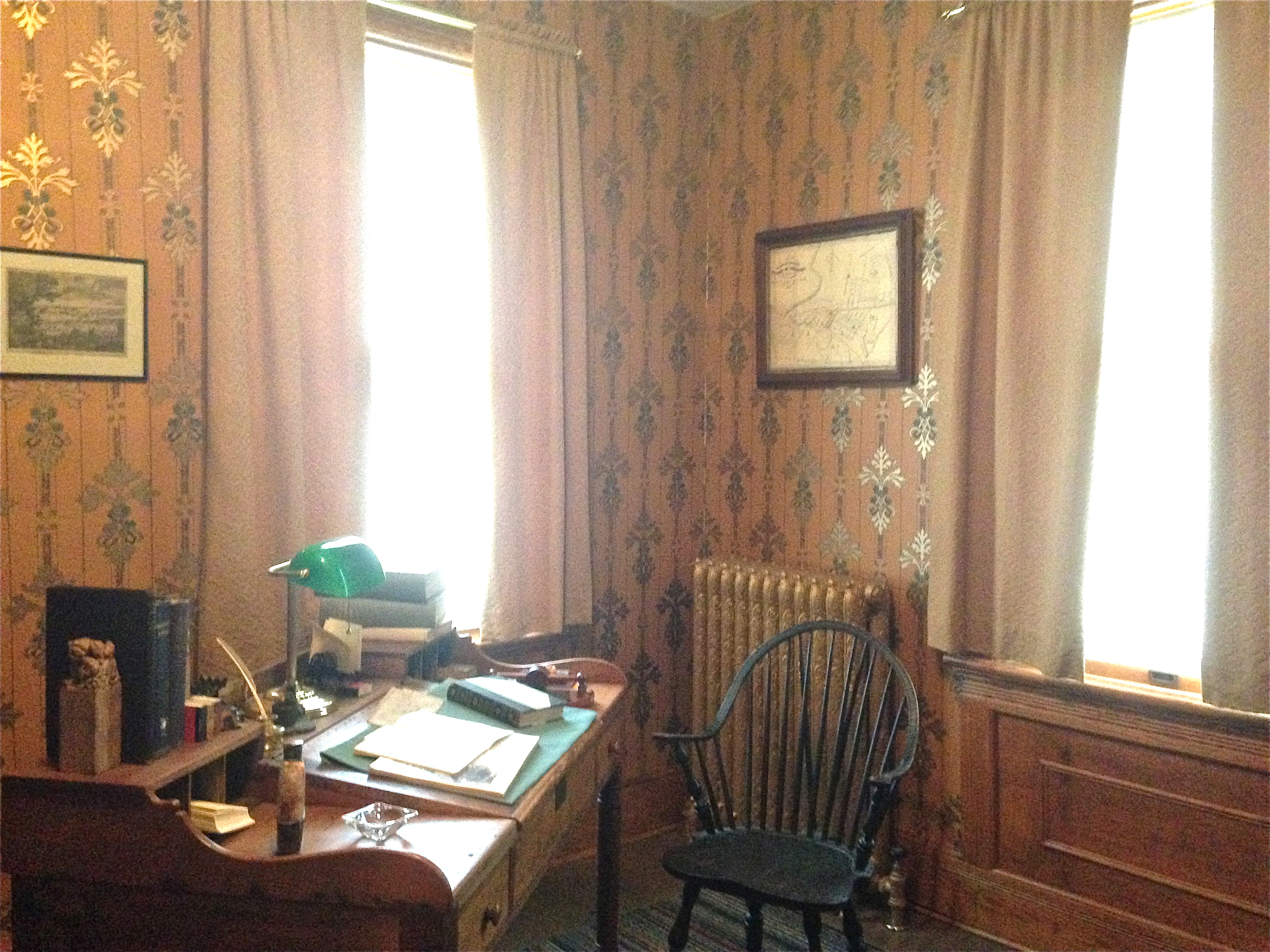
The northwest corner of Abraham Brodhead’s office. Half of the print is visible on the right side of the picture. It is the first decoration that a visitor encounters upon entering the room, and is situated directly opposite the door. (Personal photo)

Provenance: The printed inscription that lies just below the image is a key factor in discovering the origin of the print. James Scott (ca. 1809-1889), whose name is found on the lower right hand corner, was one of the finest English engravers of the mid to late 19th century. Not much is known about his art education, but he became equally talented in the genres of portraiture, history paintings, and sporting subjects. Scott earned notoriety when his portrait of the Duke of Wellington was published in 1837, and over the next fifty years he engraved a large number of designs after the works of contemporary painters. Henry Graves & Co. was a publishing house in Pall Mall, London that was active between 1844 and 1899, and it ended up publishing over one hundred of Scott’s prints within that time period. The National Portrait Gallery in London now houses over two hundred prints published by Henry Graves & Co., twenty-two of which are attributed to the artist James Scott. The inscription informs us that this print was published on June 1st, 1880, and dedicates the work to Her Majesty the Queen of England, and Their Royal Highnesses the Prince & Princess of Wales. This formality may seem odd in modern practice, but it was customary to honor the head of state in all matters of fine and high art especially for those who distributed prints & literature. Although it is not known how this particular print came to be in the Deyo-Brodhead family collection, we are able to infer that it was some point after 1880 when, as the inscription tells us, it travelled to Washington and passed through the Library of Congress.
IMG_4295

The northeast corner of Abraham’s second floor office. (Personal photo)

Narrative: You may wonder how this unique foreign print became a part of the modern day Historic Huguenot Street collection. It’s a dramatic image of a purely fictional event; the raft that all ten Huguenots seem to be floating on could have never held the weight, and the socioeconomic diversity of their fleeing party (as is evident in the clothes they’re wearing) appears democratic, but highly improbable. It is true that over 5,000 French citizens were killed during St. Bartholomew’s massacre on August 23, 1572 in Paris alone, and thousands more fled the country permanently, but this particular rendering of the escape is inaccurate. What, then, is the point? Why would a respectable descendent such as Abraham Brodhead want a romanticized print that remembers this traumatic moment in French Huguenot history hanging in his primary office? Understanding the owners’ personal history and examining the broader cultural context of the Hudson Valley during the late 19th century yields quite a fruitful explanation.

IMG_1720

A detail of the printed inscription. Only the title is visible without a magnifying glass. (Personal photo)

In 1894, Abraham and Gertrude Brodhead received notice that they had inherited what they believed to be a large sum of money from a “rich banker uncle”. Pierre Deyo was one of the original Patentees of New Paltz and had built his stone house along the main thoroughfare of the settlement in 1720. Slowly over the years, Deyo’s grandchildren added other stone additions to the rustic house, but none as dramatic as what Abraham and Gertrude decided to build nearly two centuries later.

At the ages of 37 and 32, Abraham and Gertrude regarded their inheritance as an opportunity to join a new, upper-echelon of society. The period of Colonial Revivalism that emerged in 1876 was a national expression of Early North American culture; although its underlying goal was to create a particular historical consciousness pertaining primarily to the original East coast colonies, the movement manifested itself as a style of architecture, decorative art, and landscape design. In keeping with the trend, the couple took out several bank loans (all of which they believed they would be able to pay off after the family money came through) and began reconstructing their small ancestral stone house into a three-storied mini-mansion. The stone foundation was retained as an important reminder of the family history, and once construction was complete, the original one room stone house became the couples’ main entertaining space. Abraham and Gertrude were able to welcome their guests into their lavish, contemporary home and point to the exposed wooden beams of their sitting room as a visual reminder of their ancestors’ hard work (and more importantly, of the Brodhead’s inherent privilege to that status).
abrham brodhead

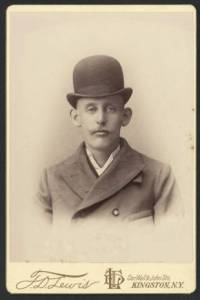
Studio portrait of Abraham Deyo Brodhead (b. 1863-1926). Photo ca. 1880-90 (Courtesy of Hudson River Valley Heritage)
getrude broadhead

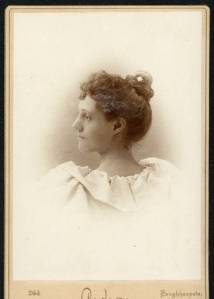
Studio portrait of Gertrude Deyo (b. 1868-1926), daughter of Matthew Deyo & Julia Etta Dubois Deyo. She married Abraham Deyo Brodhead in 1890. Photo ca. 1890 (Courtesy of HRVH)

At this point in history the Brodheads were “competing”, for lack of a better term, to be part of this new realm of American society, and were hoping to achieve the same level of opulence and grandeur that they saw in families like the Roosevelts & the Rockefellers. The Hudson Valley had turned into a hot spot for Colonial Revivalism and in an effort to stand out, the Brodheads chose to advertise their heritage.

DSC_0535

A modern view of the Deyo House. Evidence of the original stone structure built by Pierre Deyo in the 18th century can be seen on the exterior of the first floor. (Courtesy of Tania Barricklo/Daily Freeman)

Besides their newly impressive home and manicured gardens, what better way to display that particular connection than through decoration? This is where the interior of the Deyo-Brodhead house becomes important to the underlying Colonial Revivalism theme; family heirlooms and antique furniture inhabit every room, and dozens of prints & portraits dot the walls. In 1894, the Brodhead’s family home had become a stage, and these objects, their props. The image that James Scott created in 1880 is obviously sympathetic to the Huguenots, but more importantly, it portrays them as a resilient and brave people. The proud man comforting the emotionally distraught woman on his chest as he looks towards the future is an overt symbol of the Huguenots’ heroism. They were persecuted as French Protestants and run out of their own country, but instead of dying out and accepting defeat, the Huguenots became pioneers of a new land. When Pierre Deyo and the eleven other founders of New Paltz came to settle the area, they faced deadly inclement weather, starvation, and hostility from the Esopus Indians who were ready to fight for their land. These are the types of stories that would have been told as esteemed friends and colleagues visited with Abraham in his office, and these are the pieces of history that served to glorify the Brodhead name.

gertrude 2

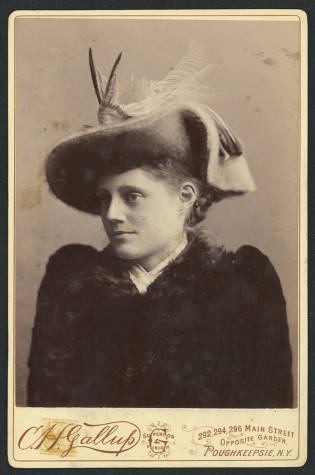
Studio Portrait of Gertrude Deyo in Hat. Photo ca. late 1890’s. (Courtesy of HRVH)

It seems somewhat strange that the true value of this print is indeed the lie that its able to tell. Its ornate frame indicates that the print was most definitely displayed and appreciated as a piece of fine art, but its true function was that of an ancestral advertisement. Although a modern perspective could perceive the Brodhead’s as power-hungry, it is crucial to remember that they were one family among a large scope of the American population who participated in this cultural obsession. In many ways, the Deyo House and the 19th century art and artifacts that are now kept protected inside are able to add to the rich history of the original settlers. By examining the Brodhead’s and the way in which they attempted to re-establish a family legacy, we are able to better understand the complexity of this noteworthy print, and the role it had in reviving an idealized memory of the Huguenot settlers.

REFERENCES:

“August 24: This Day in History, St. Bartholomew’s Day Massacre.” History. A&E Networks Digital, n.d. Web. 12 Apr. 2015. <http://www.history.com/this-day-in-history/saint-bartholomews-day-massacre&gt;.

“Henry Graves & Co. (active 1844-1899), Publishers.” The National Portrait Gallery. NPG, n.d. Web. 12 Apr. 2015. <http://www.npg.org.uk/collections/search/person/mp12751/henry-graves–co?search=sas&sText=Henry+Graves+%26+Co&OConly=true&gt;.

“James Scott (ca. 1809-1889), Engraver.” The National Portrait Gallery. NPG, n.d. Web. 12 Apr. 2015. <http://www.npg.org.uk/collections/search/person/mp15031/james-scott?role=art&gt;.

“Massacre of St. Bartholomew in France.” The Bethea Story: First Generation of Bethea Family in North America . N.p., n.d. Web. 8 May 2015. <http://www.betheafamily.org/Bethea-Story.htm&gt;.

Mitchell, Paula A., and Tania Barricklo. “Fleeing French Founders and 300 Years of Huguenot Street History.” The Daily Freeman. San Jose Mercury News, 1 Aug. 2013. Web. 8 May 2015. <http://www.mercurynews.com/digital-first-media/ci_23772113/fleeing-french-founders-and-300-years-huguenot-street&gt;.

“The Katherine Deyo Cookingham Downer Collection.” Hudson River Valley Heritage. N.p., 19 Mar. 2007. Web. 14 Apr. 2015. <http://www.hrvh.org/cdm/search/collection/hhs/searchterm/Katherine%20Deyo%20Cookingham%20Downer&gt;.

Trainor, Ashley. “Professor Mulready’s Class.” Message to the author. 2 Apr. 2015. E-mail.

Weikel, Thomas. “Professor Mulready’s Class.” Message to the author. 3 Apr. 2015. E-mail.

Colonial Revivalism in the Deyo House: The Purpose of a Print

IMG_1716

This late 19th century print depicts a romanticized scene of the Huguenots as they fled religious persecution in France. It is one of three such images in Abraham Brodhead’s office that act as a visual reminder of his cultural participation in the Colonial Revival movement that once swept through the Hudson Valley.

“Escape of a Huguenot Family after the Massacre of St. Bartholomew”

London published June 1st 1880 by Henry Graves & C° the proprietors publishers to HM the Queen and TRH the Prince & Princess of Wales, 6. Pall Mall – copyright registered. Entered according to Act of Congress in the year 1880 at the Library of Congress in Washington.

Engraved by J. Scott

Printed by Holdgate Brs.

boatpicture

“Escape of a Huguenot Family after the Massacre of St. Bartholomew”

Hanging on the north wall of Abraham Brodhead’s small second story office is a 25.5 in. x 34 in. print, set within glass and against a 3 in. linen mat. The frame is ornately carved wood, about 2 in. thick and decorated with gold colored paint. The prints’ somewhat ostentatious frame very much reflects the propagandistic nature of the scene, and both serve to catch the visitors attention almost immediately. As the eye moves across the composition from left to right, the viewer is confronted by an assortment of figures crowded together on a small wooden raft. Firstly, a young woman dressed in typical 16th century peasant-clothing stands at the back of the raft, steering it through tall reeds. Sitting beside her, an elderly woman in a fine dress and headpiece looks worried as she consoles the disheveled elderly man leaning against her shoulder. Behind the couple are two bearded gentlemen, one with a purse around his waist who leans down to aid the couple, and another who stands proudly turned towards the front of the raft, as the other finely dressed woman wraps her hand around his neck and gazes desperately at his profile. Just in front of them are the two men wearing armor, one holds a tall spear and faces frontally while the other looks back towards the party sympathetically. Lastly, two young boys wearing peasant attire crowd the front of the boat, one attending to his weapon, and the other standing with his head up, looking eagerly towards whatever might lie ahead.

IMG_4297

The northwest corner of Abraham Brodhead’s office. Half of the print is visible on the right side of the picture. It is the first decoration that a visitor encounters upon entering the room, and is situated directly opposite the door.

The printed inscription that lies just below the image is a key factor in discovering the origin of the print. James Scott (ca. 1809-1889), whose name is found on the lower right hand corner, was one of the finest English engravers of the mid to late 19th century. Not much is known about his art education, but he became equally talented in the genres of portraiture, history paintings, and sporting subjects. Scott earned notoriety when his portrait of the Duke of Wellington was published in 1837, and over the next fifty years he engraved a large number of designs after the works of contemporary painters. Henry Graves & Co. was a publishing house in Pall Mall, London that was active between 1844 and 1899, and it ended up publishing over one hundred of Scott’s prints within that time period. The National Portrait Gallery in London now houses over two hundred prints published by Henry Graves & Co., twenty-two of which are attributed to the artist James Scott. The inscription informs us that this print was published on June 1st, 1880, and dedicates the work to Her Majesty the Queen of England, and Their Royal Highnesses the Prince & Princess of Wales. This formality may seem odd in modern practice, but it was customary to honor the head of state in all matters of fine and high art especially for those who distributed prints & literature. Although it is not known how this particular print came to be in the Deyo-Brodhead family collection, we are able to infer that it was some point after 1880 when, as the inscription tells us, it travelled to Washington and passed through the Library of Congress.

IMG_4295

The northeast corner of Abraham’s second floor office.

You may wonder how this unique foreign print became a part of the modern day Historic Huguenot Street collection. It’s a dramatic image of a purely fictional event; the raft that all ten Huguenots seem to be floating on could have never held the weight, and the socioeconomic diversity of their fleeing party (as is evident in the clothes they’re wearing) appears democratic, but highly improbable. It is true that over 5,000 French citizens were killed during St. Bartholomew’s massacre on August 23, 1572 in Paris alone, and thousands more fled the country permanently, but this particular rendering of the escape is inaccurate. What, then, is the point? Why would a respectable descendent such as Abraham Brodhead want a romanticized print that remembers this traumatic moment in French Huguenot history hanging in his primary office? Understanding the owners’ personal history and examining the broader cultural context of the Hudson Valley during the late 19th century yields quite a fruitful explanation.

In 1894, Abraham and Gertrude Brodhead received notice that they had inherited what they believed to be a large sum of money from a “rich banker uncle”. Pierre Deyo was one of the original Patentees of New Paltz and had built his stone house along the main thoroughfare of the settlement in 1720. Slowly over the years, Deyo’s grandchildren added other stone additions to the rustic house, but none as dramatic as what Abraham and Gertrude decided to build nearly two centuries later.

IMG_1720

A detail of the printed inscription. Only the title is visible without a magnifying glass.

At the ages of 37 and 32, Abraham and Gertrude regarded their inheritance as an opportunity to join a new, upper-echelon of society. The period of Colonial Revivalism that emerged in 1876 was a national expression of Early North American culture; although its underlying goal was to create a particular historical consciousness pertaining primarily to the original East coast colonies, the movement manifested itself as a style of architecture, decorative art, and landscape design. In keeping with the trend, the couple took out several bank loans (all of which they believed they would be able to pay off after the family money came through) and began reconstructing their small ancestral stone house into a three-storied mini-mansion. The stone foundation was retained as an important reminder of the family history, and once construction was complete, the original one room stone house became the couples’ main entertaining space. Abraham and Gertrude were able to welcome their guests into their lavish, contemporary home and point to the exposed wooden beams of their sitting room as a visual reminder of their ancestors’ hard work (and more importantly, of the Brodhead’s inherent privilege to that status).

getrude broadhead

Studio portrait of Gertrude Deyo (b. 1868-1926), daughter of Matthew Deyo & Julia Etta Dubois Deyo. She married Abraham Deyo Brodhead in 1890. Photo ca. 1890

abrham brodhead

Studio portrait of Abraham Deyo Brodhead (b. 1863-1926). Photo ca. 1880-90

At this point in history, the Brodhead’s were “competing”, for lack of a better term, with families like the Vanderbilts, the Roosevelts, and the Rockefellers who had established their own family estates across the river in Hyde Park and beyond. Although those particular families were also the embodiment of the struggle between “old” and “new money,” they represented the top tier of opulence and grandeur in American society. Even on their side of the Hudson, the Brodheads were up against the then-growing number of Gilded Age homes that were lining the streets of nearby Kingston. They never would reach the same social sphere that the aforementioned families occupied (primarily due to their habit of spending money they didn’t have), but this did not stop Abraham and Gertrude from trying. The Hudson Valley had turned into a hot spot for Colonial Revivalism and the Brodhead’s knew that in order to stand out, their best bet was to advertise their heritage.

DSC_0535

A modern view of the Deyo House. Evidence of the original stone stucture built by Pierre Deyo in the 18th century can be seen on the exterior of the first floor.

Besides their newly impressive home and manicured gardens, what better way to display that particular connection than through decoration? This is where the interior of the Deyo-Brodhead house becomes important to the underlying Colonial Revivalism theme; family heirlooms and antique furniture inhabit every room, and dozens of prints & portraits dot the walls. In 1894, the Brodhead’s family home had become a stage, and these objects, their props. The image that James Scott created in 1880 is obviously sympathetic to the Huguenots, but more importantly, it portrays them as a resilient and brave people. The proud man comforting the emotionally distraught woman on his chest as he looks towards the future is an overt symbol of the Huguenots’ heroism. They were persecuted as French Protestants and run out of their own country, but instead of dying out and accepting defeat, the Huguenots became pioneers of a new land. When Pierre Deyo and the eleven other founders of New Paltz came to settle the area, they faced deadly inclement weather, starvation, and hostility from the Esopus Indians who were ready to fight for their land. These are the types of stories that would have been told as esteemed friends and colleagues visited with Abraham in his office, and these are the pieces of history that served to glorify the Brodhead name.

gertrude 2

Studio Portrait of Gertrude Deyo in Hat. Photo ca. late 1890’s.

It seems somewhat strange that the true value of this print is indeed the lie that its able to tell. Its ornate frame indicates that the print was most definitely displayed and appreciated as a piece of fine art, but its true function was that of an ancestral advertisement. Although a modern perspective could perceive the Brodhead’s as power-hungry, it is crucial to remember that they were one family among a large scope of the American population who participated in this cultural obsession. In many ways, the Deyo House and the 19th century art and artifacts that are now kept protected inside are able to add to the rich history of the original settlers. By examining the Brodheads and the way in which they attempted to re-establish a family legacy, we are able to better understand the complexity of this noteworthy print, and the role it had in reviving an idealized memory of the Huguenot settlers.

BIBLIOGRAPHY

“August 24: This Day in History, St. Bartholomew’s Day Massacre.” History. A&E Networks Digital, n.d. Web. 12 Apr. 2015. <http://www.history.com/this-day-in-history/saint-bartholomews-day-massacre&gt;.

“Henry Graves & Co. (active 1844-1899), Publishers.” The National Portrait Gallery. NPG, n.d. Web. 12 Apr. 2015. <http://www.npg.org.uk/collections/search/person/mp12751/henry-graves–co?search=sas&sText=Henry+Graves+%26+Co&OConly=true&gt;.

“James Scott (ca. 1809-1889), Engraver.” The National Portrait Gallery. NPG, n.d. Web. 12 Apr. 2015. <http://www.npg.org.uk/collections/search/person/mp15031/james-scott?role=art&gt;.

“The Katherine Deyo Cookingham Downer Collection.” Hudson River Valley Heritage. N.p., 19 Mar. 2007. Web. 14 Apr. 2015. <http://www.hrvh.org/cdm/search/collection/hhs/searchterm/Katherine%20Deyo%20Cookingham%20Downer&gt;.

Trainor, Ashley. “Professor Mulready’s Class.” Message to the author. 2 Apr. 2015. E-mail.

Weikel, Thomas. “Professor Mulready’s Class.” Message to the author. 3 Apr. 2015. E-mail.
Ophelia’s Flowers

When looking at the objects that present themselves in Hamlet, it is often hard to extract them from the implicit symbolism that embodies their description. An example of this are the flowers that Ophelia describes in Act IV, Scene V (pg. 388). Here, Ophelia in all of her psychological anguish, hands out flowers to those around her and in doing so ascribes meaning to them;

Ophelia: There’s rosemary; that’s for remembrance. Pray you, love, remember. And there is pansies; that’s for thoughts.

Laertes: A document in madness – thoughts and remembrance fitted!

Ophelia: There’s fennel for you, and columbines. There’s rue for you, and here’s some for me. We may call it herb of grace o’ Sundays. You may wear your rue with a difference. There’s a daisy. I would give you some violets, but they withered all when my father died. They say ‘a made a good end.

rosemary

rosemary

“A document of madness…” Laertes claims, but surely, as we know from Shakespeare’s tendency to call upon objects with a rich cultural history, there is no folly in what Ophelia is suggesting by presenting these flowers. As a reader, we are under the impression that the flowers must be embedded in some deeper context that allows Ophelia to look at them as symbols of larger ideas (such as remembrance, and thoughts). And indeed they are; in order to understand why Ophelia is looking at these specific objects as vehicles for a more significant message, it is necessary to look at each plant and its historical uses.

pansies

pansies

Rosemary – Was first used by the Greeks and Romans as an aid of protection against evil spirits. Students in ancient Greece wore garlands of rosemary around their necks, or braided it into their hair to improve their memory during exams.  Others would place it in their pillow the night before to enhance memory during sleep. When it was brought to Europe it was regarded as a purifying and healing herb, but it’s usefulness for retaining memory was also reiterated in the English court. Sir Thomas More (1478-1535) wrote, “As for rosmarine, I lette it runne all over my garden walls, not onlie because my bees love it, but because it is the herb sacred to remembrance, and, therefore to friendship . . .” In addition to Hamlet, Shakespeare also makes the use of rosemary as an allegorical symbol in Romeo & Juliet (Friar Lawrence requests that mourners bestow Juliet with rosemary at her burial, as dedication to her memory).

Pansies– The flower’s name is derivative of the French pensee, meaning thought, reflecting the flower’s reputation for bringing thoughts of loved ones. Shakespeare also cited the meaning of the flower when, in A Midsummer Night’s Dream, he wrote that the sleeping Titania will fall in love with the first creature she will see when she will awake, thanks to the pansy juice on her eyes; “the juice of it, on sleeping eyelids laid, will make a man or woman madly dote upon the next live creature that it sees.”.

The fennel flower looks very different from the wild fennel plant and the fennel root (both of which can be eaten and used in home remedies).

fennel flower – The fennel flower looks very different from the wild fennel plant and the fennel root (both of which can be eaten and used in home remedies).

Fennel – Fennel is one of nine Anglo-Saxon herbs known for secret powers; a bunch of fennel hung over a cottage door was said to prevent the effects of witchcraft. Greek and Roman women nibbled on fennel seeds because they believed the herb suppressed the appetite. Ancient Egyptians believed eating the fennel herb and seeds imparted courage, strength, and conveyed longevity.

The columbine flower comes in a large variety of colors with differing petal shapes...it's hard to believe they're all the same species!

The columbine flower comes in a large variety of colors with differing petal shapes…it’s hard to believe they’re all the same species!

Columbines – The symbolism of the columbine flower is varied, and often quite confusing. It was once believed that this flower was a symbol for foolishness, at the same time, however, it was considered a symbol of fidelity and holiness. Today, though, these flowers are given as gifts to represent its more modern meanings of seduction and anxious excitement. These flowers make very uncommon but beautiful and meaningful gifts, and are sometimes given as potted plants or simple, single-cut flowers.

The rue flower differs from the rue plant; at one time the holy water was sprinkled from bushes made of rue at the ceremony usually preceding the Sunday celebration of High Mass, for which reason it is supposed it was named the "Herb of Repentance" and the "Herb of Grace".

rue flower – The rue flower differs from the rue plant; at one time the holy water was sprinkled from bushes made of rue at the ceremony usually preceding the Sunday celebration of High Mass, for which reason it is supposed it was named the “Herb of Repentance” and the “Herb of Grace”.

Rue –In the Middle Ages and later, it was considered – in many parts of Europe – a powerful defense against witches, and was used in many spells. At one time the holy water was sprinkled from bushes made of rue at the ceremony usually preceding the Sunday celebration of High Mass, for which reason it is supposed it was named the “Herb of Repentance” and the “Herb of Grace”.

white daisies

white daisies

wild violets

wild violets

Daisy – The Celtics connected daisies with innocence. They believed that daisies came from the spirits of babies who had died during the birthing process. The daisy flowers grew in order to lighten their parents’ grief. Daisies have their place in Christianity. One legend has it that the daisy grew from the Virgin Mary’s tears. In fact, daisies are sometimes used to symbolize Christ and the Virgin Mary. You will also see the daisy as a motif in artwork from the medieval period as a symbol of Christ’s innocence when Christ was a child. Another Christian legend describes how the wise men were looking for a sign of where the newborn Christ was located. When they saw groups of daisies near a stable, the wise men knew they had found Jesus as the daisies looked like the star that had led them to Bethlehem.

Violet – In Christian symbolism, the violet stood for the virtue of humility, and several legends tell of violets springing up on the graves of virgins and saints. European folktales associate violets with death and mourning. In the language of flowers, it has had various symbolic meanings. Its color may indicate the love of truth or, conversely, the truth of love. In keeping with the latter, it is said that unknown persons who had secretly admired or loved him decorated the tomb of the Roman tyrant Nero in the spring with violets.

As I began to do research about each of these specific plants, I started thinking about the phenomenon of the flower as an object. Firstly, it is important to recognize that flowers are meant to die. In many ways they are similar to human beings; they are given life by preexisting organisms (germination and seeding), their growth depends on the environment they are brought up in, and their life span is generally short. Looking at those facts alone, it is interesting that Ophelia in her “madness” chooses to draw similarities between the life of these flowers and the lives of the people around her.    

Stepping outside of Hamlet and looking into the historical/mythological associations of these plants has helped me understand the important influence that religion had on Shakespeare’s work (and most other artistic creations of that time). When Shakespeare began writing plays for the group called Lord Chamberlain’s Men in 1594, Queen Elizabeth I had already dealt with England’s fierce schism over Protestantism and Catholicism. As Queen, she wanted to appease a large majority of the English population who had converted to Protestantism when her father, Henry VIII, had implemented the Protestant Reformation in 1532; however Elizabeth herself still clung to symbols of the Catholic faith such as the crucifix. Although most of the religious upheaval had been settled by the time Elizabeth died in 1603, Shakespeare lived another 13 years under the rule (and patronage) of King James VI, who is remembered primarily for his campaign against witchcraft. James became obsessed with stopping the threat posed by witches, and in 1597 wrote the piece Daemonologie, which is suspected to be the main source of background context for Shakespeare’s Tragedy of Macbeth.

In looking at all of this research simultaneously, it is fascinating to see how close Shakespeare was to the religious figureheads of his time, and in retrospect, notice the religious influence on the implicit meaning of the objects presented in Hamlet. One small example that I found absolutely fascinating is to look at the way Ophelia describes the daisy in comparison to the rest of the flowers; “There’s a daisy.” When I first read it, I wondered why the daisy was undeserving of any more explanation. But upon doing research on the mythological associations of the flower, and learning that in the Christian faith, some believed daisies marked the path that the wise men followed to find Christ in Bethlehem, it made sense that Ophelia simply stated “there it is”. It’s as if the daisy, in this context, could be representative of that traditional story, or it could be an indication from Ophelia that the daisy is representative of guidance.

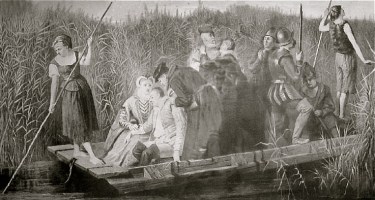
This painting is held in the Tate Britain Gallery in London. It depicts Ophelia singing before she drowns in the river in Denmark. The work was not widely regarded when first exhibited at the Royal Academy, but has since come to be admired for its beauty and its accurate depiction of a natural landscape.

“Ophelia”, Sir John Everett Millais, 1851-52. This painting is held in the Tate Britain Gallery in London. It depicts Ophelia singing before she drowns in the river in Denmark. The work was not widely regarded when first exhibited at the Royal Academy, but has since come to be admired for its beauty and its accurate depiction of a natural landscape.

Many more connections could be made when looking at the deeper symbolism of the objects in Hamlet, but this specific section painted a full circle connection in my own head, so I thought I’d share!

You cannot hide from the truth, because the truth is all there is.

“I realize how much I care about how this hard-and-soft, losable object has survived. I need to find a way of unraveling its story. Owning this netsuke – inheriting them all – means I have been handed a responsibility to them and to the people who have owned them. I am unclear and discomfited about where the parameters of this responsibility might lie.” – Edmund de Waal [pg. 13]

How do you rewrite a story that’s already been told? Moreover, who am I to take it upon myself to sift through these words, to explain them in any other way than they are already laid out? Everything my Nana has written is fact; these letters were (and still are) a record of her experiences, and unlike movies, books, or lectures, nothing about those experiences was omitted.IMG_3901

“The steak we had was delicious, the waiters wore frog tailed coats, carried huge silver trays, poured wine into delicate, long stemmed glasses, called me, “My lady” and it was all just like the movies or a dream. If this happened to me about ten years ago I would have thought I reached the heights of success, now I can see why everyone drinks too much and all the women are rank conscious (most of the men are too.)” [Sept. 1, 1946]

What then can I, having not even been alive for WWII and the American Occupation, offer to this incredible perspective? I know that these letters have been passed over as my responsibility for a purpose, but my biggest difficulty in confronting them has been deciding what I must do to honor that obligation.

“Marilyn cut her hair and made an awful mess of it. I had to take her to the barber yesterday. She had to have bangs and have it all cut very short. Red [my great-grandfather] hates it, he says she looks like one of the displaced persons or D.P.’s as they are known here. That is no compliment… They go where they please and try to dress like we do but somehow you can always spot them. Many of the D.P.’s coming in now are Jews. We can’t thrust our way of life upon these people because they are still shiftless and dirty. All they look for is a place to sleep, simple food, plenty to drink and lots of love life. Red says there are hundreds of babies born in the camps each week, many of them black. These nigger soldiers can be seen with nice looking German girls all the time.” [Sept. 1]

Initially I thought I would be able to simply cut and paste the pieces of my great-grandmothers story that seemed the most interesting; I was planning on whittling it down to the most historically poignant of comments and then doing research into specific places and people that she mentioned. I figured if nothing else, I could tell an interesting story about the American liberation of Germany and pull upon my family’s experience as textual support; I thought it would be simple, black and white, just like her cursive script against the page. How completely ignorant I was.IMG_3898

“Father O’Connor is having a hard time just now. All the defendants in the war trials are allowed to have their families visit them for the last time this week. He has all these wives crying on his shoulder after they see their husbands. It’s a comfort to those condemned men to have such a fine man as Father to console them. The wives are brave when they see their husbands but break down later and of course Father does what he can to comfort them. I guess his biggest worry just now is, that he will have to go with them to the gallows. Red is having it pretty tough just now too. He has been given the job of protecting each one of the participants in those trials so that they will not be harmed in any way. Not only that, he must see to it that the press does not get ahold of the verdict before the officials say so. If he wanted to, he could make some beautiful money on that alone. Last but far from least, he has under his personal supervision some of the notorious Nazi prisoners who would like very much to commit suicide just now. He also has been given the honor of providing Gen. Eisenhower with a Guard of Honor while he is here in Nuremberg next week. Last week one woman tried to get poison capsules to one of the prisoners. She had the palm of her hand hollowed out so the pellets were placed under the skin. All this is not common gossip but probably will be after the verdict is announced. We certainly live in a hot spot just now. The newspapers would love a story like that but don’t dare give it to them or I’ll lose my neck in a hurry.” [Sept. 21]

1024px-Karl-Brandt

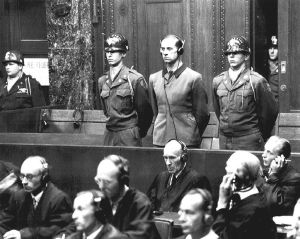
Karl Brandt (standing, middle) was one of 23 defendants in the first trial at Nuremberg (aptly nicknamed the Doctors’ Trial because 20/23 defendants were medical doctors being accused of Nazi human experimentation and mass murder under the guise of euthanasia).The indictment was filed on October 25, 1946; the trial lasted from December 9 that year until August 20, 1947. Of the 23 defendants, seven were acquitted and seven received death sentences; the remainder received prison sentences ranging from 10 years to life imprisonment. Keeping Karl Brandt and the other 22 defendants alive for the duration of the trial was my great-grandfather’s direct responsibility.

With every day I spent poring over this stack of letters, it became more and more difficult to figure out what I could leave on the page, and what I could take for the blog, for my new story. It felt wrong, to separate even one of her sentences from the one before it, as if I were taking her thoughts and ripping them into awkward, incoherent pieces. What I was unraveling here was an overwhelming number of truths that I was not prepared for; the truth that the luxurious lives of U.S. Army Generals bore an eerie resemblance to those of the Nazi’s before their demise, the truth that racism was alive and well even at the center of a culture claiming to liberate Europe from the dangers of prejudice, and the truth that my great grandparents were participants at this pivotal moment in history. I felt as if I had discovered a twisted treasure, a manila envelope full of tainted gold; these words were so abrasive and so honest that to share them would be dangerous…but at the same time they were so important that to hide them seemed implausible.

After days of simmering in self-loathing, pacing my apartment and weighing the morality of each option (do I hide her truth or do I expose it?), I decided I needed to share my Nana’s letters, blaming my duty of inheritance.

norimberga-il-palazzo

The Palace of Justice (“Justizpalast”), Nuremberg, 2012

I called my mom and we discussed a publication. I was immediately shut down. “There are family legalities that you just cannot mess with, Cait. It’s not ours to publish.” Hearing that was discouraging, I will admit. After days of committing to this idea, I was back at the beginning. I still do not know how I will tell my great-grandmother’s story appropriately. I’m unfortunately not satisfied with summarizing it in a few blog posts, and I am certainly not satisfied with my mother’s reaction, but I honestly don’t know what comes next. 

palaceofjusticen

The Palace of Justice, Nuremberg, 1946. This is where the Nuremberg Trials were carried out and where Red spent most of his time with the prisoners. 

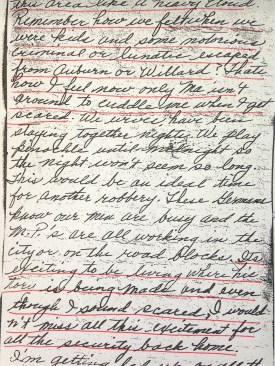
“I don’t expect Red home at all for a few days. This city is closed up tight as a drum. No one gets in or out. We can’t drive or walk within blocks of the Palace of Justice. Whenever we leave the house we have to be sure we have our A.G.O. cards with us. It has our picture, finger prints and name on it and we can’t offer any excuse if we are stopped and do not have it. The verdicts have been announced at last. Until these Nazi’s are sentenced and sent to wherever they are going, this city will be a hot seat. The mystery and intrigue seems to hang over this area like a heavy cloud. Remember how we felt when we were kids and some notorious criminal or lunatic escaped from Auburn or Willard? That’s how I feel now only Ma isn’t around to cuddle me when I get scared. We wives have been staying together nights. We play pinochle until midnight so the night won’t seem so long. This would be an ideal time for another robbery. These Germans know our men are busy and the M.P.’s are all working in the city or on the road blocks. Its exciting to be living where history is being made and even though I sound scared, I wouldn’t miss all this excitement for all of the security back home.[Oct. 1]

IMG_3894

“Remember how we felt when we were kids…I wouldn’t miss all this excitement for all the security back home.”

For now I will immerse myself in the process, get to know my ancestors more deeply, and perhaps even discover my own truth along the way.

Nana’s Letters

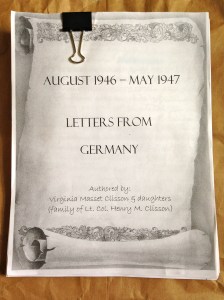
This week, I’m finally able to talk about the object that’s been on my mind since the beginning of the semester. What I have here in my hands (after a week of patiently waiting for UPS to deliver my package) is nothing more than a stack of printer paper. Over 100 pages thick, and printed on both sides, this story came to me in a large manila envelope; it is held together by a large butterfly clip and weighs just about one pound. The top of the first page reads “AUGUST 1946 – MAY 1947, LETTERS FROM GERMANY,” and then in smaller type on the bottom, “Authored by: Virginia Masset Clisson & daughters (family of Lt. Col. Henry M. Clisson)”.IMG_3802

After the first week of this course, I became quite envious of the others in our class who had chosen objects with their own rich personal history (such as Elise’s ticket stub, or Marie’s recipe card, just to name a couple). I immediately thought of these letters, but quickly decided against it, telling myself that there were other objects that I could talk about. After the second class, I felt as if the objects I had chosen to write about were missing the mark. They were interesting and personal, yes, but their stories seemed insignificant in comparison to the one I knew I could tell. There was this sinking feeling in my gut that instinctually told me I was going to have to confront these letters or I would never stop thinking about them. Once again, I told myself that I didn’t have the time nor the energy that it would take to analyze this object, and I picked something else to write about. Then, I read Edmund de Waal’s story, and realized that I was not going to be able to ignore my own inheritance, regardless of how much I convinced myself otherwise.

IMG_3804

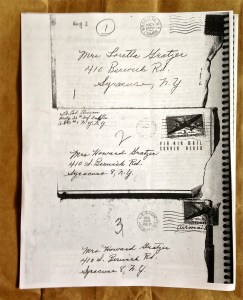
My Nana’s sister, Loretta Gratzer, even saved some of the original envelopes. Here you can see the authentic United States Airmail stamp. In the letters, my Nana mentions that it could take over a month for one letter to make it from Germany to America.

From what I know, my great-grandfather, Lieutenant Colonel Henry M. Clisson, was the commanding officer of the 2nd Battalion and in charge of the war prisoners at Nuremberg beginning in 1946. During his deployment, he sent for his wife, Virginia, and his three daughters (Catherine, Margaret, and Marilyn) who traveled on the U.S.S. President Tyler to live with him in Germany. This stack of printer paper is a copy of the collection of the surviving letters that Virginia Clisson sent to her sister Loretta between August of 1946 and May of 1947. In the letters, my great-grandmother wrote about the post-war reality she experienced everyday, and the bureaucratic nature of the US military during this time. She told her sister about the daily struggle of raising three young daughters in a country devastated by war, and about living in a community that was responsible for enforcing the consequences of that war. These letters are an honest record of a dark period in human history, and the only chance I’ll ever have of knowing my family’s story.

IMG_3803

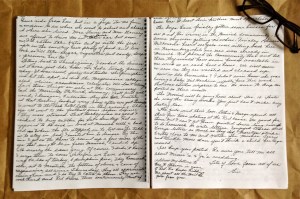
This is just one of the hundred letters my Nana sent to her sister. Some of the letters, like this one, were better preserved than others. She would always sign, “Love, Gin” at the bottom.

I was very fond of my Nana. She wore thick square glasses that magnified the size of her small, tired eyes. She had a big poof of white hair on the top of her head, and she had the biggest earlobes I have ever seen. The wrinkled skin on her hands and arms was so soft to the touch that I vividly remember stroking it when I sat next to her at the kitchen table. She was always sitting there when my mom and I walked in the door, with one hand on her cane and a huge quivering smile on her face. We would come in and make her tea, and I would pull out the large cardboard box of bells that she kept in her living room. By the time the tea was poured, I was up in my great-grandmother’s lap, asking her where each of the metal bells had come from and why some looked dirtier than others. Nana’s voice, like the rest of her body, was always shaking, but I loved to hear her speak because her voice always reminded me of those bells.

It has never been more important for me to spend time with these letters than it is at this point in my life. I stopped visiting Nana by the time I was in fourth grade. By the time I was in sixth grade my mother had cut off all communication with her own parents, and we lost touch with Nana by association. When she died in 2011, I was sixteen and had grown up without any idea about the time my family spent in Germany or the fact that my great-grandfather was involved with the Nuremberg trials. I did not attend Nana’s funeral, I have not written back to my still-living grandmother, and I will never be able to forgive myself for both of these shortcomings.

Screenshot 2015-02-09 12.05.20

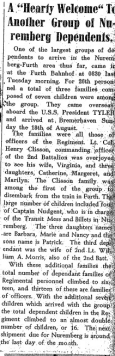
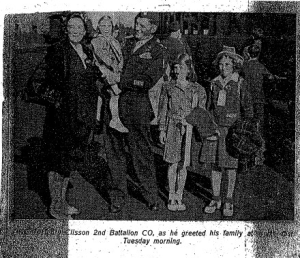
Here is a newspaper clipping from 1946 that my Nana must have clipped and saved for posterity. It explicitly mentions the arrival of Virginia, Catherine, Margaret, and Marilyn into the Nuremberg-Furth US military camp. Because of my great-grandfather’s high rank, the arrival of his family was big news.

Screenshot 2015-02-09 12.05.37

I apologize for the poor quality, but the caption reads, “Lt. Col. Henry M. Clisson 2nd Battalion CO as he greeted his family at Furth last Tuesday morning.” Seen from left to right is my Nana, baby Marilyn in my great-grandfather’s arms, Catherine (my grandma), and then Margaret on the end.

Ever since I found about these letters, I’ve felt a necessity to read and digest every word. Nana’s beautiful cursive script lies waiting on the page and, yet, for years I have not been able to bring my eyes to focus on it. Any time I’ve tried to read her words I am haunted by those beautiful tired eyes and the sweet smell of her soft skin. I think of her kitchen table and those cups of tea, and how I wasted our time together by asking about bells. A large part of myself has been afraid of confronting this history because I know how much I will regret losing the relationship I had with my Nana and my grandmother. Even now writing this, I must admit that I am terrified of what I’ll discover as I finally read their story. All I know is that this fear rising within my chest feels better than the guilt that has sat in its place for too long.

As I begin this journey of learning about my Nana’s life through her own words, I share with you a piece of the first letter she wrote from Germany:

“Of all the large cities I’ve come through, I do believe Nuremberg is the most completely wrecked. Just to see the old men and women plodding along the roads with their baskets or carts of firewood is a pitiful sight. They really hate us [the Americans] and it seems to show. I know I could learn to hate too, if I had so little and the chosen few with so much. They do not want money for there is absolutely nothing to buy. There are plenty of vegetables so they are not starving but they haven’t had any sugar, good coffee, fats or oils, soap and all such things for many years even when Hitler was still head man. It’s hard for me to know there is nothing to be done about it as we really cannot come in contact with anyone outside our own household. It isn’t safe, and that can be plainly seen.” 

-Thursday, august 22, 1946

10956093_10205666391598794_838861636_n

This is Nana and I playing dress-up. She is seated, as always, at her kitchen table.

The Wooden Box

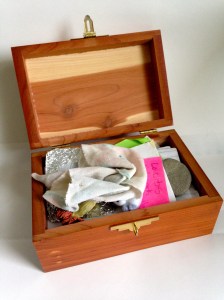
This small wooden box, no larger than my open hand, is somewhat trivial at first glance. It is 5 inches in length, 4 inches in width, and 3 in depth. Although I’ve never thought about the type of wood that my box was crafted out of, I’ve always loved the smell that drifts out when you open the lid, and upon presenting the task of “let’s identify this type of tree” to my friends recently, they all cited the sweet smell of pine as their main clue. On the back of the box, about one inch below the lid are two brass hinges that join the top piece to the bottom. Similarly, the clasp on the front side is also made of brass, and has a hinge and a hook that once allowed me to lock the box closed. These brass pieces also gave us a definitive clue in identifying the type of wood; one of my friends made the point that they were not attached to the box with glue or screws, so they must have had pins on the back that were pushed into the surface, which tells us that a soft wood like pine makes sense. On the surface of the wood is a carving of a wolf howling at the moon set against a dark circle (presumably the moon itself). Below the howling wolf is a series of three wolves, running through the snow and following very closely behind one another. The exterior of the box has been sanded down and coated in a layer of polyurethane, which makes it smooth to the touch and shiny to the eye.

IMG_3776

The box has no engraving or stamp as to indicate where or by whom it was made. It is smooth polished wood all the way around.

I was seven years old when I pulled this box off of a shelf for the purpose of using it to protect more precious items. It was July and I was visiting the family camp in the Adirondack’s, enjoying time with my cousins in a little town called Cranberry Lake. The plot of land located on the water had been purchased by my Grandfather in 1962 from the State for $2000 and had been passed down to his family when he died in 1968. In 2000, his twelve adult children came together and built a camp on the site, making Cranberry Lake one of the most important places in our family’s history. With a year-round population of about 450 people, Cranberry Lake, very much like this box, is a seemingly small and inconspicuous part of the larger environment around it. But for my cousins and I growing up, this sleepy town was the eighth wonder of the world; the vast expanse of untouched forest and the single dirt road that ran all the way around the lake were ours to explore.

IMG_3778

The box is now home to letters, love notes, and other girly trinkets that are generally embarrassing to admit that I own.

That July, my cousin Holly and I would walk two and a half miles down Colombian Rd. into town at least five times a week. Mostly it was because we had specific activities that needed to be carried out (we often brought chalk down to the Oswegatchie River and colored the tops of the large boulders, or caught salamanders on the bank of Matilda Bay and set up a ‘Natural Habitat’ for them), but the other half dozen times were because we simply liked to day-dream. By this time in my adolescent life, I had the fondest interest in collecting things; snow globes, stuffed animals, stickers, and whenever I was up at camp it was usually rocks, feathers, and everything that I wasn’t allowed to bring inside at home. I carried a small bucket and Holly wore her overalls with the deep pockets, and we would walk and talk, stopping any time we pleased to pick up a stone off the side of the road or reach for a particular leaf on a branch. By the time we made it home my bucket and her pockets would be full and our feet would be tired, but our minds were satisfied.

At the end of the month, when Holly and I had to say goodbye to all of the discoveries we had made that summer, she said we should find something to protect our most favorite objects. I remember taking our very last walk into town and venturing into one of the only two stores there. The Cranberry Lake Gift Shop was right across the road from the Lakeside General Store where we usually got our ice cream. The Gift Shop was full of a bunch of garbage (or at least that’s what our dads told us) so Holly and I nIMG_3780ever much bothered to go in. For the most part, it was exactly that; a souvenir shop with wind chimes, floor mats, ironic bumper stickers, and “Cranberry Lake, ADK” t-shirts of every size and color. I quickly gave up on the place and was turned towards the door when Holly called from the other end of the store. I met her all the way in the back where there were two glass shelves with these wooden boxes. We were immediately attracted to the shiny wood grain and polished knots that reminded us of the thousands of trees we had walked past that summer. We were drawn to these boxes because there was something about the howling wolves and the sweet smell of pine that breathed life.
Even now, thirteen years later, the box fills my nose with that scent and fills my heart with nostalgia. I’ve long since gotten rid of the objects I initially put in it, and I’ve long since forgotten what they were. That Gift Shop in Cranberry Lake closed five years after I bought the box in 2002, and the building itself came down not too long after (the owner cited a mold infestation). The Lakeside General Store is the last man standing in the Town of Cranberry Lake, and it looks as if it might stay that way for a long time.

Trip July 8 to July 10, 2012 - A 465-1

This is a photo of the Lakeside General Store taken in 2012. It has looked the same since 1994. Across the street (to the left of the ‘Hershey’s’ sign) was where the Gift Shop once stood.

I have gone back to the Adirondack’s many times since I was young and I have ventured into dozens of souvenir shops, looking for a box that is similar to mine, only to be disappointed each time. I want to feel that sensation of being immediately drawn to an object and I want to get excited all over again. More importantly, I think I want to find a way to re-live that beautiful period of my childhood; I’ve been searching for an object that makes me feel as accomplished and adventurous as I felt when I bought that box at the age of seven.

The Charm Bracelet

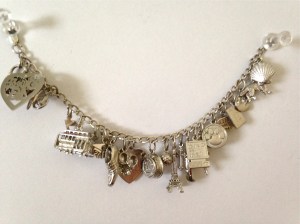
The sterling silver bracelet that now sits on the table in front of me is also twenty years old, but it does not remember the world like I do. I’ve worn it no more than a dozen times (primarily weddings, funerals, and church events) and yet it remains as one of the most important pieces of my life-story.

IMG_3684The single silver chain, the spine of the bracelet if you will, is just about six inches long, and dips about one inch below my wrist when each end is clasped together. Branching off of that delicate spine are twenty-four, unevenly spaced, silver charms. Each charm (one for every year I’ve been alive, and four extra for ‘milestones’) tells a different story, some of which I remember, and others that have been passed down to me by my mother via the image on the charm. Looking first at the tiny clasp on the left end of the chain, and moving sequentially to the open hook eye on the right side, you’ll see a small purse, with one semi-circular strap and four rows of tiny inlaid diamonds. Then a 2-dimensional heart with the words “Sweet 16” cut out in the middle, followed by a 2-D “2000”. After that there is a racing bike, a musical eighth note, a hollow trolley with tiny red lettering on the top of the car that reads “San Francisco”, and a Scottish terrier standing alert with his shorthair tail sticking straight up.

Next, a graduation cap with the tassel switched over to the right side and the year “2012” right below the brim, a track shoe with four miniature spikes on the bottom of the sole, and right next to it a different pair of shoes; two baby booties, each with a single small pearl at the end (as if they were capped by fuzz-balls). Once again there is a 2-D heart, except this one is solid silver all the way through and has my initials carved in beautiful curving script, “CCR”.

Sitting directly three inches down the spine and taking the place of charm #12 is my favorite of them all; the “Happy Birthday” cake, decorated with icing all around its perimeter, and a hinge on the back which used to allow me to open the top of the cake. In the bottom of the hollow cake there was a tiny golden candle standing straight up. From what I remember, it had a spiral design going all the way up to the top, where there was a little golden flame waiting to be wished upon and blown out.

IMG_3685

Next to the cake is a solid silver soccer ball, the Eiffel tower, a catholic cross, a 2-D laptop that says “You’ve Got Mail,”a two-person canoe, a ballerina in a tutu with her toes pointed in fifth position, a round medallion with a dog’s paw-print engraved on the surface, and a school bus that labels itself (just in case we didn’t recognize its iconic shape). Finally reaching the last inch of the spine, there is a nameless book with the number “12” engraved on the back, a ‘traditional’ artist’s pallet with a few specks of green and yellow paint left on the surface, a golden retriever (also standing alert, although his tail is much more relaxed than the terrier’s), and last but not least a simple 2-D scalloped shell.

According to my mother, each one of these charms is representative of a certain time or event in my life. She chose them every year, from the same jewelry store, to be given to me as a gift on the same day each April. The delicate silver chain was a timeline of my life, and every charm she purchased to adorn it has been a reminder of my accomplishments.

On the 22nd of April, I would open the white & silver striped box from the jeweler and spend about five minutes turning the charm over and over in my hand, getting to know it’s beveled edges and thanking my mother for buying it. But as soon as I would set it down, she would take it back and tell me that she would bring the charm and the bracelet back to the jeweler so that they could be joined. I always watched as she slid the spine back into a plastic bag and dropped the charm in before she sealed it shut. I wouldn’t see it again until it came out of that bag the same time a year later.IMG_3710                                                                                 IMG_3705

Truthfully, this bracelet and each one of these purposely ‘special’ charms are nothing more than a reminder of how differently my mom and I remember the story of my life.

I do not remember ever liking Scottish terriers, or having any sort of party for my sixteenth birthday, or being allowed to use the family computer, let alone have an email account. I was downright terrible at singing, and my dad and I almost drowned on that canoe-trip that she chose not to go on.

I do remember, however, that I absolutely despised catholic church school as a child, and that I only ran track when I was thirteen because my mom told me I needed to get more exercise, and that my absolute favorite charm (the birthday cake) was glued shut when I tried to open it on my tenth birthday because she “didn’t want me to break the candle”.

I do remember trying to build memories with my mom that were heavier than this silver bracelet, and trying for years to prove to her that I was responsible enough to chose my own charm.

But for right now, I look at the bracelet for inspiration; it is a reminder to stand up straight, with a spine that was not designed by anyone else and to fill in the rest of my timeline with charms and accomplishments that are important to me.

IMG_3717