Scrolling and Browsing: Clothing Edition

My favorite pair of sneakers are my New Balance 654 tennis shoes. I purchased them at a charity store two years ago for three dollars. They’re comfortable and durable and have a retro sort of look. I wear them basically every day. The only issue is that they are disgusting to look at. While the shoes themselves are perfectly intact, the paint has all but flaked off entirely. My shoes look like they have a terrible skin condition. They weren’t in the greatest condition when I bought them used, and the situation has only gotten worse.  

I’m not sure exactly when this style of New Balance was manufactured, but I do know they can no longer be bought new. I have made it my mission to find a new (used) pair online. It’s been a long and harrowing process. When I was home for Thanksgiving, I sat down for another online search. I got into a comfortable position in the recliner, my feet donned in thick, fuzzy socks, a cup of coffee on the table next to me. To my back was the big bay window that faces my front yard. Snow blanketed the neighborhood. I looked up new balance 654 size 6 on Google and scrolled through the images tab. Clicking on individual images shows a grid of related items, which I checked out as well. My options were very limited. There aren’t many New Balance 654 tennis shoes being sold online, and none of them are a women’s size 6. The closest thing I’ve gotten to what I’m looking for is a size 7. Once or twice during my search I thought I had found a listing of the correct size. I excitedly clicked to Poshmark, thinking I had found just the thing I was looking for, just for my heart to sink as I scrolled through the listing, realizing the size had been labeled incorrectly by the seller. However, my disappointment wasn’t long-lasting, and right away I x-ed out of the site, banishing the offending tab from my laptop screen. 

For the browsing portion of this assignment, I went to two different locations. First, I stopped by a Marshalls. I was on the lookout for a new pair of silver hoops to replace a hoop that I had lost recently. I prefer Marshalls when it’s not so busy, and the day I went it was packed with holiday shoppers. This made the experience less enjoyable. The second shopping location was a charity shop–the very same thrift store where I had found my New Balance sneakers. I love thrifting (it’s sustainable and cheap), and this particular thrift store is one of my favorites. It’s located inside a converted duplex on a quiet residential street. While I didn’t have any particular item I was looking for, the trip was successful, and I left with four clothing items and a pair of earrings. The total cost was under $20, and this made me very happy. I also tried on many things that either didn’t fit or I realistically didn’t think I would actually wear. I went with my mom on both shopping trips. I like shopping with her because we pick out things that we think the other would like.  

Looking back at my observations and reactions during both experiments, I can come to a few conclusions. Shopping online definitely has its advantages. I like the comfort of shopping without ever having to leave my couch, and I also like that I have the ability to cross-reference prices across different sites. I even have an extension on my laptop that applies any discounts at check-out. But online shopping, or scrolling, also has some glaring issues. Clicking different links and having many different tabs open quickly clogs up my laptop interface and becomes visually overwhelming. When shopping online, you must account for shipping costs and other fees. Shipping can be especially high on secondhand sites like Depop, Poshmark, and Ebay. Lastly, shopping for clothing or shoes online does not allow you to try things on. Although I don’t purchase many clothes online, when I do, I will typically purchase an item in two sizes, so I am able to determine which fits better.  

In person shopping, or browsing, is more engaging and has a social component to it that scrolling does not. When I go shopping with my mom and sister, it is less about spending money, and more about spending time with each other. I would consider a disadvantage of in-person shopping to be that stores can get really busy, especially around the holidays, and this can make having a good shopping experience more difficult.  
Esopus Wampum Belt

Original belt of wampum (top) and contemporary replica (bottom). 

Caption  

A woven belt of wampum constructed from braided thistle and white and purple shell beads. The belt is believed to have served as a record of the signing of the Nicoll s Esopus Peace Treaty in 1665. The diagonal wave pattern of purple beads against white conveys kinship between the Esopus and the English.  

Physical description of the object 

The belt of wampum, a term that is the New England colonial interpretation of the Algonkian name wampomeag which translates to string, is constructed from braided thistle and a mix of white and purple shell beads. The braided thistle is a pale straw color. Seven rows of beads woven into the thistle rope are gathered at the ends of the belt in two sets of knots. The beads are cylindrical in shape, smooth and shiny, and measure about a quarter of an inch in length and one-eighth of an inch in diameter. Naturally formed streaks run across the length of each bead, a visual remnant of the shells that the beads were carved from. There are three gaps in the belt, separating the woven beads into four distinct sections.  

Provenance  

Local historians have linked the wampum belt pictured above to the peace agreements that occurred between the Esopus and the English in 1665. It would have been a supplementary component to a written treaty, acting as a visual record of the ideas presented at a diplomatic meeting. The orientation in which the beads are woven together conveys a specific idea. Bead designs ranged from abstract geometric designs, such as linked diamonds or squares, to anthropomorphic imagery of human figures holding hands. This visual linkage references the Esopus people’s approach to diplomatic relations with their native and colonial allies, which was nonhierarchic and based on equality and kinship.

The white beads signify peace, harmony, and health; conversely, the purple beads convey mourning, war and destruction. The Esopus peoples would have used the quahog clam and the whelk shell to craft these beads. The deep purple quahog clam can be found in the coastal waters of the northeastern United States. For the white beads, the hard, brittle whelk shell was used. The production of the beads and the weaving of the wampum belt was done by women artisans. They used stone tools to carve and round pieces of the shell, before piercing holes and stringing them onto a cord. Once strung, the wampum would be rolled on a grinding stone with sand and water until smooth. Carving shells beads was a difficult and time-consuming process requiring incredible skill and patience. 

Quahog clam (left) and whelk shell (right). 

Narrative  

The wampum belt was a significant component of the diplomatic relations between the English colonizers and the Esopus peoples in Ulster County. It played the role of a peace treaty following the First and Second Esopus Wars and the ceding of Dutch controlled New Netherlands to the English and provides us with insight into Esopus artistic and diplomatic practices as well as the individual attitudes and principles of both the English and the Esopus.  

The First Esopus War (1659–1660) was the first of two significant conflicts between the Dutch and the Esopus and was a reaction to continued Dutch encroachment on Esopus land. The Second Esopus War (1663–1664) was much deadlier and ended with the death of Chief Papequanaehen and the burning of many acres of native farmland. An uneasy peace was reached between the Esopus and Dutch. On August 27, 1664, the Dutch, headed by Peter Stuvyesant, ceded New Netherlands to the English, facilitating the creation of New York, named after the Duke of York. The first colonial governor of the Province of New York was Richard Nicolls. An ardent Royalist, Nicolls immediately went to work instituting English reforms including trial by jury and ordained that all landowners apply for patents from the Duke of York. Nicolls was also tasked with negotiating a new peace with the Esopus, who were weary of white colonizers. 

Pages from the Nicolls/Esopus Peace Treaty.

 On October 7, 1665, the Nicolls/Esopus Peace Treaty was signed into effect. The text prohibited violence between the English and the Esopus and included a prescription for justice in the event that violence occurs. The treaty declared “that all past injuries are buried and forgotten on both sides,” ordained that settlers and natives found guilty of criminal activity would face equal punishment, and outlined exchanges of land and materials goods. The Treaty also encouraged future renewals of the peace and solicited the presence of “Indyan Witnesses of the Esopes young men,” so that the younger generation may maintain the treaty. Between 1665 and 1745 the Nicolls/Esopus Peace Treaty was renewed thirteen times, demonstrating a commitment to peaceful relations. Belts of wampum are exchanged during these renewals, as well.

The treaty states that the sachems, the native chiefs, “presented a string of wampum in acknowledgement of renewing said peace and say they hope it may continue.” In diplomatic contexts, the wampum belt, once presented by one side and accepted by the other, acted as a record of what has transpired at an assembly or meeting. It would have been preserved and used at subsequent meetings. The belt may have been displayed on a rock or pole, and in some contexts was presented in multiples. The width and length of the belt conveyed the importance of the point it accompanied in relation to the belts positioned alongside it. 

The practice of presenting wampum belts in diplomatic contexts originated between native tribes but was extended to relations between natives and colonizers. The presentation of the wampum belt at the Nicolls Esopus Treaty was just one instance of this cross-cultural diplomacy. A similar belt was presented at a peace agreement on May 15, 1664 between the Esopus and the Dutch at New Amsterdam following the Second Esopus War. The Esopus wampum belt provides us with insight into the underrepresented and little-known diplomacy between the Lenape peoples and European colonial forces. To this day, belts of wampum remain an integral part of Indigenous diplomatic and ceremonial proceedings.

Work cited 

Dubin, Lois Sherr, et al. North American Indian Jewelry and Adornment : From Prehistory to the Present / Lois Sherr Dubin ; Original Photography by Togashi, Paul Jones, and Others. Harry N. Abrams, 1999.

Keir, Ian. “An Agreement Made Between Richard Nicolls Esq., Governor and the Sachems and People Called the Sopes Indyans. 7th Day of October 1665.” Ulster County, Ulster County Clerk’s Office Records Management Program—Archives Division, 2015, clerk.ulstercountyny.gov/sites/default/files/resources/Nicolls%20Esopus%20Peace%20Treaty_2015.pdf. 

Shannon, Timothy J. Iroquois Diplomacy on the Early American Frontier. 2008, ci.nii.ac.jp/ncid/BB00248696. 

“That It May Bee Kept in Perpetuall Memory” | Ulster County Clerk. clerk.ulstercountyny.gov/archives/exhibits/it-may-bee-kept-perpetuall-memory/slideshow. 

Night Tooth

Something loosens in my mouth, and the hollow space under my tongue fills with blood. I stare at my reflection in the mirror, my mouth a stupid gaping hole on a wide pale face. I spit into the sink, and a white pearly stone hits the basin with a small clink.

“Oh, what the fuck,” I say out loud. “That’s my tooth.” I tongue the fresh hole in my gums. “That’s my fucking tooth.”  

From outside the bathroom I hear wobble baby wobble baby wobble baby wobble. I should be out there, on the dance floor, pleasantly tipsy, wobbling. Instead, I’m leaning over the sink, staring at my tooth. It’s an incredibly sobering experience.  

A squawk comes from next to me. I look over, momentarily distracted by the sound, half expecting to see a large bird. The squawker is a girl with long blonde hair and skinny eyebrows. She is wearing a hot pink micro-mini skirt and not much else. This is also distracting. “Don’t even worry. I’m going to call 911,” she tells me. 

Blood dribbles down my chin. In the back of my mind, I think that there’s an awful lot of blood coming out of me right now. Could it be a side effect of being on my period? Do I have a chronic blood-related disease that I was never diagnosed with? How much blood can a person lose before their body shuts down? “Don’t do that,” I manage to say. Little spots of light are floating across my peripheral vision. My eyes chase one across the top of mirror.

“I’m totally doing it right now!” the girl says, her phone planted to the side of her face, patting my shoulder in a gesture of reassurance. “Like, no offense, but you sort of look like you might pass out. Your face looks white, like, really white.” She squints at me. “Was that racist of me?” 

I groan and spit more blood in the sink. I’m getting the nauseous feeling in the pit of my stomach that usually precedes me sprawling across the floor in a dead faint. I need to get out of this bathroom, out of this shitty bar.  

“Maybe you should sit down or something,” the girl says. “That’s what the lady on the phone is saying, at least.” 

I pluck my tooth out of the sink. A string of frothy red spit trails from it. I don’t have pockets, so I put the tooth back in my gum hole (a different sort of pocket). 

“I tried,” I hear her say as the door swings shut behind me. 

I shove my way through the crowd huddled in front of the bathrooms, slapping my hand against the wall as I go. A fresh wave of blood floods my mouth. I reach blindly for an abandoned drink, toss back the blue liquid left in it, swish, and spit. On shaky legs, I make a beeline for the exit, cup and tooth in hand. 

“No drinks outside,” the bouncer tells me, half-stepping in front of me.  

“It’s my tooth,” I say, edging towards the door. He doesn’t have anything to say to that.  

The chilled autumn night hits me like a slap. The sky is a deep navy dotted with pinpricks of light. The moon is a delicate sliver. I rub my goose bumped arms with one hand and grip my spit-tooth cup with the other. I’m aimlessly walking, swerving around clumps of smokers and stragglers, the detritus of the night. The nausea has mostly passed. I remember something I saw online about how it’s best to put a separated tooth in milk. Somethimg about keeping the cells alive. Where could I get milk at three in the morning? 

I make a turn at the street corner and run into something hard and cold. I back up, blinking, and look up at a very tall man. He is dressed in a nondescript black jacket and jeans. The skin on his face looks tight, like he’s fresh from a facelift, and I can’t place his age. I look at him. He looks at the hand holding my tooth cup. 

“I can smell it,” he says. His mouth doesn’t move very much when he speaks. The man’s lips are pillowy, at odds with the taught skin around his mouth. He is very close to me all of a sudden. There is a medicinal smell coming from him, like cherry cough syrup. 

I laugh nervously. “Okay!” I say. I swerve around him, clutching the cup to my chest. “Have a good night.” I watch him over my shoulder as I turn the corner, until he is out of sight. 

I’m at a convenience store, perusing the bottled milks, when I think to look at the cup still clenched tight in my hand. My tooth isn’t there. I close my eyes and let my head fall forward and hit the sliding glass door with a thud. I know with complete certainty where my tooth ended up. I know I’m not getting it back. 

Kindle Paperwhite

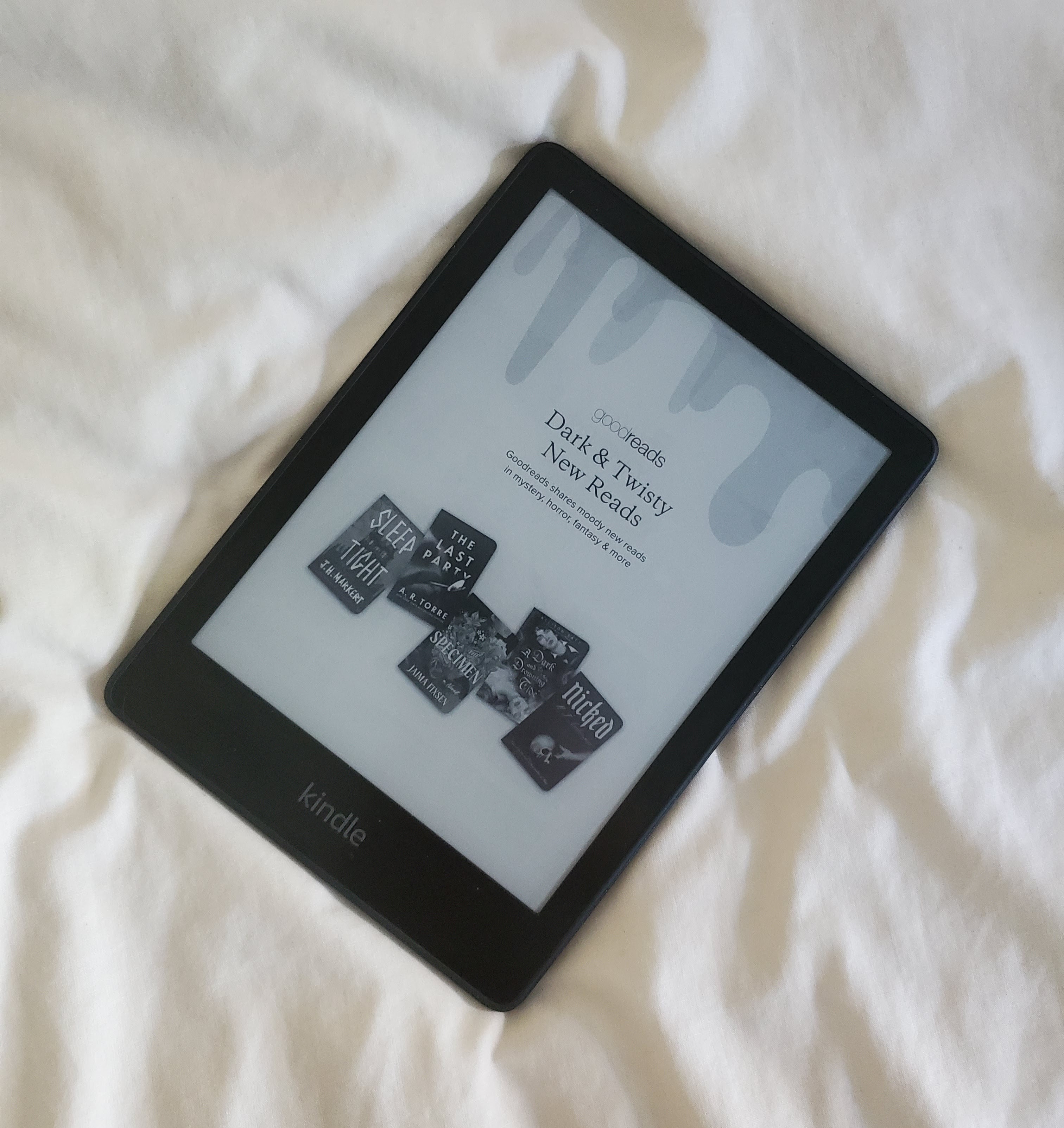
One of my most used possessions is my 2022 11th generation Kindle Paperwhite. First released in October 2012, the Kindle Paperwhite is 6.6 inches long by 4.6 inches wide by 0.3 inches thick and weighs 5.6 oz. Structurally, it consists of a matte screen encased in a beveled plastic frame. The Kindle Paperwhite is named for its clean white display, which creates more contrast with the black text than the light gray screen of earlier Kindle e-reader models.  

If I were to deconstruct my Kindle, I would be able to identify four distinct components; a circuit board, the foundation for the Kindle’s electronic circuits: a Wi-Fi chip; a electrophoretic display, or the electronic ink screen; and a lithium-ion battery:. The circuit board is made in China and the Wi-Fi chip in South Korea, the leading manufacturer of mobile phone components. The electronic ink (E-ink) display was manufactured in Taiwan by E Ink Holdings.  

Electronic ink is the crux of e-reader success. The technology was first developed by physicist Joseph Jacobson and MIT undergraduates Barrett Comiskey and J.D. Albert out of MIT Media Lab, a multidisciplinary research laboratory. MIT filed a patent for the E-ink display in 1996. E Ink Corporation was founded the following year by Jacobson, Comiskey, Albert, Jerome Rubin, and Russ Wilcox. The business was acquired by Prime View International, a Taiwan-based manufacturer, in 2009.  

E-ink mimics the appearance of ink on paper through a process called electrophoresis. Two ultra-thin transparent plastic films, coated with pixel-sized electrodes, sandwich microcapsules filled with black and white pigment. The microcapsules are suspended in an oily substance. The black pigment is negatively charged, and the white is positively charged. When a charge is introduced via an electric current, the pigments rush towards the opposite charge, creating the look of black text on white paper. The screen is lit by seventeen low-powered LED lights, diffused across the screen via a flattened fiber optic cable, creating the illusion that the screen is backlit.

The working of an E-ink display.
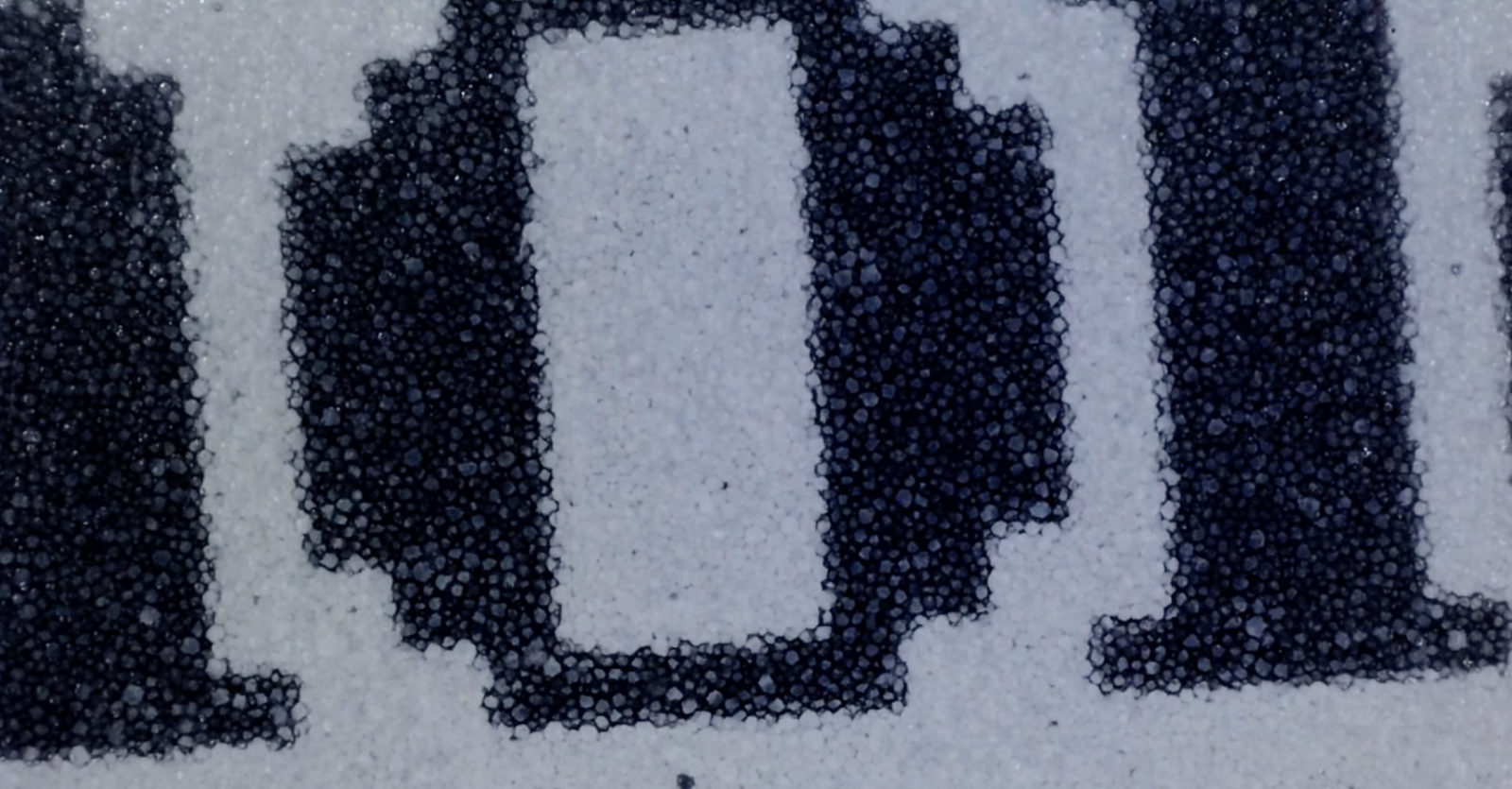
A close-up of an E-ink display. The individual electrodes are visible. 

The lithium-ion battery, too, was produced in China. However, its individual components, specifically the heavy metals lithium and cobalt, were extracted halfway across the globe. In Chile and Australia, the two leading lithium exporters, the metal is pumped from brine reservoirs underneath salt flats and left to evaporate.  

Most the world’s cobalt is mined in the Democratic Republic of Congo. In a 2021 report for the Wilson Center, Michele Fabiola Lawson writes, “mining in the DRC involves people of all ages, including children, to work under harsh conditions. Of the 255,000 Congolese mining for cobalt, 40,000 are children, some as young as six years. Much of the work is informal small-scale mining in which laborers earn less than $2 per day while using their own tools, primarily their hands.” Both lithium and cobalt extraction pose serious environmental concerns, including pollution, biodiversity loss, and greenhouse gas emissions.  

The Kindle is a great product, and in the past, I have recommended it to anyone who will listen. Its E-ink technology is a versatile and low-energy alternative to traditional electronic screens. Yet the Kindle’s near perfect design does not justify the human and environmental cost of its production.  

Work Cited

Denning, Steve. “Why Amazon Can’t Make a Kindle in the USA.” Forbes, Forbes Magazine, 21 Apr. 2014, www.forbes.com/sites/stevedenning/2011/08/17/why-amazon-cant-make-a-kindle-in-the-usa/

Frankel, Todd C. “The Cobalt Pipeline.” Washington Post, 30 Sept. 2016, www.washingtonpost.com/graphics/business/batteries/congo-cobalt-mining-for-lithium-ion-battery/

“How Is Lithium Mined?” MIT Climate Portal, 12 Feb. 2024, climate.mit.edu/ask-mit/how-lithium-mined. 

Lawson, Michele Fabiola. “The DRC Mining Industry: Child Labor and Formalization of Small-Scale Mining.” Wilson Center, 1 Sept. 2021, www.wilsoncenter.org/blog-post/drc-mining-industry-child-labor-and-formalization-small-scale-mining

Strickland, Jonathan, and Chris Pollette. “How Does Kindle Work? What to Know in 2024.” HowStuffWorks, HowStuffWorks, 30 Apr. 2024, electronics.howstuffworks.com/gadgets/travel/amazon-kindle.htm. 

Vicente, Vann. “What Is E-Ink, and How Does It Work?” What Is E-Ink, and How Does It Work?, How To Geek, 18 Oct. 2021, www.howtogeek.com/752328/what-is-e-ink/

Shirley Temple Doll

When my mother was a child, her grandmother bought her a Shirley Temple doll. Manufactured by Ideal Novelty sometime between 1970 and 1979, this model of doll was a staple of the U.S. toy market and would have been a typical gift for a young girl. The doll stands at 16 inches, and has blonde, curly hair rooted to its vinyl head. Printed details depict clear brown eyes, an open-mouthed smile, and light pink blush. The doll wears a white dress with puffed sleeves, scattered with red polka dots and sporting a matching red velvet belt. On its feet are a pair of red plastic Mary Jane shoes, which would have been worn with white socks.  

Ideal Shirley Temple doll and box. **This is the same model of doll, but not the specific object. 

The gift came with a condition: the doll must not, under any circumstance, be removed from its protective box. One day, Grandma Minnie Strassberg told my mother, this doll will be very valuable. I don’t want you to get it dirty. 

This was a big ask of my mother. Every day, against the instructions of her grandmother, she would remove the doll from its box. My mother would brush its carefully coifed hair, tweak and prod at the buttons and ribbons adorning the doll’s dress. The doll got along great with the other toys, and made friends with Raggedy Ann and Midge, Barbie’s pregnant and decidedly less glamorous friend. After playtime was over, my mother would put the doll back in its box, back in its rightful spot on her shelf, between an impressive collection of horse figurines and a box set of Nancy Drew books. By the time Grandma Minnie and Grandpa Harold and their little white dog Sherrie came around for dinner, everything was as it should be. If Grandma Minnie ever suspected what exactly was going on when she wasn’t around, she never let on.  

Grandma Minnie died at the age of ninety-five on November 30th, 2010, a week after my seventh birthday. I was around the age my mother had been when she was gifted the doll. My memory of my great-grandmother exists in flashes, pale and fuzzy with age. I remember her full head of curly hair, once a brilliant red, and how small she was when I hugged her. I remember the smell of the retirement home where she lived and the overgrown garden in the back. 

To know my great-grandmother is to have dinner with my family. This is where I listen to my grandfather recount anecdotes from his mother’s childhood, which was spent in her family’s Romanian restaurant in the Lower East Side alongside seven brothers and sisters. This is where, from the kitchen, I smell sweet potato and apple bake, a signature dish of Grandma Minnie’s that my mother makes on holidays. 

It was several years after her death when the doll came into my possession. My grandmother came across it while cleaning out the basement and thought of me. The doll had likely been there since my grandparent’s move from my mother’s childhood home in Ithaca, when it had been packed away and forgotten. The protective box Grandma Minnie had been insistent that the doll stay inside was long gone. It was missing a hair ribbon, as well as its socks. The doll’s hair was matted on one side, a permanent case of bedhead. In its condition, and without its protective box, the doll was likely not very valuable.  

I did what I could do to restore the doll to its original condition. I washed and conditioned its hair and used a pencil to recreate Shirley Temple’s iconic ringlets. I scrubbed the dirt from its face, and sewed a new pair of socks to replace the old ones. What I didn’t consider at the time, and what I understand now, is that the care I took in restoring the doll was an act of love. Now it sits on my bedroom shelf, huddled up next to a lumpy sock monkey and a long-legged ballerina. They, too, have become good friends. 

Grandmother Stover’s Trimmin’ Trinkets Cupcake Topper

The object I chose is a clown shaped cupcake topper manufactured by Grandmother Stover’s, a midcentury dollhouse miniatures company. It would have been sold in a multipack, packaged in clear plastic bags and stapled shut with cardboard. The object is white plastic with printed red, green, and black details. It is about 3 ½ inches tall. A round head sits on top of a thin stem that ends in a sharp point. There is a small crack where the head meets the stem. The print job is uneven and distorted, relaying the mass-produced nature of the object. The clown dons a triangular, striped, red cap with a green tip. Its expression is one of mischief. Curved black eyes, topped with raised eyebrows, glance to the side. Red circles define the cheeks. The typical round clown nose is the only three-dimensional component of the face, and has a red circle printed on it. Four curved lines make up a smiling mouth. 

Trimmin’ Trinkets clown cupcake toppers in their original packaging.

From 1943 to 1983, Grandmother Stover’s was one of the most prominent suppliers of dollhouse furniture and miniatures in the United States. The company, based in Columbus, Ohio, was founded by John Stover in an effort to provide dollhouse accessories for his children in a time when European imports in this market were limited. John, a successful businessman who owned an advertising business, was living in Upper Arlington with his wife Elizabeth and their three daughters when he came up with the idea to start a dollhouse company. In 1941, John purchased a dollhouse and a complete set of furnishings as a gift for his daughters. He would discover that most of the miniatures were handcrafted by German artisans working out of their homes. This inspired him to create the same sort of operation in central Ohio.  

A lot of Grandmother Stover’s miniatures listed on Etsy.

John named his fledgling company after his mother, Mrs. Anna Stover. She was an essential part of the operation and would help make the very first sample products. By 1970, Grandmother Stover’s, Inc. employed 15 full-time and 25 part-time employees. The Lancaster Eagle-Gazette published an article in December 1944 titled “New Idea in Christmas Toys Named for Lancaster Woman,” which stated, “this year the toys are being shipped to large stores from NYC to Los Angeles. The demand for them is much greater than the supply.” Grandmother Stover’s was turning out miniature kitchen supplies, newspapers, decks of cards, platters of food, gilded mirrors, bedspreads, bars of soap, and any other household item, appliance, or furnishing one could possibly imagine. The company also sold party favors, cake toppers, and other small miscellaneous toys as part of their Trimmin’ Trinkets line.  

Today, Grandmother Stover’s miniatures are renowned in hobbyist and collector circles. While the company no longer manufactures miniatures, their name brand adhesive glue can be purchased from online hobby and craft stores. John’s personal collection of his favorite one-of-a-kind miniatures was donated by his family to the Georgian Museum in Lancaster in 2006.  

The Old Curiosity Shop, a shadowbox arranged with Johns’s favorite miniatures. 

Works Cited 

Harvey, Joyce. “Remember When: Jack Stover Picked ‘The Purple Pepper.’” Lancaster Eagle-Gazette, Lancaster Eagle-Gazette, 25 Jan. 2021, http://www.lancastereaglegazette.com/story/news/2021/01/25/remember-when-jack-stover-picked-the-purple-pepper/6659362002/.