Reviving the Lost Art of Handmade Letters

Overview/Introduction: 

In exploring analog objects, I chose to focus on something deeply personal—my relationship with my Nana. We’ve been close since I was a young girl, and during quarantine, we developed a tradition of daily phone calls. Now that I’m away at school, we haven’t been able to talk as much as I’d like, but we’ve established a new routine of Wednesday afternoon calls. I go for a walk and chat with her, updating her all about my friends and classes, and she talks about her and the family. We easily go on for over an hour, sometimes even reaching the two-hour mark when the family drama gets intriguing. 

While I love my phone calls and occasional texts with Nana, I miss our in-person talks with one another. She’s familiar with messaging on her iPhone, but Facetime is something completely out of her field of expertise. As an alternative, I thought sending her a letter would be a heartwarming surprise for her to open in the mail. I would be able to express my love and appreciation for her not only in spoken words but in the form of a handmade letter. When doing this, I wondered how creatively I could formulate these terms of endearment for her. Will using a single 8.5 x 11 paper limit how much I can write to her? Will my handwriting be too illegible for her? Should I make my handwriting larger knowing that she cannot read that well? Should I include small drawings in the letter? I hoped that after completing this experiment, I would find answers to all of these questions and discover a new form of communicating with Nana that goes beyond digital interaction. To measure the practicality of communicating through letters, in addition to our weekly chats, I asked Nana how she felt about opening the letter when she initially received it. With no surprise, she was thrilled to find her heartfelt message in her mailbox. 

Observations:

The first obstacle I came across in this experiment was putting ink on paper. Between my stubborn writer’s block and the fear of not being able to erase my mistakes, it took me a while to even begin my letter. I can think of endless ways to describe my love for my Nana off the top of my head, but having to put those thoughts into physical words posed a challenge I didn’t think I’d come across. I was easily able to write birthday and Christmas cards to relatives in the past without hesitation, but now I was struggling to write an opener to my letter. Was this a creative block I had developed since being at school? Have I fallen into the comfort of typing everything on the computer without giving the delete bar and auto-correct a second thought? After these anxious thoughts left my mind, I knew I had to start writing soon and stop overthinking this task. At the end of the day, I was writing a personal message to Nana, and she was aware of how much I loved her. Anyway I express that to her would be greatly appreciated. 

So I began writing. Instantly, I noticed that because I was writing in a letter format, I felt the need to sound very articulate and formal. I tried looking past this and began my letter with “To my Bestie”, a term we call each other whenever we’re together. The words that came after that opening statement flowed so freely on the page. It felt as if I was speaking right next to her at her small kitchen table. I was nervous that I would misspell or run out of space for some of my words, but writing on the paper allowed my thoughts to run cohesively onto the paper. 

Overall, I was very satisfied with what I was able to write on my own. I usually rely on programs like Grammarly to autocorrect and rephrase my writing for emails and school assignments. However, I appreciated that those resources weren’t available to me during this experiment. I feel that it would take away from the intimacy of my written letter, almost in the sense that essays written with ChatAI lose their authenticity. I knew that filling the paper with my original thoughts and handwriting would be a precious gift to surprise Nana with. I ended the letter with our special goodbye to one another and dropped my pen in satisfaction. 

People have always told me how admiring my relationship with Nana is. We’re able to talk to each other multiple times a week and treat each other like we are inseparable friends. I’m aware that some people my age are forced by their parents to speak to their grandparents and are praised when doing it. However, speaking to Nana has always been effortless for me. It never felt like a chore to pick up the phone with her or to go to her house to chat. When writing this letter, I felt a sense of accomplishment and pride that I’ve never felt when ending a conversation with her. I believe that is because I worked on something so meaningful for her and I was thrilled for her to receive it.

Unlike sending an email or using the phone, I needed to physically send Nana her letter through the mail. Luckily, I had envelopes and stamps in my room that I was able to use. It had been so long since I sent a physical message to someone that I Googled how to properly format the stamp and the recipient’s address on the front of the envelope. I felt embarrassed that I even had to do that, forgetting something so simple yet lost in memory. The convenience of a simple phone dial or send button had completely taken over my reality of physical communication.

Using the mail system to deliver my letter was not as easy as I assumed it would be. I wanted the letter to arrive at Nana’s house as soon as possible. This meant I needed to send out the letter on a business day before 12 pm since that is when the campus postman collects the mail each day. I also feared that the letter might get lost in transit since that has happened to me in the past. Fortunately, I was able to send out the letter before noon on a Wednesday, just in time for it to be collected and delivered to Nana within days’ notice. This entire process reminded me of the times I would send my Christmas letters to Santa, taking special care in the way I wrote my letter and leaving it in the mailbox with an endless feeling of excitement. 

Reflection:

I noticed immediately when doing this experiment that I had lost my appreciation for the art of handmade things. I have always been a crafty person, especially when it comes to gifts, so my family is no stranger to receiving handmade goods or cards for the holidays. However, being at school and using my computer for most of my assignments has confined me to work electronically. Using this experiment as an opportunity to break through these technological constraints was so freeing to me. I was able to develop my creativity through the form of writing that made Nana feel so special. 

This message will forever stay in Nana’s home, where she can revisit it anytime she wants as a physical reminder of my love for her. After calling her to confirm the letter’s delivery, she told me how delighted she was to open the mailbox that day and find the handwritten message. The affectionate gesture of seeing my handwritten words brought her to tears. She ensured that the letter would have a special place right next to her bedside for her to revisit. 

Conclusion:

This process, which took me about an hour to complete, including the mailbox drop-off, was well worth the time. Knowing how meaningful my letter was to Nana and having her keep it as a token of our relationship encourages me to continue writing letters to her and my other loved ones. I’d like to start sending letters to my family during the holidays and birthdays so that they can receive more personal messages from me. I feel that they carry more significance than a pre-written Hallmark card or a classic “Happy Birthday” text. 

Making this letter allowed me to express my thoughts in a physical form that’s unique to me and my art style. I was able to include small notes and drawings throughout the paper related to my relationship with Nana. Using my computer or phone would limit my ability to include these minor, yet expressive details. Sending a heart-eyed emoji, something Nana and I often do when texting, can never match the value of a hand-drawn picture.

I recommend that everyone should attempt to write a letter at least once. If they don’t have a special person to deliver it to, finding a pen pal would be a creative alternative to this experiment. It would allow people to develop their communication skills and form new relationships with others through their writing.
Nikki Hirschkind and John Urban Quezada – Aaron Burr Broadside

Nikki Hirschkind and John Urban Quezada           

Cyrus Mulready

HON374: The Materials of History, Thought, and Art

November 2024

                       Aaron Burr Broadside and Its Historical Significance 

Caption

To the Independent Electors of the State is one of the earliest records of American political propaganda, authored by Aaron Burr and his campaign team during the 1804 election for New York governor. It delivers a solid defense against the Clinton and Livingston families and highlights Morgan Lewis’s unfit candidate during the time of the race. This document delves into the complex history of early American governance, New York politics, and the intense rivalry between Burr and Alexander Hamilton.

Physical Description

The 1804 Aaron Burr campaign poster features distinct characteristics common to early 19th-century political broadsides. The poster stands at 11.5 inches wide by 17.75 inches tall and is protected in a clear glass frame with a solid black border. The typography is arranged into 6 squared sections that sit underneath the heading, “To the Independent Electors of the State. The broadside was printed on cotton and linen-based paper, which is typical of early American printing materials, and has a slightly rough texture. It appears yellowed and browned due to aging and the acidic quality of 19th-century fabric, which tends to darken over time. The edges are uneven or frayed from handling, which may have occurred when the broadside was posted or carried around. The design is relatively simple compared to later political posters, which feature more cartoons, vibrant colors, and expressive imagery.

Example of Later Political Campaign Posters; 1896 Election 

Poster for William McKinley and Garret Hobart

Example of Later Political Campaign Posters; Richard Nixon, 1968

Provenance

This broadside is preserved as part of the collection at Historic Huguenot Street, a historical site in New Paltz, New York. Originally, it was displayed in public areas such as town halls, shop windows, and post offices to reach a broad audience, including Burr’s adversaries. The exact ownership history remains unknown despite curatorial research, but the broadside’s history is linked to prominent families in the area. The Clinton family, which resided in the Orange County region, and the Livingstons, who lived on a massive property in Columbia County, were common figures in Burr’s life. Given the Hasbrouck family’s aristocratic status and connection to these families, it is possible that the broadside was kept within this political circle and stored in an attic before reaching its current location.

Narrative

In 1791, Aaron Burr, a Democratic-Republican, defeated Federalist Philip Schuyler, Alexander Hamilton’s father-in-law, for a U.S. Senate seat representing New York. This victory, backed by the Clinton and Livingston families, dealt a significant blow to Hamilton and the Federalist Party. However, Burr’s success was short-lived as he lost re-election to Schuyler due to Hamilton’s rising influence. 

By 1800, political parties established unofficial tickets, in which the intended presidential candidate would get one more vote than the intended vice president. This was done because the Constitution before the 12th Amendment elected the winner president and the runner up vice president. The Democratic Republicans won the election, but the plan was not executed which resulted in a tie between Jefferson and Burr. Rather than adhering to the terms of the party agreement, Burr sought to persuade representatives to elect him as president. Hamilton, on the contrary, urged representatives to support Jefferson, arguing that Burr was the substandard candidate. After 36 rounds of voting, Hamilton’s influence beat Burr’s campaign, which deepened the rivalry between the two. This conflict contributed to the passage of the 12th Amendment in 1804, which separated votes for president and vice president.

1804 was a challenging year for Burr as he sought to revive his political career. It was clear that Jefferson was running for reelection and that Burr wasn’t going to be on the ticket. George Clinton, a member of the famous Clinton family, chose to not seek reelection as governor of New York, and Burr saw this as an opportunity to gain back some power. Despite being a well-known New York politician and lawyer, Burr couldn’t beat his opponent, Morgan Lewis, who was backed by the heavily influential Clinton and Livingston families. The reason these two families changed their positions on Burr has a lot to do with party loyalty. In 1791, the families supported Burr because they were at odds with Hamilton, who was one of their biggest rivals. In 1804, however, Burr was seen as a disgrace that only the fringe political groups supported, hence why they supported prominent Democratic-Republican Morgan Lewis. Hamilton led Federalist opposition to Burr’s nomination in the election, with Democratic-Republicans like Governor George Clinton and his nephew, DeWitt Clinton, working against him. DeWitt, who was the current mayor of New York at the time, used the American Citizen to issue scandalous allegations from the 1800 election. The newspaper was edited by James Cheetham, who was an ally of the Clinton and Livingston families. Cheetham called Vice President Burr a traitor to his party and president. He mocked Burr for his failure to win renomination as Jefferson’s running mate and publicized his business in purchasing prostitutes all over New York City. Burr launched an aggressive counterattack in response, which included the broadside To the Independent Electors of the State, which was published by his campaign team. The broadside urged voters to see that he was the stronger opponent and also accused the Clinton and Livingston families of being corrupt political aristocrats. Although the message was aimed in direct response to the comments of these families, it raised many concerns within the voter base, especially since Burr said that he could fill a newspaper with the full list of names and crimes. Despite his best efforts, Burr had no chance of regaining his power in a major public office. Cheetham’s attacks and the influences of Hamilton and the Clinton and Livingston families were too powerful to overcome. He suffered a great defeat in the governor’s race and faced the aftermath of Hamilton’s remarks about him in the press. The longstanding feud between Hamilton and Burr culminated in a duel on July 11, 1804, where Hamilton was fatally wounded. Burr’s actions effectively ended his political career, with his legacy remaining in his role in Hamilton’s death.

References

“1804 New York Gubernatorial Election.” Wikipedia, Wikimedia Foundation, 17 Oct. 2022, en.wikipedia.org/wiki/1804_New_York_gubernatorial_election. Accessed 31 Oct. 2024.

“Aaron Burr: Fugitive and Traitor, 1804.” Gilder Lehrman Institute of American History, www.gilderlehrman.org/history-resources/spotlight-primary-source/aaron-burr-fugitive-and-traitor-1804. Accessed 28 October 2024.

“Aaron Burr’s Unsuccessful Campaign.” Historic Huguenot Street, 7 Dec. 2020, hhscollections.wordpress.com/2020/12/07/aaron-burrs-unsuccessful-campaign/. Accessed 28 October 2024.

Brabner, Ian. “American Broadsides, History on a Sheet of Paper.” The New Antiquarian, 16 July 2014, www.abaa.org/blog/post/american-broadsides-history-on-a-sheet-of-paper. Accessed 31 Oct. 2024.

Britannica, The Editors of Encyclopaedia. “United States presidential election of 1804”. Encyclopedia Britannica, 12 Jun. 2024, https://www.britannica.com/event/United-States-presidential-election-of-1804. Accessed 28 October 2024.

Butler, Shannon. “George Clinton’s Home.” Poughkeepsie Public Library District, 11 Sept. 2020, poklib.org/george-Clintons-home/. Accessed 31 Oct. 2024.

“Campaign Broadside, Aaron Burr.” New York Heritage Digital Collections, 2021, nyheritage.contentdm.oclc.org/digital/collection/p16694coll153/id/294/rec/1. Accessed 1 Nov. 2024.

“Enclosure: Charles D. Cooper to Philip Schuyler.” Founders Online, National Archives, 23 Apr. 1804, https://founders.archives.gov/documents/Hamilton/01-26-02-0001-0203-0002. The Papers of Alexander Hamilton, vol. 26, edited by Harold C. Syrett, Columbia University Press, 1979, pp. 243–246.

“From Alexander Hamilton to Harrison Gray Otis.” Founders Online, National Archives, 23 Dec. 1800, https://founders.archives.gov/documents/Hamilton/01-25-02-0140. The Papers of Alexander Hamilton, vol. 25, edited by Harold C. Syrett, Columbia University Press, 1977, p. 271.

“George Clinton.” National Governors Association, www.nga.org/governor/george-clinton/. Accessed 31 Oct. 2024.

Historic Huguenot Street. New Paltz Town Records. Historic Huguenot Street, www.huguenotstreet.org/new-paltz-town-records. Accessed 28 Oct. 2024.

“Hamilton-Burr Duel (U.S. National Park Service).” National Park Service, 16 Mar. 2023, www.nps.gov/articles/000/hamilton-burr-duel.htm. Accessed 31 Oct. 2024.

Lee, Mary. “Aaron Burr’s Unsuccessful Campaign.” Object of the Week, Historic Huguenot Street, 7 Dec. 2020, hhscollections.wordpress.com/2020/12/07/aaron-burrs-unsuccessful-campaign/. Accessed 31 Oct. 2024.

“Livingston Family.” Wikipedia, Wikimedia Foundation, 21 Nov. 2019, en.wikipedia.org/wiki/Livingston_family. Accessed 31 Oct. 2024.

Mark, Harrison W. “Hamilton-Burr Duel.” World History Encyclopedia, 18 Oct. 2024, www.worldhistory.org/article/2548/hamilton-burr-duel/. Accessed 1 Nov. 2024.

“Morgan Lewis.” National Governors Association, www.nga.org/governor/morgan-lewis/. Accessed 1 Nov. 2024.

NCC Staff. “On This Day: A Tied Presidential Election Ends in Washington.” National Constitution Center, 17 Feb. 2023, constitutioncenter.org/blog/on-this-day-a-true-constitutional-crisis-ends-in-the-washington. Accessed 31 Oct. 2024.

“Philip Schuyler | American Experience | PBS.” PBS, www.pbs.org/wgbh/americanexperience/features/duel-philip-schuyler/. Accessed 31 Oct. 2024.

“Presidential Election Posters.” Antique Trader, www.antiquetrader.com/collectibles/presidential-election-posters. Accessed 29 Oct. 2024.

Roth, Eric. “New Paltz Town Records (1677-1932).” Historic Huguenot Street, July 2024, www.huguenotstreet.org/new-paltz-town-records. Accessed 31 Oct. 2024.

“The Duel: New York Governor’s Race.” PBS American Experience, www.pbs.org/wgbh/americanexperience/features/duel-new-york-governors-race/. Accessed 28 October 2024.

“The Great Trial That Tested the Constitution’s Treason Clause.” National Constitution Center, 22 Mar. 2021, constitutioncenter.org/blog/the-great-trial-that-tested-the-constitutions-treason-clause. Accessed 28 October 2024.

“The Livingstons and Their Riverfront House.” Friends of Clermont, www.friendsofclermont.org/the-livingstons. Accessed 1 Nov. 2024.

“The New York Governor’s Race | American Experience | PBS.” PBS, www.pbs.org/wgbh/americanexperience/features/duel-new-york-governors-race/. Accessed 31 Oct. 2024.

“Alexander Hamilton and Aaron Burr’s Duel | American Experience | PBS.” PBS, http://www.pbs.org/wgbh/americanexperience/features/duel-alexander-hamilton-and-aaron-burrs-duel/. Accessed 31 Oct. 2024.

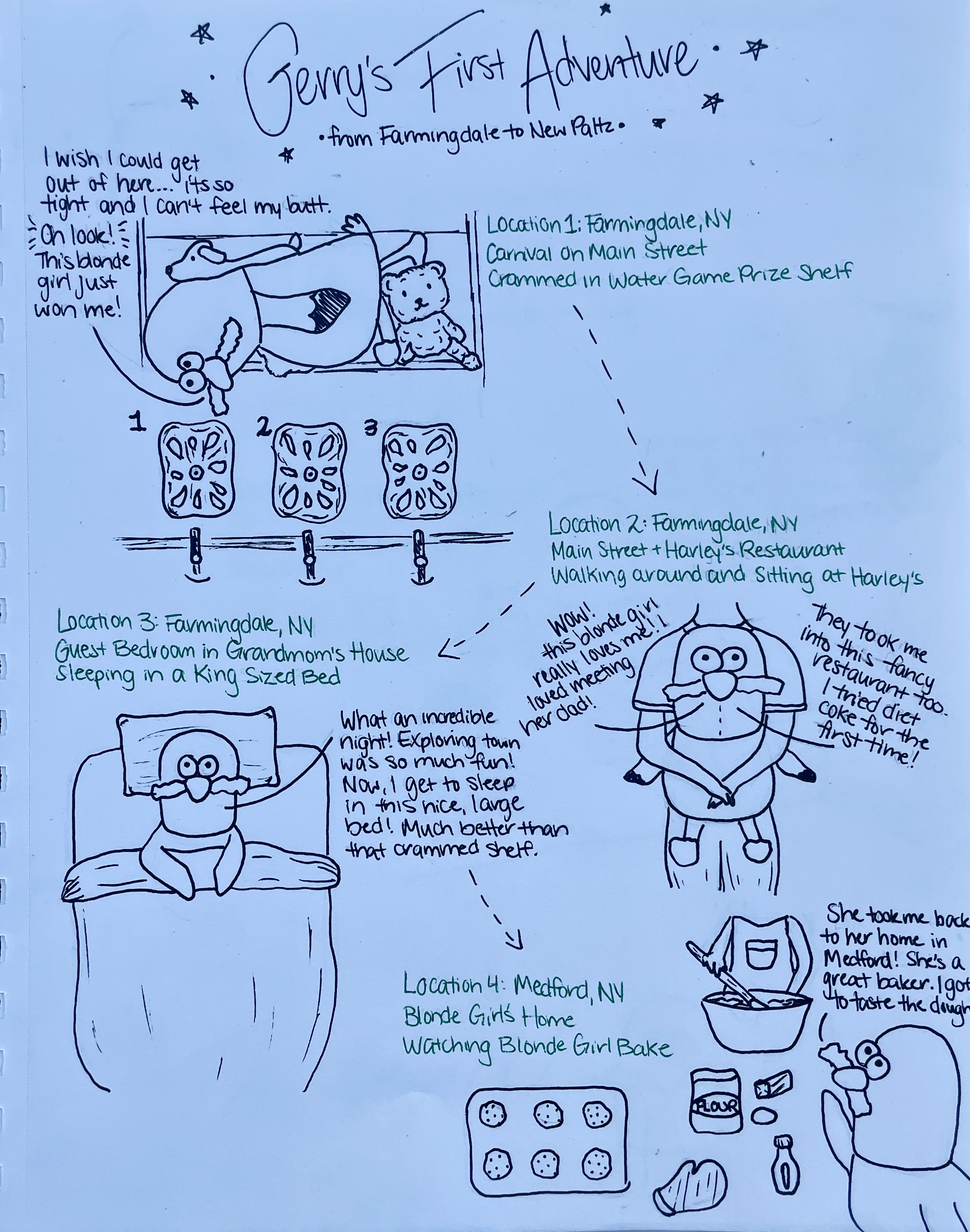
Gerry’s First Adventure: From Farmingdale to New Paltz Comic

Background Context: Gerry entered my life on October 11th, my first day home for fall break. I was spending the night at my Dad’s house in Farmingdale, NY and we had plans to go to the town fair together. Coming across a water gun game booth, I came across Gerry and immediately fell in love with him. His quirky eyes, floppy wings, and the french fry sticking out the sides of his beak filled me with instant joy. In that moment, I knew I needed to bring him back home with me. This comic shows the process of getting Gerry and the journey he took from Farmingdale, to my house in Medford, then finally, my dorm room- his permanent home. He reflects on his travels from that weekend, sharing his encounters with new people and the endeavors he took along the way.

From Fabric to Jean: The Production Process of Old Navy’s High-Waisted Wow Flare Jean


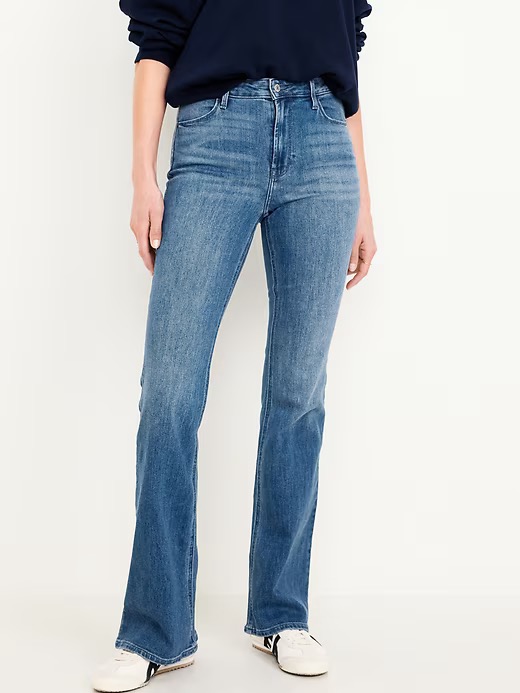
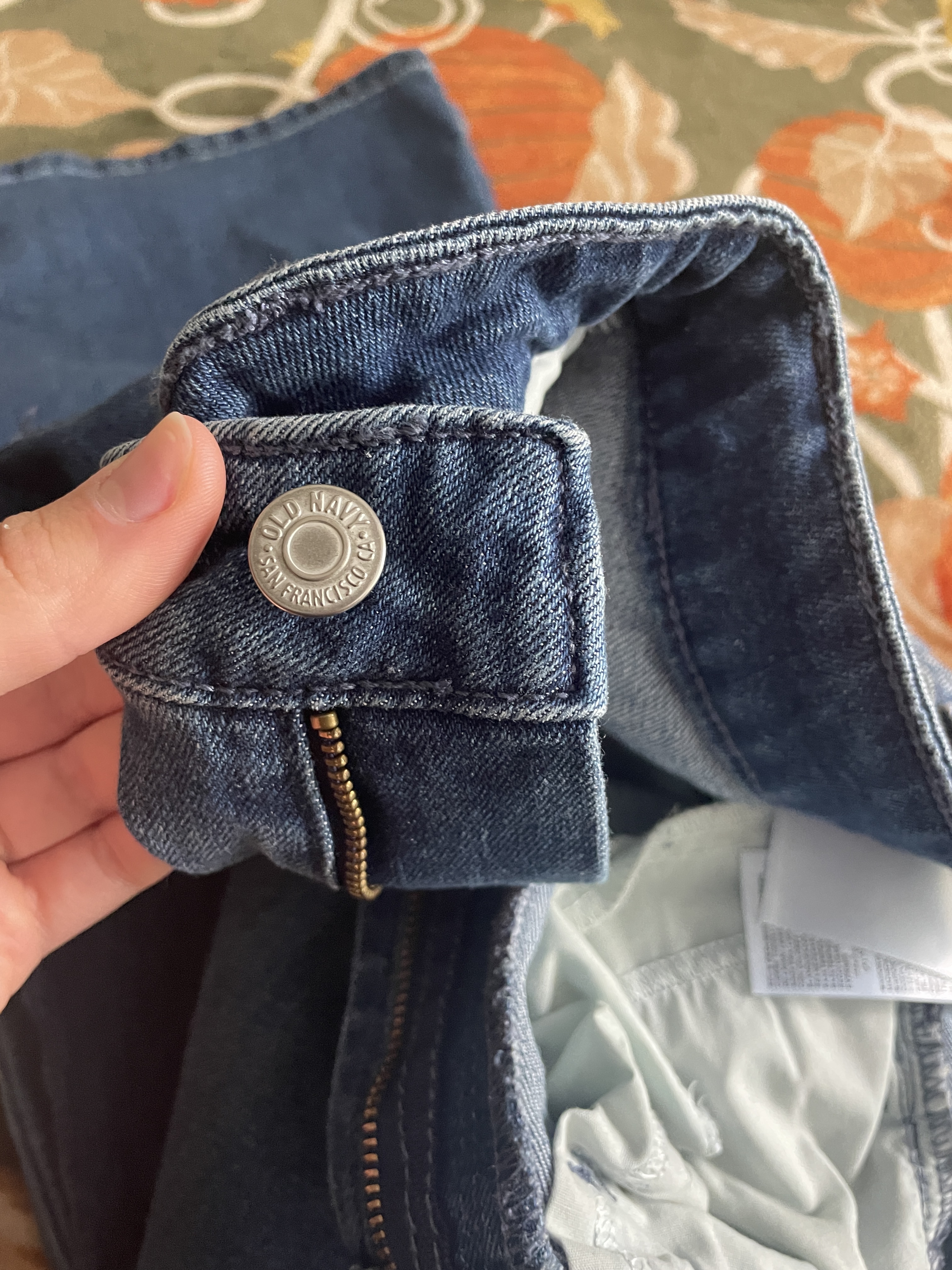
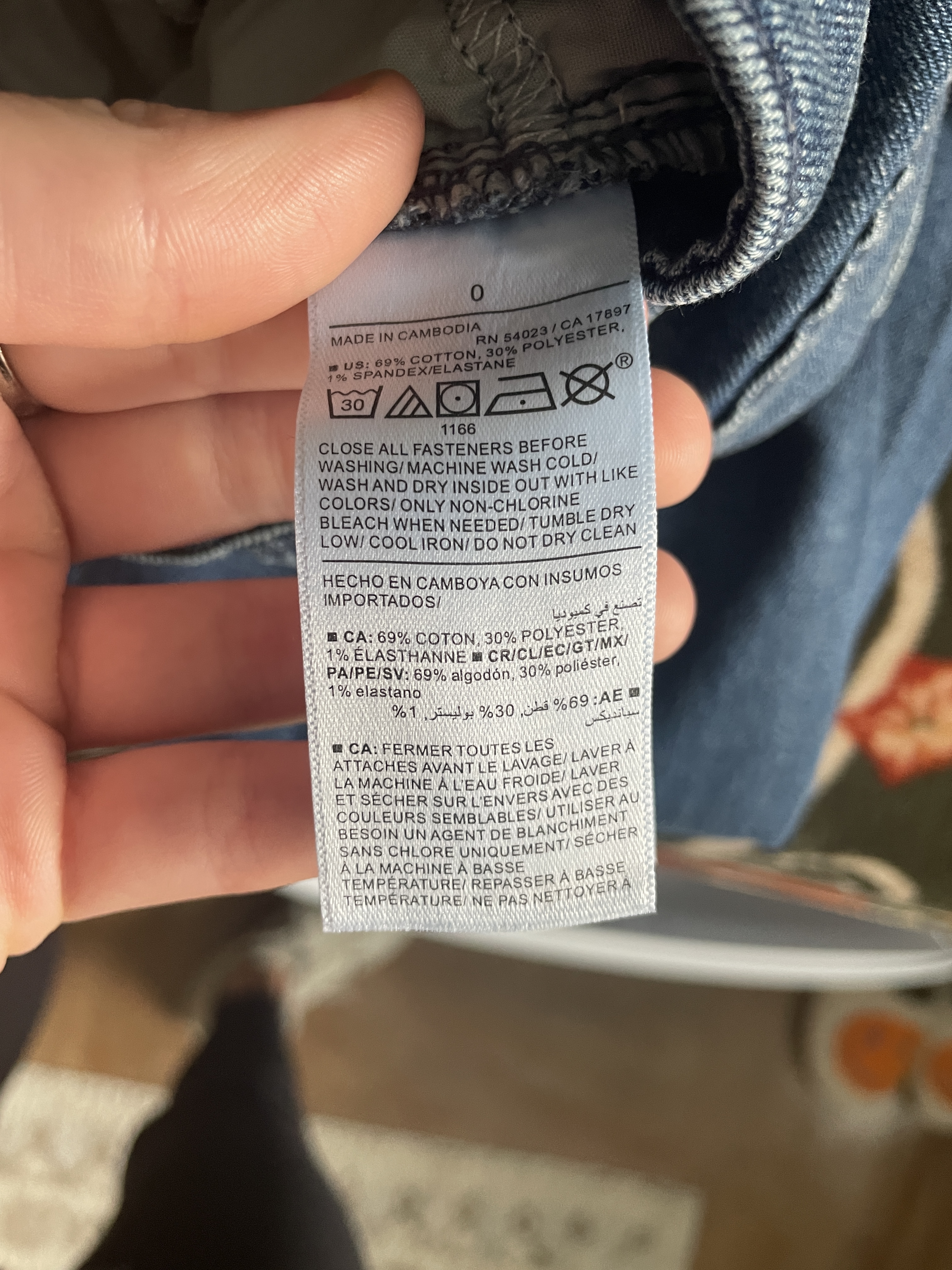
After a recent trip to the Poughkeepsie Galleria, I returned home with a pair of new jeans from Old Navy. The High-Waisted Wow Flare Jeans feature a medium wash and are crafted from a blend of materials. The fabric composition includes 69% cotton, 30% recycled polyester, 7% recycled cotton, and 1% spandex, offering a bit of stretch for a flexible fit. The brand offers different inseam lengths for regular, tall, and petite sizes. My pair, being a 0 regular, has a 32” inseam. The jeans are designed with a snug fit through the hips and thighs, flaring out from the knee. The jeans also feature a button front, belt loops, and front scoop and back patch pockets​. The button is engraved with “OLD NAVY” and “SAN FRANCISCO CA,” and the zipper below is an antique bronze. The outside stitching blends with the medium wash, making its appearance very subtle.

When I purchased them, the jeans were minimally packaged and folded neatly on a shelf with others of the same fit. They were organized by size, with the smallest sizes on the top shelf and the largest on the bottom. A rectangular adhesive sticker on the left leg indicated the size and inseam, while two paper tags on the belt and right front pocket featured the Old Navy brand and product barcode. 

*Not my pair of jeans; Used to show the original tags and stickers when displayed in store*

Old Navy emphasizes sourcing sustainable fibers for its clothing, particularly for its cotton products. Since 2022, they have implemented more eco-conscious manufacturing practices including water-efficient production practices and the Mill Sustainability Program. All strategic mills owned by The Gap, Old Navy’s parent distribution center, are obligated to perform under this program to help build a more water-resilient supply chain and improve its social performance. When dyeing and finishing the High-Waisted Wow Flare Jeans, denim specialists carefully oversee the amount of indigo dye used to produce its classic medium wash. The total dyeing process typically takes 30-60 minutes from start to finish. A pre-wash gives the jeans their “one-wash look”, which involves a laundry procedure of washing the jeans in just water. Washwell™, an additional program used to manufacture all of Old Navy’s clothing, reduces the water used in garment dyeing and finishing by at least 20 percent compared to conventional methods. 

Old Navy’s transportation system involves a global supply chain, which sources raw materials from various countries including Bangladesh, Vietnam, and China. Based on the product’s tag, the High-Waisted Wow Flare Jeans were made in Cambodia. While the exact manufacturing location is unclear, The Gap primarily operates factories in Kandal, Cambodia according to the Cambodian Human Rights Portal. On average, it takes factories approximately 11-15 minutes to produce a single pair of jeans through the process of harvesting, washing, mixing, and then spinning the synthetic fibers. Sfgate News claims that Cambodian workers earn roughly $70 per month working in these factories. That would mean that a worker earned only $0.073 making my one pair if it took them 15 minutes to produce it. 

My jeans traveled approximately 8,749 miles to reach Fishkill, New York, home to one of The Gap’s distribution centers in Dutchess County. From there, they were likely transported to the Old Navy store at the Poughkeepsie Galleria. As of May 2024, the average spot rate for dry van trucking in New York is $2.02 per mile. It would cost $14.14 to transport my jeans from the distribution center in Fishkill to the Old Navy in Poughkeepsie since they are only 7.0 miles away from one another. 

To ship products efficiently, Old Navy uses a combination of sea, air, truck, and rail transportation, focusing on cost-effective and environmentally friendly methods. It’s unknown whether my jeans arrived in the U.S. by plane or cargo ship. Shipping a 20-foot container using ocean freight, which is the most common method, costs between $2,000 and $4,000 depending on demand, fuel prices, and port fees. If I knew the exact delivery route, I could determine whether they were taken to the distribution center by truck or train. Rail transport typically costs around $0.03 to $0.04 per ton-mile whereas trucking can range from $0.10 to $0.15 per ton-mile.

The journey of these jeans involved a great deal of resources, labor, and time. Learning about the history of my jeans deepened my appreciation for owning them and the privileges I have as a consumer. 

Works Cited:

Denimhunters. “How Jeans Are Made: The Pre-Washing Process.” Denimhunters, www.denimhunters.com/how-jeans-are-made-pre-washing/. Accessed 2 Oct. 2024.

Gap Inc. “Gap for Good.” Gap.com, www.gap.com/page/gap-for-good?cid=1086537. Accessed 2 Oct. 2024.

Gap Inc. “Product Life Cycle.” Gap Inc., www.gapinc.com/de-de/impact/esg-resources/governance-and-strategy/product-life-cycle. Accessed 2 Oct. 2024.

Gap Inc. “Water Stewardship.” Gap Inc., www.gapinc.com/en-us/impact/bridging-the-climate-gap/water-stewardship. Accessed 2 Oct. 2024.

Long John. “Jeans Recipe: What Is Needed for 1 Pair of Jeans?” Long John, www.long-john.nl/jeans-recipe-what-is-needed-for-1-pair/#:~:text=An%20average%20factory%20can%20produce,the%20wash%20treatment%20can%20start. Accessed 2 Oct. 2024.

MoverDB. “Container Shipping.” MoverDB, www.moverdb.com/container-shipping/. Accessed 2 Oct. 2024.

Old Navy. “High-Waisted Wow Flare Jeans.” Old Navy, www.oldnavy.gap.com/browse/product.do?pid=8568330020002&cid=3034852&pcid=3034847&vid=1#pdp-page-content. Accessed 2 Oct. 2024.

RSI Logistics. “Comparing the Costs of Rail Shipping vs. Truck Shipping.” RSI Logistics, www.rsilogistics.com/blog/comparing-the-costs-of-rail-shipping-vs-truck/. Accessed 2 Oct. 2024.

SFGate. “Garment Workers Say Gap Aided in Cambodian Strife.” SFGate, www.sfgate.com/news/article/garment-workers-say-gap-aided-in-cambodian-strife-2746484.php#. Accessed 2 Oct. 2024.

Sithi.org. “Garment Factories.” Cambodian Human Rights Portal, www.sithi.org/garment-factories. Accessed 2 Oct. 2024.

The 119-Year-Old Colander

Written By: Nikki Hirschkind

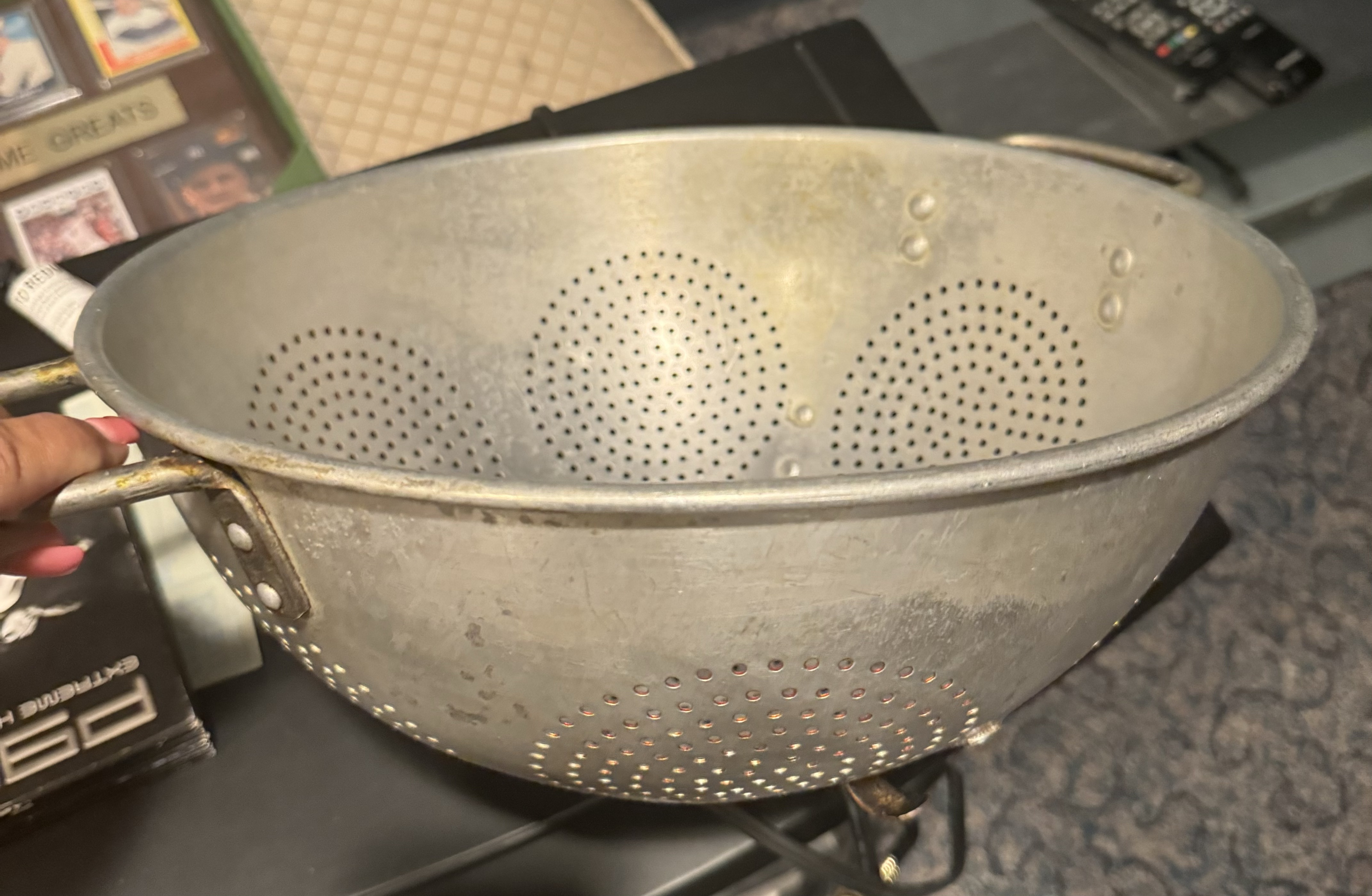
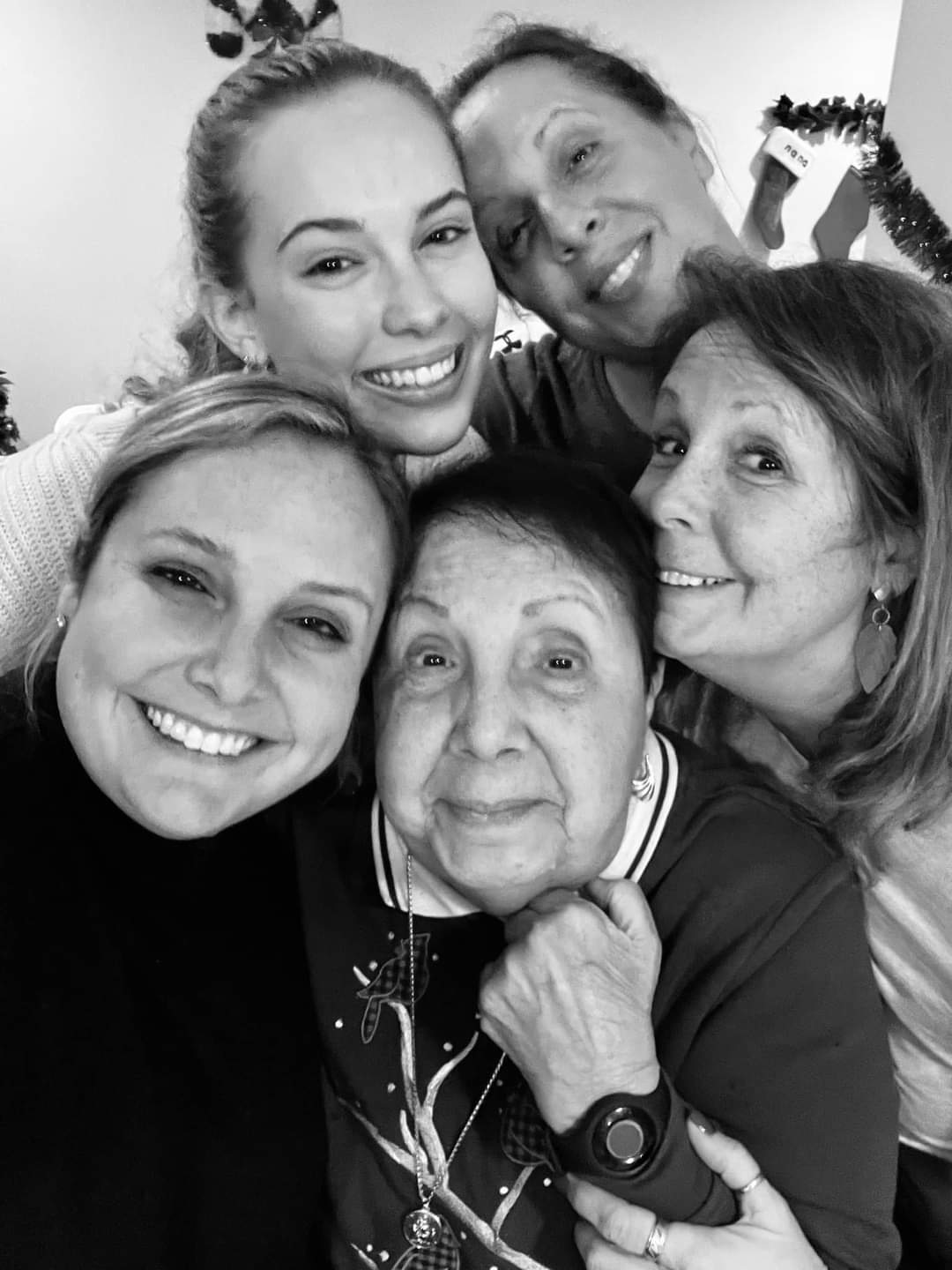
The object I will describe is a stainless steel colander that has been in my family for over 100 years. It has been passed down to generations of daughters, each using it in their own kitchens for decades. Today, the colander stays stored in my aunt’s basement until it is used for our annual Thanksgiving family dinner. 

The colander is large and spherical, with a wide rim that features a small lip. Two metal handles are attached to the exterior using four oval head screws. At the base, two curved hooks likely serve to hang it on a pot rack. Inside the colander are seven circular patterns of small rounded holes, allowing it to function as a strainer for ingredients of various sizes during cooking. Despite a few rust marks on the outer edges and inside, it is in excellent condition and works properly.

The story of the colander begins with my great-great-grandmother, Catherine Gandolfo. She was born in Palermo, Sicily, on May 2, 1888, and immigrated to the United States in Pennsylvania in 1908. Catherine married Frank Gandolfo when she was 17 and had four sons and a daughter between 1909 and 1929. One of the sons was the father of my grandmother, Nana. When talking to Nana about its history, she shared that her grandmother received the colander as a wedding gift from a friend at their wedding in 1905. However, there’s a possibility that her grandmother inherited it from her own mother, making the colander even older than we imagine.

My great-great-grandmother kept the colander until 1938, the year my great-grandfather, Matthew, married his wife, Theresa. As a wedding gift, Catherine gave the colander to her new daughter-in-law, starting a family tradition in which the colander would be passed down to the next daughter of the current owner.

Theresa and Matthew at their wedding in 1938

Theresa kept the colander in her kitchen in Garden City, New York, for nearly 22 years. In 1960, she gifted it to her daughter, Nana, on the day of her first wedding. The colander was brought to her home in Commack, where it remained there for almost 30 years. Nana fondly recalls using it to strain pots of ravioli or pounds of spaghetti.

Nana’s husband and daughters in the Commack house

            The colander became a staple at large family gatherings and pasta dinners during the time Nana’s children grew up. My mother, who is one of her daughters, cherishes the memories of those family dinners. Most Sundays were pasta night at the house, where there was always a big pot of sauce on the stove. For lunch those days, Nana would grab a meatball out of the pot and smash it up on a slice of Wonder bread for her and her daughters. My mother said she would always cook more pasta than the family needed. She would pour the large pot of steaming spaghetti into the colander, which held all of it without ever spilling over.

During Thanksgiving, Nana carries the tradition of preparing her famous stuffing. Using five loaves of stuffing bread and pounds of eggs, butter, and onions, she manages to perfect the recipe every year she makes it. The colander is perfect for mixing all of the ingredients and its depth easily holds the massive batch. 

In 1984, after remarrying, Nana moved to a new home in Holbrook, where the colander served many more pasta nights. In 2008, after the passing of her husband, she decided to move into my aunt’s house in Sayville. She brought the colander along, hoping it would carry the memories of her Holbrook home. Since then, it’s mainly been used for making her special Thanksgiving stuffing. Nevertheless, it’s always heartwarming to see my aunt pull it out for the holidays, watching Nana’s face light up with nostalgia.

Nana with her daughters during her second wedding in 1984

The colander carries a deep history, a symbol of family and love forged through a century of shared meals. Just like the durable stainless steel that has preserved it for over 100 years, the colander reflects the strength and resilience of our family and our connection with one another. Every year, I’m amazed to see it come out from its spot in the basement, still in pristine condition. I look forward to the day it’s passed down to me, as Nana intends for me to carry on its legacy.

The generation of daughters now (Top: Me on the left/My Mother on the right) (Bottom: My Aunt’s Daughter on the left/Nana in the middle/My Aunt on the right)

White Beehive Tealight Candle

The object I have chosen to discuss is a white beehive tealight candle that I have owned for nearly a year. I bought the candle as a souvenir at the New York Botanical Garden in the Bronx. I thought it would make a pleasant display piece in my room, reminding me of the great time I had that day. 

The candle is a product of Rite Lite Ltd., which has been a leading manufacturer of occasion-based Jewish gifts, decorations, and more since 1949. Many of their white honeycomb beeswax candles are used for Shabbat and Jewish holiday celebrations. They are all allergy-free, petroleum-free, and biodegradable. The New York Botanical Garden Shop is a retailer of their products and includes their pure natural beeswax candles. By checking their website recently, I’ve noticed that they no longer sell this particular candle anymore. 

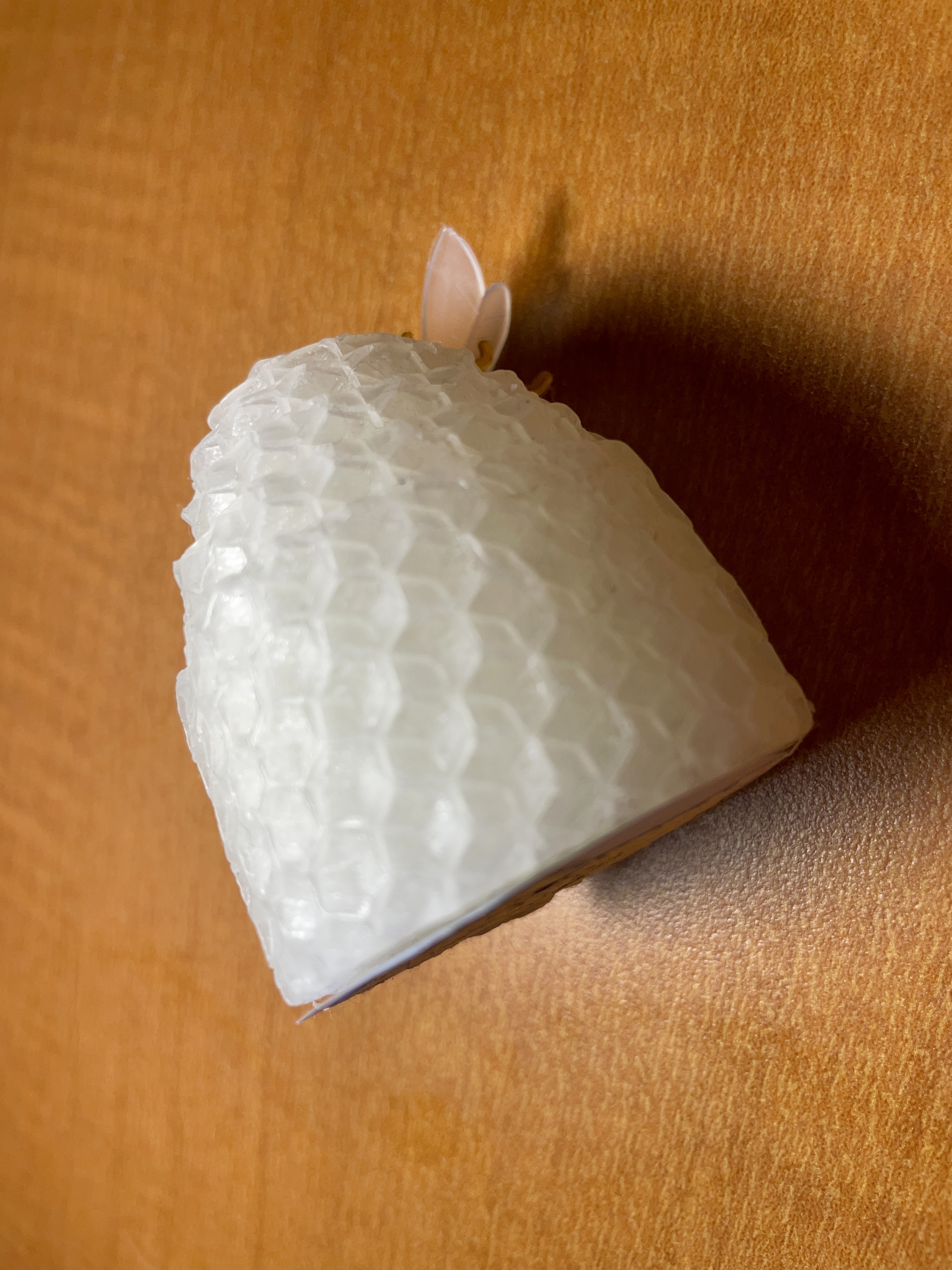
Frontal View of the Candle

Top View of Candle on Its Side

The candle has a rounded bottom and stands at 2.19 inches in height and 1.75 inches in diameter. It’s constructed in 7 tiers, where each tier gets smaller as it moves up from the base to the top. It is modeled this way so that it can resemble the shape of a beehive. The entire surface is adorned with honeycomb-like patterns that evoke the natural roots of the eco-friendly candle. Three parallelograms are engraved into the wax within each honeycomb, which is the shape of a hexagon. 

 The object also features a miniature, golden figurine of a honey bee lying on its surface. The bee has six legs and five sections indicating its abdomen. It also has two antennas and a set of long wings with two forewings and two hind wings. The bee’s body measures 0.875 inches in size and its wings measure 1.1875 inches. The bee’s body and wings are both made from a translucent, plastic material. The body has a golden hue of yellow, resembling the appearance of natural honey. The wings, however, appear as basic clear plastic. There are small linear markings on the wings of the bee, which were likely made during the production process. The candle itself is molded from a soft wax that is very delicate. If given enough pressure, the wax could be deformed by hand. The back of the candle is slightly dented, likely due to its fragility and being moved around. 

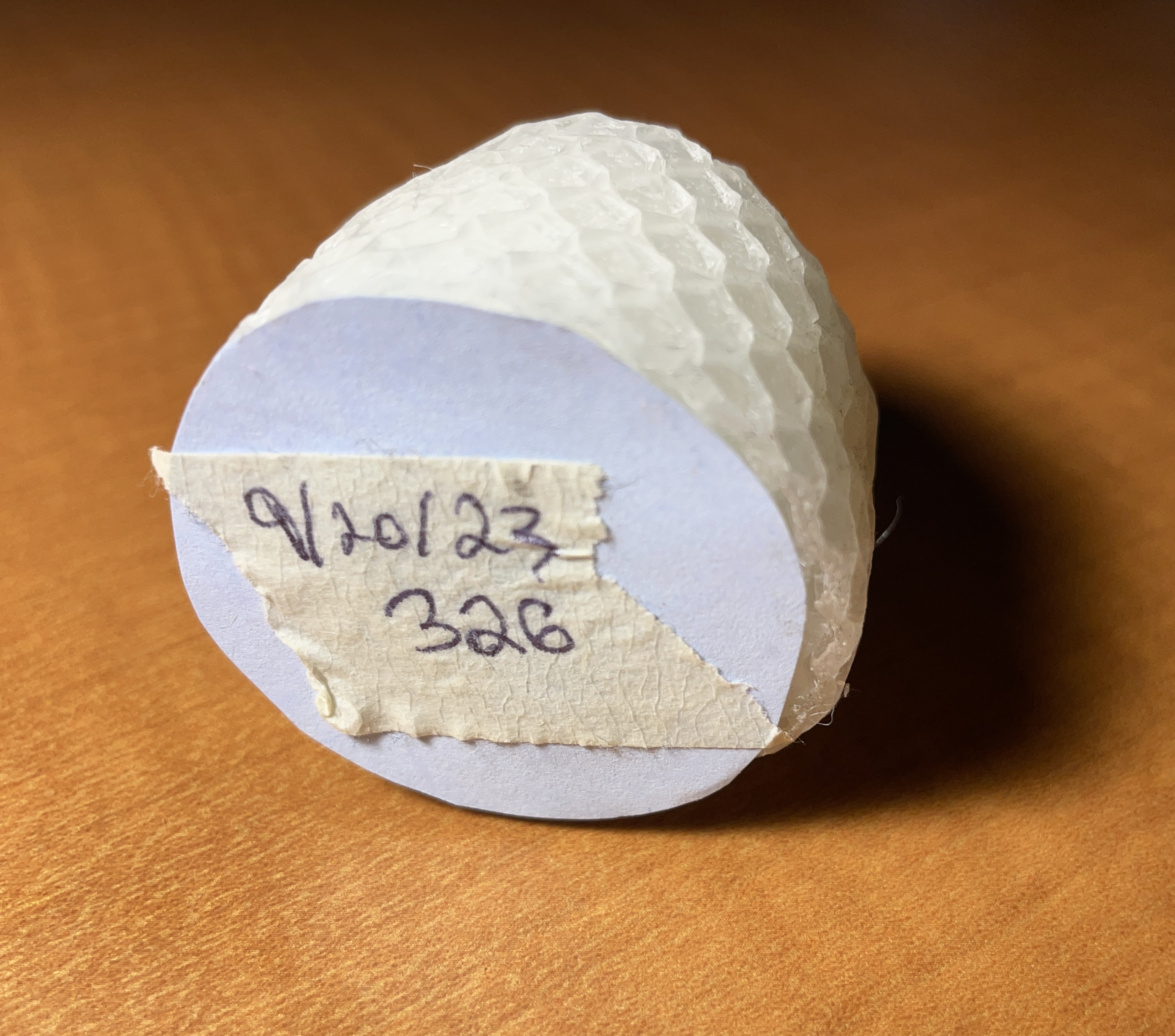
Bottom of the candle

Post-It and Craft Tape Attached to Bottom of the Candle

Beneath the candle is the coiled pattern of the wax as it is wrapped in a beehive shape. This feature is covered by a piece of a light blue Post-It that is cut out in an irregular circle. The circle was made to protect the bottom of the candle so that the natural wax doesn’t leave a residue on my desk. On top of the Post-It, there is a piece of ripped crafters tape with the date “9/20/23” and the number “326” written on it in black pen. 

The wick on all of Rite Lite Ltd.’s natural beeswax candles, according to their  ingredients list, is composed of 100% cotton and are lead-free. The top of my candle, however, has no wick. This unusual detail, including the date and number listed beneath the candle, are tied to the story from when I brought this souveniur back to school with me.

I went to the New York Botanical Garden with my roommate through the honors program at SUNY New Paltz. At the time, this outing was one of our first bonding experiences as roommates. We had only known each other for a couple of weeks, having met during Welcome Week and by living together for a short time. When browsing at the gift shop together, we both fell in love with the candle and agreed that it was essential for me to buy it. 

The beehive candle found a lovely home on my desk near all of my golden butterfly cutouts and faux leaves decorations. My roommate thought that it matched the aesthetic of our room very well. Unfortunately, its place there didn’t last long since it was taken away in the next Dorm Room Check. 

The candle was confiscated since they are a fire safety hazard in the rooms on campus. Although I bought the candle solely for decoration, I didn’t realize that having an unlit, wicked candle was forbidden. 

I had numerous conversations with the Resident Assistants and Directors trying to retrieve my candle. It held sentimental value to me and the day I spent with my roommate. After some time, they gave me the candle back but required me to cut the wick off. 

Even though the resident officials informed me about the potential risks of the candle when handing it back to me, the consequences of owning it still followed me and my roommate for months. Throughout the fall semester, we received several emails about our prohibited item and were even told to attend a private meeting with the Resident Director to discuss the seriousness of our situation. 

Owning the candle caused a lot of issues between us and the resident officials, yet my roommate remained kind and patient throughout it all. Despite not owning the candle herself, she didn’t allow the inconvenience of attending the fire safety lectures to affect her opinion of me. 

I see the candle as a symbolic representation of our friendship and my roommate’s character. Her patience and forgiveness during the situation allowed us to become great friends over time. She never got upset for having to face the repercussions of my own mistake. Instead, she chose to leave this moment in the past, which allowed us to bond over how much we had in common. Now, the candle has taken a deeper meaning than a small souvenir from our trip; it symbolizes our loyalty to one another. We’re always there for each other through moments of laughter, sadness, accomplishment, or distress. The bottom of the candle dates the time my candle was confiscated, which started the never-ending series of conversations with the resident officials. Today, my roommate and I can laugh about the situation and how my innocent mistake created our origin story as compatible roommates. 

Works Cited:

“Bee Parts: Anatomy and Senses of the Bee | Celebrating Nebraska Pollinators | PBS LearningMedia.” PBS LearningMedia, 2022, ny.pbslearningmedia.org/resource/celebrating-pollinators-bee-parts-anatomy-gallery/celebrating-nebraska-pollinators-image-gallery/. Accessed 6 Sept. 2024.

“Hanukkah Candles – Beeswax, Assorted Colors.” NYBG Shop, 2024, nybgshop.org/hanukkah-candles-beeswax-assorted-colors/. Accessed 6 Sept. 2024.

“View :: Rite Lite Ltd.” Ritelite.com, 2024, ritelite.com/Products/ProductView/Category/SHAB/4829. Accessed 6 Sept. 2024.