Family & Faith in a Chaotic and Changing World: The 1650 Jean Hasbrouck Family Bible

The Jean Hasbrouck Family Bible, dated 1650. Belonging to one of the original patentees of New Paltz, the leather bound French bible includes a listed genealogy of the Hasbrouck family and the entire Bible.

The Jean Hasbrouck Family Bible, dated 1650. Belonging to one of the original patentees of New Paltz, the leather bound French bible includes a listed genealogy of the Hasbrouck family and conveys the importance of religion to the French Huguenots who fled France from religious persecution. (Photo: © Miriam Ward)

Physical Description of the Object 
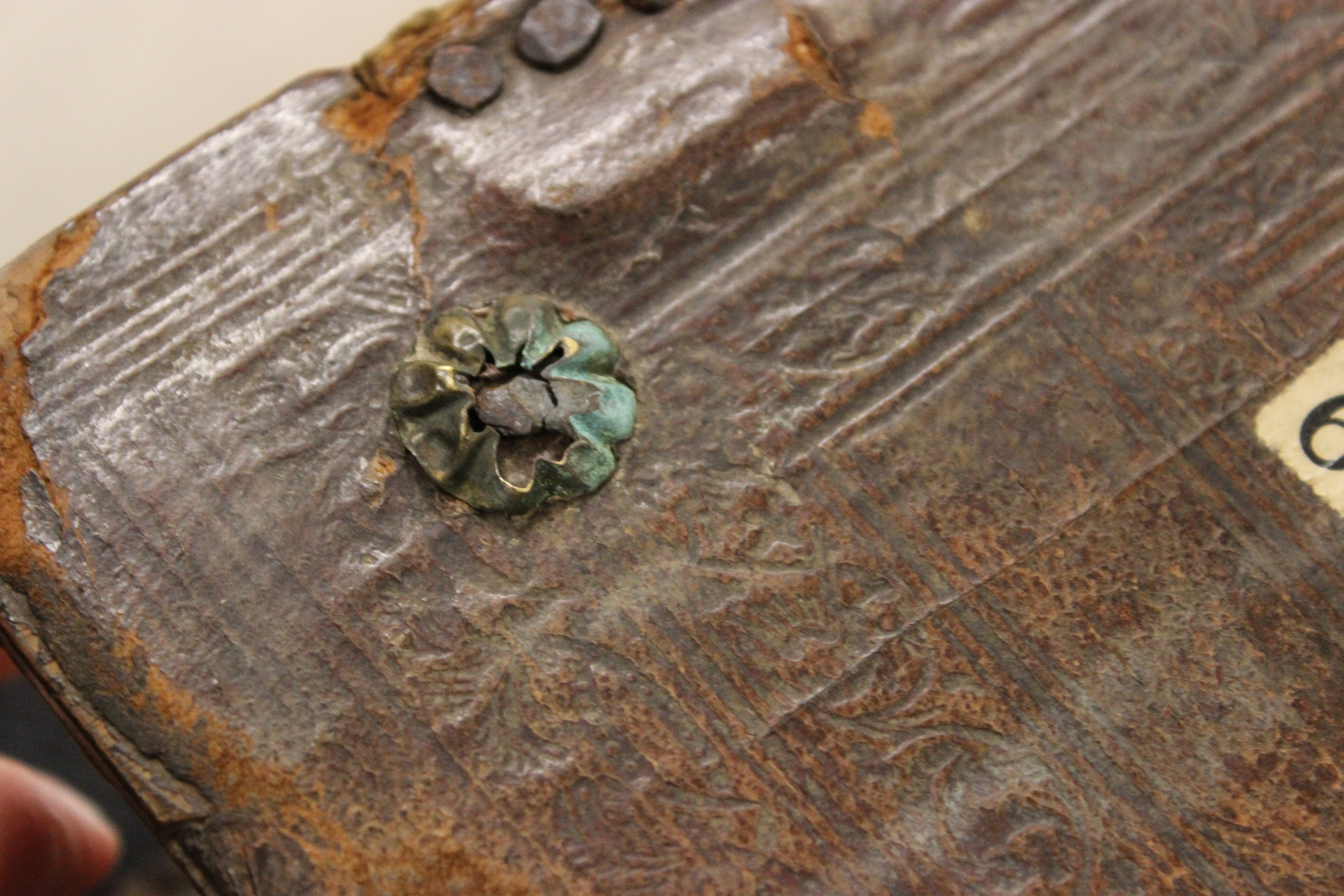
Jean Hasbrouck Family Bible, 1650. Detail showing copper ornament and leather bound cover. (Photo: © Miriam Ward)

The Hasbrouck Family is synonymous with Historic Huguenot Street and with the French Huguenots.  An object of great interest to the foundations of Historic Huguenot Street and one if its founding families is the Jean Hasbrouck Family Bible form 1650. This leather bound bible is extremely large and ornate. With over 500 pages, the bible remains almost in entire original form. With some restoration work done, the bible has a new bounding done by the historical society that reads “ Jean Hasbrouck French Bible.”

The cover and back of the 1650 Bible show wear and tear, revealing a strong wooden interior bound over the leather. Also, the front and back reveal copper straps that would have held the locks for the book. The first 11 pages of the Jean Hasbrouck bible are missing, including the important copyright page.

Provenance

Jean Hasbrouck Family Bible, 1650.

Jean Hasbrouck Family Bible, 1650. (Photo: © Miriam Ward)

Interior of the Hasbrouck Bible, including a handwritten genealogy. (Photo: © Miriam Ward)

The Jean Hasbrouck Family Bible holds a rich and telling history of both the Hasbrouck Family and the greater religious identity of the French Huguenots who settled in New Paltz, NY.  According to the Hasbrouck Family Website, the family name Hasbrouck is derived from a location, near the Ville d’Hazebrouck in Flanders (near Calais), France.The bible belonged to Jean Hasbrouck, one of the original patentees of New Paltz.  His exact birth date is unknown, but family histories put it at around the 1630s-1640s, outside Calais in France. Records show that Jean Hasbrouck died in 1714.  The history of the Hasbrouck Family comes to life when the bible is opened. Alongside the front cover and the back cover, lay hand written scripts detailing genealogy of the family. Unfortunately, many of these entries have given into deterioration and time, but many can be read. The eligible entries reveal to be the names of the children of Jean Hasbrouck and Anna Deyo. Their children were: Maria, Anne, Hester, Abraham, Isaac, Elizabeth and Jacob.  Jean married Anna Deyo in in 1676 in Manheim, Germany.  Jean Hasbrouck, left France and ended up in Mannheim, Germany alongside many other refugees. The bible stayed in the Hasbrouck family for years but the exact donor is unknown to Historic Hugeunot street, lost in time.

Narrative

Inside front cover of the Jean Hasbrouck Bible.

Inside front cover of the Jean Hasbrouck Bible. (Photo: © Miriam Ward)

The Jean Hasbrouck Family Bible is essential to the history of New Paltz. First of all, the bible reveals the incredible and rich religious history and ties that New Paltz was founded on. The bible, surviving and in the hands of Historic Hugenot Street today, shines immense light and importance of religious ties to the identity of the French Huguenots.

According to a family history compiled by descendant Kenneth Hasbrouck, the protestant church in Marck France burned around 1640 and the protestant population was forced to flee. Many French Huguenots at this time, fled to Mannheim, Germany for protection and with this haste transition could not bring many belongings with them. Even though it is not certain for sure, we can be fairly certain that Jean’s bible was made in France and that he brought it with him to Manheim, Germany.  Of the many objects to save and which to leave, the sheer fact that Jean saved this bible through such a tumultuous and changing time is very important.

Screen Shot 2015-04-16 at 10.03.51 PM

Jean Hasbrouck Letter of Recommendation, 1672 (Photo: © Historic Huguenot Street, Hudson River Valley Heritage)

Jean Hasbrouck, a founding patentee of New Paltz, received a ‘letter of recommendation’ from the French Church in Germany, confirming his and his wife’s good standing in the church, in preparation for his voyage to New York. The so called ‘letter of recommendation’ is striking. Written in 1672, this letter confirmed the relgious identity of Jean Hasbrouck and his wife. The fact that such a letter even existed gives us tremendous insight into not only the chaotic world that Jean Hasbrouck and his family lived in, but the importance of their religion to their life and identity.

The 1672 letter of recommendation shines a great light on the story of Jean’s bible. First off, it’s of importance because the weight and influence of such a letter of recommendation speaks to the importance of religion in the colonies. Further, the letter of recommendation speaks to the identity Jean and Anna Hasbrouck: that of French Protestant. The letter reads, “Jean Hasebruck and his wife are members of the Church Christ, and have lived among us during the time that they spent here, honorably & in a Christian way, attending the holy services, and taking Holy Sacrament of the Supper of our Lord Jesus Christ without scandal known to us. Thus we recommend them as such to our brothers in the Church where God will send them. Written at Mannheim in the Lower Palatinate this 17 March 1672 The leaders of the French Church in the said place & in the name of all…..” The letter of Recommendation from the French church in Germany cemented Jean Hasbrouck’s place in the colonies. The corelation between the family bible and the letter of recommendation goes hand in hand: the certificate allowed Jean and his family to join the church in the colonies by establishing their faith. The bible, materializes this faith.

The identity of French Protestant was central to the identity of Jean Hasbrouck, manifested in the family bible. On May 16th, 1672 Jean Hasbrouck and his wife Anna left Mannheim and sailed to Wiltwyck, New York in the Spring of 1673. In 1675, Abraham Hasbrouck sailed from Mannheim to Boston and ended up in New York to join his brother Jean and their small group of French Protestants. Jean and Abraham ended up becoming founding patentees of New Paltz, NY where they eventually settled.From a journey from Calais, France to Mannheim, Germany on a boat to New York Jean held onto his family bible. Jean and Anna ended up having seven children that they raised in New Paltz, NY. The names of the children are written in beautiful handwriting on the insides of the bible: Maria, Anne, Hester, Abraham, Isaac, Elizabeth and Jacob. In 1701, Jean Hasbrouck received permission from the Colony of England to “buy, sell, and trade lands, tenements, and hereditaments in this Kingdom…” The 1701 edict reveals the merchant nature of Jean Hasbrouck and how involved his family was. Jean, as a founding patentee of New Paltz, was extremely involved in the community. Along with his brother Abraham Hasbrouck and Louis Bevier, he served as the founding commissioners of the early courts of New Paltz. Serving in the court as a commissioner, Jean Hasbrouck held a very high status in the town.

Jean Hasbrouck will of 1712.

Jean Hasbrouck will of 1712. (© Historic Huguenot Street, Hudson River Valley Heritage)

In 1712, Jean Hasbrouck died. His last will and testament survives and has been translated by Historic Huguenot Street. The will, written in Dutch, reveals how Jean and his family were fluent in both French and Dutch. New York, after being a Dutch colony, certainly held onto its Dutch roots. The will conveys extremely devout and emotional language, conveying the importance of faith to Jean Hasbrouck. Jean writes, “…so I commend my Soul To God almighty my Creator and To jesus Christ my redeemer and To the Holy Ghost my sanctifier And my body to the Earth whence the same came from to be buried in A Christian fashion And rest there until my Soul and Body will be united upon the day of resurrection And receive the Eternal Bliss of salvation which God of his grace through the One merit of our savior has promised and prepared To all who have sincere and complete faith In him….” Jean Hasbrouck’s will of 1712 conveys how important and essential faith and religion were to his life. His bible reveals just that.

The Jean Hasbrouck Family Bible of 1650 conveys the centrality of faith to the life of the French Huguenots. In settling, and fostering, a community fleeing of religious persecution, Jean and his family were guided through faith.


Special thanks to Carrie Allmendinger of Historic Huguenot Street.

Works Cited

Fosdick, Lucian J. The French Blood in America. London: Flemming H. Revell, 1906. Print.

Hasbrouck, Jean. “Jean Hasbrouck Will 1712.” 1712.  Handwritten text. Historic Huguenot Street, New Paltz. Hudson River Valley Heritage. http://hrvh.org/cdm/compoundobject/collection/hhs/id/1491/rec/11

Hasbrouck, Jean. “Jean Hasbrouck Letter of Recommendation 1672.” 1672. Handwritten text: Manheim, Germany. Historic Huguenot Street, New Paltz. Hudson River Valley Heritage. http://hrvh.org/cdm/singleitem/collection/hhs/id/16/rec/2

Hasbrouck, Jon. “Hasbrouck, Our Family Name.” Hasbrouck Family. Web.  http://www.hasbrouckfamily.org/name.htm

Hasbrouck, Kenneth E. The Hasbrouck Family in America with European Background. Vol 1. New Paltz: Hasbrouck Family Association, 1961.  Print

Lawrence, Thomas. “Notary- Certificate to Jean Hasbrouck.” 1701, London. The Hasbrouck Family in America with European Background. Vol 1.

Roth, Eric. “New Paltz Town Records (1677-1932).” Historic Huguenot Street. Web  http://www.huguenotstreet.org/new-paltz-town-records/?rq=jean%20hasbrouck
In the Palm of Your Hand: Thoughts on a 1907 Prayer Book

After reading Darnton’s The History of Books, I was inspired to further investigate prayer books and the role of the publisher.  After my research on my great-grandmother’s French prayer book from 1937, my interest for these books grew intensely. The book I chose to focus on this week is a prayer book from my great-grandmother Mary Egan Ward. Mary Ward was the mother of my grandfather John J. Ward, Jr. who was married to Marguerite Ward. My earlier blog posts focused on the prayer book on my grandmother’s side, Marguerite. This prayer book belonged to my great grandmother Mary Egan Ward, on my grandfather’s side.

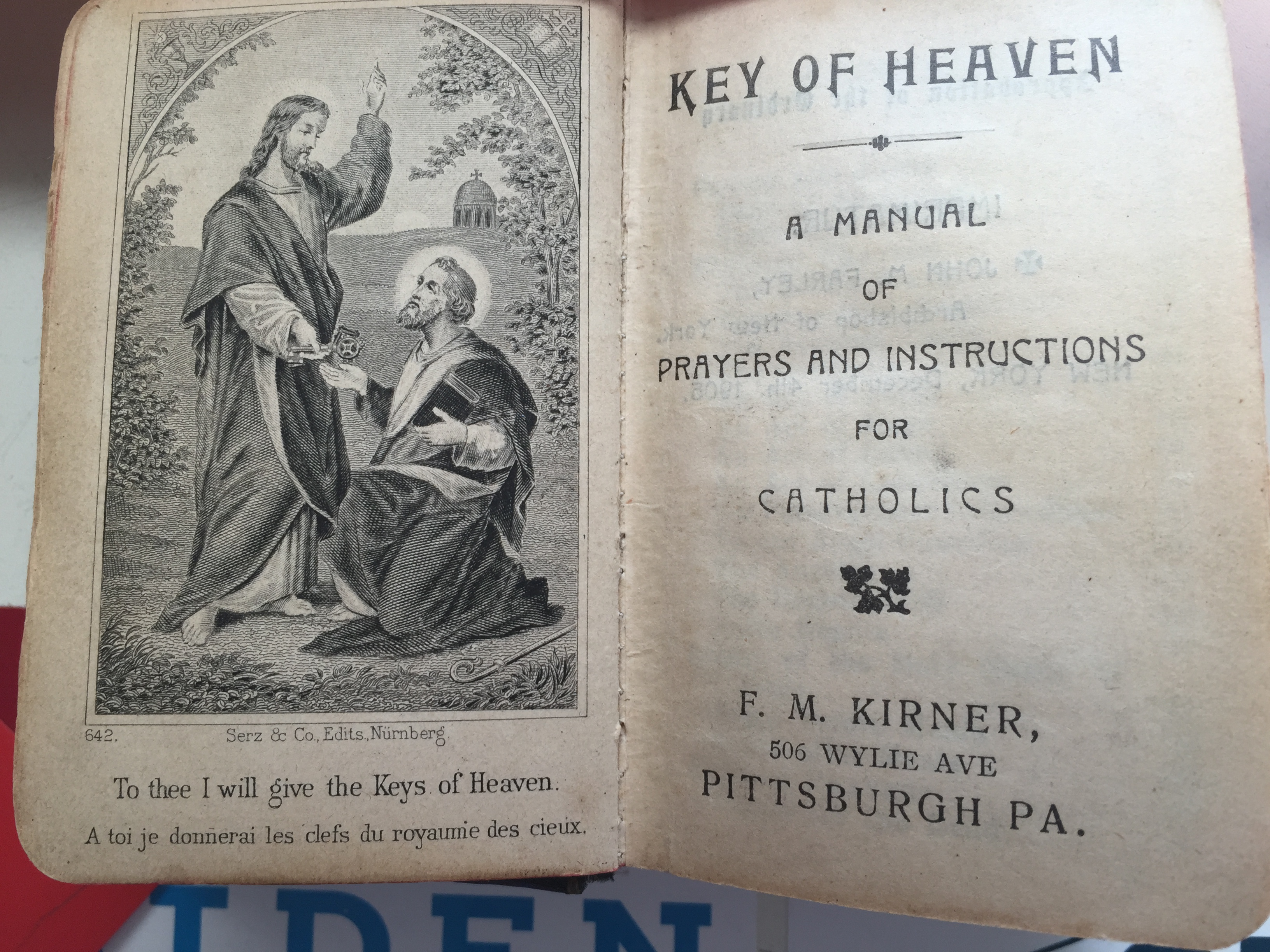
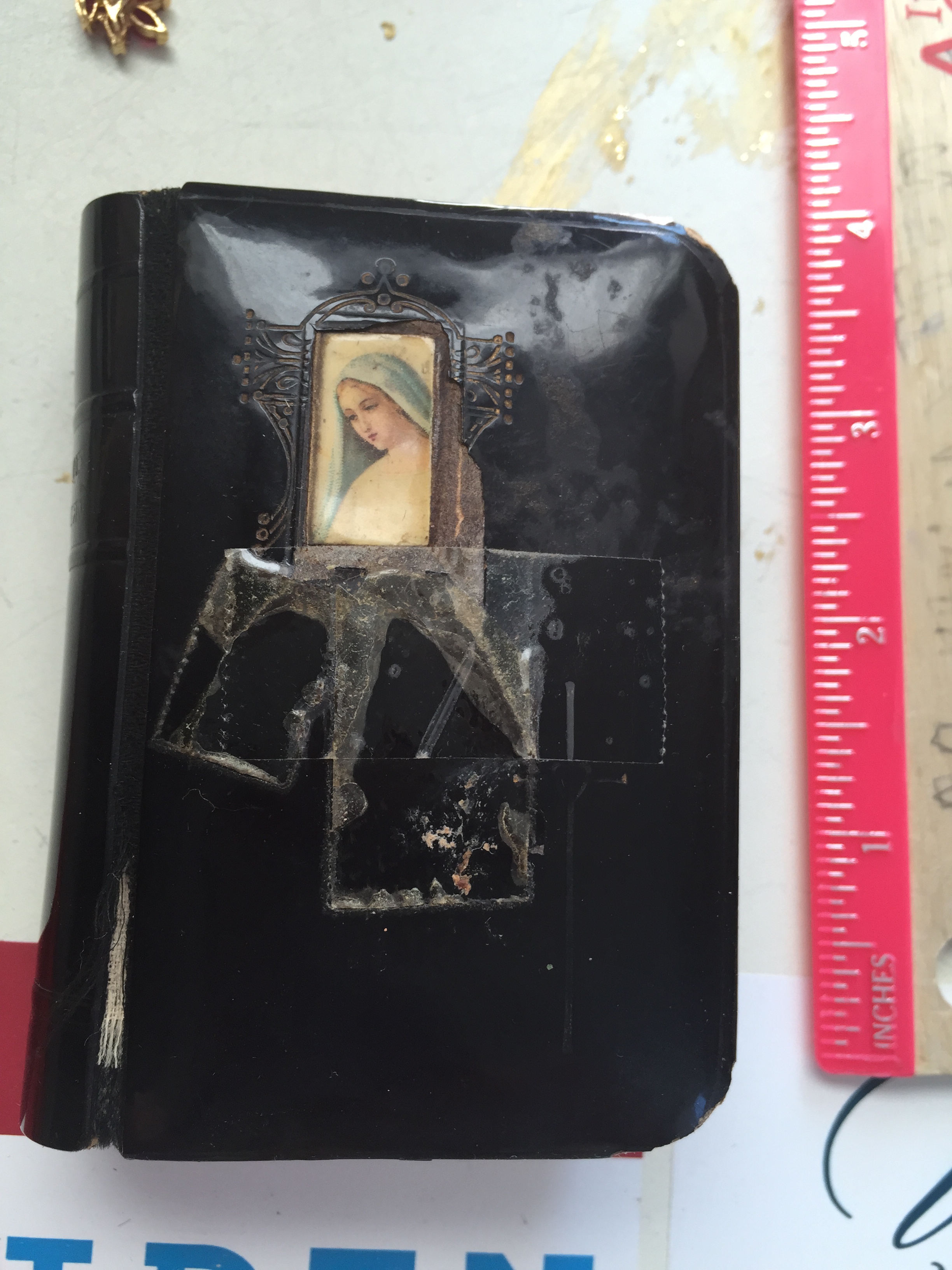
IMG_6193The prayer book is titled “Key of Heaven: A Manual of Prayers and Instructions for Catholics.” The book is so small it’s hard to believe. The book measures roughly four inches long, and fits perfectly into the palm of the hand. The book shows extreme wear. The black cover has scotch tape on it, to hold together a rip. Yet in the extremely small book, there is an engraving on the front of Mary in full color. When the book is opened, the first page is extremely ornate. The front  cover has stitching around a cross and crucifix, with the adjacent page revealing beautiful script in gold lettering. I found the book in my grandfather’s apartment in White Plains, NY. My grandfather passed away this past December at the age of 101. My research into the 1937 French prayer book on his wife’s mother, remained in the back of my head as a I went through his belongings. Lo and behold, in my grandfather’s bedroom I found this small prayer book. I couldn’t believe its small size and the how old it was. The book contains a plethora of prayers and poems to be utilized both in the Church and at home.

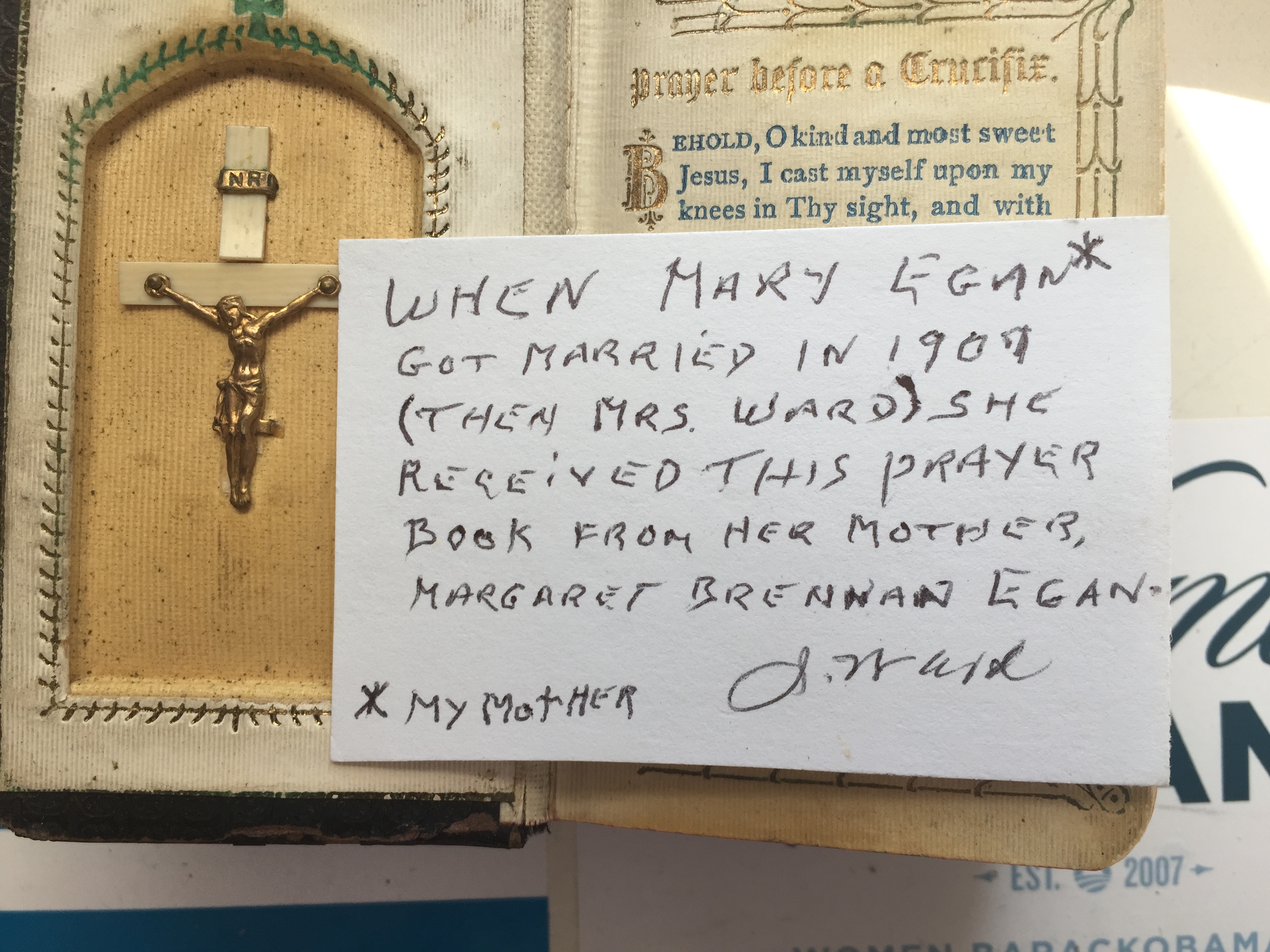
IMG_6428yes Inside the book there is a note, written in my late grandfather’s handwriting, that says “When Mary Egan got married in 1907 (then Mrs. Ward) she received this prayer book from her mother, Margaret Brennan Egan.” The small prayer book was a wedding gift to my great-grandmother, by my great-great grandmother. In 1907, Mary married John James Ward in Pittsburgh, PA.  They had five children, including my grandfather, John. In the early 1920s, my grandfather contracted pneumonia and was hospitalized for several weeks. Shortly after the ambulance took my grandfather to the hospital, the ambulance came for his mother. I recall my grandfather telling me the story of how he had given his mother pneumonia and how he felt incredible guilty for that.  She died in the hospital and my grandfather survived.

IMG_9366meThe history of my great-grandmother is important to understanding the sentiment of the prayer book. My grandfather kept the little prayer book with him up until his death in 2014. I wish I knew when my grandfather acquired the prayer book. Maybe he obtained the book at a young age to remember his mother when she passed in Pittsburgh. Or maybe he found the book as he was cleaning out his father’s apartment after his father’s death in 1970. I cannot know that history but what I do know, is this small prayer book survived one hundred and five years. It is not a stretch to infer the importance of the book to my grandfather. He revered his mother greatly and after losing her at such a young age, I can only imagine the pain and suffering he himself felt. What tangible evidence I do have of the book, is the history of the publisher and printing.  My research in to this 1907 prayer book proved to be much more successful than my history into the publisher of the 1937 French prayer book. I’m sure the language barrier has something to do with that.

Industries and Wealth of Pittsburgh, 1890

Industries and Wealth of Pittsburgh, 1890

The publisher listed on the prayer book is F.M. Kirnerfrom  Pittsburgh PA. Online, I found a PDF of an illustrated book published in 1890 titled “Industries and Wealth of Pittsburgh and Environs.” The introduction states the book’s purpose as  “….portraying the efforts of those who have so ably assisted nature in the process of making Western Pennsylvania the most remarkable portion of the American continent.” The illustrated text provides mini histories on several industries and merchants in Pittsburgh. It is in this book where I find information on the prayer book’s publisher, F.M. Kirner. The history is written in an extremely close and humanistic touch. FM Kirner is listed as “Dealer in Church and School Supplies, Corner Thirty-seventh and Butler Streets.”  The description of F.M. Kirner from this history text is so fascinating. The text continues to describe the goods in the store,

” These goods have been imported direct from Europe by Mr. Kirner, and selected with great care and excellent judgment.The array of goods presented here Is a most interesting and attractive one, and the house Is the headquarters in its line in Pittsburgh for church and school furnishings of every description, and tbe trade, which is both wholesale and retail. Is spread over the whole of western Pennsylvania, eastern Ohio, Western Virgina, etc. Mr. Kirner is a native of the city and a gentleman of fine business tact and of the highest repute.” 

IMG_5388The popularity of the F.M. Kirner’s prayer collections and books is evident from the array of editions I found online. My great-great grandmother, also a native of Pittsburgh must have visited Kirner’s shop and picked up the book for her daughter, my great- grandmother Mary. When the book is opened, in script at the top of the book reads “Holy Ghost.” Honestly, I have no idea who wrote that in the book. It could have been the book’s owner, my great-grandmother, or it could also have been my grandfather. The fact that the book was given to my great-grandmother  by her mother on her wedding day in 1907 is very important . The gift of mother to daughter on her wedding day, is an important one. The fact that a prayer book was given reveals the values and faith of my  great-grandmother.I’m sure my great-grandmother used this prayer book at church and in the home. And the intimacy of the small object shows how personal this text was intended to be to its owner. The prayer book, in its small form, was fashioned to be for the individual. This is not a text that would be passed around or shared between many individuals. “Key of Heaven” was meant to be a key to the individual.

I am extremely warmed by the fact that I could further research into this book and in the process, find out more about my great-grandmother. The exploration into this 1907 prayer book is, my own small way of honoring my grandfather’s legacy whom was an extremely important figure in my life.

The Shift to the Vernacular: From Church to Home, a comment on the French Missal

For this week, I chose to focus my research on my objects and ‘habitus’ by researching the greater history of missals in France. Since I don’t have the privilege of visiting my great grandmother’s apartment to view the habitus of her French Missal, nor do I have access to photos of her apartment, I can only imagine where she kept the missal. Most likely, she kept the book in a very special place. I imagine the leather-bound book resting in the living room, atop a table. Easy to get to but not in harms way. I also imagine the Missal by her bedside. Maybe she enjoyed reading prayers before bed. The Missal must have provided some level of comfort  and security to her for she lived in the apartment alone in her later years. Alas, that is just speculation.  So, I’ve decided to research in what is factual and known about the greater history of liturgy moving from Church to home.

The Council of Trent (1543-1563)

The fact that my great-grandmother held this Catholic Missal in her home, did not strike me at all. Until, Professor Mulready pointed out that this symbolized quite a phenomenon in Catholicism. Professor Mulready suggested a text that provided of great assistance with my research, “The History of the Vernacular and the Role of Translation” by Keith Pecklers and Gilbert Osdeik. Prior to the rise of the vernacular and translation, missals strictly only included Latin texts. Mass was said in Latin, for it was seen as the pure and old language of the Romans. The Church viewed mass and the text of mass to be a hierarchal and unchanging fact. There had been several attempts throughout history to shift mass to the vernacular and promote translation. At the Council of Trent in 1545, bishops split over the proposition to translate missals into the vernacular. Surprisingly, a majority of bishops accepted the translation of the liturgy into the vernacular but the proposal ultimately was shot down. The extremely important council of Trent concluded that “out of pastoral concern for the faithful, it was not the proper moment to shift from Latin to the vernacular; more time for catechis would be needed.” The liturgy and the Mass was viewed by the Church in a hierarchical order. The word of Jesus could not be translated–that was sacrilegious. Change, no change.


http://www.youtube.com/watch?v=Ms9axxojhpk

Fast Forward to 1937, where my great-grandmother was living in a suburb of Paris in Gagny. To view the world my great-grandmother grew up in, view the video about which features footage from the turn of the 19th century. My father sent me this video the other day as a resource because he knows I’m doing this project on the French missal. For my great-grandmother to own a missal truly represented a major shift in the Church’s view of the liturgy. Caught in a world on the eve of a second World War, and a complex and changing society, the word of the Lord was translated into French. The liturgy moved from closed off and intangible, to a very fluid and open text. The significance of my great-grandmother’s missal involves the fact that the majority of the text is in French. A major shift is happening here in 1937: faith and religion for Roman Catholics was becoming personal, in a tangible and physical way. The greater context of the missal, being incorporated into everyday life and easily accessible by the greater public is momentous.

The 1937 World Exposition in Paris. The increasingly international city my great-grandmother lived in.

The missal, in it’s small dimensions, was widely available at this time. It could be brought around and easily fit in a pocketbook. Rather than having one habitus, to borrow from Miller, the book was constantly on the move. The habitus of the missal was vast and endless. The novelty of the French missal in 1937 reflects the international shift and increasingly world view of Paris at the time. Housing a major international arts exposition in 1937, Paris was continuing to be a city of arts and culture. The popularization of the missal reflects the modern city where no longer could bishops in antiquated dress dictate faith for those city dwellers. For my great-grandmother, the missal did not sit in her apartment but rather accompanied her to mass and into the city. Fitting perfectly into her hands, the book was picked up, touched, and used for song and prayer. For my great-grandmother, a woman who valued her faith so strongly, the missal must have provided great expression. The increased availability of the French missal is something that is hugely important for process and intimacy of faith. I’m humbled to know that such a small object provided my great-grandmother with such inspiration and strength.


10 rue Cassette: Place Matters

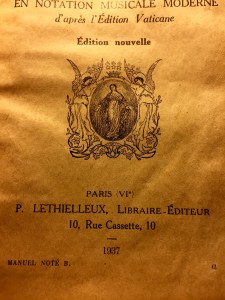
FullSizeRender (1)For the following blogpost, I’ve decided to focus on the history of my object, the 1937 French Missal in terms of its origins and make. Reading The Hare with the Amber Eyes  has had a profound effect on my research with my object. For one, I know have a strong sense of place and how place factors into the function and importance of the object. While reading De Waal’s account of his family Netsuke, I found myself aching to go to Paris to do on the ground research about the history of my great grandmother’s prayerbook, published in 1937. Reading how De Waal couldn’t properly do his research on the Netsuke without seeing them in their original home, whether in Paris, Vienna or Tokyo, taught me the importance of seeing the object in its original form, if you will. I’ve been so interested to know more about the publisher of the missal, where it would be sold, etc.  Paris is key to my story too of the 1937 French missal and I want to find out about its origins. My search into the publisher and artist of the engravings began with an address.  On the second page of the book reads the name of the publisher, P. Lethielleux, 10 Rue Cassette, Paris. The address is printed several times on the first few pages and last few pages of the book.

Google Stree

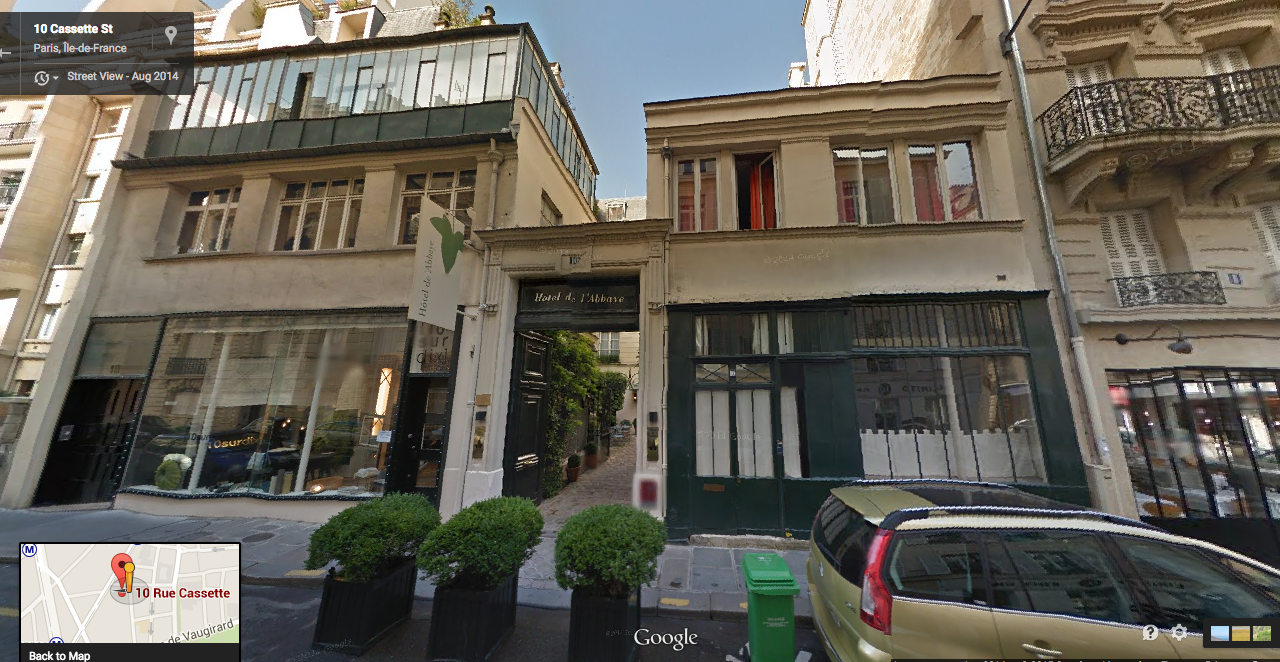
Google Street view of Rue Cassette

A quick Google Maps search allowed me to see the location of the former publisher, P. Lethielleux. Located in the heart of Saint-Germain in Paris, 10 Rue Cassette now belongs to the posh Hôtel Abbaye. Starting with place seemed most appropriate so I decided to dig deeper. Researching P. Lethielleux online only led me to several Google Books entries which attribute the publisher to hundreds and hundreds of books from the late 1800s to the mid 1900s. The last book I can find online attributed to the P. Lethielleux is 1964. The books range from children’s missals to theological collections to a 1929 publication of Ben-Hur.

Screen Shot 2015-02-08 at 6.06.08 PM

10 rue Cassette, Paris.

My next thought, maybe I’m typing in the address wrong if the hotel keeps popping up. My next mission was to find out what year the hotel was built. No luck on their English website or online. There’s a fun tool on the hotel’s website which allows you to call the hotel for free through an online service. So, I typed in my cell number and was promptly connected to the hotel. The gentleman picks up the phone in French and I freeze, it’s been a while that I’ve practiced my French so I shudder and  ask if he speak’s English. He says yes and I ask him when the hotel was founded. He had trouble hearing me but finally understands and tells me, in the early 1970s. This makes sense because the last trace I can find of P. Lethielleux is a 1964. I hang up and wonder why the receptionist sounded so odd. Then I realized it was about 2am French time, I felt terrible. Again, I wish I could be in Paris. Alas.

Now I have a location of the publisher but am still missing a history of the publisher, P. Lethielleux. After an exhausting Google and Wikipedia search, all I can find is different online merchants selling antique books, which include various missals and theological books. I cannot find anything on the history of the publisher. This is frustrating to me because there are extensive online instances of mentioning P. Lethielleux in terms of attributing books to the publisher, but alas, no history. So, I set my Google to French in the hopes that some history about the publisher would show up on a French website. My French is lacking, but I can make my way through the bare minimum. I search and search and….nothing. Only this time I’m directed to French booksellers selling Lethielleux’s books. What I can gather from the exhaustive online searching is that Lethielleux published hundreds and hundreds of books. There are several websites documenting these published books with accompanied pictures of little books that look just like my great- grandmother’s. What is lacking is a history.

 As a History major, I was never trained on how to research antique books. I feel like I’m grasping at a history–wanting some history of a book publisher– that’s not accessible to me right now. I wish I could be like Edmund de Wall and find some Catholic historian in Paris who could help me. I’m wondering if P. Lethielleux was also responsible for the engravings or if he just acted as a publisher.  Where was the missal sold? And how common was this book? From my preliminary research, it seems like something very common yet I feel a true connection to the missal in a way to learn more about my great-grandmother. Next week I want to focus more on finding information about the illustrator and the publisher, but I don’t know where to start.

Revisiting the 1937 French Missal

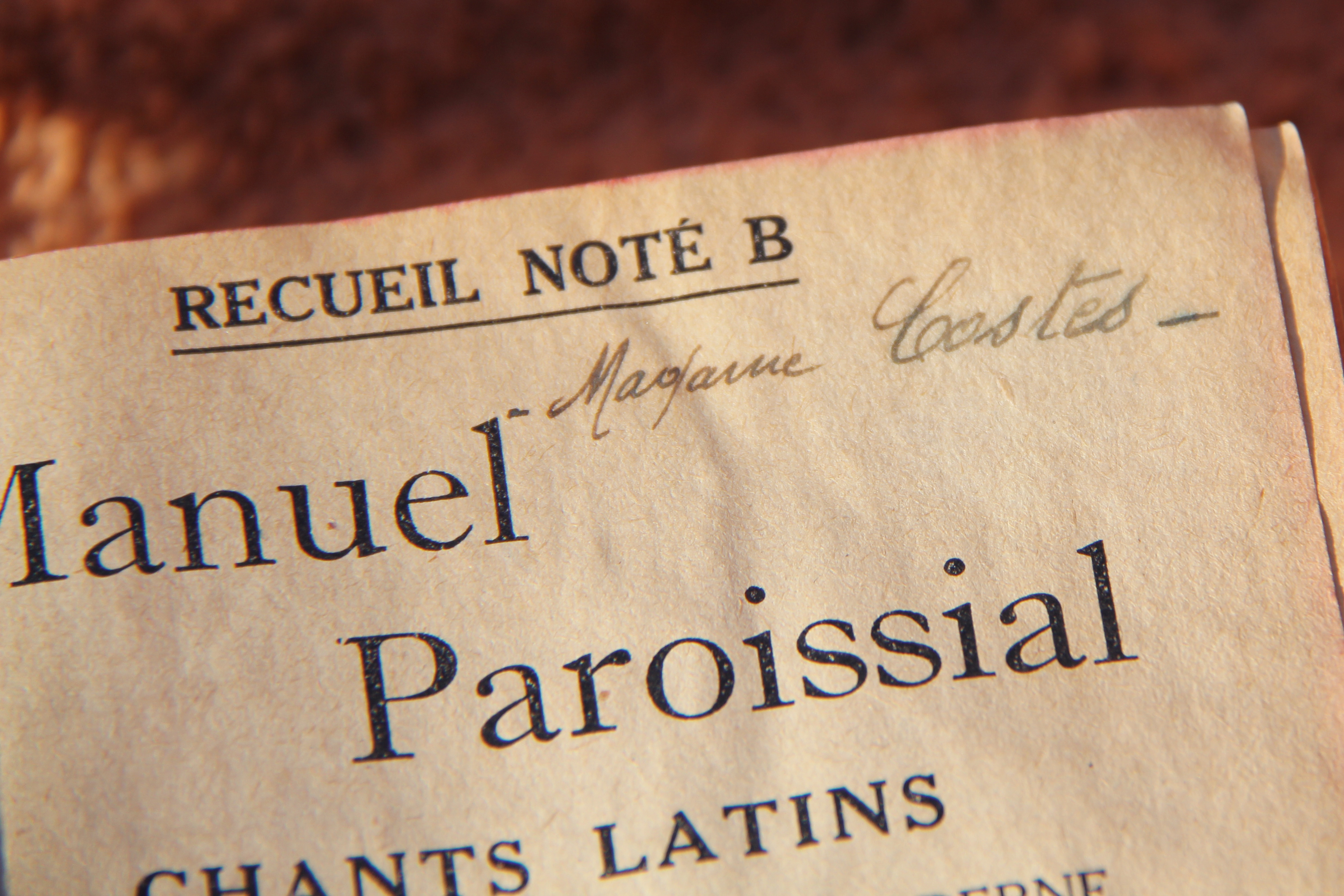
IMG_3714The entire history of my object, the 1937 prayer book or missal, has been completely flipped on its head. The post I wrote last week prescribed the missal to my grandmother, Marguerite Costes. I’ve been trying to remember how I came to this conclusion. I came across the prayer book a few years ago when I was looking through my father’s office in our basement in our home in Rye,NY. I love looking through my father’s old family memntoes and I came across this missal. The black leather, it’s small shape, and thin pages intrigued me and I asked my father if I could hold onto it for a while. He opened up the book and saw it was French hymns, and must have thought it belonged to his mother. He didn’t see the front page of the book that inscribed ‘Madame Costes.’ After all, it had been kept in a box in my father’s unorganized office, collecting dust and he hadn’t examined it in years.

That was several years ago. The prayer book remained in my desk drawer until this assignment prompted me to bring it into class. When I ask my father about the missal I never hesitate to say “Grandma Marguerite’s prayer book.” He has no reason to question the precedent that the missal belonged to his mother, a devout Catholic. The probability of the missal belonging to his mother was very high. We get talking about the book. I say it was published in 1937. My father then remembers how in France children get first communion around age 12 and that this must have been a gift to my grandmother for her first communion because 1937 would have put her at age 12. This all seemed so very plausible.

IMG_3719After I wrote my first blog post, I called my father again to find out more about the history of the missal. We talk about my grandmother growing up in Gagny, her meeting my grandfather in Paris and marrying him in 1942. I quickly mentioned the beautiful inscription of the book and stop when I read it outloud. “Madame Costes.” “Madame! Madame!” I let out a long sigh and relay to my father how stupid I was to think this belonged to my mother. When it obviously belonged to her mother, Yvonne Petit Costes, my great grandmother. Madame is the equivalent to ‘Mrs.” in English. If the book belonged to my grandmother Marguerite, it would have read “Mademoiselle Costes or Mlle. Costes, the equivalent of ‘Miss.’ My father immediately says, “Oh no. That’s Mémée’s book.’ Just to be sure, I text him a photo of the signature and without missing a beat he says “That’s Mémée’s handwriting. No question about it.” (Mémé is grandmother in French but my Father, for some reason, always added an extra ‘e’.( While I’m busy thinking how stupid I was to make this mistake, I ask my father how he didn’t know and he relays how I kept calling it Grandma Marguerite’s prayer book. Why would we question that?

After some self-deprecation, I’m excited to know the narrative of this entire history of the 1937 missal has changed. My father then began to tell me about the life of Yvonne, his Mémée. ( I refer to Yvonne as Mémée in this post because that’s all I’ve ever known her as.) Mémée was born in 1900 in Paris, the eldest of three. Growing up in a working middle class family with two brothers, faith was always central to her existence. A devout Catholic, she always wanted to join a convent but her parents pushed Yvonne to marry. So in 1923, Yvonne Petit married Paul Costes. In 1924, Yvonne gave birth to my grandmother, Marguerite Yvonne Costes. Soon after Marguerite was born, Yvonne and Paul split and she raised Marguerite in Gagny, a suburb of Paris. Mémée raised Marguerite in Gagny and her parents soon moved in with her to help raise Marguerite. Family and her faith were the two most important things to her.

My father has no idea who gave Mémée the 1937 missal. However, we know that in 1937 Marguerite was 12, and Memee was 37. The missal accompanied her to mass at the beautiful church Saint Germain-des-Prés  in Gagny. A beautiful cathedral, the place of worship must have been a central spot to the missal. Mémée worked at BNP, Banc Nationale de Paris on Opera Plaza and always worked very hard. She lived through the Nazi occupation of Paris, and witnessed an ever fast and changing world.

Saint-Germain-des-pres (photo from the church's webite)

Saint-Germain-des-pres (photo from the church’s webite)

In 1947 Marguerite married John J. Ward Jr, in Paris. My grandfather John fought in World War II in Paris and after the war, stayed in France to sell excess army equipment. Marguerite came to his office looking for a secretarial job, and the two fell in love. Mémée was sad to see her daughter move to America but alas, she remained in Gagny. The years between 1947-1995 are a mystery for the missal’s use. The missal stayed in Gagny with Mémée. The missal accompanied the move from the house in Gagny, where she raised Marguerite,  to a small apartment across the street. My father is not sure if this missal went to mass with her throughout this long span because hymns and content changed.

In 1995, Mémée passed of a stroke at her home Gagny. My father lost his mother in 1989 and that took the life out of her. I went to Gagny with my older sister and parents to my Mémée’s  funeral but I don’t remember it. I was only three at the time. A few months after the funeral my father went back to Gagny to clean out Mémée’s apartment. He came across the Missal and kept it because of the music it contained. My father, a talented composer, loves anything and everything having to do with music. So my father brought the missal on the plane back to New York and it stayed in his office. Until I discovered it a few years ago.

Mémée was an extremely important figure to my father. I’ve always wanted to learn more about her and through this missal I am. Mémée loved her faith dearly and it was the fixture in her life.

1937 French Prayer Book

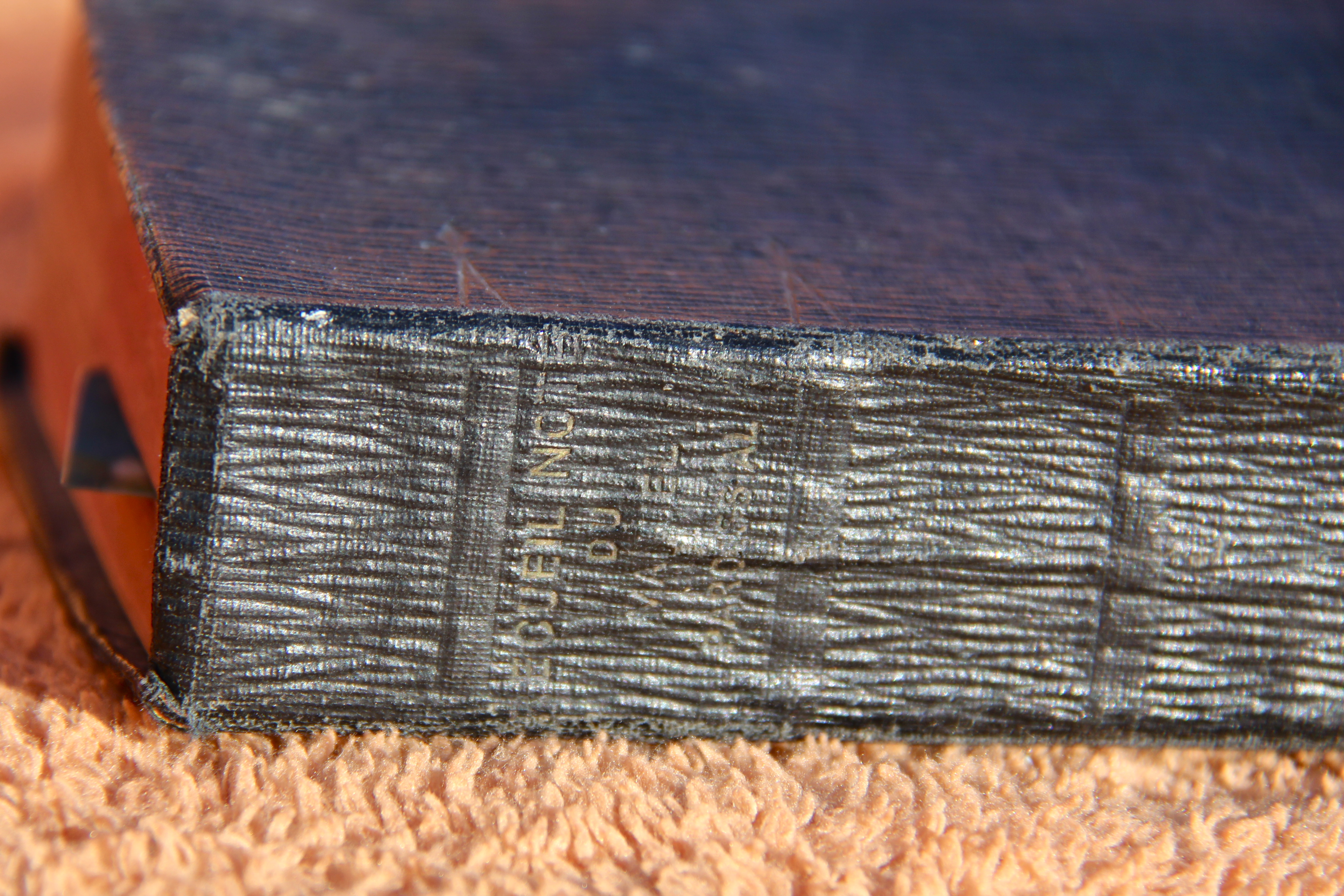
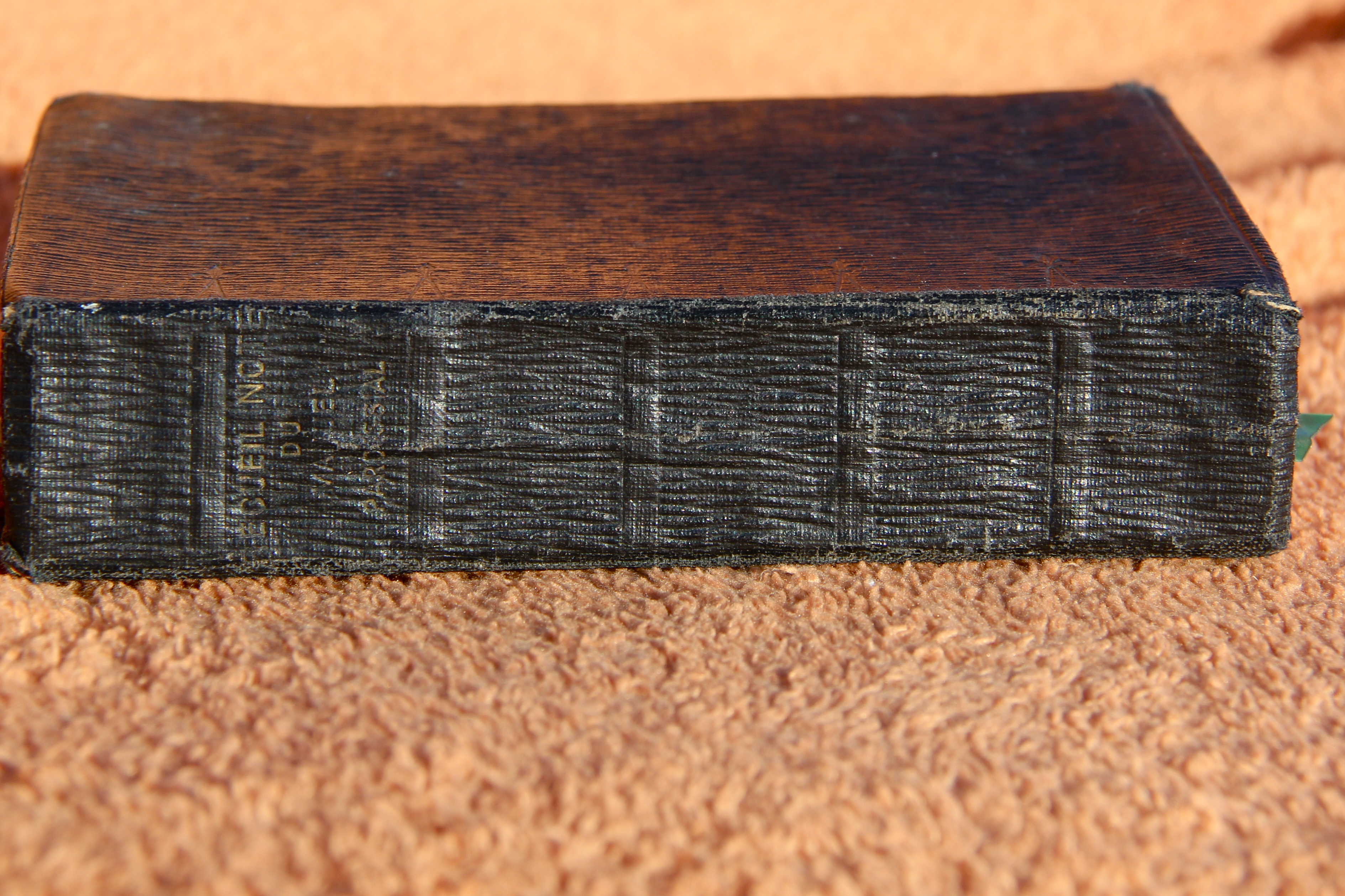
IMG_3715The black leather bound prayer book measures at 6 inches x 4 inches with a thickness of 1.5 inches. The front of the book is a simple, dark black. Adorned with five fleur-de-lis running down the front side of the book, the book shows some wear and tarnish. To any onlooker this book would seem meaningless from the outside. However, engraved faintly on the jacket in grey ink reveals “Requeil Note du Manuel Paroissial” or Parish Missal. The leather book is rough on the outside with vertical lines running across the book revealing a tough texture.

IMG_3753 By examining the book from the exterior, the pages are a bit auburn with traces of red. This prayer book was published in 1937, completely in French. The pages are worn in and seventy-eight later, are all in tact. The interior of the book is a flourishing mystery. This French prayer book belonged to my grandfather on my father’s side, Marguerite Renée  Costes.

Marguerite grew up in a suburb of Paris called Gagny, and this book would have accompanied her almost everywhere as for church was extremely important to her.The prayer book was given to my grandmother as a gift for her First Communion that she received at the age of 12 or 13. I don’t know who gave her the prayer book, but I’m pretty sure, after talking to my dad, that it was a family member.

IMG_3719On the second page of the book, my grandmother signed her name in beautiful neat script “Madame Costes.” The ink reveals perfectly shaped letters, and an air of pride in singing her name: that my grandmother was extremely proud to own this book. I love examining her signature. She put a dash before and after her name, as to proclaim its proud presence.

My father always tells me how beautiful and disciplined my grandmother’s handwriting was. Although only a simple ink writing, my grandmother seems to come alive through her signature.

IMG_3732Inside the book reveals a mixture of hymns and prayers. Within the 636 pages are a plethora of music notes and illustrated images accompanying many of the hymns. When I came across the prayer book, it contained a bookmark that opened to page 436 and this page is so fascinating to me. The page opens up to a hymn entitled Le ciel a visité la terre(Heaven visited the Earth) by the French composer Charles Gounod. After some online research, I came across a YouTube recording of the song from the 1950s that you can listen to here: https://www.youtube.com/watch?v=6dQIpFSTJZs .

I listened to this hymn on repeat as I wrote this blog post, I found it to be very beautiful. Alongside the hymnn lies an etching of an angel playing a guitar. An innocent and serene image, placed alongside a song about the sky and land gives off a very comforting feeling. The amount of detail and artistry that went into these various images throughout the book is striking. My grandmother was a trained concert pianist and I’m sure she played many of these songs at home for my father and his brother.

IMG_3725My grandmother held onto this book for her entire life. During the early 1940s, this prayer book accompanied her throughout her days attending Church. This book survived the Nazi occupation of Paris. My grandmother’s house was overtaken as a base for the gestapo during the Nazi occupation of Paris. My father told me that my grandmother had studied German in school, so when her family came home to discover their house was overtaken by the Nazis, my grandmother went to the Gestapo and demanded their house back in German.

Her courage and strength was monumental. And in the end, the Nazi’s gave my grandmother her home back. The fact that this prayer book accompanied my grandmother during this difficult time in her life reveals so much to me. This book must have provided my grandmother with hope and solace during those hard times, and I can’t imagine what she was going through. Music remained a steadfast passion and love for my grandmother throughout her life. This tiny little prayer book is an extension of that passion for music and song that my grandmother carried with her throughout her life.

By holding onto this book,I love to think about my grandmother’s life and her talents as a musician, mother, and individual.