Consumer Psychology

For my final project, I wanted to pursue the topic of consumer psychology. Consumer psychology is all about how consumers interact with objects, and how the design of a product influences our attitudes about it. As I began delving into this topic, I realized that there are so many different branches of consumer psychology, and each branch involves several different types of sub-categories for all the different pieces of information we take into account while consuming products.
            To narrow it down, I figured I would look specifically at the consumer psychology involved in designing food labels. Again, I ran into the overflow of information. While food shopping, there are so many different variables consumers take into account prior to making a decision about which product to buy. Nutrition facts, ingredients, quantity, price, and convenience are all things that influence a decision to purchase a product. Being that I wanted to focus specifically on design, I decided to set up a pseudo-study as to the influences of product design on consumers.  

            I decided to design labels for bottled water because it would be a product that most people would be likely to purchase at some point in their lives. I wanted to avoid a product that some people might choose not to buy because they do not like it or are allergic to it. I figured bottled water was the safest bet. That being said, this is the basic outline for my research. The labels have not yet been made, but their description is detailed below (with the exception of the various placements of the logo and text, which I am still currently researching).

Likelihood of Purchase with Respect to Product Design
           
Introduction: The basics of consumer psychology suggest that the best design for any product is one that elicits positive emotions in consumers (Bloch, 1995). According to Kaya et al. (2004), the color that elicits the most positive emotions among college students is the color green, because it reminds them of nature, trees, and relaxation. In the same study, Kaya et al. found that the color that elicits the most negative response among college students is a yellow-green intermediate color, because it is associated with vomit and feelings of nausea.

Method: In terms of methods, two bottled water labels will be designed. The first will use colors, form, and overall design adhering to that of contemporary consumer psychology. It will be dark green, with white lettering and black shading. The second label will not adhere to those colors, form and overall design; it will be a yellow-green intermediate color with grey lettering and shading.

The two labels will be presented to about 50 participants (25 male, 25 female). Participants will be told that each product contains the same ingredients, nutrition facts, and are of equal price. They will then be asked to choose which of the two products they would purchase, and why.

Age and gender of participants will also be recorded for statistical purposes. 

References: (so far)

Bloch, Peter H. “Seeking the ideal form: Product design and consumer response.” Journal of Marketing 59.3 (1995): 16. Web. 24 Apr. 2013.

Kaya, H. et al. “Relationship Between Color and Emotion: A Study Of College Studnets.” College Student Journal 38.3 (2004): 396-405. Professional Development Collection. Web. 25 Apr. 2013.

The Edge: A History of the SUNY New Paltz Radio Station

The wall outside of the studio in S.U.B.

The wall outside of the studio in S.U.B.

(Click to enlarge images)

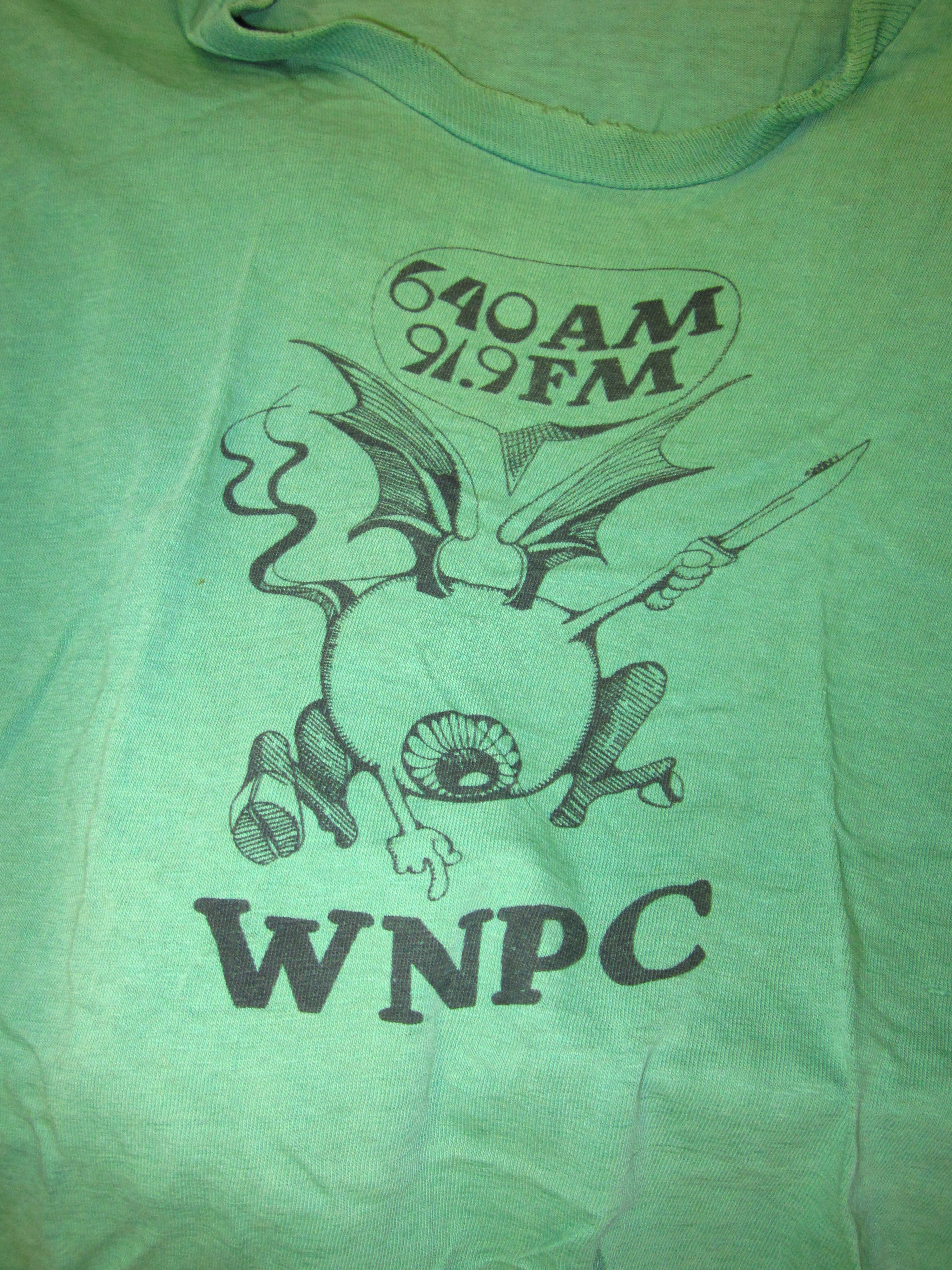
Caption: This collection of T-shirts from the SUNY New Paltz Radio Station demonstrates the development of the radio station across time, as well as providing insight into the history of the New Paltz radio station and how it has influenced the students on campus and the town of New Paltz.

Description: These are a collection of five T-Shirts from the New Paltz Radio Station. The IMG_0878earliest T-shirt is a light green, with an image outlined in black of a winged, hooved eyeball holding a sword and pointing downwards to the station’s call letters “WNPC”. There is a speech bubble above the eyeball with “640 AM, 91.9 FM” within it. This particular T-Shirt is a size large, and has been frayed around the edges with persistent wear. It is made of cotton and is soft to the touch.

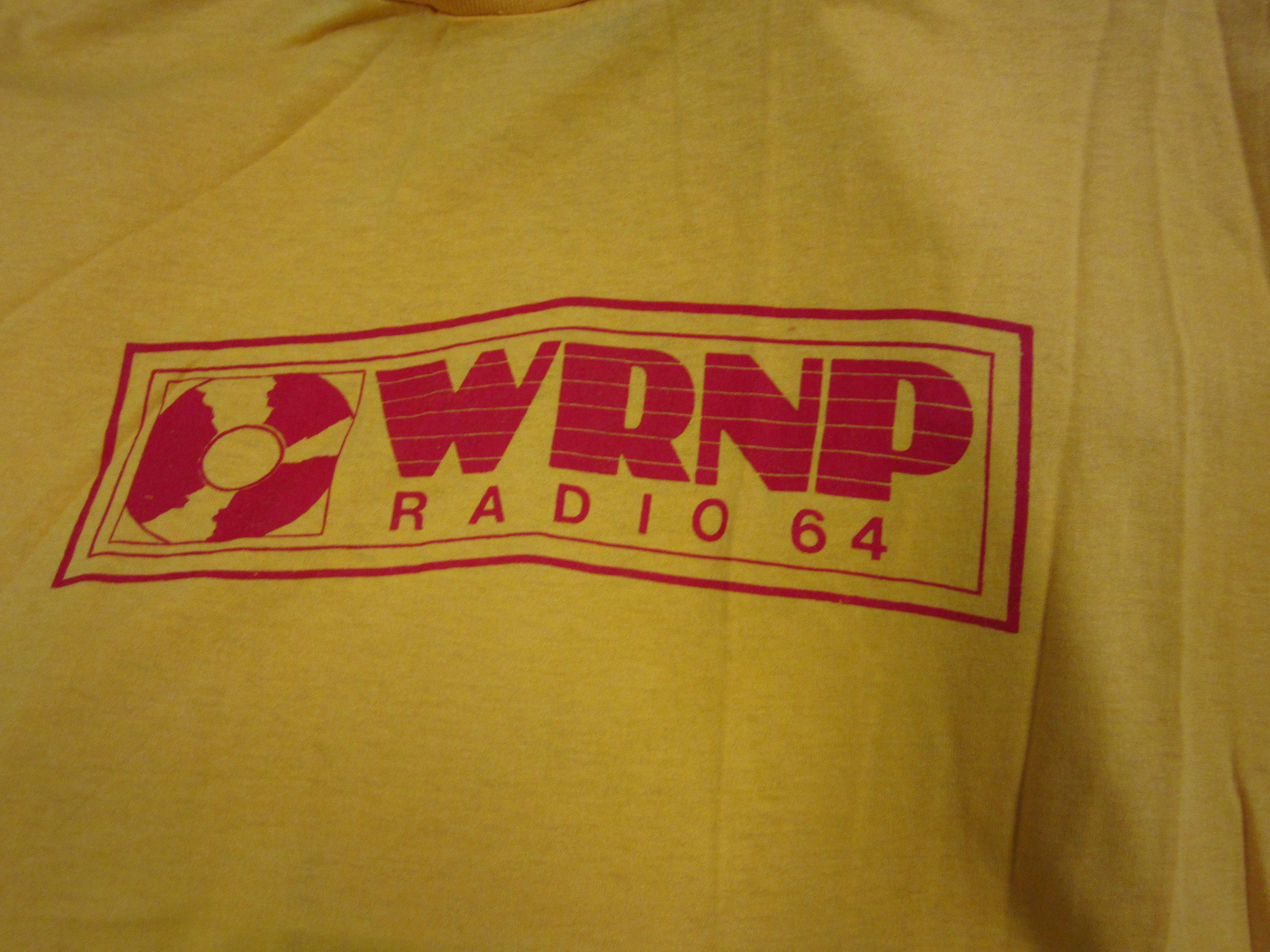
The second T-shirt is a bit more simplistic. It is a mustard yellow color, with bright red lettering. There is a red outlined rectangle on the center chest area of the shirt, within it are the updated call letters “WRNP” to the IMG_0879right of an image of a red record. Below the call letters and within the box it says “Radio 64” also in red. This shirt is a size extra large, and has also been worn in excess. Its cotton material has been wrinkled, and is a bit crisp to the touch, as it has been sitting on a shelf for a very long time.

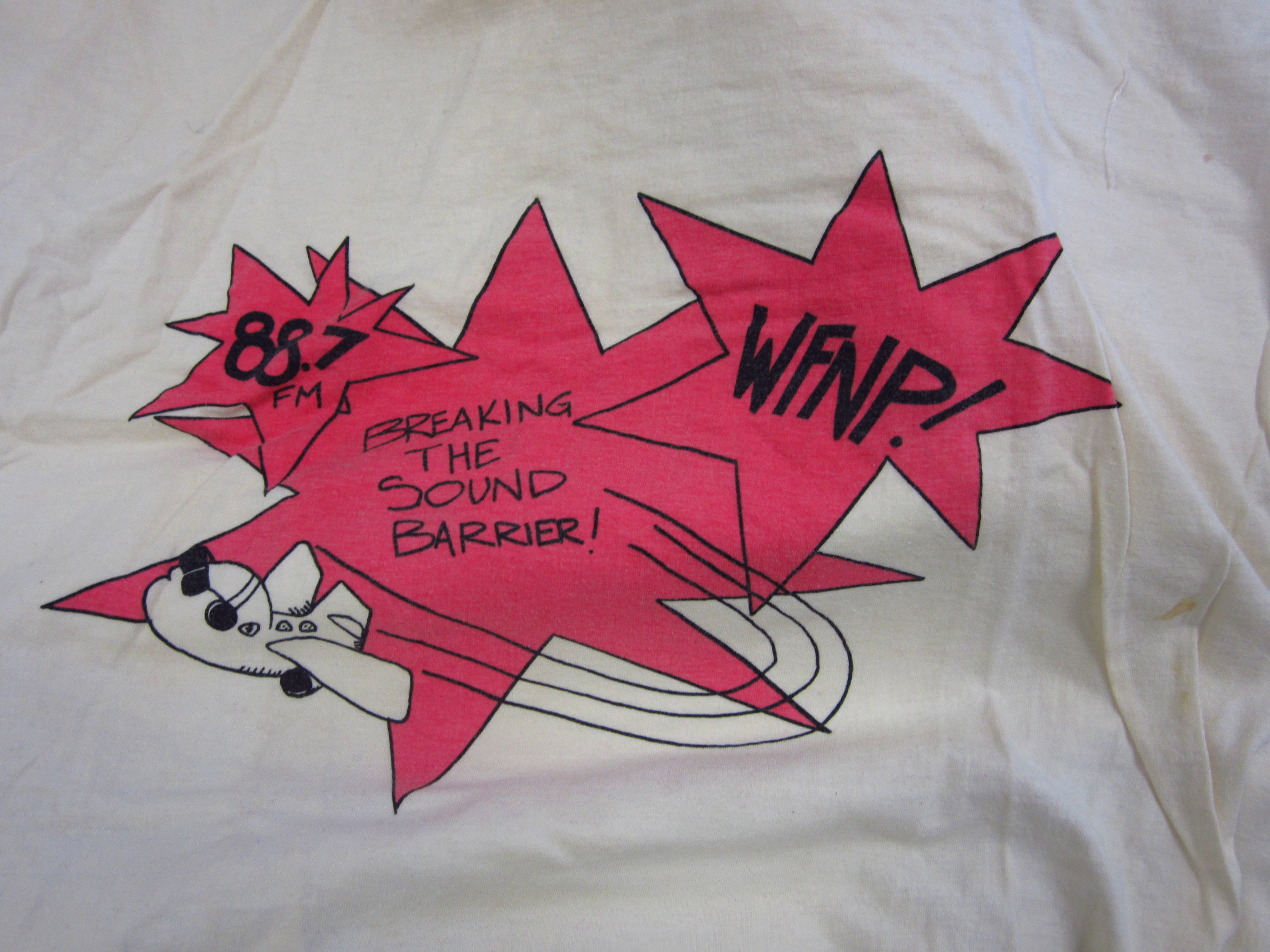
The third is a white cotton T-shirt of size extra large. The front displays an image of three pointed, star-like shapes, similar to those you might find inIMG_0880 a comic book to express an explosion or onomatopoeia. The largest explosion shape in the center reads “Breaking The Sound Barrier” in black lettering. The mid-sized explosion shape on the right hand side says “WFNP!” in bolded black lettering, while the smallest pointed shape on the left side says “88.7 FM” in black lettering. There is a white cartoon airplane with sunglasses and headphones flying out of the pointed shapes. This shirt is wrinkled, and appears to have a few small coffee stains on the front, in addition to some yellowed sweat stains in the armpits.

The fourth is a white cotton T-shirt with a rather large, more intricate design on front. IMG_0877“WFNP 88.7 FM” is written in bright green lettering on the top of the design. The center has the shadow of a human head in black, with green and white images of a leaf, a city, and a galaxy on the area where the brain would be located. This shadow is over a background of a graph of radio frequencies and wavelengths. At the bottom of the design are knobs and meters to measure volume. Curved along the bottom of this design is the expression “open your mind to music outside the mainstream” in bright green lettering. This shirt is a size extra large, and is relatively soft, but still crisp with time.

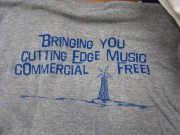
The final shirt in this collection is a very simple, gray cotton T-shirt with “88.7 IMG_0881FM The EDGE” written in dark blue lettering on the front chest area of the shirt. Underneath “the edge” it names the website, “www.wfnp.org.” The back of the T-shirt says “Bringing You Cutting Edge Music Commercial Free!” with an image of a radio tower emitting a signal below it. The entirety of the design and lettering is in the same dark blue color used on the front of the T-shirt. This T-shirt is also a size extra large, and is soft to the IMG_0882touch. It does not appear to be worn as extensively as the other four shirts.
Provenance: This collection of T-shirts was donated by Dennis O’Keefe. Dennis graduated from New Paltz in 1973. He was the General Manager of the radio station when it was first established in 1971, and he was a key player in the efforts to get the station up and running and wiring the campus for the AM signal. Even after he graduated, he was still an active background member of the radio station and also worked at the campus library. He collected these T-shirts over many years, starting at the birth of the radio station, through its development, and up until his death in 2006. He donated this set of shirts to the Special Collections of the Sojourner Truth Library before he passed.

Date(s) of Creation: Shirts: 1975 to 2006
Radio Station: 1971

Narrative: Although the popularity of radio may be declining now that music of your choice can be accessed at the click of a button, forty years ago, this was not the case. In the 1970’s, turning on your radio was the easiest and most popular way to discover new music and hear classic favorites. So, in 1971, a group of students worked together to establish a college radio station at SUNY New Paltz. The basic foundation for the station began in 1970 when Bruce Blatchy donated a surplus of $40,000 to be put towards equipment for the radio station. From there, he held elections for members of the executive board, which was to consist of students. At this time, there were four student positions: General Manager (Dennis O’Keefe), News Director (Robert Sholinsky), Program Director (Donald Weinstein), and Chief Announcer (Marc Greenberg). A single faculty member, Phil Livingston, oversaw the entire operation; but it was his intention that the students be the primary leaders of the station.

Space was set aside for the new station studio in the soon-to-be Student Union Building, but while that was still being built, the station was temporarily housed in the basement of the College Union Building, were the Yearbook committee worked. To the discontent of the Paltzonian President, they would be moved to a smaller room so that the station could be set up. The president of the yearbook club adamantly rejected this, and in his anger, quit his duties as yearbook coordinator. To this day, there is still no 1973 yearbook.

Amidst setting up the studio, students on the executive board were also needed to wire the campus for the AM frequency. This entailed draining the sewers and crawling through manholes in order to run cable to each of the dorms and the health center. A dirty, but necessary job for the effectiveness and legitimacy of the station.

With the cables set up, and the studio equipment set up in the College Union Building, the signal was ready to be sent out. Being that they were a new station not yet regulated by the Federal Communications Commissions (FCC), they were assigned the AM frequency of 640 kHz. Their call letters were WNPC, standing for New Paltz College. As of February 1972, students could listen to their peers’ broadcasts on their radios in their dorms.  By 1973, they obtained permission to broadcast over cable television on an FM frequency of 91.9 kHz. This allowed those in the village of New Paltz to tune in, so long as they had cable television.

By the Fall of 1973, the Student Union Building had been completed, and the station moved to its new studio on the fourth floor of the S.U.B. With this new space, the staff expanded, adding on the positions of Music Director, Chief Engineer, Advertising Manager, Production Manager, and Public Relations. The budget granted to the station was growing rapidly each year from $7,300 in 1973 to $10,000 in 1975. The station was becoming more and more successful and professional. Plenty of students on campus could tune in to hear classic rock, jazz, blues, talk radio, news, and so much more. Schedules of various WNPC shows were ever present in the campus newspaper. It was a popular and accomplished college radio station.
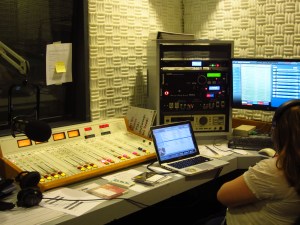
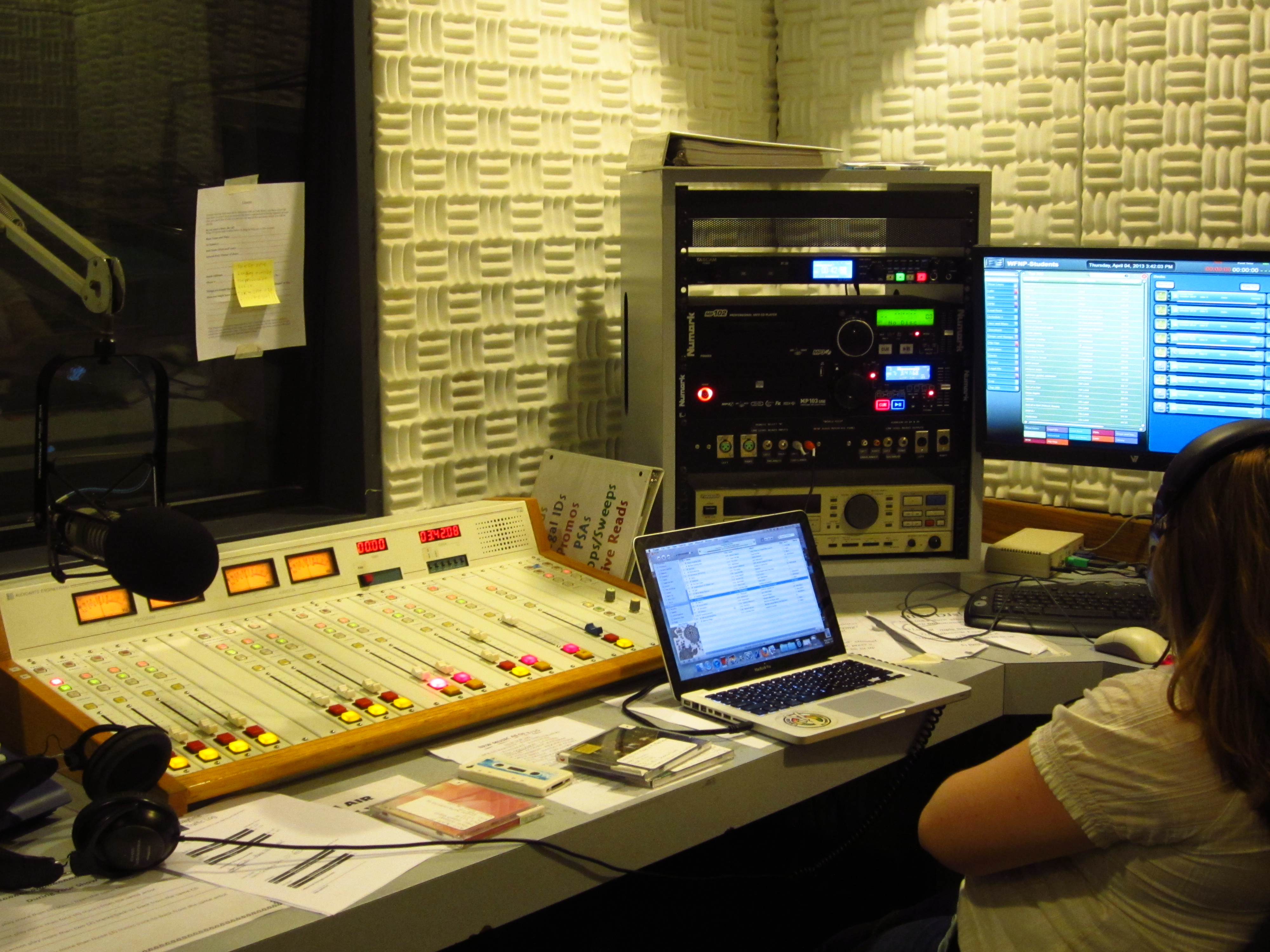
A DJ hard at work in the studio.

A DJ hard at work in the studio.

The call letters for the station changed a few times over the next several years. In 1976, WNPC became WRSW. By 1981, it had changed again to WRNP, standing for Radio New Paltz, which it stayed for the next eleven years. In 1992, the call letters changed to WFNP, which it still remains today.

As of 1980, the station was actively seeking FCC certification so that it could broadcast over FM radio. After several years of hard work and sales pitches to the FCC, the station was finally granted certification in 1989. It has been on 88.7 FM since then, sharing the waves with the classical station WRHV. The New Paltz radio station has one of the tallest transmitter towers of any college radio station, broadcasting 65 miles out. By the early 2000’s, the station updated its daytime programming from AM radio waves to a webcast that can be accessed from anywhere in the world at www.wfnp.org.

This station is not a club, but is a professional radio station that is held in high regard. It has allowed students to discuss serious world issues, broadcast important events, and provide easy listening to the entire Hudson Valley. It is a place where students can come together and learn how to use valuable equipment as well as speak professionally on the air. This collection of T-shirts illustrates the growth and evolution of a small college radio station that became a professional, legitimate station accessible from around the world. WFNP The Edge is an example of how far this school has come and all that it is capable of.

Some signatures of the stations DJs since 1973.

Some signatures of the stations DJs since 1973.


References:

Calabrese, Bruce. “What’s Happening With WRNP Radio?” The Oracle [New Paltz, NY]. 9     Mar. 1988. Print.

Combier-Kapel, Elise. “SUNY New Paltz Radio Station: a compilation of articles reprinted    from the Oracle and other sources.” Sojourner Truth Special Collections. New Paltz: 2010. Print.

Lugo, Anthony. “FM For WRNP Radio Closer Than Ever.” The Oracle [New Paltz, NY]. 22 Oct. 1987. Print.



18th Century Waffle Iron

Image
Image

Photography Source: Shelley Weresnick

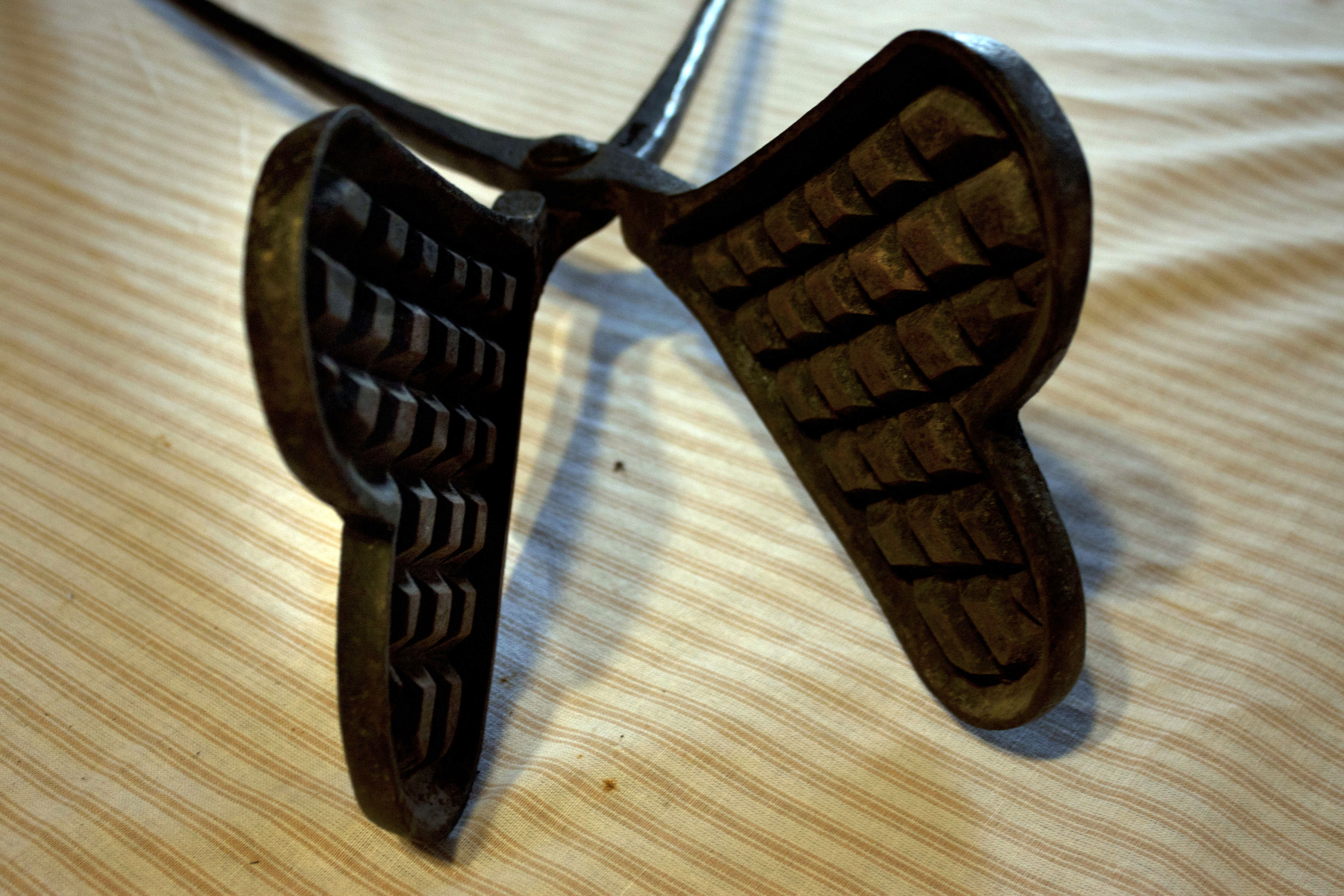
This heart-shaped waffle iron could have been given as a wedding present, and has been passed down throughout generations of the DuBois family. It has felt the heat of an open flame, tasted the batter of home-made waffles, and has provided much insight to the style of cooking in the 18th century and the lifestyle and culture of the Huguenots of New Paltz.

This is a waffle iron. It is adequately named for it is made entirely of cast iron and designed for cooking waffles. It is 34 inches in length, with two long, 28 inch handles to prevent the cook from being burned by an open flame. It has a hinge mechanism where the handles meet the press, allowing the press to open and close. The press itself is heart-shaped, with deep, one-inch square protrusions on both sides of the press. Waffles coming out of this iron would be about two inches thick, with several, one-inch square indentations. This iron is mostly black, but rusty browns can be seen in the inner areas of the press, as they are likely worn with use. This iron is surprisingly heavy, and rough with slight imperfections around the edges. 

The DuBois family was one of the twelve Huguenot families who lived in New Paltz during the 17th and 18th centuries. Benjamin DuBois owned this waffle iron sometime in the 1700’s, and it was likely purchased directly from the blacksmith who forged it. However, it is unknown if Benjamin purchased it himself. Waffle irons were typical wedding gifts in this time period, so it is possible that he and his wife Catherine received it as a gift when they wed. It has since been passed down through generations of the DuBois family, going from child to child. The most recent descendant to own this waffle iron was Edsall DuBois Elliott, who died in the late 1960’s. His wife then donated it to Historic Huguenot Street in 1970, along with many other interesting objects. 

You may wonder what significance a waffle iron has to the history of New Paltz — and I have to say there is far more to this seemingly insignificant object than you might expect. It has seen hundreds of years of history, and through that, holds knowledge about cooking, culture, traditions, and status. 

I’m sure we are all familiar with the smell, taste and texture of a delicious “Belgian” waffle. But this is not actually what a waffle of the 1700’s was like. Think of a wafer- a thin, crispy treat made from a batter. This is closer to what the Huguenots’ waffles were like. The waffles being cooked in this heart-shaped waffle iron were thick, but crispy. These scrumptious treats consisted of flour, butter, milk, eggs, and yeast. They were not served for breakfast, but rather for dessert, and often topped with sugar rather than maple syrup. 

This waffle iron not only tells us what delectable pastries cooked within it, but also explains much about the cooking style of the 18th century. All cooking was done on an open flame, within the home; a more dangerous method than we use today. And so, the cookware needed to fit the needs of the cook. The long, 28 inch handles on this iron allowed the chef to comfortably place and remove the iron from the fire without burning themselves or catching their clothing. 

Considering that waffles first originated in Europe, this waffle iron provides insight into where the people using it might have come from. Waffles were particularly popular in France, Germany, and Belgium – so we can note that the individuals using waffle irons in the 1700’s were possibly from one of these countries. It is also possible that the waffle iron’s popularity quickly spread to America, resulting in its production and use right in our lovely town of New Paltz. 

 In order to go from a lump of iron to the strong, sturdy, and lovely heart-shaped waffle iron it is today, it needed the help of a talented blacksmith. The undefined lump of iron was placed into a very hot fire until it became bright red. It was then placed on an anvil and beat into shape with a hammer. It had to undergo this process many times, each bringing more and more definition and shape until it finally became a lump of iron that could now be recognized as a waffle iron. It was likely painted black for aesthetics before being sold. Today, it has been rusted and worn on the inner areas, but still remains the valiant cooking utensil it was meant to be. 

 Now, 300 years later, this waffle iron is still perfectly functional. It could be filled with batter and placed in a fire to give you a delicious, heart-shaped pastry. Or, it can be placed on display in the village of New Paltz to tell its story. Simple as it may seem, this waffle iron has so much to say, and it will continue to silently observe the world as each day adds a new page to its story.


References:


Bruyn. Family Recipe Book. New Paltz, 1812-1832. 

Heidgerd, William. The American Descendants of Chrétien Du Bois of Wicres, France. New Paltz: Huguenot Historical Society, 1968. Print. 

Keller, C. Ancient Technologies and Archaeological Materials. Eds. S.U. Wisseman, W.S.Williams. Amsterdam: Overseas Publishers Association, 1994. Web. 

Every Object Tells a Story

From the introduction, this actually seems like a very interesting book. The basic premise is that discovering History requires both historical texts as well as historical objects.

Objects are particularly important to history because they can tell us so much. They can tell us who used them, what they were used for, where they were made, when they were made, and so on. By knowing these bits of information, we can extrapolate further to discover a very large quantity of information about a culture or group of people. Although written texts can do some of this, they cannot help us with the deeper histories of civilizations. Written documentation is relatively recent, and so objects enable us to learn about those civilizations that did not have a written language. So long as we have an imagination, we can always continue to learn more about history through objects.

In the past few weeks, this course has really taught me to appreciate objects, and I certainly look at them in a very different light. After reading this Introduction from a historian’s point of view, I can really understand just how much you can learn from an object. The examples given in the text really illuminate the abundance of information hidden within a singular object. Each individual object is not only a piece of history, but also a clue towards understanding so much more.

Reading this made me very eager to start the project of the history of New Paltz. If every object has a story to tell, then we can discover so much about our community as well as the history it has to share with us. As a class, we can all learn the value of an object; discover the individual stories each object has to tell us, and work together to create a detailed history of our lovely community of New Paltz.

A Large, Music-Making, Decoration Displaying Wooden Box

Image

This is a Rudolph Wurlitzer piano. The Rudolph Wurlitzer Company, more commonly referred to as “Wurlitzer”, was established in 1856, with the intention of manufacturing stringed instruments, woodwinds, brass, and many other types of instruments. Over the years, they decided to produce only pianos, organs, and jukeboxes. The company continued doing so until 1988, when Gibson Guitars purchased it. This particular instrument happened to be purchased while the company was still in existence in 1976.

 This piano, like any other instrument, was manufactured with the intention of creating a pleasingly harmonious sound. Each key was designed to make a hammer hit a string, and each string was designed to vibrate in such a way as to create an invigorating sound. It was constructed in the hopes that someone, either beginner or expert, would place their fingers on the keys in a pattern, a rhythm, to create an arrangement of tones. Its intended purpose was to make music.

 For many years, this object did just that. My grandmother originally purchased it because my aunt was taking piano lessons and wanted to be able to practice at home. So, its first few years were dedicated to helping a young girl improve her music-making abilities. Throughout this time, my grandmother also gave it a function that it was not originally intended for. She used the flat wooden surface on top as a place to display her statue of the Virgin Mary. And from that day on, this piano was not just an outlet for music, but was also aesthetic. For many more years, it continued to serve its dual function as items were displayed on top and other children of the household began learning to play music.

Eventually, my grandmother sold her house and no longer had room for the large music box. No one being willing to let the instrument go, my mother took it and it found a new home in our living room. Although my brother took lessons for a few years, no one ever really pursued the art of playing piano. In this new home, the piano continued to serve a function by acting as a place for other objects to be displayed. It has held family photos, Christmas decorations, and other trinkets. Today, it ironically displays a new sound system, which produces high quality sound waves to evoke the feelings of a live performance.

 In my home, this instrument was hardly played with the intention of making music, it has acted as somewhat of a toy for the children growing up around it. As a child, I would play silly songs such as “Chopsticks” or “Mary Had a Little Lamb”. It would attract the attention of my friends, who would want to touch it; to feel the keys depress so that a sound could rise out. And now, my nephew of nearly three years enjoys smashing against the keys and swaying as if he were producing the grandest symphony.

I am somewhat sad to admit that this piano is soon to be a memory in my home. The lack of moisture and excessive heat that the wood-burning stove creates is a very poor environment for this thirty-seven year old wooden music box. It never stays in tune, and some of its keys have gone dead. It requires constant maintenance and has become more of a burden than a pleasure. However, it is to be donated to an organization that might be able to take better care of it, and use it for its intended purpose. Perhaps in the future, young children or elderly folk will have the opportunity to create music that they otherwise would have been unable to do. I believe this music-making object would be proud to have served so many functions, and end its days doing what it was always meant to do.

The History of My Violin

ImageImageImageImage

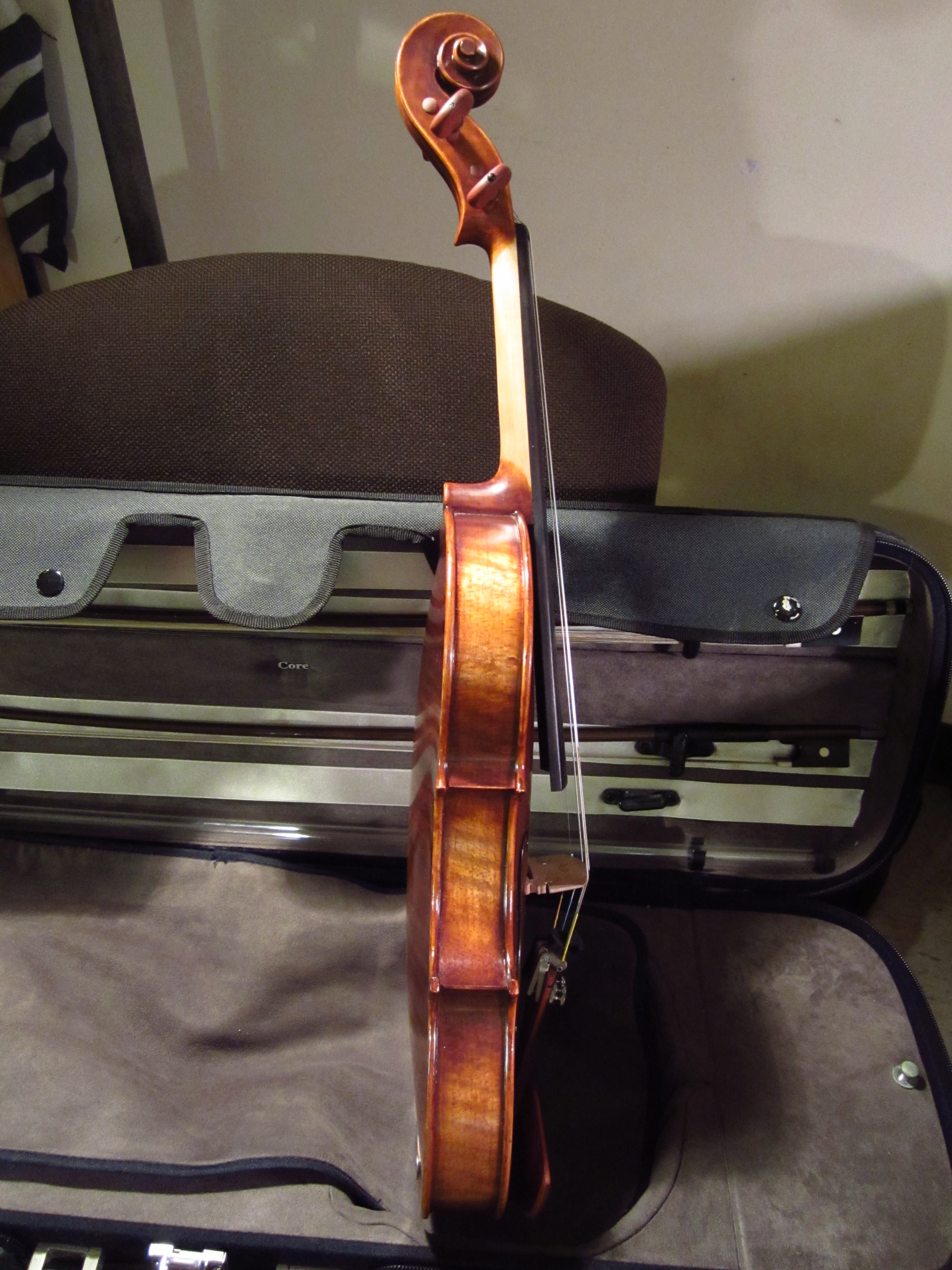
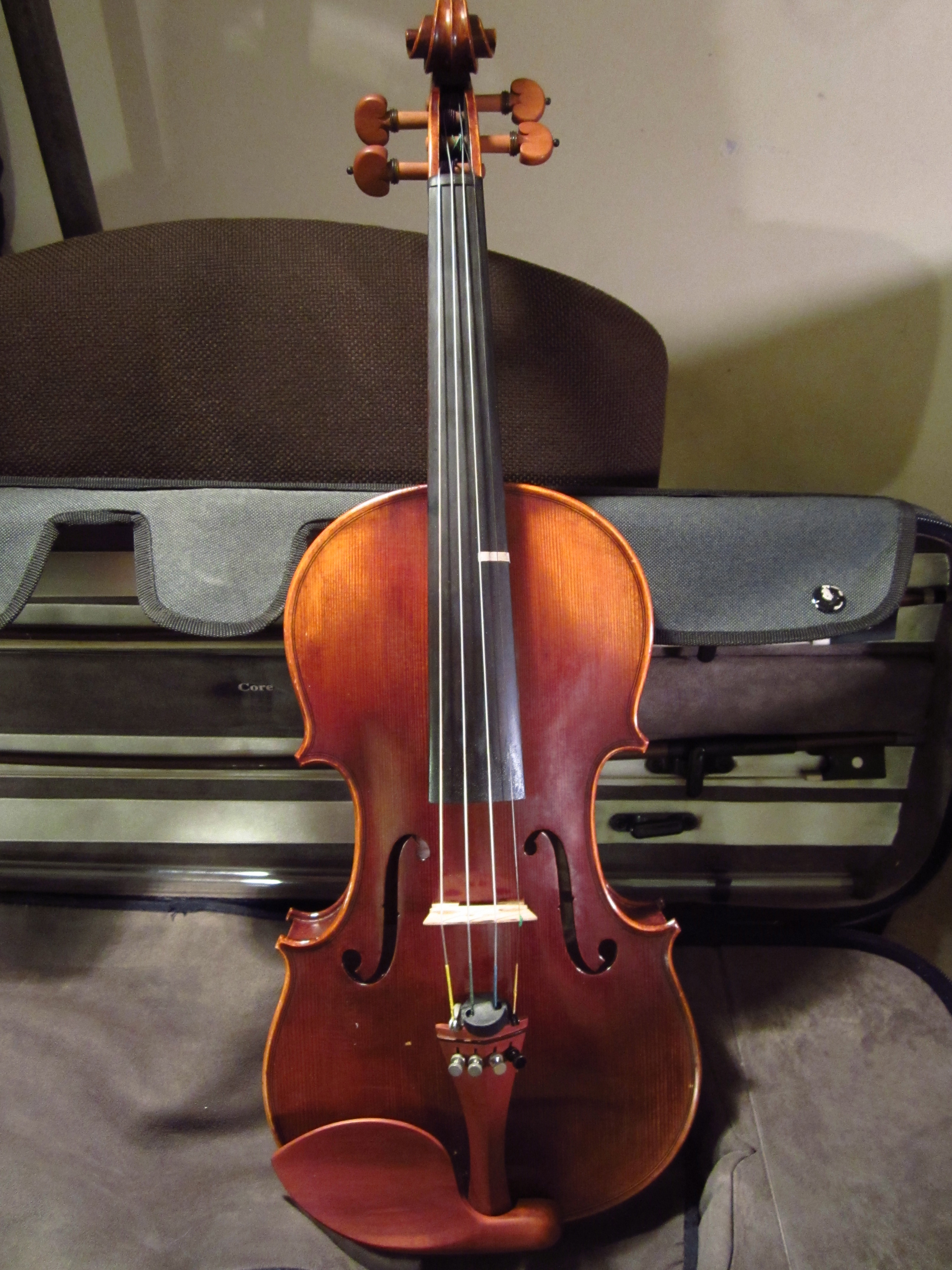
This is my violin. It is a standard 4/4 size, which is roughly 24 inches in height, and about one and a half inches thick. The body has a curved structure, much like the body of a woman. The bottom of the body is widest at 8 inches, where it graciously curves inward to about four and a half inches, and curves outward again to about six and a half inches. On the lower left (facing the violin) of the body you will see a circular wooden chin rest of about four inches. You will see another piece of wood about four inches long which holds the four metal fine tuning gears which keep the strings in place. On the front of the body, on either side of the strings, there are two f-holes about three inches in height through which the sound emerges. There is a wooden bridge about an inch in height and half a centimeter in thickness, which holds up the four strings. Two inches above the bridge, there is a black wooden fingerboard, which extends about eleven inches up the violin. The top five inches of the fingerboard constitutes the neck of the instrument, and above that you will see four pegs, two on either side, which hold the four strings. These pegs, when turned, will pull the string tighter for a higher pitch, or ease them for a lower pitch. At the very top of the violin is an elegant spiral curl, which is most evident of the fine craftsmanship of its creator.

This instrument is a dark honey-colored brown, with vertical grains running across the front of the body, and fine horizontal “ribs” can be observed on the back of the body. The strings are made of steel, and vary in thickness for different sounds. The left most string (G) is thickest, and each string gets progressively thinner until you get to the right most string (E), which is thinnest and produces the highest tone. About four and a half inches up the fingerboard, there is a small white piece of tape. This is to mark seventh position, and it was put there by my ninth and tenth grade Orchestra teacher, Mrs. Sckipp. The bottom half of the body has three small nicks, which were all put there by myself, accidentally. Each one is from my bow, which sometimes smacks against the body of the violin while I am carrying it around casually. It is fragile and surprisingly light in terms of weight, as the body is hollowed out.

Although the first stringed instruments came about in the 9th century, the violin has only been around since the 16th century. It first emerged in Northern Italy and spread throughout Europe. These instruments were handmade for hundreds of years, until the 1940’s when they begun being factory produced. The quality of the instruments suffered from the lack of care put into their creation, and since then there have been some manufacturers who have decided to use the conventional, hand-made method, which gives each instrument a unique look and tone.

My violin was handcrafted by a violinmaker under the training of Andreas Eastman of the Eastman String Company. Qian Ni founded Eastman Strings in 1992 after he moved to the United States from China. He gathered a group of talented violinmakers in order to begin his business, and has since built a very reputable reputation. This particular violin was made in 2004, and eventually ended up at a violin dealer by the name of Laurinel Owen, who works out of The House of Strings, in Bellport, New York. This beautiful instrument found its way to me in the summer of 2006, just before I entered the seventh grade.

I had been playing violin for about four years when my parents decided to grant my wish of getting my own, brand new violin. The instrument I had been using was my sister’s old, cheap violin that was most likely factory made because its quality was quite poor. When I arrived at the home of the dealer, there were 6 beautiful violins laid out before me and I was asked to choose which I wanted. After careful consideration, I chose this particular one, and my parents purchased it for $1100 as a gift to me. I was ecstatic.

This violin has been with me through years of practicing, auditions, and concert performances. It was with me as I played my first NYSSMA solo. It felt me tremble as I nervously prepared to perform in front of a judge for the first time. It was with me for all twelve seating auditions for concert and symphonic orchestra. It was with me as I played Christmas carols for a group of elderly folk at a nursing home. It has accompanied me through numerous school concerts, and has resonated vibrations to the tune of Brandenburg’s Concerto No. 3, Barber of Seville, Schubert’s Unfinished Symphony, Beethoven’s Scherzo Movement, and many more. This violin has felt the misplacements of my fingers, and screeched at me in poor intonation so that I might learn the proper placements. It has resonated with a deep, full, powerful voice as I learned how to help it sing.

This marvelous instrument has not only generated a sound for others to enjoy, but has also acted as a de-stressor for myself; it has allowed me to unwind and forget about the troubles that silence often brings. This violin may not have a very long history, or travelled through many different hands, but that does not mean that it will not create history. I intend to pass this instrument down to my children, and grandchildren, in hopes that it will journey through the lives of many more, creating memories and history as it travels through the ages.

A Key

Image

I’ve always loved keys. As a child, I had been given various diaries with lock and key- but I never felt the need to write in any of the journals. I only wanted to lock the journal, keep the key safely in my pocket, and unlock it at my heart’s content.

Over the years I have given up on diaries, but my affinity for keys still remains. I have had several key necklaces and charms through out my adolescence, one being a small key necklace with a purple stone. One day, while working at the Staples in my hometown, I was ringing up a man who complemented my necklace and asked what it meant to me. I explained that it had no significance, that I just liked keys. He replied, “one day you’ll find out what it means to you” and as he handed me the tender, I noticed a key tattoo on his hand.

Of course, I pondered the significance of the key for many months. After a number of events in my life, I believe I have found it’s meaning to me, or at least in this stage of my life. I consider the key to be a constant reminder that I alone hold the key to my own happiness, success, and life in general. If there ever is a time when I am unhappy, it will remind me that I alone can change that. If there ever is a time when I feel as though my life is not on track, the key will remind me that I alone can get it on track again.

Today, I wear this key. Unlike all the others, it was not given to me as a gift. It was a key that I chose. I was wandering through the shops of New Paltz during my first semester when I came across a rack of all different types of keys, about two inches tall, with several different words engraved in each. This particular one has the word “wish” engraved in it. However, I must admit that this key was not chosen for the expression it displays. It was chosen because of its style- the twists, turns and elegant curls. It was chosen for its antiquated finish and profound essence. I have worn it every day since then.

I intend to have a key quite similar to this tattooed on my foot with the words “I hold the key” in fancy cursive. The placement of this tattoo has been a constant battle, because it must be perfect. I decided on the foot because it will be a place that will not be mistaken for a particular key of chastity, and because it will be in a place that is both subtle, yet perfectly capable of being seen when I need to see it. When I finally have the money to get it, I will think back to the man who found enough significance in a key to get it tattooed on his hand.

This necklace has received many compliments in the two years that I have worn it, and everyone always asks what the key opens. Although I never give such an abstract answer, I like to think that this key unlocks my deepest ambitions, without my ever knowing it.