Scripture and Prayer: The Analog Way

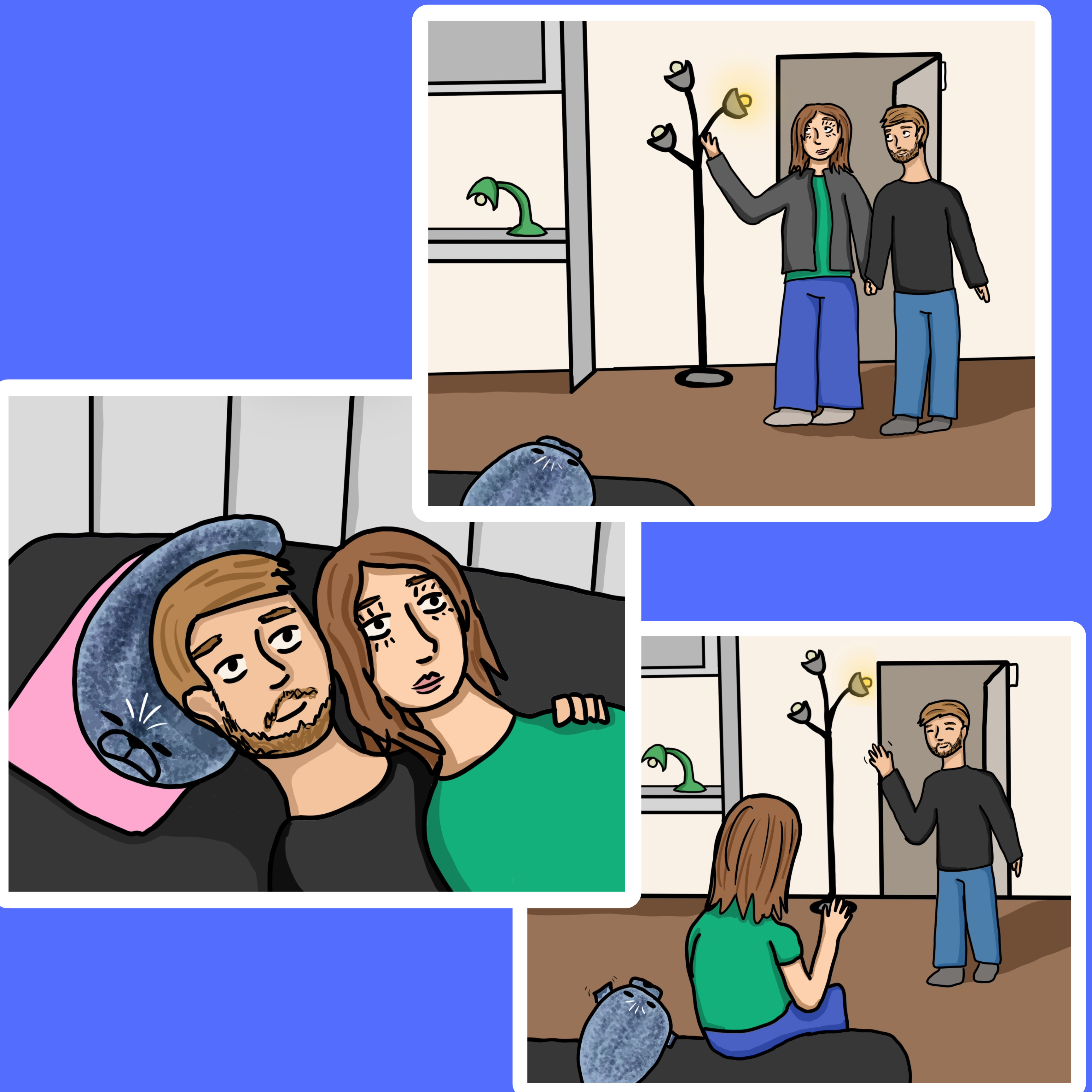
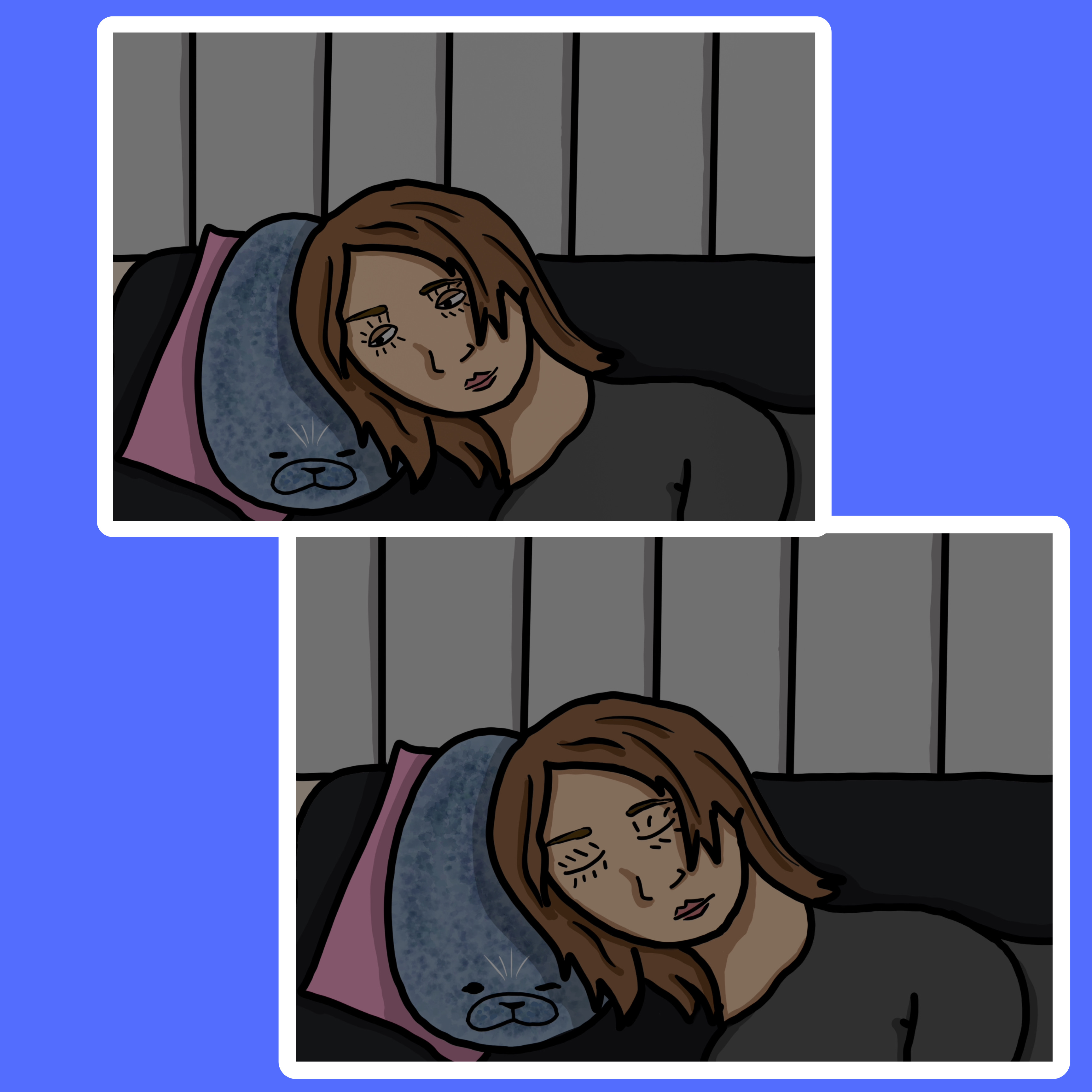
Every day, I practice my religion and connect with God through reading scripture and prayer. Though I own a Bible, and have read directly from it quite a bit, it doesn’t leave its shelf during my prayer time. From the comfort of my bed, usually right before I sleep, I open a Bible app on my phone that provides me with a daily verse from the Bible, a video explaining the verse, and guided prayers. I’m also able to collect my thoughts for my own prayer by typing out what I want to communicate with God. In a world where technology has made seemingly everything more convenient than before, even things that weren’t inconvenient to begin with, even time with God has been digitized. 

For my analog experiment, I wanted to turn away from my screen and look back into my many physical religious books I have stacked on my shelves. I turned towards the book Jesus Calling by Sarah Young to provide me with a daily verse, which led me into my Bible to find it. Flipping through my Holy book, I found the verse- 2 Corinthians 9:15: “Thanks be to God for his inexpressible gift!”. Instead of watching a video of someone talking to me about the verse, I read Young’s explanation of how we can receive God’s gifts. Instead of having a guided prayer pertaining to the verse ready for me to recite, I dove into a prayer book searching for one to recite related to Thanksgiving and gratefulness. And finally, instead of typing out my prayer, I hand wrote it with paper and pen, expressing the many things on my mind I was grateful for. Through this experiment, I hoped to rediscover communicating to God in a manual way, and asked the question- would I feel more connected to God if I was disconnected from my device?

In each part of my experiment, the verse, explanation, recitement, and prayer, I took note of my reactions and feelings. On the app I normally use, the verse you need is presented firstly, alone without its surrounding verses. While looking for the verse in my Bible, I enjoyed being able to flip through the physical book. It’s light and flimsy, and the pages are thin and soft to the touch. The words are incredibly small, which, to me, was delightful, as it forced me to get close to the book and skim multiple lines to find the one I was seeking. One downside I did find while reading the verse and the explanation was really concentrating on what it was saying. I found myself rereading everything at least twice, which wasn’t usually the case when I read from my phone. Also, watching a video seems to hold my attention better, and being able to see someone talking right at me gives me something to focus on. Nevertheless, reading Young’s explanation still gave me a feeling of deeper connection, and having to reread it multiple times helped reinforce what it was expressing. Normally, I spend my time on the app and when I’m done I open Instagram or Tik Tok, giving me no time to truly absorb what I’ve learned. Looking for a prayer in my prayer book made me quickly look over each page to find the right one, which had me feeling similar to how I felt when searching for the verse. Without having a prayer ready to go, I was able to make note of other prayers in my book I wanted to go back to. Finally, I feel I had the most positive experience writing my prayer out. Even though the option of typing my prayer is convenient and faster, it almost feels like I’m texting God, which honestly is pretty strange when I think about it. However, writing out my prayer felt like writing a letter to a friend, and while writing I wasn’t tempted to go back and correct myself or rearrange my prayer how I do when I type it. 

Taking into account all my observations, and focusing on how I felt throughout my experiment, it’s safe to say this was a positive analog experience for me. I still feel positively towards the Bible app I’ve been using, as it does allow me to read and write comfortably from my bed at night, and the creators don’t include ads or push me to pay for a “premium” version. The videos give me a feeling of togetherness with other Christians featured in them as well. However, I feel reading from my physical books and handwriting my prayer provided more pros. I felt a deeper connection, and felt my conversation with God was more personal this way. Disconnecting from my device and its conveniences did help me feel closer to God, and helped my time with him feel truly fulfilling. 

Abraham Lincoln Bust from the Deyo House on Historic Huguenot Street

front view of bust

Caption

This sculptural bust of Abraham Lincoln in a Classical garment is a telling piece from the Colonial Revival. The Colonial Revival was a widespread interest in colonial styles of architecture and decor, peaking from 1880 to 1940 (Gyure). The sculpture is a glance into this period, showing with its style and concept the relation between the revival and nationalism and the rise of patriotism. 

side view of bust

Physical Description

The sculpture depicts a bust of the 16th president of the United States, Abraham Lincoln. The artwork is composed of plaster to imitate marble, standing at 31 inches high by 22 inches wide. Lincoln is shown in a Classical garment, most likely either a Greek himation or a Roman toga. The garment drapes around both of his shoulders. Notably, instead of being depicted with his usual beard, Lincoln’s face is clean shaven. His expression is relaxed, yet confident, and reflects typical depictions of presidents in art. With his head held high, this bust brings a sense of patriotism and pride to the living room of the Deyo House on Huguenot Street.

Provenance:

Unfortunately, this sculpture is one of the pieces in the collection that the historians at Historic Huguenot Street don’t know a lot about. The object doesn’t have an ownership history, and the bust currently in the Deyo House is a replica. The bust was most likely acquired by Abraham and Gertrude Deyo Brodhead to present a fashionable Colonial Revival interior. After going bankrupt in the early 1910s, the family lost the house and sold most of their belongings. The current items furnishing the Deyo House today, including the bust, are replicas based on 1915 auction sales and social events at the home referenced in newspapers (McGoldrick).

Narrative: 

Through the analysis of its style and subject matter, it’s clear that the bust of Abraham Lincoln is a significant piece of the Colonial Revival in New Paltz during the early 1900s. Abraham Deyo Broadhead was evidently an enthusiast of the Colonial Revival, remodeling the Deyo House in 1894 to transform the original small stone home into the Queen Anne style home we see today (“Deyo House Historical Structural Report”). This transformation was also noticeable in the home’s interior decor, which is where the Lincoln bust comes into play.  

In order to understand the sculpture’s significance during its time, we have to explore the Colonial Revival and its history further. The expansive popularity of the revival was due to many factors, but most importantly was because of a rise of patriotism and nationalism. After the Civil War, Americans took a new sense of pride in their country, in both the North and the South (Jost). The war transformed patriotism, solidifying the value of national unity. The reintroduction of original political values of pride and unity fueled the emergence of the Colonial Revival, and the colonial style of architecture and decor that’s at the center of the revival provides a physical representation of those values. The Abraham Lincoln bust was a piece of interior decor, specifically a plaster cast, that was mass produced during this time. During the period of the Civil War, Americans consistently made connections to classical heritage, and through participating in the replication of plaster casts, the United States began to evoke a higher reputation as a modern and confident country (Breitweiser).

Lincoln was an extremely important political figure during Deyo’s time, so it’s no wonder he would have decor honoring him, especially after his successes during the Civil War. Lincoln’s term as president preceded the beginning of the Colonial Revival, connecting it to patriotism felt by Americans during his presidency. The Classical garment Lincoln is shown wearing reflects the importance of Classics during the revolutionary period. America’s founding fathers referenced classic Greek and Roman democratic movements when creating the Constitution (Breitweiser). Showing a recent president such as Lincoln in a Classic Greek or Roman style showcases the interest and reintroduction of the original idea of what being American means.

Abraham Deyo was a political figure during his time, serving as mayor of New Paltz from 1896-1897 (“Deyo House Historical Structural Report”). As well as this, he was a founder of the Huguenot Patriotic Monumental and Historical Society in 1894, the predecessor of Historic Huguenot Street (“About Us”). Regardless of these facts, it’s clear that Abraham was in fact a patriot through his involvement in the Colonial Revival. His interest in colonialism showcases the prevalent beliefs he held, relating to nationalism and cultural heritage (McGoldrick). The Abraham Lincoln bust gives us an increased incitement on Deyo’s ideologies. 

While the statue doesn’t directly relate to the history of elections and voting in New Paltz, it’s an important symbol of democracy and political ideals of the time. As mentioned before, Deyo was an involved political member of New Paltz. After his remodeling of the house in 1895, he and his wife began to welcome visitors to witness their “beautified” home in the style of the Colonial Revival (“Deyo House Historical Structural Report”). Though the architecture of the house was the star of the show, the interior decor that laid inside the house is suggestive of what values Deyo wished to convey to his guests. Specifically, the presence of the Lincoln sculpture in the living room of the home showed guests that Deyo was indeed a patriotic man, with a keen interest in colonialism and classical heritage. As well as this, it presented him as a man with confidence in his country and an involvement in its government. 

Works Cited

“About Us”. Historic Huguenot Street. https://www.huguenotstreet.org/home. 3 November 2024. 

Breitweiser, William C. “Plaster Cast Collections in the Colonial World”. Cornell University. January 2015. 

“Deyo House Historical Structural Report”. John G. Waite Associates, Architects. 1997. 

Gyure, Dale Allen. “Colonial Revival in America”. University of Virginia. https://colonialrevival.lib.virginia.edu/#:~:text=The%20Colonial%20Revival%20peaked%20in,it%20has%20never%20really%20died. 28 October 2024. 

Jost, Kenneth. “Patriotism in America”. CQ Press. 25 June 1999. 

McGoldrick, Louise. Email to the author. 28 October 2024. 

“Is This Modern Slavery?” from Mmuseumm, by ShirEl, Rose, Sarah, and Charlie

The Mmuseumm is a tiny and unique museum on Cortlandt Alley, NYC, founded by Alex Kalman, and Josh and Benny Safdie. What makes Mmuseumm stand out amongst other museums is the extremely unique design, standing at only 36 square feet and being the smallest museum in NYC. Kalman dreamed of opening a museum in an unusual place, where he could display found objects. The museum aims to create a place where people are curious and ask questions about what they see. The tiny space leaves no room to wander, it’s an immersive and thoughtful experience. Exhibitions at the Mmuseumm include a large collection of objects, broken into smaller collections with subcategories, all related to an overall theme. There have been several exhibits to highlight social injustices in the world, as well as display the everyday human condition. The small objects displayed in each collection tell a bigger story that people can reflect on, and relate to due to the common nature of each object. 

Our specific collection, titled “Is This Modern Slavery” is the ninth collection in the museum’s 2020-2021 exhibit. This collection includes objects from all around the world made through the use of forced labor, including debt bondage, human-trafficking, and child slavery. The wide variety of objects in this collection reflects the growth and globalization of slave labor. One of the reasons we chose this collection is because it puts an emphasis on the effects of consumerism and unethical labor, which are topics relevant to our class discussions. 

An important reflection from our research is that at first glance, the objects presented don’t necessarily make sense together, yet they are all connected in very specific ways. Although the collection appears to be filled with the most random and incohesive objects, there is actually a great amount of thought and cohesiveness behind the display of each object in order for it to fit the collection and overall theme. When asked about the museum’s array of objects, Alex Kalman said “These seemingly ordinary objects, they’re intimate and they’re incredibly revealing. So, you can explore big ideas through these small objects” (NY Times). 

If someone were to visit Mmuseumm, I’d suggest they observe the objects and reflect on how they may be involved in their everyday life. The museum highlights the beauty in simplicity, while also acknowledging the downsides of typical consumer items. Bringing attention to labor and social injustices present in the world, Mmuseumm is unlike other museums and sends a stronger message about human nature. 

Works Cited

5 Dec. 2013. Los Angeles Times, https://www.latimes.com/nation/la-na-c1-small-museum-nyc-20131205-dto-htmlstory.html. Accessed 10 Oct. 2024.

6 May 2024. Thrillist, https://www.thrillist.com/lifestyle/mmuseumm-smallest-museum-nyc. Accessed 10 Oct. 2024.

Barron, James. “This Tiny Museum Fits inside an Elevator Shaft.” The New York Times, The New York Times, 21 Apr. 2019, http://www.nytimes.com/2019/04/21/nyregion/tiny-museum-new-york-city.html.

“Collection.” MM, http://www.mmuseumm.com/exhibitions. Accessed 10 Oct. 2024.

Condé Nast Traveler, https://www.cntraveler.com/activities/new-york/mmuseumm. Accessed 10 Oct. 2024.

Google, https://www.google.com/search?q=tesco+2024+in+london&sca_esv=247a3cc0ba513c42&rlz=1C1CHBF_enUS1071US1072&udm=2&biw=1280&bih=632&ei=xvQGZ6iYFoWo5NoPo-Oa0Qc&ved=0ahUKEwiok9-jnoKJAxUFFFkFHaOxJnoQ4dUDCBA&uact=5&oq=tesco+2024+in+london&gs_lp=EgNpbWciFHRlc2NvIDIwMjQgaW4gbG9uZG9uSI41UM8NWO0jcAJ4AJABAJgB5wGgAY8GqgEFMy4yLjG4AQPIAQD4AQGYAgSgArcCwgIGEAAYBxgewgIKEAAYgAQYQxiKBcICCBAAGAcYCBgemAMAiAYBkgcFMy4wLjGgB4kI&sclient=img#imgrc=aTkx9sOU7PF2qM&imgdii=jq1ozWseN8q7tM. Accessed 10 Oct. 2024.

“IS THIS MODERN SLAVERY? Mmuseum 2020.” YouTube, Mmuseumm NYC, 2020, youtu.be/gmok5Cx_6fI.

MM, http://www.mmuseumm.com/. Accessed 10 Oct. 2024.

“MMUSEUMM 2020 Credits.” MM, http://www.mmuseumm.com/2020/credits. Accessed 10 Oct. 2024.

“WELCOME TO MMUSEUMM 2020.” YouTube, Mmuseumm NYC, 2020, youtu.be/cgFmtGDIju4. 

The Making of Sealie

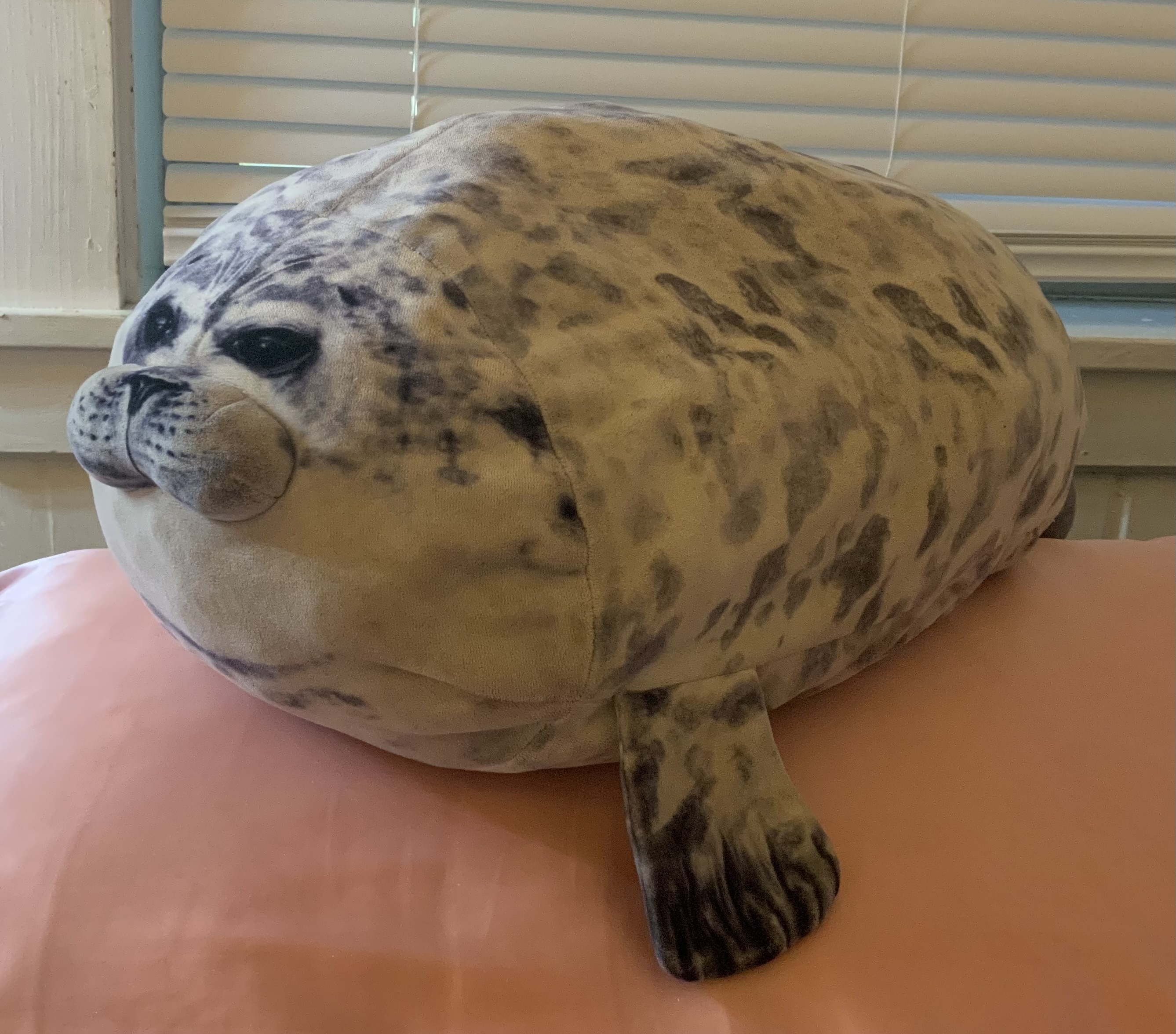
The object I decided to look into the making of is my beloved stuffed seal, Sealie. I received Sealie from my mom at the very beginning of Covid in 2020, after she saw him on Amazon and thought I’d enjoy his silly design. He quickly became my close companion during quarantine, coming to and from the couch and my bedroom with me, and even accompanying me in the backyard when I’d venture outside. During a difficult time, he was a comforting presence. 

Sealie

While attempting to begin my research about Sealie, I realized that it may be harder than I first thought to narrow down exactly where he came from, considering he has no tag. Also, his design is incredibly mass produced amongst many vendors. The first thing I noticed when searching him up on Amazon was the various different brands and vendors that sell him. How could I know which one he was specifically from? Well, I couldn’t. However, the majority of vendors have his materials listed as a cotton and polyester mix on the inside and outside. As well as this, and most importantly, almost all of his producers are from China. 

80% of China’s cotton is supplied by the Xinjiang region in northwest China. The cotton is typically planted from April to June, and harvested from September through December (Cotton Outlook). The Xinjiang cotton industry has had many allegations against their production methods, with claims of forced labor and other human rights violations. This caused many United States companies, such as H&M and Converse, to pull back from importing their cotton from the Xinjiang region (Asia Media Centre). However, this cotton is most likely the type that is found in many finished products the U.S. receives from China, such as my seal plush. Now, let’s take a look at polyester. China has been using coal to make polyester fiber, as a fairly new way of production. Coal is abundant in China, and with advancing technology it has become an increasing means of producing chemical and synthetic materials (C&EN). Processing of polyester is mostly done in Zhejiang and Jiangsu. The mass production of polyester in these regions contributes to China’s place as the largest polyester producing country in the world (Fibre2Fashion). 

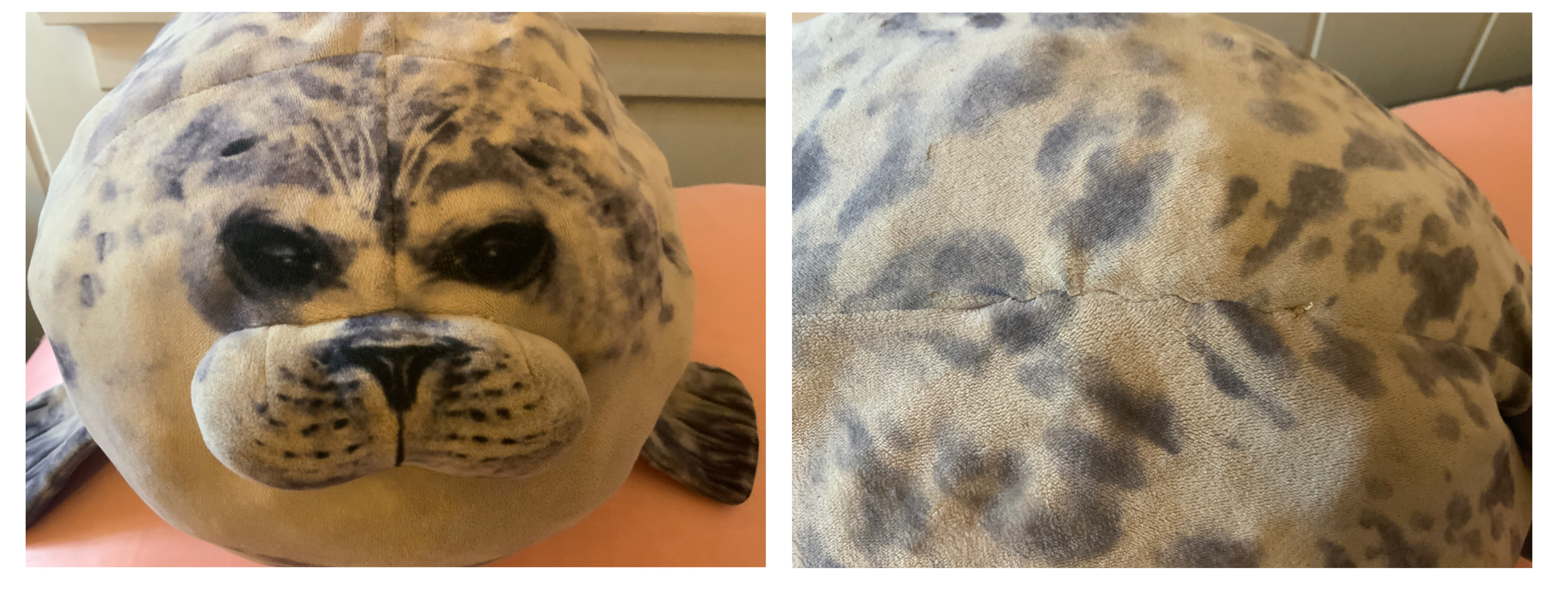
After figuring out where Sealie’s materials most likely came from, I started to look into the technical aspects of mass producing stuffed animals specifically. After Sealie’s birth place (or factory) had received the polyester and cotton materials needed to make him, such as his stuffing and outer fabric, the first step would be cutting the fabric into the seal shape. There are many ways factories could cut fabric, but Sealie’s fabric was most likely cut by a fabric roll cutting machine. It’s possible that his factory also had individuals cutting the fabric manually, but it’s unlikely considering the fabrics thin quality, which would make it easy to cut by machine, and because this specific plush design is common and popular. Then, the pattern needed for Sealie would be printed onto the fabric. Sealie’s print is evidently digitally printed, shown by the grainy image that are his eyes and snout. After printing, the fabric is sewn together by individuals using sewing machines, leaving a small opening which is then used to put the stuffing into the “skin”. Finally, the small opening is hand sewn together (Maple Eye Toys). On Sealie, you can actually see exactly where he was hand sewn, because one of his seams has a section that isn’t as linear as the others. 

Sealie’s digitally printed face and hand sewn seem

One step of Sealie’s making that I haven’t mentioned was how he was designed. In the process of researching, I learned that Sealie and another popular white seal plush usually sold alongside Sealie are actually based on real seals located in the aquarium of Osaka, Japan. Sealie’s design is based on Yuki the harbor seal, and the other seal is based on a white ringed seal named Arale. This process of research has taught me a lot about the stuffed animal I hold so close to me, and this bit of information is the most heartwarming for sure. 

Yuki the Seal

Works Cited

“China Country Page”. Cotton Outlook. https://www.cotlook.com/china-country-page/. 4 October 2024.

“Polyester made from coal? China is betting on it”. Chemical & Engineering News. 6 March 2023.  https://cen.acs.org/business/petrochemicals/Polyester-made-coal-China-betting/97/i3. 4 October 2024.

“Step-by-Step: How Manufacturers Navigate Mass Production”. Maple Eye Toys. 27 July 2024. https://mapleeyetoys.com/plush-manufacturers/. 4 October 2024. 

“Surplus Polyester Production in China”. Fibre2Fashion. https://www.fibre2fashion.com/industry-article/7406/surplus-polyester-production-in-china. 4 October 2024. 

 “Xinjiang cotton: what’s the controversy?”. Asia Media Centre. https://www.asiamediacentre.org.nz//features/xinjiang-cotton-whats-the-controversy. 4 October 2024. 

My Grammy’s Piano

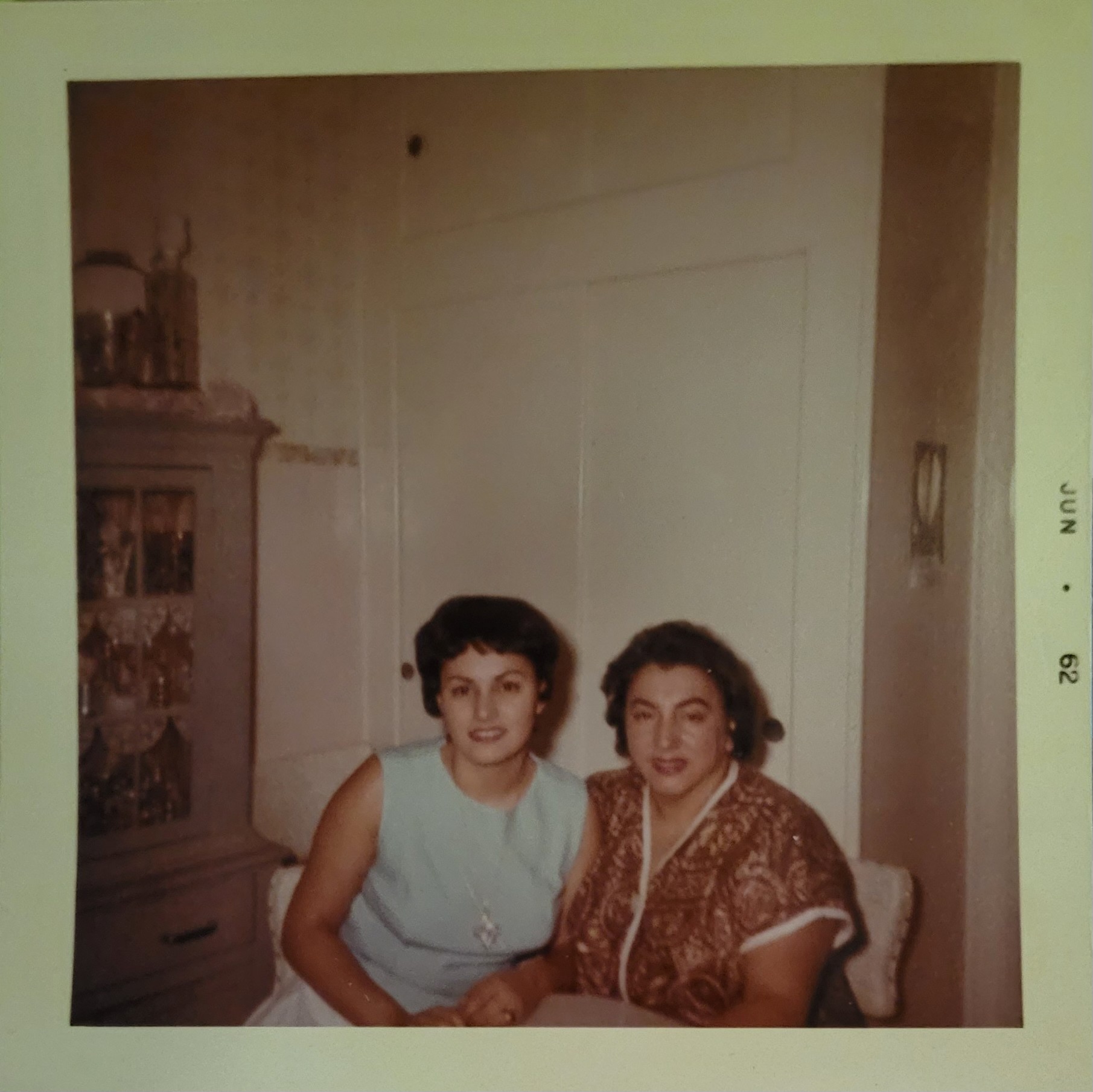
My great grandmother, Carmela, but best known as Millie, was born in Manhattan to two Italian immigrants. She lived in New York City her whole life, moving from Manhattan to Brooklyn, and along the way she met her husband Tony. In Brooklyn, she gave birth to her daughter Pamela, my Grammy. My grandmother grew up in Brooklyn, and eventually moved to New Jersey after she got married. There, she had her daughter, my Aunt Lisa. After splitting with her husband, Grammy took Lisa and moved back to Brooklyn with Millie and Tony, where she had her son, my dad Anthony.

my Grammy and my Great Grandma Millie

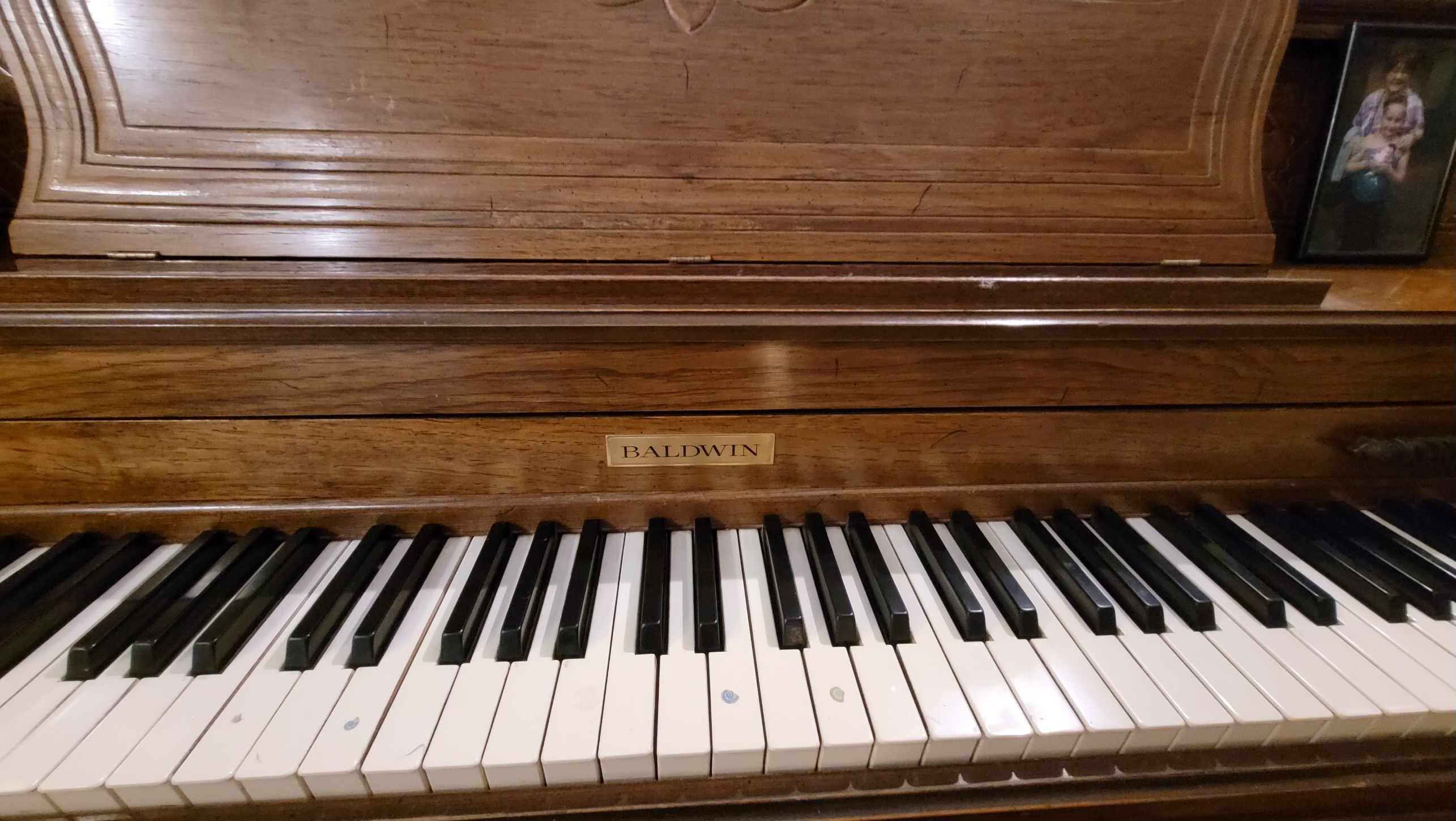
One of my great grandmother’s dreams was to have a piano in her home, and she shared this dream with her husband and daughter. She wanted her home to be filled with music, hoping her family would be able to learn to play. In 1973, my great grandmother, great grandfather, Grammy, and my aunt and my dad all had agreed to move out of their 2 family home in Brooklyn to a house in Staten Island together. They bought a house and were planning their move, when Millie passed unexpectedly from a heart attack. Her heart- wrenching passing led my great grandfather and Grammy to buy a different house, as they couldn’t bear to live in the one they had picked out alongside her. Even though she passed before she could live out her dream of having a piano in her home, my Grammy and Tony fulfilled it by purchasing a piano once the family had moved into their new house in Staten Island. They bought the Baldwin upright piano brand new in 1974, about a year after they moved.

the Baldwin label

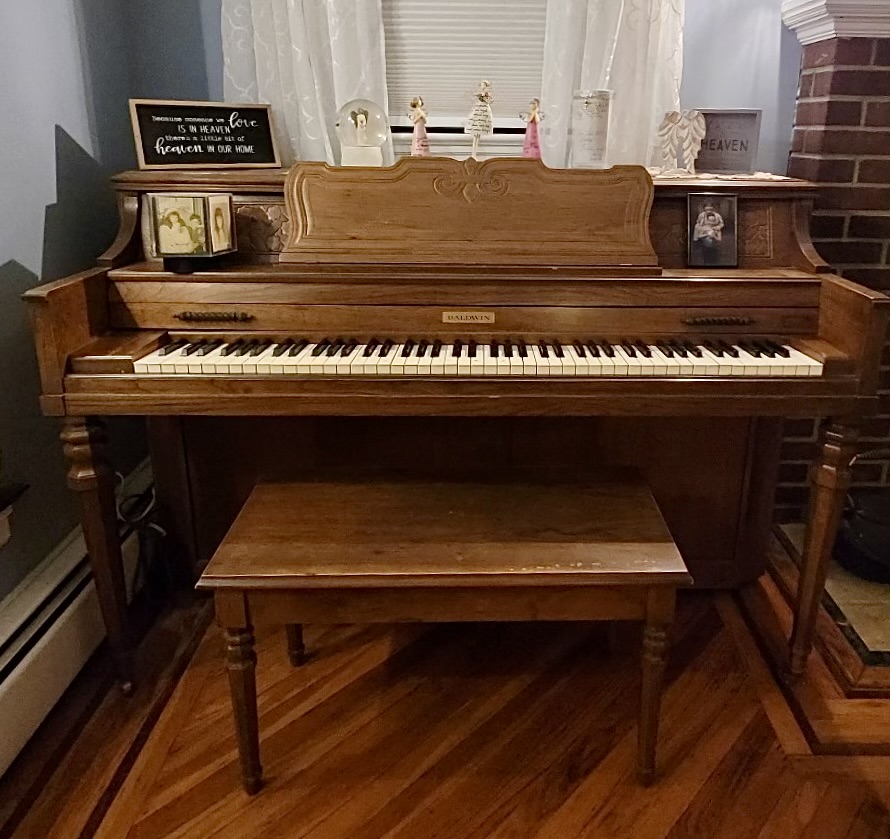
Though I wasn’t able to find how much a Baldwin upright piano would have been worth in 1974, a Yamaha upright piano would have been around $2,500, so it was most likely around a similar amount. The beautifully carved wooden piano stands at 58 inches wide, 40 inches high, and 25 inches deep, weighing about 500 pounds. It claimed its place in my grandmother’s living room from 1974 until she passed in 2019.

The piano’s first handler was my Aunt Lisa. Grammy signed up her daughter for piano lessons at the house. While my Aunt Lisa was being taught, her brother listened intently. One day, Grammy and Lisa were about in the house, away from the piano, when they heard it being played. “Isn’t that a tune you’ve been learning?” Grammy asked Aunt Lisa, as she recalls. My dad was found to be playing the song Lisa had been learning, completely by ear. Of course, Grammy signed him up for lessons as well after that. My dad was naturally musically talented, and still plays the piano beautifully to this day thanks to my great grandmother’s wish. 

the keys

When I was a kid, I remember being at Grammy’s house and listening to my dad play on that piano. On every Christmas Eve spent at my Grammy’s, he’d play the music for our family sing-along and while all us kids opened our presents. I remember my brother playing Fur Elise for Grammy, but jokingly speeding up turning the song into chaos, causing Grammy to exclaim “Play it nice!”. 

After my Grammy had passed, my family was faced with clearing out the many memories that house had held. The Baldwin upright piano was moved from its home of 45 years. Despite us already having a piano in our home, my dad of course took ownership of the Baldwin. Now, our piano sits in our living room across from my Grammy’s. 

Grammy’s piano in my living room

Cat on a Cozy Chair Tiny Teapot by Rose Ruocco

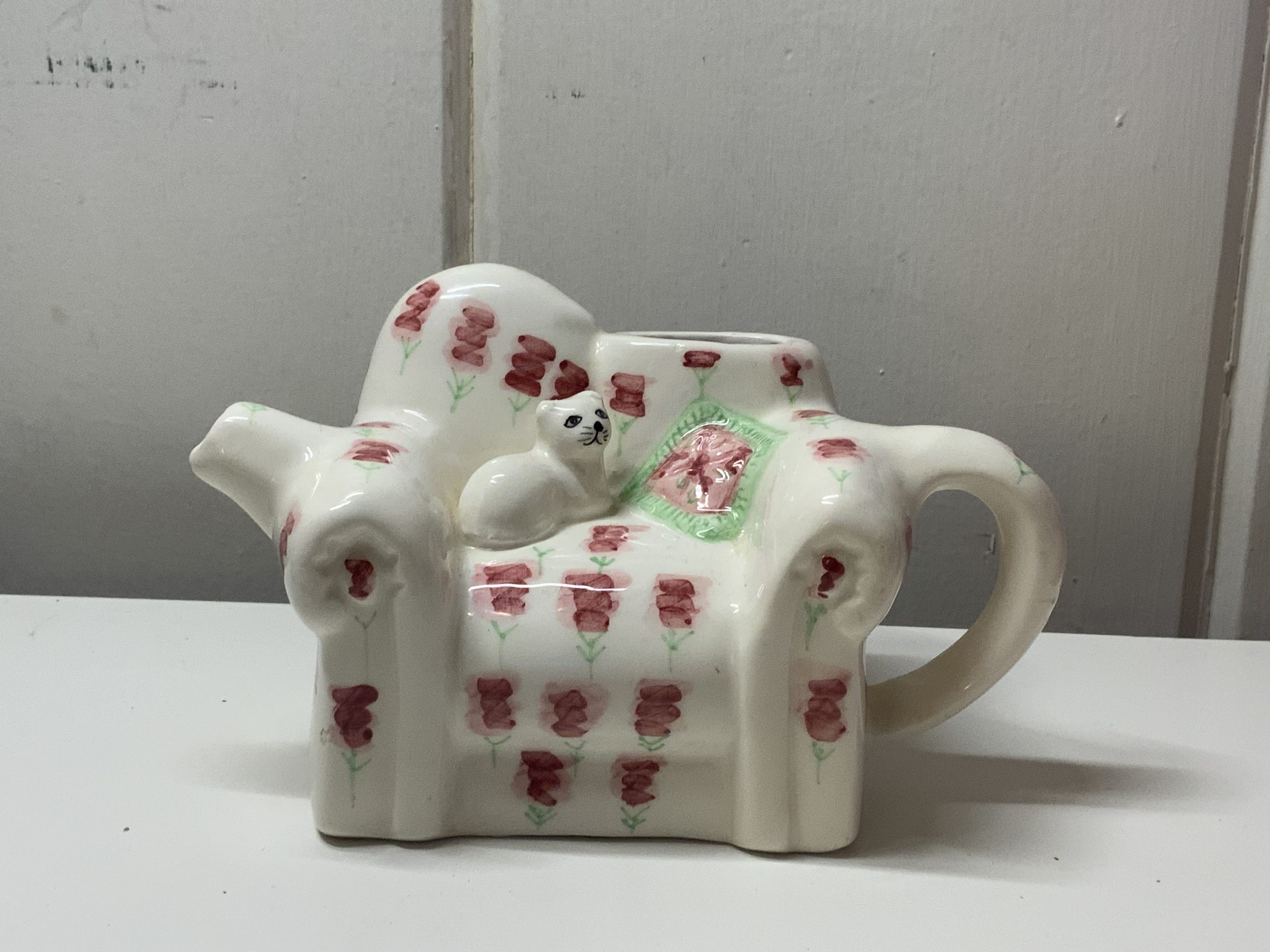
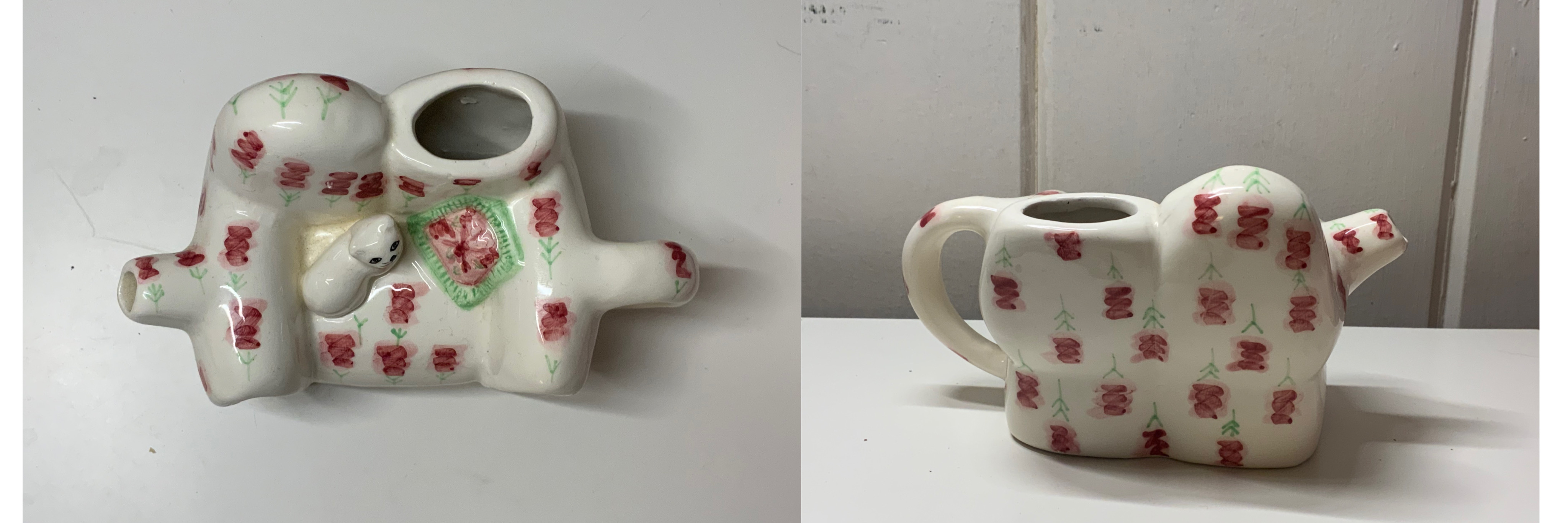
This ceramic teapot sits at only 3 inches tall and 5 inches wide including its handle, with a volume of roughly 22 cubic inches. It’s extremely light and delicate to handle, with a smooth, glossy surface all around.

from the front

The pot is shaped as a chair, with curling armrests and a creased back. The chair is white with a floral pattern, with repeating pink petals and green stems that continue onto the spout and the handle. On the right side of the chair lies a one inch pillow, pinched in the center, with a green trim and pink interior design. To the left, a round one inch cat loafs, completely white except for its painted face- two eyes, a dot of a nose, a small curling mouth, and six whiskers, three on each side. All of this comes together to depict the scene of this white cat sitting nicely on a cozy chair.

from the top and from the back

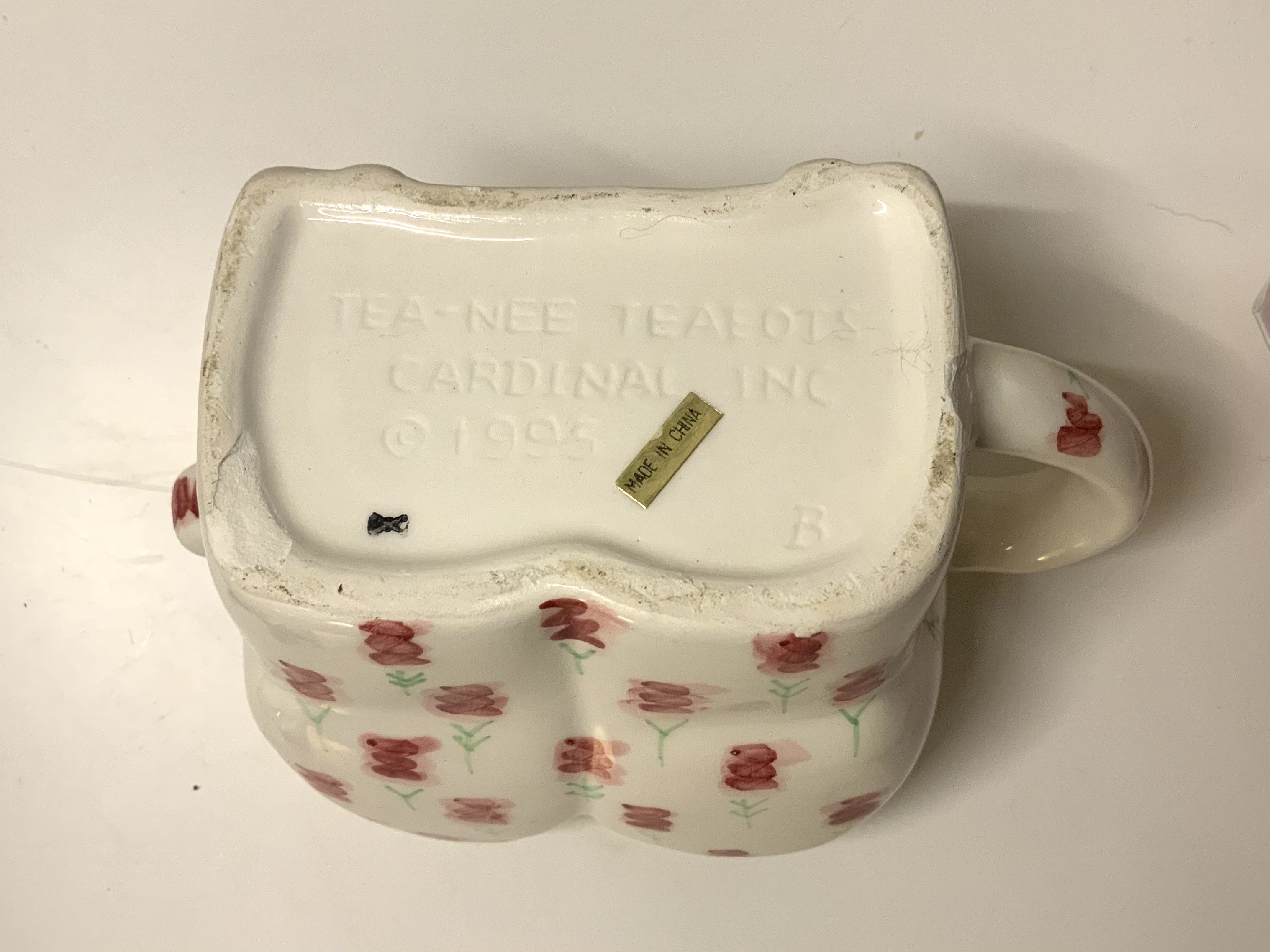
On the bottom of the object, a small gold “made in China” sticker sticks, and engraved in the ceramic are the words “TEA-NEE TEAPOTS CARDINAL INC. c 1995” and a “B” that resembles a type of signature in the bottom right corner. There is also a dark spot in the left bottom corner.

from the bottom

This tiny teapot was found by me in the abandoned downstairs kitchen of my grandfather’s two family home. He was helping me find any old pots and pans I could take from him for my new apartment, and while tracing my eyes over the scattered toys and papers left on the kitchen table, I spotted the white cat’s tiny face. I showed it to my grandfather, who replied “Oh yeah, look at that” as if it was the first time he’d seen it. I asked if I could take it, and he happily gave permission.

A clue to who may have used this teapot lies in the engravings at the bottom. Though I previously suspected it was solely my grandmother’s, the date 1995 suggests that perhaps my mother was the owner, though she only seemed to half remember the object when I showed it to her. Regardless, there is no true way of knowing and there are endless possibilities of who may have purchased it or who it was from, like one of my grandmother’s friends or close family members.

Now with it in my possession, it sits neatly on the corner of my desk, amongst various other knickknacks and figurines. When peering inside the vessel, its age and its history of use can be predicted by yellow discoloration, and the years of non use is shown by the dust and small debris lining the bottom. Despite my cleaning it, I don’t believe it’d be very safe to drink from after spending a large bit of time sitting in the musty downstairs of my grandfather’s house. Because of this, it seems its days of being used as a teapot have ended with me, or perhaps until it belongs to someone else.

Rose Ruocco