My analog experience began a couple weeks ago, when I decided to try to do my graphic design homework– based in digital Adobe programs– all on paper. So far, every sketch or thought has been typed on a notes app, written in a sketchbook app on my iPad, or recorded in a document online. Graphic design needed to go back to its creative basics, so I started cracking open my ninth-grade notebook.
The first thing I noted was the flexibility I had to produce meaningful work in different environments and through different mediums besides solely screens. I have actually been feeling extremely limited when completing my assignments since I need to complete them in the graphic design building on campus. Their computer labs are built to have all of these programs on their computers, and the monitors are the size I am used to working on in class, which is to say, giant. My laptop refuses to be an option as well, and other computers provided by the library or in other buildings simply don’t cut it.
When working in my notebook, I sketched everything with a pencil, took notes and ideas down on the same sheets, and physically mapped out every version of my project I had considered. Honestly, it felt odd, doing something by hand that everyone else could do with three clicks of a button, but it did get me in touch with every stroke of my pencil on paper and made me connect with the purpose of every line.
I felt in control as well, having grown up loving physical papers in front of me, I handwrote all of my notes as opposed to using our shitty, plastic Chromebooks the school provided. Lord knows I could move my hand faster than those things could load anyway. I am used to the feeling of creating with a pencil in my hand, the sensitivity and dexterity. This is why I prefer to use my iPad in many cases, but I had never even really considered how much of my assignments could be done actually on paper and not just an impression of it. Of course, some things need to be transferred to the computer and completed digitally, but it was far later in the process of my project than one would expect.
The familiarity was such a comforting feeling, allowing me to really focus on my product instead of the stress of figuring out the program I was using or who I was disturbing by being in the studios so late. My analog experience is at least shaping the way I plan to carry out the last of this semester, on paper in a notebook falling apart by the second.
Reflection of the class period itself-
At our analog cafe today, I brought in my record and sat down to color. I could choose between three coloring pages themed for Thanksgiving, one being Snoopy in a Pilgrim’s outfit holding out a pie, a page with calligraphy bubble letters spelling out “Happy Thanksgiving” with pumpkins all around it, and a page that featured a cornucopia in the center and blocky bubble letters that also spelled out “Happy Thanksgiving”. I chose to color in the festive Snoopy like a lot of my classmates.
I selected an array of pinks and reds out of the big case of alcohol markers provided by Rose, and set to coloring in my snoopy. I then colored in his clothing and hat in purple, and made his pie green. While doing so, our whole area of the table was immersed in collective conversation, springing back and forth around the room. Our class was lively and as topics flowed and changed, we weren’t cut off with intent to reach a certain goal. Many people laughed, and we were all able to compare our differently rendered Snoopies in the end.
As for the experiment, the data I observed is broken down according to the steps included in “Object Studies”.
Firstly, for the overview of the experiment, I recorded my expectations of how today would go, as well as what I wanted to look out for while the analog cafe was taking place. Due to our debate in class, I was focused on the attention spans of students and what they would be creating throughout our time in our analog cafe. Much of our discussion centered around the authenticity of art and the use of AI with modern technology, as well as the globalization of ideas and lack of inspiration.
Next, over the course of the class period, I noticed that most students had picked one craft that interested them upon arriving and stuck with it for the time we had. There were multiple creative tools available, such as air dry clay, crochet, coloring pages with colored pencils or markers at hand, a type writer, etc. Each person had enough patience to really put effort into what they were creating and never got frustrated or quit what they were doing, nor left it there without a word. Students were also able to have conversations and socialize while doing their task, opposed to how all encompassing screens tend to be, to the point where people cannot converse while doing something on their phones.
Additionally, although there were only three different coloring pages, everyone chose to complete their differently, with different colors or mediums, and each person’s final result was much different from anyone else.
As for my personal reflections, during the class time, I felt much more light and having a positive experience in class. Despite feeling very tired before and after the time slot, I was able to forget about how tired I was since my mind was actually being used. I just felt very present and as if I was able to really take in all of the information given to me in conversation with peers and other stimuli. I also tuned in and out to the background music playing because it was more up to selective hearing, instead of being bombarded with every source of art in equal measure.
To add on, I personally did not find the task of staying off my phone to be difficult. I even had the device in my pocket where I could feel any potential vibrations from receiving notifications, which many people find to be even more distracting and tempting. Yet, I was not tempted to check my phone throughout our time, since I felt fulfilled from my experience and therefore didn’t need to rely on anything else to occupy my hands or mind.
After experiencing our analog cafe, I think that more institutions should try the same thing in the future. However, there are steps to be taken first to ensure that the experience is as successful as ours. It is important to instate discussion-based assignments first– our class relies heavily on talking to our peers, which allows for friendly relationships to develop first, making the analog cafe experience better. Without doing so, our classroom would have surely been engulfed in silence, leaving many students to feel isolated and feel the need to compensate by “socializing” on their devices. Only after this should more schools use class times to complete digital free sessions– specifically with a selection including hands-on activities. These two things are things I feel are the most crucial for the success of the experiment, as students are actively engaged physically and mentally, comfortable around their peers, and not made to pay attention to a lecture that is horrendously understimulating compared to our everyday lives.
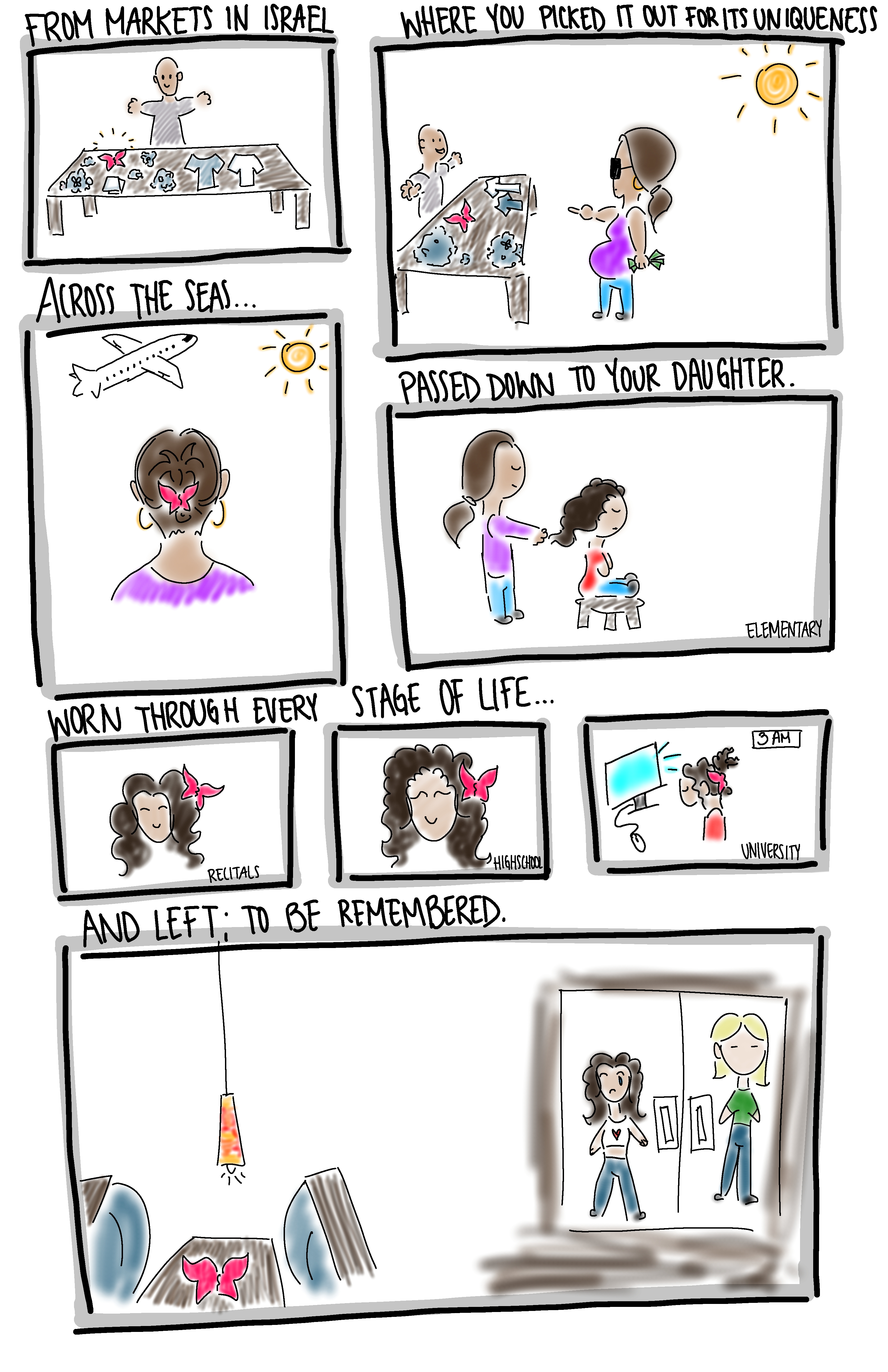


 The Materials of History, Thought, and Art