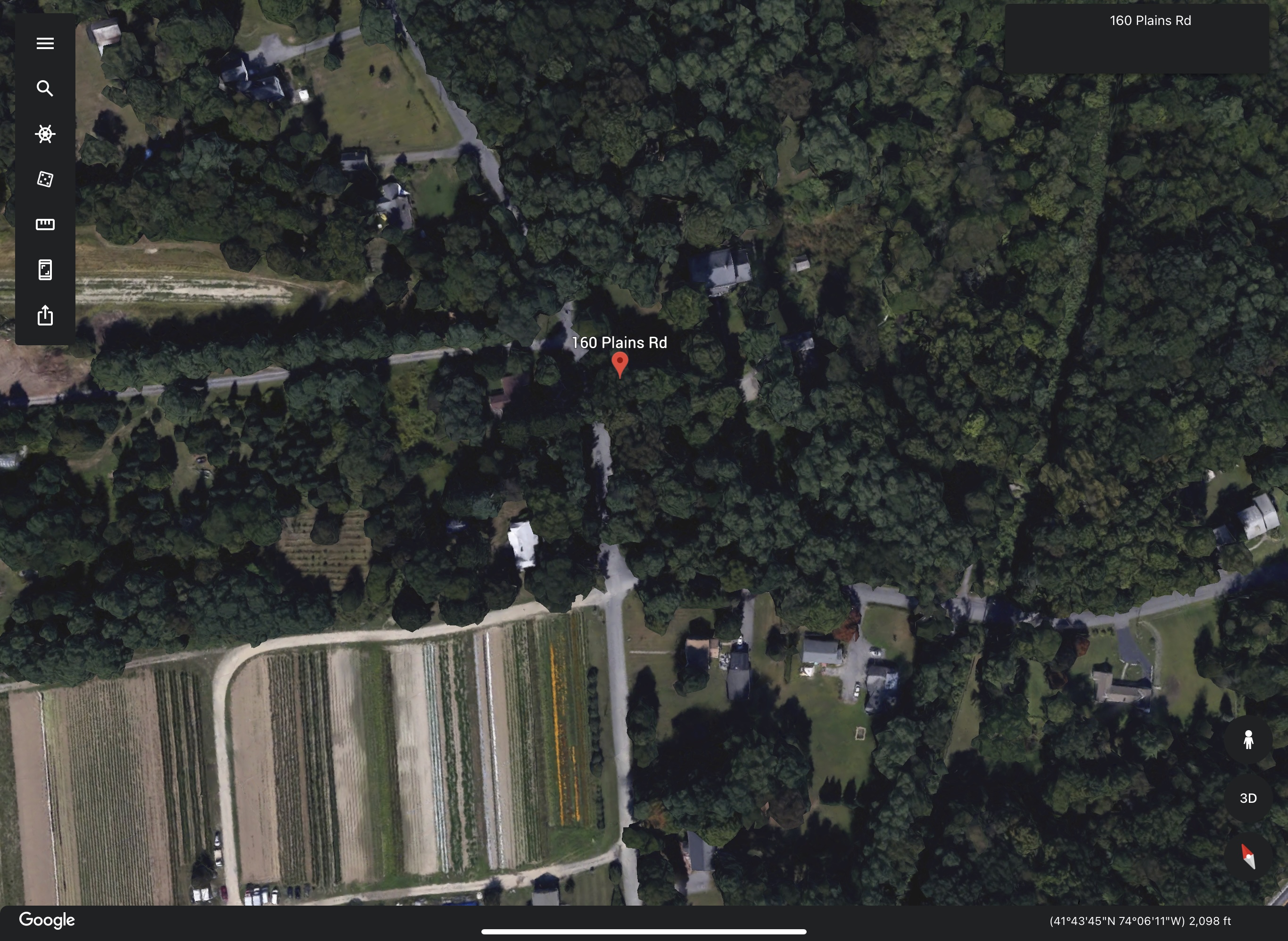
Just around a mile outside of SUNY New Paltz’s campus borders sits one of the most influential pieces of land in New Paltz history. 160 Plains Rd or “The Locusts” as it is formally known, is home to one of our local historic sites. According to the U.S. National Register of Historic Places, this large stone estate dating back to 1826, once belonging to Peter Eltinge, mimics the same style and structure as the houses that line historic Huguenot street today. The Eltinges beautiful stone estate is not only what attracts tourists and historians alike, for the property it resides on is part of one of the most significant property transactions in New Paltz history to date.
The Deed of Noah Eltinge describes the land transaction between Noah Eltinge, a well-known resident in New Paltz, and a gentleman by Benjamin Doyo. The Eltinge’s have a long-standing history in New Paltz, most well known nowadays for the Elting Library located in the heart of Main Street. However, the deed that was transcribed described a very different terrain and surrounding landscape that the Library dedicated to the Eltinge family resides on. Upon this discovery, it was time to dive deeper into the Eltinge family and their history in New Paltz to see where else they may have lived and where a-bouts this piece of land that was described in the document was located today.
According to New Paltz’s Historical and Natural District Inventory, the piece of land described in the deed is still in the Eltinge family’s name. Before Roelif Eltinge even purchased it in 1727, it belonged to the DuBois family. The DuBois Family, another local name familiar to the area, was one of the original New Paltz’s Pantees. According to documents, Roelif Eltinge married one of the DuBois daughters, which helped secure this significant land transaction. Noah Eltinge, born in 1721, inherited the land through his father Roelif and maintained it through the years.
This transaction described in the deed is perhaps the most famous one to date involving the Eltinges. It helped make Noah Eltinge one of the wealthiest men in New Paltz at that time. This piece of land was sold to Benjamin Doyo in 1765 and went for nearly 45 shillings. It is unclear which portion of land and where exactly it was located on the Eltinge’s estate, for their property was so expansive, and so many changes had been made to the maps and charts of the area. This transaction of land and mainly the profits they made from it genuinely shaped the legacy of the Eltinge family in New Paltz and made them who they are today.
The family expanded on the property through the years with a large estate, barns, and other amenities added well through 1821 when they did major renovations. To this day, their property extends and includes the mill and the pond located on Rt.208 as you are entering New Paltz on the east side. Peter Eltinge, the grandson of Roelif Eltinge, who initially purchased the land, built the large stone estate formerly known as “The Locusts.” Located on what is now known as Plains Road, it is one of the oldest landmark houses besides Huguenot street. Built-in 1826 by Peter Eltinge himself, this house mimics that same style found on Huguenot street, with the original stonework still present and evident in its structure today. The property is still owned by the Eltinge’s as it has been for nearly three centuries.










 The Materials of History, Thought, and Art