The word “key” can refer to many things. A spoken password, symbols on a map, answers to a test, and letters on a keyboard or typewriter can all be called keys. However, I am interested in the physical keys that can be used to open mechanical locks.
Modern versions of these types of keys include some basic anatomy that allow them to open locks:
Figure 1: Basic Key Anatomy
Locks and keys have been in use for over 6000 years, and have gone through many different styles around the world, including Mesopotamia, Egypt, Rome, and Belgium. Some sources point to Theodorus of Samos, a Greek sculptor and architect from the 6th-century BC, as the inventor of the key, as well as ore smelting and casting. Women in Ancient Greece carried bronze temple keys on one shoulder, while early Roman keys were mostly used as a status symbol for those who had property to protect.
Figure 2: Ancient Greek Temple Key
Figure 3: Early Roman Key
Keys have also been used as symbols of many things. One example is the coat of arms of the Holy See of Rome. This emblem of the papacy used by the Catholic Church displays the Keys of Heaven, or Saint Peter’s keys, which refer to the metaphorical keys that open the gates of Heaven.
Figure 4: Holy See Coat of Arms
The goddess Hecate is also sometimes pictured holding a key. In the image below, it is in her left hand. Because of this, keys have, in some circles, come to represent witchcraft and Wiccan magick.
Figure 5: Wiccan Goddess Hecate with Key in Hand
Some people carry their keys on a circle cotter or “split ring” commonly referred to as a keyring. Invented in the 19th century by Samuel Harrison, keyrings can be made of metal, leather, wood, rubber, or plastic.
Figure 6: A Modern Key on a Circle Cotter Keyring
Spring hook carabiners are also a popular option for carrying one’s keys, as they make it easy to remove and add keys. Often times, at least one of the keys on one such keyring will be a master key, also known as a skeleton key. This special key can open several different locks.
In addition to literally granting access, keys can be used as representational objects. By being a part of a collection, the item takes on a new life and meaning. In the past, wearing a keyring with many keys on it was a symbol of occupation and masculine status. A custodian, groundskeeper, hotel worker, delivery person, or stage manager might keep a set of keys that allow them access to many different areas. It also allows them to lock up at the end of the night, ensuring no one gets into someplace they shouldn’t be.
Figure 7: A Collection of Keys on a Caribener Worn on a Beltloop
With this in mind, many keys attached to metal ring or carabiner began to indicate independence for queer women, particularly in the rise of butch culture during the 1980s. Lesbians often wore these keyrings on a specific side to indicate sexual preference, and they became a shared language to signify sexuality, similarly to the communication of the hanky code used by gay men.
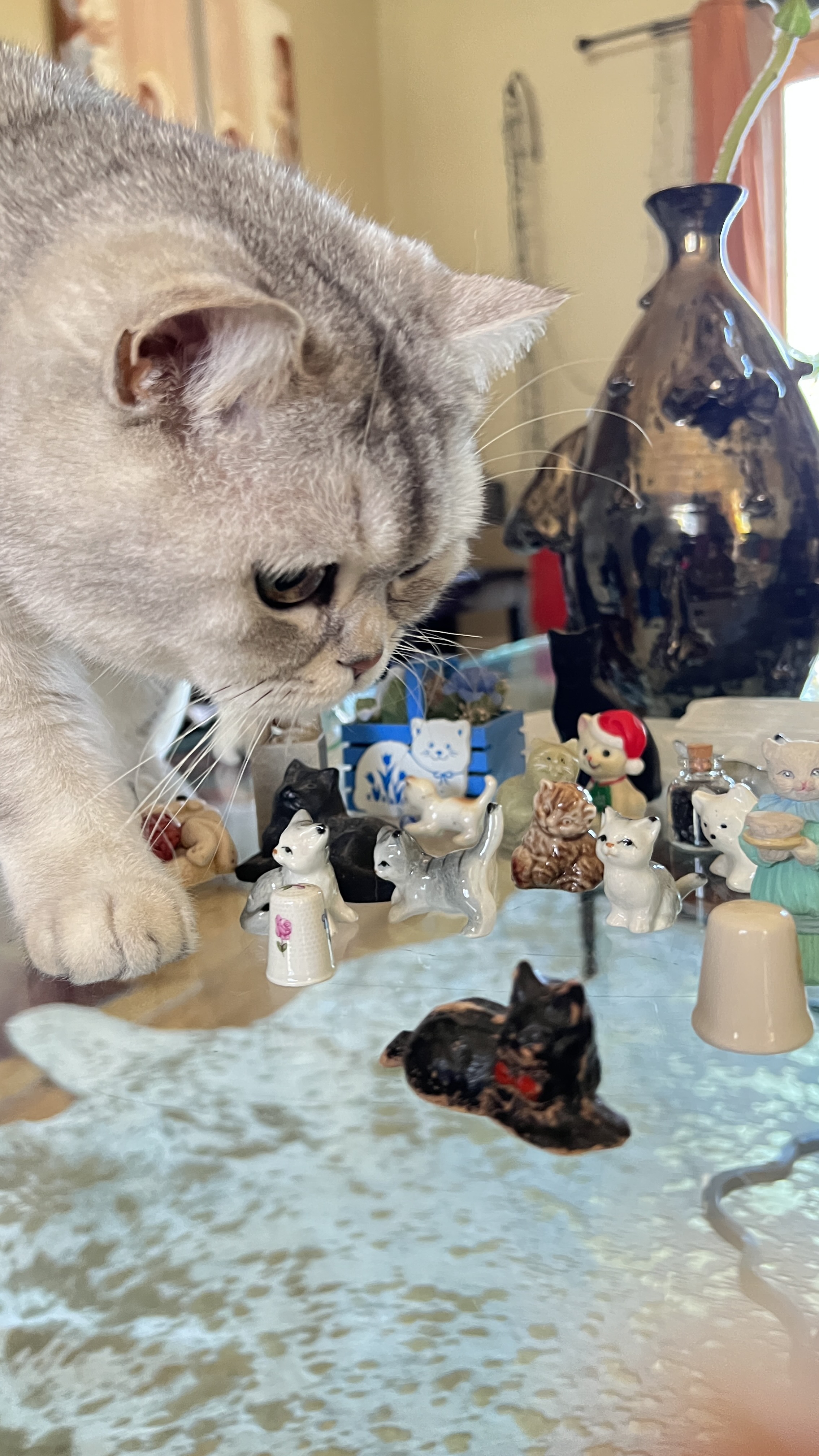
My mother and I have a small collection of ceramic cats. We inherited them from my Great Aunt Norma, who had an affinity for cats and any cat-themed items. I was immediately reminded of this collection while reading the Hare with Amber Eyes, since Edmund de Waal also inherited a beautiful collection of small ceramic figurines from his uncle.
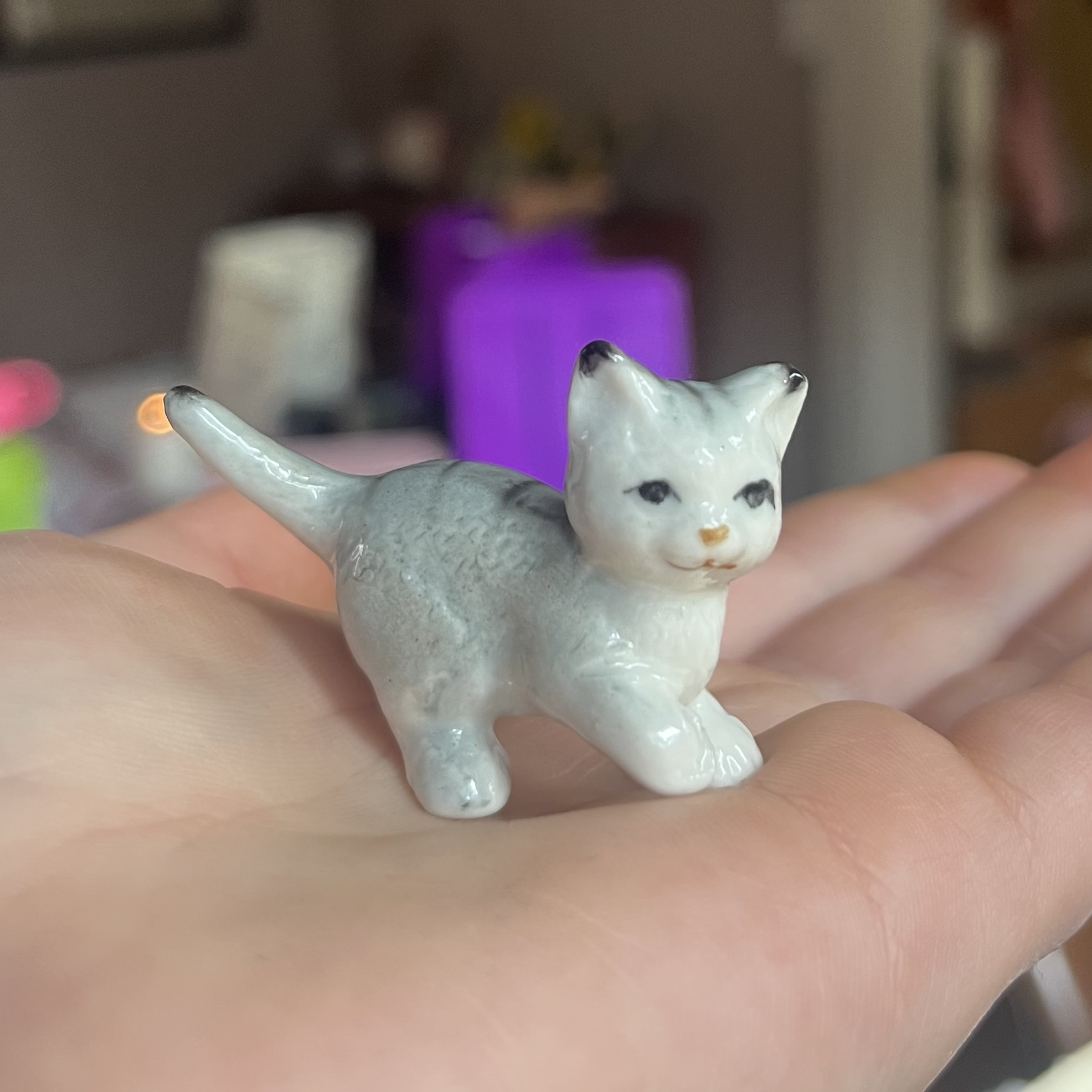
I am choosing to talk about this gray cat in particular, because it is one of the only things I have with me in my own room to remember her by. Her father survived World War 2 and had terrible PTSD for the rest of his life. However, he never spoke about what happened at war. The only thing he would speak about was the wonderful care packages that my Great Grandma Nuccio would send him. I feel like this is a testament to how much my family values gift giving as an act of love. I’m sure he gave my Aunt Norma a few of these trinkets, which we now honor.
I have always felt personally attached to this gray cat because it is uncanny how much he looks like my cat, Hare (as in Hare Krishna, not like a rabbit). The ceramic figure is smiling, with one paw gently reaching upward to step. It is carefully hand painted, which I can tell from the unmistakably human brush strokes. The grey back of its’ coat is such a beautiful gradient from the white underbelly, that it must have been sprayed to achieve a seamless look. Purposeful black lines stripe the backside of this figurine, making it even more alike to my own cat, whose tail is striped just like a raccoon. It is small enough to completely conceal in my hand, about the length of two quarters in total. Its’ tail is reaching upward happily with one pronounced black dot painted exactly on the tip of the tail. I cannot tell if this piece was hand sculpted or made from a mold and cast. There is a tiny hole on its’ belly which signifies to me that the piece is hollow. Something that makes me smile is the very small speck of residue from the kiln shelf on the bottom of this cat’s foot. Only potters notice this stuff.
My mother would always have tea with my Aunt Norma, and kindly passed down the story of some of these figurines. A certain type of tea that she bought would come with a small ceramic animal, like a toy in a cereal box! After researching, I found that the kitten in particular was released in their series between 1985-1994. This was the exact same time my mother was a student at New Paltz. She told me how she would regularly go visit Aunt Norma across the river, in Redhook. The two of them went through pots and pots of Red Rose Tea® for the chance to acquire more cats.
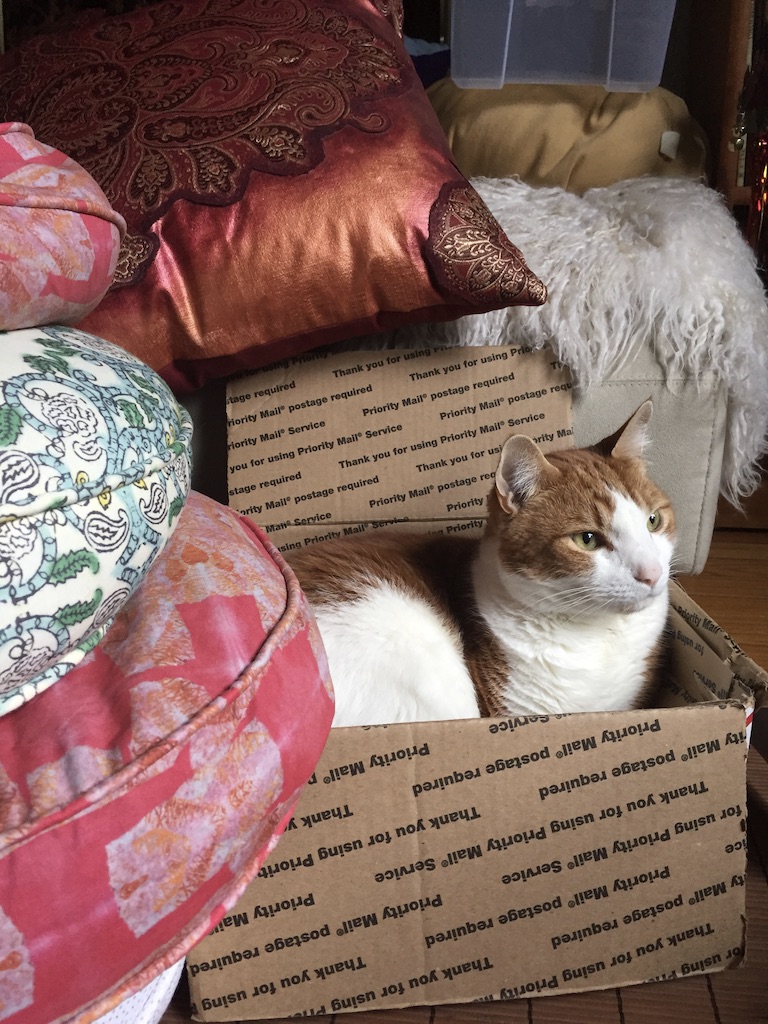
Another level of the story that makes Aunt Norma’s cat collection so important to me, is the story of Flag. Flag was Aunt Norma’s BOC (big orange cat) circa 2010-2019. He was named flag because his tail always stood straight up with a little bend at the end, like a flag waving in the air. One day my Aunt fell while she was home and it was decided that it was best for her to stay at an assisted living facility until she got better. She always wanted to go home. In the meantime, she asked my mother and I to take care of Flag for a while. We loved him like he was our own. I had Flag in my life during my freshman to junior year of high school. Just about three years. For some reason, she knew that we were the only family members trustworthy enough to protect her best friend. And it broke her heart to be away from him.
Now, I hope you have come to understand that this cat figurine, and the rest of the cats that reside at my mother’s house, are so much more than a kitschy crazy cat lady’s collection. They are the embodiment of her trust in us, her love for her animals, and her unique ability to collect and appreciate all that life has given her. Stories of objects passed down are always so much more than objects. This story was so bittersweet to write about, because since these stories occurred, both Aunt Norma and Flag have passed on. We remember them every day, and I am so grateful that I knew her for so many years of my life. Luckily, we got to bring Flag back to Aunt Norma while she was still in the assisted living facility. She got to be with him for his last months. That is how it was meant to be, though I am sad that my time with both of them was too short.
What do shibboleth, coffin varnish, monkey rum, and tarantula juice have in common? They are all spoken passwords! Spoken passwords were one of the earliest forms of keys. Instead of a physical key, it was a spoken word to allow entry or access into a place. Earliest uses of the spoken password were used in warfare. In Ancient Rome spoken passwords were referred to as “watchwords” and the watchword would be spoken around an encampment to ensure no spies had infiltrated. While it had several practical uses in warfare, the spoken word password erupted in popularity after the 18th amendment had passed. Speakeasies erupted out of the ashes of prohibition, but a code was required for entry. Oftentimes this code was a ridiculous string of words such as panther sweat, but regardless of what the spoken password was it kept people drinking and the law enforcement out!
Spoken passwords are another form of keys, instead of relying on an object such as a chest, another person acts as the chest while the key is the password! Spoken passwords resulted in personal connections as this key would have to be talked about and spread around to ensure that all “keyholders” had access. Instead of physical keys being lost, the equivalent was a code word being forgotten. While someone can steal a key to get into a locked location, spoken passwords have different weaknesses. Vulnerabilities of spoken passwords consist of people eavesdropping to get the key.
An extreme example of the spoken password being used and eavesdropped was the complex code communication methods of World War II. During a time when radio calls could be intercepted over air, the only way to communicate secretly was through spoken passwords. Nazi Germany was dominating the spoken password system during World War II. Code “Ultra” was uncrackable and the key was right in front of the allied intelligences. The Enigma Machine was the key to the spoken password yet was almost impossible to crack. It took several mathematicians and years of work to crack. Eventually the spoken password was cracked by Alan Turing and resulted in the beginning of the turn of the tide in World War II towards the allies. Since the allies now had the key to the code, the chest of military intelligence and top secret information was now open.
In the 21st century, spoken passwords are a less common form of password as many different technologies make spoken passwords obsolete. The 21st century rendition of a spoken password is computer recognized vocal recognition. Instead of relying on a person saying a code word a computer listens to a person’s voice tone, pitch, and accent as the key to a locked location. With less vulnerabilities as it is nearly impossible to crack the code of someone else’s voice, computer recognized vocal recognition provides the most up to date and secure version of the spoken password.
In conclusion the key of a spoken password has been modified and adapted for uses in warfare and speakeasies. With its new adaptation in the 21st century of technology providing the new spoken key of a person’s voice, the spoken key has survived throughout history and remains relevant to today.
When I was younger, and even until this day, my parents have always told me that I have an old soul. I definitely agree with them because even though technology might be really useful and convenient, I always wish I could’ve experienced my life without it. I am the type of person who prefers riding my bike into town during the summer, just walk around shops, never actually purchasing anything, to just enjoy my time outside. Thats why I was really excited for this experiment.
For my scrolling experiment, I realized that I needed to buy some art supplies that I was running low on, as well as a box to carry my supplies in. I immediately opened the Amazon app on my phone and began to scroll through my search of the specific art supplies I was looking for. It was very easy for me to find these items but I spent almost 2 hours trying to find the cheapest versions of these items. This actually made my experience very stressful because I was never satisfied with the price of my items. I had a bit of a different experience when searching for the art box online. I had a very specific image in mind of what I wanted, however, I am convinced that this design does not exist. Therefore, since I was shopping online, I had assumed that I could find it somewhere and spent hours looking to find nothing of the sort. Overall, my experience was okay at first, but eventually stressed me out too much and I had to stop.
For my browsing experiment, I was actually unable to go shopping until this Sunday because I had sprained my ankle unexpectedly. However, I had the perfect opportunity to document my experience from the honors trip to NYC. My friend Donnie and I had two goals during this trip: 1)Have the best day ever and 2)Find some sort of unreasonably large stuffed animal to comically bring back on the bus with us. To fulfill these goals, we went to many different places all over the city. Many of them, like the Disney Store, Line Friends, Bubba Gump Shrimp Co. and Kinokuniya were way too expensive to actually purchase anything from, so we just enjoyed looking at all the cool things that we were really tempted to buy. I think that this really added to my positive experience because just looking at all of the cool items in the store was satisfying enough. (The price tags definitely prevented me from spending more than I did). But soon enough, we encountered a really small store called the, “Toy Store” and we did some browsing for funny and large stuffed animals. Most of the larger stuffed animals were over $70 and we immediately knew we weren’t going to be purchasing anything there. However, my favorite experience in this store was finding a really questionable looking Thor plushie. It was so unexpected that I burst out laughing and got yelled at in the store. I proceeded to run out the front door and down the street with my friend, laughing the entire way. This is one of my favorite memories from this trip. However, that isn’t all. I am also highly tempted by all of the street vendors that I make an effort to stop at every vendor to make them feel better about their artwork. Most of the pieces these artists made were already collecting in my room back home so I knew I shouldn’t purchase any. However, I found these handmade wire figures that were stunning to look at. I spent almost an hour at his stand just contemplating whether or not I wanted to spend $40 on a dragon and I caved. I have a very soft spot for cool decorations, but also posters, so I did end up buying some cool posters as well. Overall, I had an amazing day and barely stressed at all.
After completing both of these experiments, I can say that there are pros and cons to both browsing and scrolling. I definitely prefer browsing over scrolling any day, in hopes that I may have another story like the Thor one. However, I am a very busy person, who barely has enough time to complete homework, so how could I find the time to make it to these stores to just browse? I enjoy having the option to shop online when I need something urgently and cannot walk to the store to buy it. Especially because walking takes a while and I am not allowed to have my car on campus yet, so it is very inconvenient for me to shop in person. Also, when scrolling, it is much easier to find exactly what you’re looking for. I also notice that depending on what I am purchasing, I pay more attention to the money I spend online rather than the amount I spend in person. However, if I am shopping for clothes online, I do find myself spending more money than I plan on spending. When shopping in person, if I am paying with cash, I am very conscious of how much money I am spending, but when using a credit card, the black hole of overspending money starts to form. I noticed that while in the city I was tempted my many cheaper items that added up a bit, but I was still avoiding the more expensive items. (Something about physical price tags scares me). I also think that when shopping in person, I had lower expectations of finding anything specific and enjoyed the randomness that followed. But with online shopping, I stressed myself out way too much over trivial details I wanted on my art box. Overall, I just think that shopping in person is much more personable, unique and enjoyable than shopping online.
Now enjoy some pictures of the items mentioned in my trip!
On Saturday, I will be going to my friend Evelyn’s birthday party. She’s turning 20, and has been my best friend since high school. I needed to buy her a gift, so I decided to purchase her gift while doing this experiment.
I had a couple of goals going into this experiment. My friend is a big Broadway, Disney, and Harry Potter fan, so I wanted to buy something related to her passions. I set myself a $50 budget and had to buy a card along with the gift.
On Wednesday the 22nd at 3pm, I went to a number of different stores along Main Street in New Paltz. Eventually, I ended up in Heady Teddy’s Outfitters, where I bought her a generic mug. Some of the other stores I stopped at were Antiques on Main, Inquiring Minds Bookstore, and Groovy Blueberry. It was fun hopping from one store to another. I went with a different friend, and it was a good chance to socialize and laugh. I didn’t know ahead of time what the stores had in stock, so I was unaware of what I would find. I ultimately found some nice things, such as outfits and bags. Evelyn has a very specific style, however, so none of the clothes I found worked. Not knowing what the stores had in stock was a nerve-racking experience, since I needed to buy something for a specific purpose. I ultimately bought her a generic gift from the physical store.
Not using my phone was easier than I thought it would be. My friend provided enough distraction as we joked around. A couple of times, I found myself tempted to check if I got any messages. I had to fight my habitual tendency to open my phone.
When we entered Heady Teddy’s Outfitters, my friend had to excuse himself and step outside. He said that it was too crowded in the store, making him nervous. This is something I hadn’t considered when comparing browsing vs scrolling. Those who have social anxiety or don’t do well in crowded places benefit from scrolling. There’s no one around, so you can take your time without feeling pressured.
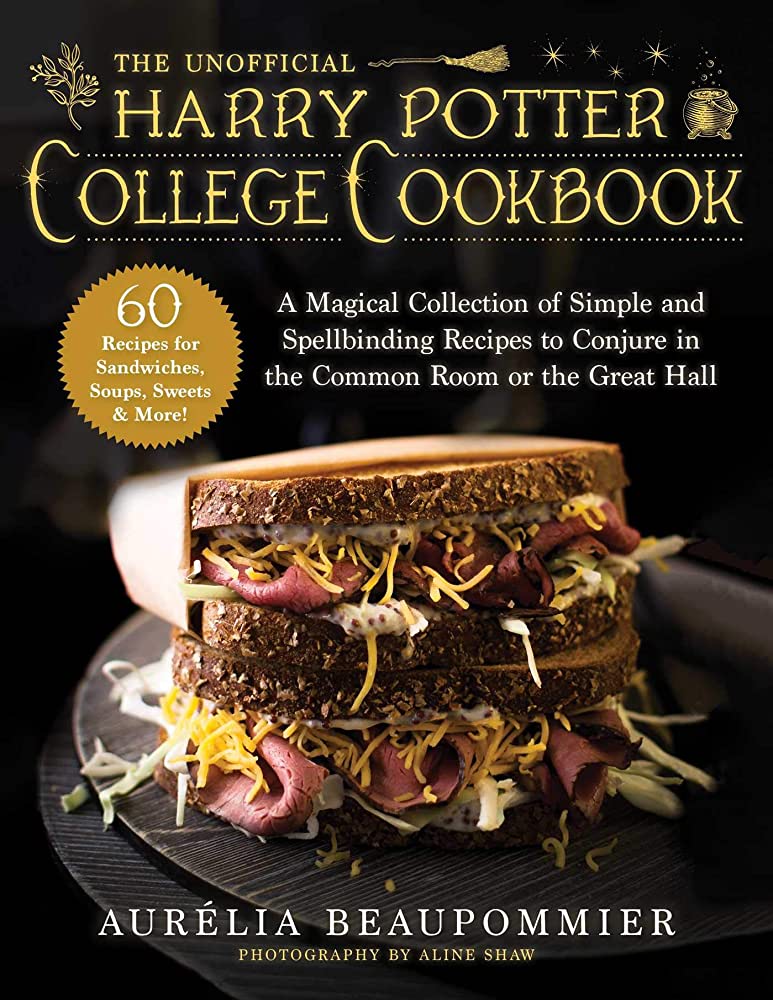
The next day, Thursday the 23rd at 1:30pm, I went on Amazon to search for a second gift. It was a slightly lonely experience, and I found myself wanting to text people in order to socialize. However, I wasn’t limited by what a physical store carried. I was able to find niche products that better suited my friend. For example, I found a Harry Potter cookbook for college students. Evelyn is going to college to become a chef, and is a big Harry Potter fan, so it was perfect.
After about half an hour of scrolling, I started to get distracted. I was looking up objects that weren’t related to my search. I spent approximately three hours looking at camping equipment, instruments, and other random items. Online stores such as Amazon promote unrestricted browsing. In a physical store, once you walk through the whole store, you’ve seen everything. On Amazon, there are hundreds of thousands of objects up for sale. If one isn’t careful, they could spend the whole day doing nothing but scrolling.
After I bought both gifts, I was conflicted about which experience was better. While I socialized with my friend at the physical store, I was able to buy a better gift online. Since both browsing and scrolling have their benefits and issues, I feel that a mix between the two is ideal. When someone wants to socialize, physically see the objects, and have a restricted browsing experience, going to a physical store is better. However, if someone wants privacy, the ability to find niche products, and an unrestricted browsing experience, then online stores are ideal.
For this first scrolling experiment, I decided on looking for a new cleanser to purchase since the one I am currently using has been drying my skin. I didn’t have a specific one in mind, so I just looked up “face cleanser” in the google search engine. What immediately popped up was a sponsored site/company called Curology, which is skincare you can get customized to your specific skin type. However, since this required me getting a subscription, I scrolled past because my goal was not to spend too much money.
As I continued to scroll I came across the people also search for box, which contained more specific searches like: “face cleanser machine”, “face cleanser for acne”…etc. This then led me to change and specify my original search to “best face cleansers for combination skin”, since it wold lead me more to what I am looking for. However more sponsored sites popped up so I decided to click on the shopping tab. What really stood out to me when doing this was seeing all of the ratings under each product and being able to choose specific price ranges to be able to find an affordable and good quality cleanser. This is a much quicker and efficient process than trying to find an item shopping in person. You would typically need to ask someone who works at the store their opinion on the product or if they have any cheaper versions which could ultimately lead to not the most truthful response. So, after narrowing the prices down I decided on purcahsing the Cetaphil facial cleanser for $14 with 4.4 star ratings. Based on the 41,560 reviews, it says that it doesn’t dry skin out which was exaclty what I was lookng for.
When starting the browsing experiment, I decided to go to my favorite store in town, Dancing Hands this Wednesday since I had no classes that day. Everytime I have gone to this store, I never have a specific thing I want to purchase as all of the items are so individual and unique. So, going into the store with the mindset of not buying anything and just looking made me feel an appreciation for the items more and gave me the opportunity to really explore. Even though this is considered a jewelry store, they sold some other things like crystals. My roomates and I purchased a cute crystal tree from there that’s currently sitting on our windowsill.
As I continued walking around, I noticed how there was always something new to look at; whether it be necklace charms, different ring designs, earrings, bracelets, etc. I found myself throughly enjoying this experience. It felt more rewarding than actually purchasing an item. It kind of felt like I was viewing the objects in this quaint shop as pieces in a museum.
Overall, I felt that the second experiment was a much more rewarding and engaging process. While online shopping can be more convenient in terms of finding a specific item you need or would like to purchase, I think that it is also very important to utlize some of your free time to browse around in stores even if you don’t buy anything. You gain a stronger connection to the objects this way and a sense of pleasure just exposing yourself to new things. So, I do agree with Guriel’s view on the importance of browsing because constantly scrolling online creates a disconnect with the real world and separates yourself from having meaningful connections with objects and their stories.
Recently I have been interested in buying a new sweatshirt. My criteria was that it had to be comfortable, creative, and affordable. Whenever I shop online I always enjoy using Etsy. I feel guilty whenever I use amazon or other sites that may not be treating workers as well. However I do believe that the convenience and prices of those sites will often compromise my morals! But for the online portion of this assignment, I will be browsing on Etsy. After putting “çomfy sweatshirt” into the search bar, I was immediately bombarded with many options. While exploring the search criteria there are several things I consider. The credibility of the seller, the cost of the item, and the design of the item. Once an item peaks my interest I can view more images and consider sizing options. Upon clicking there are several images and often a detailed description explaining why you need this item. There is a sense of urgency that comes with online shopping, text boxes stating “20 people have this in their cart” or “only 2 of this item left” makes you almost want to buy it without even thinking! One perk of online shopping is that you never have to worry about a sweatshirt not being your size as you can simply just change the size with a click of a button. Overall the experience on Etsy is very easy to use and can give you very specific items you may be interested in. However there is a sense of urgency that makes shopping stressful or very wallet draining!
Shopping in-person is a very different experience. Walking into stores there is immediately a different “vibe” from store to store. Specifically at New Paltz there is also a very friendly energy when you walk into stores! Some stores burn incense and have relaxing music playing to have a comforting energy. Other stores have rock music and band sweatshirts to match the environment. Talking with shop owners sometimes can be a little stressful as sometimes there is also an urgency to buy sometime. However there is a significant connection with browsing rather than scrolling. In the case of a sweatshirt, you can hold it to your body and see how it would look on you, some stores even allowed me to try it on. This connection to the item makes it difficult to not immediately purchase! Knowing that I don’t have to wait a few days for shipping is also a great perk of in person shopping. Being able to feel the fabric and know that the sweatshirt is soft makes for additional sensory enjoyment that scrolling does not provide. Overall I do agree with doing more browsing rather than scrolling, taking the time out of your day to explore and enjoy stores and sweatshirts makes for an overall more rewarding and fun experience!
My old journal stores fragments of my childhood dating back to my elementary school graduation. The entries are written by my past identities: a tennis player, a summer camp student, and a stressed-out high school senior. These stories were shelved away in the bottom of my desk drawer. After our class conversations that connected storytelling to an object’s value, I wanted to recreate a personal and intimate collection of my everyday experiences outside of digital photographs hastily snapped on my phone. The permanence of my blue-black tennis racket is stored through a narrative about my first tennis tournament within the thick, yellowing pages of my journal.
During the past month, I picked up my 0.5 ballpoint pen to begin the practice of journaling. Now, there are only thirty-one blank sheets of paper left for future writing entries within the 1-inch-thick book. My thoughts, scribbled in thin navy-blue ink, will soon have to nestle in the pages of another journal.
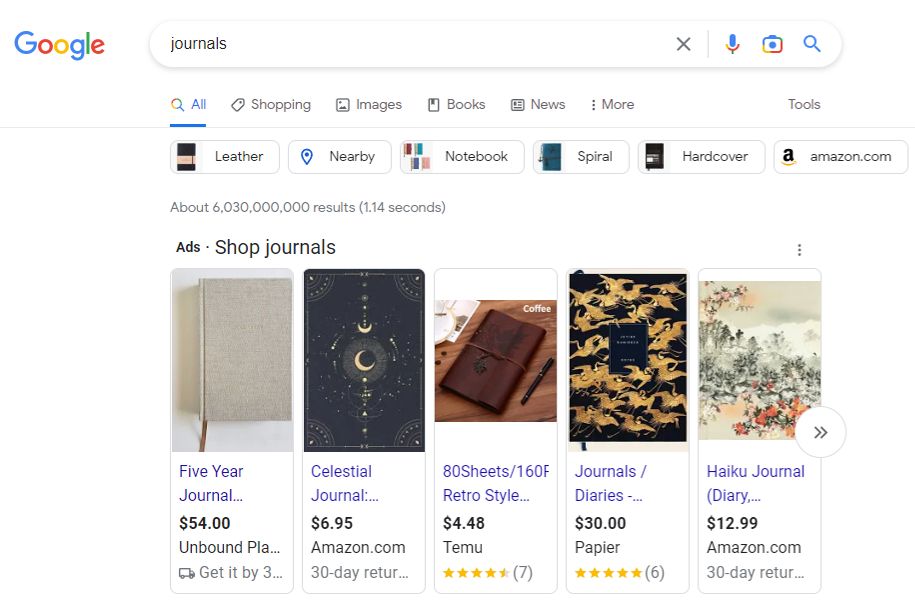
I began my first experiment with the Google search engine by punching in the key term “journals.” As if reading my mind, Google displayed the exact product I was looking for. There were 6,030,000,000 results that guided me to a vast selection of potential notepads, diaries, and journals in 1.14 seconds.
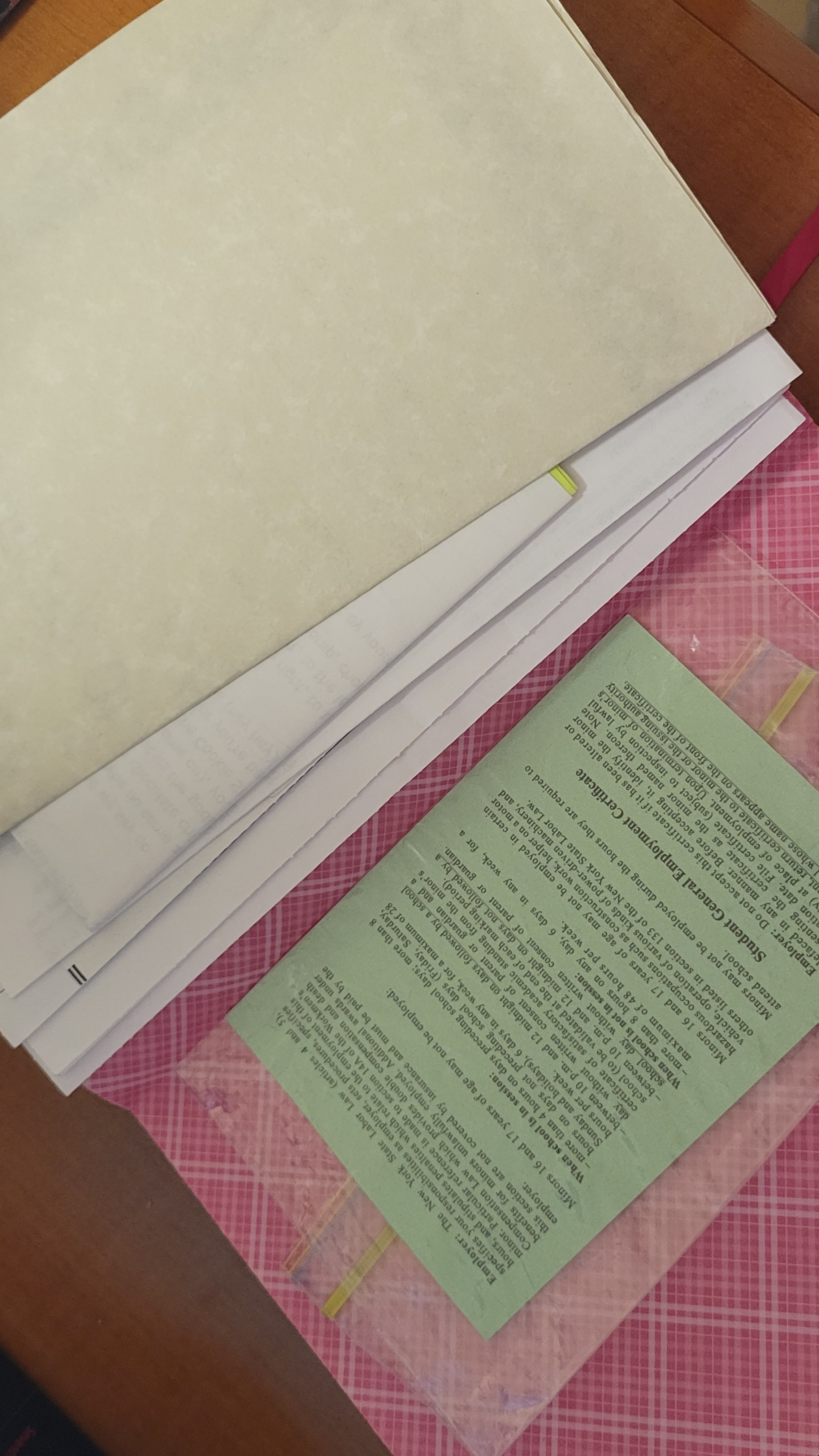
I left Google and tried scrolling on Amazon. Soon, I felt overwhelmed by the lack of tactile touch. None of the items seemed to spark the needed joy for me to click “add to cart.” After all, how could I possibly narrow my selection of notebooks from 60,000 results when many of the products had five-star reviews? Would this professionally photoshopped image of an online journal have the same color contrast in my own hands? Do the journals on Amazon have the same level of quality as my own book? My current journal laces pages together with a fine white thread. There was not a single piece of paper that ripped or slipped out after jamming dried leaves, my first paycheck, and my New Paltz college acceptance letter into the book bind. These concerns clouded my judgment and dissuaded any further willingness to complete the online purchase order.
My current journal that depicts a single sunflower.Leaves were used in my 6th grade science class to study plant cells under a microscope. Assorted documents found in my journal. The green card is my first working paper.Five-starred-reviewed journals on Amazon.
The ease and accessibility, yet the immemorable experience of scrolling that Guriel describes in his book, On Browsing, is accurate. Tomorrow, the small desk, the location of my current infinite scrolling will be repurposed as my workspace where I finish composing an email. If I did not record and reflect on my scrolling experiment, the experience of looking for a journal would have been forgotten. Only my browser cookies will fondly recall my digital shopping experience. However, Google’s reminder of my scrolling experiment will reappear as a pop-up advertisement that obscures my screen as I read a potential news article or shift through social media.
My second experiment began at Manny’s Art Supplies, a local arts and crafts shop on Main Street. I stepped into the crafts store with the assumption that only sketchbooks would be stocked on the shelves, as their website advertised.
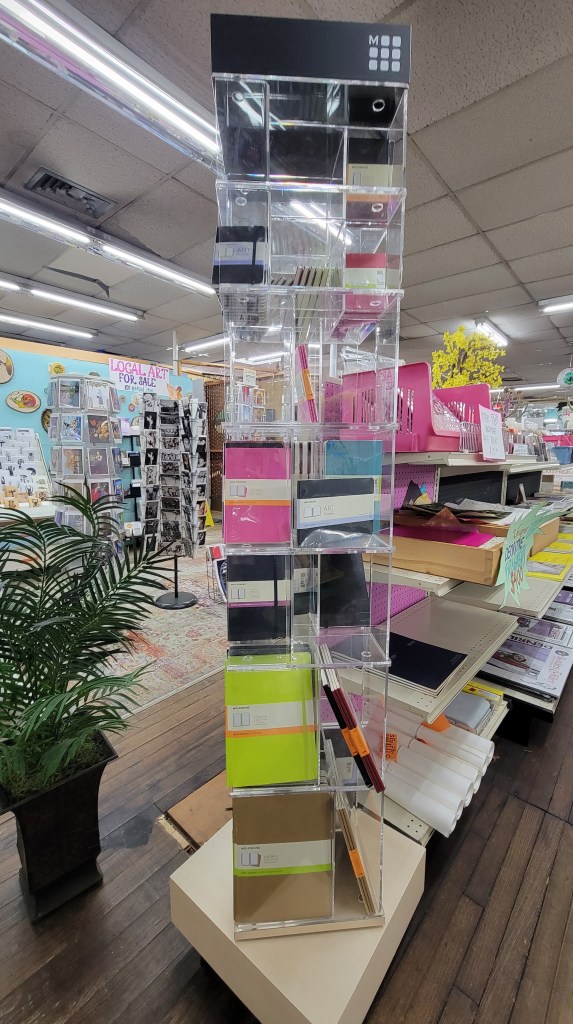
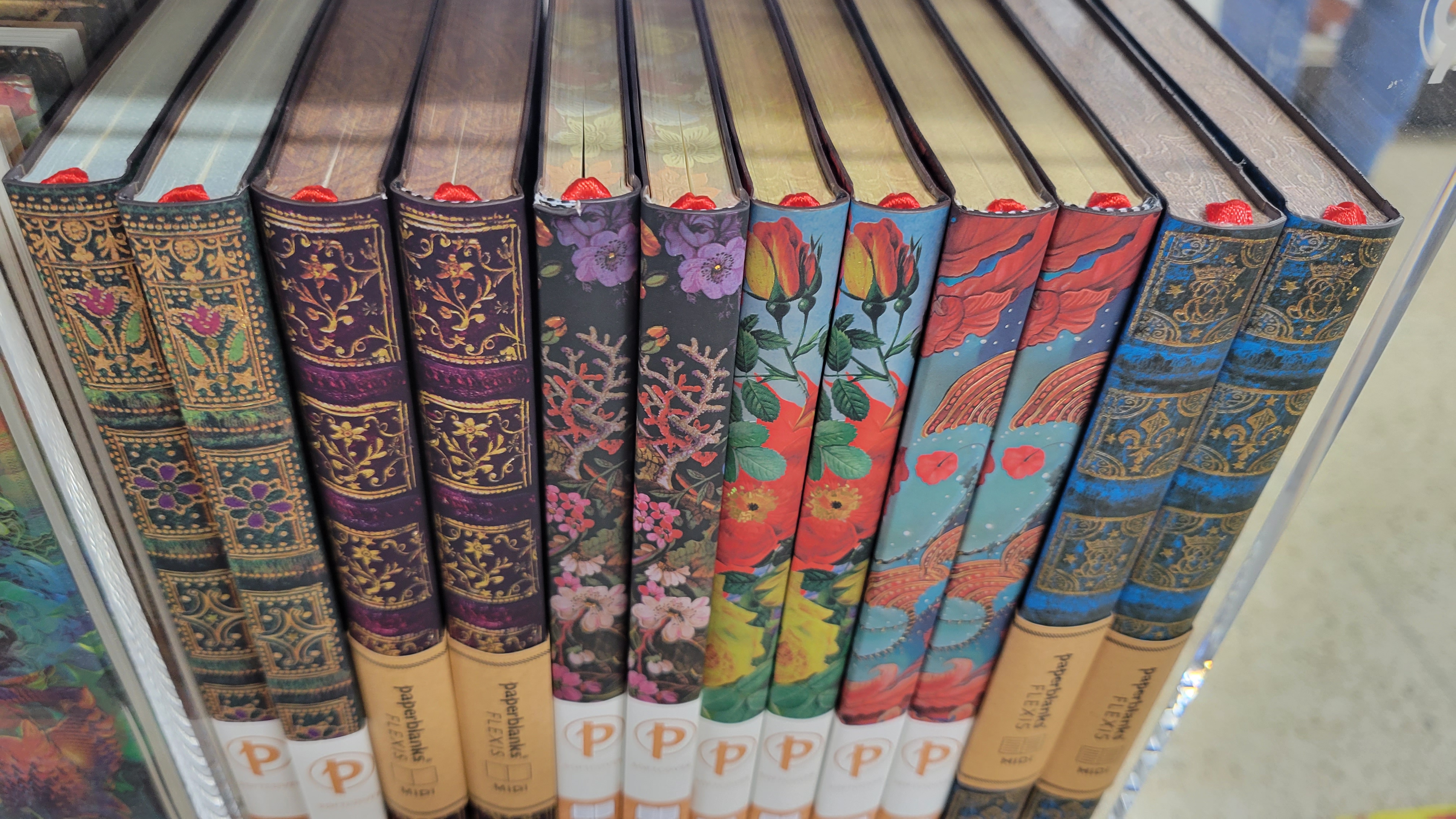
Towards the back of the store, there was a plethora of sketchbooks and a limited selection of Moleskine journals. I felt an immediate pang of disappointment. When did the brand-name, dull, solid-colored journals that I saw on Amazon invade a store that supports creativity? Many of the journaling books were wrapped in a protective transparent plastic layer to preserve their leather-bound covers and pearly-white pages.
Solid-colored journals wrapped in plastic.
A fully stocked shelf of sketchbooks.
Shelf of Moleskine journals.
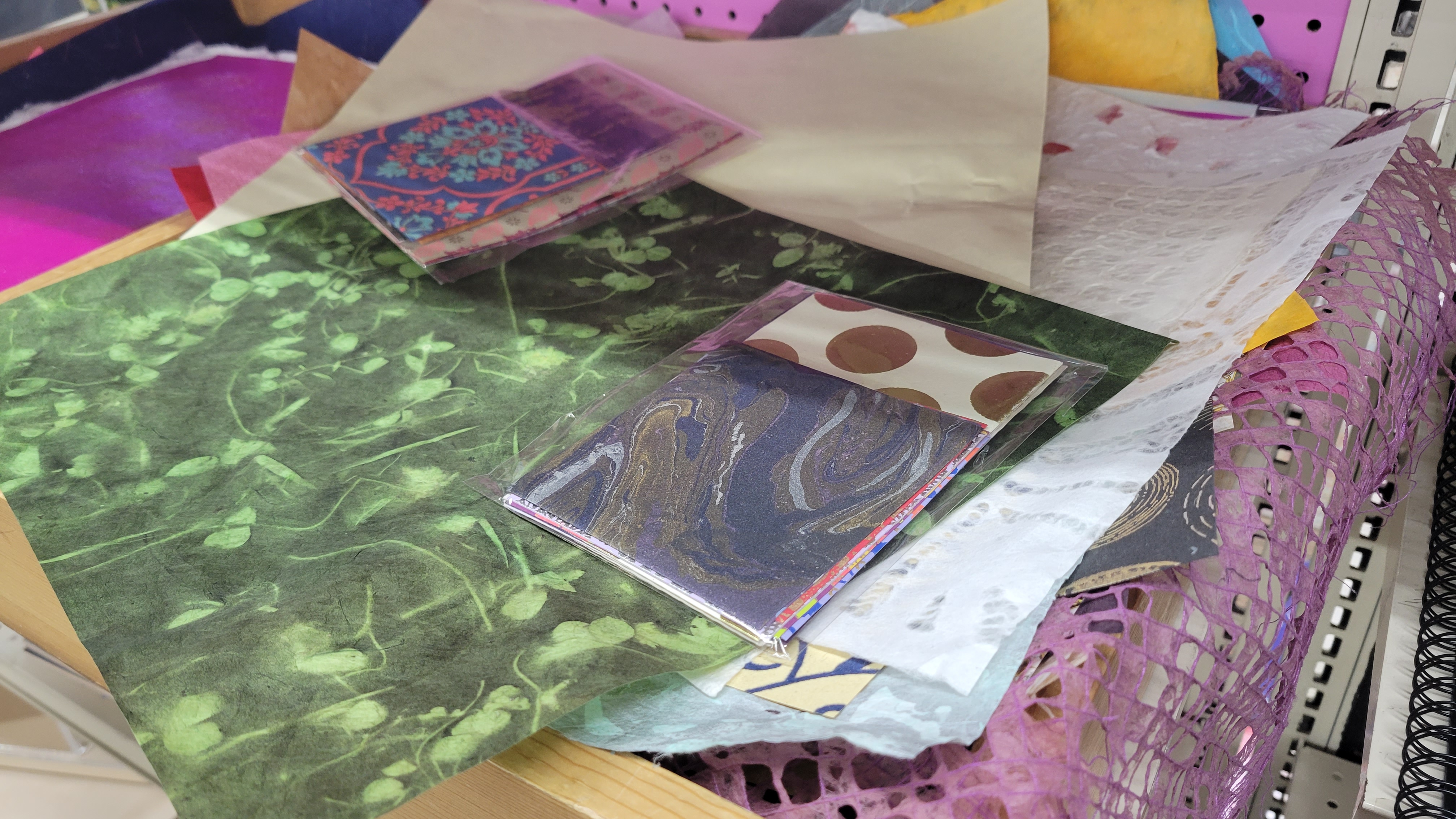
Usually, I do not linger in a store. However, staying true to the browsing experiment, I started wandering up and down the spacious aisles. The store was physically accessible, I noted. There were no stairs, and the slight ramp encouraged access for all individuals. My eyes roamed to admire peculiar greeting cards, while my fingers brushed against an assortment of decorative paper prints. Soon, I found myself swaying and humming to the pop music playing in the background. Between each lyrical tune, the loud creaks of the floorboards loudly creaked under every step.
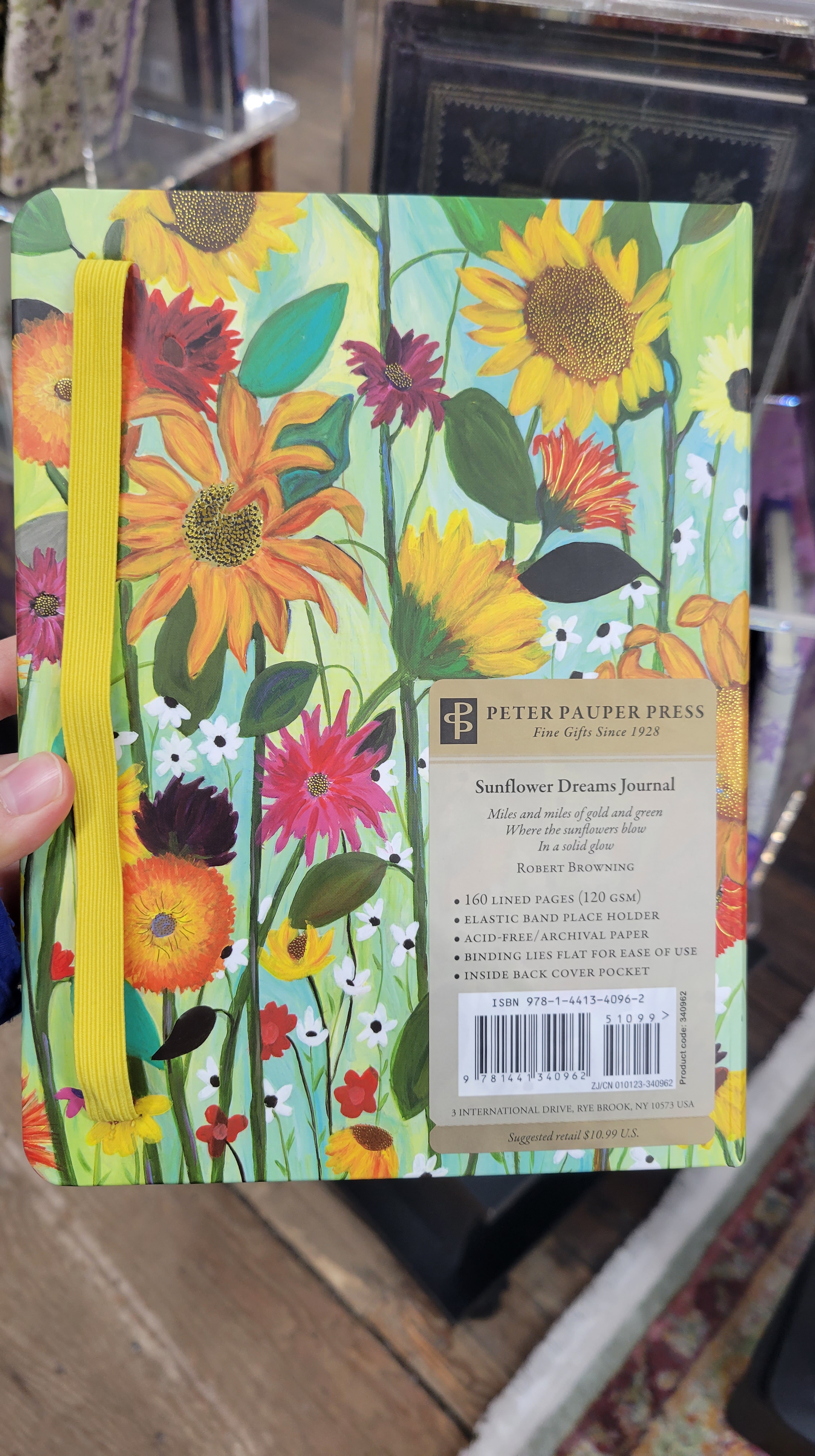
As I was about to gather my belongings and leave Manny’s, a book that depicted a field of sunflowers captured my attention. My brain immediately made the connection that my current journal also illustrated a sunflower!
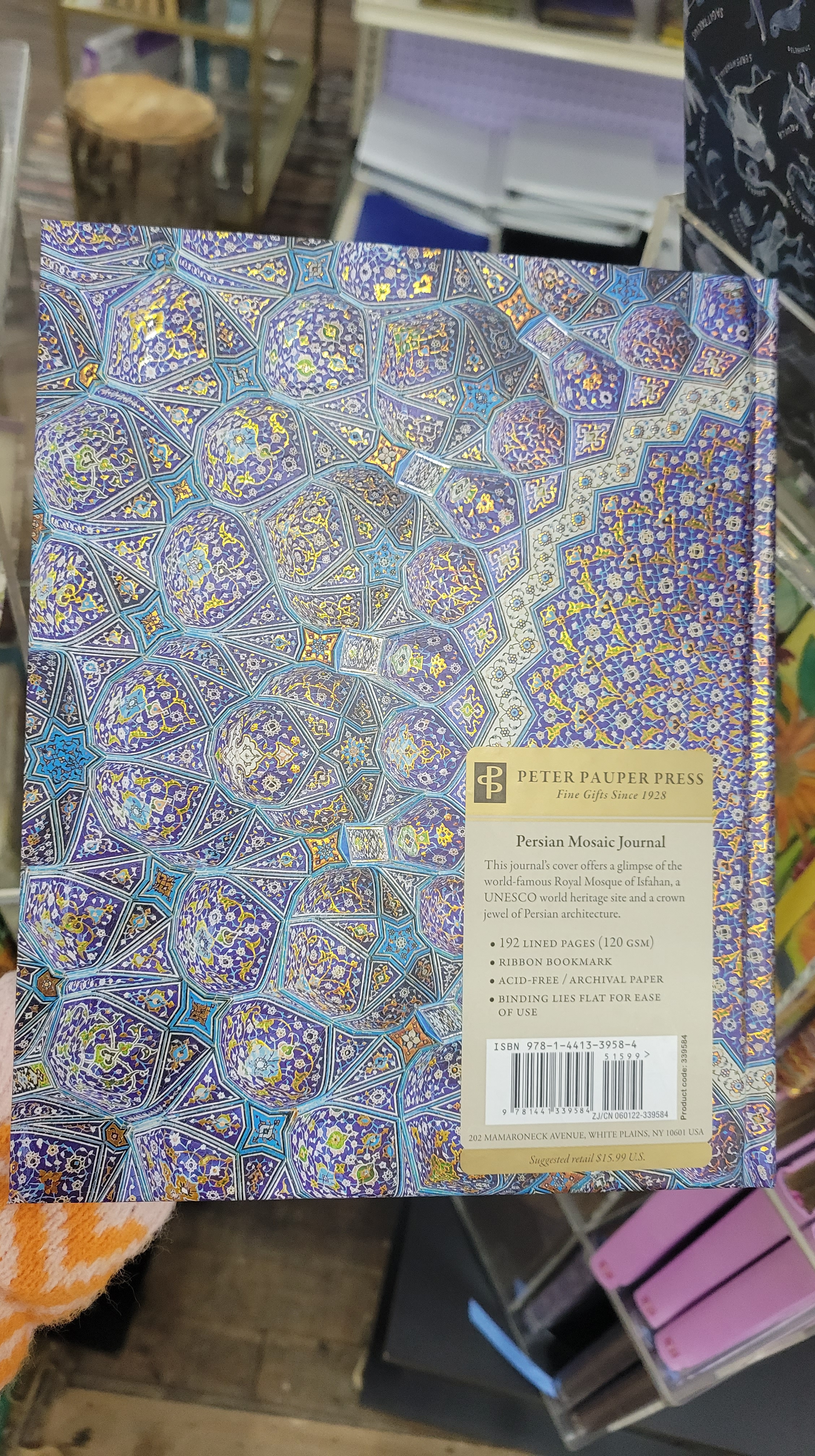
At closer inspection, I realized that I had stumbled upon brightly-hued journals that seemed to scream, pick me up! The whole shelf and the next two rotating columns were supplied with journals depicting famous mosaics and artworks. The back label of each journal briefly identified the printed design. I jotted down a few notes to remind myself to research Ohara Koson’s Tit on Paulownia and the ceiling of the Shah Mosque.
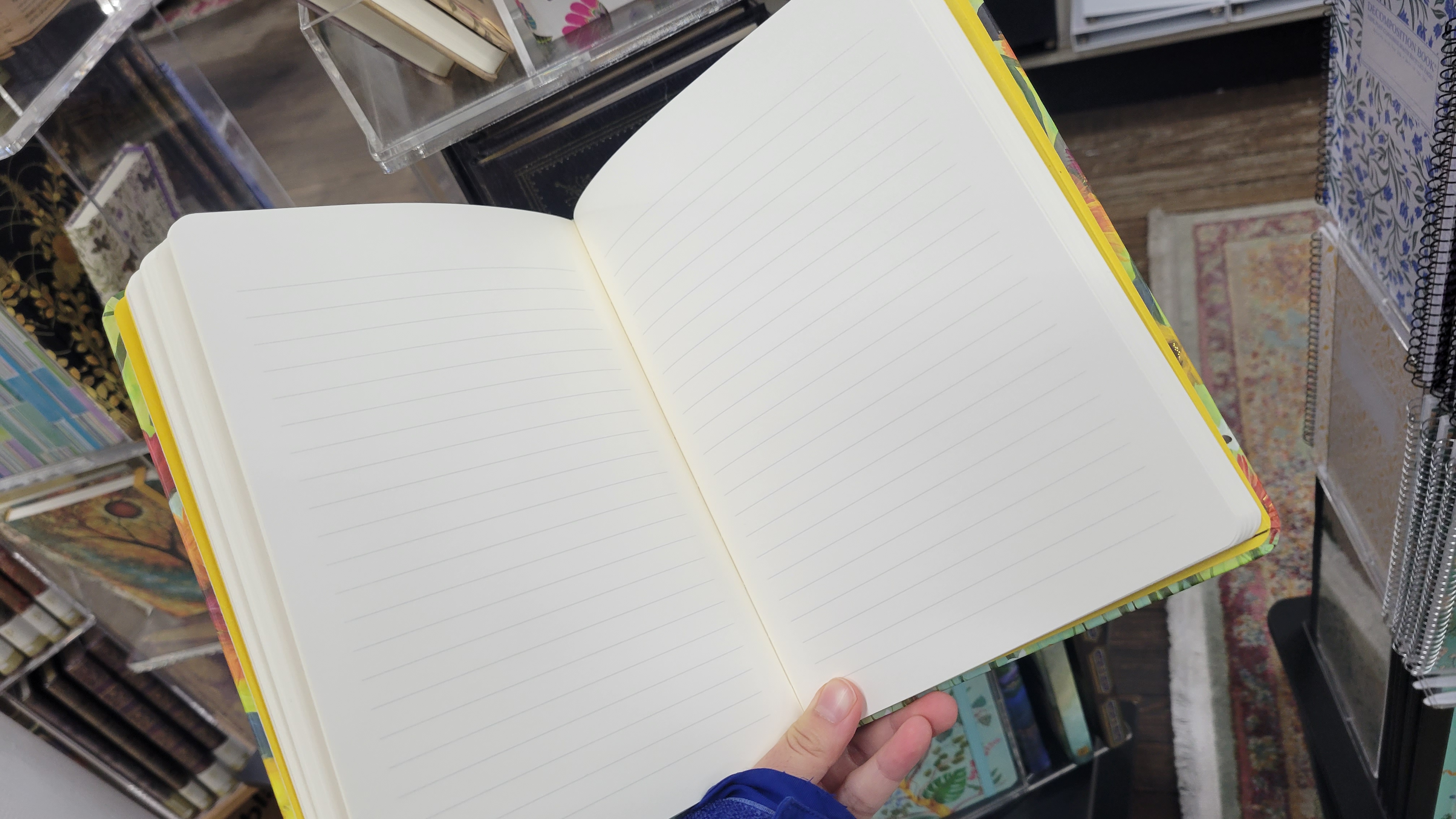
Each journal cover had a story during the design process. My sensory need for touch was appeased as my fingertips ran along the front and back covers. I felt the indented ridges and bumps that emphasized each petal and stem. After I opened the cover, the bookbinding was engineered to lay flat for writing to feel enjoyable. Meanwhile, my current journal needs one hand to stabilize and prevent the binding from closing, even while I am writing mid-sentence.
Suddenly, my timer of forty-five minutes beeped. Today’s browsing experience was over if I wanted to get to class on time. I left satisfied with the discovery of a local crafts store where I could purchase a potential journal that I could fill with my future musings.
After completing the two experiments, I understand Guriel’s perspective on scrolling. Scrolling felt mind-numbing and pointless in comparison to browsing. I was not compelled to complete a purchase order because the thousands of similar-looking journals lacked a touch of personal connection.
The whole motion of browsing included my struggle against the February wind chill, but I treasured the surge of excitement after finding the vibrant collection of journals. I lack certainty about when journal advertisements may start popping up, but I intend to browse through more local shops on Main Street to create tangible and cherished experiences.
Three rotating columns of journals.Gold lined journals.The journal with a field of sunflowers.Pattern lined journals.Inside the sunflower journal.Assorted decorative prints.Ceiling pattern of the Royal Mosque.Print of Ohara Koson’s Tit on PaulowniaA journal that reflected light based on the angle that it is held.
I have always preferred browsing over scrolling for most things. I love going to malls, stores, small businesses, and even thrift stores, for the fun of the search. However, I do think scrolling has its advantages especially when you are in a pinch for time or a certain store is inaccessible to you.
I chose to search for a new book. I didn’t care what genre, author, or style the book was, as long as it looked interesting. I am a book worm and I can spend hours upon hours in a bookstore, so it was hard for me just to find one.
On the first day of this experiment, I decided to browse first because I have a large bias toward bookstores. The first store I went to was Barnes and Noble in Poughkeepsie. I spent about two hours going through each row and taking my time wandering the store and seeing what covers caught my eye. I noticed in Barnes and Noble that the books that first caught my eye were on display or set aside from the other books on the shelf. For example, each table of books in the front of the store had a cohesive theme, whether that was black history, romance, on-sale fiction, or highlighted classics. This reminded me of how online stores such as amazon push the items they want to sell by displaying them aside from other items. I found Barnes and Noble had an overwhelmingly large selection of books in stock. I took notice of how other customers either were on their phones or quickly grabbed the book they were in search of and left the store.
The other bookstore I went to was Inquiring Minds Bookstore in New Paltz. These kinds of small business bookstores are my favorite way to buy books. As a person who loves everything neat and organized; I believe a messer bookstore is a better bookstore. I find the organized mess provides an extra element of searching for a book. I also feel there’s nothing that beats the smell of an old bookstore. I spent about another two hours in Inquiring Minds Bookstore. I personally like used books, so I had a blast uncovering all of my findings. I feel bookstores like this allow you to be surprised with what you find, free from expectations.
On the second day of this experiment, I scrolled the internet to see what books would catch my eye. I first went on Amazon and because I bought countless books from there, I was already getting recommendations for books Amazon thinks I would like. While this is a nice feature of online shopping it doesn’t always work. For example, I just recently bought a few textbooks along with book gifts, thus causing my recommendations to be skewed. I found that books on Amazon are a lot cheaper than at a bookstore like Barnes and Noble. However, in comparison books from thrift bookstores like Inquiring Minds were cheaper than both of the other stores. I found an infinite amount of books that simply no one could go through all of them. Scrolling through Amazon took me about an hour. I was able to find a lot that interested me in a short period of time.
Lastly, I checked out an online thrift book store called ThriftedBooks. This was my first and definitely not the last time I will be using this sight. I spent about an hour on this site. The deals we insane and as little as four dollars. There was a variety of used and new books. You could also select the condition you wish to purchase your book. My only critique is, what qualifies as a good or acceptable standard for thrift books is objective, so there is a bit of a gamble. They also had other categories such as video games, movies, and music I looked through as well.
This experiment was truly eye-opening in the differences between Browsing vs. Scrolling. I came to the conclusion that for some items like household essentials and everyday products, online shopping is a great resource to have. However, when it comes to items we hold close to our hearts, I think browsing is the best. I learned that there is nothing like holding a book in your hand and thumbing through shelves rather than just scrolling through pictures of covers. There is definitely an intentional connection when browsing for books otherwise not provided through the internet. I am a known wanderer in bookstores so I find that I go up and down every aisle thus discovering finds I would not have seen had I been scrolling for a book on the internet. For example, I don’t read many psychology or self-help books but I found “Thinking Fast And Slow” by Daniel Kahneman really appealed to me. You never know what you are going to find and who you might meet along the way. Sometimes you won’t find exactly what you are looking for but you might find something even better. Even though it is time-consuming I believe it is a privilege to browse rather than scroll.
For this assignment, I decided to shop for a top that I need for one of my costumes for a dance show that I’m in. The choreographer of this dance described the top that she wanted us to buy as a burgundy, v-neck, crop top and sent everyone in the dance a direct link to amazon for the exact one that she wanted us all to get. But I decided instead of just clicking the link right away and purchasing the item, my roommate and I would take a trip to the Target in Poughkeepsie to not only find the burgundy, v-neck, crop top but also to run the experiment that this assignment asks us to do.
The first thing I noticed when we arrived at Target was the smell of coffee from the in-store Starbucks directly to my right. As we began to browse around the store I noticed just how much Target really caters to its customers and values their shopping experience. The store is accessible and has a nice warm feeling when you walk in, and I’ve never once met a Target worker that wasn’t extremely helpful and accommodating. I feel like this is one of the reasons that, despite the immense increase in online shopping over the last decade, Target has remained a busy hub for all things shopping-wise.
Another aspect that I noticed while I was browsing around for my shirt was the autonomy I had over myself. There’s a sense of freedom that comes with in-person shopping that online shopping just doesn’t have. The ability to mosey around the isles and choose what I specifically want to look at, rather than being automatically recommended a bunch of other items, is a good feeling that more people should experience regularly.
As I looked around the workout section for a top that fit the description I was given by my choreographer, I noticed that it was hard to find a top that checked off all of the boxes. I found a few shirts that were cropped and had a v-neck but were more magenta than burgundy. I never got to find the exact shirt that I wanted but I wouldn’t consider the trip out to target a failure in the slightest. I got to spend the day out with my roommate, I got Starbucks, and I even found a cute little porcelain bunny that I saw in the one-dollar section that I ended up buying.
On the bus ride home from Target, I found the text from my choreographer and opened up the amazon link for the exact shirt I needed. It was extremely easy to buy because I had my debit card info automatically in the app.
My final thoughts are that online shopping is quicker and better at condensing the process of shopping, but doesn’t make you feel anything. Browsing isn’t as good as streamlining the process of shopping and is not helpful when you’re looking for an extremely specific item but allows you to take in your surroundings and feel freer in your venture. Even Though finding specific items and buying them efficiently is an important aspect of shopping, I definitely do see the value in browsing and further appreciate the fun day that I had because of my decision to browse rather than scrolling.














 The Materials of History, Thought, and Art