Two Pins of Scrap Metal

Going into this assignment I was unsure about how easy this was going to be. On the one hand, I knew from the very beginning what I would choose: my great grandfather’s World War 1 medals. My family doesn’t keep anything in our house unless it’s practical for present use but these medals are the one exception to this pattern. These medals are all I really know about my great grandfather, as I never met him while he was alive, and yet they have been kept in my family for generations. On the other hand, all I have connected to these objects are the stories passed down from my father, which he learned either from his father or from my great grandfather himself. The medals themselves aren’t very unique for a soldier of the time, so it’s difficult to create an image of what this distant relative was like back when my father was learning stories from him at a young age. But while I can’t draw on uniquities from the objects to create this image, the story of my great grandfather fills in the emotional gap that these medals lack.

My great grandfather was named Karl Bohnaker. He was born in Stuttgart Germany in 1898 to a woman who’s name has been lost to time. All I know is that she was a mistress to a wealthy German aristocrat, and Karl grew up a poor child with no connections to his father. Because of this he joined the army at the start of World War 1, hoping to escape his impoverished life. My father said he spoke little about the war, only that he served on the western front. Knowing the horrid living conditions and tactics of war used on the western front it makes sense as to why Karl wouldn’t speak much of his experiences at war, especially to a child. Rumor has it that he had to walk from the trenches back to Stuttgart on foot after the war was over. What I do know is that at the end of his service Karl received two medals from the German military: a “wound badge” given as the German equivalent to the American “purple heart” and an “iron cross” pin that was given to all soldiers regardless of rank. 

This is an example of a German Wound Badge from WW1, similar to the one Karl received from his service. They were often painted black, silver or gold based on the rank of the number of wounds the soldier earned. Karl’s was painted black.

What I find interesting about these medals is that they are made up of brass and zinc due to the German military using all other metals for the war effort, and thus these metals feel light and fragile to hold. I find it interesting that this is the detail that my dad would always point out when telling the story. I rarely hear about who my great grandfather was as a person, but my father never forgets to tell me what his medals were made of. Perhaps it was because of the irony behind a poor boy going to war to make some money and start a life, when in the end he is rewarded with the leftover metal that his country wasn’t using for the war that he just fought in. 
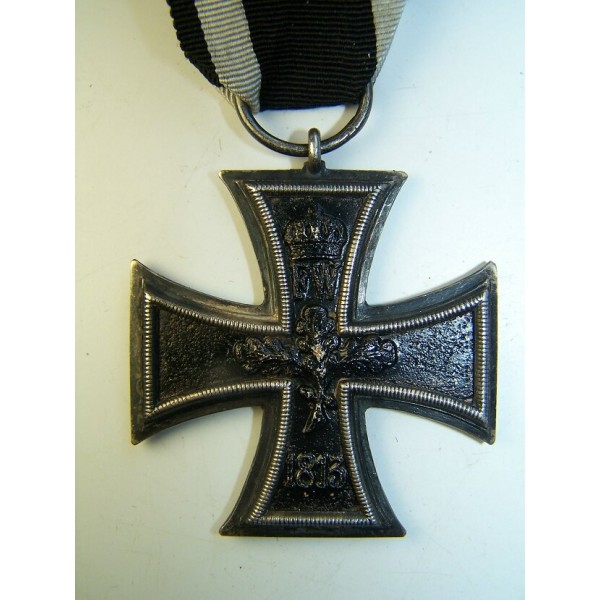
This is an example of an Iron Cross Badge from WW1, similar to Karl’s Iron Cross Badge.

This irony would continue after the end of Karl’s service for the German army. After returning home after the war had ended, he experienced the hyperinflation of the post war German economy. This hyperinflation made it nearly impossible for Karl to make any money for himself, and prompted drastic action to survive in this post war era. In the early 1920s Karl immigrated to the United States, taking what little money he had left and his two medals. He supposedly came to New York through Ellis Island, however I can not find any proof of this. His plan was to make some money in th US’s booming economy, wait for the German economy to settle down and then move back to Germany to continue his life. However, due to the economic crash of the American stock market in 1929 and the rise to power of the Nazi party in the 30s, Karl decided to stay in America. Throughout the 30s and early 40s, Karl started a tool and die manufacturing business in Brooklyn. From there he made enough money to settle down and start a family for himself.

And from there the story becomes much more vague. After settling down in Brooklyn my great grandfather’s story became less specific, so much so that I hardly hear about what his life was like after 1940. But what I find interesting about it is just how ironic the story is. Karl, who came from a childhood with little to no money, was constantly working to make a living for himself and was always being beaten down by political and economic conditions that were much larger than he was. And yet Karl never stopped working, even after the first world war and two economic catastrophes he still worked to make the life he always wanted. What I find most interesting is that he kept his two war medals with him the entire time. Maybe he kept these medals out of national pride, as a way of remembering where he came from. Or rather they were to remind him of his victories of the past, like surviving the hell that was World War 1. I may never know why Karl kept these two pins of scrap metal, but I believe he would be proud of the legacy that he’s left behind and the stories that are told of him to this day.
Jeremiah Hunt, a Photo, a Forgotten Story

Despite growing up with an Irish mother and an Irish extended family, I know very little beyond the fact that we call Ballylongford, or Tullahennel South, our home. While I know some stories about Ireland, they are my mother’s and only reach as far back as the 1970s.

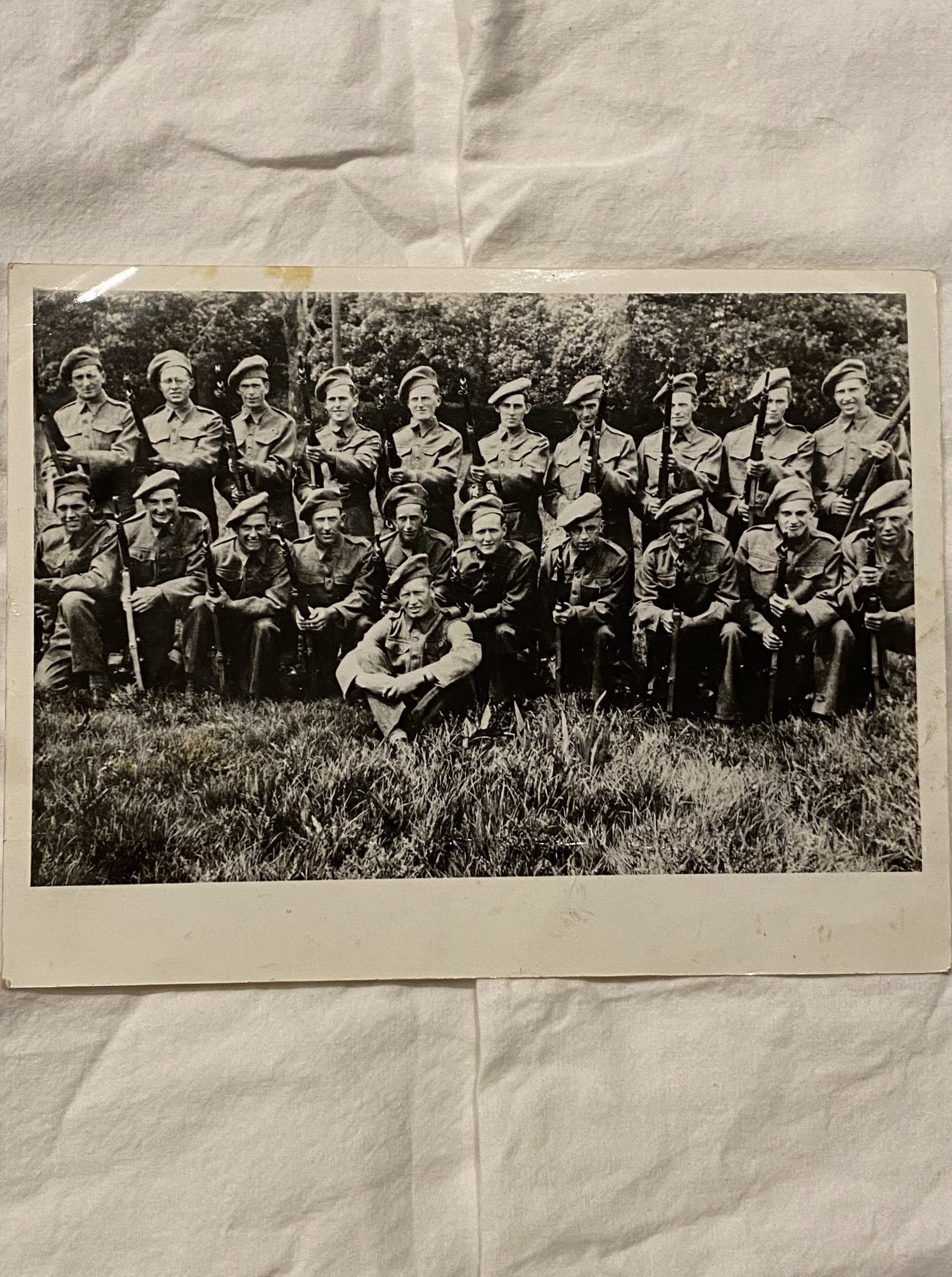
When I was assigned this project, I immediately thought of this photo. Printed on thick glossy paper and weathered by time, the photo weighs more than one might think – literally and metaphorically. The photo is covered by various splotches but the photo is still clear. A bunch of young men dressed in Irish Volunteer Army uniforms with some grinding mischievously at the cameraman.

Pictured: Ballylongford Volunteer Army. Jeremiah Hunt is in the top row and fourth from the right.


All I had to start off with with finding the history behind this photo was a name: Jeremiah Hunt. Jeremiah, also spelled Geremiah, was usually just called Ger. Beyond his name, I had nothing. I had no idea when and where he existed or what his life was like. Jeremiah Hunt, was born May 31st, 1897 under English rule to Patrick and Catherine (nee: Collins) Hunt in Tullahennel. Once I showed my mom a record of Ger, she immediately took a picture to send to her seven siblings on WhatsApp. This photo is perhaps the first solid connection my family has had to this man.

Ger grew up in southwestern Ireland. He attended school at least until the age of 13 and grew up without a father. There is no record of when Patrick Hunt died, his wife is simply labeled as a widow on the 1911 census. When the Irish War of Independence began in 1919, Ger immediately joined the Irish Volunteer Army of Ballylongford. Ger was only 23 when he joined the army, his brother heading off to America and never be heard from again.

Speaking with my Great Uncle Larry, one of Ger’s twelve children, I was told that my great-grandfather owned one of the only guns in his part of the IRA. In his captain’s, Brian O’Grady, witness statement he lists that the only weapons they had were two .32s revolvers and one shotgun. Ger owned one of the two .32s.

The years 1920-21 were some of the worst years my great-grandfather and his fellow neighbors were to endure. Within a period of six months, the Tans twice entered the village of Ballylongford where my great-grandfather was stationed. During this six month period, the Tans burned down houses and businesses, killed both Volunteers and civilians, as well as looting whatever they could put their hands on. These two events are called the “Burning of Ballylongford”.

It was during one of these events that Ger was shot in the chest by a Tan. While he survived, the gunshot wound he suffered ailed him for the rest of his life. My Great Uncle Larry recalls when they were picking turf for the winter, his father would take his shirt off and he had a giant hole in his chest. My great-grandfather didn’t talk about it so his children didn’t ask. It is unfortunate that my grandfather did not speak of what had happened to him. His story can only be told through the vague recollections of those who surrounded him.

After the war, Michael Collins, leader of the Volunteers and famous Irish revolutionary, signed a treaty with the British: 26 of the 32 counties would be free. The remaining six would remain with Britain. These six counties come to form what we consider Northern Ireland today. Perhaps Ger was anti-treaty and regretted his time under Collins. Or maybe he was ashamed of what the IRA became in the years before his death in the 1960s. There is no clear reasoning Ger hid his stories away from those closest to him.

This photo pictured is a copy of the original one that sits in the archives of County Kerry. My grandmother, Ger’s daughter, was the one who inherited the copy of her father. Perhaps it was because she was only one of twelve who remained in Tullahennel. The others moving away to America, England, and Australia. My grandmother, much like her father, did not tell what she knew of Ger’s story. Instead, she hid the picture in her wedding album. The hiding of the photo in an intimate place speaks of a pain close to the heart.

It was only in 2015 after my grandmother died that my mother found the photo in the album. Much like her mother before her, it was hidden away from view but not out of pain but of a detachment from the past. In 2021, the picture of my great-grandfather is no longer hidden from view. Ger never had a chance to tell his story but now, like the photo, I possess both and can tell his story for him.

Daisy Earrings

I have a pair of earrings. They are clip-on earrings since I do not have pierced ears. They have gold colored backs, and a bright yellow enamel circle with matching white enamel petals on the front. The daisies are about the size of a quarter. And the hinged mechanism on the back is the size of a fingernail.

I first found these earrings in my mom’s jewelry box. She had a collection of earrings, both clip-ons and regular ones, since her previously pierced ears had long since closed up. This was about three or four years ago, when my sister pierced her ears and asked my mom to borrow some old earrings. My mom keeps her jewelry in boxes at the back of a drawer. She likes to hold onto everything, and I found several old beaded bracelets and necklaces that I had made for her as a little kid. This led to an afternoon of the three of us digging through lots of old jewelry with varying degrees of value and patina.

My sister found the earrings she was looking for, but I also found the daisy earrings. I really like anything with flowers on it, so I was pretty excited about this. They were also clip-ons so I could wear them, despite not having pierced ears. My mom had not worn them in years, and was happy to see someone using them again, so she gave them to me.

I just assumed that they were bought by my mom, and she wore them for a while before they found a home deep within the jewelry box. However, I soon found out that this was not quite what happened. Once when I was wearing them she informed me that my aunt would be so happy to see someone wearing her earrings. I was not very surprised by this, since many of the sets of old clothes and jewelry came from my aunt. She was a fashion major at FIT, and my mom has a box of “dress up” clothes filled with all the bright and colorful things she sewed as a student there.  

Again, I assumed that was the end of the story; that she had bought them, and then later given them to my mother, but a few weeks ago I went to visit her, I happened to be wearing the earrings. When she first saw them, she did not remember them, but told me that she really liked my earrings. Then she realized that they were familiar, and asked me if they were the ones that she used to wear. I told her they were, and she said that she got them from my grandmother. Unfortunately she did not know where my grandma had gotten them, and there is nobody else who I can ask. She definitely remembered my grandma wearing them, and then giving them to her. Then my aunt passed them on to my mom.

While they do not have any identifying marks, I found a few Etsy shops that sold identical and similar pairs. However all of them identified them as merely “Retro Daisy Earrings”, and only one shop indicated them as being from the 1970s. Most of the shops also seemed to be reselling thrifted items, and did not actually know anything about the items themselves.

While I would like to believe that my grandmother had inherited them from a long chain of relatives, I believe that they are from the 70s, which means that she could not have had them for more than five or ten years before giving them to my aunt. Perhaps they were a gift from my grandfather, or her cousins in Connecticut. The exact origins of this object has been lost to time, but it is nice to know that so many women in my family share my fondness for flowers.

Alan Gartner: A Watch With A Story

My grandfather, Alan Gartner, was an amazing man and one of the most compassionate and caring people I have met. The details in my memories of him are vague and far between, but that does not take away from my admiration of him. His passing, after a lengthy battle with Parkinson’s disease, when I was fourteen, devastated my entire family. The impact he had on people can be seen in each of his three children, as they hold him in extremely high regard. My mother and her extended family share countless stories of the mitzvot (a loosely translated Hebrew word for good deeds) that illustrate his prowess in the endeavors he took on. I feel I should point out that my family does not feel this way about many people. In fact, the opposite is true when it comes to folks that we feel do not encapsulate qualities Alan held.  

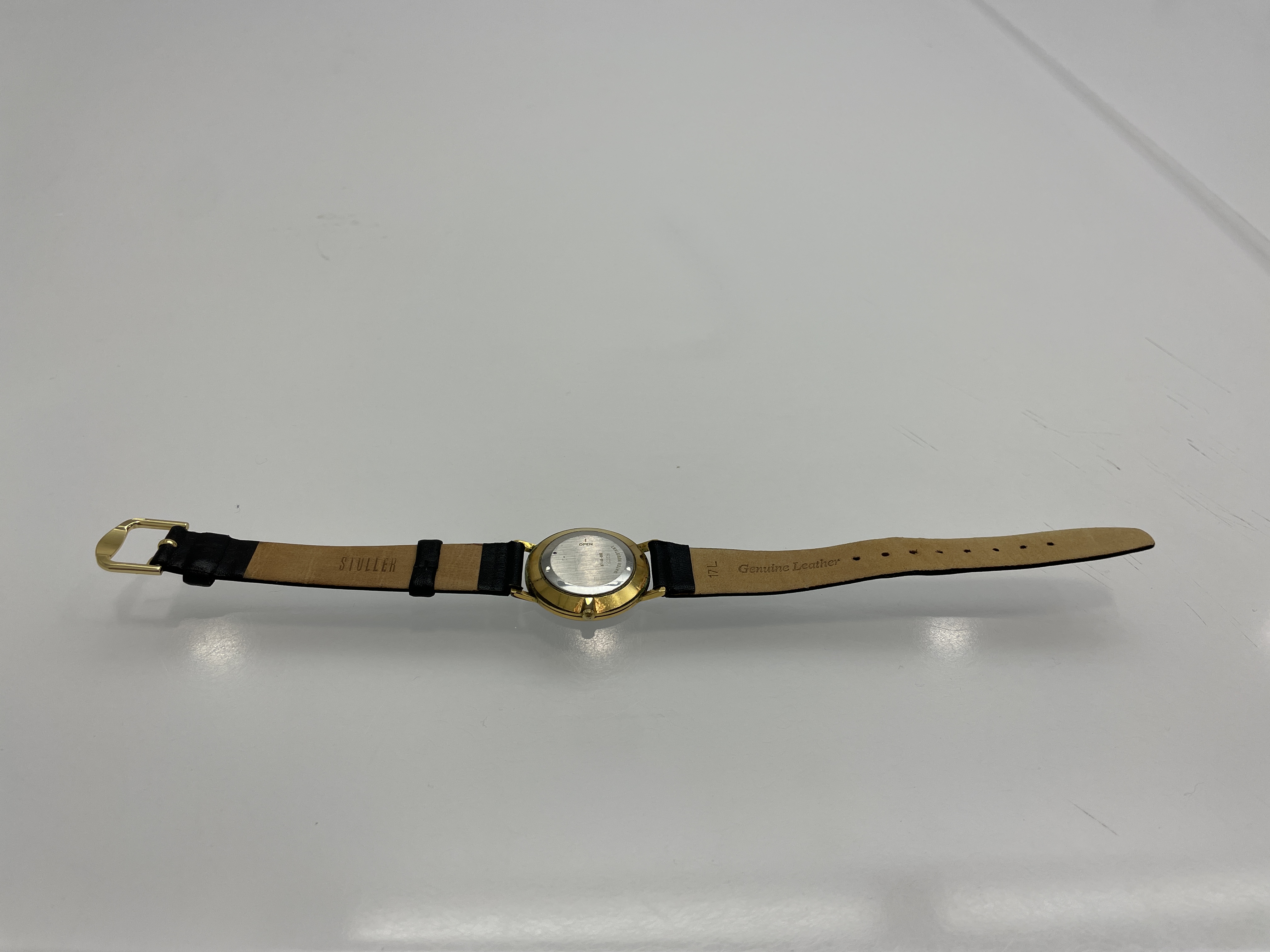
Alan and his second wife, Dorothy, gifted me the watch he wore throughout his adult life when I became a man in the eyes of the Jewish people. Many gifts are given to someone for his Bar mitzvah, most of which are checks and are forgotten about after the thank-you notes are written. The gorgeous, simple Movado watch was not one of the gifts that were quickly forgotten. I do not wear it often, but wherever I am living, the watch has come and will come, with me.  

All the information I have about the watch is known through oral history, as Alan is no longer alive, and my thirteen-year-old brain did not think to ask about the piece. Fortunately, this watch was prominent in my mother and Dorothy’s lives.  

The watch has a single gold dot where twelve o’clock typically is, an hour hand and a minute hand. The face has no markings other than the dot. The story goes that Alan could glance at his wristwatch and tell time to the minute every time, or so my mother says. Dorothy pointed out he may have been full of it as no one would question his reading, but I like to remember the story as my mother tells it.  

After talking to Dorothy, I was able to gather a bit of information about his relationship with the watch; but like my memories, hers are vague with some gaps. Dorothy recalls a story told to her by Alan in which he went about finding the watch. He loved museums and at the Museum of Modern art, he saw an exhibit where a watch designed by Nathan George Horwitt was displayed. The watch he saw was “The Museum Watch” which had a simple design (the same as the one I have) that he fell in love with. The design was stolen by Movado from Horwitt which was later settled in court. Alan saw the exhibit sometime after 1960; no one is quite sure when he actually bought the watch, but it must have been after 1960. After seeing the unique watch at MoMA, he decided to purchase the “Movado Museum Watch” as it is called. He later bought the exact same watch for Dorothy. She estimated he gifted it to her in the late 1990s but seemed fairly uncertain about the date. He loved the design so much that he wanted her to have the same one and be able to appreciate it as much as he did.   

Growing up, I have vivid memories of Alan wearing the watch. He wore it almost every day of his adult life. It went with him to his job as Director of Research, Office of the Mayor of the City of New York, where he worked closely with Michael Bloomberg. When he gifted it to me at my bar mitzvah, he took it straight off his wrist. The love he had for the watch made the gift far more valuable to me. I do not wear the watch often, but the object is safe for the amazing things it has been through with Alan. The stories I am aware of and the ones I am not aware of are held in the small face of the watch. Whether the hidden stories come to light is up in the air, but time will tell. In the meantime, I have the honor to have this watch that went everywhere with someone I admire immensely. 

Sources  

“Nathan George Horwitt.” Wikipedia, Wikimedia Foundation, 25 Jan. 2021, en.wikipedia.org/wiki/Nathan_George_Horwitt. 

Behind the Badge

As a college student pursuing graphic design here at SUNY New Paltz, I can share my pride over one of my grandfather’s designs, specifically the badge of the USS Intrepid. The Intrepid is an Essex-class aircraft carrier built for the United States Navy, used in World War II, the Cold War, and the Vietnam War.

Growing up, I had always seen this badge design sitting on a shelf in my grandparents house. To my knowledge, it had become an ordinary decor piece. As a young girl, I was blatantly uninterested in learning about anything to do with the Navy, and so despite my grandfather’s attempts to explain his stories- they were not remembered. As I grew older, however, I became more interested in the story behind the badge. For the interest of this assignment, I had my grandfather tell his story to my father, who had taken notes to send to me.

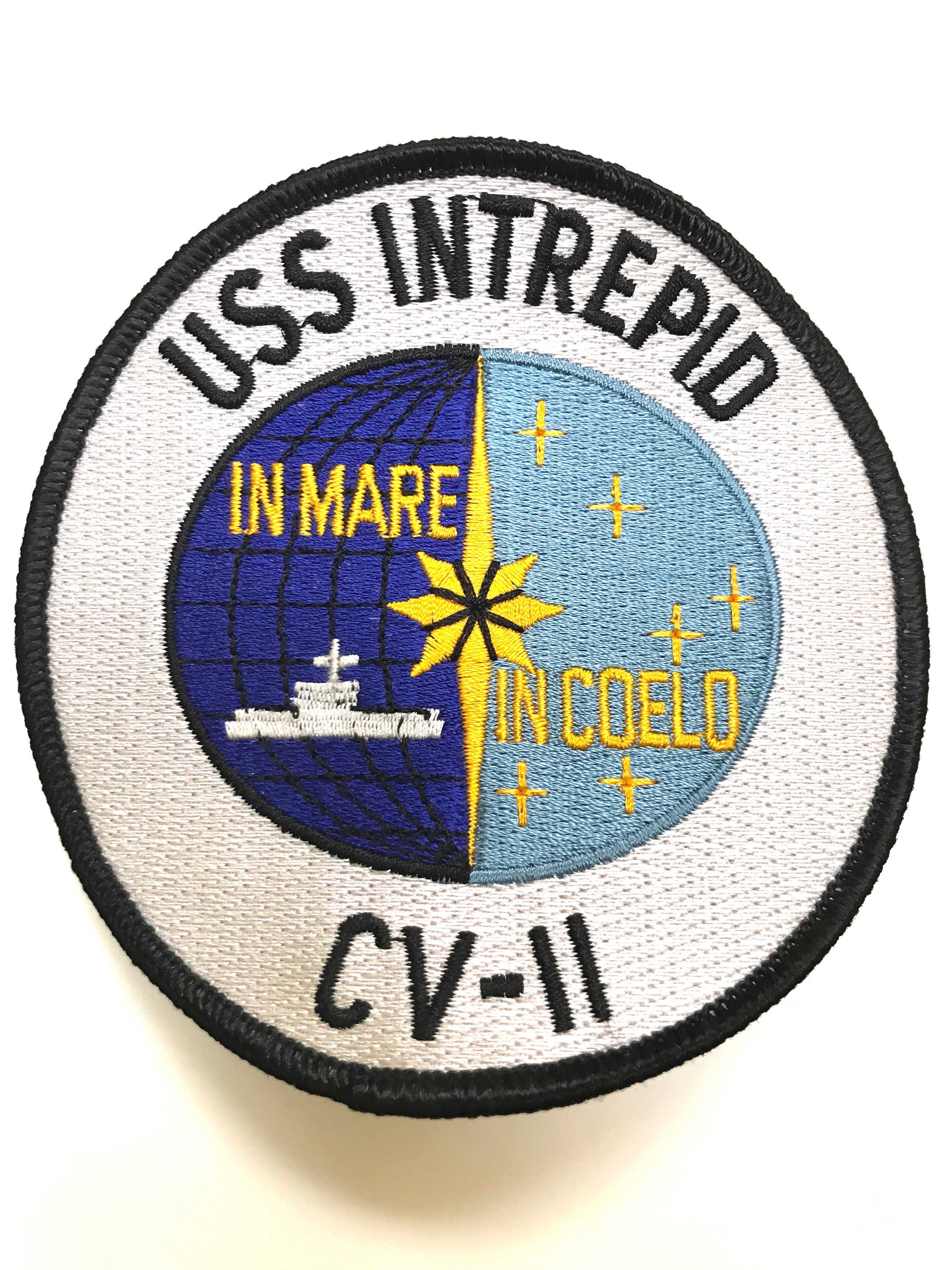
The badge, designed by my grandfather

The badge itself is 4” wide, in near perfect condition. There are several badges floating around our family, this specific badge photographed is owned by my father in our home of Clinton, NY. Iron-on backing unused, without any loose threads. Preserved with care. So, how is this badge important to my family?

My grandfather, Norbert Blum, had joined the Navy on July 14th, 1952 at the age of 19. He had just recently graduated from high school in a small town south of Rochester, NY. He had always found a passion for art and design growing up, but was drafted to the Navy before any academic plans were pursued. He found himself on the Intrepid, working as a radarman during the Korean War. On the ship, there was a newspaper that was published once every month. The paper included news journals, cartoons, and entries by the sailors themselves. One day in 1955, the newspaper announced a contest for a sailor with a knack for design to create a logo for the ships crew; the best design would win the honors of reproduction. 

With previous interests in art, my grandfather took the opportunity to enter a design. He wanted a design that represented the two parts of the Intrepid; the ship, and the aircraft carrier. He divided the patch into two parts. On the left side of the patch states, “IN MARE”, which translated from Latin, means “on the sea”. On the right side states, “IN COELO”, which translates to “in the sky”. The left half design is a globe with latitude and longitude lines, signifying the sea. The right half design is blue with stars, signifying the sky. In the center, acting as the dividing line, is a compass needle. “USS INTREPID” curves at the top of the design, “CV-11” curves at the bottom. As my grandfather states, “CV-11 is Navy code for the Intrepid ship, us Navy guys would know”. 

He submitted the design, and soon later heard the Admiral Commanding Officer announce great news: his design won. 

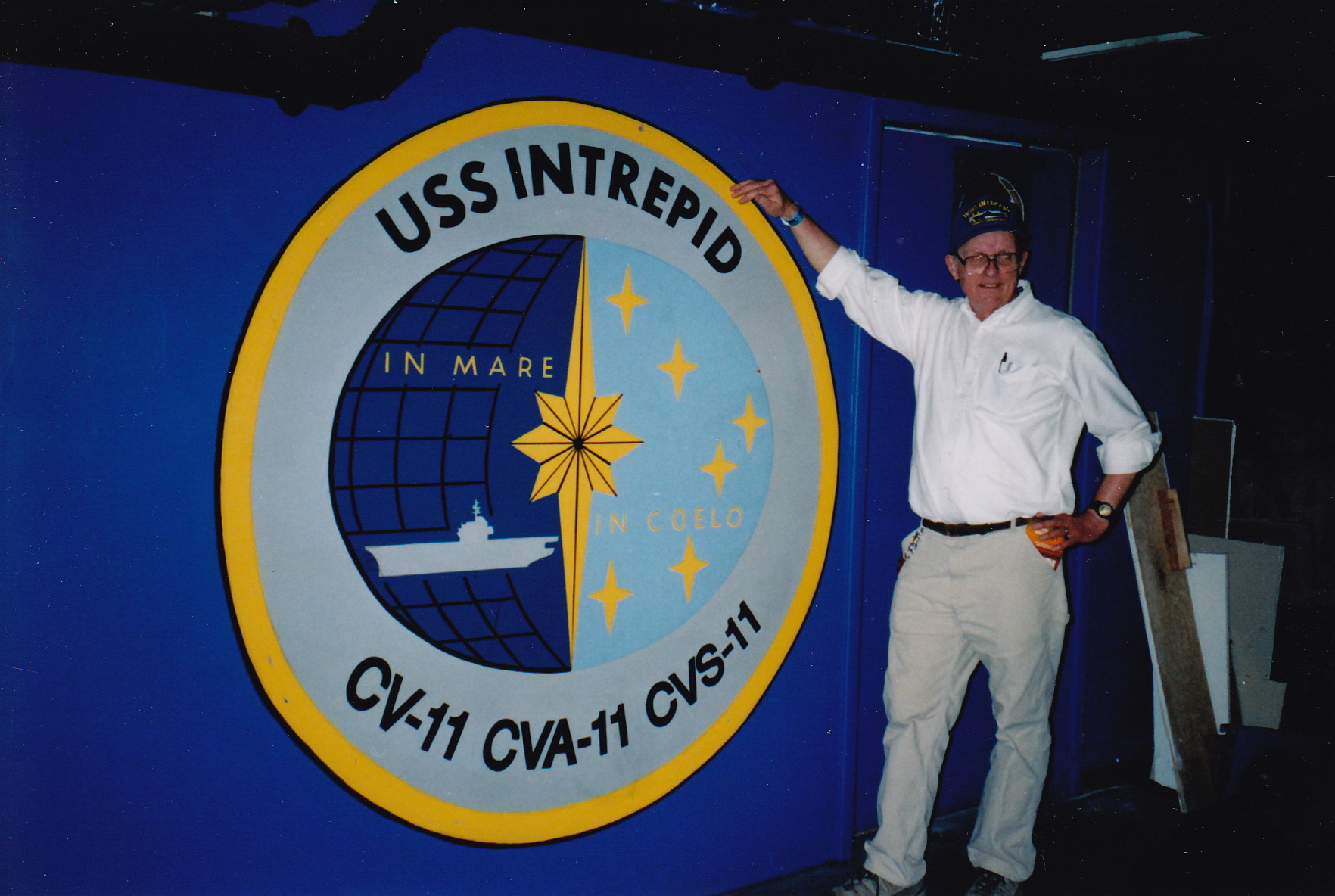
As a material object, I think a logo design is particularly interesting to choose because it has great personal value to my family, yet, it is not a privately valued item. The aircraft carrier docked in the Hudson River in New York City has turned into a museum, The Intrepid Museum, where visitors come and go. Out for public display, my grandfather’s design is painted largely on the inside of the ship, and embellished on countless items in the gift shop. My grandfather had gotten an original copy of the patch before he left the navy, but the patch that my father owns today is bought from the gift shop when my father and grandfather visited the Intrepid Museum in 2010. When noting this specific badge’s chain of ownership, I can discuss the passing of the gift shop, to my grandfather, to my father, to me. However, I see a wider picture. The design is intended to be owned and shared by the public, including the tens of thousands of sailors that served. I believe the design’s ability to serve the public is what makes the object so great, what makes it valuable to our family.

Image from the Intrepid Museum, pictures my grandfather standing next to his design (2010)

It is important to note that for me personally, the badge is not of interest to me in content. In other families, this badge may serve as a reminder of the struggles and sacrifices of a family member in their service to our country. Others may have their own personal stories, memories, and feelings, that they attach to this badge. While I can acknowledge the service of my grandfather, the spark of excitement comes from the design and aesthetics of the badge. I am inspired by my grandfather and his pursuit and success in art and design. Proven by the badge, design is in the bloodline.

Written in the Stars

Sun and Moon cross stitch pieces hanging on the wall
Close up of Moon Piece
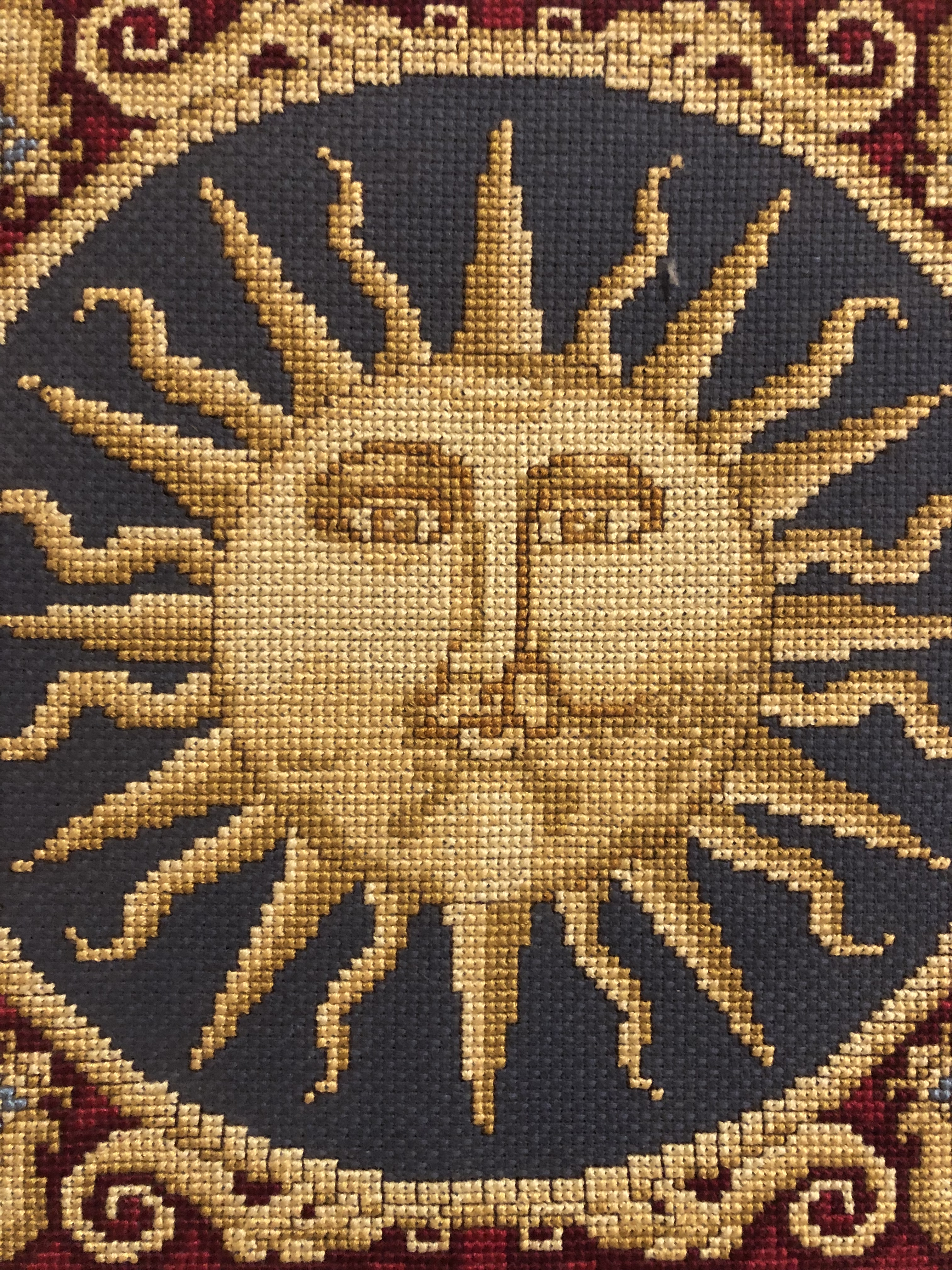
Close up of the Sun Piece
Picture of the Pattern Booklet

Ever since I was little I can remember staring at these Sun and Moon frames hanging above my mother’s headboard. I always adored them but it wasn’t until they were gifted to me in 2018, that I understood their full meaning.

My grandmother, Mimi, as we call her loves to craft and do handmade projects. Knitting, cross-stitch, embroidery, you name it, she can and will make it for you. Long before I was a thought, my Mimi made my mother these celestial cross stitch pieces as a Christmas gift in 1994. These pieces were made from a pattern booklet, The Definitive Book of Celestial Designs, made in the early ’90s. These pattern booklets were all the rage back then and Mimi to this day has saved every single pattern she has ever made, a whole cabinet full to be exact. These pieces are made with what is called four-point cross-stitch and are a simple stitch in the embroidery world. These elaborate Sun and Moon pieces were made stitch by stitch, and as Mimi claims only took her a few weeks to complete. These pieces were then framed in an 8 x 8 wooden square frame which allows it to be hung up as a wall decoration. My grandfather, a handyman and antique dealer, found these frames at the garage sale and repaired them to fit. It was almost serendipitous how it all came together in time for Christmas morning. 

My mother has always had these hanging up since that day no matter where she is in life. They followed her to the first college dorm at SUNY Purchase, then transferred right along with her to SUNY New Paltz of all places. When I came along in 2000, I can remember them always in her room above the headboard, on the side by the window, and even hanging on the back of the door. I always loved them and admired them from afar never questioning where they came from or even knowing that my Mimi had made them. It wasn’t until I was getting ready to move to my first college dorm here at SUNY New Paltz that my mother gave them to me to hang up and told me the story of how they came to be. Since that day in 2018, I have had them in both of my college dorms and now in my apartment, they hang above my bed. 

These celestial pieces have become a sort of family heirloom and something I treasure dearly, but the meaning goes beyond just that. My Mother loves anything celestial and she has in more ways than one passed that love down to me. Both my mother and I were born on a full moon, and we are both Pisces. For us, this love of the celestial beings goes way beyond just being about the sun and moon, but rather is more about our connection, our love, and how in a way it was written in the stars. 

The Vedovato bros Tile

Repurposed kitchen backsplash from the 1900s

I never thought I had a lot of family history until I asked my mom one day if she had anything that would be interesting to investigate for this assignment. We were eating dinner during this conversation, so I was surprised when she stood up and walked over to one of the tiles in our kitchen backsplash. Now, this backsplash is something that I have seen every day since I was five, so to say I was confused when she pointed at a seemingly ordinary tile was an understatement. The tile is 4x4in and in the shape of a square. The edges of the square are rough, and the corners are rounded out. The tile is textured and when you run your hands over it you can feel the bumps that were added to give it dimension. Painted onto the tile are a brown pitcher, a light blue bottle of oil, some fruit and vines, a bundle of garlic, and a small cream-colored teacup. My mom proceeds to tell me that this tile was custom-made from the grounded remnants of a tile she was gifted after my nana’s passing. The tile she was gifted was an original tile from the Vedovato bros tile business. The Vedovoto bros were the business my family started when they first arrived in America. My mom proceeded to tell me that she thought the original tile looked too dated to be used in our kitchen, so she went to a local tile company and had the tile ground down and remade into the tile above. She walked back to the dinner table after this and began to tell me the history of the Vedovato bros business (something I had no previous knowledge of).

In the late 1800s William, Vincent, Joe, and Erminio Vedovato, went to a trade school in Italy to study tile, marble, terrazzo, and mosaic. After they finished their education, they moved to Germany. In Aachen, Germany Acme Tile and Marble was created. The business was going really well so Vincent and William decided to take a vacation to New York City. On this vacation, they realized two things. The first was that construction was on the rise. Second, there were barely any tile businesses. This sparked an interest and after heading back to Germany, (as history goes) there was a long conversation between the four brothers. This conversation specifically discussed the turmoil they sensed boiling within the German government and the new opportunity they could have in America. This leads the brothers to their third move.

Upon arriving in the city, they bought a storefront at the end of 116th street right next to the East River. This location was prime for them because tile shipments were easily brought to their storefront. With the new move to a different country, they also changed the name of their shop. In 1910, they became the Vedovato bros and was primarily being run by Joe and Ermino.

Once again business was going extraordinarily well, but three major events changed the course for these brothers. The first and second events occurred in tandem with WWI in 1914 and the Spanish Influenza in 1918. While both the war and the flu put a strain on their business financially the biggest loss was the death of their brother Vincent who succumbed to the influenza. However, after his death, the roaring 20s picked up in full swing, and apartments were being built faster than they could produce the tile. This brought on more change within the business. In the mid-1920s William had decided to leave the business and headed back to Italy to help my great-great-great-great-grandparents on their family farm. Joe also left the business selling his share to Ermino. My great-grandfather Leon then joined the family business and worked along with his father.

The third major hit for this business was a combination of the stock market crash, the great depression, and WWII. When WWII hit the Vedovato bros shifted their company from tiles to a machine shop where they manufactured nuts and bolts to help aid in the war. Once the war was over, they were able to reopen the tile business and began importing tile from Japan. The shift from Acme tile imports to Japanese imports came from the U.S. government taking over Japan’s rebuilding where they began focusing heavily on the tile industry.

As the years went on more of my family began to join the business and more storefronts and storage warehouses were created in the Vedovato name. My grandpa ended up joining the business after his father (Leon) had passed and began to run the company alongside my nana Lena and her brothers. The business did begin to slow down until 1968 when my nana Lena decided to open one of the first tile showrooms in New York.

This new way of visualizing tile allowed for the business to pick up once again and be passed down into more generations. The business has since passed down to the fourth generation of Vedovatos and was the origin of one of the tiles in our kitchen backsplash!

The Lillians’ Ring

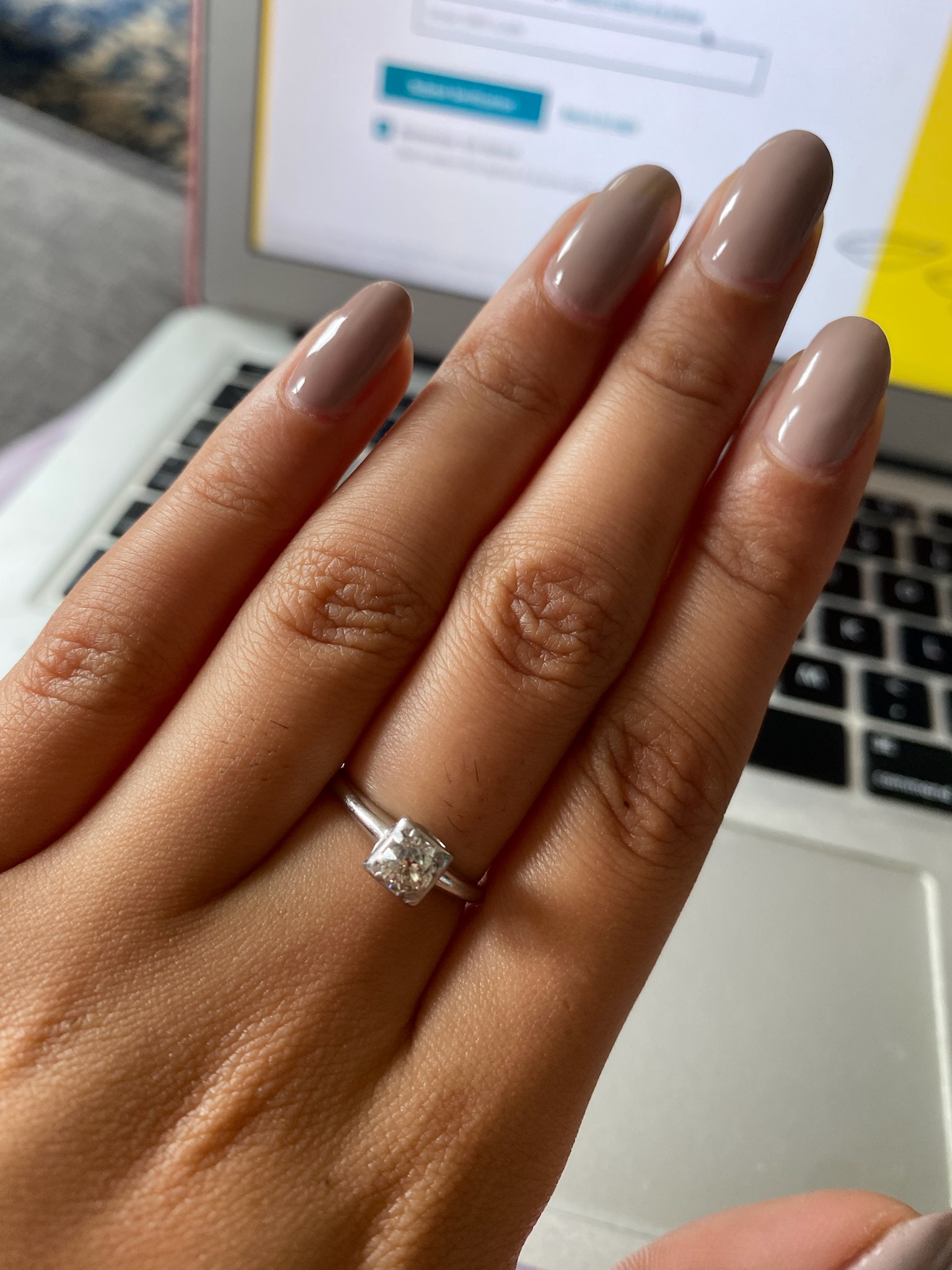
My Grandmother’s Engagement Ring, Scottsville VA, June 2018

My sister has a ring. It’s not too old, only coming into our family in 1946, but an heirloom nonetheless. It was given to her a few months after she turned twenty by our great-grandmother at a family reunion. The gift giving was a moment of joy for some, a moment of jealousy for others, and it was also the last time I saw my father’s mother’s mother alive. 

My paternal grandmother has ten siblings, six of them sisters, all of whom have children and grandchildren of their own. So why, pray tell, out of all the options, all the daughters, grand-daughters and great-granddaughters, was the ring bestowed upon my sister? This silver band studded with a diamond suited perfectly to its size. It might have something to do with the fact that my grandmother is her oldest, my father my grandmother’s oldest and my sister my father’s. It could be that, a logical chain of primogeniture succession. It could be that, unlike many others, my sister had never shown any interest in possessing the ring, a ring central to the mythology of our paternal family. Perhaps. Or it could just be that out of all of my great-grandmother’s progeny, all of the many many grand-children and great-grandchildren, my sister was the only one named for her. The only other Lillian.

My Sister’s Hand, Boston MA, Sept.16th 2021 Circa 1:30PM

This state of affairs, that is the fact that only one person was named after a woman who had eleven children, is particularly egregious once you take into account that almost every firstborn son in the family has Eugene as either their first or middle name, including my father. Eugene being the name of her husband and my great-grandfather. It’s really quite sad to think how utterly surprised she was when my mother and father told her that their first child would be named after her. So, of course, my sister got the ring. From one Lillian to another. An unassailably sensible decision. But how did the elder Lillian come to have it in the first place? 

We go back to the end of WWII and Operation Magic Carpet. It’s January 1946 and Gene Hamshar is getting off a ship in his hometown of NYC. He’s been away for years, seen hell, fought from the shores of Normandy, to the Hürtgen Forest, to the Baltic. He saw friend’s die in the Battle of Bulge, only surviving himself with the help of some Belgian women who dutifully changed their flags from German to British back to German several times a week. And after all that he was back and nothing had changed. Well nothing besides the fact that he now had a low-interest mortgage and an addiction to liquor. 

Something that had certainly not changed throughout his time at war, was what the first thing he was going to do when he got back. Though he had promised to go straight home as soon as he got back to American. Instead, Gene elected, as his first action back in the U.S., to go to a pawnshop. I couldn’t tell you the name of the place or how long he stayed there or even how many different shops he visited. I can tell you that by the time he walked up the steps of the Hamshar home in Queens, he had a diamond ring burning a hole in his pocket. And standing before him was the beautiful woman he wanted to put it on.

The woman at hand was Lillian Herndon. Lillian was not a city girl. Nor did she ever expect to even see a city much bigger than Charlottesville. But here she was in New York staring down at the man she met all those years ago, before the war took him over to Europe. The two had met when he was in her home town of Scottsville, Fluvanna County, Virginia. One of those tiny Mid-Atlantic towns in a empty county with soil still badly damaged from generations of tobacco planting. The town, village really, was exceptionally quiet Lillian’s whole life. Until one day it was flooded with young men from FDR’s Civilian Conservation Corps (CCC). Eugene Hamshar was one of these young men.

Lillian Herndon and Eugene Hamshar, Queens NY, January 1946

After years apart and days spent waiting for him at his parent’s house, Lillian didn’t have it in her to wait a second longer. She rushed down the stairs, threw the door open and wrapped her arms around her Gene. And that’s when he asked her to marry him. Still in his uniform, he got down on one knee, beseeching her in that soft, polite voice of his, and without a second’s hesitation, she gleefully accepted. Having caught wind of what was happening outside, the Hamshar family joined the couple on the steps and officially and likely tearfully welcomed their only son back home. At some point, someone thought to commemorate the day with a photo. A photo now tucked safely away in their eldest daughter’s desk.

Eugene and Lillian were married on February 23, 1946 in Scottsville, VA. and the engagement ring was replaced by a golden wedding band. Safely retired to a mostly vacant jewelry box, the diamond studded loop of silver awaited an heir for the next seventy-two years. Only being brought out for annual resuscitations of the story that brought a truly prodigious family into being. A family that altogether now constitutes about a third of the Scottsville corner of Fluvanna County. Though, of course, that’s not exactly a whole lot of people.

The Well-Loved German Shepherd

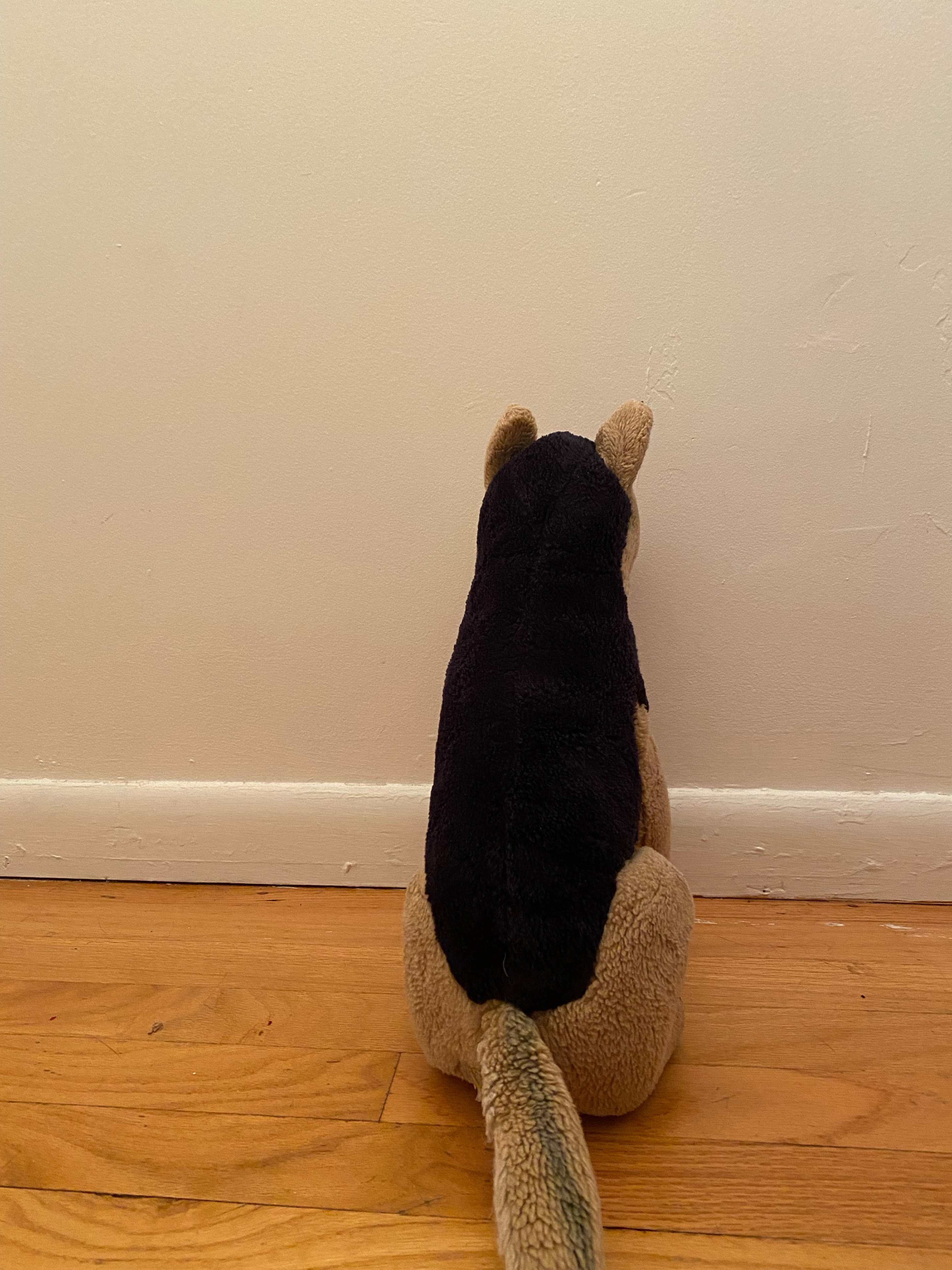
Figure 1: German Shepherd plush toy from the front

I chose to describe my childhood stuffed German Shepherd. This plush toy was given to me by my mother’s boss at a Christmas party in 2004. Invited to a party where everyone was larger and older than my brother and I, we were allowed to spend the hours in his now grown-up children’s playroom. A small holiday gift, we were allowed to take a toy home. Once I set my eyes on this dog, I was strangely drawn to it. Coincidently it was his one of his daughter’s favorites growing up.

Handling the plush, it is roughly the size of a small dog itself. When the plush is laid on its side, it is approximately the same size as a Yorkie. Standing up, the plush is 12 inches by 6 inches. A young child would be almost dwarfed when carrying it around. For someone on the smaller side, the dog would be tedious to carry around.

Figure 2: Side View

On the bottom of the dog is a well-worn white tag that has begun to grey with age. The tag is looped and measures an inch out from the body of the dog. On one side there is a stitched yellow bear holding an unintelligible sign and stitched blue text on the reverse.

Unfortunately, the word on the bear side of the tag has been worn away. Beneath the bear are the letters “C. W” written crookedly in bright pink marker. The other side of the tag reads: “© R. Dakin & Co. – 1986. San Francisco, CA. Product of Korea. PA Reg No. 118. All New Materials. Contents: Polyester”.

The fur, according to its tag, is made from polyester and is smooth to caress. The fur itself is more akin to a cat’s fur than a dog. Squeezing the body of the dog, it is filled with some sort of fluff to give it a fuller shape. The eyes and nose are, on the other hand, are made of harder material. Knocking a knuckle against the eyes and the nose, both appear to be made from the same hard plastic. Rubbing a finger pad across the eyes, scratches can be felt. The eyes share the duplicate sensation as well-used sandpaper. The eyes have a mismatched array of scratches with some deeper than others. When facing towards the plastic eyes, the scratches omit one’s reflection.

The plastic nose has suffered the same fate as the eyes. There are numerous scratches as well as chunks missing from the black plastic. No longer sitting correctly on the snout of the plush, the plastic nose appears to have been glued back onto the plush. Looking head on at the dog, the nose appears crooked in proportion to the rest of its features. Using a hand to feel around the broken plastic nose, what appears to be hardened by aged glue can be felt around the edges.

While filled with stuffing, the front of legs of the dog are hard in comparison to the rest of the body. Putting my entire hand around the right front leg, the animal seems to have some sort of hardened rod in inside of it. Inside the front two legs, the rods seem to have been put in disproportionally. One rod can be felt down to the paw while the other stops just short of it. As a result, the dog leans more to its left side and gives off the same feeling as a crooked painting.

Using a hand to pet the dog as though it was real, there are patches along its back where there is less fur. From a distance, the dog’s back black hair appears splotchy like an incomplete haircut. The front hair and other light brown parts of the dog feels fuller and coarser than the back. While not uncomfortable, there is a stark contrast in the difference of feeling. Running a hand from the black fur to the brown fur, it is like petting two different toys.

Figure 3: Back View

Near the base of the tail, the original light purple stitching appears where the toy is starting to split at the seams. At the actual base of the tail there are pieces of fine plastic stitching sticking out like a spider’s legs. The very fine yarn loops the base of the tail to the actual body of the plush. Giving the tail a tug, the stitchwork holds and gives very little.

Despite the aging and the threadbare appearance of the toy, the material shows the decades use and love of two young girls growing into young women. Now as one girl is currently attending college, the other is currently practicing law after graduating from Harvard Law. While both may have outgrown the well-loved toy, the toy’s presence has yet to come to an end.

The Eternal Locket

The object at hand is my great-grandmother’s (i.e., nana’s) locket. Within the women of my family, it has become a family heirloom that was passed down from my nana to my mom and eventually will be given to me.

This heirloom is made of solid yellow gold and consists of three heart-shaped layers (back, front, and the middle pull apart). The pull-apart capability of this locket was created from having a thinner gold heart inside the general locket. There is a clasp at the top of the heart that allows the wearer to open the locket. When this item was in possession of my nana a small picture was inserted into this pull-apart section. If we look at the front of the locket the ridges around the edge of the heart are both raised and slightly rounded creating a small reservoir or sunken effect where a thin layer of gold lays flat beneath it. This thin layer of gold is textured. If you rub your finger across the surface, it is the same as when you rub your fingers against a decorative pillow. If we look at the top of the heart, we can see two rods of thick gold curve down into roughly the center of the locket. These rods are attached to the flat gold base and are each adorned with a single round-cut diamond.

When you compare the dainty modern-day lockets to this one you can see the drastic size difference. This locket measures about 3.8 centimeters in length. When clasped the width is nearly 3.6 centimeters, and when fully opened it expands to a little over 5 centimeters. This locket can fit perfectly in the hand of a toddler.

When I flip this locket over, we see the real significance of the object. Engraved in English roundhouse script are three parallel lines of writing. The first line reads To Lena, which is then followed by From Leon. Finally, the last line has the date of 11~24~59. Due to this slight shakiness in some of the lettering, it can be determined that this was done by hand. If I theorize a lozenge burin could very well be the tool used to make these markings. The markings on the locket are consistent with the markings the tool makes. The engravements appear to be deeper than the width of the letters.

The chain is completely flat, unlike a rope chain. Each individual link seems to be made of an “S” like shape, and each of these “S’s” intertwine with the tail of the next. Even through heavy research, not much is known about the maker of this object. It can be assumed that it was made in 1959, as the given date suggests, and when looking at the clasp at the top of the chain a small stamp of Italy, 14k can be found. In my own assumptions of the making of this necklace I imagine that it was imported from Italy to a jeweler in the city or Scarsdale, NY; where then a small business owner took it upon himself to make the engravings.

The necklace was a gift given by my great-grandfather, Leon, to my nana Lena for their 25th wedding anniversary. They had been married in 1934, a year before they had my uncle (great-uncle) Dick, and eleven years before the birth of my grandpa Larry. They had been high school sweethearts and were married for 29 years before Leon had passed away at the age of 50. This necklace was given to her four years before his passing and my mom recalls that never once had she ever taken it off. My mom has told me stories that when she was little, she used to sit on her nana’s lap and play with the pendent begging for her to let her try it on. “When you’re older I’ll give it to you Laur.”, she would say; she later gave it to my mom a month before she passed. In this photograph of my mom, myself, and nana, if you look closely, you can see the chain of the necklace around her neck.