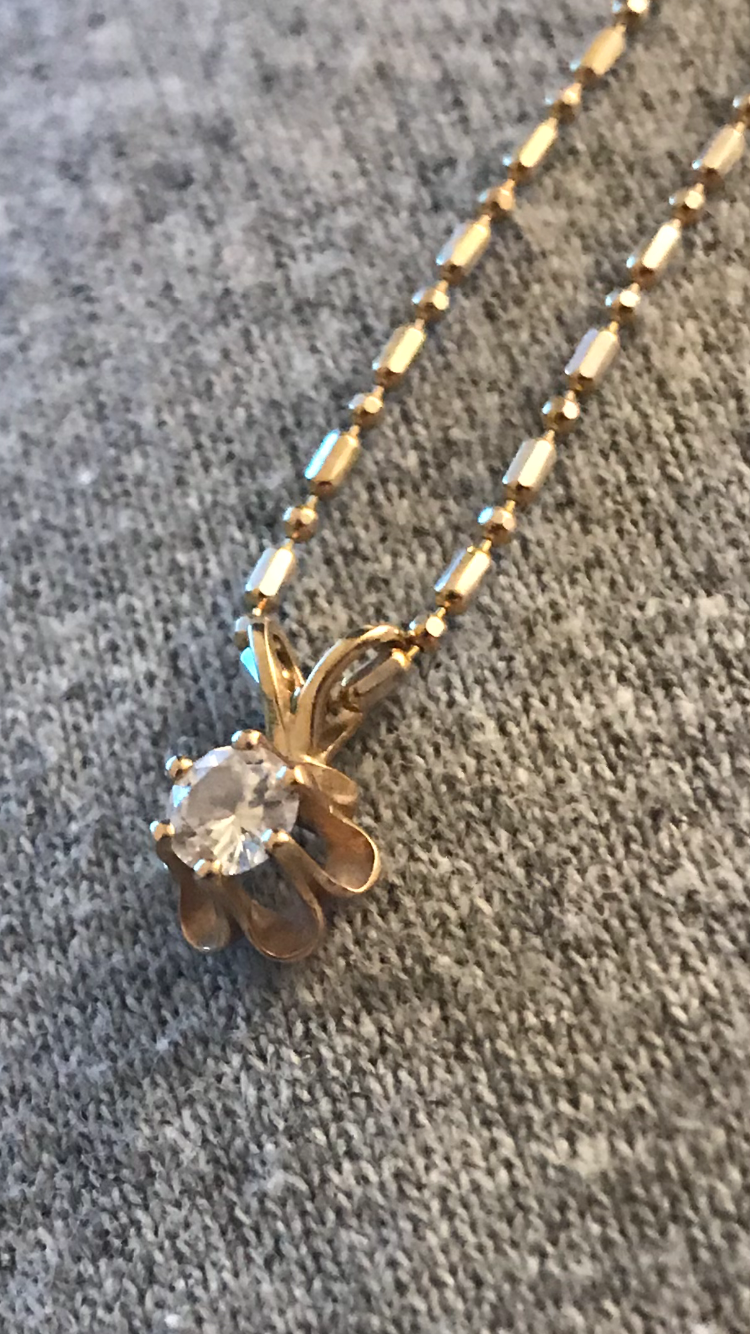
For this post, I chose to focus on my Irish Claddagh ring, one of the objects that I brought with me to our very first class meeting. It is one of, if not the only, object that I keep with me every second of every day. I wear it on a thin gold chain around my neck, so that no matter where I go, I always have it close to me.

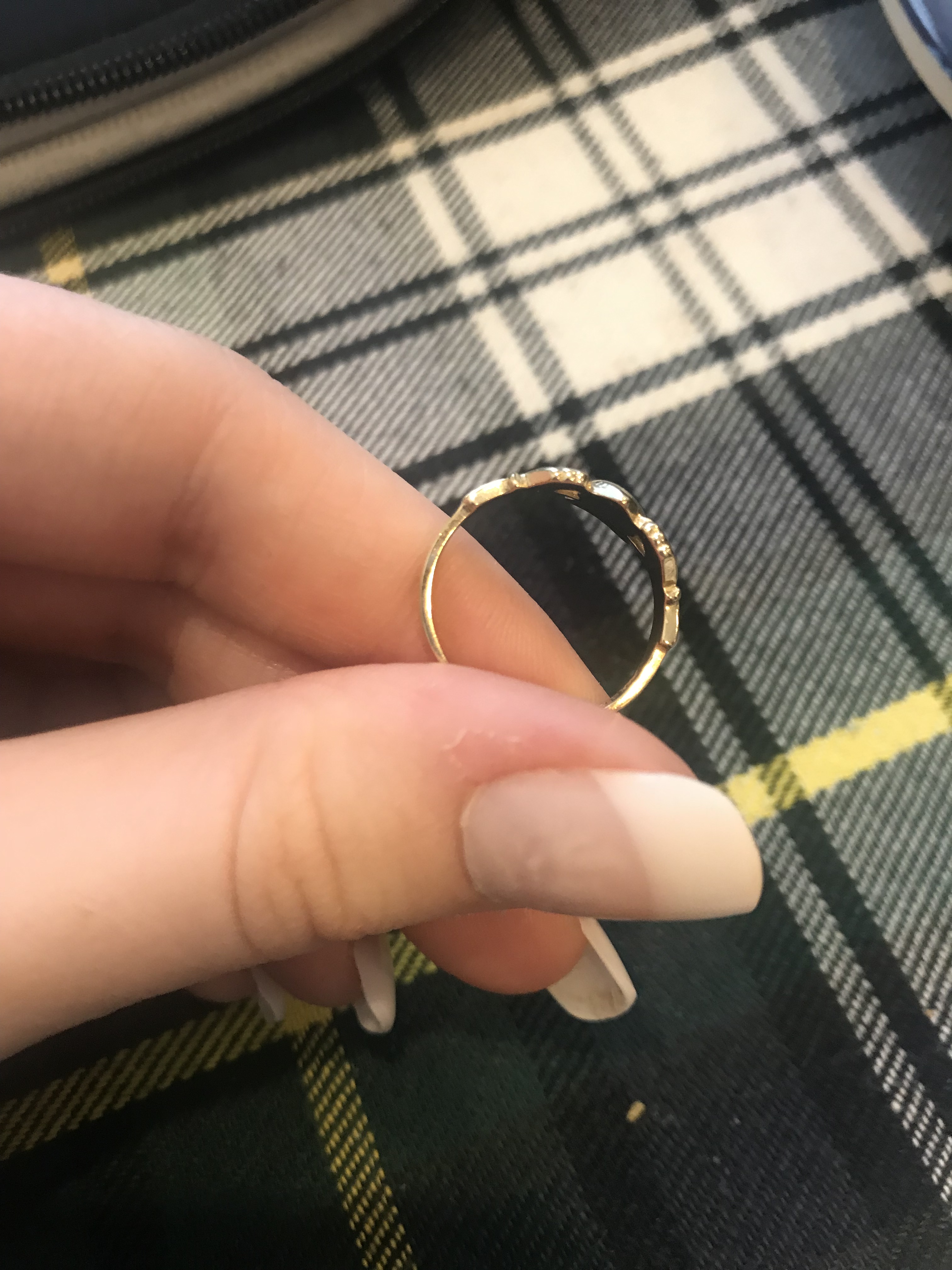
The ring is gold and very small. Due to its age, it has lost a bit of its luster, but nonetheless, is still quite a shiny piece of jewelry. I wear this ring around my neck for a few reasons, the first simple one being that it does not fit comfortably on my finger where it is supposed to be. However, more significantly, I wear this ring because it has become much like a family heirloom to me. Unfortunately, I come from a family that is not very rich in traditions. Aside from holiday get togethers, we don’t have many things that really tie us together–that is, except for our Claddagh rings.
My dad’s side of my family is very Irish. All of the girls have been given one of these rings at some point in their lives. My sister was given hers when she turned thirteen, and so was I. To the women in my family, obtaining a Claddagh ring is much like a rite of passage that signifies we’ve made it to womanhood. It also connects us all, and lengthens our long continuous string of rings that have circulated through our family for many generations.
Delving into the history of my object, I can’t say exactly how old the piece is. However, I am able to track its progress through my family. The ring was a gift given to my great-nana in the later years of her life. I am not sure if it was bought new or passed down, but that leaves the ring at somewhere between 25-35 years in my family. My great-nana was often regarded as the matriarch of my family. Unfortunately, I never got the opportunity to meet her. She passed away shortly before I was born. A lot of my family thinks there is a strong connection between the timing of her death and the timing of my birth, in the sense that they believe she became a part of me. I am not necessarily a religious person, but it is still a wonderful story to hear about and be told that I carry traits that such a wonderful woman in my family did. Now, I carry her ring as well. My grandmother had had it for nearly a decade before she decided that she wanted me to be the grandchild that received the object.
Thinking of all this as I sit here holding my ring, I can’t help but think about whose hands have held it before mine. There’s a strange sensation knowing that a woman I never even met was once the owner of one of my prized possessions. However, the beautiful thing about that is that I can still feel connected to her.
Claddagh rings were first developed in Ireland during the seventeenth century. Most times, they were used as engagement or wedding rings. The hands that clasp the heart on the ring are meant to symbolize whether or not a woman is taken, depending on how it is worn. If the hands are facing outwards, it means her heart is open to be taken. However, if the hands are facing inwards it means her heart has been taken.

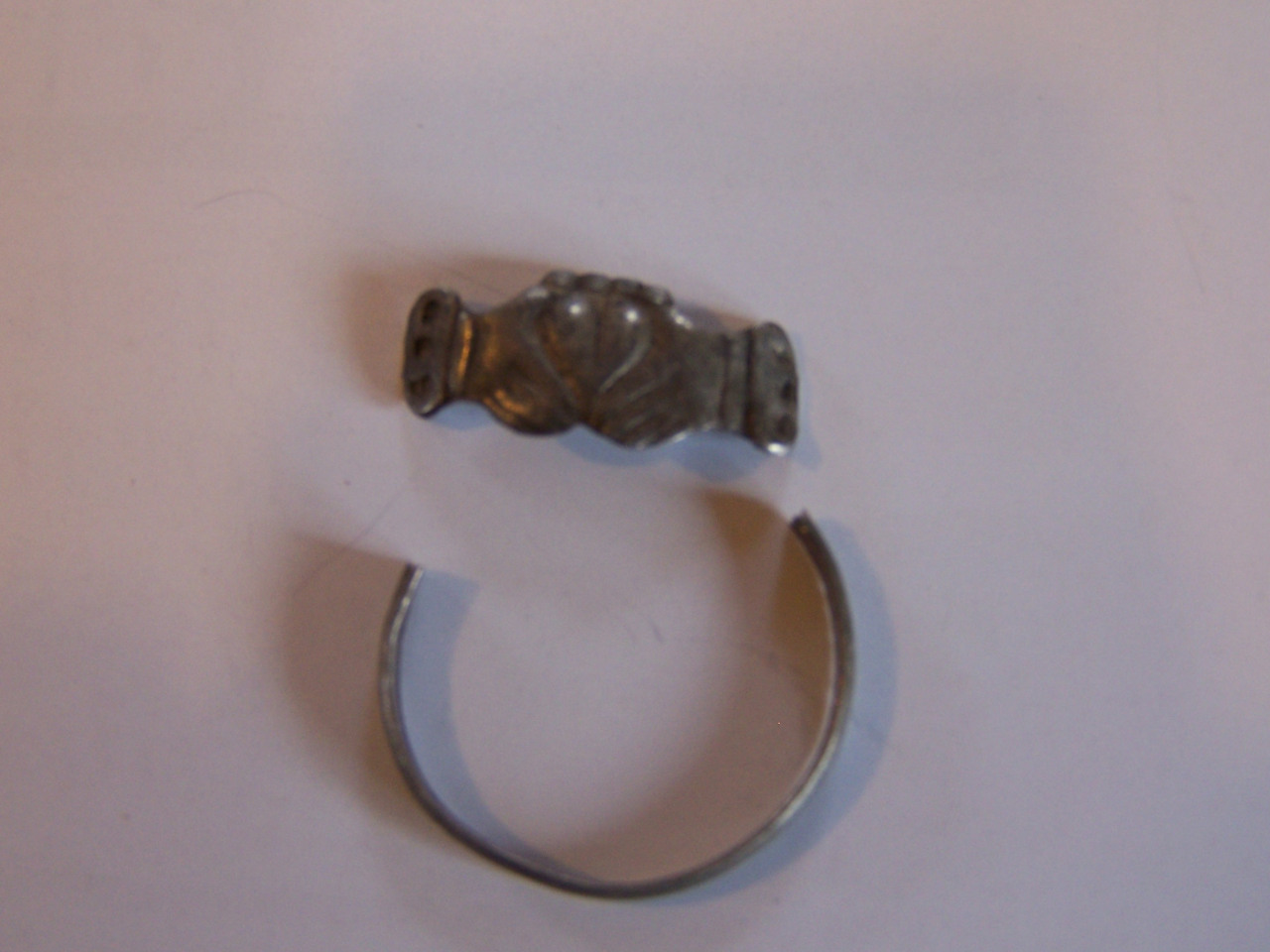
Though I do not use the ring for the same reason, it does still symbolize love for me. Wearing it around my neck means it constantly changes whether it is facing outwards or inwards, which I like to interpret as this idea that I often wear my heart on my sleeve and will give my heart to those deserving of taking it–in both a romantic and a platonic sense.
My Claddagh ring is something that is very important to me and my family. Though delving into its history and origins is fascinating to me, I am equally as interested in thinking about where it will travel after me and who my ring will be given to when I am older. I find this to be a wonderful thought, because it means that I will always remain a part of my family web–always connected to the one’s I love through the objects we pass down.







 The Materials of History, Thought, and Art