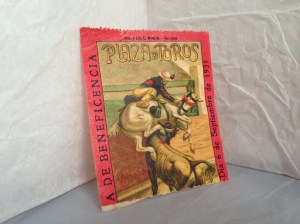
Front side of the Ticket
Reflecting on a Struggle
When I told my mother that I was enrolled in a class studying the role of objects in shaping both our personal lives and our cultural heritage, she immediately offered to dig up as many family mementos as possible. One of the several items that she excitedly passed along to me on a recent visit is a ticket stub, dated September 6, 1931, for an event at the Plaza de Toros in San Sebastian, Spain. It was likely purchased by my great grandparents (my mother’s father’s parents), Stella and Emilio de Jauregui-Blanco, while they were living in France.
Just shy of three inches long and two and half wide (for those who prefer exact measurements, the dimensions are 2” by 2”), the ticket stub is no bigger than a gum wrapper and just as thin. It appears to be printed on paper. Yet, despite its thinness, this paper is surprising strong. When given a gentle tug, the ticket does not rip as one would expect, but springs back, not unlike a dollar bill. It is possible, that, like dollar bills, the paper is combined with cotton or linen, making it more resilient to wear and tear as well as better able to absorb and retain ink during the printing process.
Indeed, it is the printing on the ticket that transforms it from a mere scrap of paper (a gum wrapper to be tossed away) into a cultural artifact signifying not only a purchase but also a presence. One side of the ticket features an incredibly detailed tri-color print of a man mounted on a white horse trying to evade the rush of a muscular grey bull. The horse’s eyes have been blindfolded with a red bandana and, if you look quite closely, the bull’s shoulder is shaded with a little bit of red, imbuing the scene with a palpable tension. At the top of the scene, a dramatic font proclaims in shades of yellow “Plaza de Toros.” I am tempted to imagine that the ticket is for a bullfight not unlike the one depicted, but nothing else on the ticket directly suggests this. The only clue to the circumstances of the event appears in the red margins that border the scene. To the left of the bullfighter, and running perpendicular to the scene, are the words de beneficencia, “of charity,” suggesting that perhaps this was a charity event of some kind. However, the beginning of the phrase, which might have revealed the beneficiaries of this charity at least, has been ripped off, possibly by a ticket collector as my great grandparents made their way into the Plaza.
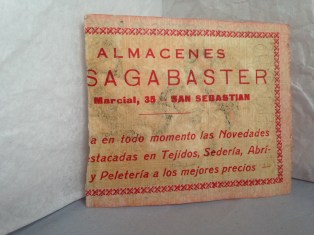
Reverse Side of the Ticket
The reverse side of the ticket appears to be an advertisement for shops (almacenes) in the area. The red italic script in the lower half of the stub promise fabrics (tejidos), silk/screenprinting (sederia), and leather goods (peleteria) at the best prices (a los mejores precios ). It is interesting to imagine whether or not my great grandparents paid any attention to this advertisement, choosing perhaps to go to the address listed in bold red letters (the first half has been ripped off, leaving me lost, unable to trace it exactly) to buy trinkets for their son, my grandfather, who would still have been quite young at the time and not ready to attend a potentially dusty, crowded event at the Plaza.
Emilio de Jauregui-Blanco, a citizen of El Salvador, would eventually move his family back across the Atlantic, finally settling in Guatemala. Moving is a daunting process under any circumstances, and I can only imagine that a transatlantic move would be especially so, requiring the family to choose what they absolutely would not part with and what could stay behind in Europe. Somehow, this little ticket stub made the cut, successfully traversing both the ocean and three generations to make it into my hand. Certainly, it has little or no monetary value, nor will it ever grant me access to an event in the Plaza. However, what it does have to offer is far more meaningful. It offers me a physical link to my great grandparents. And, while I cannot say for sure what exactly they did on September 6, 1931, I can tell you it was significant. I have the ticket to prove it.
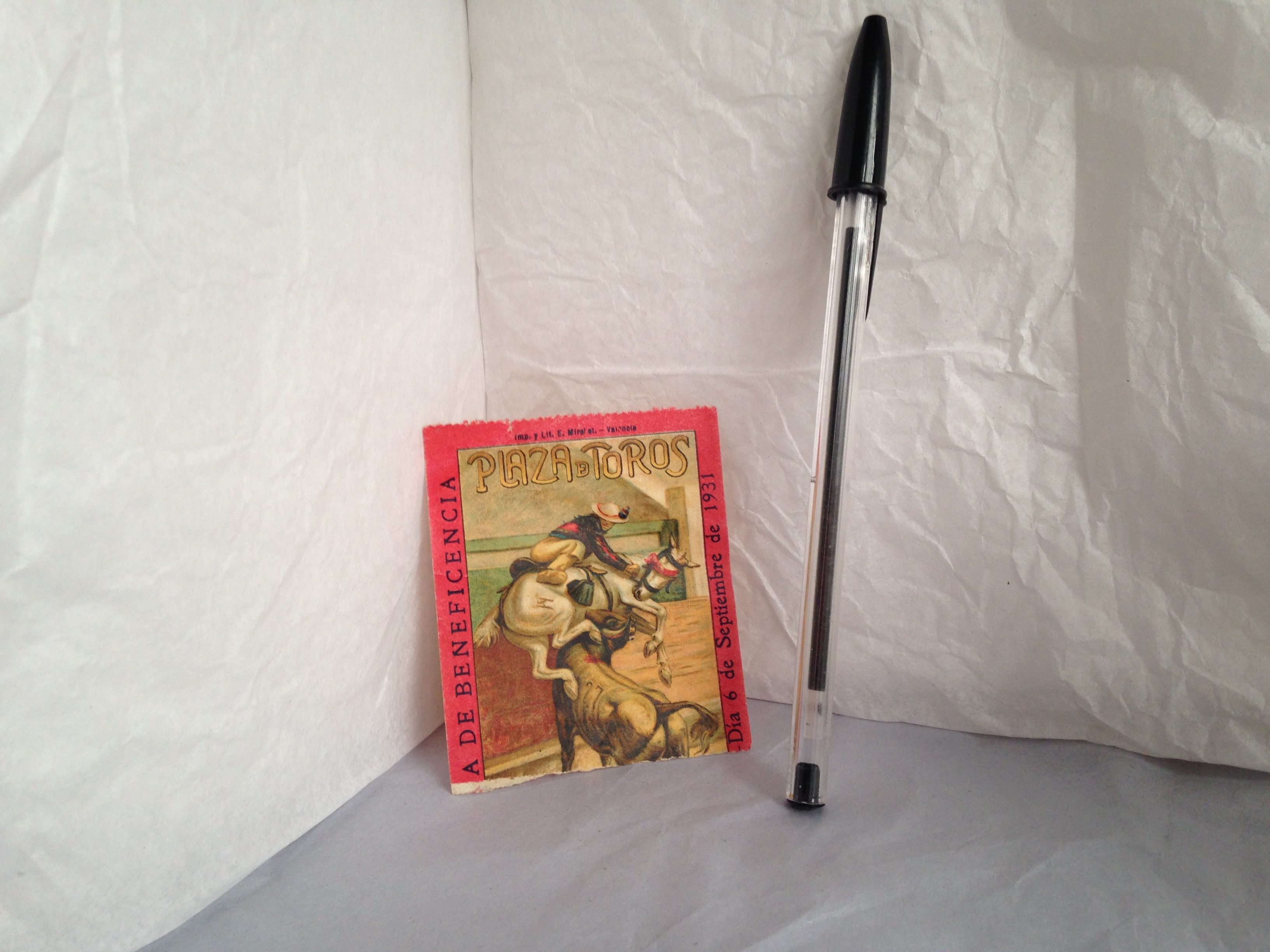
Some Perspective






 rot cards are flat and rectangular in shape. Like traditional playing cards they are made from layering paper, creating a product called pasteboard that is then used to print the cards (madehow.com). On the back of each card is a cerulean blue and white design of roses and tulips. The cards themselves are 5” by 2.5”. As you can tell, the size of a deck makes it very portable. The accompanying book is the same length with a width of half an inch. The cover of the book is deep blue with gold mimicking the design on the cards with an inner rectangle displaying the title and author. Also within this rectangle is the ouroboros, a snake eating its own tail, which is a symbol for eternity. The pages have experienced slight water damage, but are still legible.
 imminent danger. In his left hand is a white rose and in his right he carries all his worldly belongings. The back drop is yellow with a white sun.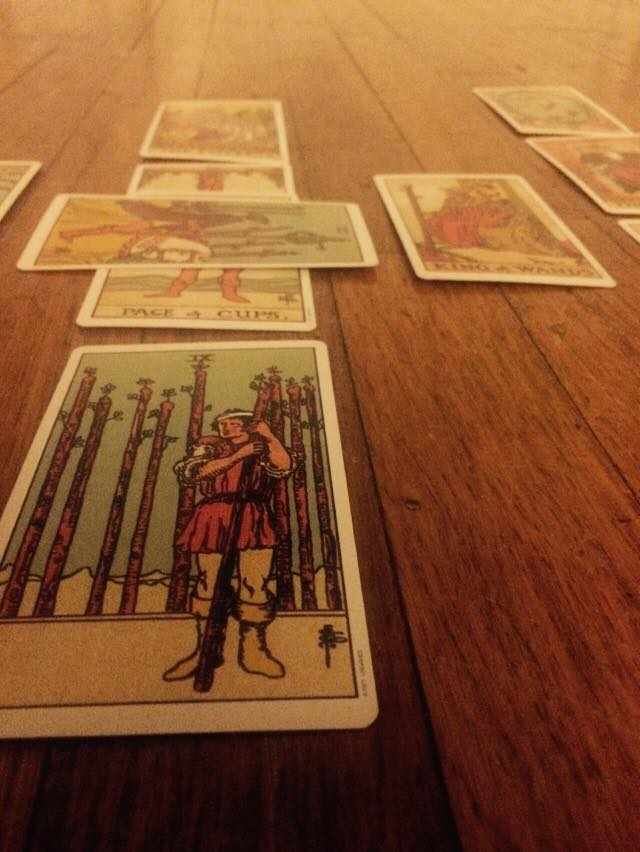



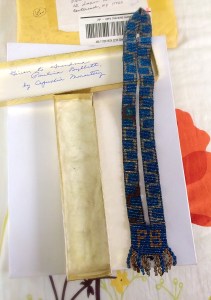 was mainly made with blue beads, but alternates in a maze-type pattern of silver beads with minor gaps of brown beads. Toward the bottom of the necklace is inscribed the initials PB, which stood for Paulena Byllott, my great grandmother. Just below her initials, the very bottom of the necklace is lined with beaded tassels.