Midterm Presentation: Destination Moon

MIDTERM PRESENTATION BLOG POST

John, Alex, Michaela

Although we learn about the Space Race in high school, we will never be able to experience the thrill of being the first country to land on the moon. However, we can still look at the objects left behind by the Apollo 11 mission and try to piece together their story. Destination Moon is an exhibition at the Smithsonian that showcases the critical role of Apollo 11 on space exploration. This exhibition, consisting of over 100 objects, celebrates the 50th anniversary of the Apollo 11 mission of the first human Moon landing on July 20th, 1969. 

This exhibition consists of several vitrines that contain 1-20 objects each. This exhibition has clearly labeled plaques to the side of each object. These plaques highlight the object’s stories, owners, and how they were used for the Moon mission. The objects in this collection were chosen based on their relevance and involvement in the Moon mission. These items range from technological marvels (Columbia Command Module), to small things like pens and many, MANY urine tubes. Besides reminding us of America’s victory in the Space Race, these items also highlight the hard work that was done for this mission. 

Though the Space Race is not the main focus of this exhibit, the exhibition’s focus on technological advancement is one that reflects the core ideas of the Space Race. This race occurred as a result of political rivalry which turned into the desire to prove one country’s superiority over another. By commemorating these items that allowed for America’s Victory in the Space Race, the museum is showing how, even in history, the victor is who is celebrated. 

 Although Americans pride themselves on being the first to travel to the Moon, the reality is that they only invested in the program because the Soviets were looking into it first. NASA’s success led to a better understanding of aviation, space, and earth science, which allowed an era of global innovation. For example, nine years after the Apollo 11 mission, the first GPS satellite was launched. Today, we use GPS for navigating, weather reporting, and even watching foreign Netflix (Lipowicz). The fact that we can casually have a serious conversation about colonizing mars and moon vacations as if they are an everyday thing shows how much the Space Race and subsequent space exploration has influenced our culture. 

If you were to visit this collection, it would be more insightful if you viewed each section chronologically. Doing so allows the story of the Apollo 11 mission to flow better since you get to learn about the “mini stories” that build up to the big story. It would also be wise to consistently remind yourself that it took 11 years and thousands of people to make this mission happen because it becomes very easy to forget the scope and importance of such a project. 

This exhibition is one that many are encouraged to visit since it serves as a reflection of such a pivotal part of space history. Specifically, the exhibition represents the development of many technologies and humanity’s ability to surpass their earthly bounds as well as demonstrate our tangible connection to the moon. Without this mission, the thought, or even hope, of space travel would not be possible. As such, this collection shows how “an extraordinary combination of motivations, resources, and technologies made it possible for humans to walk on the Moon” (Smithsonian) and why we want to go back today. 

BIBLIOGRAPHY: 

Apollo11Space. “Apollo 11 Spacecraft.” Apollo11Space, 4 May 2024, apollo11space.com/apollo-11-spacecraft/.

Apollo 11 Command Module “Columbia”. Directed by Anonymous, produced by Smithsonian Institution. National Air and Space Museum, Smithsonian Institution Press, 2017. Alexander Street, https://video.alexanderstreet.com/watch/apollo-11-command-module-columbia.

Chisholm, Johanna. “Elon Musk Jokes about Buying Coca-Cola, Putting ‘Cocaine’ Back in the Popular Drink.” The Independent, Independent Digital News and Media, 28 Apr. 2022, www.independent.co.uk/tech/elon-musk-coca-cola-cocaine-b2067493.html.

Contributors to Voice over and Voice Acting Wiki. “Apollo Creed.” Voice over and Voice Acting Wiki, Fandom, Inc., voice-over-and-voice-acting.fandom.com/wiki/Apollo_Creed. Accessed 10 Oct. 2024.

DiLisi, Gregory A., et al. “The Legacies of Apollo 11.” AIP Publishing, 1 May 2019, pubs.aip.org/aapt/pte/article/57/5/282/1016306/The-Legacies-of-Apollo-11.

“Destination Moon.” Smithsonian National Air and Space Museum, https://airandspace.si.edu/exhibitions/destination-moon. Accessed 10 Oct. 2024.

“‘Destination Moon’: Take a Tour of New Air and Space Museum Gallery.” collectSPACE.Com, 14 Oct. 2022, www.collectspace.com/news/news-101422a-air-space-museum-destination-moon-tour.html.

Farrington, M.C. “A Ringside View of the Moon Shots, Part 3: The Countdown Kit.” Hampton Roads Naval Museum, 17 July 2019, hamptonroadsnavalmuseum.blogspot.com/2019/07/a-ringside-view-of-moon-shots-part-3.html.

“Hatch, Crew, Apollo 11.” National Air and Space Museum, 3d.si.edu/object/3d/hatch-crew-apollo-11%3Ae7514eea-3f12-490d-a2d0-999f2a1a70f7#:~

=Object%20Details&text=This%20hatch%20was%20the%20main,Johnson%20Space%20Center%20in%201970.&text=Overall:%202%20ft.,100%20%C3%97%2027cm%2C%20286lb.)&text=Support%20(Display%20stand%20(2017)):%2025.9kg%20(57lb.). Accessed 10 Oct. 2024.

“Heat Shield, Fragment, Ablated, Apollo.” National Air and Space Museum, airandspace.si.edu/collection-objects/heat-shield-fragment-ablated-apollo/nasm_A19731423008#:~

=To%20protect%20the%20Apollo%20Command,filled%20with%20phenolic%20epoxy%20resin. Accessed 10 Oct. 2024.

Infomedia. “Are You Flying Blind?” Revere Control Systems, 10 Sept. 2019, www.reverecontrol.com/are-you-flying-blind/.

“International Space Station Legal Framework.” ESA, www.esa.int/Science_Exploration/Human_and_Robotic_Exploration/International_Space_Station/International_Space_Station_legal_framework#:~:text=The%20rule%20concerning%20utilisation%20of,of%20Understanding%2C%20and%20state%20that. Accessed 10 Oct. 2024.

Loff, Sarah. “Apollo 11 Mission Overview.” NASA, 17 Apr. 2015, www.nasa.gov/history/apollo-11-mission-overview/#:~:text=Apollo%2011%20launched%20from%20Cape,of%20114%20by%20116%20miles.

Phillips, Samuel C. “Apollo 11 Command and Service Module (CSM).” NASA, nssdc.gsfc.nasa.gov/. Accessed 10 Oct. 2024.

Smithsonian National Air and Space Museum. Destination Moon. Smithsonian Institution, https://airandspace.si.edu/exhibitions/destination-moon. Accessed 10 Oct. 2024.

Smithsonian National Air and Space Museum. Virtual Tour: Destination Moon. Smithsonian Institution, https://airandspace.si.edu/virtual-tours/destination-moon/?startscene=13&startlookat=-144.47,9.18,83,0,0. Accessed 10 Oct. 2024.

“Sputnik.” Encyclopædia Britannica, Encyclopædia Britannica, inc., 11 Sept. 2024, www.britannica.com/technology/Sputnik.

“Symbols of NASA.” NASA, 13 June 2024, www.nasa.gov/history/symbols-of-nasa/.

Xia, Ping, et al. “Mechanical Properties and Energy Absorption of 3D Printed Double-Layered Helix Honeycomb under in-Plane Compression.” Composite Structures, Elsevier, 31 Mar. 2023, www.sciencedirect.com/science/article/abs/pii/S0263822323003264.
“Is This Modern Slavery?” from Mmuseumm, by ShirEl, Rose, Sarah, and Charlie

The Mmuseumm is a tiny and unique museum on Cortlandt Alley, NYC, founded by Alex Kalman, and Josh and Benny Safdie. What makes Mmuseumm stand out amongst other museums is the extremely unique design, standing at only 36 square feet and being the smallest museum in NYC. Kalman dreamed of opening a museum in an unusual place, where he could display found objects. The museum aims to create a place where people are curious and ask questions about what they see. The tiny space leaves no room to wander, it’s an immersive and thoughtful experience. Exhibitions at the Mmuseumm include a large collection of objects, broken into smaller collections with subcategories, all related to an overall theme. There have been several exhibits to highlight social injustices in the world, as well as display the everyday human condition. The small objects displayed in each collection tell a bigger story that people can reflect on, and relate to due to the common nature of each object. 

Our specific collection, titled “Is This Modern Slavery” is the ninth collection in the museum’s 2020-2021 exhibit. This collection includes objects from all around the world made through the use of forced labor, including debt bondage, human-trafficking, and child slavery. The wide variety of objects in this collection reflects the growth and globalization of slave labor. One of the reasons we chose this collection is because it puts an emphasis on the effects of consumerism and unethical labor, which are topics relevant to our class discussions. 

An important reflection from our research is that at first glance, the objects presented don’t necessarily make sense together, yet they are all connected in very specific ways. Although the collection appears to be filled with the most random and incohesive objects, there is actually a great amount of thought and cohesiveness behind the display of each object in order for it to fit the collection and overall theme. When asked about the museum’s array of objects, Alex Kalman said “These seemingly ordinary objects, they’re intimate and they’re incredibly revealing. So, you can explore big ideas through these small objects” (NY Times). 

If someone were to visit Mmuseumm, I’d suggest they observe the objects and reflect on how they may be involved in their everyday life. The museum highlights the beauty in simplicity, while also acknowledging the downsides of typical consumer items. Bringing attention to labor and social injustices present in the world, Mmuseumm is unlike other museums and sends a stronger message about human nature. 

Works Cited

5 Dec. 2013. Los Angeles Times, https://www.latimes.com/nation/la-na-c1-small-museum-nyc-20131205-dto-htmlstory.html. Accessed 10 Oct. 2024.

6 May 2024. Thrillist, https://www.thrillist.com/lifestyle/mmuseumm-smallest-museum-nyc. Accessed 10 Oct. 2024.

Barron, James. “This Tiny Museum Fits inside an Elevator Shaft.” The New York Times, The New York Times, 21 Apr. 2019, http://www.nytimes.com/2019/04/21/nyregion/tiny-museum-new-york-city.html.

“Collection.” MM, http://www.mmuseumm.com/exhibitions. Accessed 10 Oct. 2024.

Condé Nast Traveler, https://www.cntraveler.com/activities/new-york/mmuseumm. Accessed 10 Oct. 2024.

Google, https://www.google.com/search?q=tesco+2024+in+london&sca_esv=247a3cc0ba513c42&rlz=1C1CHBF_enUS1071US1072&udm=2&biw=1280&bih=632&ei=xvQGZ6iYFoWo5NoPo-Oa0Qc&ved=0ahUKEwiok9-jnoKJAxUFFFkFHaOxJnoQ4dUDCBA&uact=5&oq=tesco+2024+in+london&gs_lp=EgNpbWciFHRlc2NvIDIwMjQgaW4gbG9uZG9uSI41UM8NWO0jcAJ4AJABAJgB5wGgAY8GqgEFMy4yLjG4AQPIAQD4AQGYAgSgArcCwgIGEAAYBxgewgIKEAAYgAQYQxiKBcICCBAAGAcYCBgemAMAiAYBkgcFMy4wLjGgB4kI&sclient=img#imgrc=aTkx9sOU7PF2qM&imgdii=jq1ozWseN8q7tM. Accessed 10 Oct. 2024.

“IS THIS MODERN SLAVERY? Mmuseum 2020.” YouTube, Mmuseumm NYC, 2020, youtu.be/gmok5Cx_6fI.

MM, http://www.mmuseumm.com/. Accessed 10 Oct. 2024.

“MMUSEUMM 2020 Credits.” MM, http://www.mmuseumm.com/2020/credits. Accessed 10 Oct. 2024.

“WELCOME TO MMUSEUMM 2020.” YouTube, Mmuseumm NYC, 2020, youtu.be/cgFmtGDIju4. 

MGMT’s “Congratulations” and the World of Compact Discs

There has been a revival in the last few years of physical media — a return to bulk. Vinyl record collections, ancient video game consoles and cartridges, digital cameras accompanied by stacks of photo albums, they’re making comebacks, and my media of choice is the compact disc.

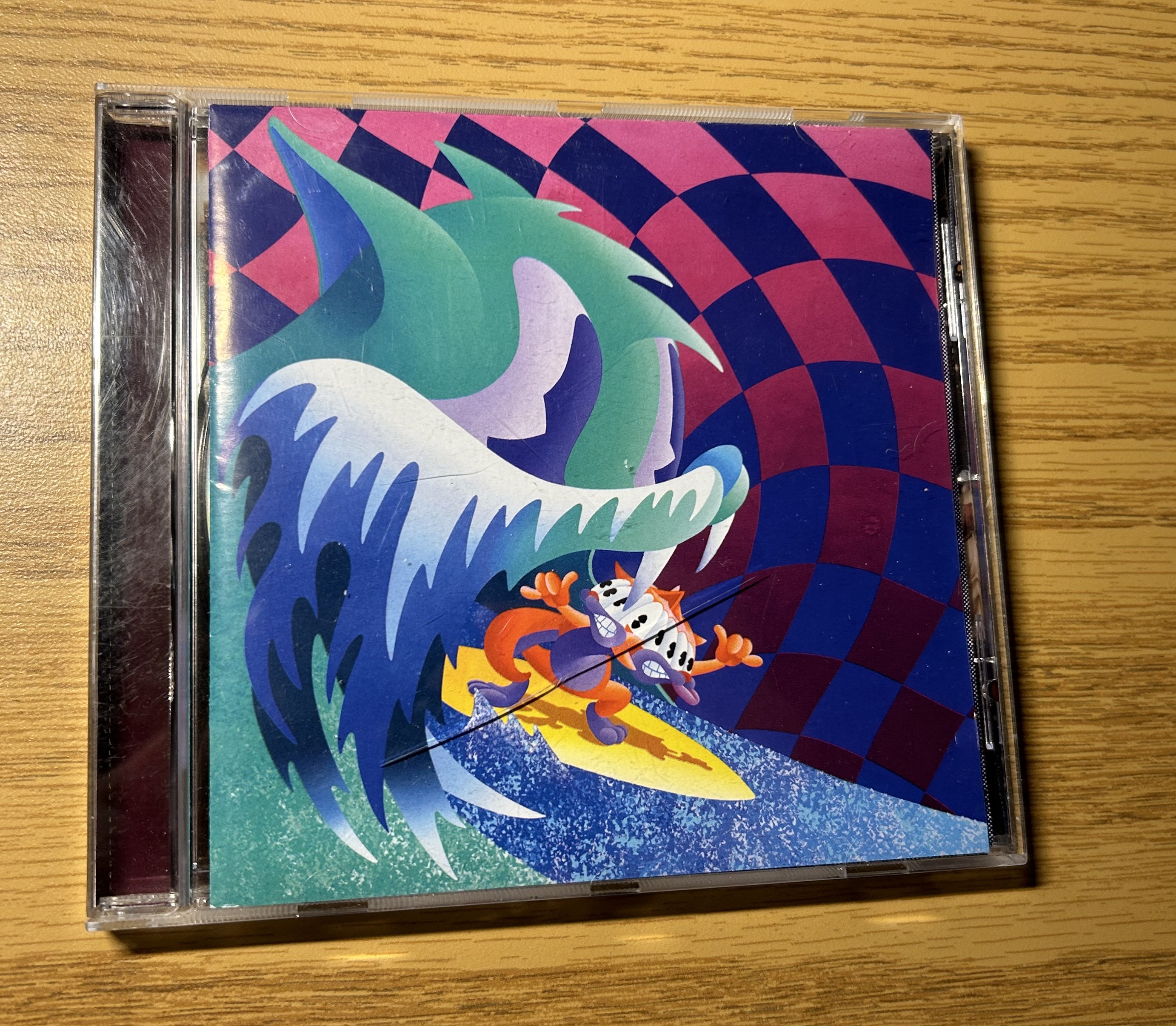
The front cover of the compact disc of MGMT’s Congratulations, released in 2010. There are a few scratches and cracks in the jewel case, but the contents are unaffected.

This is my CD of MGMT’s sophomore album, Congratulations. I bought this album on Apple
Music for $9.99, but I’ve also purchased this disc for $6.98 on Amazon in March 2021. Oftentimes, I try to shop local for my music, but for those harder-to-find albums, I turned to the online retailer in a moment of need. And now, as I hold the case in my hands, tracing the seafoam-green and blue waves, I find myself looking at the many multitudes that collide and mold together to create this product, that product being soundwaves, an intangible object. For me, I break down this product in three ways: the disc, the case, and the art. These three physical components are the driving forces that create this marketable CD.

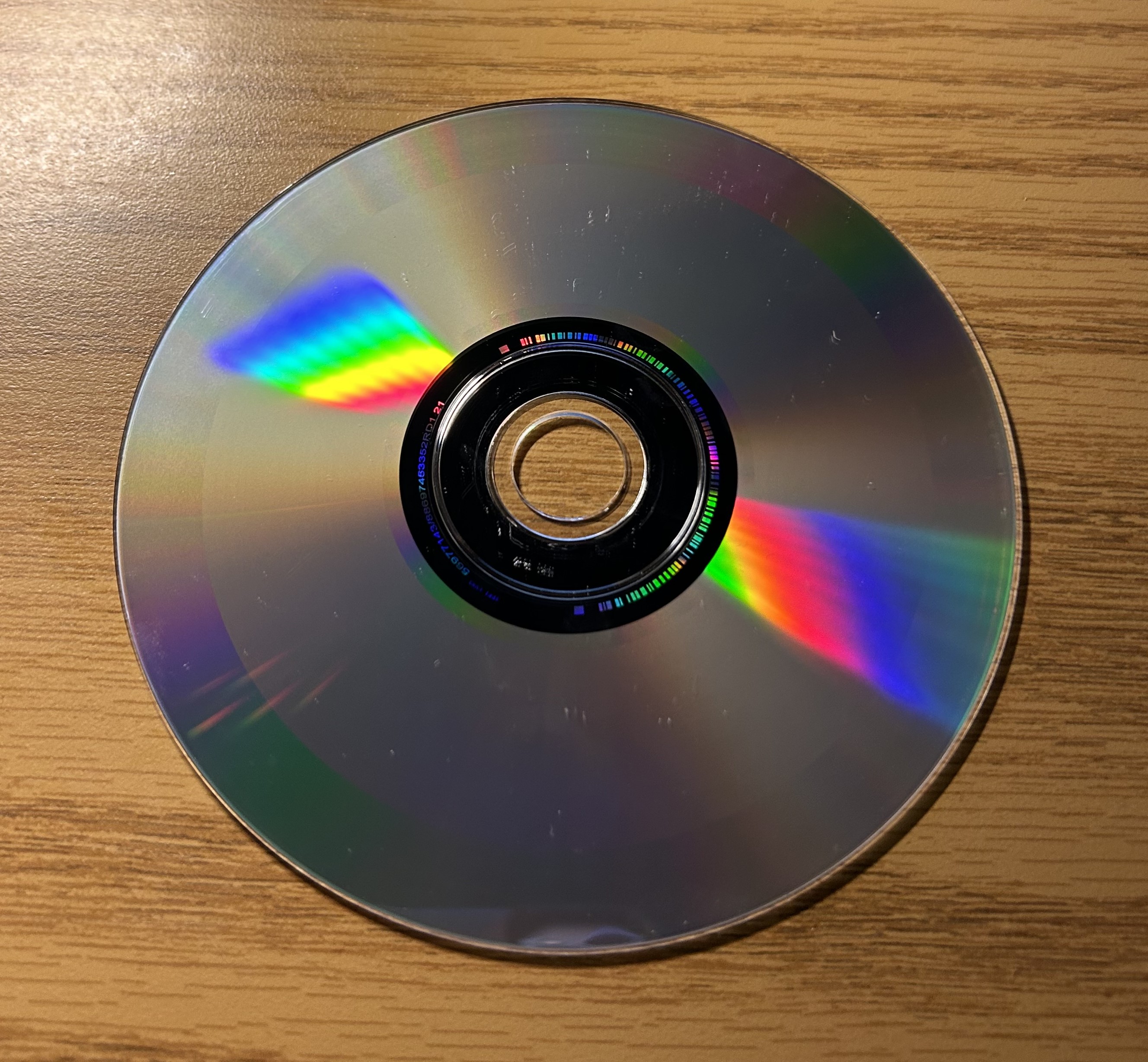
Firstly, the compact disc. Invented in 1979, the compact disc was a sleeker, shinier new alternative to the clunky, inefficient vinyl discs and cassette tapes. They were introduced to the public in 1982, dominating the music market for years up until the late 2000s, when digital databases and streaming services rendered the CD industry nearly obsolete. However, there is still a sizable market for physical media like the compact disc that implores bands to sell copies for their most adoring fans.

Compact Disc manufacturing is an interesting process in itself, utilizing complex machinery and materials to essentially create a master disc (the original) which is then used to press onto discs of polycarbonate, copying data onto one after the other and making playable CDs. These particular disc factories can be found in regions like the United States, Canada, the EU, Japan, Mexico, etc.

The back cover of MGMT’s Congratulations CD, featuring a few minor scrapes and cracks in the jewel case.

Tracing the origins of this particular compact disc turned out to be trickier than I thought. The album is distributed by Columbia Records, a sub-label of Sony Music Entertainment. At the very bottom of the case, the only origin story given is a simple “Made in Mexico.” The CD does not pinpoint a particular city nor a particular distributing company. Sony does not list out their specific manufacturers publicly either, meaning I can make educated guesses as to where this CD was produced.

One potential lead can be within Sony themselves and Sony Digital Audio Disc Corporation (DADC), the manufacturing division that handled Blu-ray discs, DVDs, and CDs. They had a plant in Mexico City up until 2015, when the plant was closed. Though it’s a plausible explanation, there is no direct information linking Congratulations and this particular factory together.

Scouring this particular thread in a music forum led me to discover one company, Technicolor, formerly a disc manufacturing plant in Guadalajara, Mexico, was a major manufacturer of compact discs and DVDs. They supplied and pressed discs until 2020, declaring bankruptcy (citing the COVID-19 pandemic as a major factor) and splitting from Technicolor SA to create Technicolor Creative Studios with the original company changing their name to Vantiva. The plant was in operation from 2002-2022, taking on the brunt of Sony’s disc production after major factory closures across North America. Technicolor has been credited as the pressing manufacturer for some of MGMT’s other albums like Oracular Spectacular (2007) and Little Dark Age (2018), according to Discogs, an online music database and marketplace, hence why they are another plausible source of my CD.

CDs can be packaged in a variety of ways and vary in strength and durability. This particular reissue came in a jewel case, a hard, transparent plastic shell with a raised section to hold the disc securely in place. They were created in 1982 by Peter Dooson who worked for Philips, a Dutch manufacturing company and are typically produced en masse. The case is made of polystyrene and is only a bit heavier than the disc itself, providing a safe way to store discs.

Finding details on this particular jewel case is difficult, as they are not able to be traced to a particular manufacturing plant. However, many disc pressing companies (like Sony DADC) also provide packaging and printing services, meaning this jewel case most likely sourced from the same plant where the disc is pressed.

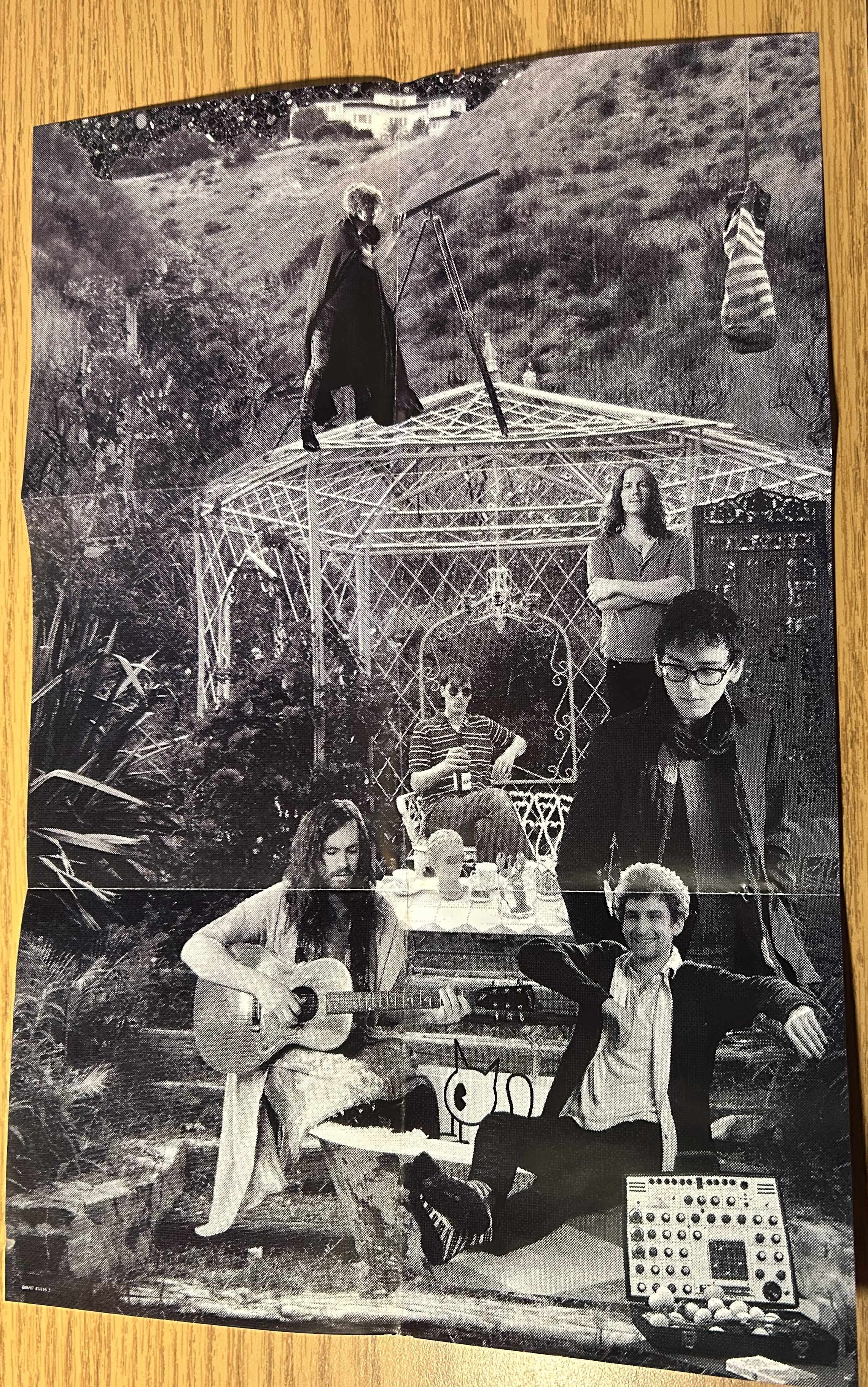
While the jewel case and compact disc make up the bulk material of the final product, it is the art that makes it unique. Starting with the front cover, Congratulations’ album art was created by Anthony Ausgang, a lowbrow artist living in Los Angeles whose primary subjects are cats. According to his personal blog, Ausgang stated that, “While painting the cover [he] was not allowed to hear any of the advance tracks, so [he] had to listen to Oracular Spectacular while working. Once [he] did hear the new tracks, [he] was extremely happy that the image worked so well with them.” The psychedelic, new-wave, synthesized sounds of the songs are situated with this album cover, which is just as equally trippy and colorful. The remaining artwork, photography, and design of the CD was led by Sony Music Entertainment’s art director, John Cheuse. This art fills in the transparent space of the jewel case and provides the consumer with additional paper material (lyrical content and a poster-size photograph of the band).


In doing research on this CD, my research has led me down many interesting rabbit holes regarding CD manufacturing, distribution, and the overall dismal truth that physical media is in decline. When looking at Congratulations in its disc form, I am implored to explore it beyond its audio purpose, to analyze the time, craft, and care that went into designing and producing every part of this product. Physical media as an object serves not only the purpose of archiving data, but representing multitudes of stories that come to create something you can hold in the palms of your hands.

Kindle Paperwhite

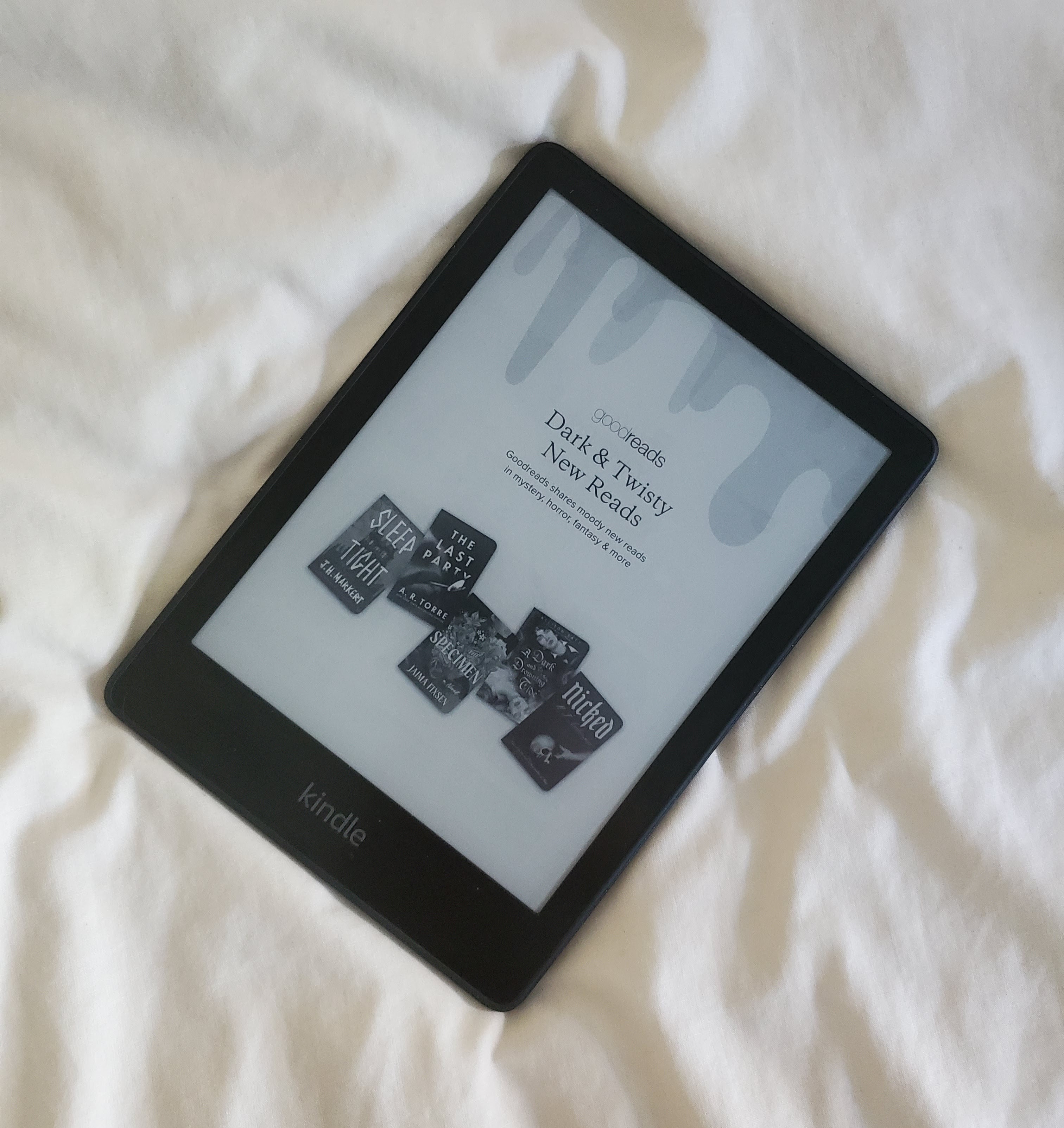
One of my most used possessions is my 2022 11th generation Kindle Paperwhite. First released in October 2012, the Kindle Paperwhite is 6.6 inches long by 4.6 inches wide by 0.3 inches thick and weighs 5.6 oz. Structurally, it consists of a matte screen encased in a beveled plastic frame. The Kindle Paperwhite is named for its clean white display, which creates more contrast with the black text than the light gray screen of earlier Kindle e-reader models.  

If I were to deconstruct my Kindle, I would be able to identify four distinct components; a circuit board, the foundation for the Kindle’s electronic circuits: a Wi-Fi chip; a electrophoretic display, or the electronic ink screen; and a lithium-ion battery:. The circuit board is made in China and the Wi-Fi chip in South Korea, the leading manufacturer of mobile phone components. The electronic ink (E-ink) display was manufactured in Taiwan by E Ink Holdings.  

Electronic ink is the crux of e-reader success. The technology was first developed by physicist Joseph Jacobson and MIT undergraduates Barrett Comiskey and J.D. Albert out of MIT Media Lab, a multidisciplinary research laboratory. MIT filed a patent for the E-ink display in 1996. E Ink Corporation was founded the following year by Jacobson, Comiskey, Albert, Jerome Rubin, and Russ Wilcox. The business was acquired by Prime View International, a Taiwan-based manufacturer, in 2009.  

E-ink mimics the appearance of ink on paper through a process called electrophoresis. Two ultra-thin transparent plastic films, coated with pixel-sized electrodes, sandwich microcapsules filled with black and white pigment. The microcapsules are suspended in an oily substance. The black pigment is negatively charged, and the white is positively charged. When a charge is introduced via an electric current, the pigments rush towards the opposite charge, creating the look of black text on white paper. The screen is lit by seventeen low-powered LED lights, diffused across the screen via a flattened fiber optic cable, creating the illusion that the screen is backlit.

The working of an E-ink display.
A close-up of an E-ink display. The individual electrodes are visible. 

The lithium-ion battery, too, was produced in China. However, its individual components, specifically the heavy metals lithium and cobalt, were extracted halfway across the globe. In Chile and Australia, the two leading lithium exporters, the metal is pumped from brine reservoirs underneath salt flats and left to evaporate.  

Most the world’s cobalt is mined in the Democratic Republic of Congo. In a 2021 report for the Wilson Center, Michele Fabiola Lawson writes, “mining in the DRC involves people of all ages, including children, to work under harsh conditions. Of the 255,000 Congolese mining for cobalt, 40,000 are children, some as young as six years. Much of the work is informal small-scale mining in which laborers earn less than $2 per day while using their own tools, primarily their hands.” Both lithium and cobalt extraction pose serious environmental concerns, including pollution, biodiversity loss, and greenhouse gas emissions.  

The Kindle is a great product, and in the past, I have recommended it to anyone who will listen. Its E-ink technology is a versatile and low-energy alternative to traditional electronic screens. Yet the Kindle’s near perfect design does not justify the human and environmental cost of its production.  

Work Cited

Denning, Steve. “Why Amazon Can’t Make a Kindle in the USA.” Forbes, Forbes Magazine, 21 Apr. 2014, www.forbes.com/sites/stevedenning/2011/08/17/why-amazon-cant-make-a-kindle-in-the-usa/

Frankel, Todd C. “The Cobalt Pipeline.” Washington Post, 30 Sept. 2016, www.washingtonpost.com/graphics/business/batteries/congo-cobalt-mining-for-lithium-ion-battery/

“How Is Lithium Mined?” MIT Climate Portal, 12 Feb. 2024, climate.mit.edu/ask-mit/how-lithium-mined. 

Lawson, Michele Fabiola. “The DRC Mining Industry: Child Labor and Formalization of Small-Scale Mining.” Wilson Center, 1 Sept. 2021, www.wilsoncenter.org/blog-post/drc-mining-industry-child-labor-and-formalization-small-scale-mining

Strickland, Jonathan, and Chris Pollette. “How Does Kindle Work? What to Know in 2024.” HowStuffWorks, HowStuffWorks, 30 Apr. 2024, electronics.howstuffworks.com/gadgets/travel/amazon-kindle.htm. 

Vicente, Vann. “What Is E-Ink, and How Does It Work?” What Is E-Ink, and How Does It Work?, How To Geek, 18 Oct. 2021, www.howtogeek.com/752328/what-is-e-ink/

When your friend is a mystery. SMISKI Living Series.

Hiding behind a book on your desk, holding a pencil, or even taking a nap on your favorite shelf. Smiski are curious little creatures that love hiding in small spaces…and glow in the dark. For my object of choice, I wanted to discuss a consumer good where I really didn’t know what I was buying.

Smiskis are part of a series of small green plastic figurines. Ranging in different types and sizes, each is unique and filled with its own personality. In a “Blind Box” with foil wrapping, you may ask yourself, “What is a Blind Box?” A Blind Box is a type of packaging that keeps its contents hidden. Depending on the brand, there is no way to tell what is contained in the boxes. Some, like this toy, are also wrapped in foil, which deepens the mystery of the toy. The only way to find out what you want is to buy! (kidrobot.com 2024).

Additionally, blind boxes like Smiskis have different odds of finding figures. Each option for a figure is always displayed on the outside of its boxes; some display the odds, while others don’t. Chase figures or “secret” figures are items that have the lowest odds of being found within a set number of boxes. However, this set doesn’t include one.

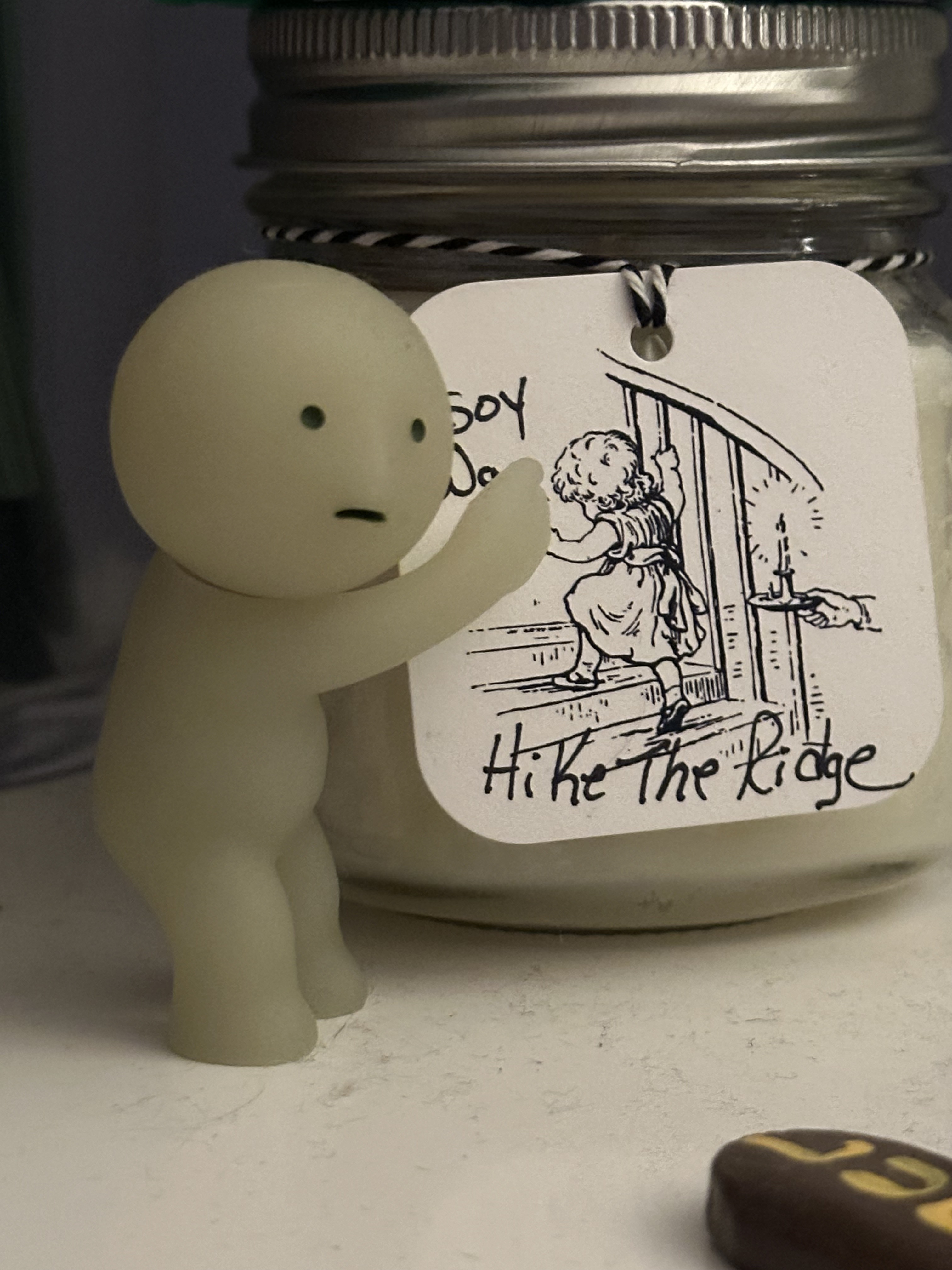
Smiski holding a candle on my dresser

The series I bought from was the Smiski Living series, which features a few of our beloved friends sleeping, lifting, or even playing the flute. Out of the six possible options, when I received my package, I was granted the figurine “Smiski Hiding.” This figure stands at about 2.75 inches tall and about 1.5 inches wide (measuring with its arms). It has its arms outstretched with a space big enough to hold the average pen, pencil, or hiding spot.


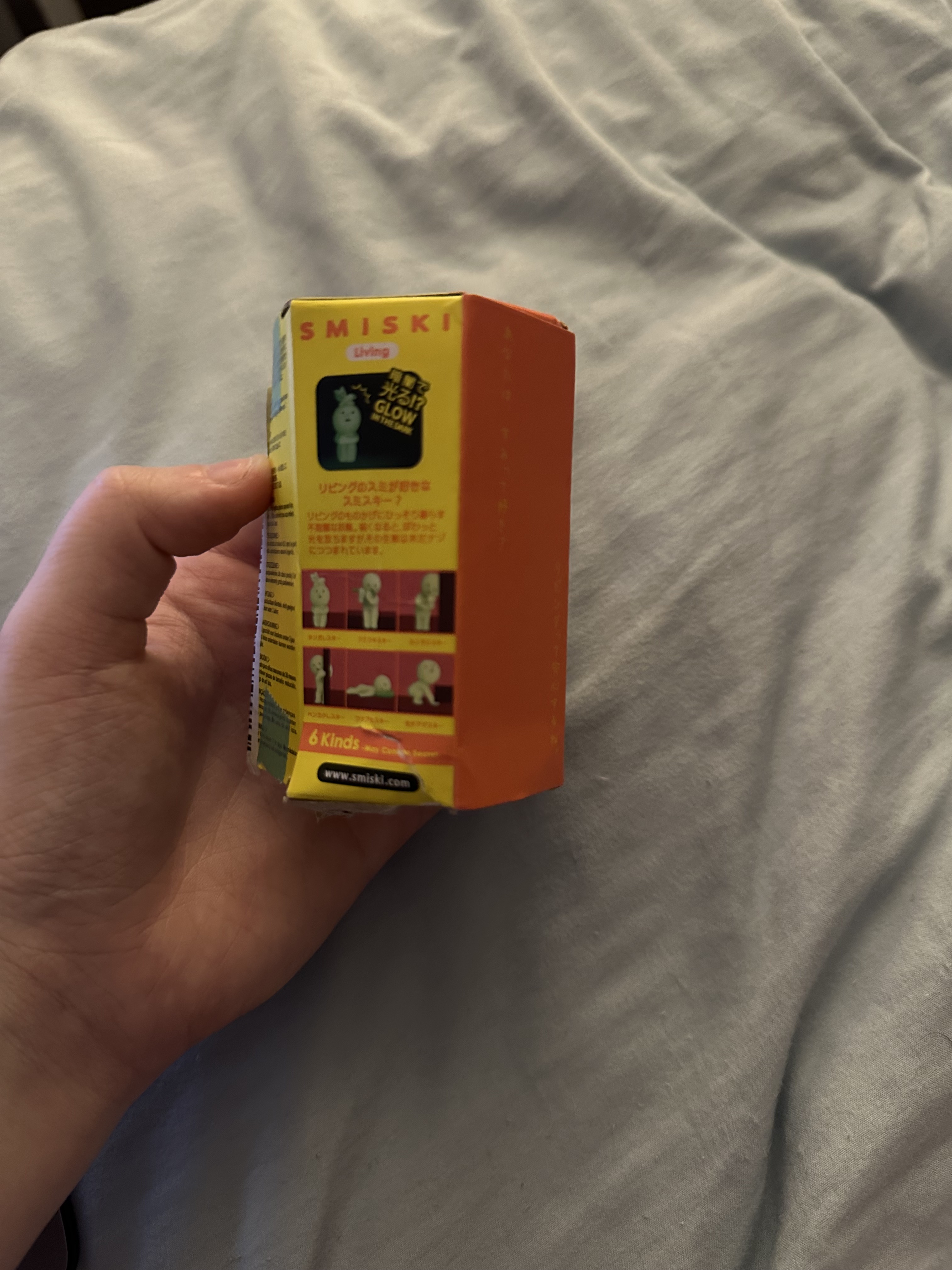
Its packaging, like its other brother and sister series, is all shaped in a hexagon. The outer layer is made with colorful cardboard describing the product and possible figures included. Standing at 3 inches tall, each panel is 1 inch wide. Within, there is a bright yellow and silver foil with the word “SMISKI” printed all over and a mini booklet showcasing all the released series by the company, Dreams. The next task is I wanted to take another look at its packaging and its journey from Japan to my hands.

Smiski, depending on where you live, is relatively hard to find in stores. Smiski was originally a Japanese goods store established in 1996. Over time, and with the major popularity of their objects, they opened a business in America and Korea. According to their website, employees get 8 hours of work Mon-Fri, with a 1-hour break, along with benefits such as transportation, salary, and social insurance. Through my research, the exact labor cost per Smiski and the production information produced by Dreams Inc. is not publicly available due to company confidentiality. However, we can speculate on likely stages of production such as mold creation, casting, hand painting, assembly, and quality control. While I was unable to find information on specific labor, I was able to find some information regarding the production of objects through the Dreams INC wholesale website. This is where my trial ended.

Credit: https://www.dreams6.com/oem/

Where I’m from, not many places sell them, and I’ve really wanted one. Amazon, the great big website itself, offered me the opportunity to purchase one! While there are many storefronts on Amazon when searching for this specific series, the only available one was from a seller on Amazon named “Japan Mart JP.” According to their storefront, they sell various toys and games. However, under Detailed Seller Information, it states that the “Business Name: Masumi Yoshikawa” and “Business Address: 8-15 Kaminagaya 6-chome Kounan-ku, Yokohama-shi Kanagawa-ken 2330012 JP.” (Amazon 2024). Moreover, looking for this information online yielded not much more info—which often seems to be a recurring case in most Amazon storefronts.

However, within these interactions and my research, another question was considered. Thinking about these mass-produced objects led to the thought process of toy production in China, especially the idea of the blind box within marketing. China’s blind box industry has successfully entered the peak of development and consumerism over the past four years. This can be highly attributed to younger generations and social media trends; for example, a mega trend and hype surrounding “Sonny Angels,” which became one of the largest blind box products of the year and caused major hype around the product through TikTok and other social media platforms. Buying and sharing blind boxes has become a new consumer trend, a trend that targets a young consumer market.

Taking a look at a report by Yuqing Yang called “Analysis on the Marketing Strategy of Blind Box,” Yang takes an approach to further explore the level of marketing and strategy of the blind box movement. They briefly discuss the overarching consequences for consumers but also the benefits for the companies themselves, even in China. Yang makes a point at the beginning of their work that I found interesting: “This trend of toys targets the young consumer market, stimulating consumers to buy and rebuy. Blind boxes’ unknowability can pique customers’ curiosity, increase their readiness to buy, better activate the market for consumer goods, and boost their potential for consumption.” (Yang, 2023).

The marketing/culture that surrounds blind boxes offers this type of relationship between online and offline stimulation for younger audiences. Blind boxes, while the plastic within is not very useful, foster an environment for young people to consume and to be noticed within a collectors’ community. The excitement of buying a box, the tension of opening the box to see if you get the one you wished for, and the reaction afterward fuel stimulation among friends and collectors. Such marketing pushes you to buy more and more, a gambling dilemma, to get the one you really want or the entire set.

Taking these products into account adds a new layer to how these products are created and consumed. I am a victim of it, buying my own fair share of Smiski’s. This leads to my next section: the journey of my Smiski itself.

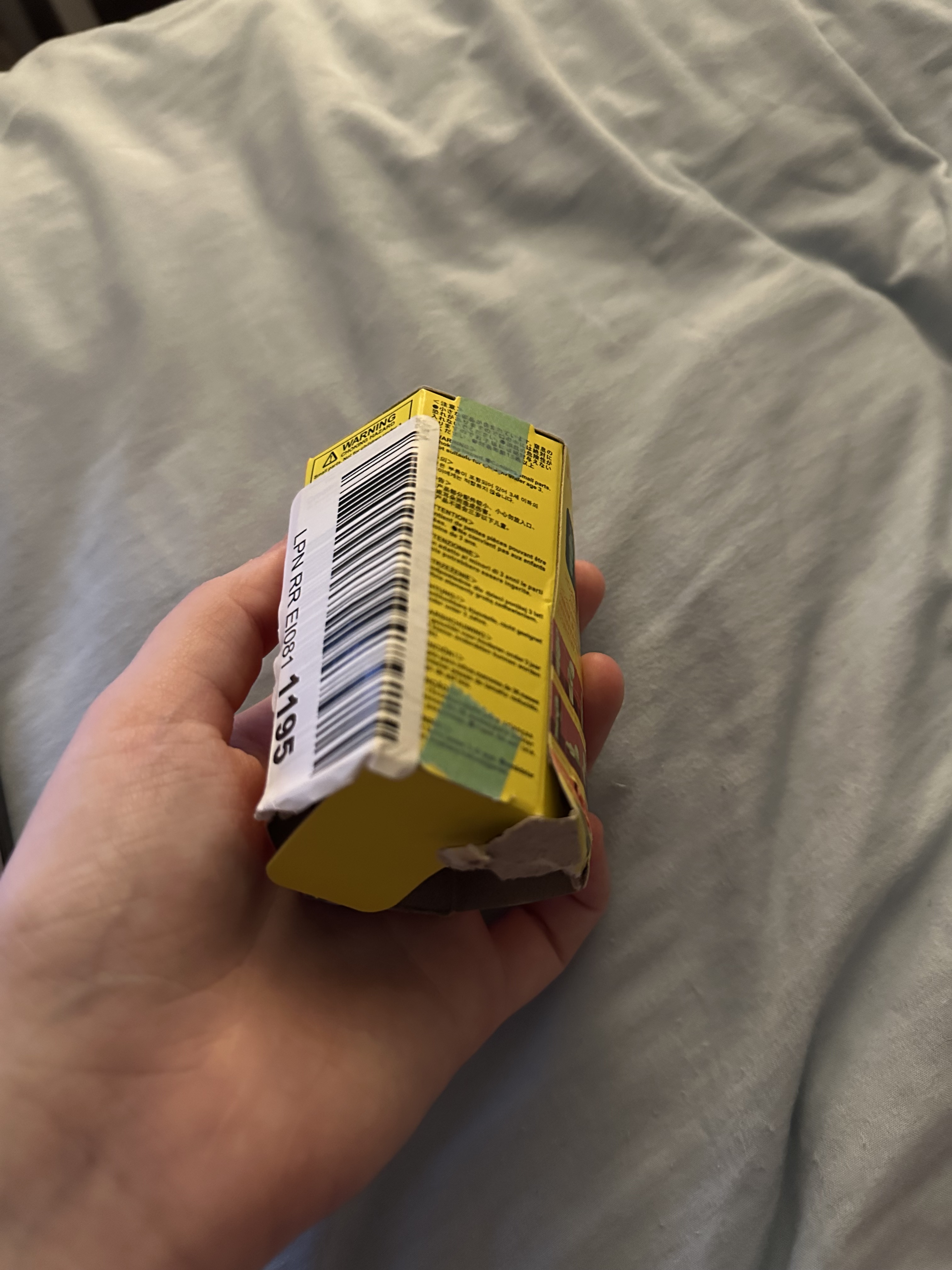
Ordered on May 22, 2024, I received my new little friend on May 31, 2024. Due to its later shipping and the location of the seller, I can only assume my new object traveled from overseas. Opening the white bubbled package, I found my new Smiski friend packaging to be covered in dents, tape, and overall unkemptness. This box certainly had a journey. Partly crushed, the box had an extra-large barcode sticker and two smaller pieces of blue tape on its sides. From this, I could determine that perhaps this box was damaged before it was even shipped. The blue tape seemed to be holding the top and bottom together. The bottom piece was completely dented in… the more I looked, the more I feared I was scammed. The possibility of this item being opened and then shipped was real. However, this was not the case; my figure and the products inside were all there, nothing missing.

So I began to think about this assignment…how did my box end up like this? Where was it sitting in Japan before an American bought it? A warehouse? I’ll never know. But I can take into consideration what the dents and damage look like, and how it traveled over 6,000 miles to get into my possession. Did the plane ride have a lot of turbulence? Is the seller too rough? Were the millions of potholes scattered around Troy, NY too much for the little package!? I’d like to think so. Maybe all along that’s why my new friend is hiding…they’ve seen so much of the world.

Works used:

Amazon.Com. Spend Less. Smile More., https://www.amazon.com/sp?ie=UTF8&isAmazonFulfilled=1&marketplaceSeller=1&orderID=114-5662527-3777048&seller=A3O3JJL0KSN0KD. Accessed 5 Oct. 2024

Inc., Dreams. “コーポレートサイト.” 株式会社 ドリームズ Dreams Inc., http://www.dreams6.com/. Accessed 5 Oct. 2024.

Inc., Dreams. “店頭販促に!オリジナルプリントが可能な『デザインモニター』.” 株式会社 ドリームズ Dreams Inc., http://www.dreams6.com/oem/. Accessed 5 Oct. 2024.

Kidrobot. “What Is a Blind Box?” Kidrobot, http://www.kidrobot.com/pages/wtf#:~:text=A%20Blind%20Box%20is%20a,knows%20which%20toy%20is%20inside. Accessed 5 Oct. 2024.

“Living.” 【OFFICIAL SITE】SMISKI, smiski.com/e/products/living/. Accessed 5 Oct. 2024.

Yang, Yuqing. (2023). Analysis on the Marketing Strategy of Blind Box. Advances in Economics, Management and Political Sciences. 27. 26-30. 10.54254/2754-1169/27/20231206.

The COROS Watch: Designed for Everyday Performance and Precision

Consumer goods can be anything from everyday necessities to luxury items nevertheless these items serve to satisfy the consumer needs and preferences. The consumer object that I will focus on is my COROS watch. 

As I started getting more into fitness and running last year, I decided to look into buying myself a running watch during Cyber Monday 2023 as a Christmas gift to myself. After much research I decided to purchase a watch from COROS, they are a “performance sports technology company that helps athletes train to be their best” (“About Us.”). I ordered the COROS Pace 2 in white with the silicone band from Amazon as they had the best deal at $179. 

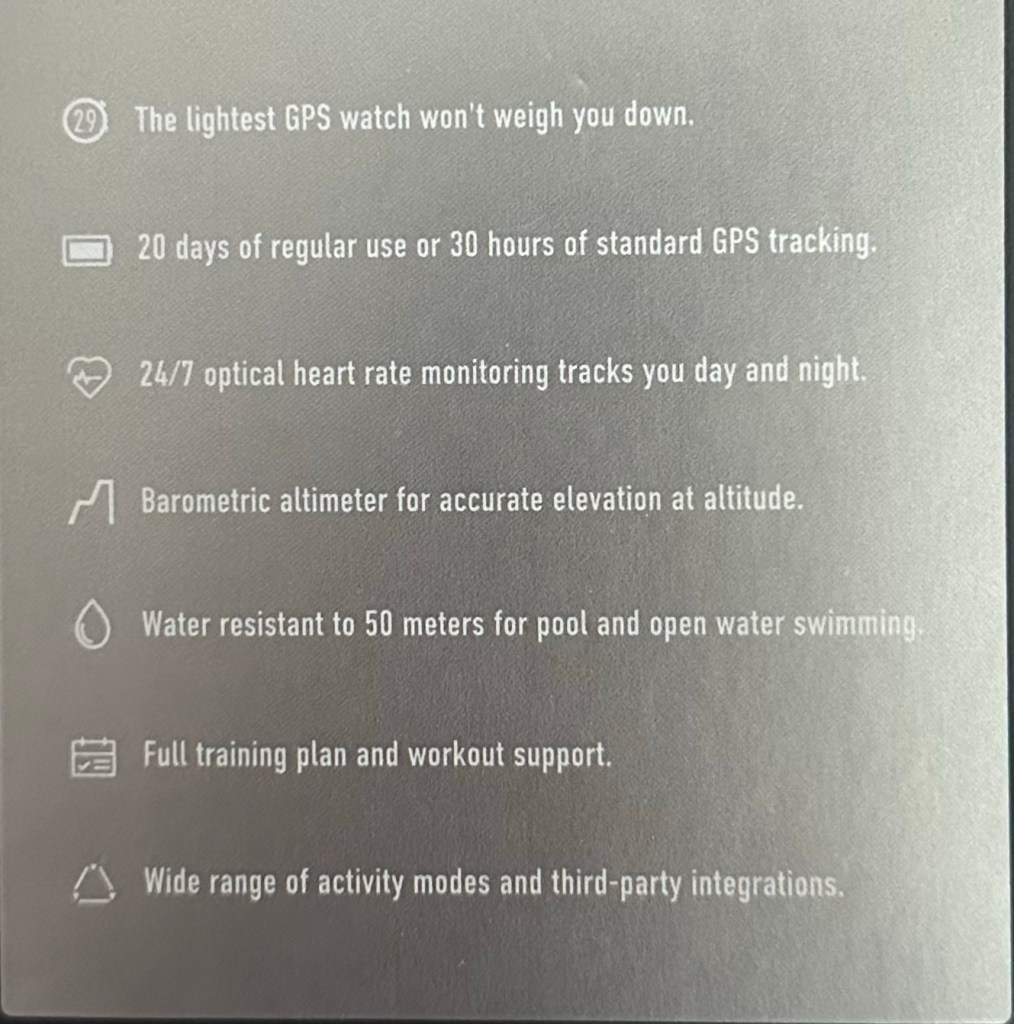
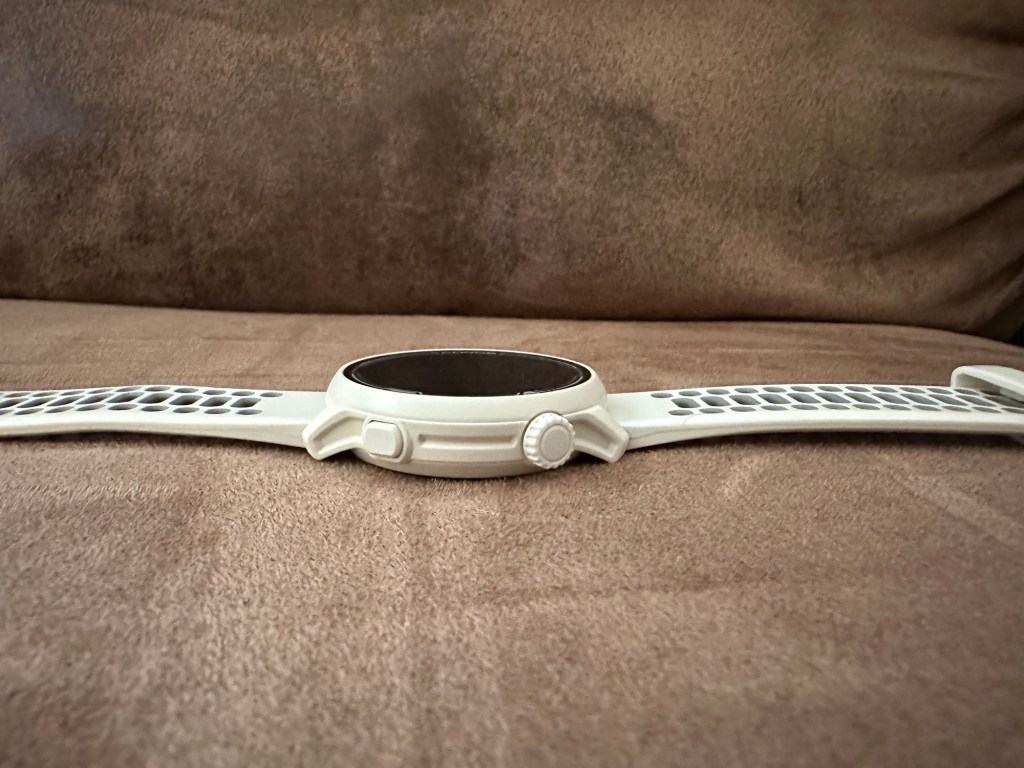
I was convinced to buy this watch because it is advertised as the “lightest GPS watch on the market” to consumers who do not want to compromise performance for a heavier and uncomfortable watch (Amazon). The lightness is an appeal. The watch dimensions are 42 x 42 x 11.7 mm with a weight of 36 grams. The screen display of the watch is an “always-on memory LCD” (“Coros Pace 2 GPS Watch.”). 

The watch is not a touch screen. The main way to access the different features is by dialing on the top right side of the screen or by pressing the button on the bottom right. The watch offers features such as GPS tracking, heart rate, sleep monitor, compass, find my phone, and fitness analytics. The watch provides a selection for specific activities like indoor running, track running, pool swimming, gym cardio, and strength training to help track activity data accurately. Once an activity is completed the data can be viewed on the COROS app which is connected via Bluetooth. 

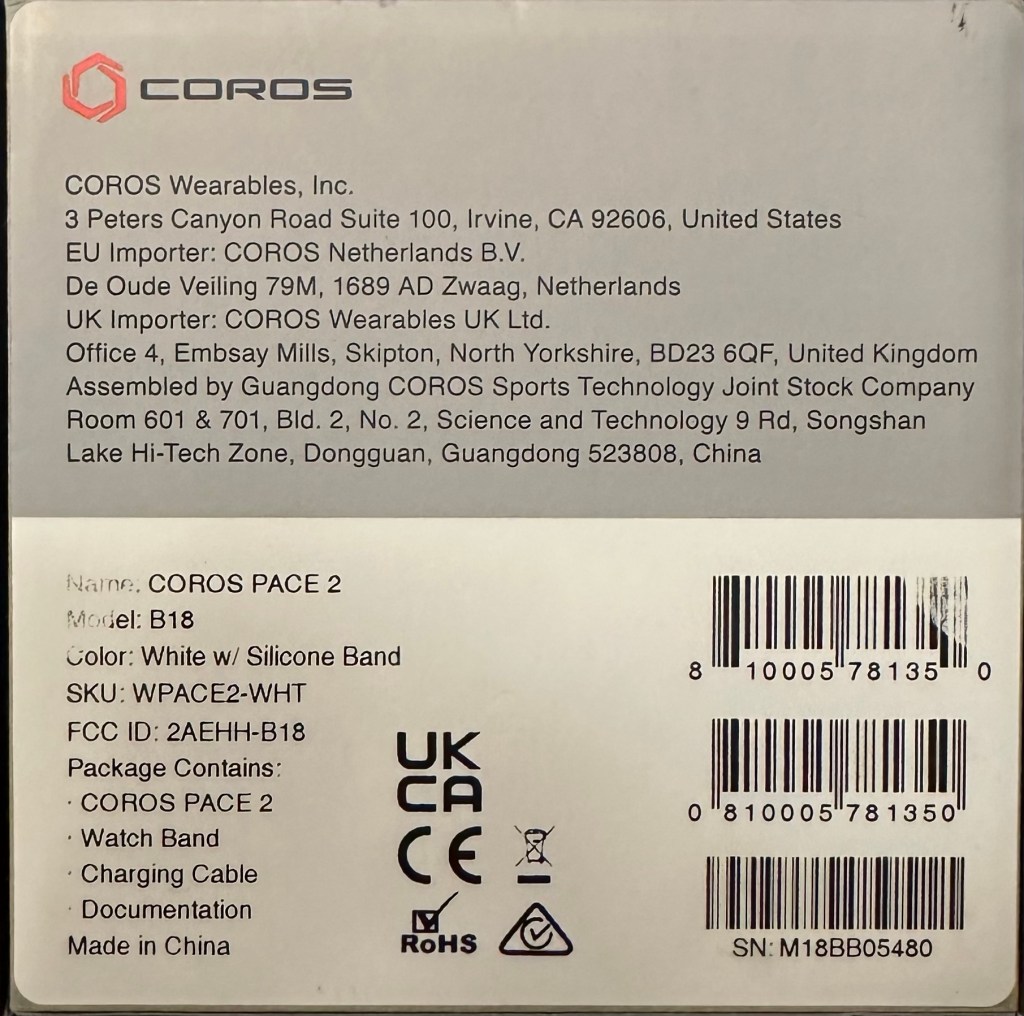
Regarding the packaging, the watch comes in a small box with a minimal design. Inside the box are the watch, the charging cable, and a user manual. The box’s design presents the brand as modern because the only design on the front is the watch itself. I feel the minimalist design aligns with what the brand stands for which is performance and innovation. 

The COROS Pace 2 was assembled by Guangdong COROS Sports Technology Joint Stock Company which is located in China. However, I could not find specific details regarding the labor required to produce any COROS products. 

Amazon sells COROS products from COROS Wearables which has its business located in California. When purchasing my watch, I chose the standard shipping, so it took seven days to arrive. The business location is approximately 2,793 miles away from my home. However, this does not take into account the country of origin which is China. Also, these miles do not account for any stops or other packages that the Amazon driver had to take throughout delivering my package. 

Now as consumers we receive a tracking link by Amazon after the distributor has shipped the item. I was hoping I would still be able to see all the tracking information from my Amazon order that contained the COROS watch, however, I think because it has almost been a year, and the product has been delivered the tracking link is no longer available. The tracking link would have provided good insight on where my package was moved onto another vehicle, as shipping a package across the country it is likely the package will be on different vehicles with different drivers. As an occasional online shopper, I feel that consumers all checking up where their packages are because we want to have our package as soon as possible.


Works Cited

“About Us.” COROS, us.coros.com/about. Accessed 4 Oct. 2024.

Amazon.Com: Coros Pace 2 Sport Watch GPS Heart Rate Monitor, 20 Days Long Battery Life, Barometer, Lightweight, Strava, Training Plan, Navigation, Sleep Track, Swim, Bike, Run, Strength, Treadmill-White Silicone : Electronics, http://www.amazon.com/COROS-Barometer-Lightweight-Navigation-Treadmill-White/dp/B08GPCZ4C9. Accessed 4 Oct. 2024.

“Coros Pace 2 GPS Watch.” GPS Watch, coros.com/pace2#:~:text=COROS%20PACE%202%20is%20the%20ultimate%20training%20partner%20for%20athletes. Accessed 4 Oct. 2024.

Dr. Bronner’s Magic All-One Chocolate

Charlie Strittmatter

Image via Dr. Bronner’s website, featuring the flavor I purchased, Smooth Coconut Praline (highly recommend trying).

A few days ago I was craving something sweet. I’ve never really been one to enjoy a chocolate bar on its own, although I always liked chocolate in baked goods or added to other things. As I have matured and gained some sense, chocolate is a commodity I am delighted to get my hands on.

I am not interested in just any brand of chocolate, but real chocolate. Certainly not Hershey’s or even Ghirardelli or Lindt. The chocolate I eventually settled on purchasing was Dr. Bronner’s Magic All-One Chocolate. Dr. Bronner’s, as a brand, is collectively most known for their long line of castile soaps, ranging in a variety of scents and forms, from liquid to solid bar. But to my surprise, they also make chocolate. As I was scanning the candy aisle in the ShopRite just up Main Street, my eyes were drawn to the bright magenta paper wrapping and silver holographic letters printed over top. I carefully scanned the ingredient list and eventually decided I was okay with these ingredients entering my body, the thing I try to keep happy the most.

Image via Dr. Bronner’s website of the ingredient list.

The reason I chose to purchase this chocolate bar over the other kinds is because of the nature of the ingredients. Each item listed (excluding the sunflower oil) was labeled as “fair trade” and “organic.” I appreciate this because it is difficult, especially now, to find things with ingredients that are sourced ethically or not sprayed with chemicals. This led me to look into where these ingredients really come from and determine if I believe Dr. Bronner’s claims.

Something that did persuade me to trust such a big company is the way Dr. Bronner’s was founded. Emanuel Bronner, a third-generation soap maker, prided himself on his push for unity and harmony among humanity after suffering the loss of both his parental figures as a result of the Holocaust. Emanuel began Dr. Bronner’s in 1948 with this as the driving force backing his brand. The central statement is written on the packaging of his products: “IN ALL WE DO, let us be generous, fair & loving to Spaceship Earth and all its inhabitants. For we’re ALL-ONE OR NONE! ALL-ONE!” Emanuel wanted to spread his message of unity and ecological fairness on his well known soaps. The company was inherited by his family and is now under the management of two of his grandsons, David and Michael, who continue to spread his meaningful message.

Returning to the chocolate itself, I began to dive into the most important part, the ingredients list. I was pleased to discover how easy it was to find the origins of most of the ingredients, as they were explicitly listed on the Dr. Bronner’s website. The cocoa beans are harvested from a large farm in West Africa, specifically Ghana, where the workers seem content with the job they are doing based on the feel-good video provided on the Dr. Bronner’s website. Slightly south and further east is where the cocoa butter is sourced, from the Democratic Republic of Congo. In combination with these chocolate products is the sweetener, the coconut sugar, which has come from across the Indian Ocean, Indonesia. A little flavoring of vanilla brings us back closer to the cocoa, from Madagascar. I was unable to find the source of the sunflower seed oil, which I am slightly disappointed about since it was the only thing in the ingredients list without being labeled as “fair trade,” but still as “organic.”

All of these components are then (most likely shipped by plane or boat) brought together in the perfect ratios in Switzerland, the masters of chocolate in my opinion. From there, I can infer the bars are then sealed up in their thin silver foil, rolled in brightly colored packaging (which is made from 100% recycled paper), and sent over to the Dr. Bronner’s headquarters to be distributed to the masses. Their headquarter resides in, you guessed it, none other than California, more specifically, in a city called Vista. Domestic shipments across the United States land the chocolate bars in their semi-final resting place. I am unsure of how ShopRite receives their products, but I can imagine they get scheduled shipments of inventory to display on their shelves.

From the company executives, to the foreign farmers, then to the shipping workers, passed onto the skilled chocolatiers, shipped to the store retailers, and finally, in the hand of the consumer (me), this chocolate has traveled more than I have and most likely ever will in my lifetime. Now, the chocolate bar is sitting in my dorm room fridge, half eaten but thoroughly enjoyed.

Works Cited:

“Smooth Coconut Praline – Dark Chocolate Bars.” Dr. Bronner’s, www.drbronner.com/products/coconut-praline-pack-magic-all-one-chocolate.

“Dr. Bronner’s Magic All-One Chocolate Bars – Dark and Oat Milk.” Dr. Bronner’s, www.drbronner.com/pages/magic-all-one-chocolate.

“Dr. Bronner’s | Who We Are | Our Cosmic Principles.” Dr. Bronner’s, www.drbronner.com/pages/about.

My Stuffed Shells- ShirEl Wolfstein

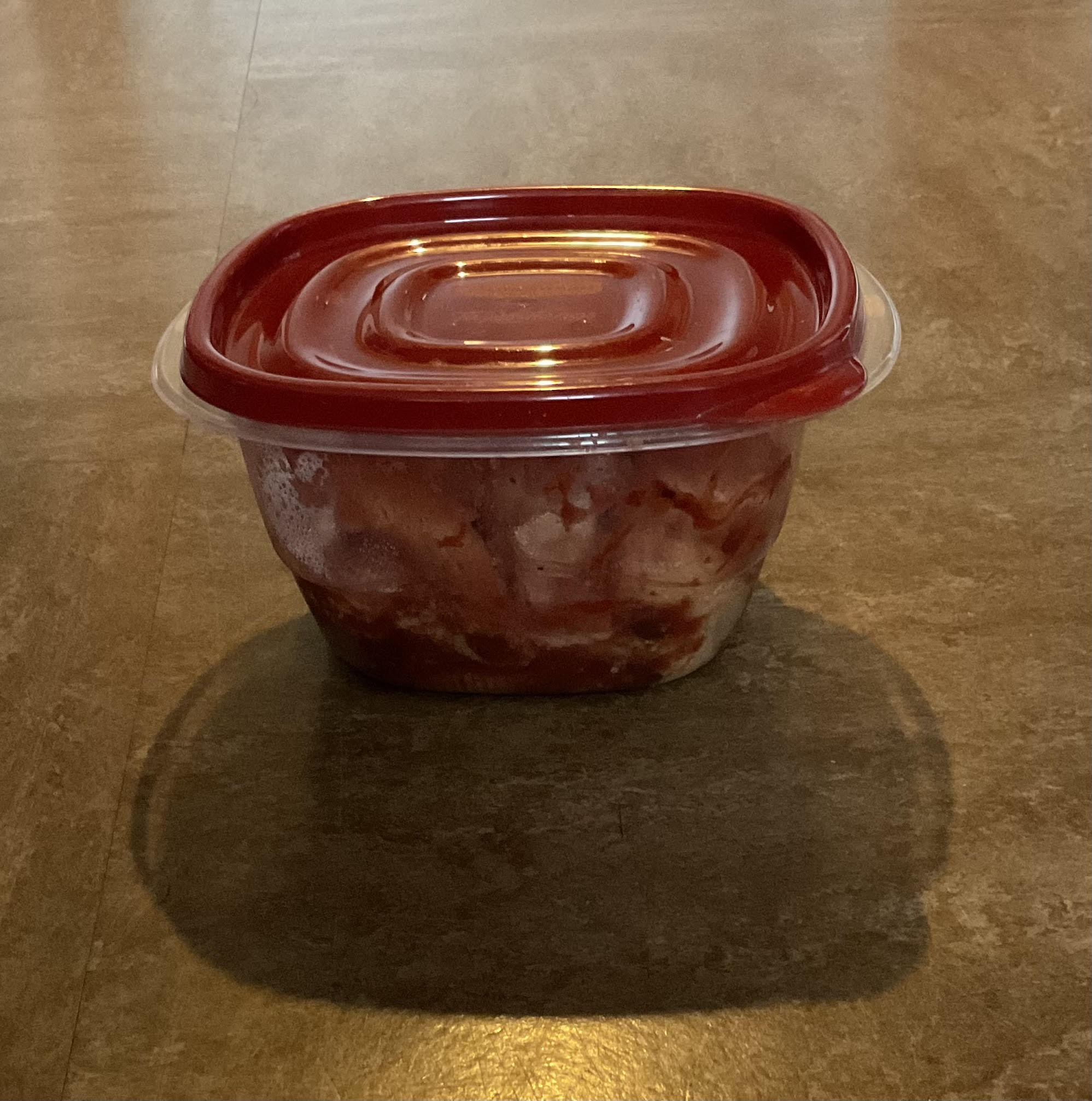
A container of stuffed pasta shells seemed a bit like an obscure choice even to me, but it breaks down well. Starting off one step back up the supply chain, my best friend, Gabby, made this meal for me while I was at home because we always talk about cooking for each other. She is Italian-American, and so the recipe she uses comes from her grandmother from Italy, to whom she credits many of her skills and recipes. To split the object into different components, I thought about the pasta itself, the cheese, the sauce, and the container she gave it to me in.

As for the pasta, she tends to buy things from the grocery store she works at locally, Hannaford’s, and the company she usually purchases from and prefers is Prince, although she had to buy Borilla this time with she says herself was “very saddening.” The sauce is completely made by her save for growing the tomatoes, which she bought from the company named Tuttoroso. She spices the sauce and makes it on the stove herself, giving it a full day to cook with the utmost care.

The cheese is Galbani ricotta cheese in a 32-ounce container and the same brand of mozzarella in their pound-size brick. Locatelli pecorino is added from a block of around 8 ounces, 4 of which are used each time. Both the mozzarella and pecorino are hand shredded, the mozzarella with a handheld grater and the pecorino with a cheese mill from her grandmother herself. 

The container is a plastic to-go container, manufactured by Rubbermaid in their TakeAlongs line. The container itself is made of transparent, mostly inflexible plastic, and the cover is a deep, vibrant red made of opaque plastic. The container tapers slightly towards the base but the overall shape is square with the corners being rounded for easy cleaning. On either side of the container, the transparent plastic extends past the seal of the lid in order to provide a safe place to hold after heating. This particular container size is marketed as their 5.3 cup size, despite its capacity being listed as 5.2 cups. The dimensions listed on the Rubbermaid website for the medium square size container are ‘6.372 by 6.982 by 4.125’ and by itself weighs .32 pounds. 

While Rubbermaid produces some 80% of their products domestically, food-grade containers with pull-off lids are not produced in the US, and are manufactured elsewhere, though Wikipedia says the opposite. It is not disclosed specifically where the TakeAlongs are made, but some say China. 

All in all the products themselves have to travel far, but the already-made dish was placed right into my hands by my caring friend who loves to see me well-fed and taken care of. 

https://www.rubbermaid.com/food-storage/everyday-use-containers/takealongs/takealongs-medium-square-food-storage-containers/SAP_2086707.html 
https://allamerican.org/investigation/rubbermaid/

https://allamerican.org/investigation/rubbermaid/

The Making of Sealie

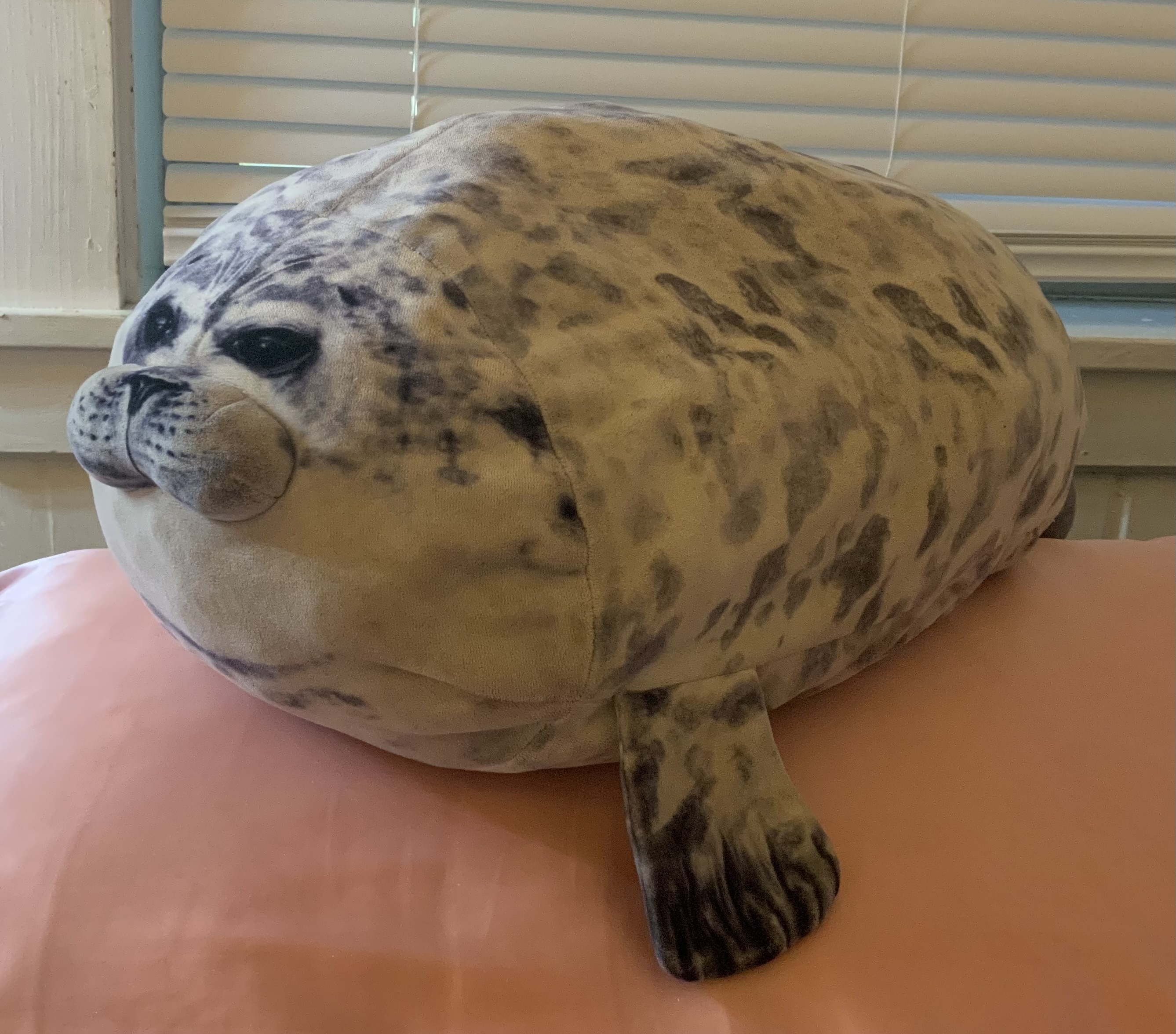
The object I decided to look into the making of is my beloved stuffed seal, Sealie. I received Sealie from my mom at the very beginning of Covid in 2020, after she saw him on Amazon and thought I’d enjoy his silly design. He quickly became my close companion during quarantine, coming to and from the couch and my bedroom with me, and even accompanying me in the backyard when I’d venture outside. During a difficult time, he was a comforting presence. 

Sealie

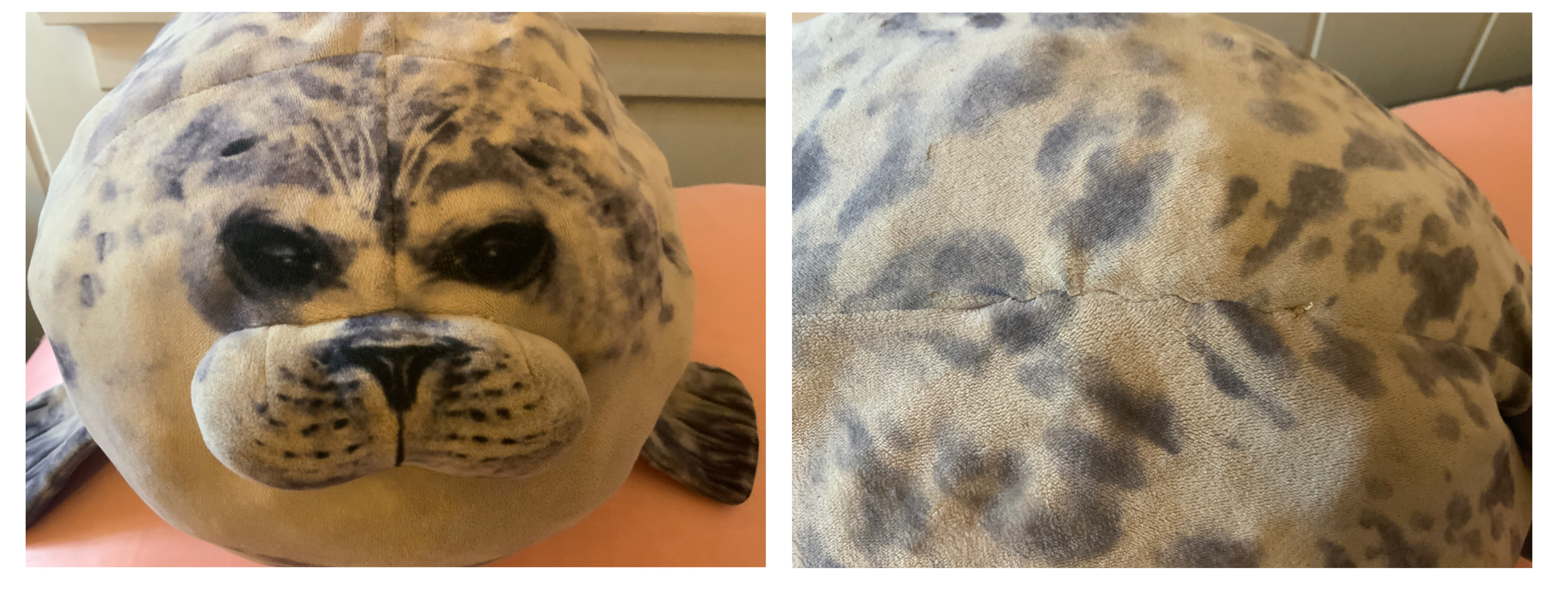
While attempting to begin my research about Sealie, I realized that it may be harder than I first thought to narrow down exactly where he came from, considering he has no tag. Also, his design is incredibly mass produced amongst many vendors. The first thing I noticed when searching him up on Amazon was the various different brands and vendors that sell him. How could I know which one he was specifically from? Well, I couldn’t. However, the majority of vendors have his materials listed as a cotton and polyester mix on the inside and outside. As well as this, and most importantly, almost all of his producers are from China. 

80% of China’s cotton is supplied by the Xinjiang region in northwest China. The cotton is typically planted from April to June, and harvested from September through December (Cotton Outlook). The Xinjiang cotton industry has had many allegations against their production methods, with claims of forced labor and other human rights violations. This caused many United States companies, such as H&M and Converse, to pull back from importing their cotton from the Xinjiang region (Asia Media Centre). However, this cotton is most likely the type that is found in many finished products the U.S. receives from China, such as my seal plush. Now, let’s take a look at polyester. China has been using coal to make polyester fiber, as a fairly new way of production. Coal is abundant in China, and with advancing technology it has become an increasing means of producing chemical and synthetic materials (C&EN). Processing of polyester is mostly done in Zhejiang and Jiangsu. The mass production of polyester in these regions contributes to China’s place as the largest polyester producing country in the world (Fibre2Fashion). 

After figuring out where Sealie’s materials most likely came from, I started to look into the technical aspects of mass producing stuffed animals specifically. After Sealie’s birth place (or factory) had received the polyester and cotton materials needed to make him, such as his stuffing and outer fabric, the first step would be cutting the fabric into the seal shape. There are many ways factories could cut fabric, but Sealie’s fabric was most likely cut by a fabric roll cutting machine. It’s possible that his factory also had individuals cutting the fabric manually, but it’s unlikely considering the fabrics thin quality, which would make it easy to cut by machine, and because this specific plush design is common and popular. Then, the pattern needed for Sealie would be printed onto the fabric. Sealie’s print is evidently digitally printed, shown by the grainy image that are his eyes and snout. After printing, the fabric is sewn together by individuals using sewing machines, leaving a small opening which is then used to put the stuffing into the “skin”. Finally, the small opening is hand sewn together (Maple Eye Toys). On Sealie, you can actually see exactly where he was hand sewn, because one of his seams has a section that isn’t as linear as the others. 

Sealie’s digitally printed face and hand sewn seem

One step of Sealie’s making that I haven’t mentioned was how he was designed. In the process of researching, I learned that Sealie and another popular white seal plush usually sold alongside Sealie are actually based on real seals located in the aquarium of Osaka, Japan. Sealie’s design is based on Yuki the harbor seal, and the other seal is based on a white ringed seal named Arale. This process of research has taught me a lot about the stuffed animal I hold so close to me, and this bit of information is the most heartwarming for sure. 

Yuki the Seal

Works Cited

“China Country Page”. Cotton Outlook. https://www.cotlook.com/china-country-page/. 4 October 2024.

“Polyester made from coal? China is betting on it”. Chemical & Engineering News. 6 March 2023.  https://cen.acs.org/business/petrochemicals/Polyester-made-coal-China-betting/97/i3. 4 October 2024.

“Step-by-Step: How Manufacturers Navigate Mass Production”. Maple Eye Toys. 27 July 2024. https://mapleeyetoys.com/plush-manufacturers/. 4 October 2024. 

“Surplus Polyester Production in China”. Fibre2Fashion. https://www.fibre2fashion.com/industry-article/7406/surplus-polyester-production-in-china. 4 October 2024. 

 “Xinjiang cotton: what’s the controversy?”. Asia Media Centre. https://www.asiamediacentre.org.nz//features/xinjiang-cotton-whats-the-controversy. 4 October 2024. 

A New Sweater

As our fall season has come upon us, it was time for another shopping trip for clothing. Just last week I visited the Poughkeepsie Galleria to gain new cozy and comfortable outerwear in anticipation for the cold weather. One of my favorite stores to visit is American Eagle. Luckily for me as I walked by the store, my eye caught their new fall collection. As I entered the store, I had the idea of wanting new sweaters. Not that I don’t already have twenty in my closet, but as a consumer I want to own what the latest fashion is. I would say I was quite satisfied with the assortment considering I walked out with four new items of clothing, one being this sweater. As I felt through the material of each item as I walked by, this sweaters texture felt as if it would keep me warm on a snowy day. Even though I would have to wait to wear this sweater until December, given that it is 70 degrees in October, I felt joy in purchasing it. I find comfort in what I wear and how it represents my personality to others. As I have grown older, being able to express myself in clothing makes me feel good about myself.

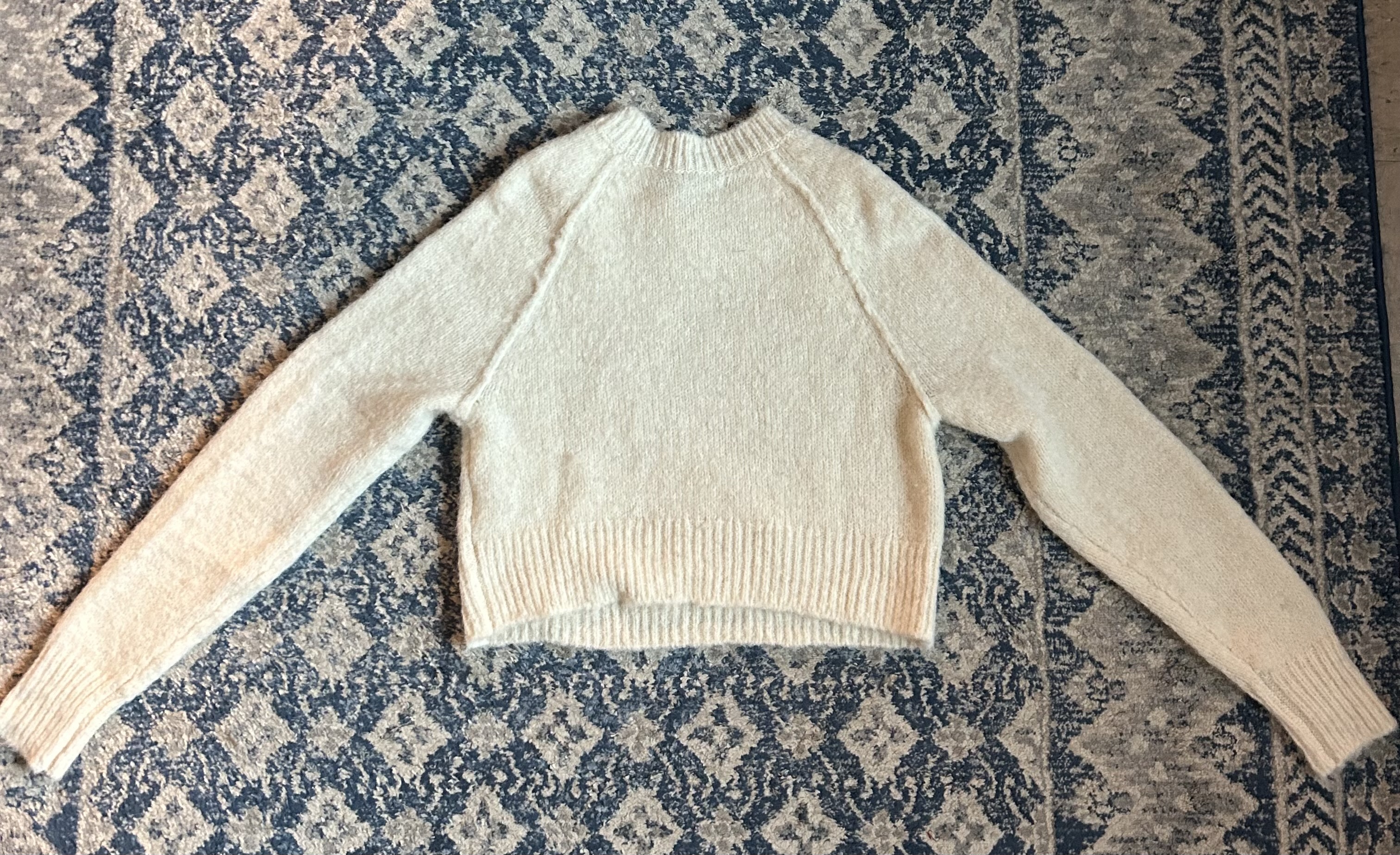
This sweater, soft at the touch, was made with 74% polyester and 26% nylon. It is a cream soft sweater knit with ribbed cuffs, neckline, and hem. The 3D bow detail, my favorite of the sweater, was sewn onto the fabric. From the neckline to the base, it measures 18 ½ inches long and 16 ½ inches wide and each sleeve measures 31 inches long and 5 ½ inches wide. As I was looking on the American Eagle website to gather more product information, the product details said that the item has a “Real Good” badge. On the website it says, “Products with the Real Good badge are the most sustainable items in our collection.” American Eagles goal is to make their clothing with an inclusive dedication to decrease the environmental impact of their products. It also expresses on the website that “this includes incorporating more sustainable raw materials, lowering our carbon footprint, and reducing our water use.” Because this sweater is made from recycled polyester and nylon, it makes use of waste, promoting recycling processes that help prevent polyester and nylon from ending up in landfills. Opting for recycled polyester and nylon over virgin reduces our reliance on chemicals derived from fossil fuels. The sweater was also made from natural dyes that are a “plant-based colorant alternative that reduce our dependence on synthetic chemicals.”

American Eagle clothing is not made in the USA. From the tag on the inside of the sweater, it says it was made in China. Under the Materials and Care section of the description it says “imported.” American Eagle partners up with factories in countries worldwide such as China, Vietnam, Mexico, Thailand, and Indonesia. This means their clothing travels a long way from where it was manufactured. The labor is substantial within creating clothes for a company this size. It makes us consumers appreciate the sustainability that goes into producing the items. American Eagle is always producing new seasonal collections to catch the eye of consumers such as myself. Their goal is to make clothing that is trendy yet casual and comfortable. As shown on their website, they are promoting a clean, ultra-flattering look that is appealing to buyers. They will continually entice consumers with sale prices online that you would not get in stores. Even though I bought the sweater in person at full price which was $49.95, it is now on sale for $15 less online. This intrigues me to check the website next time to view all of their sale items. It is all a ploy to buy more of their apparel the next time I choose to shop.

Works Cited

“AE Cropped Crew Neck Bow Sweater.” American Eagle Outfitters, 2015, http://www.ae.com/us/en/p/women/sweaters-cardigans/sweaters/ae-cropped-crew-neck-bow-sweater/0348_1373_106?menu=cat4840004. Accessed 2 Oct. 2024.

‌ “Where Is American Eagle Clothing Made? – AllAmerican.org.” Allamerican.org, 25 July 2023, allamerican.org/investigation/american-eagle/. Accessed 2 Oct. 2024.

Sustainability – AEO Inc. www.aeo-inc.com/sustainability/. Accessed 2 Oct. 2024.