“Sparking” Emotion

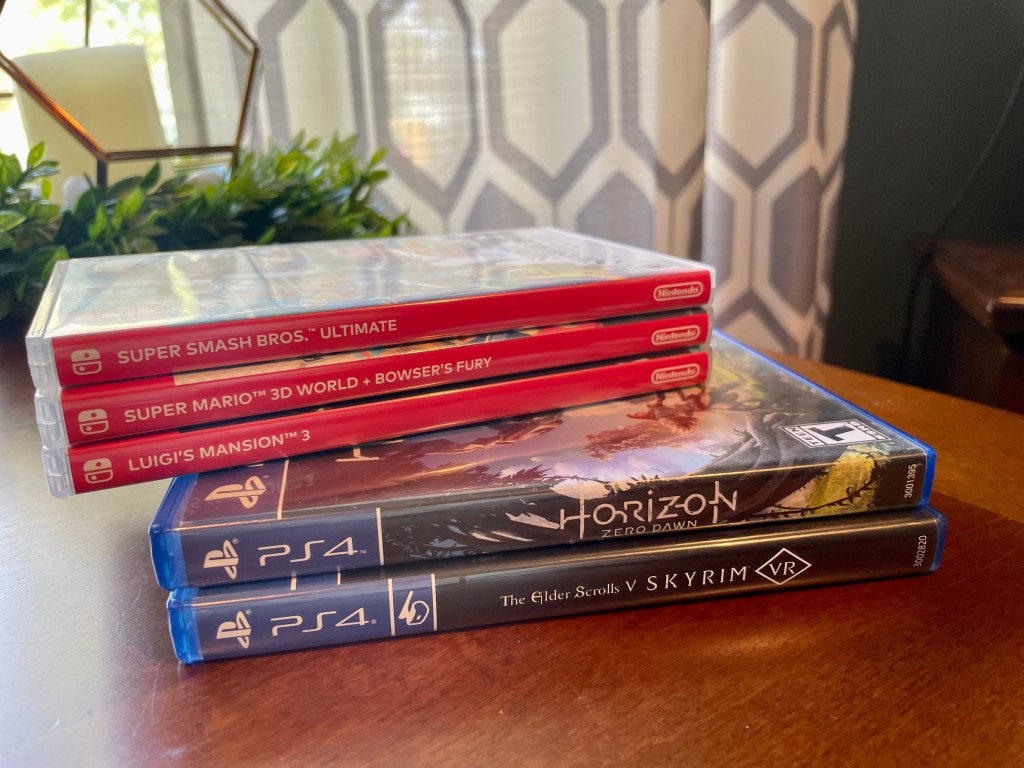
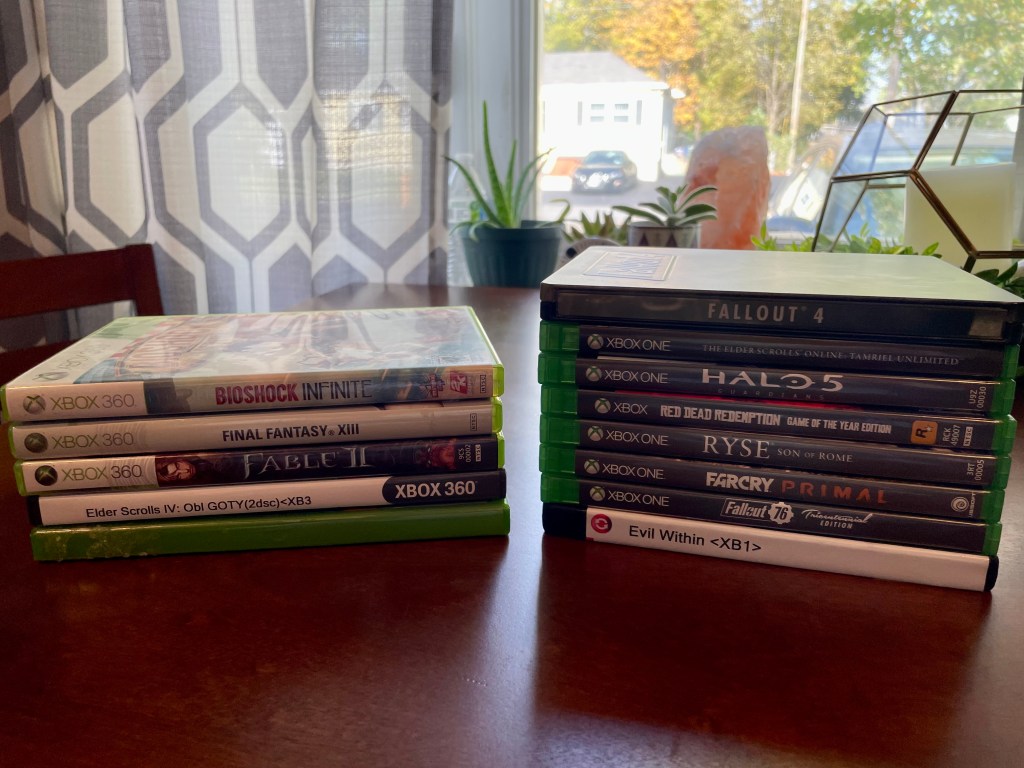
Marie Kondo’s “joy test” is one that seems extremely simple in theory. In practice, it is a bit more complicated. While the categories of clothing or books could have been sorted through, I felt this “joy test” should be done towards objects I feel more connected to, and so I chose my video games. I have several consoles and have purchased and been gifted many games over the years. I have played several of these games multiple times over and have spent countless late nights playing others with friends. I started with ten Xbox 360 games, thirteen Xbox One games, one Xbox Series X game, eight PlayStation 4 games, one PlayStation 5 game, and five Nintendo Switch games, for a grand total of thirty-eight video games across six consoles (not counting those that are still at my childhood home). If you can’t tell, I am more of an Xbox fan than a PlayStation fan!
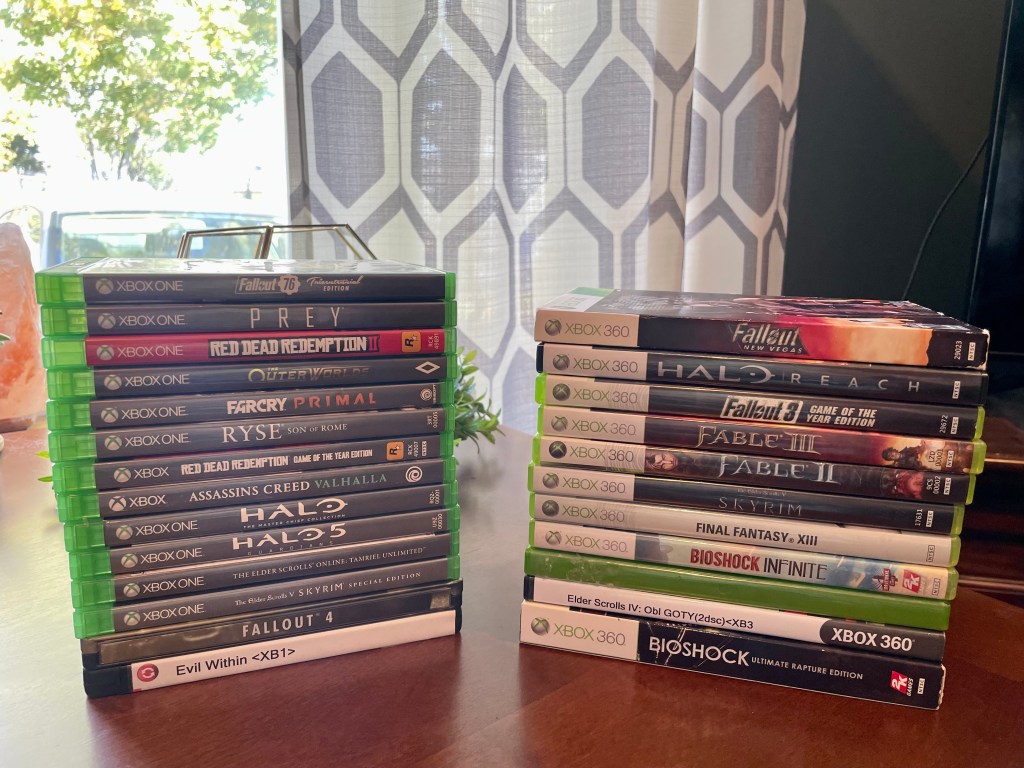
Sorting through my video games was not as difficult as I expected but I was surprised by some of the choices I made. I expected that every game I own in the “Fallout” franchise would “spark joy” – even those I would rank lower on my list – but that was not the case. Both Fallout 4 and Fallout 76 were put into the “discard” pile. I was surprised by this because I love the “Fallout” franchise in its entirety – I have replayed Fallout 3 and Fallout: New Vegas numerous times and have played Fallout 4 twice. Fallout 76 had its drawbacks, but I enjoyed the time I spent playing with my friends discovering a new post-apocalyptic wasteland. Fallout 3 and Fallout: New Vegas, on the other hand, both caused immense joy. Not only was I flooded with memories of all the different times I have played the game, but I was also reminded of the passion I have for these games – how much knowledge I have of the characters, the setting, and the quests. Certain video games “sparked” conflicting emotions within me. If you know anything about The Last of Us and The Last of Us Part II, they are not feel-good games, especially the most recent installment. Yet, when I held the games in my hand, I found myself yearning to go back into the cordyceps-infected world that Joel, Ellie, and Abby lived in. I wanted to relive the experience that playing those games was – even if it meant going through the five stages of grief all over again – solely because of the deep emotional connection I formed with the characters. I felt the same way about Death Stranding – a game I consider to be a work of art. The Last of Us Part II and Death Stranding both had me sobbing uncontrollably at certain points, and yet I love the games so dearly for the journeys they took me on and the lessons they taught me. So, while these games did not “spark joy” per se, they did illicit a strong emotional reaction. There were, of course, games that received a dull reaction from me. One I was surprised by was Skyrim: VR. Skyrim is tied for my favorite video game of all-time and I was in awe at how well-done the virtual reality version of the game was. However, all I could think about was the awful headache I got every time I played the VR version, and into the “discard” pile that version of the game went.

At the end of this “joy test,” I had “kept” six Xbox 360 games, five Xbox One games, one Xbox Series X game, six PlayStation 4 games, one PlayStation 5 game, and two Nintendo Switch games, for a grand total of nineteen games – exactly half of what I started with.
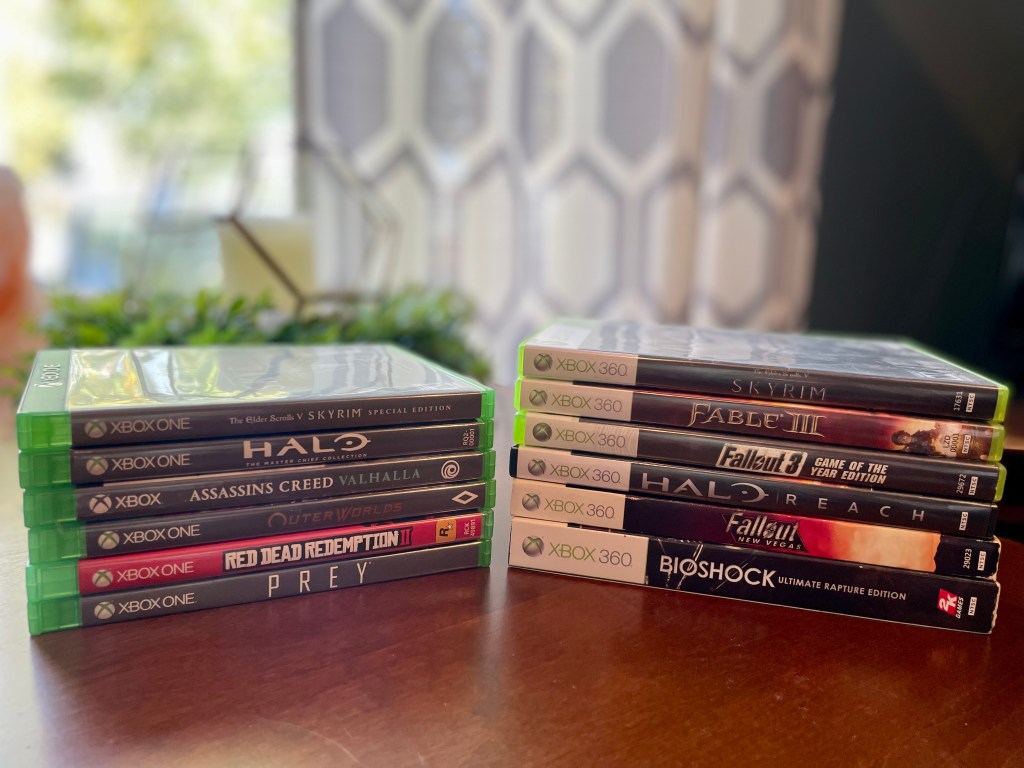
This exercise was very revealing and taught me a lot about my relationship to objects. For example, the two games from the “Fallout” franchise I chose to “keep” were the Xbox 360 games. Fallout 3 and Fallout: New Vegas were released in 2008 and 2010, respectively – they are both over a decade old and the graphics of Fallout 4 and Fallout 76 (made for Xbox One) far-surpass both games. Why did I choose to “keep” two games that are so old they can barely be played on my console without it crashing? Memory and emotion. Even games such as The Last of Us Part II and Death Stranding – whose poignant stories led to heartbreak and tears – I find great value in due to the way playing them made me feel.  This exercise taught me that I place the most importance on objects that I either have fond memories with/of, or that cause me to have a strong emotional reaction. Almost every game I chose to “keep” I could subcategorize into “games that I have fond memories of” and “games that made me deeply feel things, good or bad.” When I think of other objects I own, I see that same pattern repeating – even with my clothes! Overall, I found Marie Kondo’s “joy test” to be an enlightening and “joyful” experience and I believe many people can learn about themselves, and their relationship to their things, if they try the “joy test” themselves. 
The History of My Violin

ImageImageImageImage

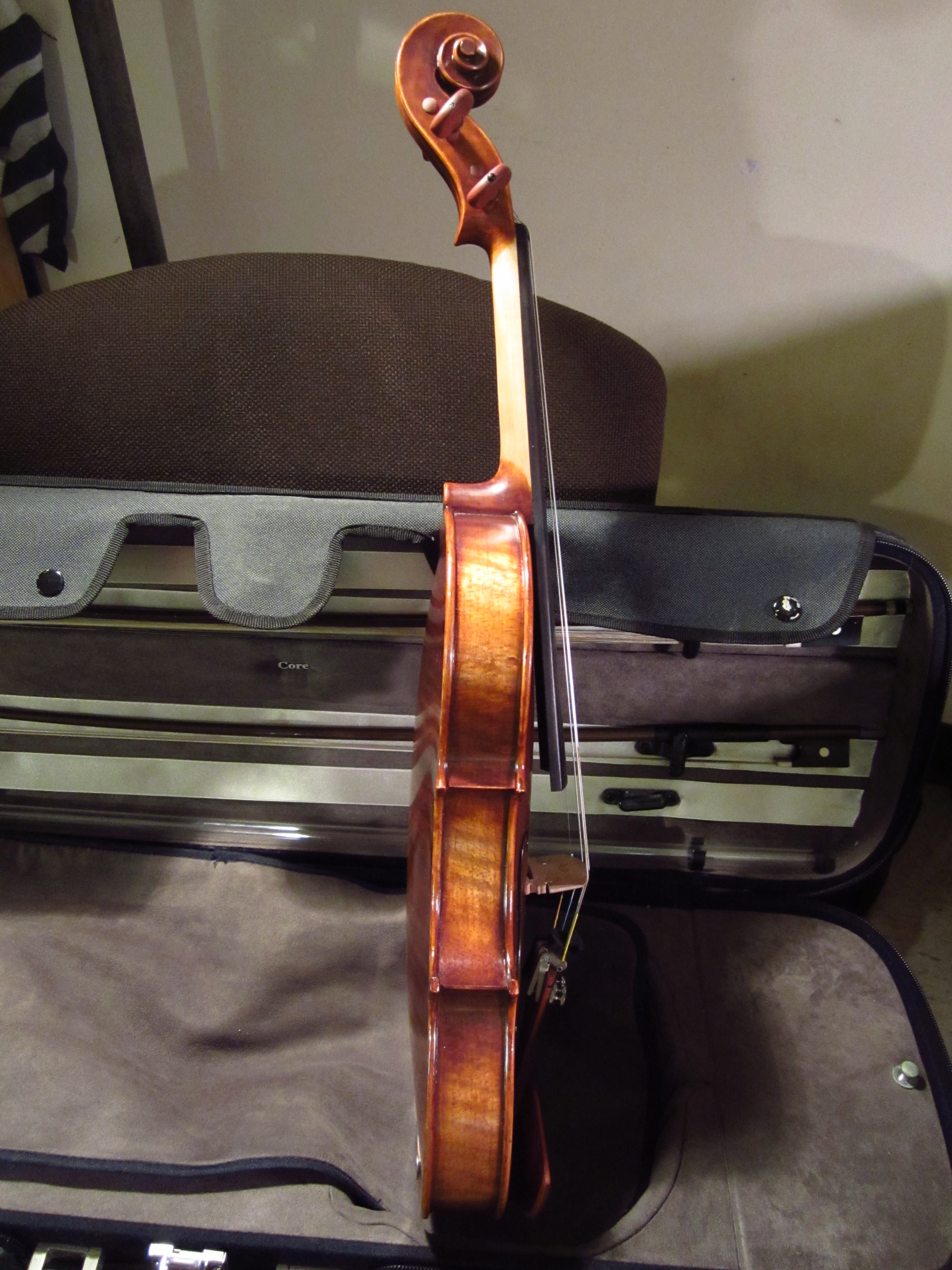
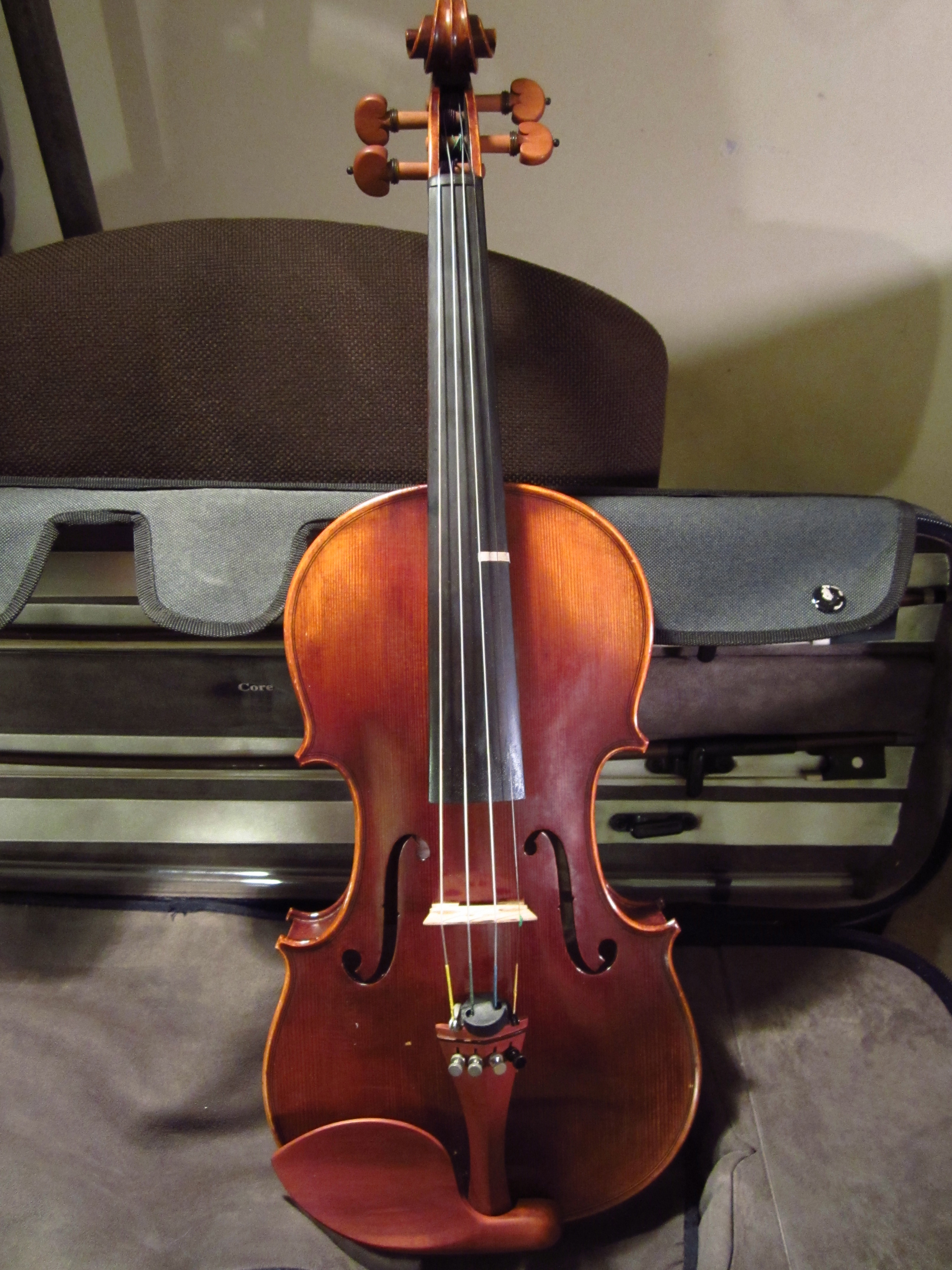
This is my violin. It is a standard 4/4 size, which is roughly 24 inches in height, and about one and a half inches thick. The body has a curved structure, much like the body of a woman. The bottom of the body is widest at 8 inches, where it graciously curves inward to about four and a half inches, and curves outward again to about six and a half inches. On the lower left (facing the violin) of the body you will see a circular wooden chin rest of about four inches. You will see another piece of wood about four inches long which holds the four metal fine tuning gears which keep the strings in place. On the front of the body, on either side of the strings, there are two f-holes about three inches in height through which the sound emerges. There is a wooden bridge about an inch in height and half a centimeter in thickness, which holds up the four strings. Two inches above the bridge, there is a black wooden fingerboard, which extends about eleven inches up the violin. The top five inches of the fingerboard constitutes the neck of the instrument, and above that you will see four pegs, two on either side, which hold the four strings. These pegs, when turned, will pull the string tighter for a higher pitch, or ease them for a lower pitch. At the very top of the violin is an elegant spiral curl, which is most evident of the fine craftsmanship of its creator.

This instrument is a dark honey-colored brown, with vertical grains running across the front of the body, and fine horizontal “ribs” can be observed on the back of the body. The strings are made of steel, and vary in thickness for different sounds. The left most string (G) is thickest, and each string gets progressively thinner until you get to the right most string (E), which is thinnest and produces the highest tone. About four and a half inches up the fingerboard, there is a small white piece of tape. This is to mark seventh position, and it was put there by my ninth and tenth grade Orchestra teacher, Mrs. Sckipp. The bottom half of the body has three small nicks, which were all put there by myself, accidentally. Each one is from my bow, which sometimes smacks against the body of the violin while I am carrying it around casually. It is fragile and surprisingly light in terms of weight, as the body is hollowed out.

Although the first stringed instruments came about in the 9th century, the violin has only been around since the 16th century. It first emerged in Northern Italy and spread throughout Europe. These instruments were handmade for hundreds of years, until the 1940’s when they begun being factory produced. The quality of the instruments suffered from the lack of care put into their creation, and since then there have been some manufacturers who have decided to use the conventional, hand-made method, which gives each instrument a unique look and tone.

My violin was handcrafted by a violinmaker under the training of Andreas Eastman of the Eastman String Company. Qian Ni founded Eastman Strings in 1992 after he moved to the United States from China. He gathered a group of talented violinmakers in order to begin his business, and has since built a very reputable reputation. This particular violin was made in 2004, and eventually ended up at a violin dealer by the name of Laurinel Owen, who works out of The House of Strings, in Bellport, New York. This beautiful instrument found its way to me in the summer of 2006, just before I entered the seventh grade.

I had been playing violin for about four years when my parents decided to grant my wish of getting my own, brand new violin. The instrument I had been using was my sister’s old, cheap violin that was most likely factory made because its quality was quite poor. When I arrived at the home of the dealer, there were 6 beautiful violins laid out before me and I was asked to choose which I wanted. After careful consideration, I chose this particular one, and my parents purchased it for $1100 as a gift to me. I was ecstatic.

This violin has been with me through years of practicing, auditions, and concert performances. It was with me as I played my first NYSSMA solo. It felt me tremble as I nervously prepared to perform in front of a judge for the first time. It was with me for all twelve seating auditions for concert and symphonic orchestra. It was with me as I played Christmas carols for a group of elderly folk at a nursing home. It has accompanied me through numerous school concerts, and has resonated vibrations to the tune of Brandenburg’s Concerto No. 3, Barber of Seville, Schubert’s Unfinished Symphony, Beethoven’s Scherzo Movement, and many more. This violin has felt the misplacements of my fingers, and screeched at me in poor intonation so that I might learn the proper placements. It has resonated with a deep, full, powerful voice as I learned how to help it sing.

This marvelous instrument has not only generated a sound for others to enjoy, but has also acted as a de-stressor for myself; it has allowed me to unwind and forget about the troubles that silence often brings. This violin may not have a very long history, or travelled through many different hands, but that does not mean that it will not create history. I intend to pass this instrument down to my children, and grandchildren, in hopes that it will journey through the lives of many more, creating memories and history as it travels through the ages.