A Common Thread: the Needlebook

From the onset of this seminar, I have been focusing on needlework and its significance in women’s history. In a patriarchal culture such as existed in early America, the voice of women was ignored and silenced by the dominant goup: white men. Women used the medium of needlework as a voice with which to express themselves in a society where they were not encouraged to do so. The creation of needlework serves a means to connect a woman with her mother, her daughter and her female community.

I chose an antique needlebook as a material object of interest for my blog post, dated 02/01/13. A subsequent blog post (dated 02/15/13) discussed the evolution of the needlebook from the 19th century until today. For my final project, rather than writing about material objects, I have chosen to make two needlebooks which will be applied to my BFA thesis work in printmaking.

sketch A sketch for the needlebook design.

mock up A full-scale mockup in cardstock.

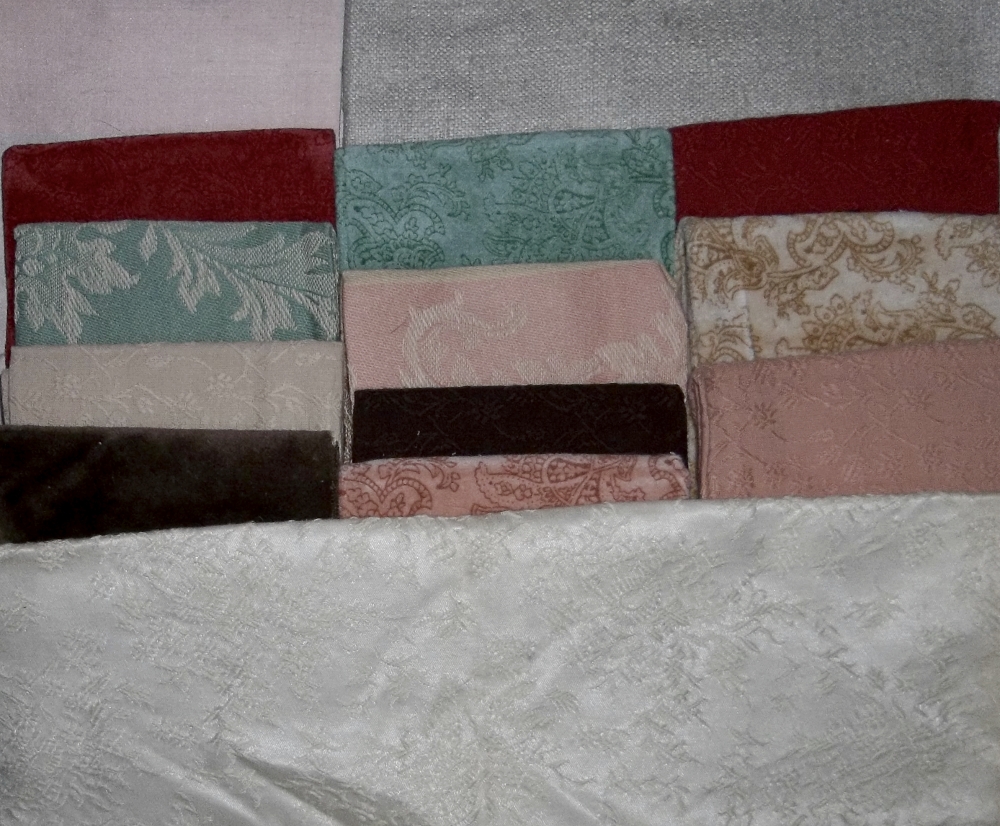
The first needlebook will refer to the 19th century, and include images of patterns from that era, as well as photographs of my female ancestors taken prior to 1900. The images will be printed digitally on fabric, and stitched to background fabrics which include brocades, velvets and silks in a palette of beige, ecru, brown and dark red. I will be constructing the object with hand embroidery, and embellishing with laces, buttons and decorative stitches. In making this piece, I will be focusing on the mindset of women, particularly my personal foremothers, as they strove for a functional means to express creativity in the domestic sphere during the 19th century.

velvets Brocades, velvets and silks.

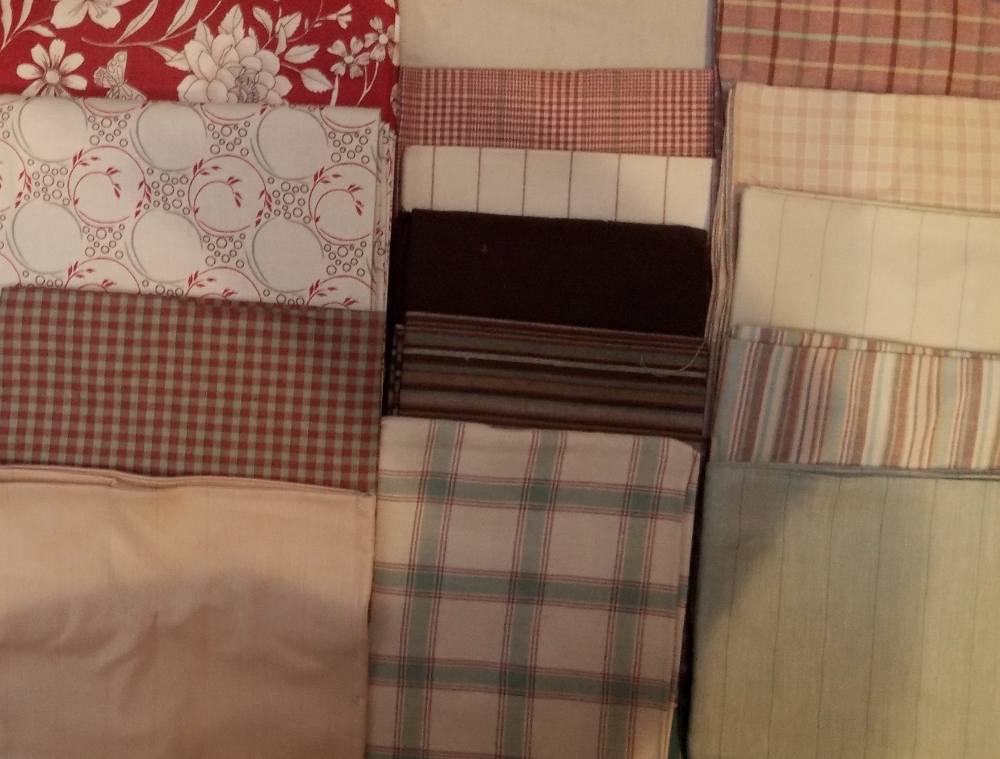
cottons Woven and printed cottons.

The second needlebook will include images of early 20th century patterns, along with photographs of my mother and grandmothers. The fabrics will echo the same color palette as the first needlebook and will be made from printed and woven cotton material. I will be constructing and embellishing in a similar manner, but instead using ‘rick-rack’ and other 20th century trims, rather than antique laces. Making this piece will remind me of my own mother teaching sewing and knitting techniques to me, and hearing about how her mother had taught her the same skills as a girl in the 1920s and ’30s.

Scottish Object Superstitions

For my final project, I’m looking into Scottish superstitions. Scottish people have always been very superstitious, especially when it comes to objects. I’ve been interviewing elderly people who live in Dundee, Scotland, along with reading about Scottish superstitions, then relating them to lives today to see if there are any modern day connections to the old superstitions. (I’m just going to post everything I have done so far!!)

Scottish Superstitions: Still Alive Today?

Introduction

            We like to believe that we’re original people with original and new ideas. We think that we invent so many ideas, traditions, and customs; however, people have walked the earth for over fifty thousand years, therefore ideas and traditions have been around for a very, very long time. Most of the time, we are just recycling or morphing traditions from a different culture or time period into our own cultures. Because our life span is so short, we often fail to realize the origin of traditions we take part in each and every day. Many of these traditions grow out of superstitions— some that are still practiced today, and others that are dead or beginning to become a thing of the past.

According to the Oxford English Dictionary, superstition is “a widely held but irrational belief in supernatural influences, especially as leading to good or bad luck, or a practice based on such a belief.” People follow superstitions for their own individual reasons, perhaps because it is what they have learned from the previous generation, and therefore is “right,” or maybe because it gives the person a way of explaining events or actions that are otherwise unexplainable. For as long as humans have been able to record aspects of their culture, superstition has been prevalent and accepted among the people of Scotland, despite their social standing. Some superstitions are specific to a region, while others stretch from as far south as Hadrian’s Wall all the way up to the coast of Caithness in the north. The Scottish might believe in superstitions because of the mysterious Scottish landscape. The waves eerily crash against the shore, the glens fill with mist, and the lochs lay still and murky— adding to the magical feel of the land. It is easy to believe in “powers” that can affect lives.

Although today the scientific fields are exploding with new information about the state of the world, Scottish superstitions are still very prominent. They have spread and morphed and snuck their way into other cultures and changed as the people have changed. Even though people today do not necessarily believe in these superstitions, they are still very much alive and practiced today. Traditions that we happen today can be traced back to superstitions in Scotland, some of which go back thousands of years, because these superstitions have influenced modern Scottish culture and nestled their way into customs and traditions in other places around the world as well .

Beltane

Samhain

            Samhtheine, or samhain, which translates to “the fire of peace,” was a druidical festival held on October 31st, halfway between the autumn equinox and the winter solstice. It was believed that during this night, the veil between different worlds was thinner and it was easier for ghosts to cross into our world. Sprites, fairies, witches and other creatures enjoyed playing tricks on this night. In order to keep their farms protected from mischief, farmers would surround the borders of their farms with lit torches. Today in America, Halloween is celebrated and children dress up in costumes— many of them dressed like the magical creatures that are supposed to play tricks during this night. Americans also hang lights for Halloween, which is quite similar to the torches put out by the farmers long, long ago.

Scissors

            It is normal for superstitions to be about common household objects, since these objects were easily available to the people. If handing scissors to somebody else, you must hand them holding the blade yourself, otherwise you may cut the friendship between you and the person that you are handing the scissors to. If you drop a pair of scissors, it is bad luck to pick them up yourself— you must have somebody else pick them up for you. If you receive a gift that is sharp, such as scissors, you must give the person who gave you the gift a silver coin in return. This is because it is believed that the sharp, gifted object could sever the friendship between the two people. The coin functions almost like you are “paying” for a part of your gift, and therefore it will not cut your friendship. Today in many countries, children in school learn to pass scissors to each other by holding the blade, so that the other person can grab the handle of the scissors and not get hurt. This could be simply for safety, but it could have stemmed out of Scottish superstition about severing a friendship. In addition, many superstitions were about safety (such as it is bad luck to sleep with your head under a beam), maybe because having superstitions encouraged children to listen better than when they were simply told not to do it. Giving a silver coin in return for receiving a sharp gift is still practiced in certain regions in Scotland today. If somebody does give you a coin in return today, it is almost a nice surprise that the superstition is still honored.

Handselling

            Handseling, as defined by the Scottish National Dictionary, is “’A gift bestowed to commemorate an inaugural occasion, event or season, e.g. the beginning of the year, the first visit to a friend’s new home or the commencement of a new undertaking, the wearing of new clothes, etc., with the idea of bringing good luck to the recipient”. When a baby is born, family and friends put a piece of silver in the baby’s hands the first time they see him or her. It is thought that doing this will allow the baby to be fortunate and never go without money in his or her lifetime. How the baby receives these coins placed in his or her hand is very important. If the baby grabs the coin tight, he or she will be stingy with money. If he or she lets go of the coin quickly, he or she will love spending money. The practice was extremely common in the 1950s, and was practiced for hundreds of years before that. Proof of this lies in Robert Burn’s There was a Lad, which makes reference to hanselling after birth with the line “Twas then a blast o’ Janwar’ win’ / Blew hansel in on Robin”.  Today, it is a typically a fifty pence piece that is placed in the hand. In Margaret Bennett’s book Scottish Customs from the Cradle to the Grave, she records hanselling events taking place in Lilliesleaf in 1990 and in Dundee in 1992. The two women whose babies had been hanselled commented on how it was still quite a common tradition in Scotland to bring the baby fortune in the future. Hanselling can be related to children receiving pocket money, which were usually coins. Good children have received money from their parents to keep them from having no money, just like how handselling happens so that the baby will never be without money. Up until recently, since we are becoming a cashless society as people use money electronically, pocket money was given to children in coins, many of which were silver. Pocket money teaches a child how to handle money, and this echoes the handselling.

First Footing on Hogmanay

            First-footing is another type of handseling. In the New Year, Scottish people “first-foot” one another, which means to be the first into somebody else’s home. The first-footer must bring a gift into the home to bring good fortune for the coming year. It is even luckier if the person bringing the gift has dark hair instead of fair hair. This most likely developed because of the fair-haired Vikings invasion of Scotland in the 8th century (therefore, a fair-haired person would bring you bad luck in a first-footing). When first-footing, if you gift a lump of coal, the home will never be cold for the whole year. First-footing still happens today in Scotland, with common gifts being whiskey, shortbread, and chocolate. Many people in countries around the world also bring gifts to each other’s houses when they first see each other in the New Year, although it does not always have a specific name and it is not necessarily specifically to bring good luck. In Scotland, first-footing is still very common and although most people don’t fully believe in the superstition, it is still done and talked about.

Teeth

            Today, we are very familiar with the tooth fairy who leaves us money under our pillows in exchange for our teeth. Usually, the tooth is put in a small container hidden under the pillow. This highly resembles an old Scottish superstition about lost teeth that is supposed to bring a child good luck and strong teeth. The first tooth that a child lost was carefully rolled up in a sheet of paper lined with salt and hidden in a hole made by a mouse.

A superstitious ritual is also performed for teething babies. A “teething bannock” is made— in silence— from oatmeal, butter, and cream. When it cooled and hardened, the teething child would play with it until it broke. A small piece of the bannock was then placed in the child’s mouth, along with everyone else in the room. It was believed that teething pain would disappear almost instantly. Although this is not made today, cultures all over the world use teething rings to soothe a child’s gums when he or she is teething.

Umbrellas

            In Scottish superstition, it is terrible to open an umbrella inside someone’s home because this will bring bad luck to the family who lives there. This may have come from when umbrellas were used as protection from the sun. Opening an umbrella inside may have been seen as insulting to the sun, which was considered to be like a god long ago by the Druids in Scotland thousands of years ago. This superstition is very much alive today, probably because we’re constantly using umbrellas! It is a common superstition still in the English speaking world.

Howdies

            A howdie, an archaic Scottish term for a “handy woman”, is a midwife and the person who looks out for the soon-to-be mother. She makes sure that certain rituals concerning superstition are carried out. Before the baby is born, the howdie unties all knots in the mother’s clothing and unlock all the doors and windows in the house to make the birth have no complications, turn over all mirrors so that the baby’s soul won’t be captured, and to give the mother a Rowan berry herb concoction. The Rowan berries are from the sacred Rowan tree, and are therefore believed to provide protection against mischievous fairies and the Evil Eye. After the baby is born, the howdie pours whiskey into the baby’s mouth to protect the baby from these two predators. In addition to this, every woman who is present during the birth must take three spoonfuls oatmeal to bring the baby strength and good luck. (**relate this to traditions done today***** maybe relate to godmothers or traditions surrounding good luck for birth).

Cradles

            Fairies in the Scottish superstition love to play tricks. It is believed that they often will try to swap the human baby with a fairy baby (a Changeling). Until a baby gets baptized, it is at risk of this. Therefore, a baby’s cradle should be made from rowan or oak and be put together with iron nails. These materials provide protection to the vulnerable child. (***relate to today***). Cradles for a baby were often borrowed instead of bought new (for protection for the baby and good luck). There are also two very different superstitions about rocking an empty cradle. One Scottish rhyme goes, “If you rock the cradle empty, then you will have babies plenty.” However, others believed that rocking an empty cradle was a terrible thing to do and could lead to the death of the child. (*****)

The Wedding Day

Works Cited

Bennett, M. Scottish Customs from the Cradle to the Grave. Edinburgh: Polygon 1992.

Bogle, Lara. “Scots Mark New Year With Fiery Ancient Rites.” National Geographic. National    Geographic Society, 31 Dec. 2002. Web. 15 Apr. 2013.             <http://news.nationalgeographic.com/news/2002/12/1230_021231_hogmanay_2.html&gt;.

“Customs and Superstitions.” Clan Henderson Society. N.p., n.d. Web. 23 Apr. 2013.             <http://www.clanhendersonsociety.org/&gt;.

Lane, James. “The Importance of Pocket Money.” The Huffington Post. N.p., 27 June 2012.          Web. 18 Apr. 2013. <http://www.huffingtonpost.co.uk/dr-james-lane/pocket-money-the- importance-of-pocket-_b_1624582.html>.Scottish National Dictionary

Lynch, M. The Concise History of Scots. Oxford: Oxford University Press 2001.

MacLean, J. P. An Epitome of the Superstitions of the Highlanders of Scotland, Together with a     Selection of Books Pertaining to the Subject,. Franklin, OH: n.p., 1917. Print.

McLeish, William. Personal interview. 19 April 2013.

Norrie, Rhona. Personal interview. 16 April 2013.


The Significance of Object Symbolism in Western Art

         The topic that will be discussed for teaming teaching is: exploring the significance of object symbolism within Western Art. As an Italian Studies minor I have studied Renaissance Art and the way in which the painter places objects within his work to convey different meaning is extraordinary. It has enabled my creative mind to shine through and influenced great discussions on how to interpret what the artist might mean. This topic matters tremendously because it shows another way in which objects play such a large role in one’s society , the understanding of its people and ways of life from a historical perspective. This topic also raises so many questions about the artist’s intention of his work: What does he want the viewer to understand through the objects he paints? Are all objects meant to be symbolic within his painting? Can an object have multiple meanings behind it? Can objects serve to enable the viewer to see what’s not there or what’s in the distance? The questions are endless and I believe the more questions a painting gives us the more influential it serves to  its audience. This in turn enables the painting and the artist to be remembered and this may be a major reason for why the artist painted his piece.

                In our team teaching, Ally and I studied five paintings created during the Renaissance period and introduce them to our class. However we will start with an exercise of examining Vanitas works and pointing out what we see. This will allow the class to become comfortable with talking about art and we choose Vanitas paintings because many important objects are found within them. However these objects have a pessimistic meaning behind them and often convey themes of death, decay and temporary earthly pleasures. Indeed,  the term Vanitas is the Latin word for vanity and so this type of artwork possesses this idea that earthly objects are meaningless and only serve as temporary pleasure for the individual. Thus, Vanitas pieces  are symbolic paintings with different objects placed in the artwork that allows the reader to interpret the message or messages of the painting. This type of art work also incorporates the form of still life painting which was popular in Flanders and the Netherlands during the 1500s. Still life paintings are paintings that only have inanimate subject matter within them, whether they be natural objects or man-made ones. Introducing these terms and these types of paintings is a great way for students to see the significance of objects as symbolism in artwork during the Renaissance and examples of different objects and the meanings behind them.

                After we have a discussion about Vanitas art pieces we will talk about: Campin’s Merode Altarpiece, Van Eyck’s Arnolfini’s Portrait, Holbein’s Ambassadors, Aertsen’s  Butcher Stall, and Bronzino’s Venus, Cupid, Folly and Time paintings. All of these paintings have a vast amount of objects within them and symbolism behind those particular objects. Students will learn about the different symbolism behind objects such as: a mirror, a lute with a broken string, a mousetrap and the material clothing worn by subjects within the paintings. All of these things represent different ideas that the artist may have wanted his patron and viewer to comprehend about himself, his world around him or the religious world. Although most of these paintings were done during the Northern Renaissance Period, but the last one (Venus, Cupid, Folly and Time) will introduce the class to the Mannerist period and the characteristics that makes a painting a product of that time frame. We intend for students to not only understand the significance of object symbolism in Western Art, but also different religious ideas, historical background, and the way people lived and how they were influenced during the 1500s. Thus, students should comprehend that objects have phenomenal power in channeling in an entire time period.

                Lastly, Ally and I will go over the art historian’s role within material culture studies and how any form of art – whether it be paintings, sculptures or material artifacts, should be examined and understood by art historians. Michael Yonan’s article: Towards a Fusion of Art History and Material Culture Studies develops this idea that art historians are absent from material culture studies because many of them do not believe in objects being significant enough for intensive study. However  what they fail to realize is that a painting, that has tons of symbolism and value within it, is also an object – like ceramics, metalwork and carved wood. At the same time, paintings do not only have object symbolism that can aid in one’s understanding of its meaning but there are so many other factors one should take into consideration. For example the artist’s choice of medium can display much about the his intention for each component within his painting. Therefore, although object symbolism plays a tremendous role during the Renaissance, how large is its role in today’s world? How do other aspects of creative artwork serve in one’s understanding of the overall meaning the beholder intends for his audience? The fact of the matter is, one can never fully determine the specific reason or reasons why an artist inserts an object into his work and the symbolism behind it. That is the responsibility of the interpreter and this is a challenging task considering there cannot be one right answer. There are many answers and that is what makes the task all the more valuable and beneficial to the one studying the work. This is why we want every student’s opinion and interpretation on the paintings we have chosen to discuss. They require critical thinking, analysis and interpretation and objects can influence a discussion for hours on end. In conclusion, objects are a tremendous value within Western Art and have the power to promote extensive thinking  and realization about an artist’s piece which in turn, honors the artist.

Annotated Bibliography

Yonan, Michael. “Toward a Fusion of Art History and Material Culture Studies.” West 86th – Toward a Fusion of Art History and Material Culture Studies. Bard Graduate Center, 20 Sept. 2011. Web. 21 Apr. 2013.
This is an informative article that discusses the similarities and differences between the study of art history and material culture studies and why they are often times disconnected. The author argues that the two studies both complement one another and art-historical practices should play a larger role in understanding material culture studies. This article is fascinating for someone who wants to explore the ways in which materiality impact our world and how goods of all kinds can assist in one’s understanding of broader academic practices and intellectual life.

“Explore Smarthistory.” Smarthistory: A Multimedia Web-book about Art and Art History. Ed. Beth Harris, Dr. and Steven Zucker, Dr. Khan Academy, n.d. Web. 20 Apr. 2013.
This is an incredible educational resource for studying, understanding and exploring art history. There are videos, written pieces, discussions, and resources for students to easily access. There is also a blog on this website that contains tours, information about different museums and art history in relevance to the classroom. If someone is taking an art history class and needs information about a piece of artwork this is your go-to site!

Protas, Allison, Geoff Brown , and Jaimie Smith, eds. “Dictionary of Symbolism .” University of Michigan . UM Fantasy and Science Fiction, n.d. Web. 20 Apr 2013.
This is a very expansive source from the University of Michigan which gives an entire online dictionary to symbolism seen throughout the arts. There are many search options and you can even submit questions.  If you are looking at a particular piece of art or literature that you know employs symbolism or has an object in it which you think might be a symbol, you can go to this site to see it’s possibilities.  Just remember, not every artist uses symbolism, and typically not every object in an art piece is a symbol, so you must use your judgment to discern just how much symbolism there is!

Ward, John L. “Disguised Symbolism as Enactive Symbolism in Van Eyck’s Paintings” Artibus et Historiae, Vol. 15, No. 29 (1994), pp. 9-53.  IRSA s.c, n.d Web. 21 Apr. 2013.
Here is a very informative and interesting scholarly article if you want to research further into Van Eyck’s paintings.  It discusses his use of symbolism and inquires as to how much symbolism is used throughout his works and his techniques for employing symbolism.

Roepstorff, Andreas. “Things to think with: words and objects as material symbols.” Philosophical Transactions of the Royal Society: Biological Sciences . Phil. Trans. R. Soc. B , 12 Jun 2008. Web. 23 Apr 2013.
This article digresses slightly from what we will be delving into in class, but it provides valuable information for perhaps why artists throughout history have decided to put symbols in their artwork and why they represented objects as those symbols.  It approaches this through the angle of human nature and is a psychological/neurological inquiry into why and how we create symbols through the objects and materials we come into experience with and how this possibly links our internal understandings to the external world.

Needlework, Quilting, and Marginalized Voices

AIDS Quilt

By Ricardo Hernandez and Sandy Marsh

Traditional histories of the United States focus on the activities and achievements of the white male.  It was this group who held the power to write history and decide what was significant to include.  Only in the last few decades has there been an attempt to spotlight the history of marginalized groups such as women, blacks, Native Americans and, more recently, the LGBT community.

Scholars have searched through diaries, letters and court records to uncover the story of women in society.  Unfortunately until the latter half of the 19th century, girls had little access to education beyond learning to read and sew.  Girls and boys were taught to read in the home by means of oral recitation from the printed page; both sexes needed to be able to read the Bible.  Boys then continued on to a town school, where they were taught to write in cursive script and to master basic arithmetic, both skills to be used in the professions and trade.  Beyond reading, the most important skill for girls was  proficiency in sewing.

With the scarcity of written documents by the women of early America, the study of material objects reveals a great deal about the role of women in society.  In particular, the embroidery sampler tells a meaningful story.  The earliest samplers were created by experienced needle workers as a means to record a variety of stitches and patterns.  These pieces were long and narrow, rolled up and stored as a reference guide for future projects.  Once printed patterns became available, the sampler became used as a tool to teach young girls the alphabet, numbers, perhaps a moral lesson, as well as sewing.   A working-class girl might stitch a ‘marking’ or ‘darning’ sampler in order to master the skills to be used as a wife in the home, or as a domestic servant.  An elaborate pictorial sampler rendered in silk thread on fine linen indicated femininity and gentility of the upper class.

Since colonial times, the stitching of a quilt has been used as an expression of community.  Women would gather to stitch a bed cover as a wedding gift; frequently following the sewing session, the ‘menfolk’ would arrive for a meal and dancing.  The patchwork quilt developed in the early 19th century as a frugal means to use leftover bits of fabric from the making of clothing and household items.  The use of color and pattern in quilting allowed women creative expression, yet the quilt served a function rather than being perceived as frivolous activity.

The art of quilting has been adopted by modern marginalized groups in the United States.  Both African Americans and Native Americans embraced quilting as a means to express the history of their people.  Elaborate use of appliquéd symbolic images in story quilts provide a powerful view into cultural identity within these groups.

Needlework has always been used to carry out a mission. Marginalized groups have found refuge in pattern making, quilting, needlework and knitting as a form of hope, disapproval or unity. The AIDS quilt does just that. It was first created in 1987 when Cleve Jones realized the potential of creating a quilt, which not only creates a representation of mourning, but also one of political activism through the LGBT community in San Francisco, California. When word of the AIDS quilt reached national coverage and submissions rolled into San Francisco, political activism took on a new method in the LGBT community. As a tool used for both mourning and remembering, the quilt helped the community show the world how much damage AIDS could do to a particular community. With these lives lost and media coverage surrounding these individuals to put a megaphone to their voices, government had to respond.

Research on the AIDS quilt has been quite extensive. Sociologist, psychologists and political scientist have studied the effects of the AIDS quilt on human beings. According to Peter S. Hawkins, professor of religion and literature, the quilt is more than just patches, lines, and material. “The panels betray a delight in the telling of tales, revealing in those who have died a taste for leather or for chintz, for motorbikes or drag shows. Secrets are shared with everybody,” (Hawkins, 770). While researchers, journalists and academics question the role of the AIDS quilt in the LGBT community, they come to realize that the object has become more than a tool of remembering, mourning and grief. As Jones says:

“History will record that in the last quarter of the 20th century, a new and deadly virus emerged. And that the one nation on earth with the resources, knowledge and institutions to respond to the new epidemic, failed to do so. History will further record that our nation’s failure was based on ignorance, prejudice, greed and fear not within the heartlands of America, but in the oval office and the halls of congress,” (gcncincinnati, Youtube.com)

The LGBT community used the AIDS quilt to bring attention to the inefficiencies of the Reagan administration. While they mourn their siblings, friends and lovers, activists used the quilt as a means for media coverage. Their mission to end ignorance by pushing their voices beyond the walls of Washington D.C. and into the hearts of all Americans, was achieved.

The study of material culture is an interesting one. It doesn’t have to just tell about the history of a person, object or time period. We realize that the AIDS quilt, in its most concrete form of patterns and materials, was used to showcase the lives of individuals who’ve lost their lives at the height of AIDS, but that’s not all. The use of this quilt, like many, takes material culture a step further when used as a weapon by marginalized groups. We’ve seen this occur with women through suffrage, African Americans during slavery and segregation, and of course, LGBT individuals in the fight against AIDS. This portion of material culture brings light to the events of marginalized groups in history.

Annotated Bibliography:

Cash, Floris Barnett. “Kinship and Quilting: An Examination of an African American Tradition.” The Journal of Negro History, Vol. 80, No. 2 (1995):  30-41. Print.

This article describes the use of quilting and knitting by African Americans, specifically women who are by the author’s views, the most marginalized group in American history. The author says that the use of quilting has been passed down as an African American tradition to eradicate the discrimination this marginalized group experienced. This tool was a method to voice their opinions on their own lives.

Edwards, Clive.  “‘Home is Where the Art is’:  Women, Handicrafts and Home Improvements 1750-1900.”  Journal of Design History, Vol. 19, No. 1 (2006) Print.

A discussion of the history of women’s crafts on levels of  frugality & financial necessity, creative/artistic expression and entertainment.

Friedland, Anne M.  “The Sampler and the American Schoolgirl 18th and 19th Century.”  Dutchess County Historical Society Yearbook 79 (1994)Poughkeepsie, NY:  Dutchess County Historical Society (1994): 22-36. Print.

Essay on the application of the sampler as a teaching tool for girls.

gcncincinnati. “AIDS Quilt: 1st Anniversary Coverage.” Youtube.com. 11 Dec. 2009. Web. 11 Apr. 2013.

In its one year anniversary, this video gives a deeper understanding of the impact the AIDS quilt can create within the LGBT community. The beginning speech by Cleve Jones delivers a powerful message towards the president and congress for their actions in avoiding the discussion of AIDS, and providing assistance to those who’s lives were lost. This ceremony and moment in history brings the names of the people right to the offical’s doorsteps.

Goggin, Maureen Daly and Beth Fowkes Tobin (eds.).  Women and the Material Culture of Needlework and Textiles, 1750-1950.  Surrey, England:  Ashgate Publishing Ltd. (2009) Print.

Collection of essays by multiple authors on a variety of topics regarding the significance of needlework in the study of women’s history.

Hawkins, Peter S. “Naming Names: The Art of Memory and the NAMES Project AIDS Quilt.” Critical Inquiry, Vol. 19, No. 4. (1993): 752-779. Print.

In Peter S. Hawkins’ article, the NAMES Project is presented as a form of political activism, mourning and memory. Hawkins places an emphasis on the AIDS quilt, which he says tells the stories of lives. Each patchwork tells how individual stories are told from childhood events to explorations of love. Each quilt is an open book on a certain person or people, which depicts a deeper meaning behind this material. He also emphasizes the use of the tool as a form of political activism.

Monaghan, E. Jennifer.  “Literacy Instruction and Gender in Colonial New England.”  American Quarterly, Vol. 40, No. 1 (1988), 18-41.  Web. 30 Mar. 2013.

An essay explaining the discrepancy between the levels of education for boys and girls in early America.

Morris III, Charles E. Rhetoric and Public Affairs: Remembering the AIDS Quilt. East Lansing, Michigan: Michigan State University Press (2011) Print.

The book is written by a number of individuals who have researched, experienced or have some way been affected by the AIDS quilt. The book also identifies strong material culture significances on the basis of memory and mourning. One author compares the AIDS quilt to photos from the Holocaust, arguing that it reveals a stronger significance because each patch tells a story of a person’s life, rather than photos of a particular event.

SeanChapin1. “AIDS Quilt – 25 Years Later.” Youtube.com 20 Feb. 2012. Web. 11 Apr. 2013.

The video gives a look on the impact the AIDS quilt had on Washington D.C. However, the video also pulls on heart strings when texts on quilts are read and shown to viewers. The video gives an overview of the number of quilts, exposing how many lives were lost due to AIDS.

Ulrich, Laurel Thatcher.  Good Wives:  Image and Reality in the Lives of Women in Northern New England 1650-1750.   New York: Alfred A. Knopf (1982) Print.

A thorough study of the multiplicity of roles encompassing the lives of women in early America.

Xtra! “Cleve Jones on Harvey Milk & AIDS Memorial Quilt.” Youtube.com 29 Nov. 2011. Web. 11 Apr. 2013.

Cleve Jones shares how the AIDS quilt was founded during a march for Harvey Milk in San Francisco, where he realized how many lives were taken by AIDS. He also states that the quilt was a form of tool to hold the government accountable for their actions in turning away from a deadly disease right in their backyard. He also acknowledges that this was more than just a piece of material; it was a tool for remembering lives and pushing for action.

The Normal Review

Normal Review 1Normal Review 2

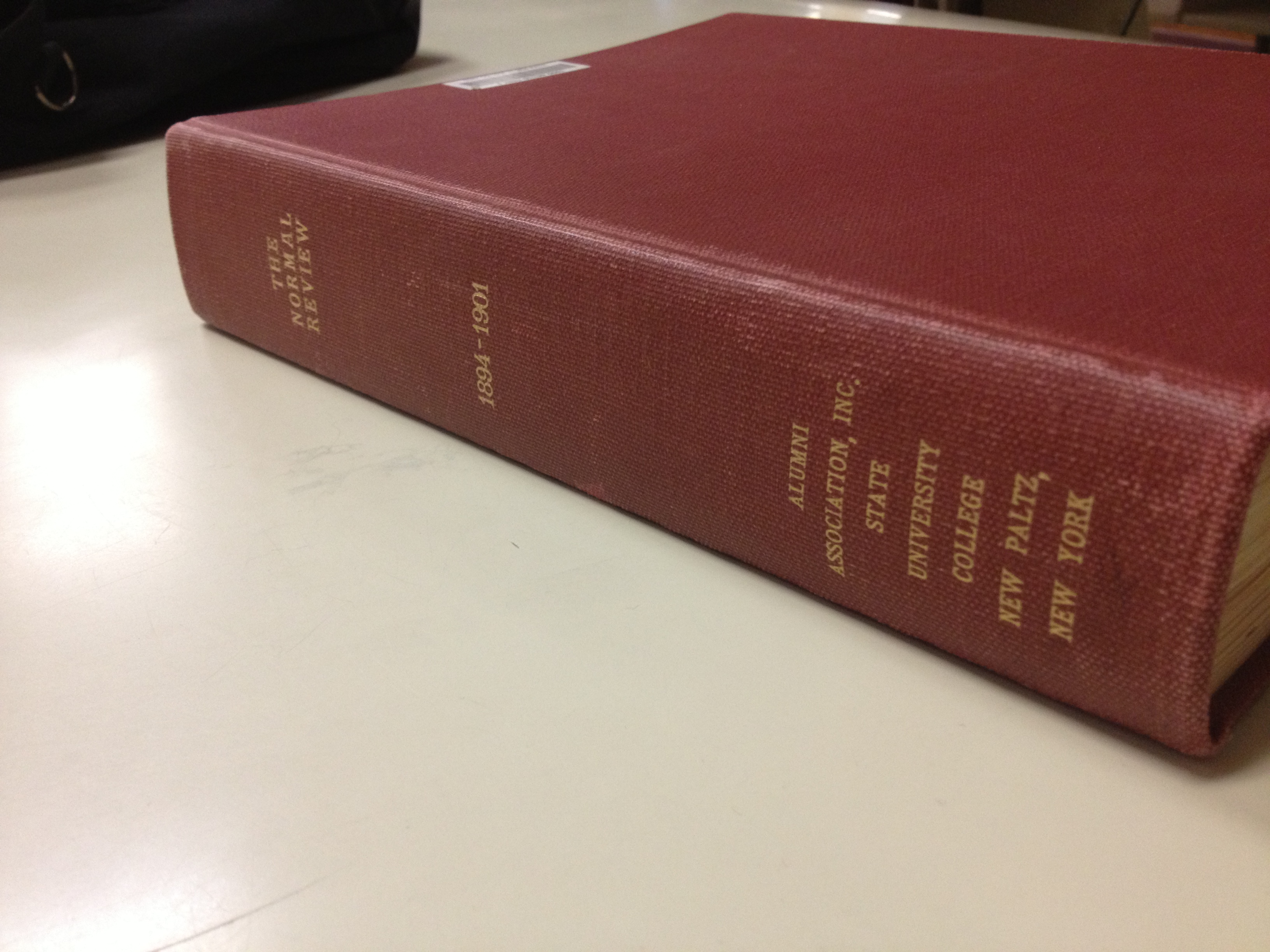
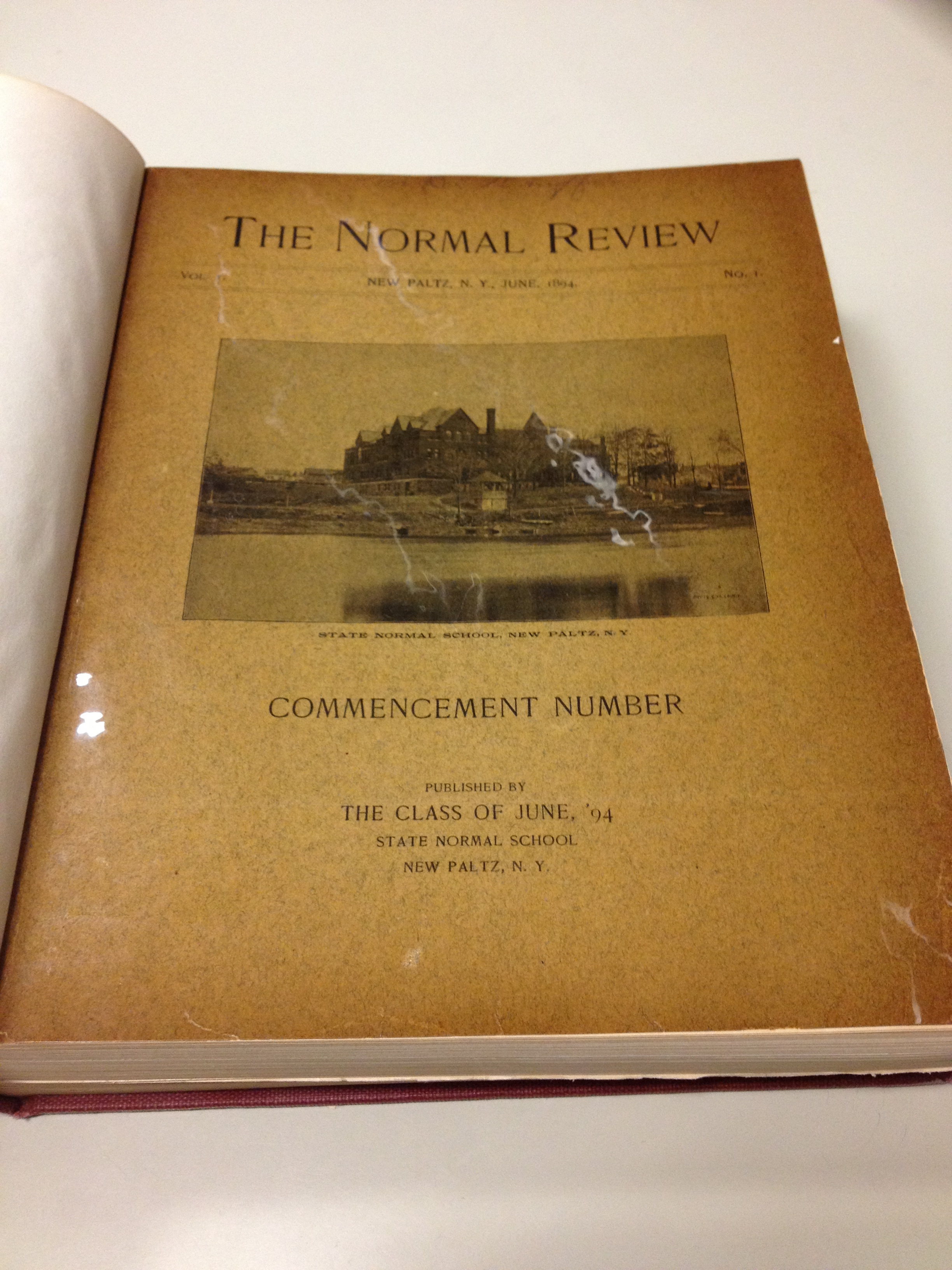
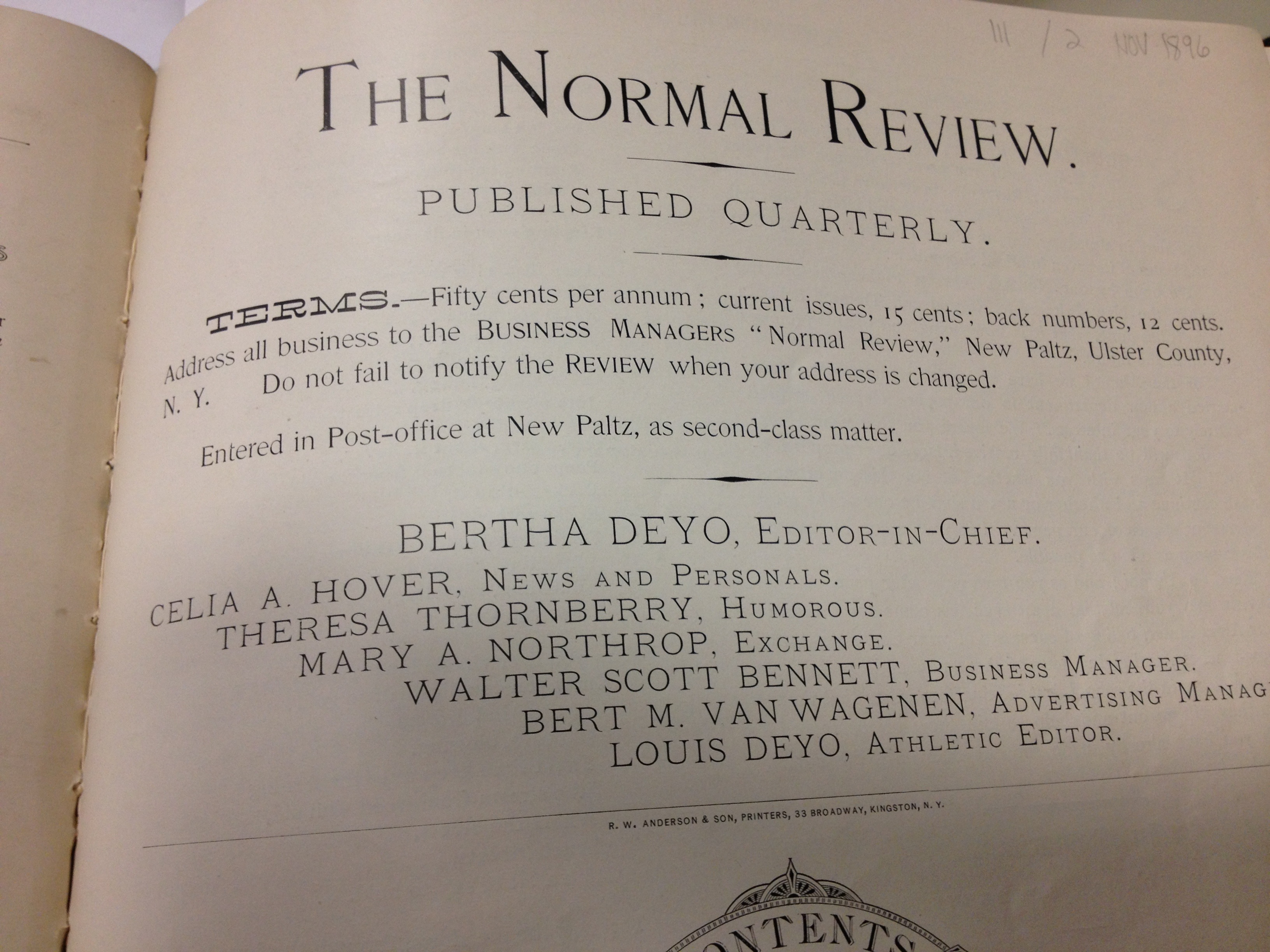
Caption: Distributed quarterly, The Normal Review became the first-ever literary magazine at the New Paltz Normal School in June of 1894. The 26-page publication contained news, poetry, narratives and other forms of writing from students within the school. The magazine folded in 1901 after years of journalistic service to the New Paltz community.

Physical Description: The Normal Review catalog contains a burgundy red hard cover. The 11-by-7 book feels rough at the touch. If you caress the book with your finger, you could feel years of wear displayed as lines on the book. The book also contains gold lettering with the words “The Normal Review” on it’s binding. Below, in the same gold letters are the active years, “1894-1901” On the bottom of the binding reads, “Alumni Association, INC. State University College. New Paltz, New York. The library placed a barcode on it’s top middle corner. When you open the book you’re displayed with the first issue’s cover page, table of contents and words. All written work is in a black san serif font, while advertisements in the back are of different fonts.

Provenance: The book of literary magazines has been in possession of SUNY New Paltz since its creation. However, the magazines were in possession of the New Paltz State Normal School, a new building after the first fire which burned down the New Paltz Classical School in 1884. After the second fire which burned down the Normal School, the issues were moved  to “Old Main,” which is currently part of what is today SUNY New Paltz. The book of magazines was most likely created sometime after the magazine’s final issue. The catalog of the Normal Review issues are available today through the Sojourner Truth Library.

Date of Creation: June 1894 – June 1901.

Narrative (Rough Draft):

Normal Review 5

It was their first meeting. The staff of The Normal Review were sitting in a room with piles of papers in front of them. If they were to succeed this would be The New Paltz State Normal School’s first-ever literary magazine. Before the first editor in chief, Albert C. Mayham, grabbed the first submission to the magazine, he spoke with his staff and gave them requirements of editing. The magazine’s staff must check for spelling errors, grammar and use their own form of journalistic writing, which some of it compares to what is known today as Associated Press style. After a few words, the editing began.

The Normal Review’s first issue became a 26-page issue with combined forms of writing. The staff edited narratives, love being a very common theme. One issue in particular was of a woman who saw her former lover on a train heading south, but she didn’t say where. But, she tried to make her self known. Although she was hoping to never speak with him again, she made herself known and wanted to feel desired. Other literary works contained poetry by students experiencing love, success, hatred, and sadness. These were written pieces seemed like they were submitted by students and faculty who evaluated and graded student work. It’s interesting because it isn’t clear if they submitted students work for the sake of competition and satisfaction of being published, or because alumni would pick up an issue of the literary magazine and see work of current students within the school. Given that the publication includes a alumni section, it can be assumed that they wanted to target alumni—possibly for donations, as well.

Normal Review 3

However, The Normal Review didn’t just keep to literary work. They succeeded in writing news briefs of events and celebrations taking place in the school and around town. However, the magazine didn’t contain any form of quotes. They mostly used attribution when necessary. For example, “Principle Frank S. Capen said … ” The editorial staff of the publication also incorporated sports within their section publication with references to the scores. However, it wasn’t just literary work and pieces of news which made up the publication. The Normal Review consistently published debates in every issue. A student would take the affirmative and another would take the negative. A favorite was the women’s suffrage where a woman wrote of how women voting could benefit New Paltz and society. In the negative, a male student wrote on how it could be detrimental.

Most importantly, just like any publication, this literary magazine created a sense of community. It was a piece of material which brought the student body together. With about a 12-student staff, the published work would be distributed to students, faculty, and residents in town. Although it cost 15 cents to own, the publication made known to all what students were doing in classes and in their spare time. It made announcements of upcoming events and provided a place for literary expression, not available to students who were strictly learning to write essays and more research based work.

Similar to the Shawangunk Review or the Stonesthrow Review, The Normal Review brought together a “department” of students and faculty to learn and prosper from each other’s writings. Debates such as the women’s suffrage debate were regularly seen. What’s interesting is this sense of women’s rights built up in the school through the editorial staff as well. Since the magazine started, the publication hardly had a female editor in chief. According to the publication itself, the first female editor in chief was a Bertha Deyo of 1896. The last one was Grace B. Travis of 1900.

Normal Review 4


Research:

English Department. “The Shawangunk Review.” SUNY New Paltz. 1998. Web. 7 Apr. 2013.

SUNY New Paltz English Department. “The Stonesthrow Review.” SUNY New Paltz. Web. 7 Apr. 2013.

The New Paltz Normal School. “The Normal Review.” SUNY New Paltz. 1894. Print. 7 Apr. 2013.

Sojourner Truth Library. “College publications.” College History Collection. Feb 2001. Web. 7 Apr 2013.

State University of New York at New Paltz. “Past Presidents.” Office of the President. Updated in 2010. Web. 7 Apr. 2013.

The New Paltz Normal School. “The Normal Review.” SUNY New Paltz. 1894. Print. 7 Apr. 2013.

Looking at Books and Print as Objects

In a world of mass-produced media, in an information-flooded culture, books are taken for granted across the Western world, both for their style and content. A casual reader would hardly recognize differences in binding or font unless drawn attention to the glued spine or the use of serif fonts in nearly all their favorite publications. Bibliophiles hoard books into their personal libraries, sometimes faintly aware of their aesthetic appeal, yet more so taking advantage of their accessibility. Thanks to computer processors and rapidly-progressing technology, e-readers offer immense content and a variety of design styles at one’s fingertips.

communications circuit

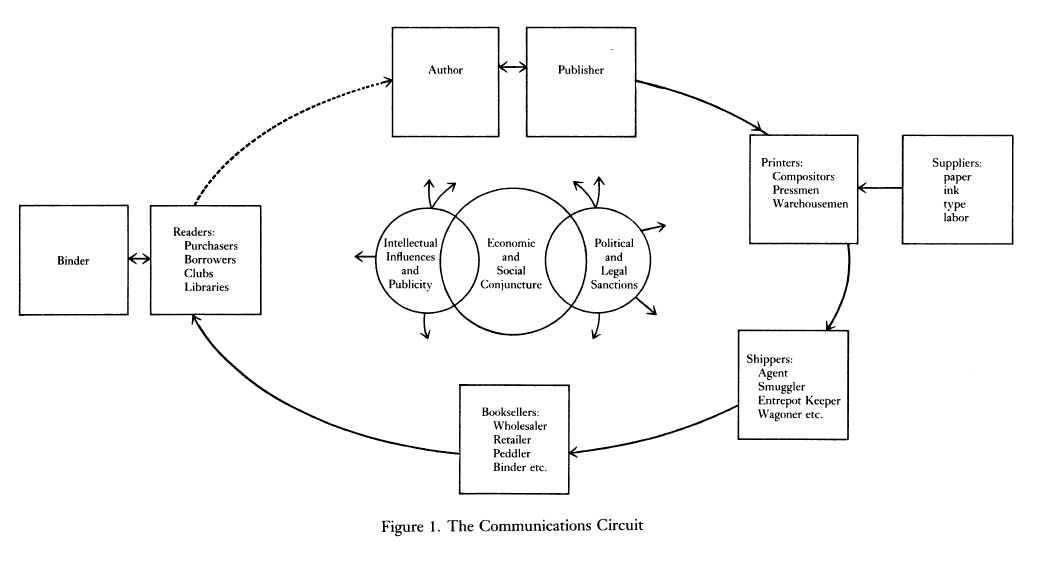
Yet without the written word and its sturdy encasing, our monumental creations would carelessly alter at the whim of one’s memory. A few stories of oral tradition survived, but only when transcribed into a translatable language, such as Beowulf. Nearly all literary merit originates with the transcription of text and the mass reproduction thanks to the printing press, credited to Johannes Gutenberg in 1450. Similarly, the study of the history of books primarily starts with the famous machine, since documents were otherwise mainly scrolls without strong binding, and expands towards other steps in the printing and distributing process. A book only persists in the common media with the right “communications circuit that runs from the author to the publisher (if the bookseller does not assume that role), the printer, the shipper, the bookseller, and the reader” (Darnton 67). The reader then influences the author with critique, and because “authors are readers themselves” (Darnton 67). Even in our expansive world today, we can see how authors draw from their readership, anticipate their audience’s reaction to their work, and form a reader/writer literary community that pushes the cycle. Perhaps more of such exists today because of widespread media. Take John Green for example; he discusses his upcoming novels on his video blog series with his brother, and he can easily garner the reaction of his work by scrolling down the Youtube comments. As such, the full cycle persists.

According to Darnton, book historians take a singular section of the full cycle and analyze, then contextualize the part to the whole, particularly in the context of and to describe the economic, social, political, and cultural environment. In “What is the History of Books?”, Darnton offers the publishing history of Voltaire’s Questions sur l’Encyclopedia, particularly analyzing the role of the bookseller Rigaud, to vividly illustrate the full cycle and reveal crucial missing evidence that continues to leave holes in the book history narrative. The successful bookseller relies on the readership, just like the author, and Rigaud’s variety in his bookshop catered to varied audiences: “travel books, histories, novels, religious works, and the occasional scientific or philosophical treatise” (Darton 70). Similarly, the bookseller competes with other businesses, vying for dominance in the industry, just as one could find today with the liquidated Borders and expanding Barnes & Noble. Yet, Darton’s questions towards all part of the cycle, starting on page 75, reveal the heavy burdens of the study of the history of books. Some documents persist to answer the questions, but not enough data can be found to solidify conclusions about mainstream literary trends.

How does this all relate to the physical book you will present in class? How does it not? The interconnected cycle offers a rich history of the social climate. Voltaire’s success with Questions reveals an Enlightenment trend in the 1770s and 1780s through literature; Harry Potter’s massive sales reveal a cultural trend towards children’s literature, perhaps even as backlash against surging visual media. A bookstore, even today, detects what would be successful, orders in massive stock, and promotes its great wares. In a way, the book lives not because its creator bestowed life but because the seller validates its importance to the literary world. If none of the booksellers believed Questions or Harry Potter would be profitable, the books would never receive such high acclaim and awareness. Yet, the bookseller decodes its readership to make its purchases, and the readers encourage the authors to produce more.

Such logical interconnection does not falter in studies of print. Just like books, the printing press launched the development of fonts; with the advent of moveable type, printers could style text typefaces for massive reproduction. Themes of readability and simplicity dominate font style both in books and on a multitude of printed works. While mainstream books and newspapers do not deter from serif fonts, since the feet naturally separate the letters and make otherwise cramped text easier on the eyes, contemporary shorter printed media (signs, advertisements, etc.) abandoned the serif. Prior to the creation of Helvetica in 1957, a san-serif was introduced in the early 1800s, but popularity of san-serif hit spiraled in the 1900s with types such as Johnston (used by the Transport for London), Gill Sans (popularized as the typeface for LNER’s marketing materials), and Broadway. As recognized in the movie Helvetica, the font type dominated the print sphere because of its simplistic design. It offers no emotional tug and became the basis for other sans-serifs developed decades later, such as Arial, Century Gothic, and Calibri. In their lack of emotional attachment to viewers, the font exists and persists in the background, unknowingly beloved by millions of viewers because it does not call attention to itself. Since the font does not suggest anything, the designer can adjust it for their visual aesthetic, and the viewer can imbue their own meaning to the text. This modernist trend conflicts with post-modernist font trends that reject such simplicity; post-modernist fonts are intentionally designed with implied meaning. One could classify Papyrus as a post-modern font due to its apparent replication of ancient Egyptian scroll-work, adding a certain foreign and relic element to the text. No matter what type of font used, its careful design and craft reflects on its object quality, offering a narrative that pervades multiple media trends, from books to the world wide web.

Annotated Bibliography

“History of Books and Printing: A Guide to the Collections of the Stephen A. Schwarzman Building.” New York Public Library. n.p, n.d. Web. 05 Apr. 2013. http://legacy.www.nypl.org/research/chss/grd/resguides/bookhist/

The New York Public Library, located near Bryant Park in Manhattan, offers its collection on the history of books and printing in the Stephen A. Schwarzman Building. Their works are divided into several subcategories: Bibliographical Description of Books; General Surveys; Bibliographies; Antiquity: Alphabets, Writing Systems, Writing Materials; Medieval Period: The Codex an Manuscript Production; Art of the Book; Invention and Spread of Printing; Publishing and Bookselling; Books and Society; and The Book in the United States. Online, a dedicated scholar can look up all their resources according to category, along with their call number, to aid in further research at the library itself.

Hutchings, Emma. “Typeface Timeline Shows Us the History of Fonts [Infographic].” PSFK. n.p., 3 Apr. 2012. Web. 05 Apr. 2013. http://www.psfk.com/2012/04/history-of-fonts.html

This graphic timeline of the history of western typefaces primarily starts with the invention of moveable type with the printing press in 1440 by Johannes Gutenberg up to 2011 when Matthew Carter, who designed Georgia and Veranda, won the national Design Award for lifetime achievement. Notably, the sans serif first originated in the early 1800s, but only skyrocketed in the 1900s, especially when Helvetica was created in 1957. The timeline also notes significant font debuts in popular media, such as Catul for the Google logo, a modified Klavika Bold for Facebook, and Futura for The Social Network poster.

“The Centre for the History of the Book.” The University of Edinburgh. n.p., 19 Apr. 2012. Web. 05 Apr. 2013.
http://www.hss.ed.ac.uk/chb/

The Centre for the History of the Book, established in 1995 as a leading resource for advanced interdisciplinary research and study of the material culture of the text, offers a website to aid scholars in navigating its resources, showcase related events, and offer information for its postgraduate programs in the History of the Book. The Centre is affiliated with the University of Edinburgh, located in Scotland.

Helvetica. Dir. Gary Hustwit. Plexifilm, 2007. DVD.

This feature-length documentary on the development and prevalence of Helvetica exposes the culture, history, and art of print-making and text design, centered on the typeface of the same name. Candid interviews with leading graphic and type designers, such as Matthew Carter, who originally designed web fonts Verdana and Georgia, assist brief glances around New York City, where Helvetica continues to populate and persist across the bustling city, a history of the typeface, and insight on the battle between modernist and postmodernist type.

“Jessica Hische – From Berlin with Love.” Gestalten TV. Vimeo, March 2013. Web. 08 April 2013. http://vimeo.com/60556612

Jessica Hische talks to Gestalten TV about designing letters B, E, R, L, I, and N. She also discusses the balance of personality in font design, the value of serifs, and collaborating with other print-makers in a recent two-day Gestalten workshop. In conclusion, Hische finds font design a unique exposure of self and personal artistry, as each font design will end up differently depending on the designer. Hische, a letterer and illustrator, has been named a Forbes Magazine “30 under 30” in art and design, an ADC Young Gun, and one of Print Magazine’s “New Visual Artists.”

By Jaime Burns and Jessi Putnam

Epaulet of Johannes Jansen

ImageImageImage

(Photography credits to Shelley Weresnick)

Caption 

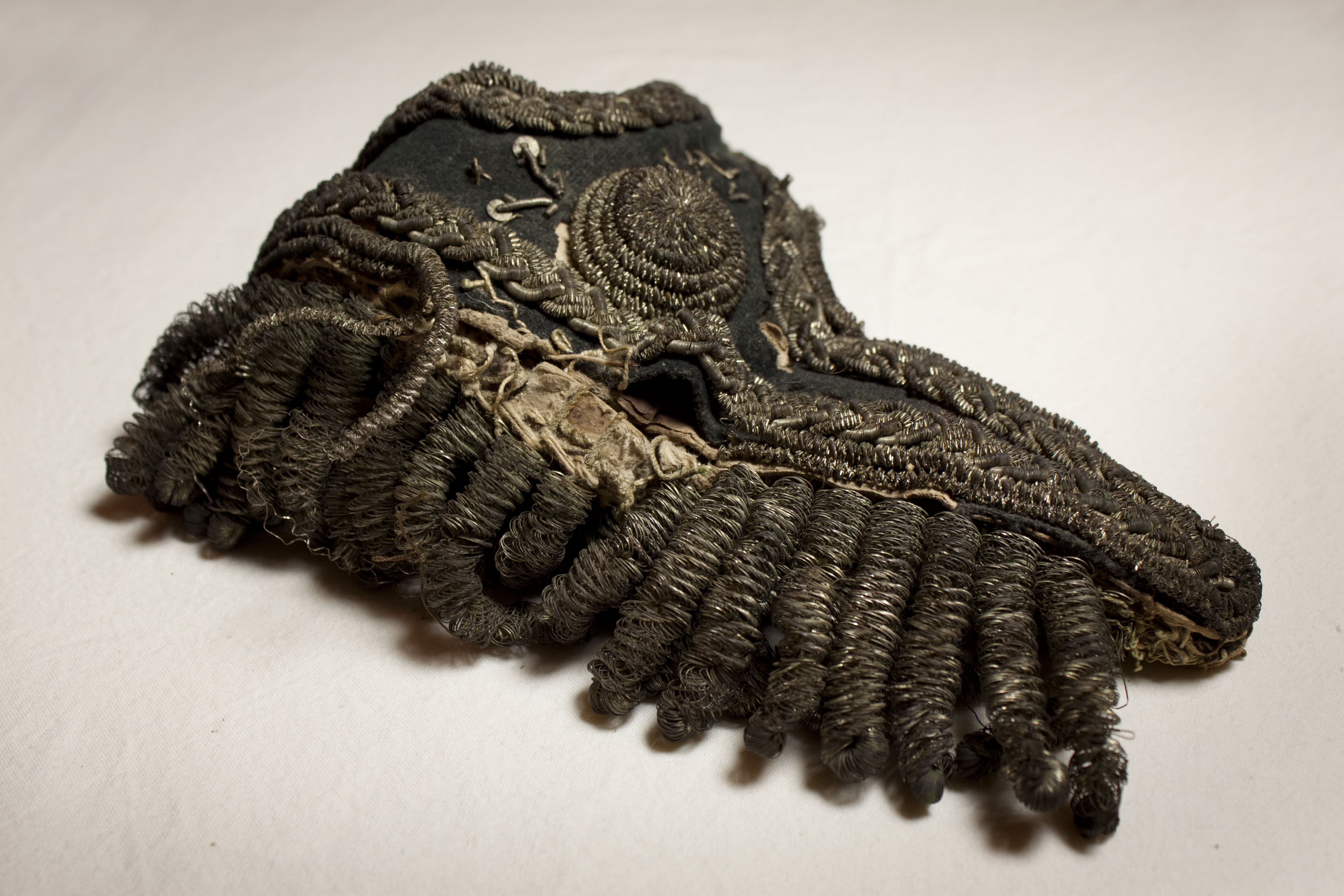
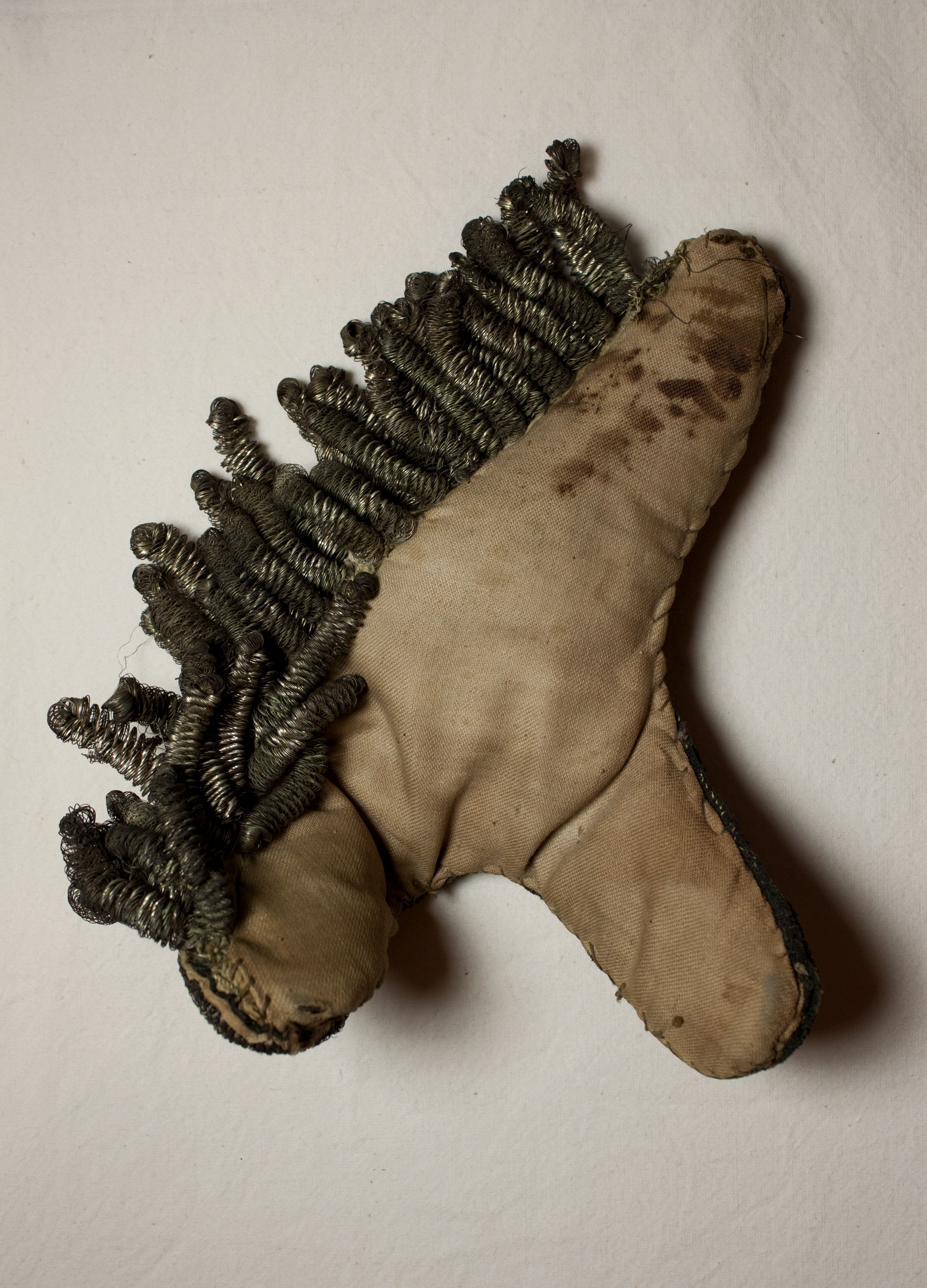
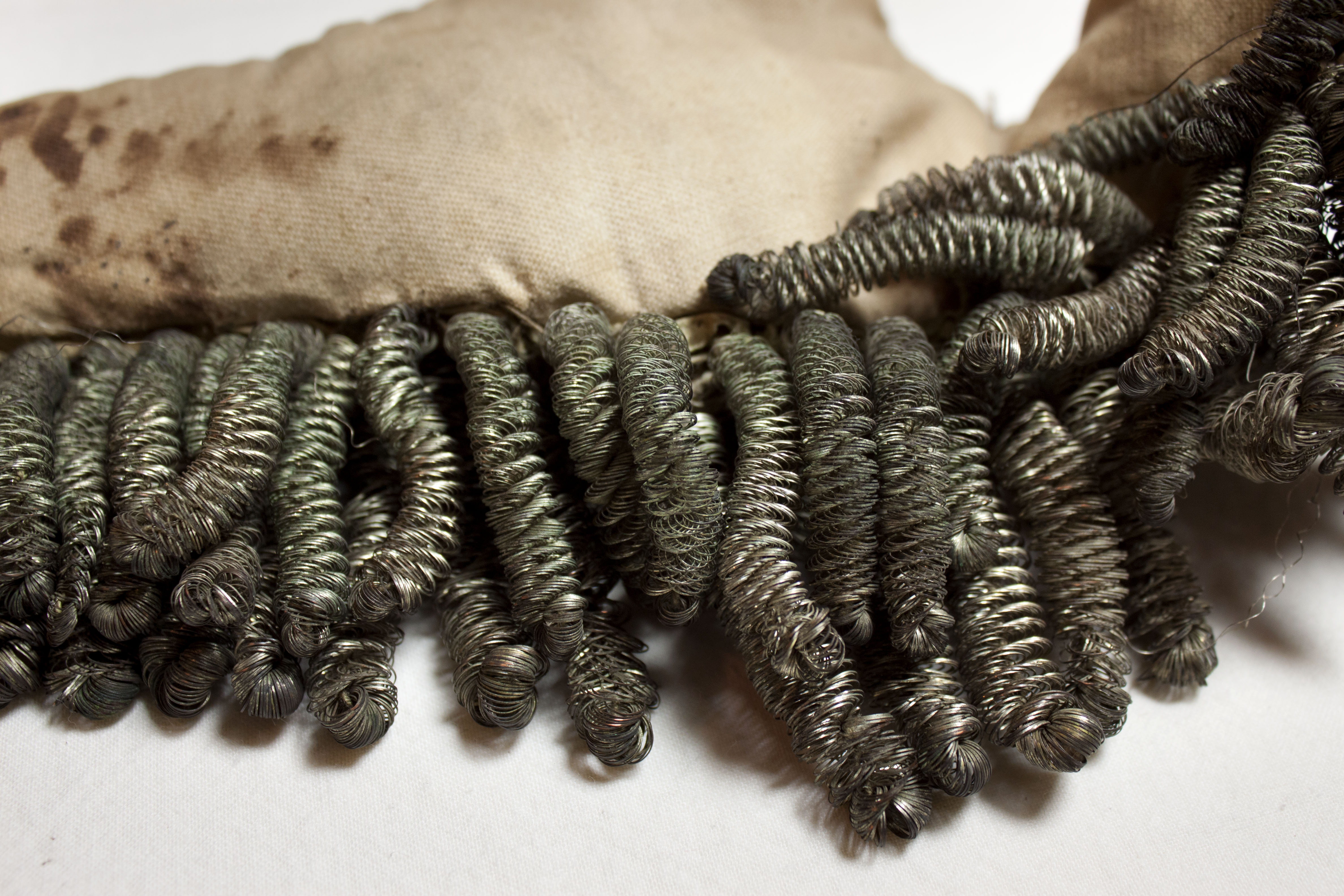
This epaulet belongs to Colonel Johannes Jansen who served in the 4th militia during the Revolutionary war. Much of what is known about Colonel Johannes Jansen comes from his home in Shawangunk, as well as from a popular story about the failed ambush of the Colonel near his home

Physical Description of the Object 

This epaulet measures about 24 cm in length and 14cm in width.  The steel or metal wiring hangs in coils about 5cm from the body of the epaulet and runs through the front. A braided pattern and two coiled lines made up of the metal border the edges of this piece. In the center of the epaulet is a ball of coiled steel that wraps around itself. This ball measures about 3 ½ cm in diameter. There seemed to have been more metal decorations, but must have gotten ripped out. The fabric underneath the metal decorations is black wool. Beneath the wool is some kind of paper that the metal was sown into, perhaps for more support. Under the layer of paper is a sheet of metal and under the metal there  seems to be a coarse form of cotton that fills the insides of the epaulet. The material at the bottom of the epaulet is a tan colored linen or cotton fabric.

Some of the coils hanging off the epaulet are falling apart and the seam connecting the hanging coils to the body of the epaulet is burst open, allowing us to look inside. On top of the epaulet, parts of the wool and paper have been ripped away, exposing the metal underneath. It seems that the layer of metal inside the epaulet gives it its shape, although a section must be broken because one of the “wings” of the epaulet concaves about 10cm in.

Provenance (about 100 words) 

Johannes Jansen was born in 1725. He served as a Colonel during the Revolutionary war and was in charge of the 4th regiment in the Ulster County Militia. He was also part of the Whig party, which caused him to be a target for Loyalist and Native American attacks. Johannes Jansen lived in Shawangunk and is currently buried in the Bruynswick Rural cemetery near the Reformed Church of Shawangunk.

Historical Society of Shawangunk and Gardiner- Volume 2 Number 3

Date(s) of Creation 

Circa 1775-1783 (During the revolutionary war)

Narrative 

Brief overview of Epaulets

Before the 20th century, epaulets and shoulder straps were commonly used to show the rank or status of an officer. The rank of the officer could usually be deciphered through the insignia that appears on the epaulet strap or near the rounded portion over the end of the shoulder (the crescent). For ranks like ‘Major’ or ‘Second Lieutenant,’ the sizes of the epaulet or the fringes on the epaulets were indicative of the officer’s rank (since some officers did not wear any insignia). The word epaulet is derived from an old French word to mean shoulder; and was first made with cloth straps that were worn on the shoulder to keep shoulder sashes and belts in place. Epaulets are also thought to have begun as protective pieces of armor to shield the shoulders. During the Revolutionary war, epaulets were used both by the British and French. These epaulets were created with gold or silver and started from the collar and ended at the end of the shoulders. They were decorated with heavy fringes of gold or silver wire. The epaulets were very expensive as they were made of silver, gold, solid metal, and or plated metal. Officers started wearing gold or silver epaulets in their dress uniforms from 1780 during the Revolutionary war, to about 1872. For sergeants and other enlisted men, the epaulets were made of cheaper metals or cloth.  

http://www.history.navy.mil/trivia/triv4-5a.htm

Johannes Jansen

Johannes Jansen was the lieutenant colonel of the fourth (Hardenbergh’s) regimen of Militia, and represented the people of Shawangunk in the Revolutionary war. In the colonel’s same regiment were; Captain Isaac Davis, Matthew Jansen, Cornelius and Matthew Masten, David Ostrander, Peter Roosa; Lieutenants Jacobus S. Bruyn, Peter Decker, William Ostrander and various others.

(376). The History of Ulster County, New York, edited by Alphonso T. Clearwater

Much of what is known about Colonel Johannes Jansen comes from the Johannes Jansen house, as well as from stories and tales told about the Shawangunk area. The Johannes Jansen house is an example of early stone architecture in the area and it is believed that the west one story wing was built by Johannes Jansen around the 1750s. The main building of the house was built in the early to mid-1800s by the nephew of Johannes Jansen who inherited the house in 1803.

http://www.wallkillhistory.com/Houses/JohannesJansenHouse/JohannesJansenHouse.htm

In the article “Notes of the Ancient History” of Ulster County, published in the New Paltz Times of March 10, 1865 the author writes of Colonel Johannes Jansen. Because Johannes Jansen was a colonel of the militia of Southern Ulster and was part of the Whig party, was very wealthy, and lived so near the mountain, he was thought to be a valuable prize if captured by loyalists. In September 1780, members of the loyalist party Samuel Gonsalus and Ben. DeWilt as well as three Native Americans decided to try and capture Colonel Johannes Jansen. Samuel Gonsalus was the first white man born in the county and was well known as an ‘Indian hunter’ and scout.  Ben. DeWilt or ‘Shank’s Ben’ was also well known in Shawangunk and served in the French war, and had often worked for Johannes Jansen. The party tried to ambush the Colonel as he was leaving the house, but a boy raised the alarm and the Colonel was able to run back to the house and secure the door. Because they couldn’t through the door, the party ransacked the kitchen instead (it was the only room that they could enter). A female slave discovered them there and when the party heard Mrs. Jansen calling out to the neighbors, they took three slaves and a girl named Hannah Grunenwalden who was employed by the Jansens. They ended up killing the girl because they were afraid that her cried would lead their pursuers to them. In the area of Scrub Oak Ridge, the party encountered a man named John George Mack, Elsie, his daughter, and John Mentz, his son in law. While Mentz saw the enemy in time and was able to escape, John George Mack and Elsie were slain and scalped. A few members of the militia found the remains of the old man and his daughter while pursuing the party. The bodies of Hannah Grunenwalden, John George Mack, and Elsie Mack were deposited in their last resting place.

History of Sullivan caounty: embracing an account of its geology, climate, aborigines, early settlement, organization with biographical sketches

James Eldridge Quinlan, Thomas Antisell 

Pg 395

References 

History of Sullivan caounty: embracing an account of its geology, climate, aborigines, early settlement, organization with biographical sketches::James Eldridge Quinlan, Thomas Antisell:::Pg 395

http://www.wallkillhistory.com/Houses/JohannesJansenHouse/JohannesJansenHouse.htm

(376). The History of Ulster County, New York, edited by Alphonso T. Clearwater

http://www.history.navy.mil/trivia/triv4-5a.htm

Historical Society of Shawangunk and Gardiner- Volume 2 Number 3

The Paltzonian of 1928

Image


CAPTION:

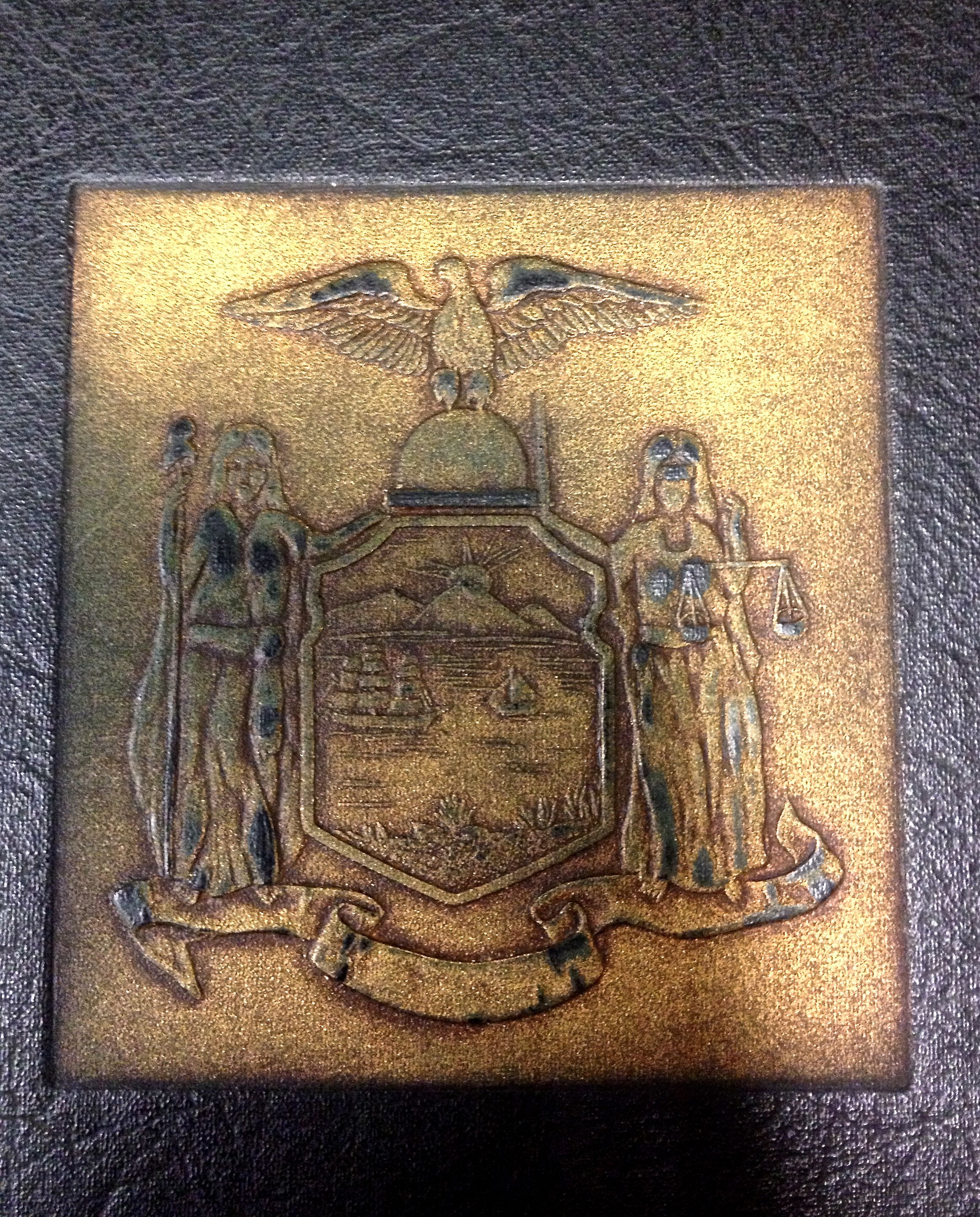
This New Paltz Paltzonian Year Book of 1928 captures the essence of the New Paltz Normal School and its culture at this time.


DESCRIPTION:

This black, hardbound book is around 8.5in by 11in.  It is a little scuffed up and tattered around the edges, and has a gold colored symbol embossed on the cover that is worn with age.  This symbol features and armored plate with a seascape in the background, presumably the shores settlers reached on their journey to what is now New Paltz.  There is a hawk at the top, the colleges mascot, and two female figures on each side.  The women are stylized with Greco-Roman influence and are draped in flowing robes.  One of these figures is holding a balance scale, while the other is holding a staph.

get-attachment


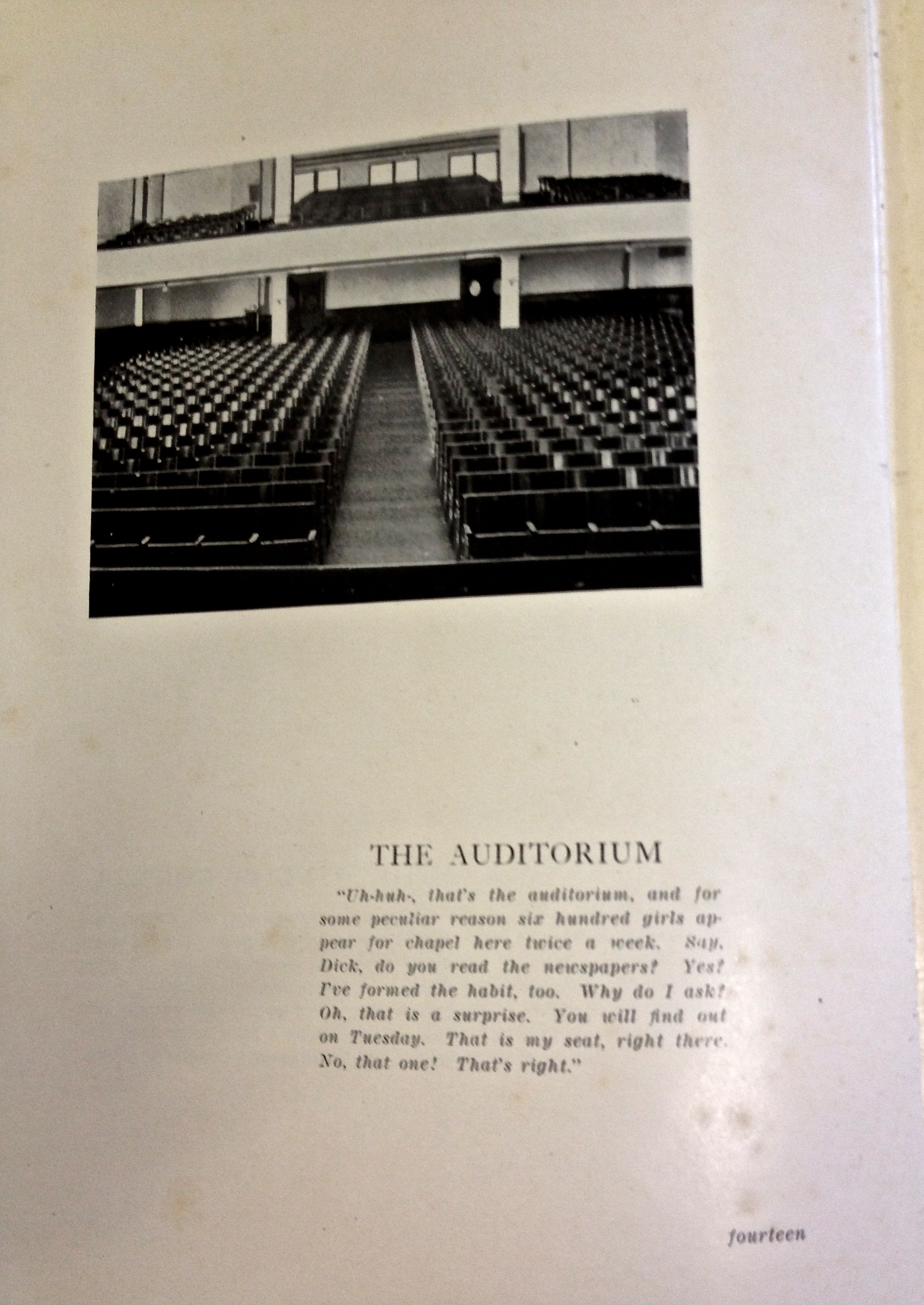
The inside of the book is detailed with 200 pages, which include a variety of content, such as numerous pictures students took around New Paltz, details of teachers and students, organizations, sororities, clubs, a literary section, sports, humor, pictures, advertisements, and contributions.


PROVENANCE:

This object was created in 1928 by the local board of the New Paltz Normal School and was saved here at New Paltz up until present day.  Now it remains in the New Paltz special collections at the Sojourner Truth library.


DATE(S):

1928


NARRATIVE:

As I flipped through the dusty pages of the Paltzonian, I was taken back in time to New Paltz in 1928 at the Normal School.  Being that it is a Normal School, the subjects primarily had to do with training students in education.  I turned the pages and came across a list of all of the students here, the senior grade had pictures and suddenly the popular hair style for girls was dark, wavy hair cropped close to the head


get-attachment (7)


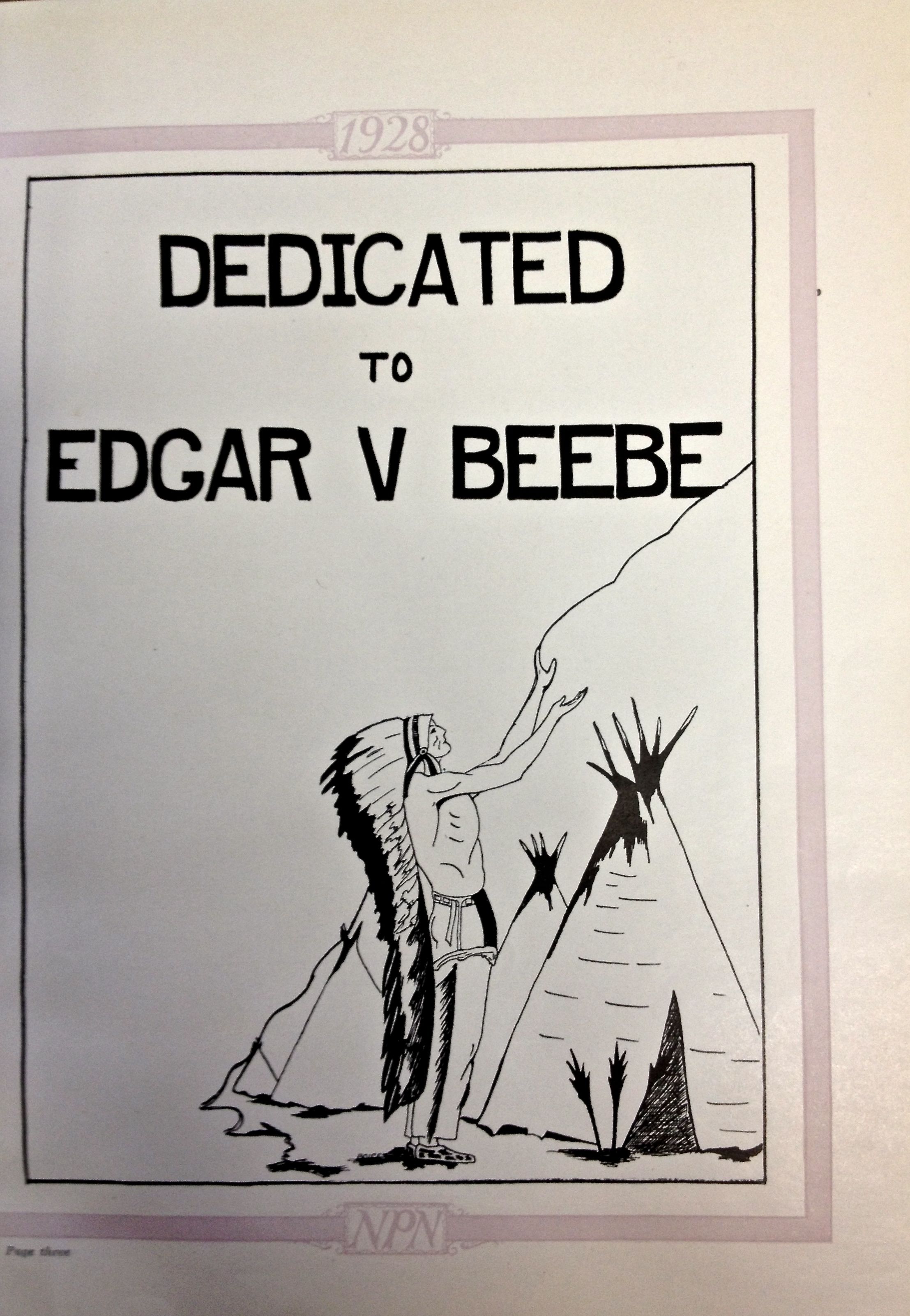
This book is dedicated to Edgar V Beebe, an obviously significant man to New Paltz at this time, as his picture takes up an entire page, making it the biggest picture of a person in the yearbook.  Beebe had a doctorate in psychology and was a teacher at the Normal School who had done civil service.


get-attachment (9)     get-attachment (2)

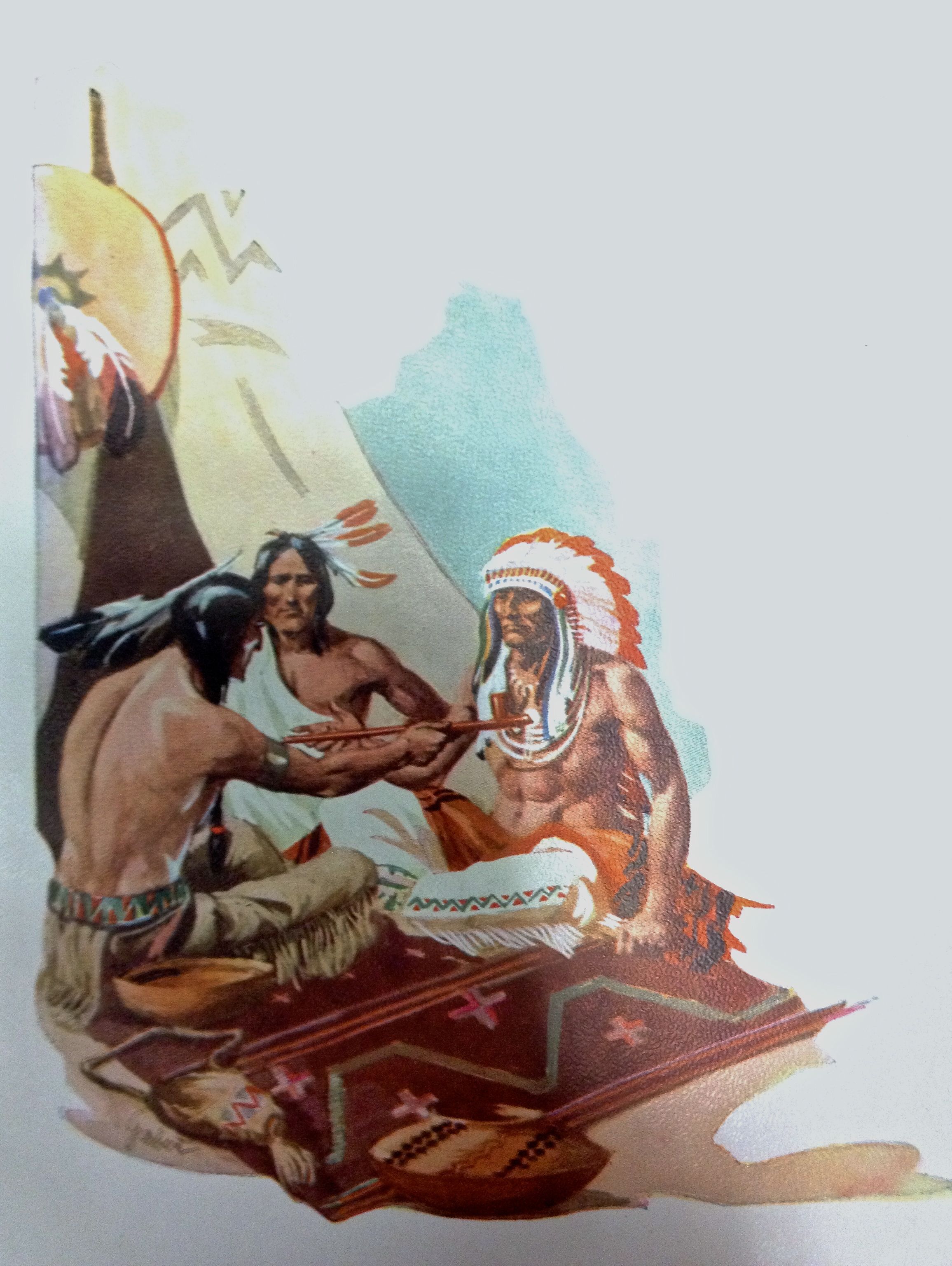
I was immediately surprised by the Native American theme throughout this book, as the settler’s taking over the Munsee Indian’s land and bringing about massacres and disease only a number of years ago should be a source of shame to me, not a source of entertainment to be taken lightly.  However, as propaganda and misleading history is evident all throughout the world, this was not unfitting.

get-attachment (5)


get-attachment (4)


Several clubs, organizations, and Greek life was noted throughout the book, and the Kappa Pi Honorary Art Fraternity is highly likely to be responsible for creating this Asian-themed party with a giant homemade Buddha statue, as depicted in the pictures.  However, the exact year this was done remains unknown, as the only record on the back of the photos is the word “Meyer”, presumably a last name.

new paltz object 2


There were several literary sections and poems featured throughout the book, and it is apparent that SUNY New Paltz has very artistic roots, even back in the early 1900s.


get-attachment (8)


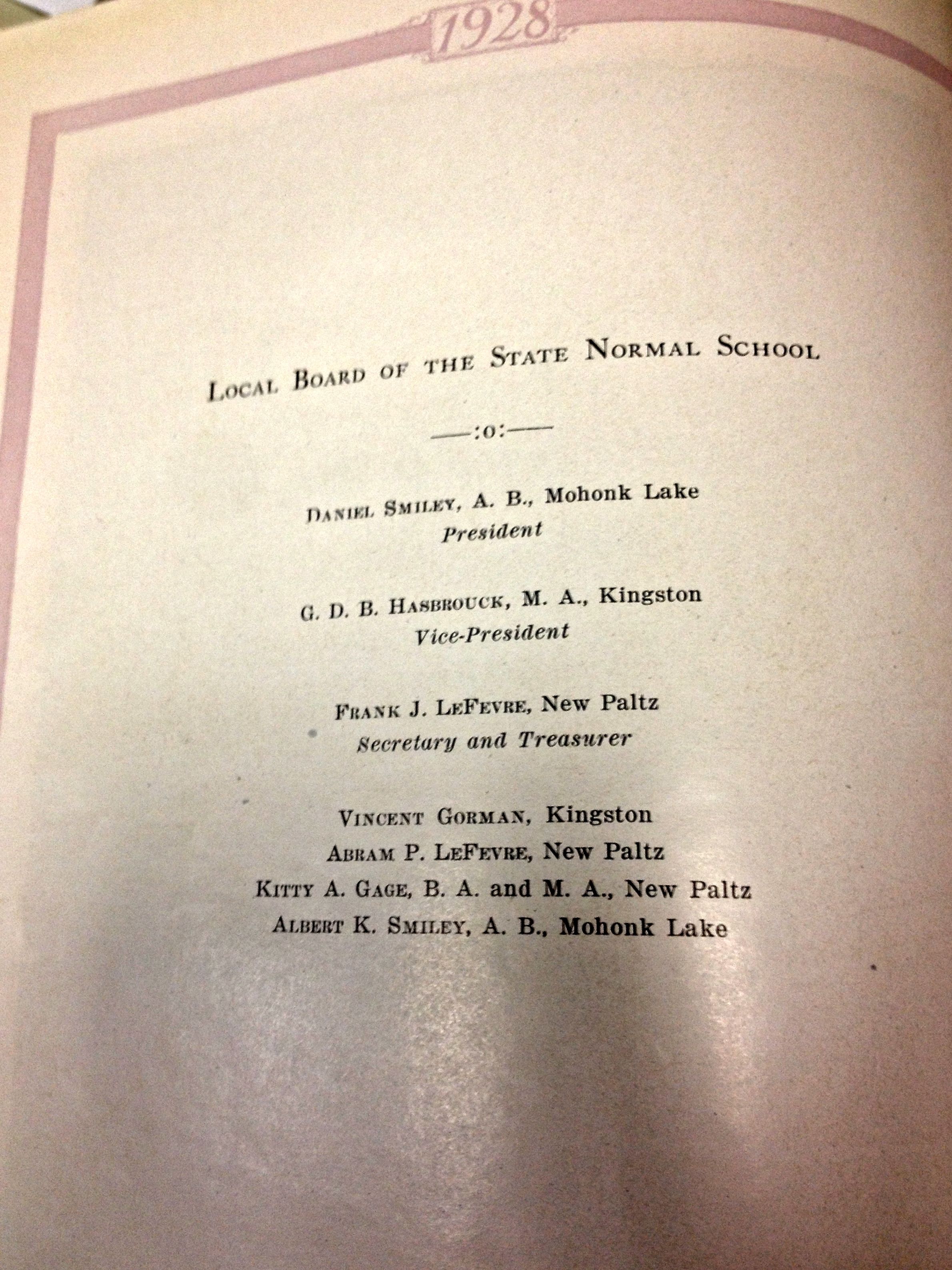
One of the last pages in the book features contributors and the local board of the school, some of whose last names reference our founding families and consequently reoccurring names on our streets and buildings in the present day, namely: Smiley, Hasbrouck, LeFevre, and Gage.


get-attachment (3)


RESOURCES: to be updated soon!  I need to find more resources on the New Paltz normal school at this time (and have several websites with school records to look into).

-Paltzonian 1928

-Buddha party pictures

-http://fultonhistory.com/newspaper%2010/Kingston%20NY%20Daily%20Freeman/Kingston%20NY%20Daily%20Freeman%201942%20Grayscale/Kingston%20NY%20Daily%20Freeman%201942%20Grayscale%20-%200138.pdf


Aladdin: New Paltz’s Theatrical Cultural History Epitomized in a Working Manuscript

R.I.P. Bille Brown

Actor, playwright, teacher, director, and beloved friend

(11 January 1952-13 January 2013)

Image

Caption

Aladdin by Bille Brown can be found in the special collections of the SUNY New Paltz Sojourner Truth Library. It is in the form of a “working manuscript.” Donated to the collection from Brown himself, Aladdin epitomizes the college’s involvement with the fine and performing arts on not only a local, but also international, level.

Image

Physical Description of the Object

The volume residing in the Sojourner Truth Special Collections contains two parts within a sturdy binding folder. The working manuscript of Aladdin is between approximately 83 pages. Its content is in the classic play format, with Brown’s actively handwritten notes in the margins. In addition to these annotations, one also sees Brown’s editing notes of Aladdin, such as certain lines and words being changed or switched or extended. The play, in this manuscript, even includes Pantomime stage directions for the actors, such as “ad lib till AUDIENCE reply sufficiently.” The volume also includes the 2004 Old Vic Christmas Issue detailing that year’s Classic Family Panto, which was, of course, Aladdin. In this publication there lies information and articles about the 2004 production of Aladdin at the Old Vic Theatre, containing direct quotes from Brown, Ian McKellan, and even an anecdote as to how Elton John became involved with the score of the production.

Image

 Image

Dates of Creation/Provenance

The first page of Aladdin says it was written on November 19th, 2004. However, this date is scratched out by Brown and written over it are the words: “JANUARY PERFORMANCE DRAFT,” meaning that although the printed text was written in November, the play became a working manuscript and was edited into January of the next year for performance purposes. This leaves the play being nearly ten years old. Brown gave Aladdin to the special collections in the Sojourner Truth Library as a gift. Such an action indicates that Brown loved New Paltz enough to contribute not a polished, perfect version of Aladdin, but instead a working manuscript. To think that such an accomplished actor would feel comfortable enough to give us an intimate view into his creative process, shows how Brown must have felt that those in the New Paltz community would understand and appreciate his work.


Narrative

The version of Aladdin existing in New Paltz is a work-in-progress of a play, and the fact that SUNY New Paltz accepted the gift into its special library collections tells us that the college values the performing arts in all forms, from an edited-by-hand manuscript to a full-blown production. The object kicks this notion up a notch when one learns that Bille Brown is a respected actor and also an Australian, in fact an AM (Member of the Order of Australia). Brown came to be affiliated with New Paltz under unusual circumstances. The current Assistant to the Dean of Fine & Performing Arts, David Cavallaro, ran into him as an undergraduate theatre student at the college. Cavallaro told his acting instructor that his roommate had someone staying with him that stated he was a member of the Royal Shakespeare Company. Quite quickly, Brown was invited to speak to Cavallaro’s acting class. Soon enough, the former College President Alice Chandler granted Brown Artist-in-Residence at New Paltz.

Brown’s time at New Paltz in the 1980s proved to be quite fruitful. He acted and directed for a number of productions, such as The Fantastiks and The Philanthropist, and even launched the American premier of his own work, including the musical Almost a Joke and an RSC pantomime called The Swan Down Gloves. He is also the man that founded New Paltz’s London Theatre Seminar!

Aladdin is not just any play; it is a traditional English pantomime that was performed at the Old Vic in London in 2004-2005. Pantomimes, usually performed around Christmas time, are defined as “theatrical performances played in the language of action.” Pantomimes usually provide audiences a spin of old fairy tales. With heavy emphasis on audience participation, pantomimes border on the slapstick, valuing heightened bodily expression during the depiction of emotions, events, and dialogs. A line often proclaimed by the audience is the famous “Behind you, behind you!” in relation to some intermittent trouble approaching an actor without them noticing, leaving audiences with the fun obligation of telling the actor themselves.

Another facet of Brown’s editing notes that illustrate a desire to maintain the pantomime ritual is the addition of certain words and actions to increase audience participation, such as changing the line from “Are you having us on?” to “Are they having us on,” in relation to the audience. Soon after this alteration follows the line, “Oh yes they are! (Routine with Audience and DIM).”

Image

Children are indeed welcomed to pantomimes as participants and audience members just as much as adults, thanks to the tradition of double-entendres throughout such productions. Shakespearean cross-dressing is also a trait of the pantomime play. Dominant lady-wives are often depicted by older men, and princely male characters are played by youthful women. Brown’s Aladdin is no exception to this tradition with its all-star cast, with Ian McKellan (yes!) playing Widow Twankey (Aladdin’s mother), and Dim Sum, a male Chinese character, being played by Maureen Lipman. One can see these names written in the margins of the working manuscript of Aladdin, alongside their respective characters.

Image

As mentioned earlier, Brown hosted a pantomime production at New Paltz entitled The Swan Down Gloves, and having Aladdin in the Sojourner Truth Library special collection just further specifies the amount of theatrical variety the college has delved into. Not only are we familiar with musicals, student black box productions, and official main stage shows, but we also do pantomimes, in the tradition of a foreign country. What an assortment! And Aladdin is just scratching the surface, us a peek into just one of the many art forms New Paltz is associated with. New Paltz has the reputation of being an artsy-fartsy kind of school, but it is objects like Aladdin and people like Bille Brown that refute this trivializing label. New Paltz is not artsy-fartsy – it is a cultured and well-rounded institution.

References

Aubert, Charles. The Art of Pantomime. New York: Benjamin Blom, Inc., 1927. Print.

“In Memoriam.” Stagelight, The McKenna Productions Newsletter. Jan 2013: n. page. Web. 5 Apr. 2013.

IMG_20130405_134434

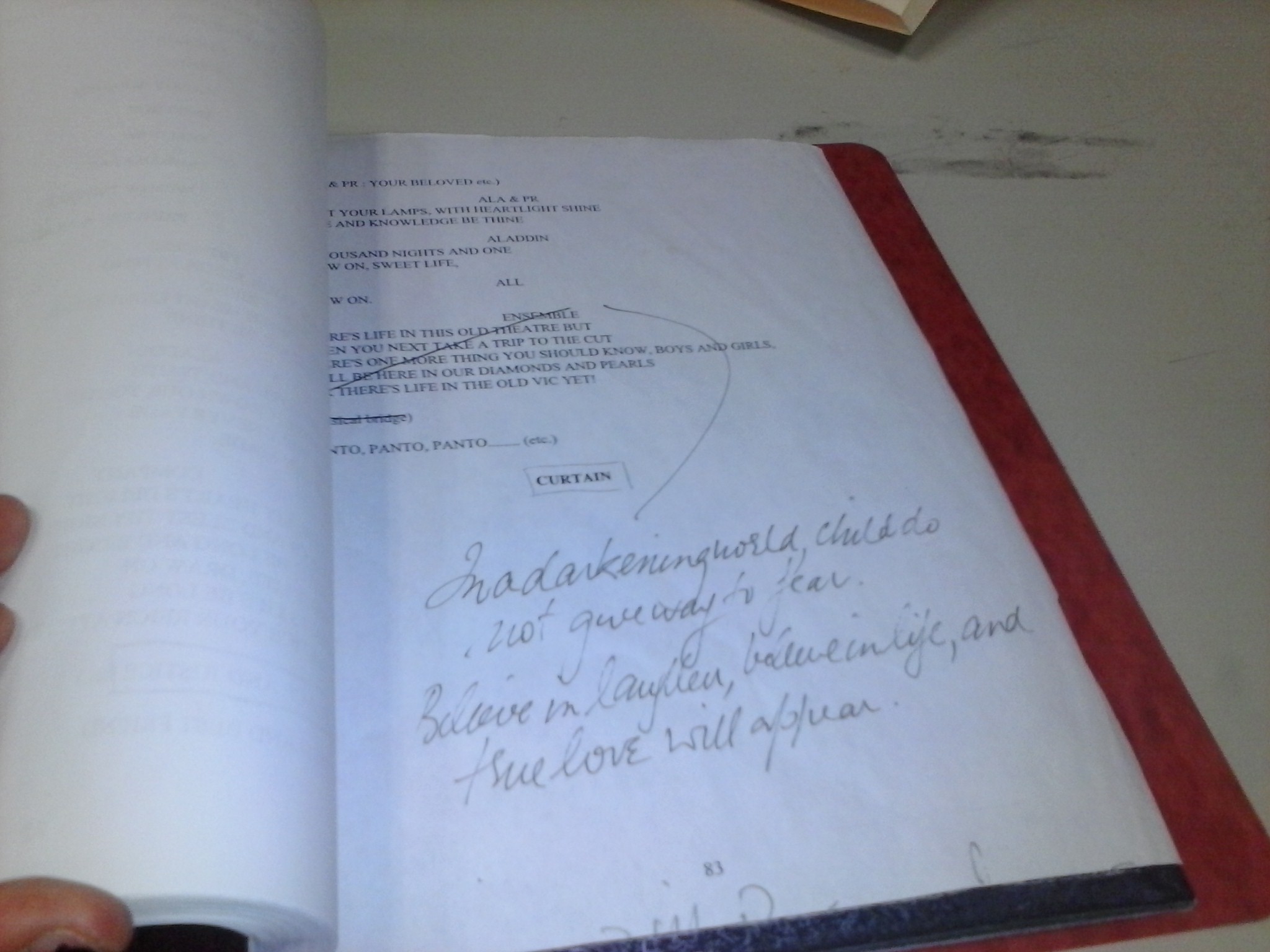
And I just thought this was really cool: Brown’s handwritten ending to Aladdin, edited in silver pen. It states:

In a darkening world, do not give way to fear. Believe in laughter, believe in life, and true love will appear.