I should preface this by saying that I’m the kind of person who likes to have stuff around, and am skeptical at best about the “magic” of tidying up. Reading phrases like “… when we reduce what we own and essentially ‘detox’ our house, it has a detox effect on our bodies as well,” (193) makes my stomach want to detox my lunch, and gives the impression of a sales pitch for snake oil. At any rate, the KonMari method won’t kill me, so it’s worth trying at the very least.
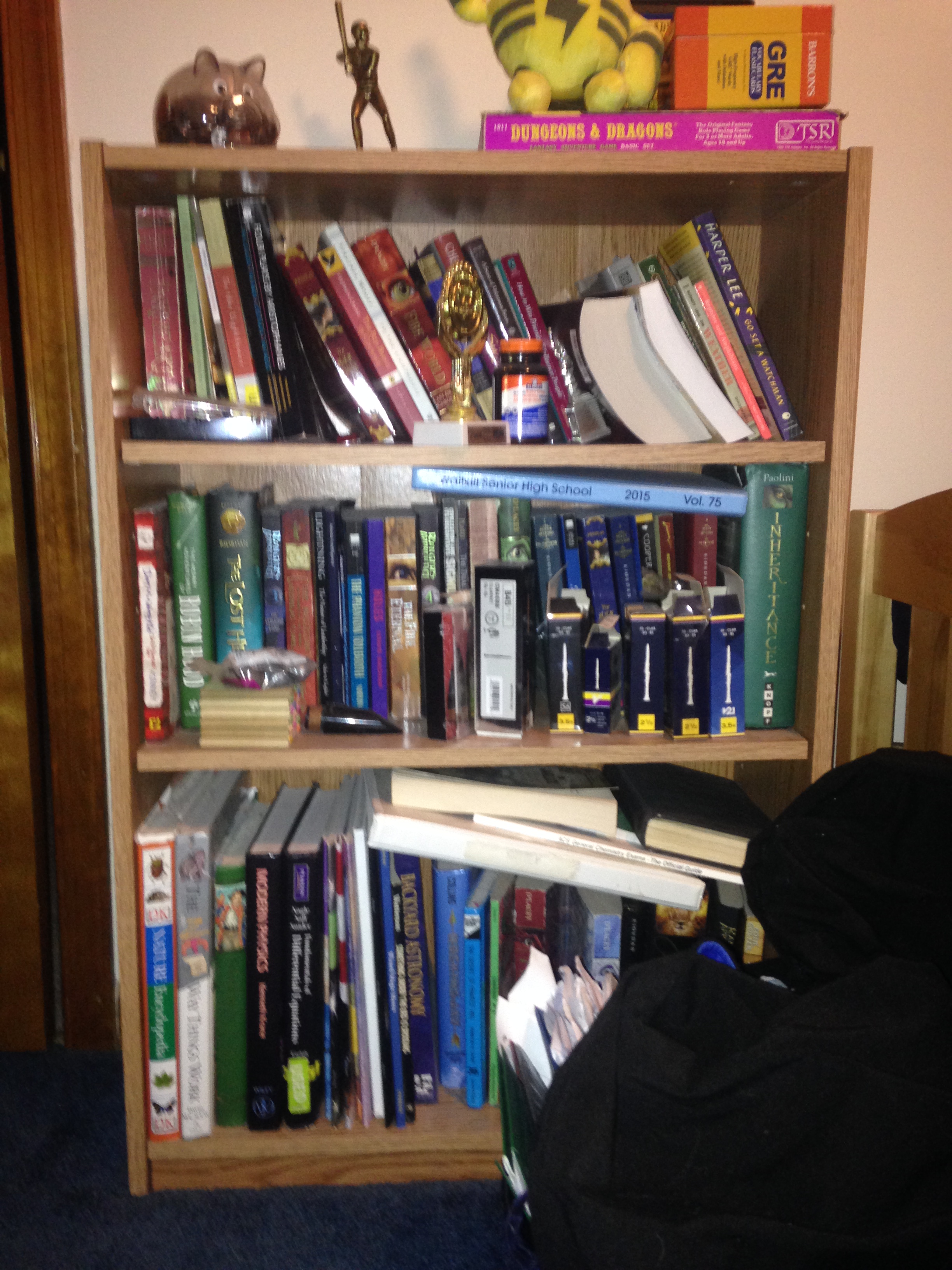
Clothes are supposed to come first, but I decided to organize my books because they need it. I like to read and have saved all kinds of books, ranging from children’s stories and novels to textbooks and encyclopedias. My main bookcase has been overrun by other knick-knacks and lack of space, and the rest of the books are relegated to a crate by my dresser, also a jungle with no particular standard of organization. In total, I estimate there are about 150 books jammed in.

Starting out, I thought for a bit about what I wanted to gain from organizing. I decided that de-cluttering my bookshelves would make my room a better work environment, and a nicer place to spend time reading. That would make me happy, so I got to work tearing my shelves apart; every book on the ground, and everything else relocated to another place.
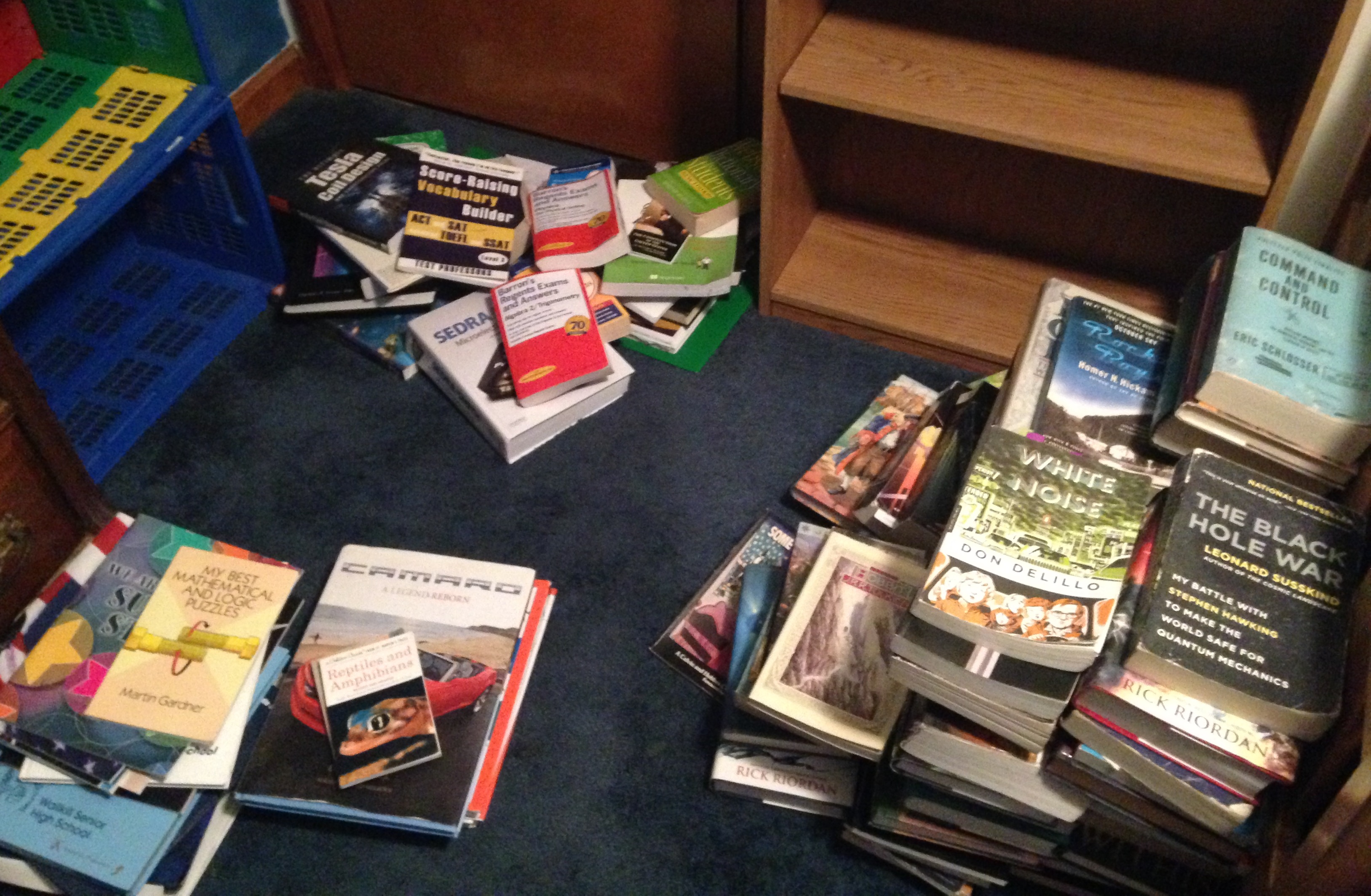
Left: Visual Top: Practical Right: General
Tearing everything out of the shelves was quite fun, and I sorted everything into three piles since I don’t have magazines. On the left is my visual pile, with some photo collections, yearbooks and puzzles. At the top is practical, where my textbooks, dictionaries and manuals went. Everything else went to the right, and since I mostly read for pleasure that pile was the largest by far. I counted 183 books in total, and right away was struck by just how much I had. There are test prep manuals for exams I already took, some things I’ve never read, books I’ve grown out of, and books I’ve never read at all. I felt a little guilty about just how much was piled up, and since the practical pile was blocking my exit I had no choice but to move to the joy test.
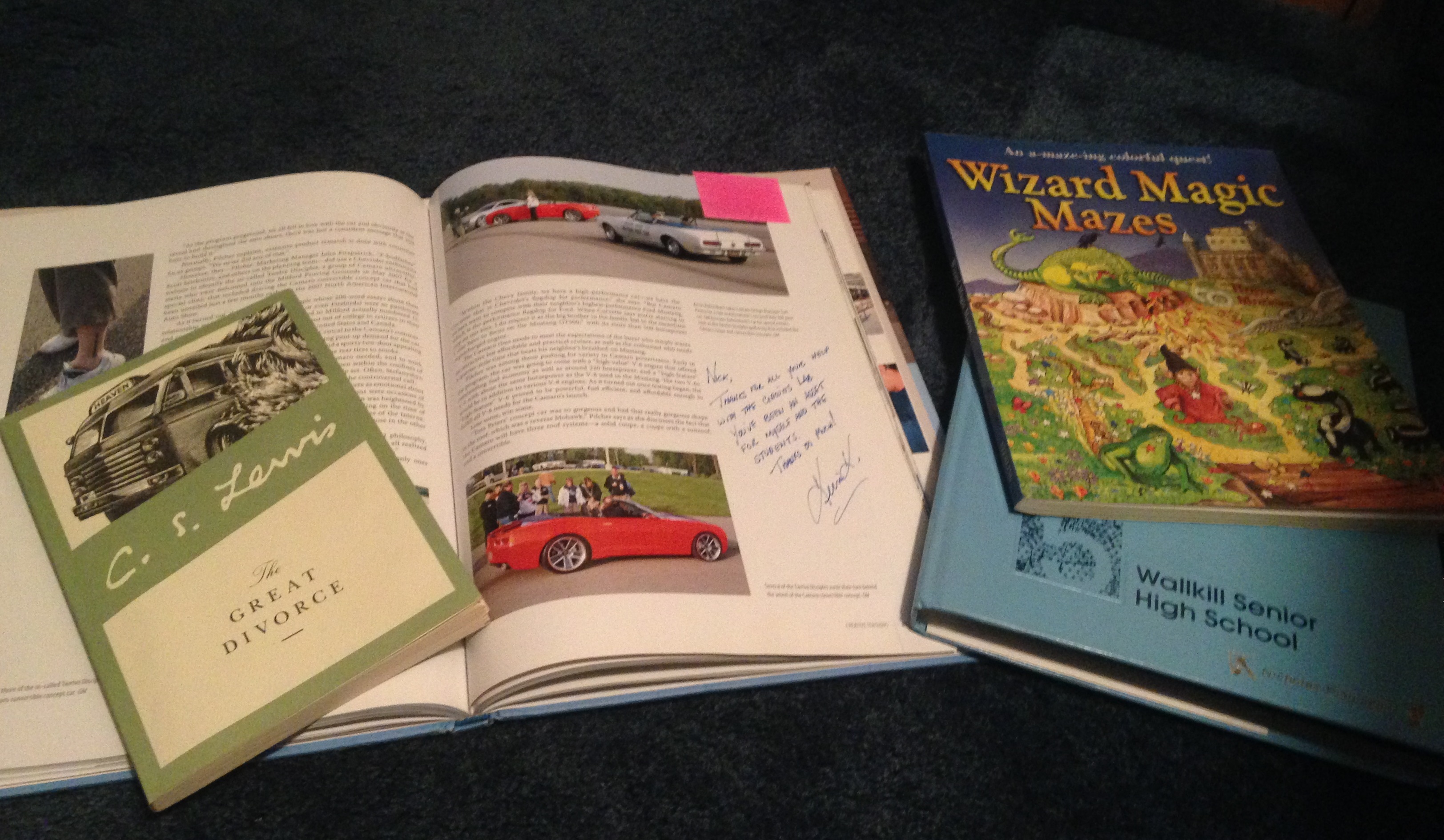
Holding most of my books didn’t cause me to feel anything. A select few brought back personal memories that have little to do with the actual book. These include mazes I did with my dad as a kid, my yearbook and gifts from past mentors. I feel a special connection with these, making them mementos.
Going through the rest felt strange, and not just because I had to thank inanimate objects. It was easy to toss the few I hadn’t read, but I finished the vast majority, and enjoyed them too. Even still, I didn’t feel any joy holding most of them. They were good stories, I had fun reading them once, and I have no intention of ever picking them back up again.
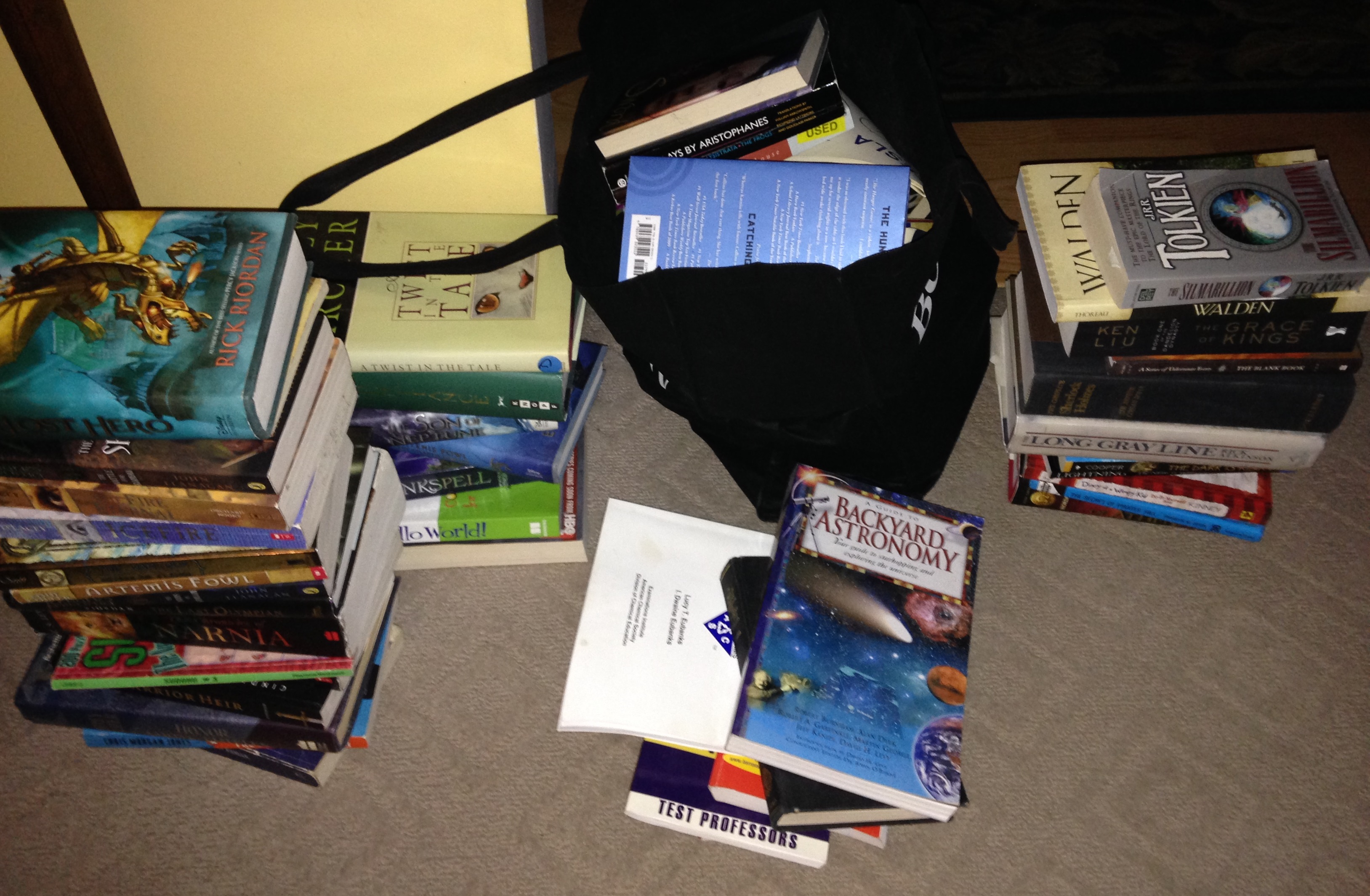
My mother is the librarian at the local elementary school, so she took all the books in the black bag. I’m not sure what to do with the rest, but it does feel good knowing some of them will be read again.
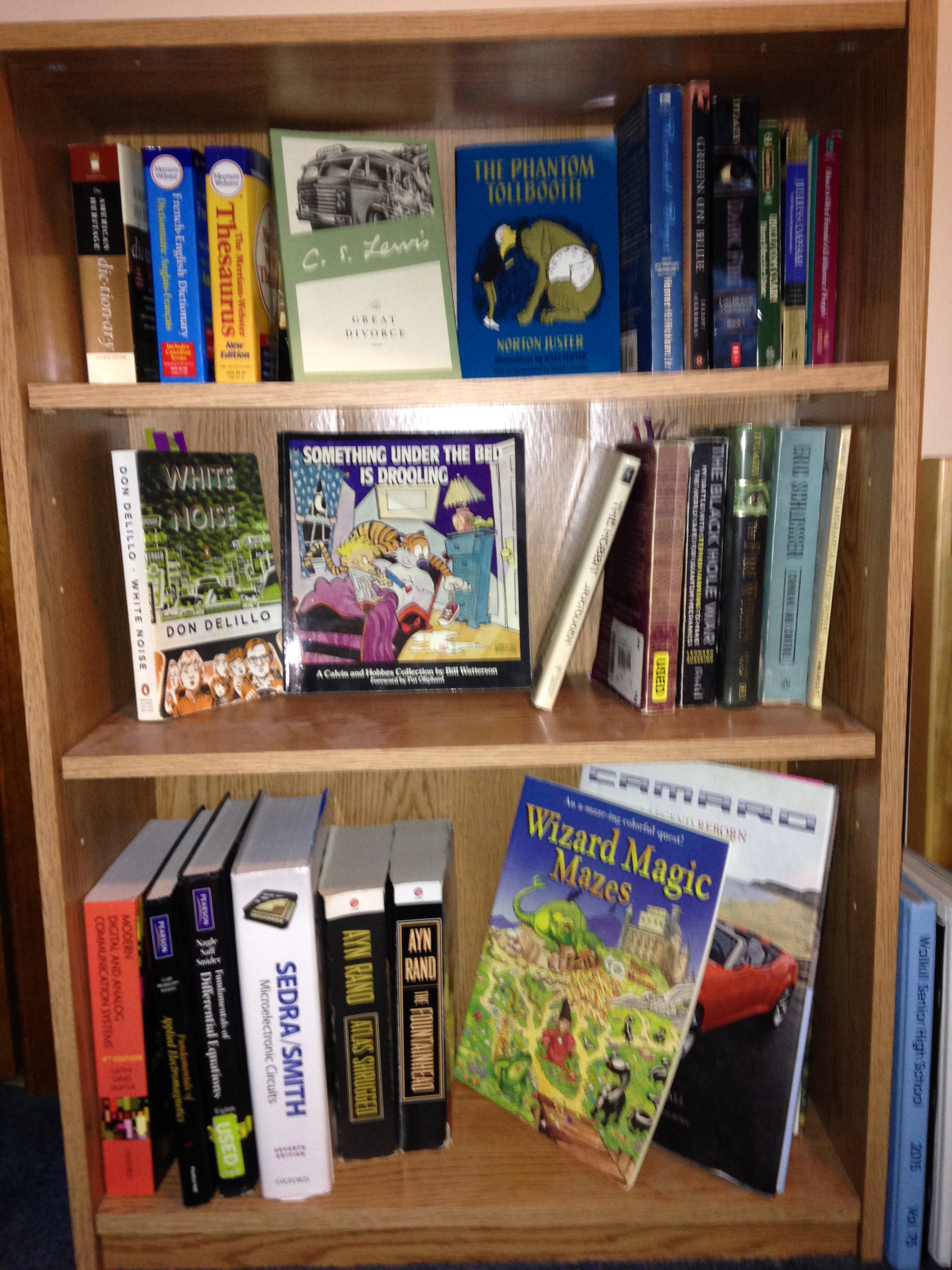
There were a few books that made me feel something when I held them. These brought back images, quotes, and ideas, and reminded me why I love them. In particular, I found that the books I felt connected to relate to me personally. Calvin and Hobbes just makes me laugh, but others helped shape me as a person and introduced me to ideas that worked their way into my character. I like these books because they are a part of me, and looking at them really does make me happy. I only kept 39 books, so I decided to show off the covers with the extra space. Since I reference them all the time, I also put my most used engineering texts here.
For what it’s worth, I was probably too critical of the value of organization at first, and I really do like the look of my bookcase now. The exercise also helped me to understand that the books I’m attached to really stem either from memories of other people, or because I identify with them on a more personal level. My physical health has yet to improve, but my bookcase says something about me, and I feel joy looking at it.
Works Cited
Kondo, Marie. The Life-Changing Magic of Tidying Up: The Japanese Art of Decluttering and Organizing. Translated by Kathy Hirano, Ten Speed Press, 2014.
 The Materials of History, Thought, and Art
You must be logged in to post a comment.