I felt really inspired after reading Marie Kondo’s The Life-changing Magic of Tidying Up. One of the things that struck me the most is her basis on how to decide whether to keep or discard an item, by asking ourselves—does this spark joy? This is a brilliant way of measuring whether to keep an item because it gets right to the heart of the matter—does this make me happy? And, if we have spaces only with things that bring us joy, the space then becomes happier, and we, in turn, feel happier being in that space.
I’m a pretty neat person and try to periodically go through my things and donate what I don’t use anymore, however, this experiment opened my eyes to the things that I’ve still been holding onto that I really don’t care about, want, need, or use anymore, yet would turn a blind eye to when going through things because I think one day I’ll use it. For this experiment, I went through my t-shirts and sweaters. Clothes are one of the things I hold onto for way too long. I developed a pretty sizeable mound of clothing as I amassed them into one pile on the floor, but this helped me realize how much I do have, and deep down knowing how much of it I actually wear and how much I don’t. This experiment made me confront those items that I know deep down I won’t ever wear again, and just take up space.
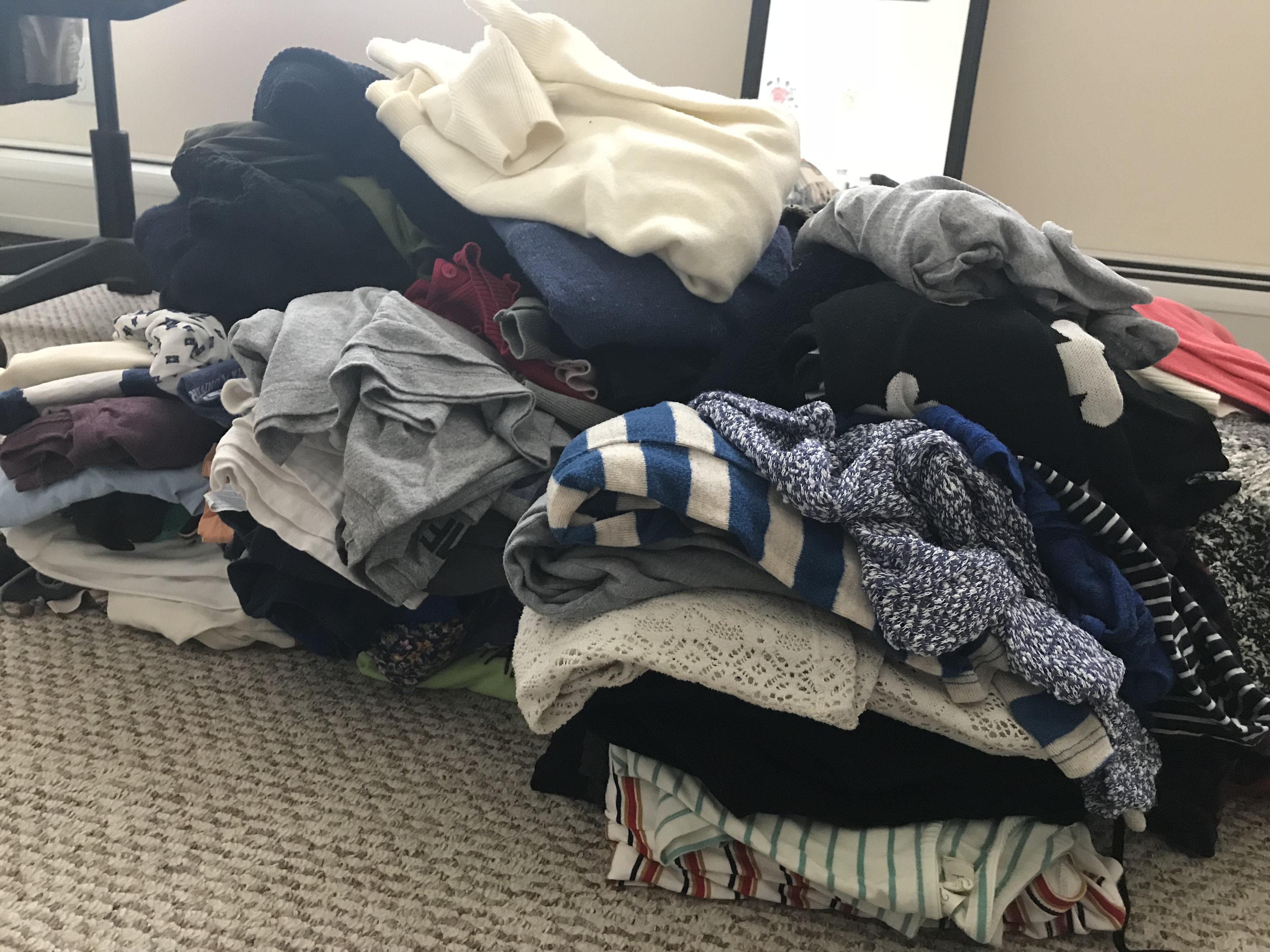
As I grabbed each item of clothing and examined it in my hands, I asked myself, does this spark joy? Some items were an immediate yes, and some a hard no, while others I really had to stop and think for a bit. However, that question helped me to decide what I want and don’t want, because when getting rid of clothes, I usually ask, could I see myself wearing this again, or does it still fit? The answers are usually yes because I rationalize that one day I will feel the need to pick up that sweater I haven’t worn in years and strut it out. The question of whether it sparked joy changed my way of thinking, and allowed me to make those decisions. I was surprised by some items that I discarded—shirts that I swore I would always keep and used to wear to death, but they served their time and purpose, and don’t spark joy the same way they used to—and that’s okay.
I kept thinking of Kondo’s method of thanking your items when getting rid of them. This is a reason why I don’t get rid of clothes, I feel bad and guilty. However, her words really helped me. When I looked at a shirt that I was no longer keeping, I thought of the good times I had in it and the purpose it served me, and felt grateful. I thanked it for coming into my life, and allowed myself to let it go, knowing that it has fulfilled me as much as it could.
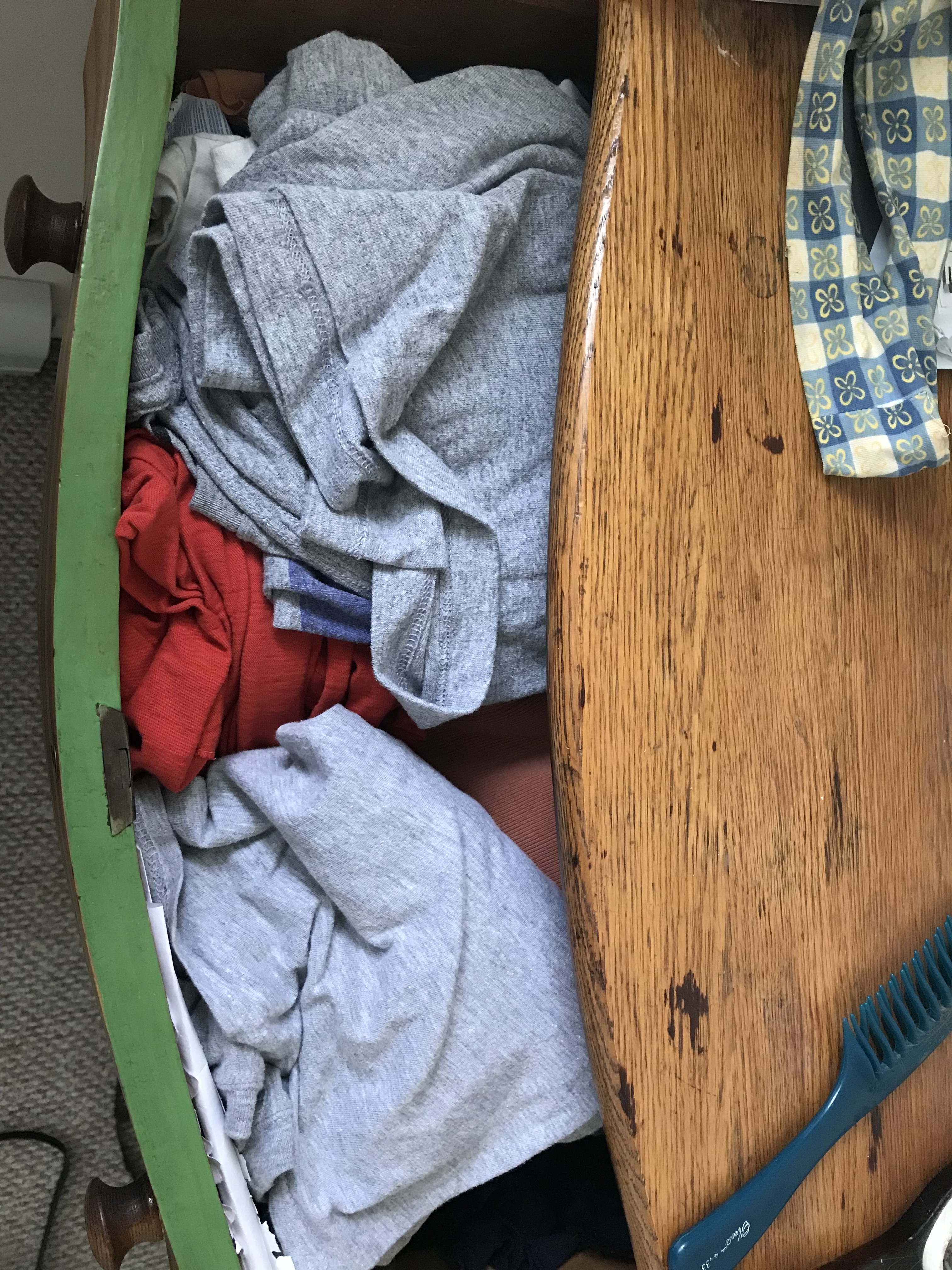

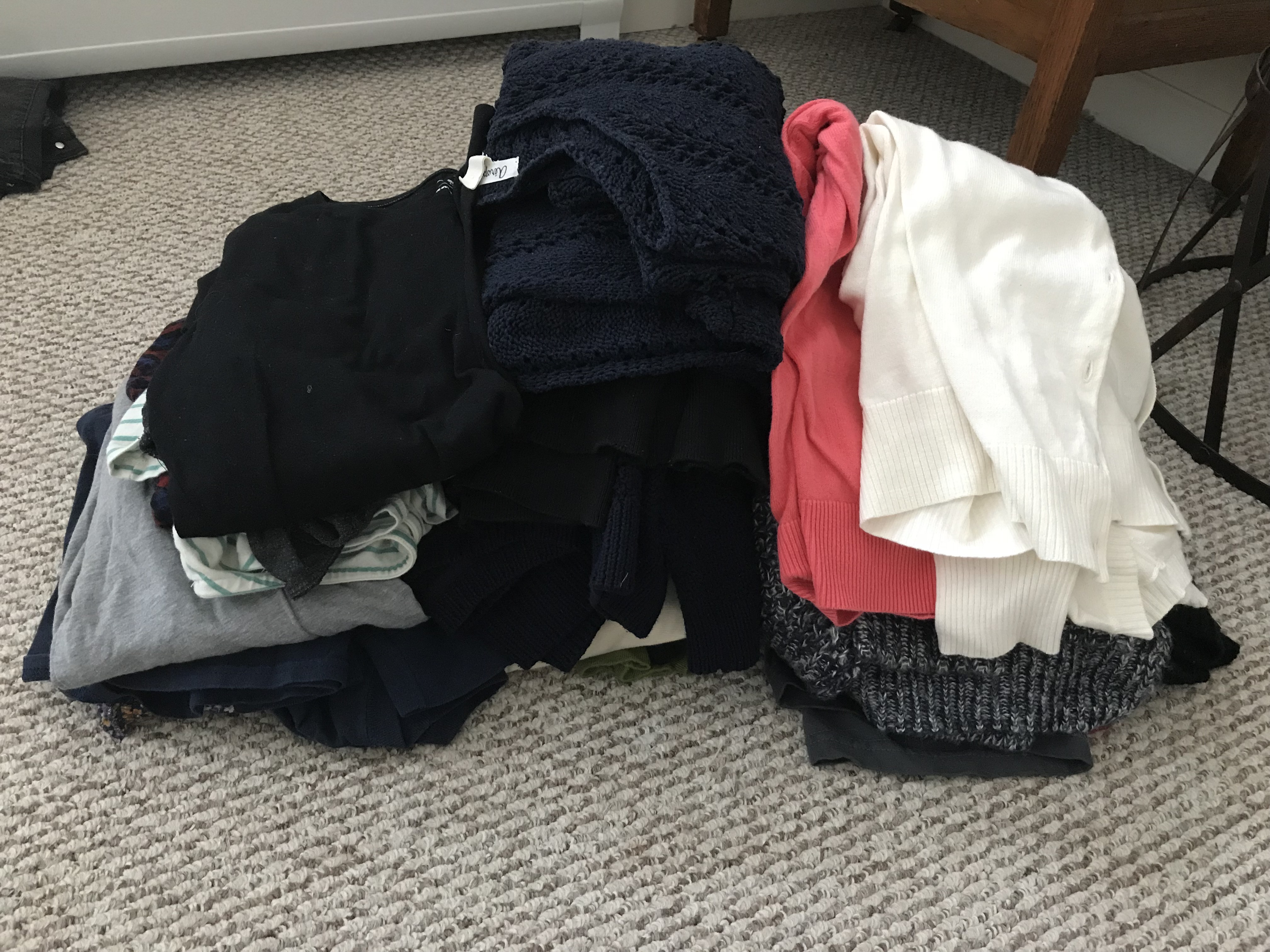
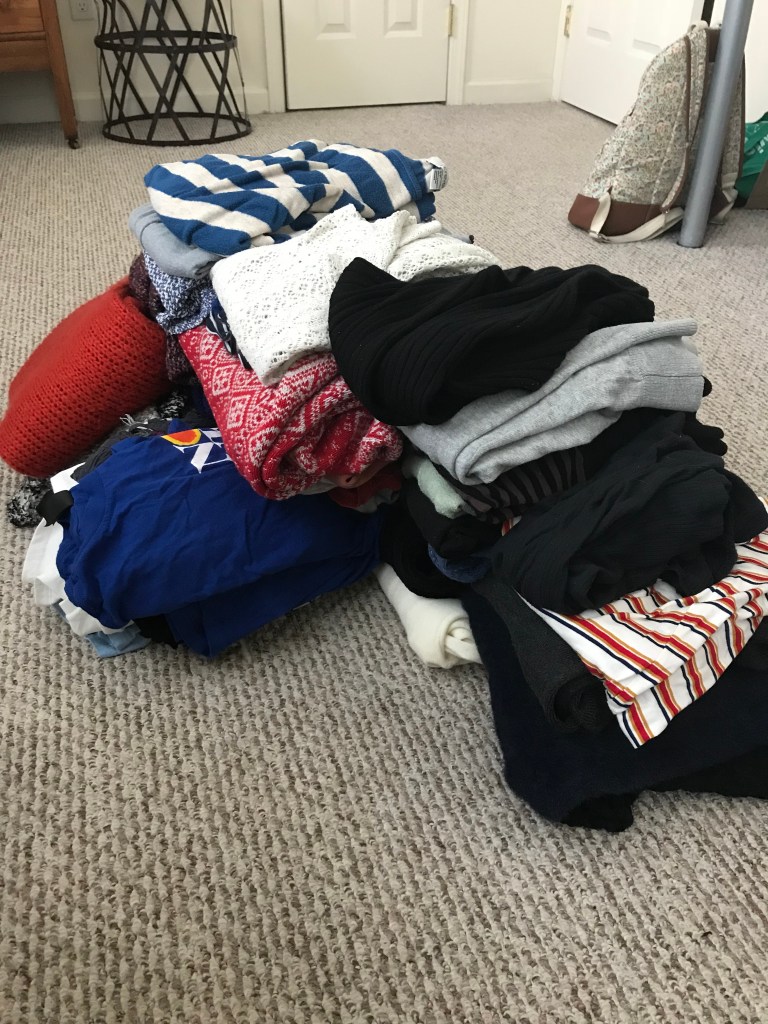
By the end of the experiment, I had discarded a little less than half of the clothes in my original pile. My one drawer with a lot of my t-shirts could now close with ease, without having to jam all of them in there. I felt lighter and freer, and I didn’t feel guilty about letting things go. It makes me feel less stressed and anxious knowing I only have items that really spark joy in me and that I love to wear. This experiment made me think of all the old books and notebooks that I have in my room at home, and it inspires me to go home and do this same experiment. I hold onto things longer than I should because I assign a sentimental value to it and feel guilty about “wasting.” However, notebooks I tell myself I’ll look at, or items of clothing that I tell myself I will wear, I never do. In thinking about Kondo’s discussion of things having feelings, I realized that it’s better to take a moment to feel the gratitude for the item, and thank it, and let it go, than to shove it into a corner where it never sees the light of day and collects dust, just so I can have the mental ease of knowing that I have it. It made me realize that I can assign too much meaning or value to items that don’t actually spark joy in me anymore, and that I’m trying to hold onto some past event or past time in my life. It’s better to be thankful and move toward a future, than be stuck in the past.
 The Materials of History, Thought, and Art
This is exactly how I felt while tidying up my clothing. Although they hold good memories, I know that I would never wear so many of the shirts I discarded ever again. It was a satisfying feeling tidying up and being able to easily close my drawer. I also have donated my clothing which makes me feel better about giving them away because it now serves more of a purpose more than it did in a ball in the back of my drawer. I really like your outlook in the last sentence. It is true that some items may hold good memories but, it is important to move toward a future.
I would definitely agree with your idea of feeling guilty when throwing out your clothes that served a unique purpose in the past. When I was performing the same experiment on my wardrobe, I had some difficulties deciding what to remove and what to keep and would feel guilty if I removed something that once had a special purpose. Despite this, your idea of leaving the past behind is a great way to move on and decide on what to keep and what to discard.
I completely relate to your feeling of guilt when getting rid of clothing. I feel as though I often justify keeping clothing because of the money I spent on it. I justify buying clothing in the same way. I like to think that for every dollar I spend, I should get at least one wear out of the clothing article. When I do not reach this number for clothing that no longer brings me joy, I find it very difficult to justify getting rid of it. I don’t think this feeling of guilt comes from attachment to the clothing. Instead, I feel as though I would be wasting money and feel guilty about it. This feeling is emphasized if it is clothing that someone else has purchased for me, as I feel like I am wasting their money.