The KonMari Method: Books

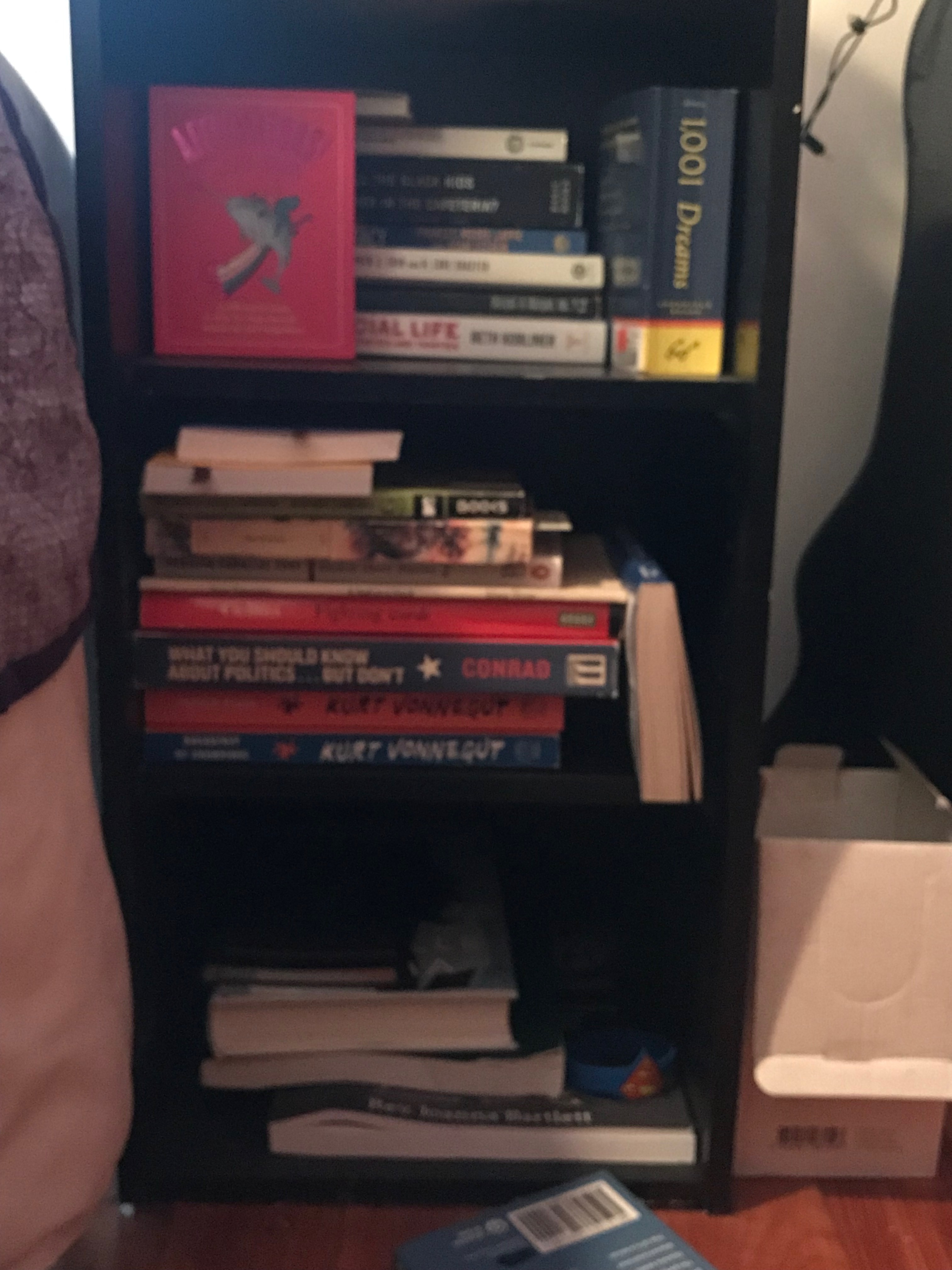
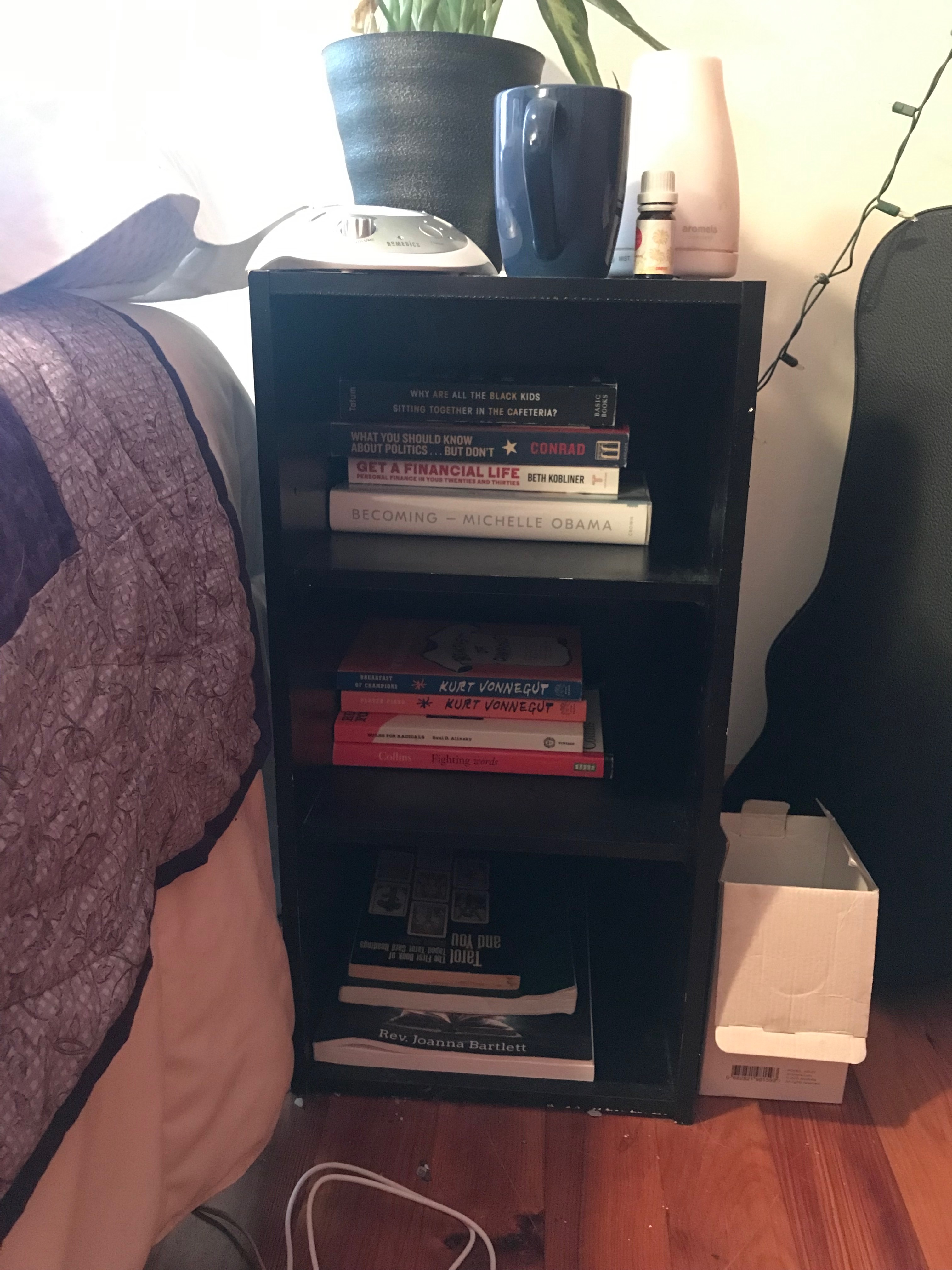
I’ve always been a big reader. I’ve developed a pretty large book collection over the years, a decent portion of which has accompanied me to college. I had roughly 30 books in my tiny room here in New Paltz when I started this assignment and finished with about 15. It was an interesting process going through all of my books. Kondo’s method intrigued me because I’ve always gone about  “tidying up” with a focus on what I want to get rid of rather than what I consider important enough to keep. I was honestly shocked by the sheer volume of books when I laid them all out on my bed; It never looked like that many when they were cluttered on my bookshelf or nightstand.

Following Kondo’s advice, I began by picking up each book and noted my initial feelings toward it without opening it up. This was harder than I expected. Although I was able to sort the books into “keep” and “discard” piles based on this method, I found myself considering all the possible scenarios the books in the discard pile may be useful for. Some of those books were gifts; others I’ve been meaning to read for years now but can never find the time to. It was difficult to convince myself that I don’t need these in the same way I “need” the books I decided to keep–I guess not having my space filled with books just felt sort of wrong. This got me thinking that much of my relationship with objects–be it books, clothing, or momentos–is based in a sense of  comfort. The objects in my space are reflections of my personality, and in this way become an extension of who I am. Although the clutter they form is sometimes overwhelming, getting rid of that clutter can be equally overwhelming.

Most of the books I purchase or am given have similar themes: satire or social commentary, french literature, or sociological/ social justice related topics (this group being the majority). These are all topics I care about, and reading books on these subjects help me sustain my passions. I felt most drawn to the books that deal with politically-relevant subjects; for example, I recently purchased a book debunking problematic myths about immigration in the US, which is a subject I’ve been excited to become more informed about. Knowledge is very important to me, so a lot of the books I chose to keep were educational in some way or another. The biggest trend I noticed, however, was sentimental value. I haven’t’ read some of the books in my room since high school; I chose to bring them with me to college because they remind me of a particular time in my life. Many of these are annotated from cover to cover, complete with circles, underlines, and notes to myself. It’s very nostalgic for me to flip through the pages and see what stood out to me at that certain point in my life. I think this all ties back to the idea of objects bringing me comfort. Having these books in my space that remind me of who I used to be, or can help me in becoming the person I want to be, is a calming feeling.

Reflection of Tidying Up

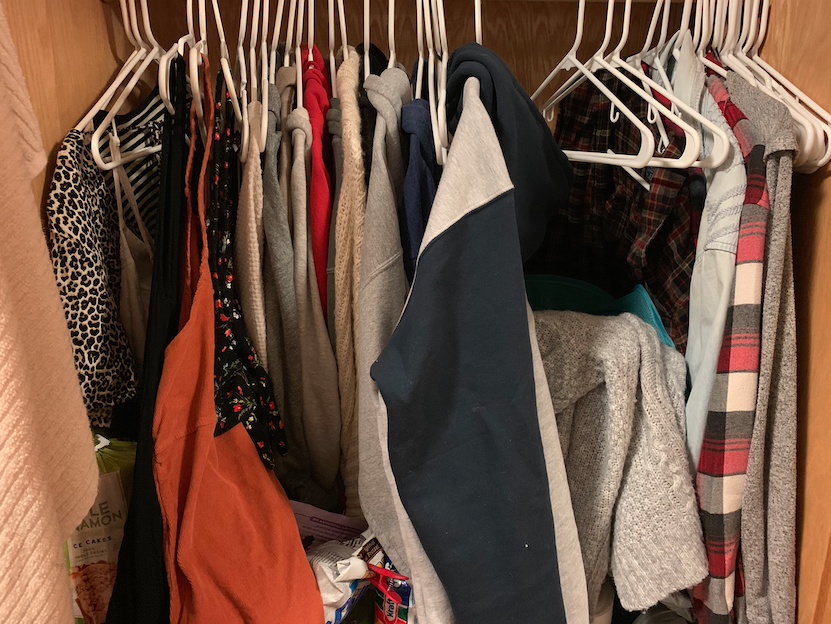
I chose to “tidy up” my closet, but I focused only on tops or shirts; particularly sweatshirts, sweaters, cardigans, and long sleeve shirts. I started with around fifty items, and removed fifteen from my closet through this process. When placing all the items into one common place, I realized just how many items of clothing I had and was a bit shocked. I found that this realization was a bit similar to the ones Kondo describes and that is seen in the Netflix series, where people do not realize how much they have until it is in one big pile in front of them. I found myself trying to rationalize how many articles of clothing I had right off the bat, and told myself that it is because I am from upstate where it can be colder, and that I in fact wore all of these items. However, I soon found out that this mindset would get me nowhere, and that I had to take a step back and really find the perspective Kondo describes.

My closet before tidying

After reading the sections from Kondo’s book and watching the series, I knew how the process worked, and I thought it would come relatively easily. However, I found the process a lot harder than I expected it to be. I am a regular cleaner, and enjoy going through my closet and getting rid of what I am not wearing after each season. This process though, was more challenging for me, as finding what sparked joy for me was not as easy as just getting rid of out of season clothes. I found myself thinking about everything that article of clothing was; where I got the article of clothing, who I was with if I purchased it myself, or who gave it to me if it was a gift, and what happened the last time I wore that specific item. Was the memory of that item a good or bad one, how did I feel that last time I wore it, who was with me the last time I wore it, would I find pictures of myself wearing this sweater or sweatshirt in the past, did I enjoy those pictures or did I not want them shared with others? All of these questions circled in my mind throughout this whole process, and made it harder for me to get rid of things. If someone in my family picked out that sweater for me I associated that item with them and found that it was harder to part with, even if I couldn’t feel joy with that item right away, or if a sweatshirt was from a place I traveled too and had great memories from that place I wanted to keep it. I guess in some ways that could be considered bringing me joy, but at the end of this process I felt as if I still had a lot of clothing, and was not successful in “tidying up”.

I think that this feeling of not getting rid of as much as I thought I would or as much as I should can be contributed to many things. Watching the show, the people cleaned their whole living spaces while I only tackled certain items in my closet. I think since I saw them get rid of so much more, I thought I should have more too. I think that this feeling also relates to my relationship with clothes. I have always struggled with body image, and I definitely realized that I have an attachment to certain things. If a sweater or sweatshirt got me through a difficult time or I felt that I looked a certain way in that article of clothing, I found myself wanting to keep it. Even if the item reminded me of that difficult time, or if I was not happy in the item but “looked good” in relation to beauty standards, I held onto it. This dynamic is something I did not foresee being so prominent in my life, and in my closet. Overall, this process opened my eyes to the bigger picture that Kondo describes, and I have come to conclude that I need to more clearly and distinctly figure out what kind of life I want after the tidying process. I think I will try this process again in the future, after I have more concretely decided what I want to get out of it, and hope for a more fulfilling and joyful outcome.

My closet after tidying


My Memory Box

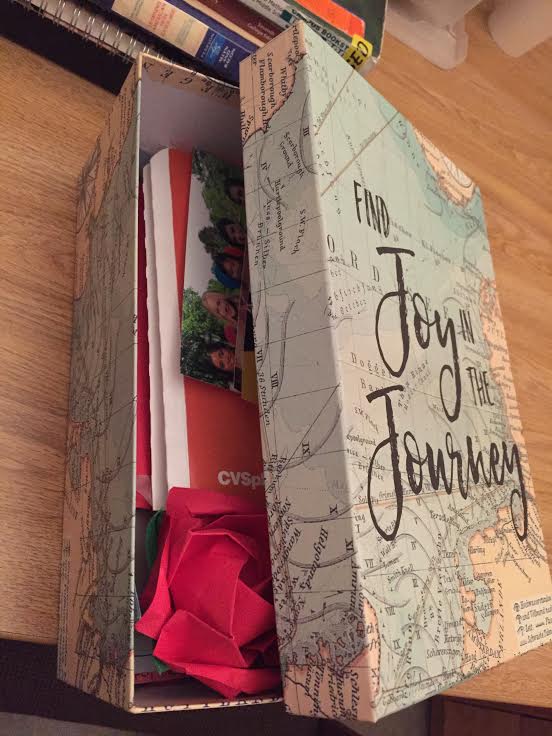
Peep of the inside of memory box

I have decided to tidy my memory box. Every time I make a memory, a small part of that day goes into the box. I started by categorizing the items in the box into cards, ticket stubs/plays, photos and miscellaneous. As I was sorting it, instantly in my mind, I saw things I wanted to get rid of, things that I had left at the bottom on the box, forgotten. I realized I had 28 cards, 16 ticket stubs, 2 signed plays, 84 pictures and 18 miscellaneous.

The cards were either birthday cards from my staff or my sorority that I didn’t want to part with. The ticket stubs ranged from movie dates with my boyfriend as we started dating to movies I went with friends. I understand that I could throw these out because I don’t need them. They bought me joy when I went all those years ago but now it’s just paper that reminded me of those great times. Looking at the two play books, the Dear Evan Hansen was signed by the original cast and Hamilton was an amazing experience, both adventures that my brother took me on. I decided to follow KonMari’s idea of ripping the page that was most important, so that’s what I did. I ripped out the front cover and tossed the rest. The photos were mostly of my best friend and I from years ago, which I realized that I don’t need anymore. Those memories will forever be with me and I don’t need physical photos to prove that. There’s also pictures of my boyfriend and I in the beginning of our relationship along with photos of my sorority when I first joined. A lot of memories in that box, but also many forgotten memories. There was also a few photos from high school and I still love those people so I might keep a few of those. The miscellaneous can probably all go, a lot of it was things I have collected from camp as a counselor, things that remind me of my future and why I chose the path I did. I also realized a lot of the miscellaneous things were origami that my camp kids made for me as a goodbye gift and I treasured those in that moment, but now I realized it’s just clutter.

Items were categorized from left to right: cards, miscellaneous, ticket stubs, play books, and photos.

Starting with the miscellaneous pile, I threw out everything but the origami rose and white flower corsage that were given to me by the two most important people in my life right now, my boyfriend and my sorority girls. Holding both in my hand, definitely brought me joy. Next, I moved onto the ticket stubs, which was hard. Each ticket stub had its own story, whether it was with friends or significant others. I realized that I had only gone to amazing movies like Deadpool, Crazy Rich Asians, Coco, Ocean 8 etc. In the end, I realized I don’t need these tiny stubs to remind me of the great films I have seen. I decided I will keep only three tickets: one from the American Museum of Natural History, one from a Lindsey Stirling concert and the last one was from the Great Jack O’Lantern Blaze. All three experiences were amazing and I would like to keep mementos of them. Maybe one day they will be discarded, but for now, they mean a lot to me.

Photo taken after the discarding of all piles.

Next, I went through the photos and put all the old ones in one photo packet and some of the recent ones in the other packet and left the most important ones on the surface. I realized that there were so many changes in my lifeas I got older. I lost and gain friends and those that I lost, their photos have been stored away. Eventually, those photos will be thrown out but at this moment, I’m just going to put them out of sight. Last but not least, I saved the cards for last because I knew they were going to be the most difficult ones for me to look through. These handmade cards have stories of their own given to me by the people in my life. I would hate to see any of it go but I understand that I need to clear some of it out. As I went through it, I decided to throw out anything that was written to me by my camp kids, such as scribbles of their names and thank you notes. I decided to keep only those that I could read and had an impact on me when I thought about it. There was one card written by one of my favorite kids and the minute I opened it, a smile appeared on my face and in my mind, I saw her face. It’s amazing what a memento like this one could do to someone’s emotions. The question now is, is it worth keeping? I also came across a birthday card I was suppose to give a friend of mine but then we grew apart. Holding that card in my hand gave me a feeling of sadness but sometimes things like that, are meant to happen in your life because better things are coming your way.

End product of discarding

Overall, I feel like I have cleared out a lot, but I also notice that there are a few things I still hold onto and that’s okay. Going through my old stuff was a great way of going down memory lane, but it also helped me understand what I need or don’t need. In the end, I had 15 cards, 3 ticket stubs, 2 play covers, 2 miscellaneous and 6 photos. My memory box is so much lighter. Even though I threw out a lot, there were still objects that hold meaning for me. Objects will always hold meaning to its owner because together they went through an experience that they don’t want to forget.

Application of the Marie Kondo Method

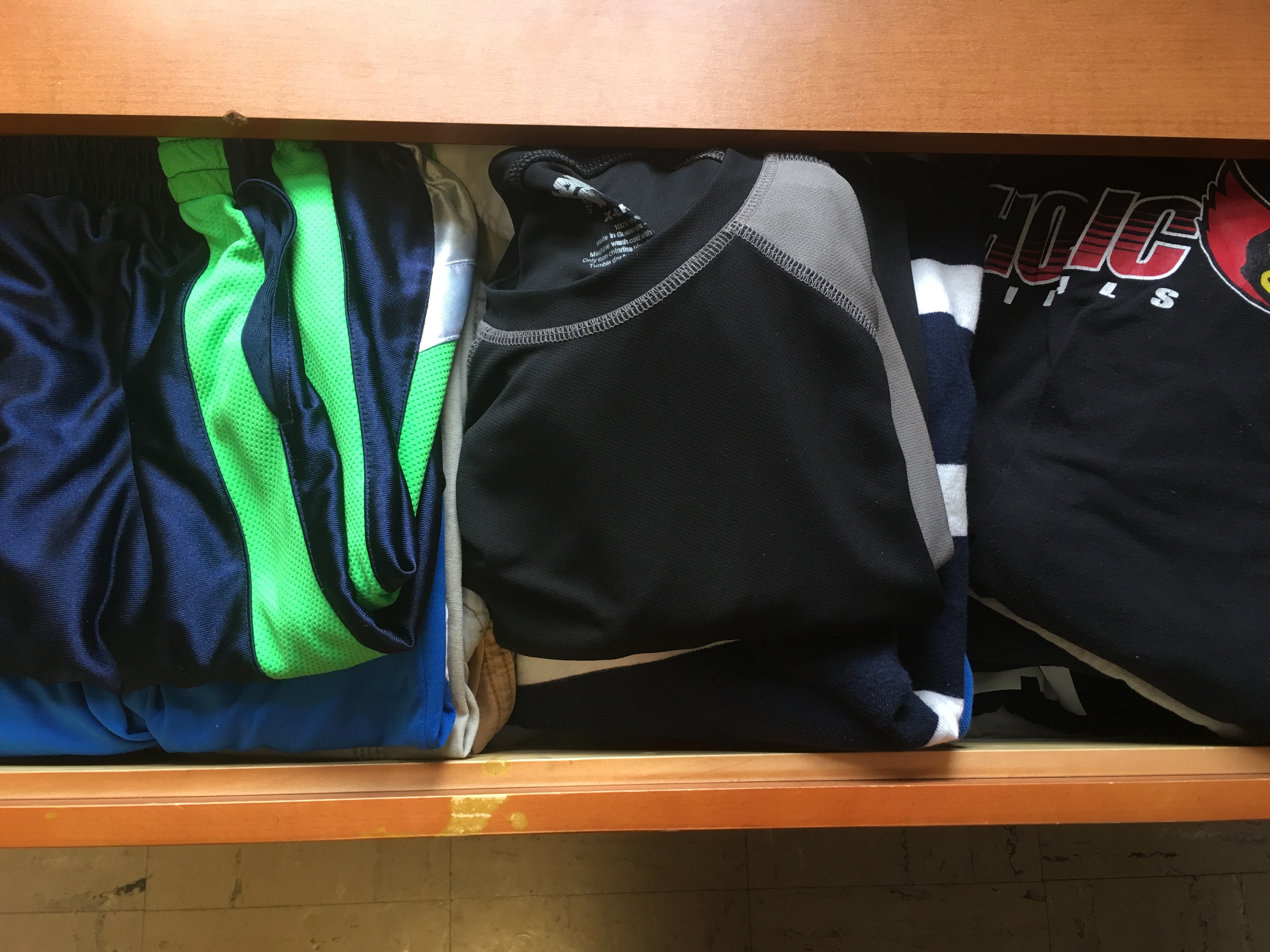
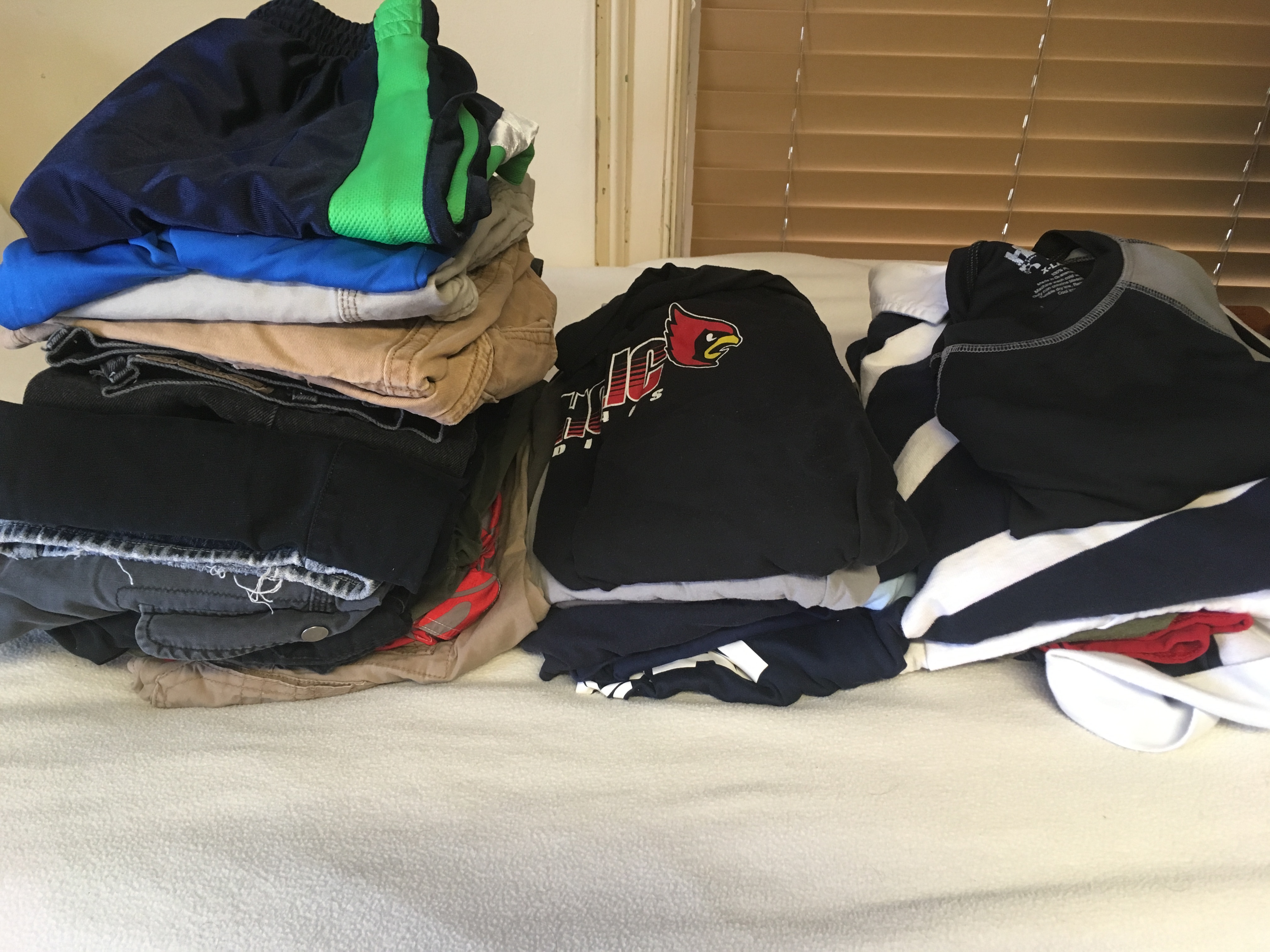
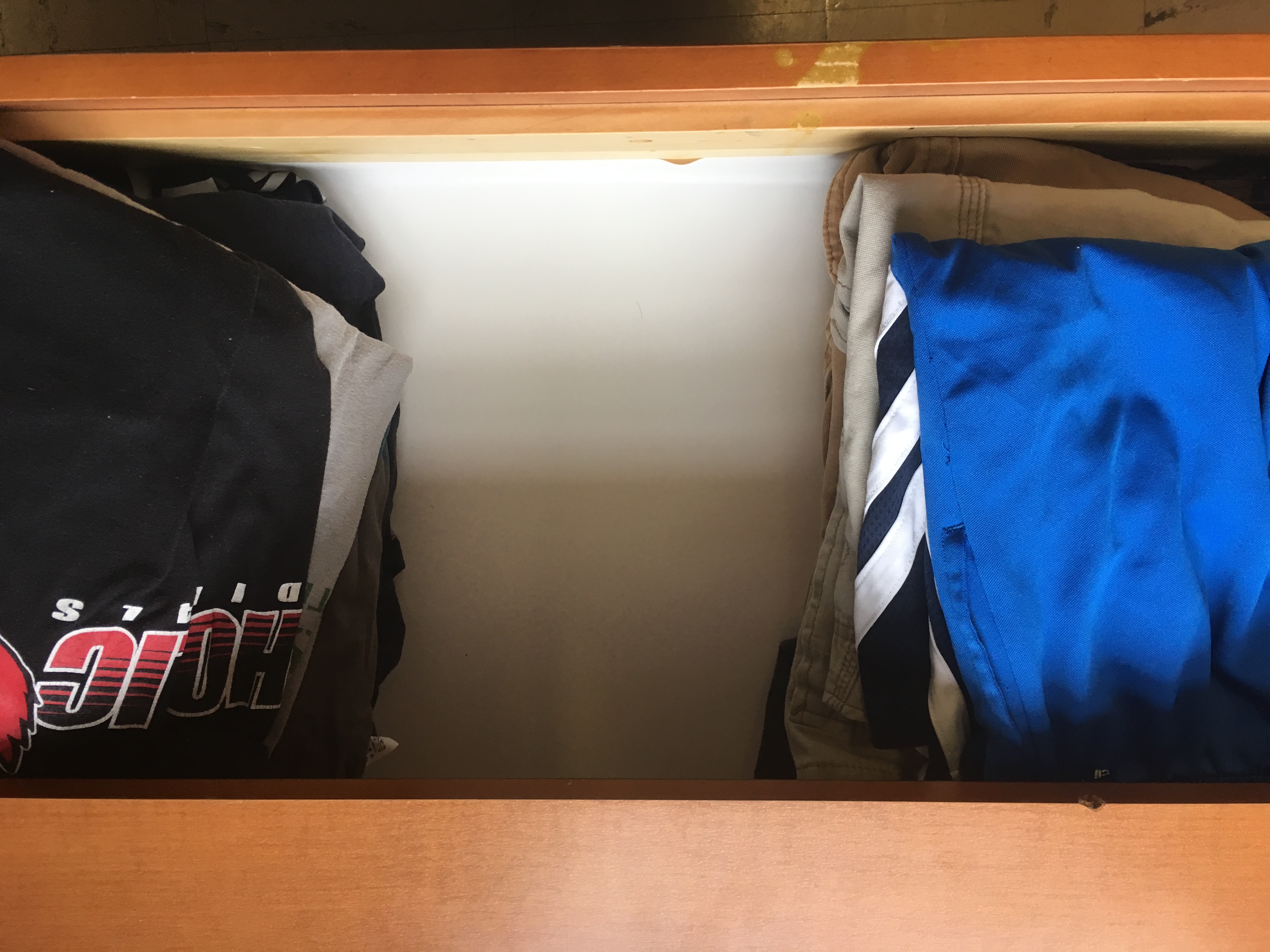
Being consistent with the first step in Marie Kondo’s The Life-changing Magic of Tidying Up, I decided to organize my wardrobe. Initially, between my summer and winter belongings, I began with nearly 50 articles of clothing. This may seem like a significant amount, but when all the clothing was neatly tucked away, it was difficult to place a definitive number on how much clothing was in my room (reference figure 1). Once I removed all my clothes from my wardrobe, it was easier to understand how much clothing I had brought from home, proving Kondo’s point that for an individual who is serious about tidying up, they need to place all their belongings from one category – in this case, it was clothing – in one location before applying the joy test (reference figure 2).

Figure 1 – Wardrobe before applying Marie Kondo’s method
Figure 2 – All my shirts and pants in one central location

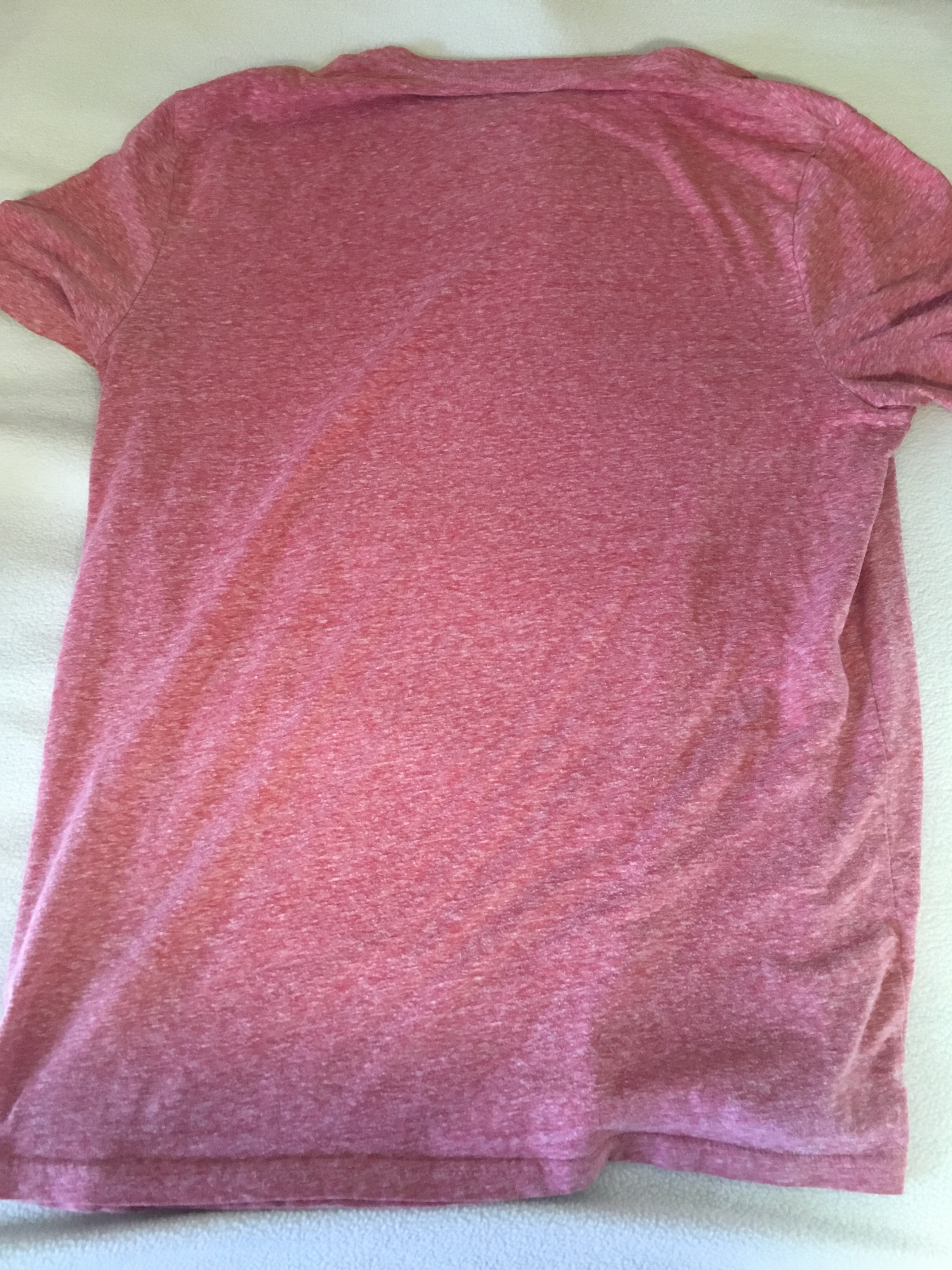
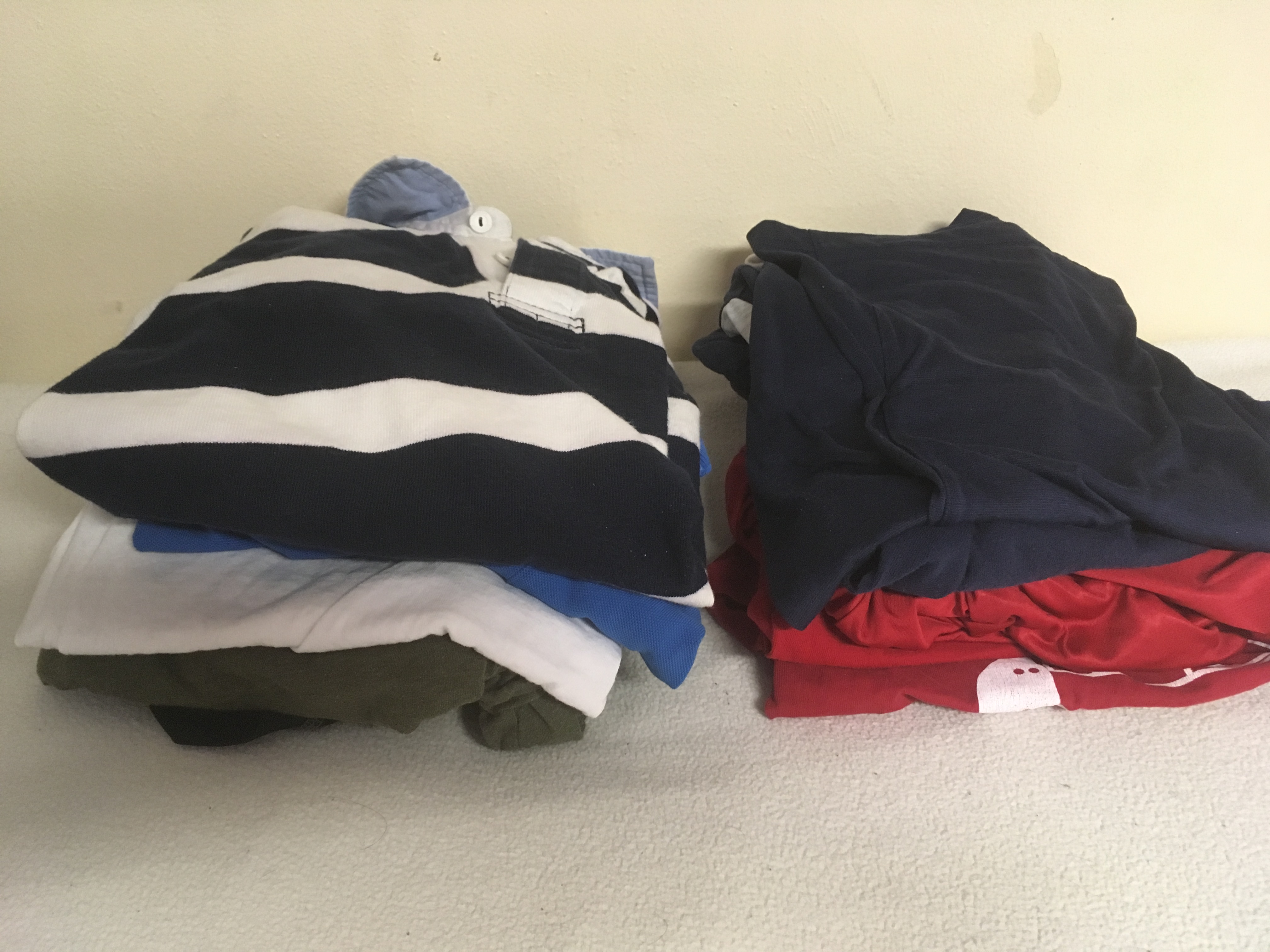
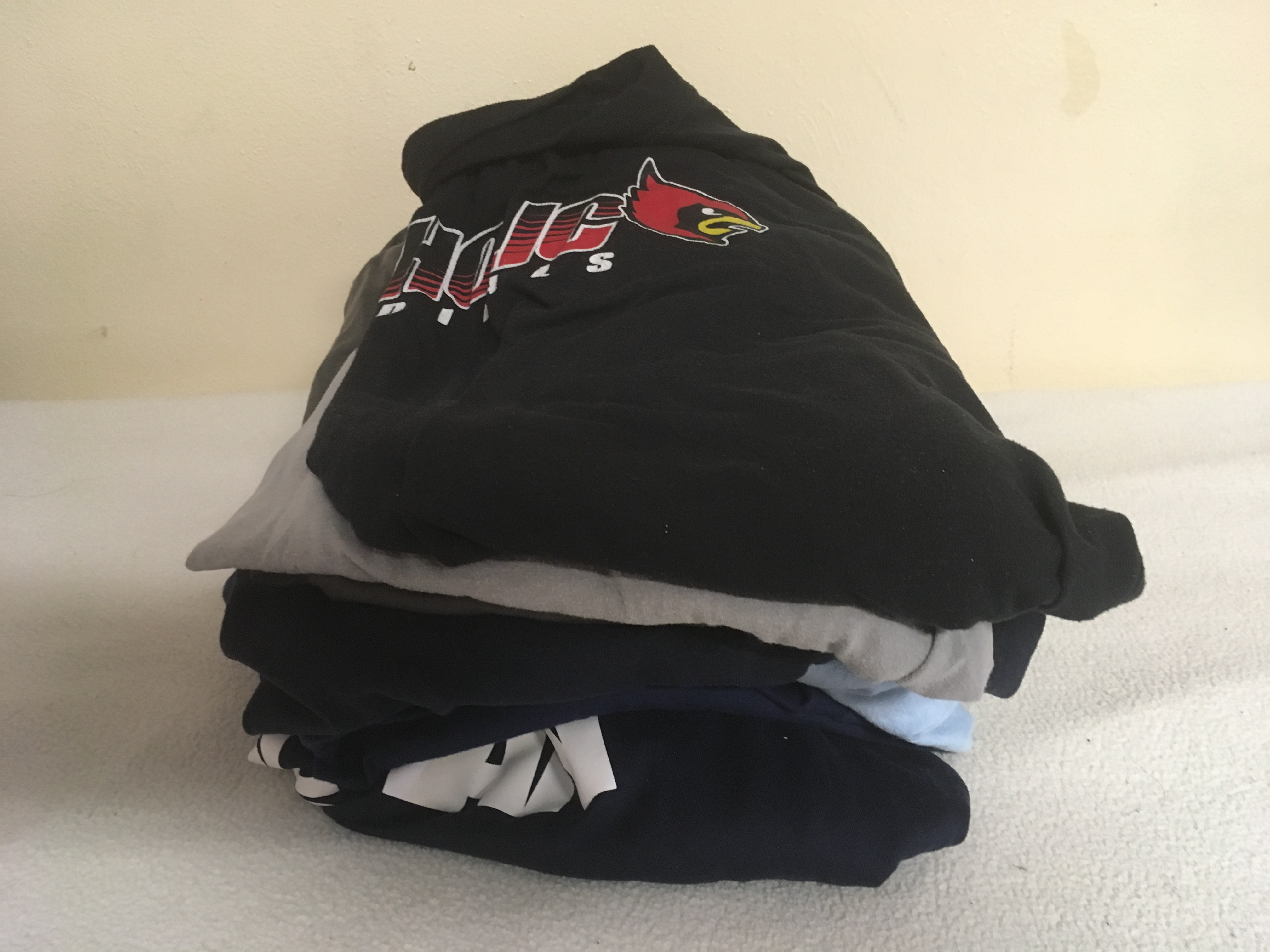
I began with separating shirts into two piles: one discard pile and one save pile. I quickly realized that I had no emotional connection to shirts which had no text associated with them. For example, in figure 3, there is a photograph of a salmon colored shirt. While it might go well with other articles of clothing in my wardrobe, it did not flood my mind with wonderful memories like the myriad of New York Yankee shirts I own. As a result, I could not compel myself to discard even one New York Yankee shirt because each shirt is like a time capsule, containing wonderful memories which stretch over a period of four years. Once I finished filing through my pile of shirts, I ended up discarding eleven out of a total of nineteen (reference figures 4 and 5). Surprisingly, I did not feel any regret in placing so many shirts I had worn frequently for years in the discard pile; instead, I felt a sense of happiness knowing that the shirts I decided to keep held sentimental value.

Figure 3 – Salmon colored shirt
Figure 4 – Before the Marie Kondo Method
Figure 5 – After the Marie Kondo Method

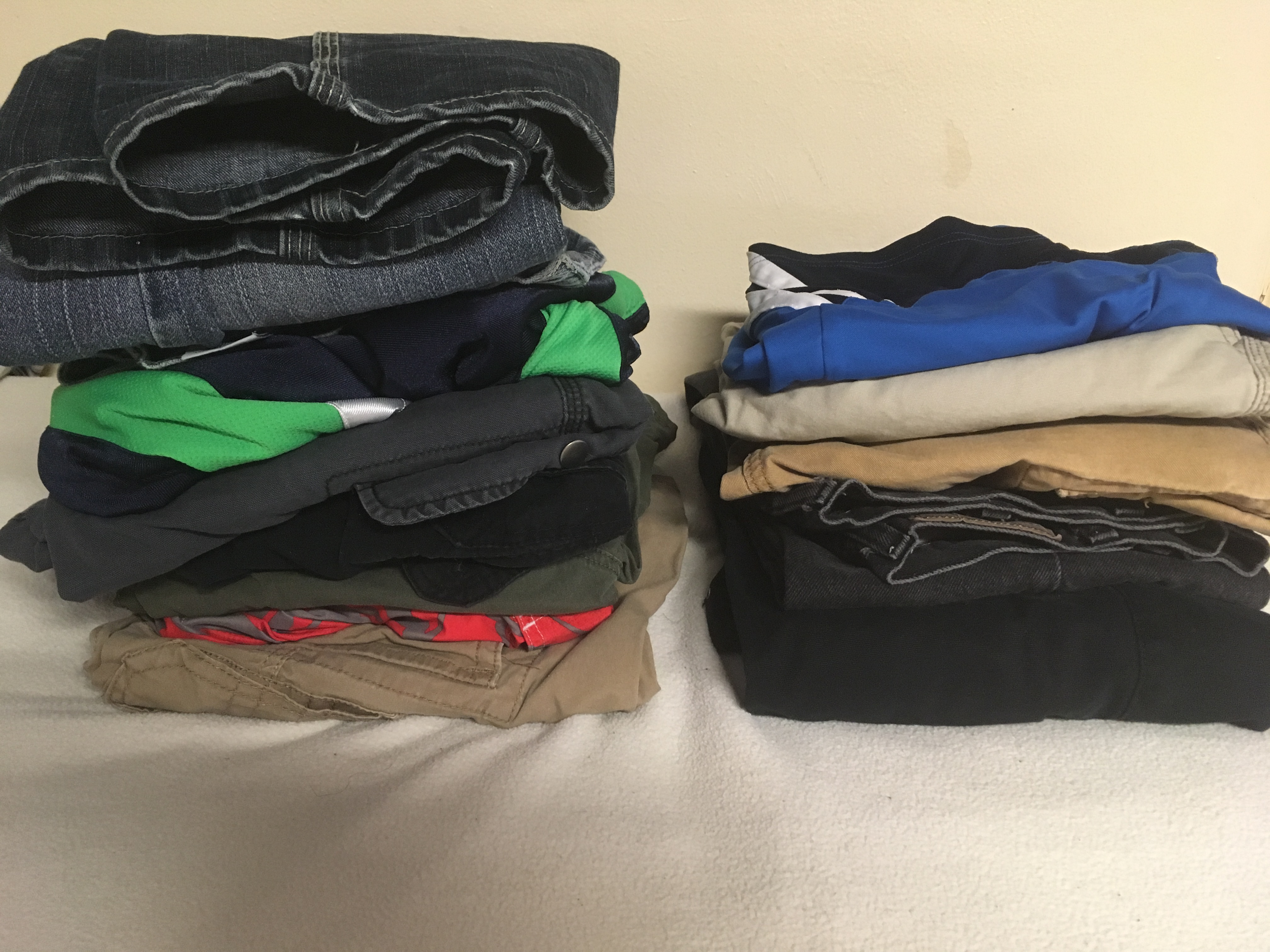
The next sub-category of clothing I searched through was my collection of pants. I began applying the joy test to my gym shorts, and I noticed that I was discarding the gym shorts which did not have any pockets. To be honest, I do not know why I purchased these types of shorts in the first place. In addition to not providing any sense of excitement when holding each pair of shorts, they did not provide an essential function of housing my phone while listening to music and exercising. However, organizing my other pants – cargo shorts, jeans, and running pants – was a different story. In stark contrast to my gym shorts, there is little differentiation in color and design between my jeans and cargo shorts. They all fulfill the same purpose each day, so I wondered why I had purchased so many similar pairs of pants. I ended up keeping two pairs of jeans, two pairs of cargo shorts, and one pair of gym shorts, whereas I started with four pairs of jeans, six pairs of cargo shorts, and three pairs of gym shorts (reference figure 6). The pants I discarded I felt did not carry any experience with them. In other words, I did not have any distinct memories with the pants I removed from my wardrobe, so I did not have any feeling of regret. The pants I decided to keep held some sentimental value, bringing back fond memories of past work-related experiences, entertainment events with friends, and competitions in high school sports.

Figure 6 – The left pile consists of the pants I discarded, and the right pile consists of the pants I decided to keep.
Figure 7 – Wardrobe post Marie Kondo method

After reading The Life-changing Magic of Tidying Up, I was skeptical of whether this method would work in an experiment with clothing. I initially thought it would be difficult to part ways with a lot of the clothing I had brought to school, but it turned out to be a simple task. Marie Kondo’s method for sorting through personal belongings also helped me in an indirect way: as an engineering student, I am always looking for new efficient methods to organize my personal belongings, and while I felt that I had a nice organizational system for my clothes where I was utilizing every inch of space in my wardrobe, by employing Marie Kondo’s method, I ended up creating more room in my wardrobe (reference figure 7). This brought joy to my face, knowing that I had kept the meaningful items in my life, while downsizing and removing the clutter which had taken up valuable space in my wardrobe. This lesson taught me that there is a different relationship and story with each item I save.

Man vs. Books: A Tidying Up Experience

I should preface this by saying that I’m the kind of person who likes to have stuff around, and am skeptical at best about the “magic” of tidying up. Reading phrases like “… when we reduce what we own and essentially ‘detox’ our house, it has a detox effect on our bodies as well,” (193) makes my stomach want to detox my lunch, and gives the impression of a sales pitch for snake oil. At any rate, the KonMari method won’t kill me, so it’s worth trying at the very least.

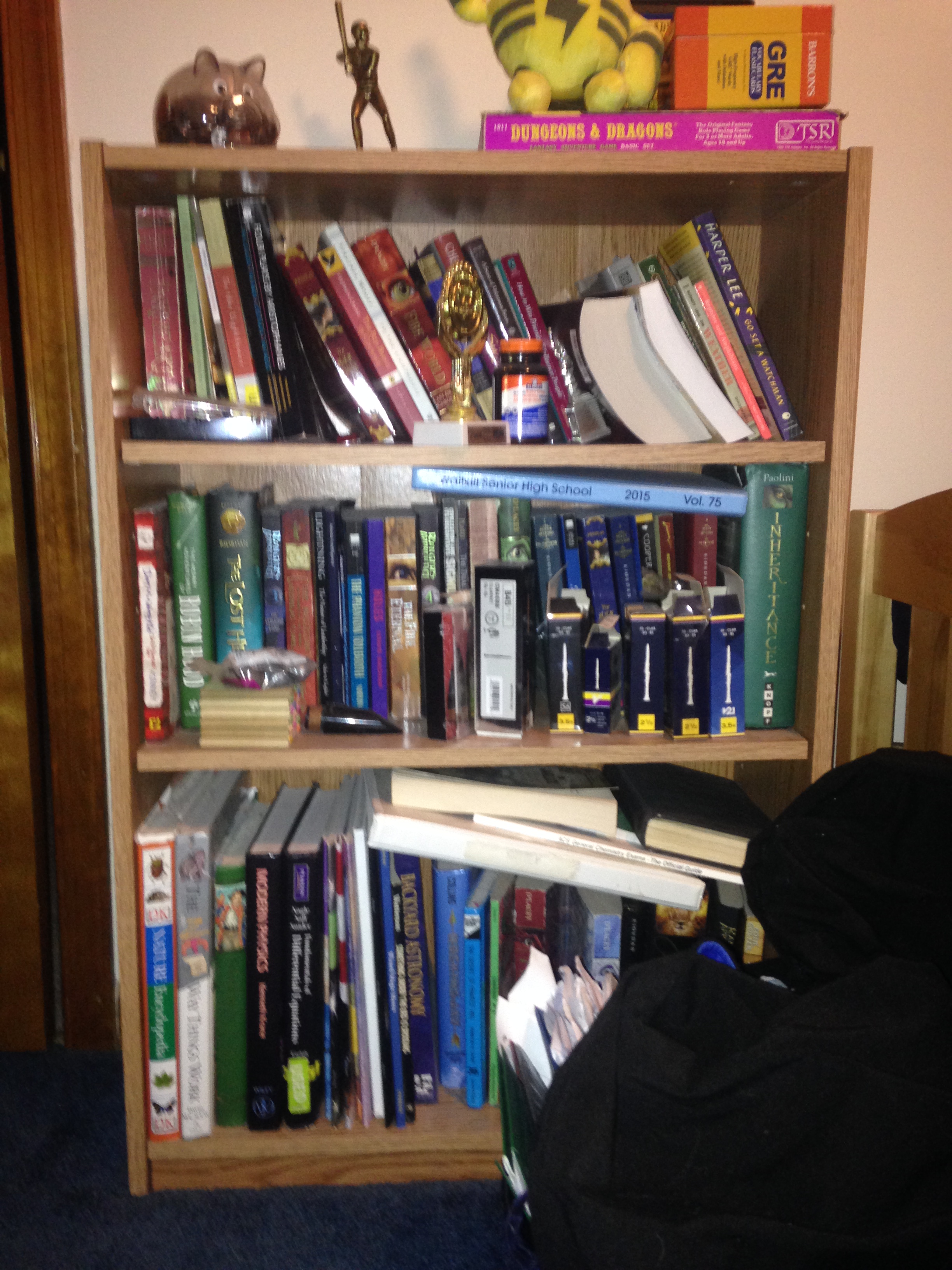
My Bookcase and some Unrelated Objects

Clothes are supposed to come first, but I decided to organize my books because they need it. I like to read and have saved all kinds of books, ranging from children’s stories and novels to textbooks and encyclopedias. My main bookcase has been overrun by other knick-knacks and lack of space, and the rest of the books are relegated to a crate by my dresser, also a jungle with no particular standard of organization. In total, I estimate there are about 150 books jammed in.


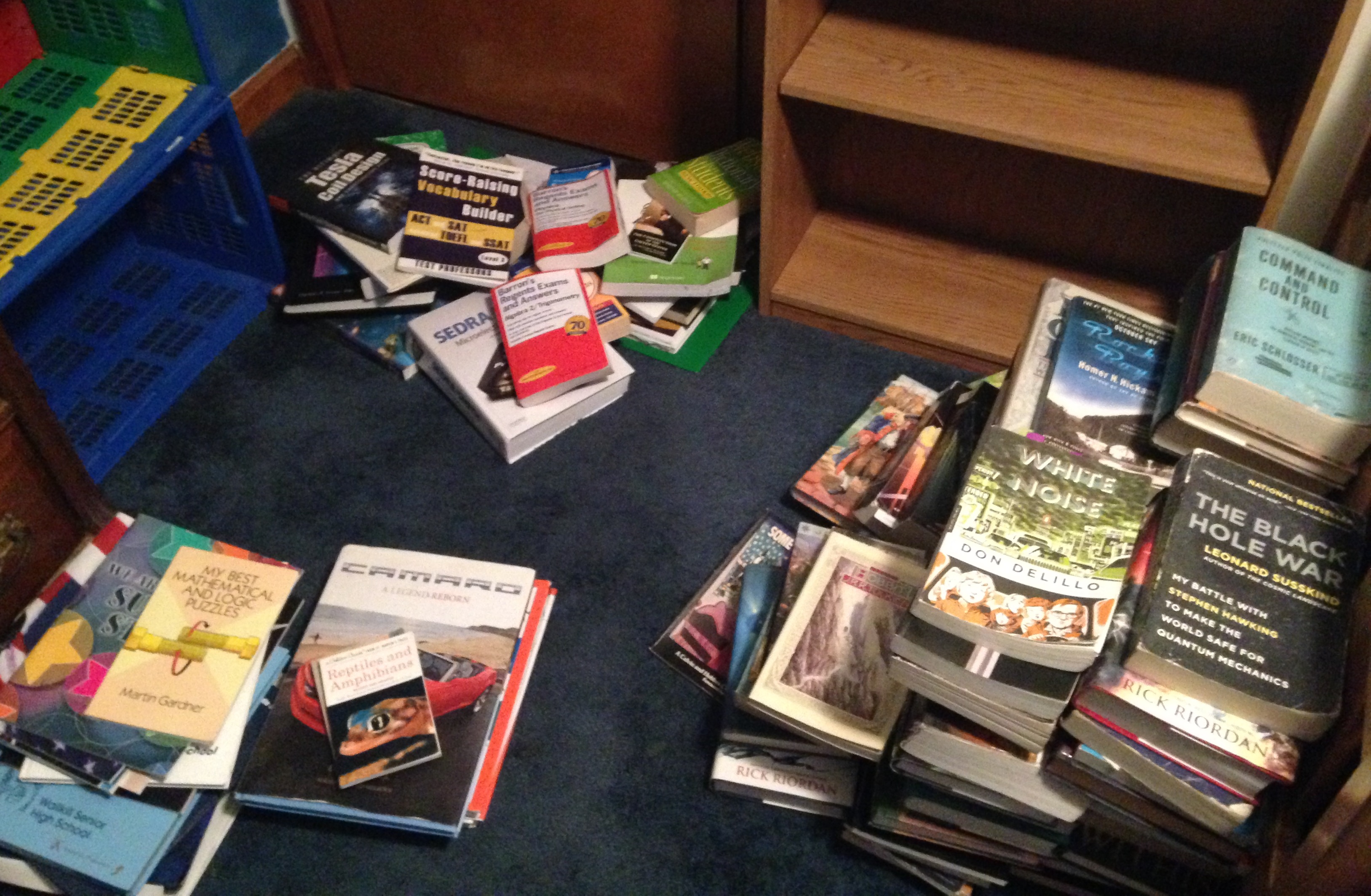
The Bookshelf Annex

Starting out, I thought for a bit about what I wanted to gain from organizing. I decided that de-cluttering my bookshelves would make my room a better work environment, and a nicer place to spend time reading. That would make me happy, so I got to work tearing my shelves apart; every book on the ground, and everything else relocated to another place.

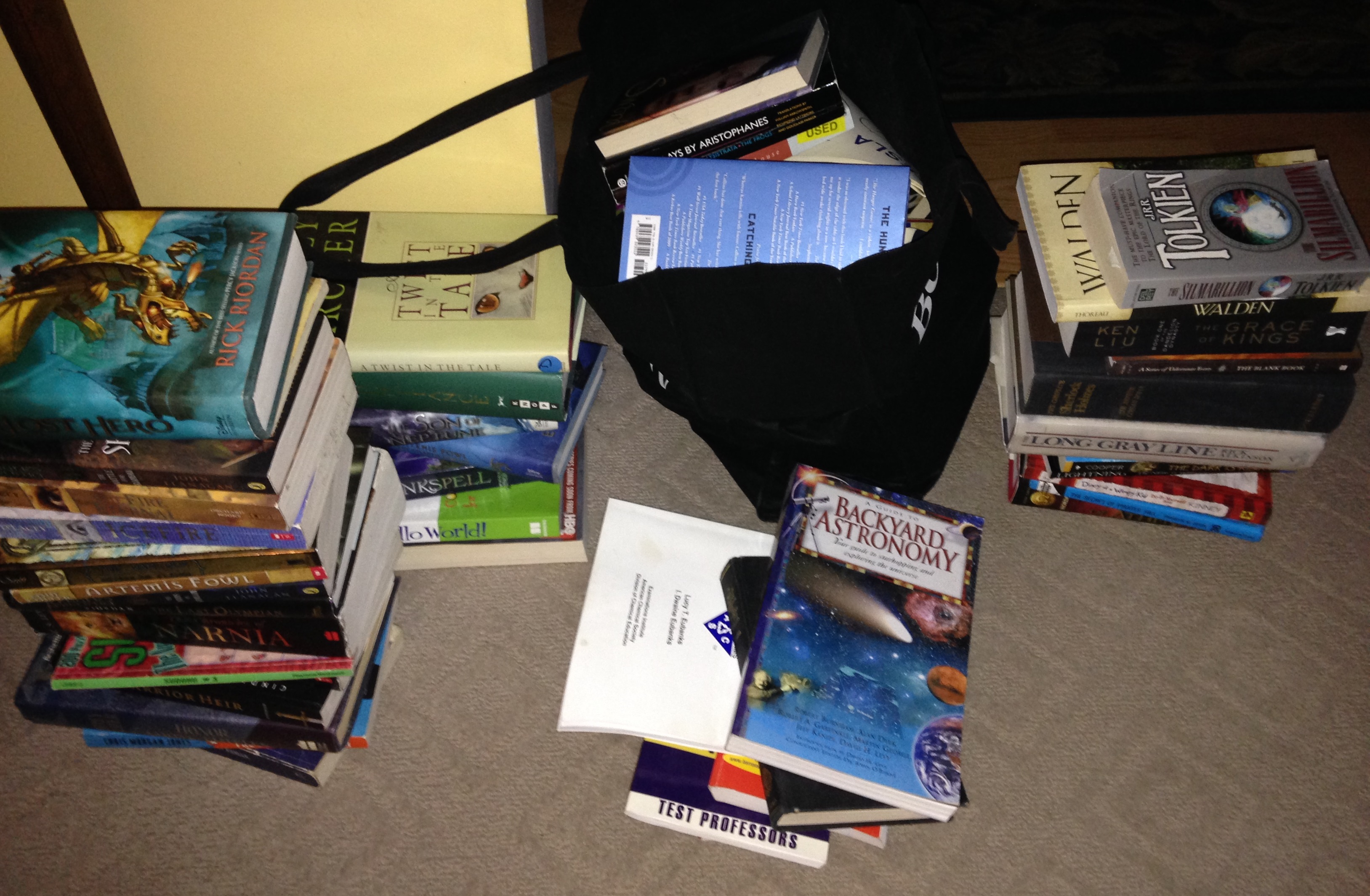
My Three Piles
Left: Visual Top: Practical Right: General

Tearing everything out of the shelves was quite fun, and I sorted everything into three piles since I don’t have magazines. On the left is my visual pile, with some photo collections, yearbooks and puzzles. At the top is practical, where my textbooks, dictionaries and manuals went. Everything else went to the right, and since I mostly read for pleasure that pile was the largest by far. I counted 183 books in total, and right away was struck by just how much I had. There are test prep manuals for exams I already took, some things I’ve never read, books I’ve grown out of, and books I’ve never read at all. I felt a little guilty about just how much was piled up, and since the practical pile was blocking my exit I had no choice but to move to the joy test.

Mementos – Things I’ll be Keeping for Sure

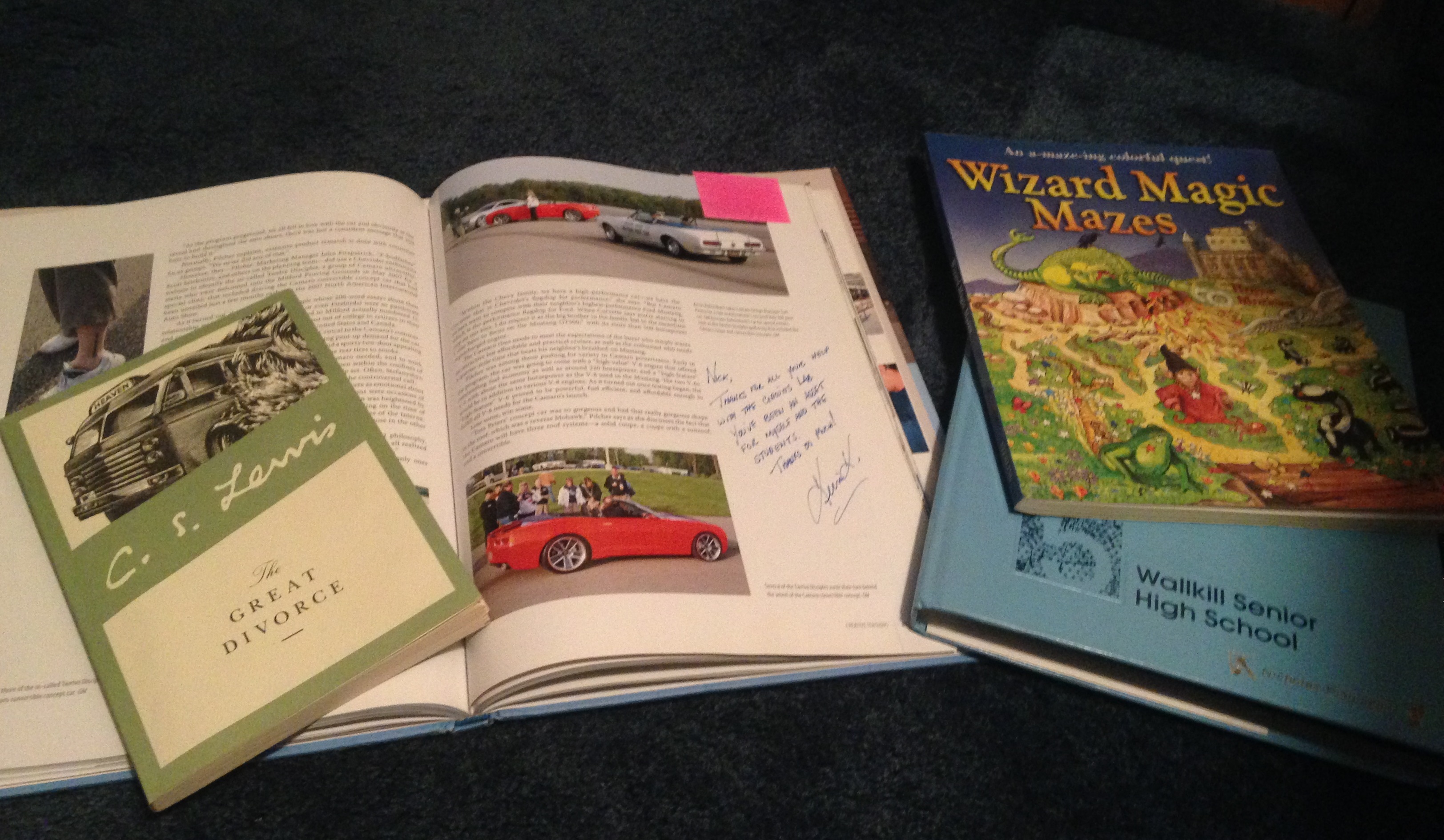
Holding most of my books didn’t cause me to feel anything. A select few brought back personal memories that have little to do with the actual book. These include mazes I did with my dad as a kid, my yearbook and gifts from past mentors. I feel a special connection with these, making them mementos.


Going through the rest felt strange, and not just because I had to thank inanimate objects. It was easy to toss the few I hadn’t read, but I finished the vast majority, and enjoyed them too. Even still, I didn’t feel any joy holding most of them. They were good stories, I had fun reading them once, and I have no intention of ever picking them back up again.

Thanks for the Stories!

My mother is the librarian at the local elementary school, so she took all the books in the black bag. I’m not sure what to do with the rest, but it does feel good knowing some of them will be read again.

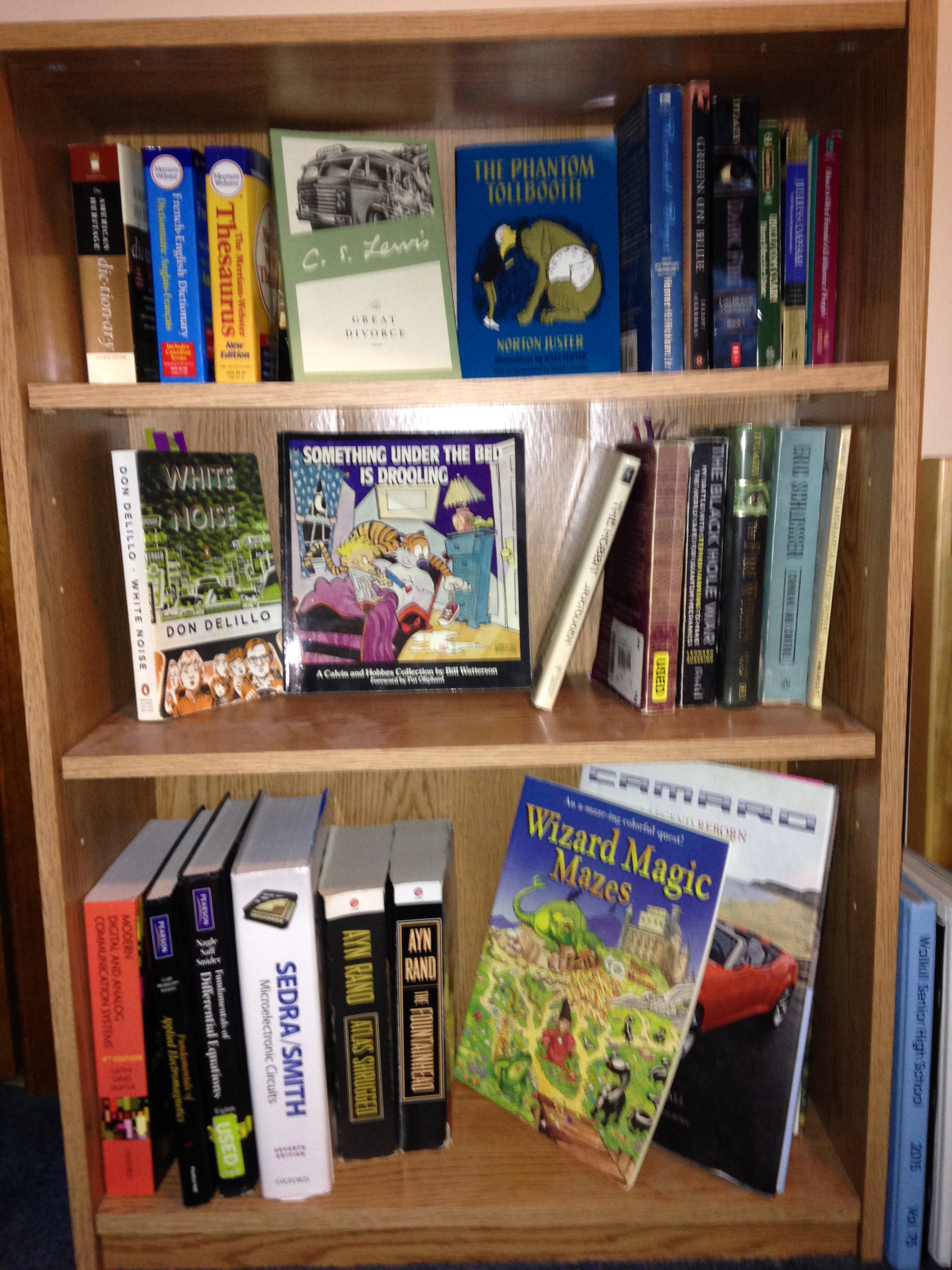
My New Display

There were a few books that made me feel something when I held them. These brought back images, quotes, and ideas, and reminded me why I love them. In particular, I found that the books I felt connected to relate to me personally. Calvin and Hobbes just makes me laugh, but others helped shape me as a person and introduced me to ideas that worked their way into my character. I like these books because they are a part of me, and looking at them really does make me happy. I only kept 39 books, so I decided to show off the covers with the extra space. Since I reference them all the time, I also put my most used engineering texts here.

For what it’s worth, I was probably too critical of the value of organization at first, and I really do like the look of my bookcase now. The exercise also helped me to understand that the books I’m attached to really stem either from memories of other people, or because I identify with them on a more personal level. My physical health has yet to improve, but my bookcase says something about me, and I feel joy looking at it.


Works Cited

Kondo, Marie. The Life-Changing Magic of Tidying Up: The Japanese Art of Decluttering and Organizing. Translated by Kathy Hirano, Ten Speed Press, 2014.

Tidying Up

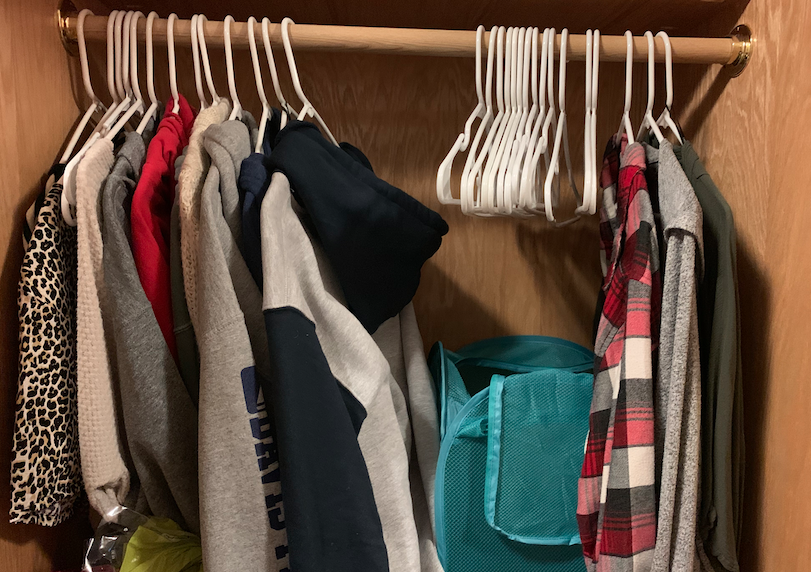
After reading Marie Kondo’s “The Life-Changing Magic of Tidying Up” I chose to go through my clothing putting the joy test to practice. I began with a full armoire of clothing, which held various items hanging and a drawer filled with tops. Additionally, I had a separate dresser drawer devoted mostly to pants. Overall, I would estimate I had nearly 100 articles of clothing. For the sake of space in my small dorm room I sorted through my clothing by sections, which for the most part lent itself to article type, (i.e., tops, pants, etc.)

First, I assessed the hanging items.

Screen Shot 2019-01-25 at 11.51.28 AM.png

Hanging Items Before Joy Test

I found that it was easier for me to part with items that I could not readily see, specifically the items that were tucked into the corners rather than in the middle in my direct line of sight. I found that nearly half of the items I had hanging were not articles of clothing that brought me joy at all. I did not have trouble parting with them, but rather appreciated the times they made me happy to wear.

Screen Shot 2019-01-25 at 11.53.26 AM.png

Hanging Items After Joy Test


What I found interesting after assessing before and after photos was they look fairly similar. This reinforces Kondo’s idea that things in our plain sight that become invisible to us almost do not even really exist to us. Upon further application of the joy test I found this to be even more apparent for my experience.


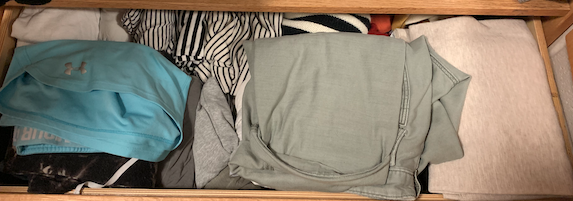
Upon inspecting the first drawer that was filled with mostly tops and sweaters, I found there were many items I more or less entirely forgot I owned- things that had been tucked away that I did not actively seek out or think of when I was getting dressed.

Screen Shot 2019-01-25 at 12.04.18 PM.png

Extremely Messy and Cluttered “Tops” Drawer

This made me think of how Kondo describes these articles as dormant or unseen. I had an uncanny number of t-shirts obscurely folded tightly to fit in this drawer. After an application of the joy test, I found that half of the tops I owned did not bring me joy. There were many items that I was only keeping because I had sentimental value attached to them. I was able to choose one item of many that represented the same sentiment to me and gracefully part with the rest.

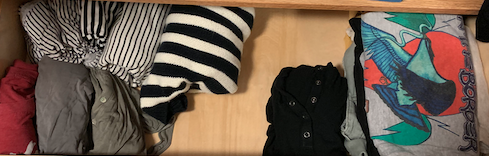
Half of the contents of the drawer brought me pleasure and those were the items I chose to keep. After this realization I became conflicted- I felt somewhat guilty for owning so many items that I did not truly value, but I also felt relieved that I was able to peacefully let go of these items that were not meant for me anymore.

Screen Shot 2019-01-25 at 12.08.25 PM.png

“Tops” Drawer After Parting With Half of the Contents

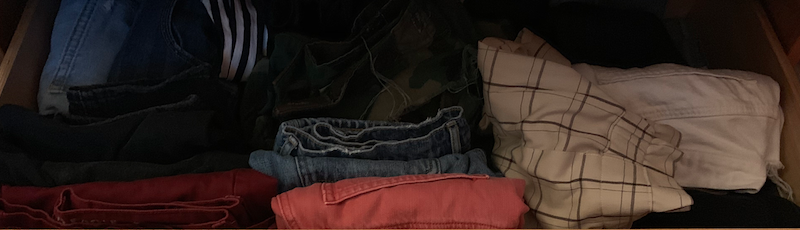
The final drawer I sorted through housed my bottoms, mostly pants. This drawer was jam-packed with multiple pairs of similar jeans. When I was picking through each item applying the joy test I was wondering why I owned so many pairs of jeans that just had slight variances between each other. I was able to sort through them and conclude that about half brought me joy and half did not. I was not conflicted trying

Screen Shot 2019-01-25 at 12.11.47 PM.png

“Bottoms” Drawer Before Joy Test

to choose which items brought me joy, I was actually very relieved that I could part with these items that were tucked deeply into my drawers, because when I had tried to get rid of clothing in the past I always fell victim to the voice in my head convincing me that I would perhaps want to wear this item again in the future. Like the other sections of my clothing, I decided to keep about half of these items.

Screen Shot 2019-01-25 at 12.32.32 PM.png

Left Pile: Discard. Right Pile: Brought Me Joy, Keep

Overall, I chose to keep about half of the clothing I owned after applying the joy test. This experience was not difficult for me, but in the past trying to do this with clothing has been. One interesting thing I became aware of was for the most part clothing is not very difficult for me to part with.

However, when I was thinking about what items I wanted to sort through for this exercise, thinking about my more sentimental items, like my books, evoked a sick feeling in my stomach. I did not want to consider the possibility that I would have to choose between them. This gave me insight into my personal relationship with objects that I am more attached to items that evoke emotion or a sentimental meaning to me. I could choose to discard fairly easily of an item of clothing, but thinking about discarding something like a book or a letter that had a more personal and emotional meaning to me felt nearly impossible. I believe my attitudes about objects stemmed from my family who taught me to value sentiments and keep them close to my heart, it makes parting with items of sentimental value feel like I am losing a friend. Overall, I found this exercise to open my eyes about my relationships with objects and why I feel more attached to objects that have depth and meaning in my heart and mind.