
The object I have decided to select is an Aluminum ingot. The dimensions of the ingot measure about 2.3 inches at the top and 2.6 inches near the base. The object is small enough to be held comfortably within the palm of one’s hand. The shape is typical of a standard metal ingot. The ingot shows some bubbles and ripples, especially on the bottom and the sides. There exists a small amount of corrosion and black marks. One of the faces of the ingot is slightly extended, on this side there is a small brown-bronze mark. The ingot is mostly the trademark silvery color of aluminum, but shows black and yellow marks in certain areas dude to residue and oxidation. This ingot is composed primarily of aluminum, primarily sourced mainly from aluminum beer and soda cans; These cans were mostly found in the forest behind my home. The other sources include some junkyard scrap, and some broken computer heatsinks.

The process in which this ingot was made involved the use of a homemade, charcoal powered furnace. The process of constructing the furnace consisted of filling a bucket with a mixture of plaster, sand, and silica powder; these are all highly heat resistant materials and can withstand the high temperatures. An indentation was made with a smaller vessel and left until the filling hardened somewhat. Afterwards a hole was drilled in the side, and once it was fully hardened, a metal tube with an air outtake was placed through the hole. Our crucible was essentially just a fire extinguisher cut in half; just a sturdy steel cup to hold metal. We put charcoal at the bottom and used the air outtake to heat up the hot coals and bring the crucible to temperature and we put cans in until they melted. Once the metal was all liquid, we poured it into an ingot mold to cool.
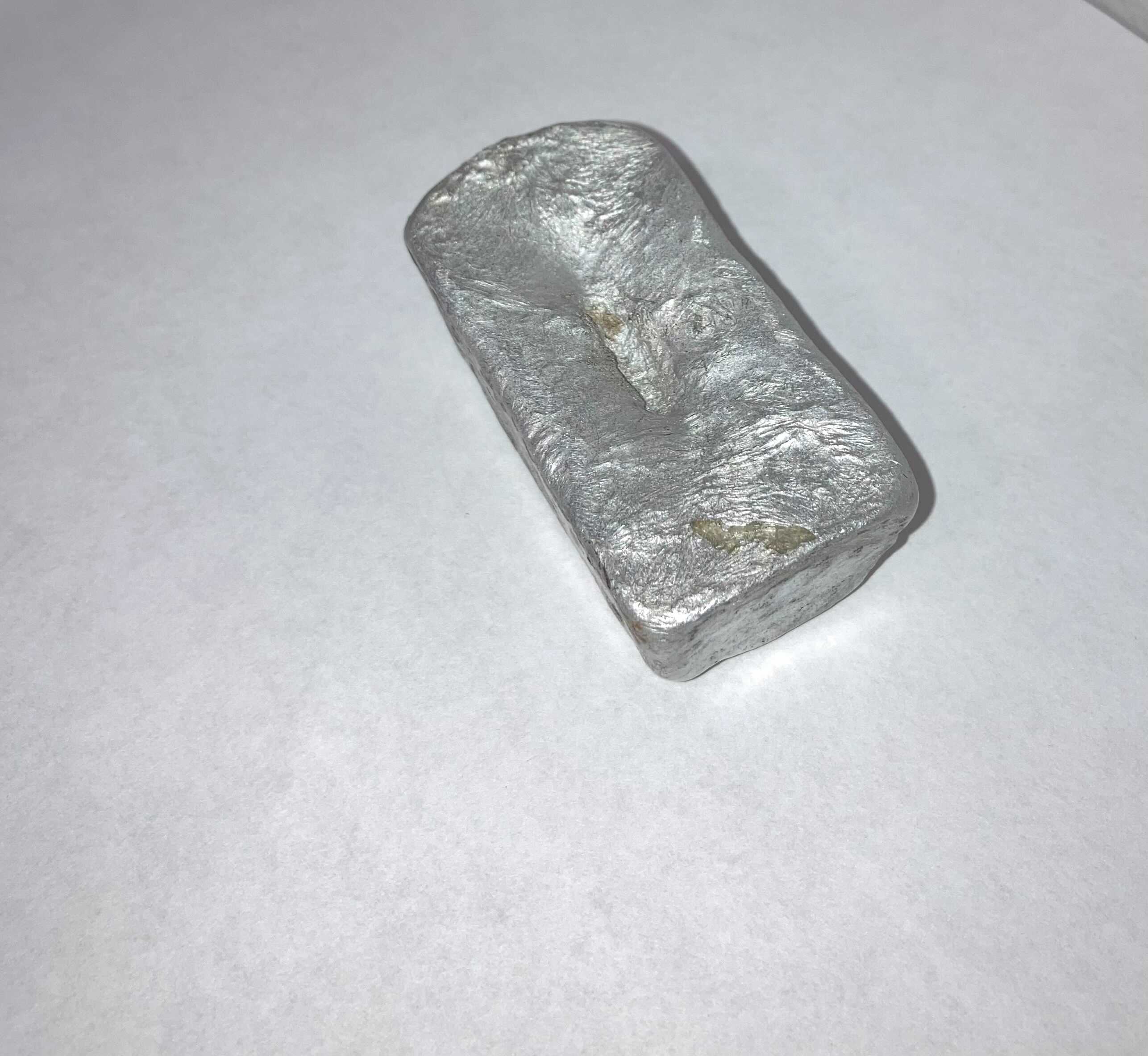
This process was rather painstaking and time consuming, but it was a great experience working with my friends to create something like this. It took a lot of technical ability, and some dumb luck granted, to create this ingot. The ingot wasn’t our final objective, it was simply done so we could have some clean metal to make other objects later down the line. The difficulty involved in creating this ingot adds to the meaning of the object. We considered simply buying some source ingots to use for our crafts, but we figured making our own would be the right thing to do. Inadvertently we ended up cleaning a lot of the litter and refuse in the woods.
We used the ingots for various things, and we fashioned all sorts of different items by casting the metal in foam cutouts buried in sand. The foam burns away leaving a hole for the metal to seep into and fill up. We each made our own trinkets: One of my friends made a set of knuckles, another a casting of a sculpture, and I made a model sword. All of these items didn’t really hold any significant value, and the thought behind them was nothing more than intrigue, but the process that shaped them added a sense of completion.
 The Materials of History, Thought, and Art
Aadish, I enjoyed reading about this ingot. I had no idea what an ingot was before this, and I always enjoy learning something new. While on the surface it just appears to be a piece of aluminum composed of beer cans and scraps, it holds a lot more significance to you than that. This is a great example of the object being defined by its relationship to the subject.
I like the fact that you mentioned all of the places that went into the making of this, all the different forms of aluminum and where they are from. It allows me to better understand exactly what I am looking at and how it came to be.
It was also really cool reading about the process of making this. Our teenage experiences were so different, as this is something you and your friends got together and decided to do, and this would never have even crossed my mind. It’s refreshing to hear about an experience like this that seems so unconventional, in terms of the mainstream. And yay for turning trash into treasure! Great job.
Hi Aadish!
My knowledge of ingots starts and ends at minecraft, so I really enjoyed learning about your process. Recently, I have been becoming more interested in making things, especially the types of items that are almost always store bought. I want to learn how to make my own paper and paint, but I am not sure if I have the right materials to do it. Hearing your story is very inspiring because you found a bunch of materials to serve the purpose for creating something, even if they were not the most conventional tools. I also really appreciate the sustainability aspect of your story. You used repurposed materials and cleaned up litter. Now instead of having trash in the woods, you have an interesting and useful object.
-Sarah
I found it interesting that you focused more on the creation of the ingot than the actual description of the ingot itself. It really showed how it was significant not because of what it was, but rather because of the process behind attaining it. I also found it interesting that you choose to use the ingot for the process instead of the model sword you mentioned in the article. I think that would have made for some cool pictures, but I see how the ingot itself holds more sentimental value. I hope you can keep making ingots in the future, sounds like its a great hobby!
-Shane
The story of how this ingot came to be is still so fascinating to me and the care you clearly give it and what it means to you is really cool. It’s an awesome way to remember your friends and where you came from. I really like that you described the ingot in a clear, straightforward manner, using strong, simple and direct language just as the object in question deserves.