Upon my recent resignation from Starbucks, I realized I would not be permitted to free coffee any longer. Unfortunate. And so, on Wednesday, September 29th, I ordered a reusable cup.

I went to Amazon, where I am embarassingly an avid shopper, and found this cup listed for $15.99. Amazon’s 1-Click Buy feature couldn’t have made it any easier to make the purchase. Because of Amazon’s naturally prosaic manner, I didn’t think too hard about making this purchase. I am an avid coffee-drinker, I love espresso, and I have my own espresso machine. I thought a reusable cup would be the perfect oppurtunity to keep making coffee at home.
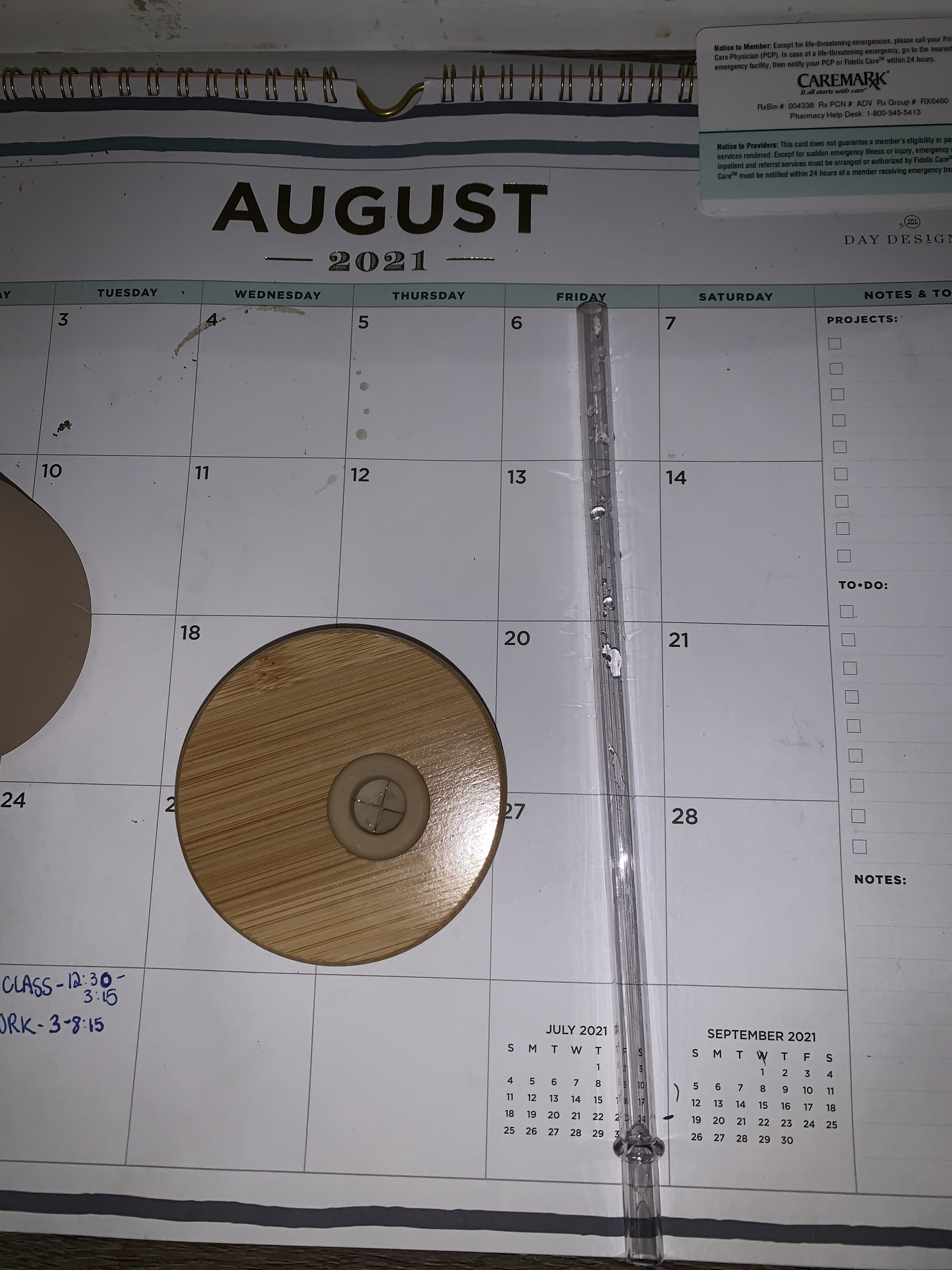
The cup consists of three features: a straw, a bamboo lid and a glass container which is protected by a silicone sleeve. The straw is plastic, the lid is made out of bamboo and the cup is glass. This tumbler appealled to me because it was made out of glass, and in my experience plastic reusable containers get moldy much faster than glass containers. Something that interested me were the selling-points listed on the Amazon ad above, such as “Natural Bamboo,” “Food Grade,” “BPA free,” and “Easy Visibility.” What are the benefits of these selling points? What exactly do they mean?
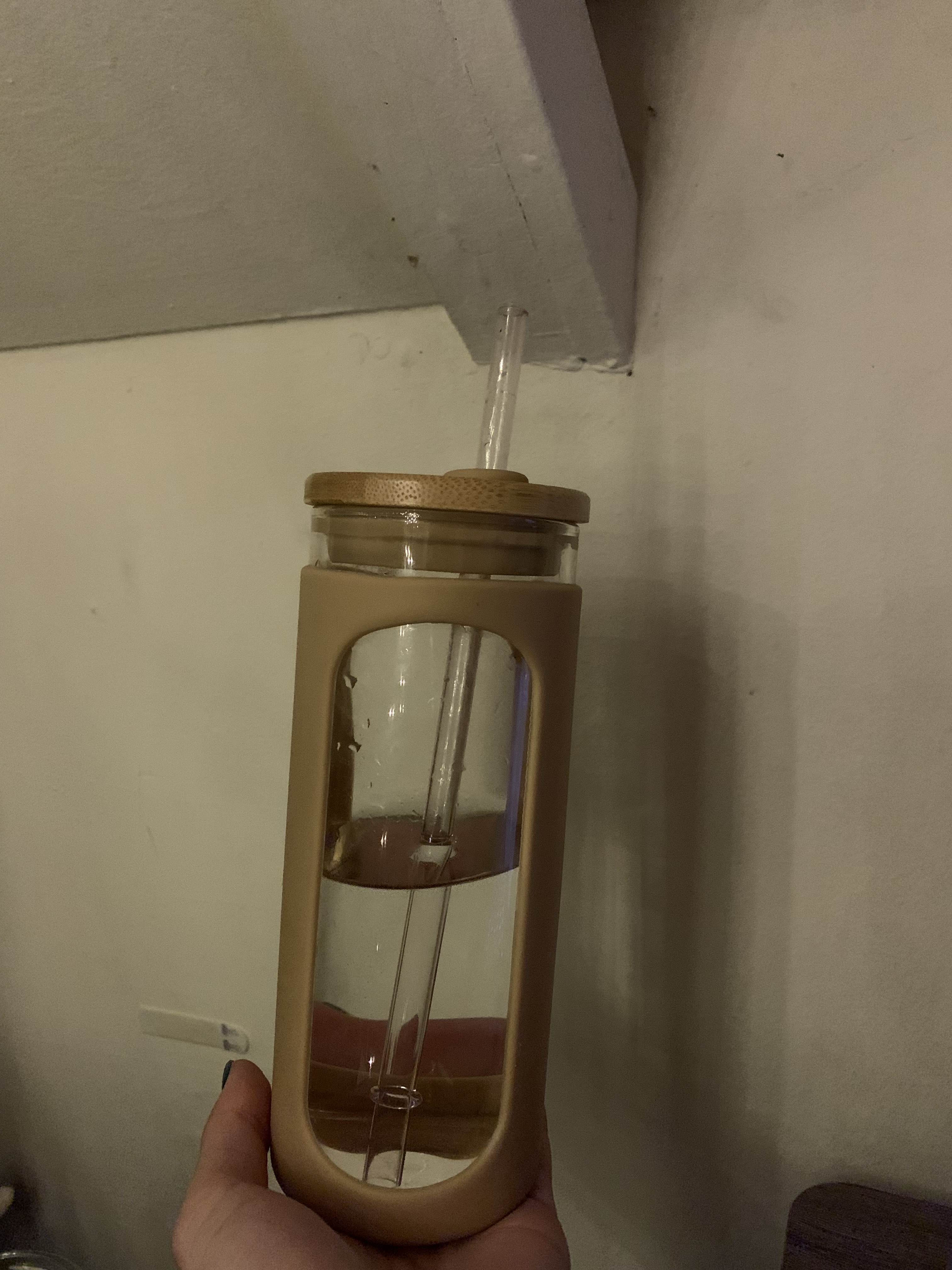
I started with “Natural Bamboo.” One component of the cup, the lid, is made out of bamboo. The major pro that I found the most appealing to me is the fact that natural bamboo is a renewable source. Synthetic/faux bamboo is not, and therefore has detrimental effects to the enviornment. Next, I inspected the “BPA free” feature. BPA is shorthand for bisphenol A, which is a chemical added to many food containers in order to make a more resilient plastic. What I found interesting in my research was the following, “However, even small concentrations of BPS and BPF may disrupt the function of your cells in a way similar to BPA. Thus, BPA-free bottles may not be an adequate solution” (Healthline). In short, BPA-free is not entirely effective as a selling point, given that there are other bisphenol chemicals that could be incorporated in this product. “Food Grade” simply means that the product is safe to make contact with food, which I would hope this reusable cup could do. Food Grade is necessary for a product to be FDA-approved (ISM).
As for “Easy visibility,” I am not sure what this means. Is it indicating that the cup is easily identifiable, or that the glass is transparent? I was not sure why the advertising of this product included this feature.

I included the above image, which I also found on the Amazon listing, because it said that “1 reusable cup = 500 coffee cups.” It included this, however, I was not sure exactly what that meant. Does this reusable tumbler lose it’s integrity after 500 uses, or does the making of the product use 500 cups? I wasn’t sure. In a similar remark, I attempted to look where the company was based, but the Kodrine website did not list it’s origin/where it’s products were made. However, Kodrine has a partnership with Amazon, and there are Amazon warehouses everywhere. I am assuming, given that I was able to recieve the object in less than 48-hours, that it must have been shipped to me from somewhere relatively local to New Paltz. All in all, the tumbler is relatively vague in it’s origins, where it is shipped from and how it got to me.
Sources:
https://www.healthline.com/nutrition/what-is-bpa#where-its-found
https://www.industrialspec.com/about-us/blog/detail/fda-compliant-food-grade-food-safe-meanings
 The Materials of History, Thought, and Art
Hello!
In my experience, products from Amazon tend to be very vague in their origins so I understand your struggle to find more information. I did not think that glass had any effect on when mold developed in your cup, but I have only ever had plastic or metal reusable bottles, so that was new information for me. I would say I would give glass bottles a try, but thinking of how many times I drop my water bottle I think I’ll stick with the less fragile option for now. I also appreciate the articles you linked as I had no idea about the difference between natural bamboo and faux-bamboo when it comes to environmental impact.
Hi!
When reading your question at the end of your post on what the “1 reusable cup = 500 coffee cups” equivalent means, I came to the conclusion that using the reusable cup might be the equivalent of using around 500 disposable cups, however the way that it’s worded is confusing. I have never considered getting a glass water bottle, but I would consider getting this one the next time I’m looking for a reusable bottle due to the materials that the bottle is made out of.