For the past few years I have been utilizing pliers in my metalworking that I received from my grandfather. He used to use these pliers for radio repairs when he was around my age, as he was too young to fight in the second world war, he worked fixing radios. When I told him that I began to work with wire, he excitedly gifted me these pliers.
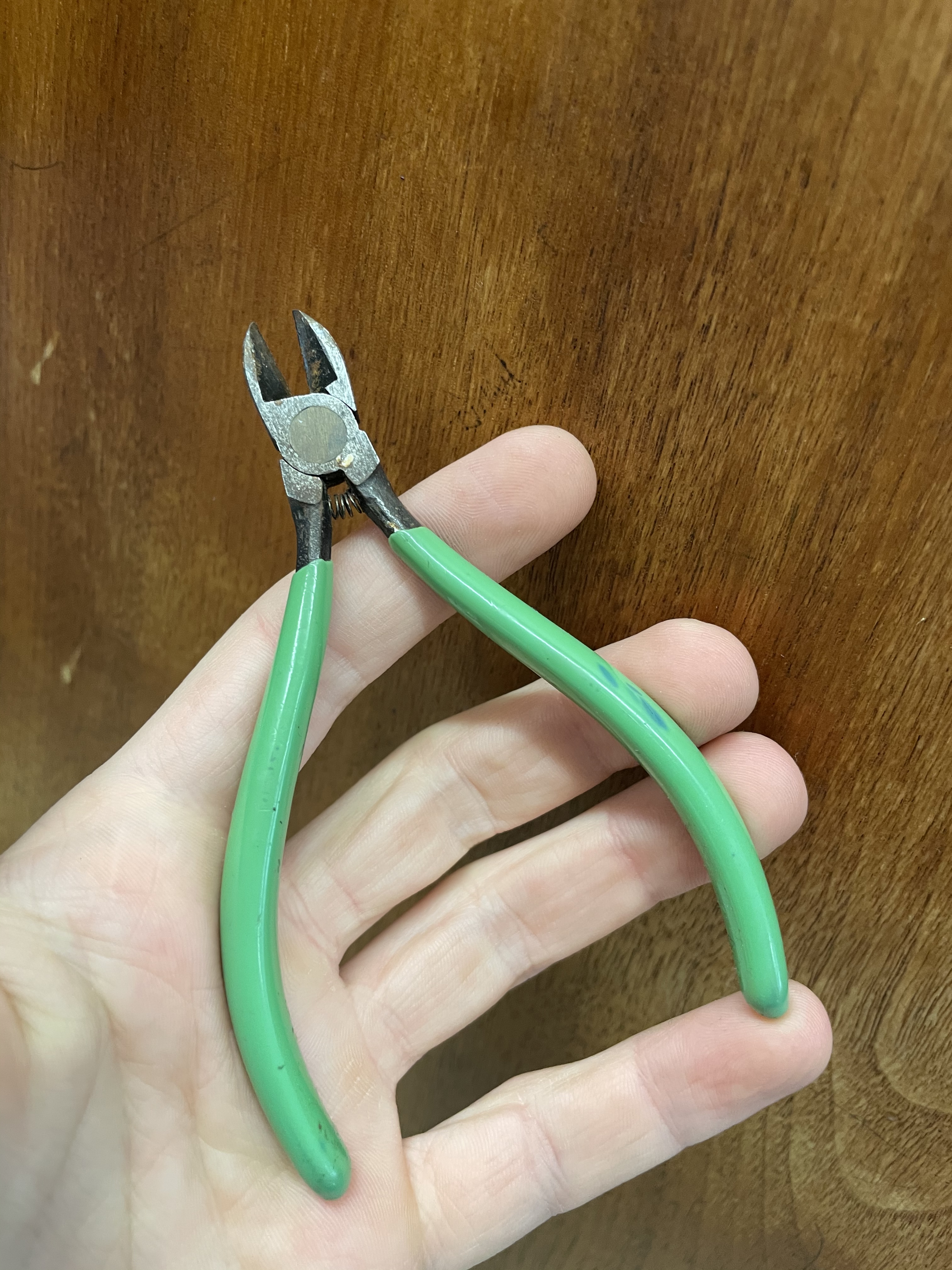
These pliers are three inches in length and an inch and a half in width at the widest point. The pliers are remarkably thin and modest, and almost remind me of an ant. While small in size ants are capable of great feats of strength, these pliers are capable of such fortitude despite the miniscule proportions. The pliers are surrounded by a layer of rubber, this rubber is worn and slightly discolored as layers of metallic dust, sweat and residue have inlaid its way into the plier.
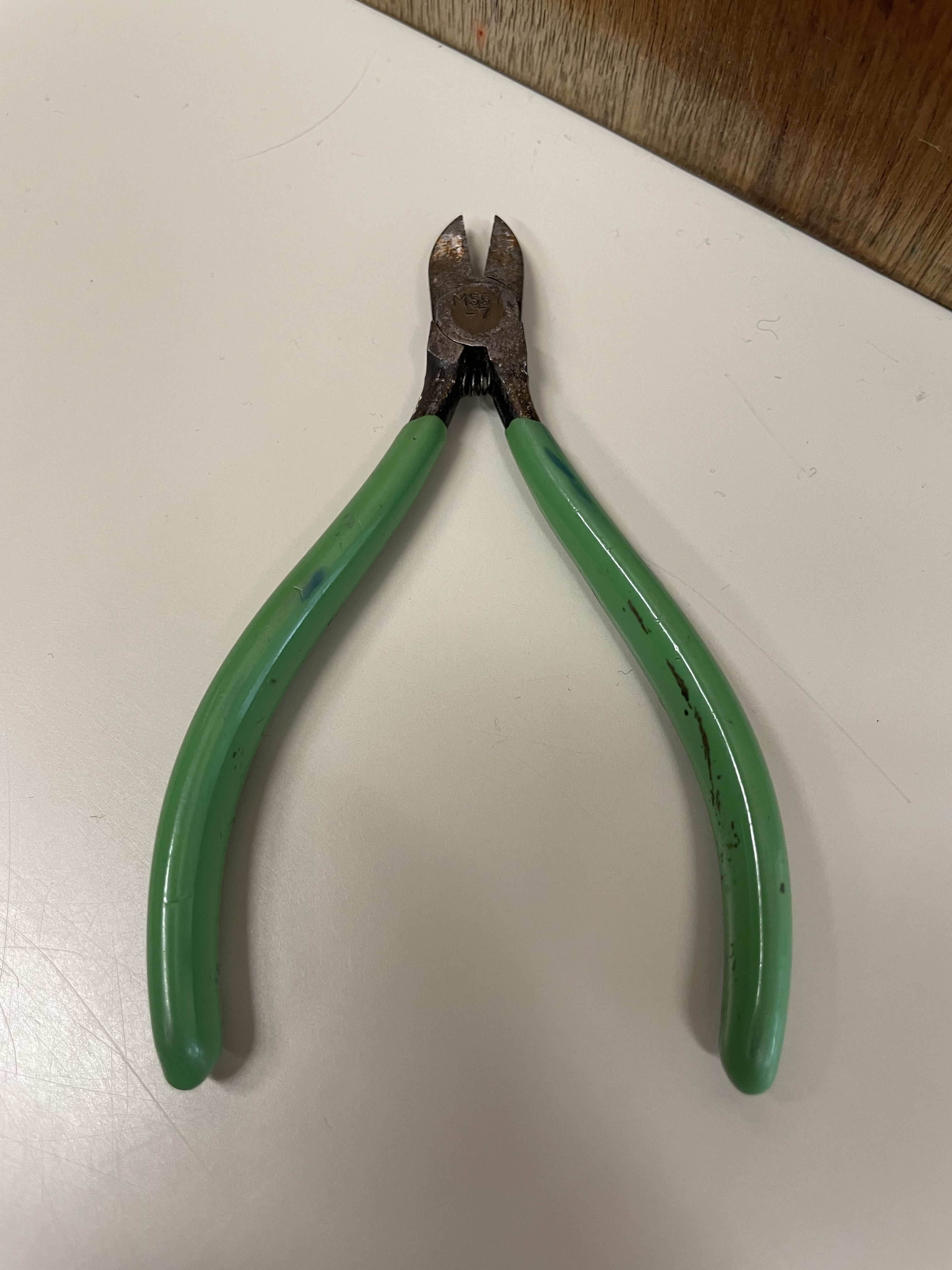
The metal that is not encapsulated by a thin green rubber sheath is covered in a patchy layer of rust and oxidation. The backside of the pliers display the numbers MS54-7. These numbers are not cast onto the plier through heat, but instead are stamped onto the bolt used to help the pliers swivel. When squeezed the pliers demonstrate the simplicity behind the mechanism, two sharpened metal rods rotate towards each other until finally connecting. Despite years of usage the mechanism runs perfectly, and there is no squeaking to establish its age or rust to slow the mechanism and expose its inadequacy.
The sharpened blades tell a story of their own as they have been worn down over time, upon close inspection light passes through different areas of the blades. One large gap displays a story of a foolish grandson who tried to cut a large piece of steel with the pliers, leaving a dull area in the midsection of the plier blades. Despite the dulled areas of the pliers, they are still razor sharp and threatening. The rust and residue remaining on the sharp blades indicate that this is not a welcoming area for fingers but instead strictly for non-ferrous metals.
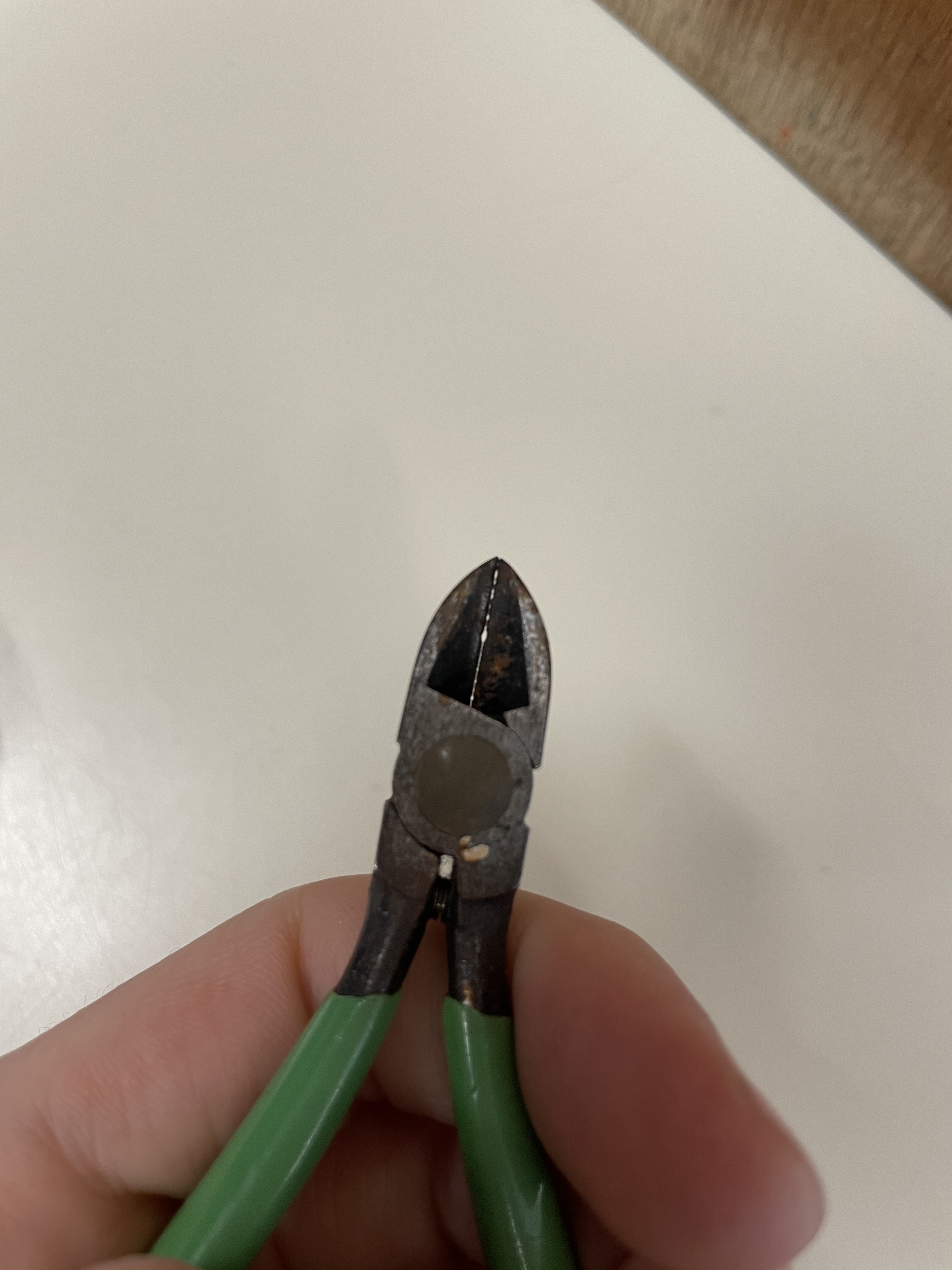
In the center of the metal lies a spring. Despite the pliers age and heavy use, the spring still recoils with a sense of vigor. When squeezed you can feel the tension build as the plier fights to reopen against your grip. When wire is caught between the plier the spring begins to strain as the stress begins to grow between the wire and the mechanism. In due time the wire always surrenders to the pliers strength and launches into two divided parts.
These pliers allow me to have a direct connection with my family history and always serve as a reminder of how important my lineage is. Combined with the value of pliers spanning from generation to generation as well as its almost pristine cutting ability, these pliers are a demonstration of my family’s values as craftsmen and artists as well as the value we hold in family.
 The Materials of History, Thought, and Art
I loved reading this! I particularly enjoyed the comparison to an ant. Immediately, that analogy and the image it was paired with in the text made complete sense both in appearance and in function. The familial anecdotes were woven in perfectly, great job!
The way you wrote about these pliers was fascinating and perfectly descriptive! Even though they are so old, it is incredible that they still work so well. I suppose things were just made with more integrity back then. I like where you described “the spring still recoils with a sense of vigor…In due time the wire always surrenders to the pliers strength and launches into two divided parts.” This animates the pliers into a being much more powerful than one would assume at first glance. You can tell that you have worked with them a lot, and from the level of observation it also tells me something about the way you understand the world–you clearly have a heightened sensitivity to the way things feel in your hands, taking even the smallest sensory factors into account.