In our group project, I wanted to continue the discussion on cloth proverbs used in Ghana. These textiles displayed in the exhibit are from 1990’s and are used to share messages and stories. The material displayed carries a rich history as well as very beautiful and detailed artwork. As I was thinking about cloth proverbs, I began to ponder other ways people use material/textiles to share their stories.

In Ghan, featured in the Smithsonian exhibit titled African Voices, cloth proverbs are material that shares a story. These cloths are made into clothing for different occasions. The intricate patterns are almost like keys; if you know the pattern, you know the message. These clothes become a way to communicate non-verbal with people in your community. Many of these cloth proverbs are made into funeral attire but other cloths are used for more day-to-day attire. Some of the cloth proverbs translate to themes of jealousy, greed, and intention. The proverb says, “ A royal doesn’t cry… Not everyone has the good fortune of being born into royalty, so one must be prepared for hard time” (CITE). This proverb is reminding the wearer that not everyone has the same kind of status and wealth. Each cloth shows the values and mindsets of the people in Ghana. Many of these cloth proverbs carry oral stories and traditions passed down from generation to generation.
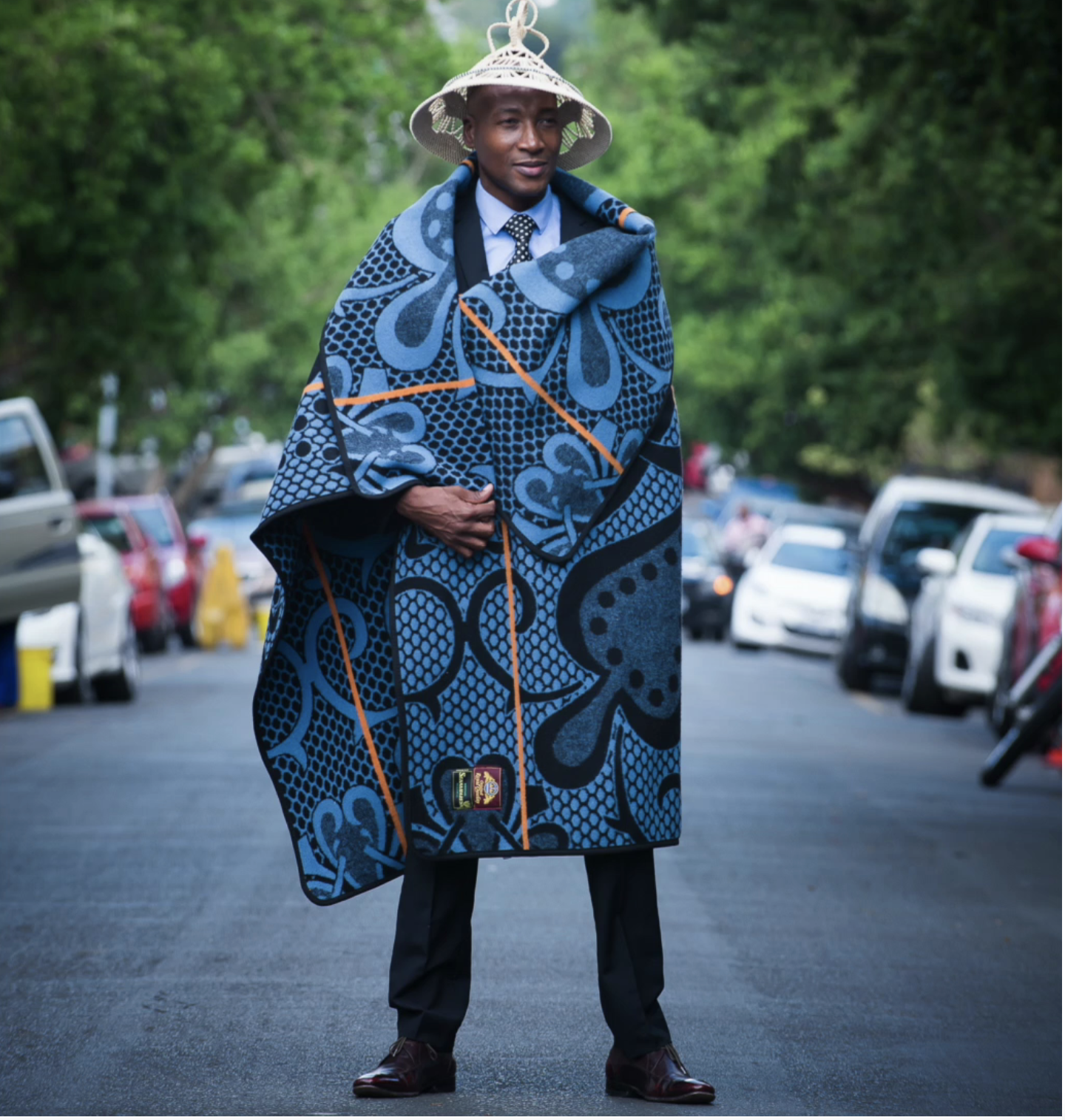
In comparison, in Lesotho, South Africa, it is common for people to wear Basotho blankets. They are very colorful and intricately designed. The Basotho blankets protect them from the cold but more importantly, they are “statues symbols and cultural identification” (Faces of Africa). These blankets are specially designed to protect the wearer from wind, rain, and extreme temperatures. Basotho blankets have three different class rankings to show status. They rank from acrylic to wool and cotton made for royalty. It is said that the first blanket was given as a gift to King Moshoeshoe by a British trader. The King began to wear this garment in a similar way indigenous people of Southern Africa wore animal skins. In the article, it quotes Elizabeth Masetho a waitress and a cultural activist when she says, “You have to know the history behind each pattern and why is that pattern there and what happened in Lesotho, You have to know your history in order to understand your future…” (Face of Africa). Each blanket had deep cultural stories woven into each stitch of its making. Traditionally, men will pin the blanket on their shoulders and women will pin the blanket across their chest.
The Smithsonian exhibit, African Voices, that highlights these cloth proverbs, I believe did not do a good job of displaying these objects. From what I could see of the exhibit, it had limited information on these cloth proverbs. I was wondering how these clothes were acquired and if the translation provided was accurate. In addition, there is hardly any information on the artists that created these cloths. As I being to look at museum description, the more I find the need to add additional information to make it a well rounded description. Much of these descriptions in this exhibit are detailed so that the viewers are satisfied enough not to ask any more questions. I wonder if the artists in Ghana where asked about how these cloths were displayed in the museum .
Today, in our society, we use materials and textiles for a variety of purposes. It is important to see what kinds of messages your clothing projects to the world. No matter where you live or in what time period, we have always used materials and textiles as a form of communication and storytelling.
Work Cited
Africa, Faces of. “Faces of Africa – a Nation in a Blanket.” CGTN Africa, 7 May 2019, https://africa.cgtn.com/2019/05/07/faces-of-africa-a-nation-in-a-blanket/.
Clothed in Symbols: Wearing Proverbs, https://quod.lib.umich.edu/p/passages/4761530.0007.004/–clothed-in-symbols-wearing-proverbs?rgn=main%3Bview.
“Exhibits.” Smithsonian National Museum of Natural History, https://naturalhistory.si.edu/exhibits.
“Kente Cloth: Moma.” The Museum of Modern Art, https://www.moma.org/audio/playlist/43/696.
 The Materials of History, Thought, and Art
I love how you compared the textiles in the Smithsonian exhibit from Ghana to a different type of textile from Lesotho, as well as to the textiles we wear. I agree that more information would benefit the display at the Smithsonian, perhaps more on the process of making the textiles, or more on the people who wear them. But I enjoyed reading your research on the different textiles, and I appreciate that you did not just group all of Africa into one place, but chose to research similarities/differences in textile cultures in multiple parts of Africa.