If there’s something you can learn from Slavic stereotypes—alcoholism, the post-communist brutalist architecture, chain-smoking cigarettes—the Christian devotion is one of the more truer ones.
It’s hard to imagine my Slovak heritage divorced from religion. Even a common parting word, zbohom, means “with God,” and it is a word that comes so naturally to me when hugging my relatives goodbye. Even as an agnostic, it’s hard to sequester myself from Catholicism. Yet, it isn’t just my tongue, but the objects that cling to my walls, that hang from my bedposts, that sit in my wallet, reminding me of our religious roots. One object that resonates with me is our black crucifix.
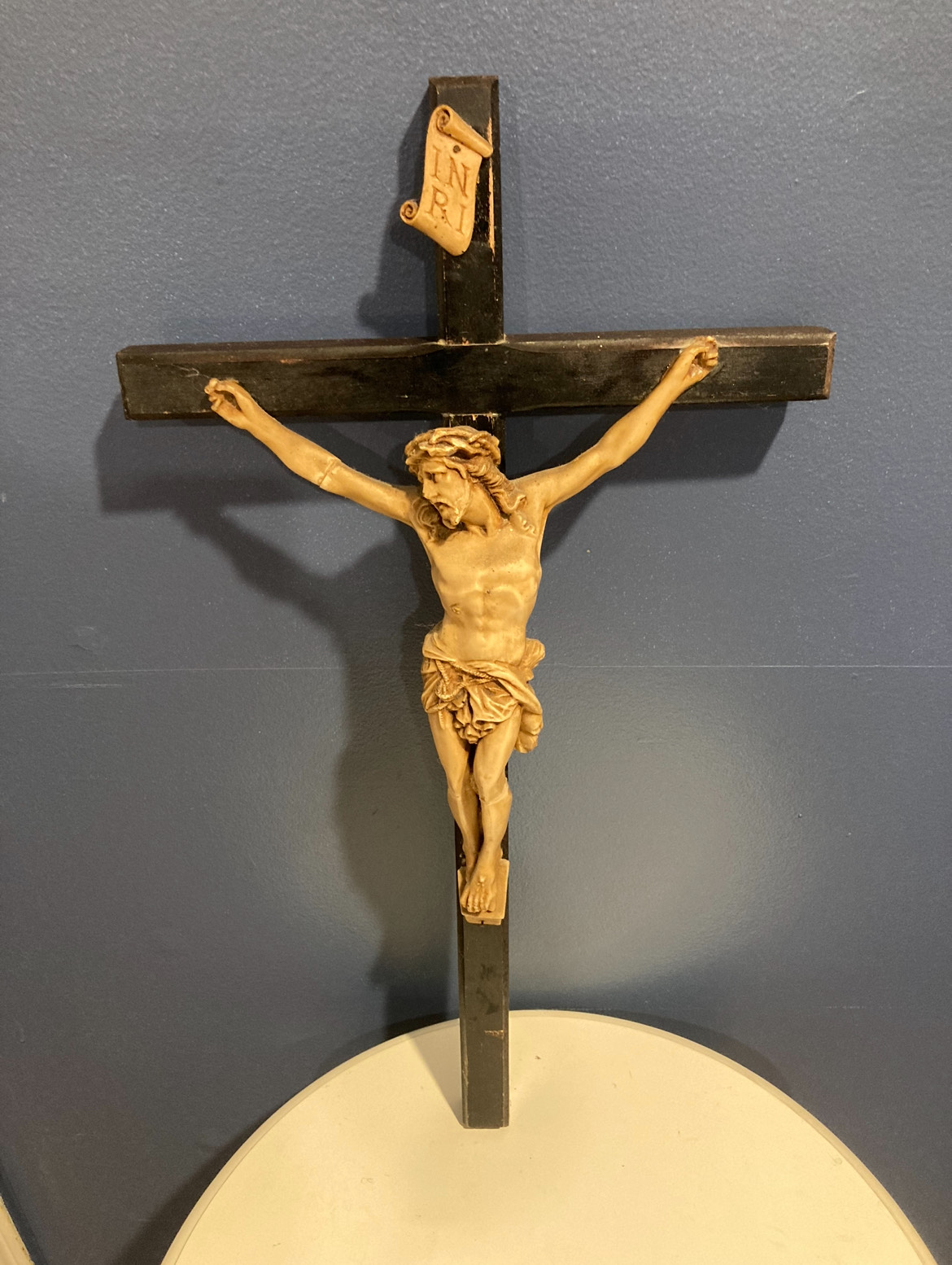
The crucifix, standing around 25 inches long, 12 inches wide, is made from oak wood. Two pieces overlap to form the base, holding up a small wooden figure of Jesus Christ. He faces the right, clad in only a garment wrapped around his waist and bearing the crown of thorns. Inscripted in another piece of wood are the letters “INRI.” Compositionally, it is no different than any other crucifix, yet this one was an immigrant in my home, hanging in the kitchen for the first nine years of my life before moving to the hallway of our new home for the next ten (and counting!). It is an object that now exists in an unremarkable space, yet represents a deeper history of our Catholic Slovakian family.
My family comes from a small village in Northwestern Serbia in a province called Vojvodina. Both my mother and father’s families immigrated here in the 19th century, leading to a collision of cultures and languages that resulted in a Slovakian-Serbian speaking region. A few empires and civil wars later, the Serbian village is still inhabited ethnically by Slovaks. My mother, who grew up in this village, could speak both Slovak and Serbian, navigating her tongue between the cyrillic script and Slovakian alphabet. My father is a native New Yorker, born and raised in Astoria, Queens, but he still frequented the village every summer. Both were raised catholic; both were raised speaking Slovak. Those two identities brought them together in union.
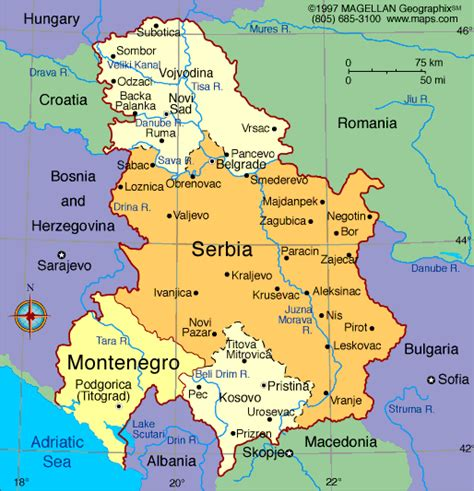
But the story of the crucifix does not start here (though we will be returning); it begins thirteen hours away (allegedly by bus) in a small village called Medjugorje in Bosnia and Herzegovina (formerly part of the larger Yugoslavian empire). This is one of numerous pilgrimage sites for Catholics, having been established as such in 1981 after the apparition of the Virgin Mary.
The year was 1982, three years after my great-grandfather died. My great-grandmother, my Babička, at the time was a nun, living in Subotica and cooking meals for the bishops in a church. She was invited to live and work in Medjugorje, which had only begun to gain traction by that point. She took their offer, moving across soon-to-be-drawn international lines, and working as a caretaker for troubled youth. My Babička worked there for ten years, feeding and housing those youth in the hopes of rehabilitating them. It was during this period that she was given the crucifix from a local priest, though due to her old age and fading memory, the exact context and timestamp is not entirely certain. The crucifix did however make its way to our village in Serbia, along with my great-grandmother, once the Yugoslavian war broke out. It found a new home on her living room wall, along with countless other rosaries, statues, and books from the mountain. My Babička continued to visit Medjugorje, but she permanently settled back in our village, holding onto and eventually gifting these objects.
Something worth noting about this crucifix is its black paint. It is no accident that this is the shellac used, because this is a replica of a much larger wooden cross on top of Medjugorje. Though faded now, the black is meant to symbolize the darkest of sins, painted by those who touch its wood and soon after seek penance. Our family’s crucifix is matte black, a bit faded on the backside, but it still physically and symbolically maintains its color and meaning, as it hung from my Babička’s wall for twelve years.

It is April 2004, and my parents are back in our small village, visiting my mother’s grandmother, my Babička, just one month before they were set to wed. It is here where the crucifix falls into my parents’ hands. It was a Catholic exchange, one not too unfamiliar within my family, but symbolically, its meaning had now changed. The matte black paint, meant to bear the weight of their worst sins, was now meant to prompt them to reconcile and to bear each other’s crosses as an act of love for each other and God. My Babička injected this new meaning into this object, handing it to them to bear and support this new crucifix in their new family til death. Fourteen years later, they filed for divorce.
For me, this crucifix exists in two contexts, pre- and post-divorce. Post-divorce, in the year 2024, it stands alone in my father’s home, sitting just above a light-switch, filling the blank blue wall between the bathroom and bedroom door. The crucifix has lost its luster, collecting dust and scuffs instead in the years of natural wear and tear. For my father, it is a reminder of his Slovak heritage and Catholic faith; for me, it is a reminder of the broken family unit betraying my Slovak and Catholic roots. It sounds grimmer than it actually feels, but looking at this cross—its inscriptions, its blemishes, its fine-wooden detailing—ultimately, it’s a part of me. It is a Yugoslavian Catholic reflection of myself and this new meaning I make of it, as time continues to pass and the crucifix still hangs.

 The Materials of History, Thought, and Art
The way you described the crucifix existing in two different contexts and how it reflects your own familial and personal relationships gave this object a life of its own. It was a great way to end this already amazing post. I also love how you structured your post, as the story felt completely personal throughout but still managed to discuss the history and more formal elements of the crucifix.
I really appreciate how you explained your personal relationship and feelings for this object so in depth, because it gave the Crucifix so much more life and emotion. I also enjoyed how you described where the Crucifix was from originally, and how its setting, physically and emotionally, changed after it was passed down.
This was such a touching narrative! You structured the text in very a successful manner, and I appreciate that you concluded with the message that the crucifix, ultimately, is a part of you and your heritage. You did a great job at relaying the idea that, although your chosen object is a religious symbol and you yourself are agnostic, it still holds significant familial and historical value.