The object I decided to look into the making of is my beloved stuffed seal, Sealie. I received Sealie from my mom at the very beginning of Covid in 2020, after she saw him on Amazon and thought I’d enjoy his silly design. He quickly became my close companion during quarantine, coming to and from the couch and my bedroom with me, and even accompanying me in the backyard when I’d venture outside. During a difficult time, he was a comforting presence.
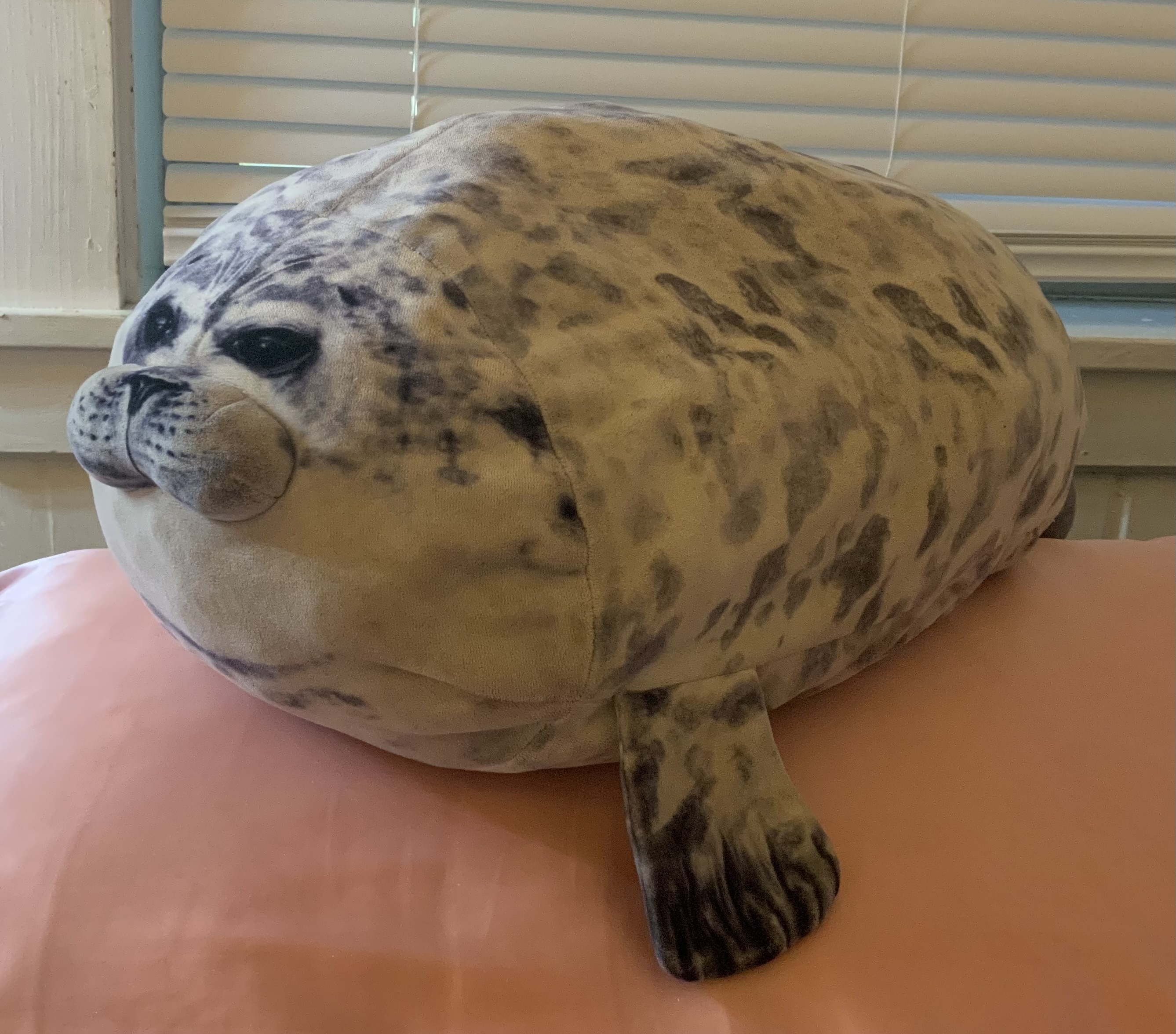
While attempting to begin my research about Sealie, I realized that it may be harder than I first thought to narrow down exactly where he came from, considering he has no tag. Also, his design is incredibly mass produced amongst many vendors. The first thing I noticed when searching him up on Amazon was the various different brands and vendors that sell him. How could I know which one he was specifically from? Well, I couldn’t. However, the majority of vendors have his materials listed as a cotton and polyester mix on the inside and outside. As well as this, and most importantly, almost all of his producers are from China.
80% of China’s cotton is supplied by the Xinjiang region in northwest China. The cotton is typically planted from April to June, and harvested from September through December (Cotton Outlook). The Xinjiang cotton industry has had many allegations against their production methods, with claims of forced labor and other human rights violations. This caused many United States companies, such as H&M and Converse, to pull back from importing their cotton from the Xinjiang region (Asia Media Centre). However, this cotton is most likely the type that is found in many finished products the U.S. receives from China, such as my seal plush. Now, let’s take a look at polyester. China has been using coal to make polyester fiber, as a fairly new way of production. Coal is abundant in China, and with advancing technology it has become an increasing means of producing chemical and synthetic materials (C&EN). Processing of polyester is mostly done in Zhejiang and Jiangsu. The mass production of polyester in these regions contributes to China’s place as the largest polyester producing country in the world (Fibre2Fashion).
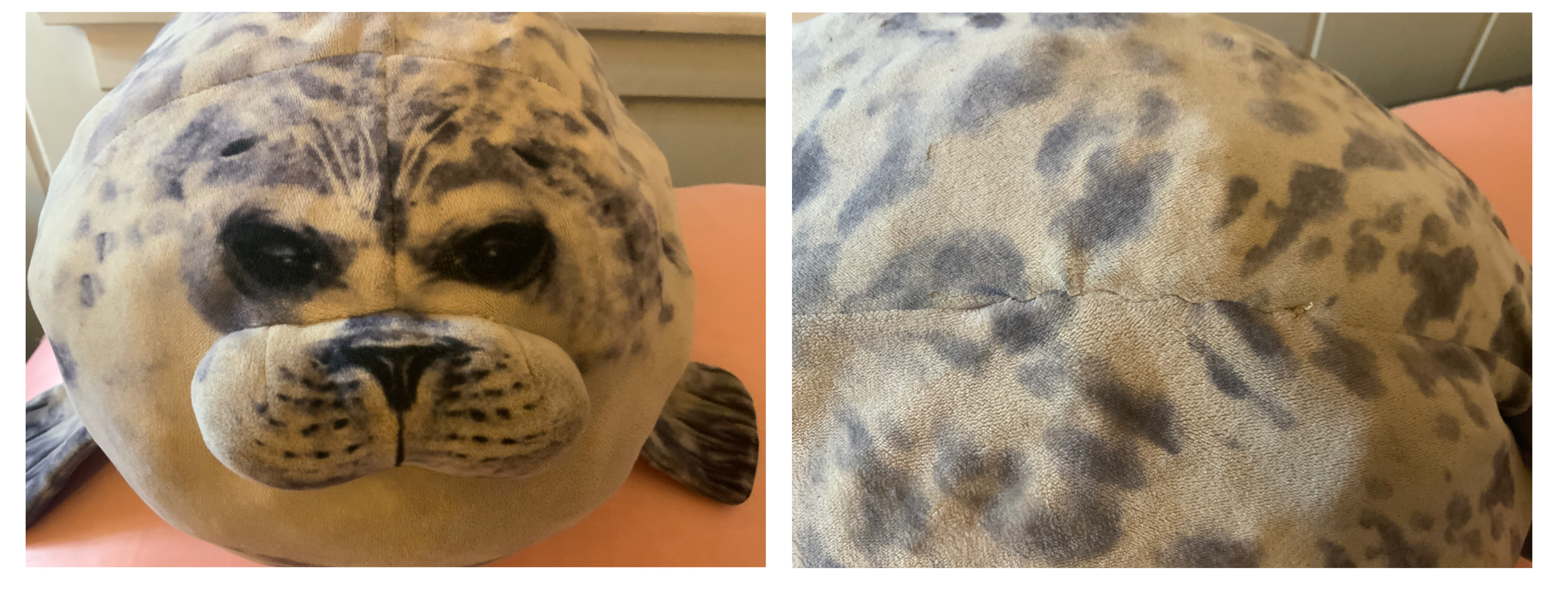
After figuring out where Sealie’s materials most likely came from, I started to look into the technical aspects of mass producing stuffed animals specifically. After Sealie’s birth place (or factory) had received the polyester and cotton materials needed to make him, such as his stuffing and outer fabric, the first step would be cutting the fabric into the seal shape. There are many ways factories could cut fabric, but Sealie’s fabric was most likely cut by a fabric roll cutting machine. It’s possible that his factory also had individuals cutting the fabric manually, but it’s unlikely considering the fabrics thin quality, which would make it easy to cut by machine, and because this specific plush design is common and popular. Then, the pattern needed for Sealie would be printed onto the fabric. Sealie’s print is evidently digitally printed, shown by the grainy image that are his eyes and snout. After printing, the fabric is sewn together by individuals using sewing machines, leaving a small opening which is then used to put the stuffing into the “skin”. Finally, the small opening is hand sewn together (Maple Eye Toys). On Sealie, you can actually see exactly where he was hand sewn, because one of his seams has a section that isn’t as linear as the others.
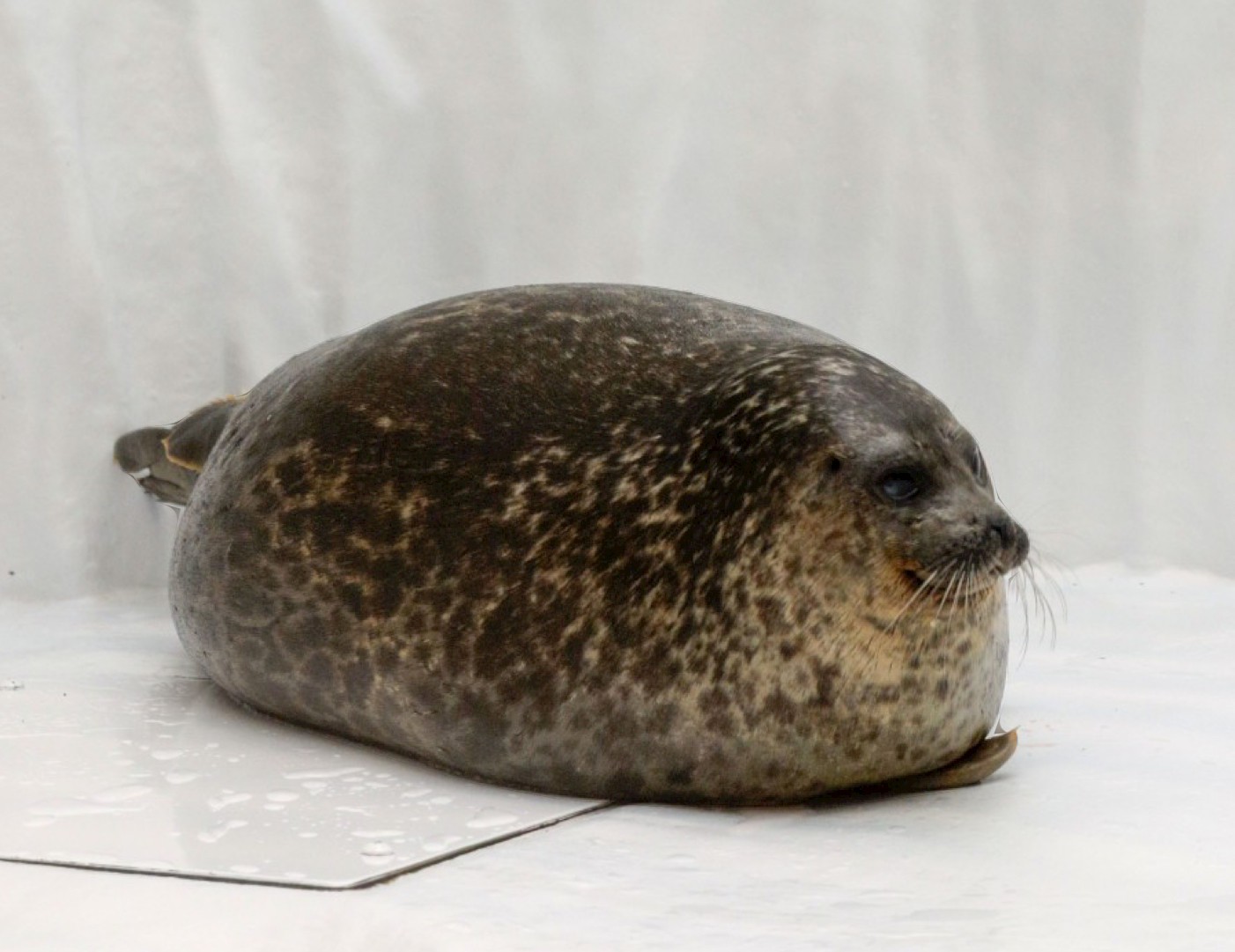
One step of Sealie’s making that I haven’t mentioned was how he was designed. In the process of researching, I learned that Sealie and another popular white seal plush usually sold alongside Sealie are actually based on real seals located in the aquarium of Osaka, Japan. Sealie’s design is based on Yuki the harbor seal, and the other seal is based on a white ringed seal named Arale. This process of research has taught me a lot about the stuffed animal I hold so close to me, and this bit of information is the most heartwarming for sure.
Works Cited
“China Country Page”. Cotton Outlook. https://www.cotlook.com/china-country-page/. 4 October 2024.
“Polyester made from coal? China is betting on it”. Chemical & Engineering News. 6 March 2023. https://cen.acs.org/business/petrochemicals/Polyester-made-coal-China-betting/97/i3. 4 October 2024.
“Step-by-Step: How Manufacturers Navigate Mass Production”. Maple Eye Toys. 27 July 2024. https://mapleeyetoys.com/plush-manufacturers/. 4 October 2024.
“Surplus Polyester Production in China”. Fibre2Fashion. https://www.fibre2fashion.com/industry-article/7406/surplus-polyester-production-in-china. 4 October 2024.
“Xinjiang cotton: what’s the controversy?”. Asia Media Centre. https://www.asiamediacentre.org.nz//features/xinjiang-cotton-whats-the-controversy. 4 October 2024.
 The Materials of History, Thought, and Art
Hi Rose,
I enjoyed reading Sealie’s story. For some reason, I found it especially interesting that there was a piece of Sealie that was sewn by hand. I always assumed that stuff like that was 100% machine sewn
Hi Rose!
I’m a sucker for silly plushies, and Sealie definitely fits that description. I find it interesting just how detailed you were able to get with this mass-produced object, even down to the fabric material and stitching. Though no plushie can beat the real thing 🙂
Really good job!