There has been a revival in the last few years of physical media — a return to bulk. Vinyl record collections, ancient video game consoles and cartridges, digital cameras accompanied by stacks of photo albums, they’re making comebacks, and my media of choice is the compact disc.
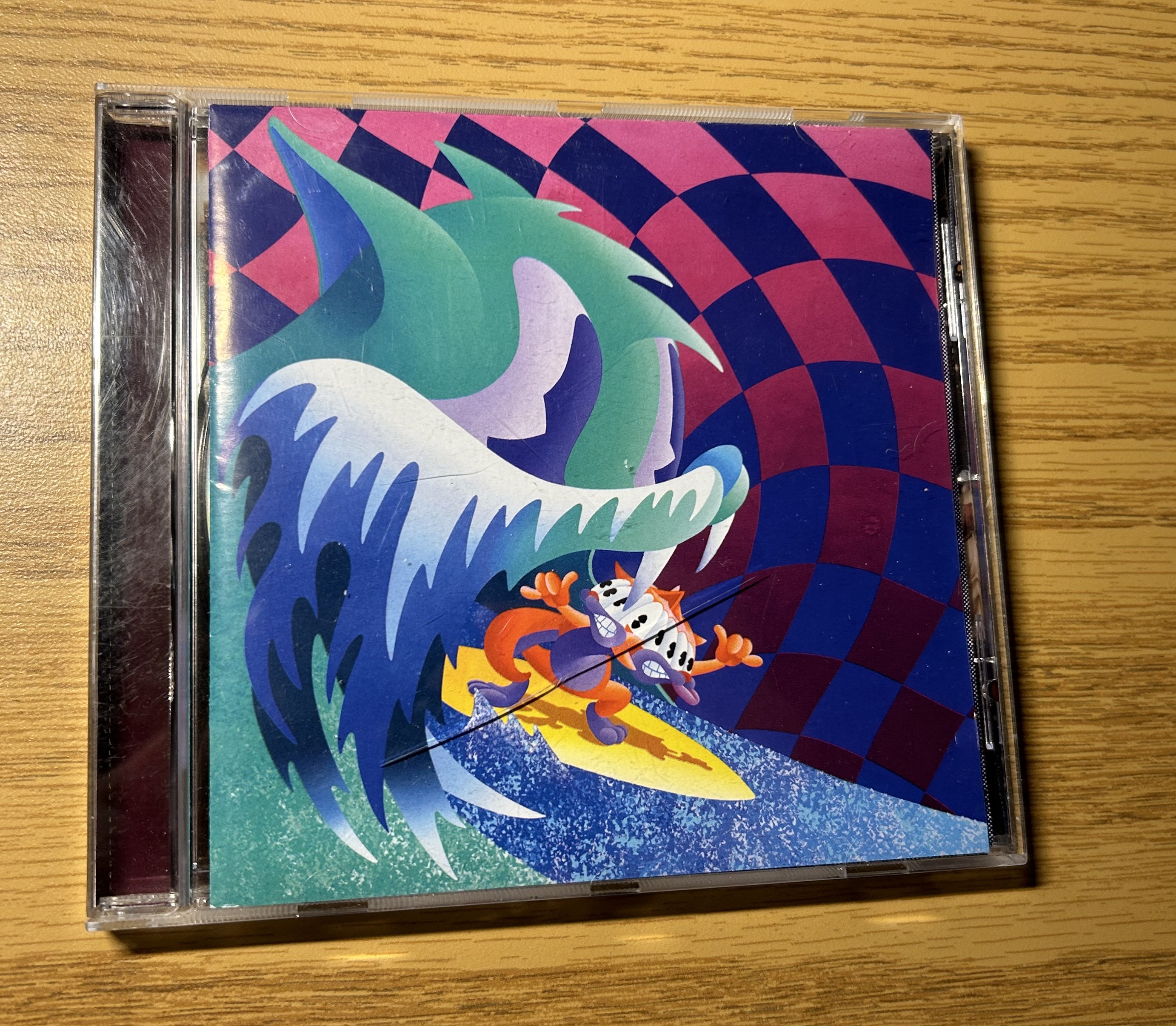
This is my CD of MGMT’s sophomore album, Congratulations. I bought this album on Apple
Music for $9.99, but I’ve also purchased this disc for $6.98 on Amazon in March 2021. Oftentimes, I try to shop local for my music, but for those harder-to-find albums, I turned to the online retailer in a moment of need. And now, as I hold the case in my hands, tracing the seafoam-green and blue waves, I find myself looking at the many multitudes that collide and mold together to create this product, that product being soundwaves, an intangible object. For me, I break down this product in three ways: the disc, the case, and the art. These three physical components are the driving forces that create this marketable CD.

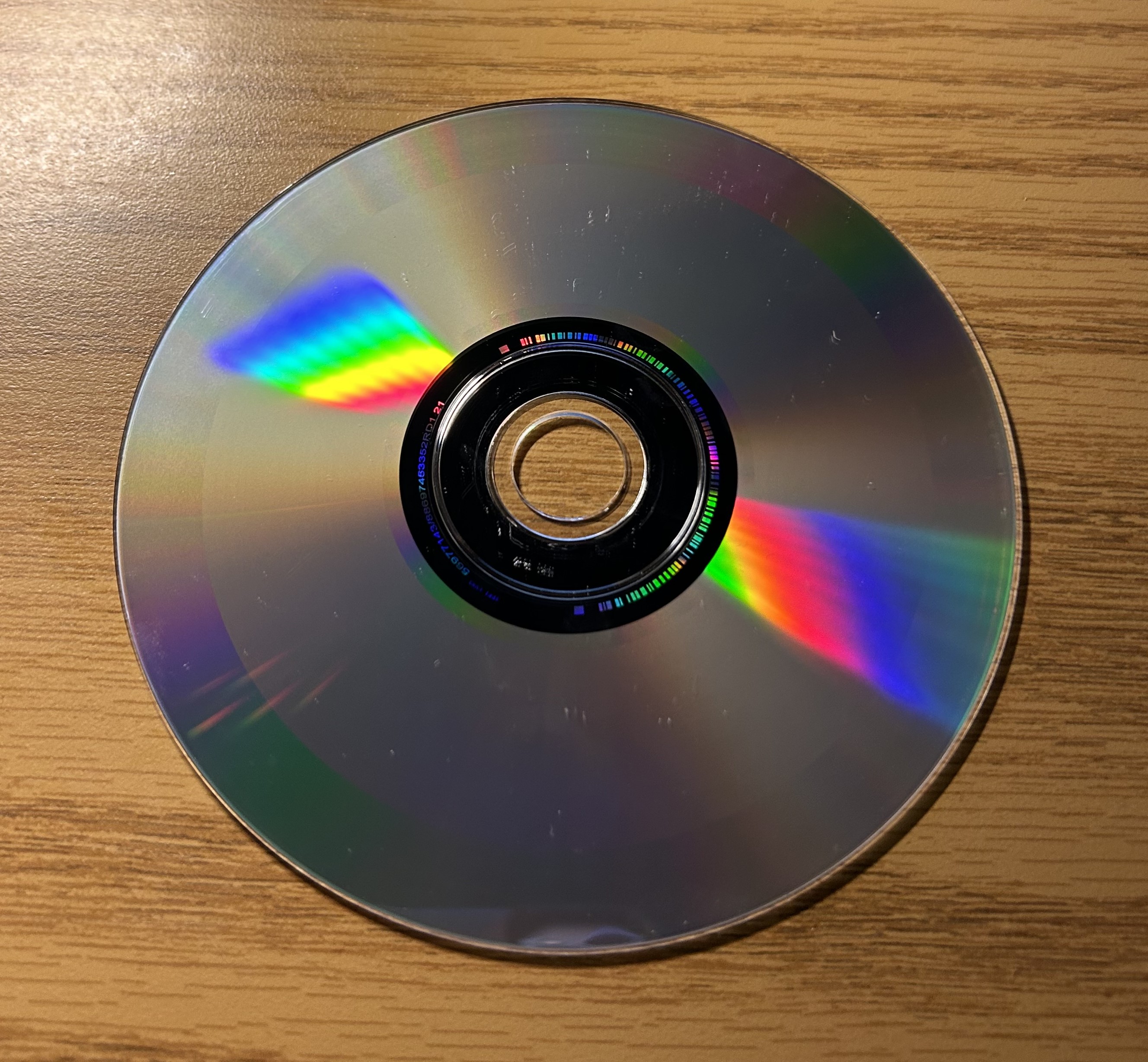
Firstly, the compact disc. Invented in 1979, the compact disc was a sleeker, shinier new alternative to the clunky, inefficient vinyl discs and cassette tapes. They were introduced to the public in 1982, dominating the music market for years up until the late 2000s, when digital databases and streaming services rendered the CD industry nearly obsolete. However, there is still a sizable market for physical media like the compact disc that implores bands to sell copies for their most adoring fans.
Compact Disc manufacturing is an interesting process in itself, utilizing complex machinery and materials to essentially create a master disc (the original) which is then used to press onto discs of polycarbonate, copying data onto one after the other and making playable CDs. These particular disc factories can be found in regions like the United States, Canada, the EU, Japan, Mexico, etc.

Tracing the origins of this particular compact disc turned out to be trickier than I thought. The album is distributed by Columbia Records, a sub-label of Sony Music Entertainment. At the very bottom of the case, the only origin story given is a simple “Made in Mexico.” The CD does not pinpoint a particular city nor a particular distributing company. Sony does not list out their specific manufacturers publicly either, meaning I can make educated guesses as to where this CD was produced.
One potential lead can be within Sony themselves and Sony Digital Audio Disc Corporation (DADC), the manufacturing division that handled Blu-ray discs, DVDs, and CDs. They had a plant in Mexico City up until 2015, when the plant was closed. Though it’s a plausible explanation, there is no direct information linking Congratulations and this particular factory together.
Scouring this particular thread in a music forum led me to discover one company, Technicolor, formerly a disc manufacturing plant in Guadalajara, Mexico, was a major manufacturer of compact discs and DVDs. They supplied and pressed discs until 2020, declaring bankruptcy (citing the COVID-19 pandemic as a major factor) and splitting from Technicolor SA to create Technicolor Creative Studios with the original company changing their name to Vantiva. The plant was in operation from 2002-2022, taking on the brunt of Sony’s disc production after major factory closures across North America. Technicolor has been credited as the pressing manufacturer for some of MGMT’s other albums like Oracular Spectacular (2007) and Little Dark Age (2018), according to Discogs, an online music database and marketplace, hence why they are another plausible source of my CD.
CDs can be packaged in a variety of ways and vary in strength and durability. This particular reissue came in a jewel case, a hard, transparent plastic shell with a raised section to hold the disc securely in place. They were created in 1982 by Peter Dooson who worked for Philips, a Dutch manufacturing company and are typically produced en masse. The case is made of polystyrene and is only a bit heavier than the disc itself, providing a safe way to store discs.
Finding details on this particular jewel case is difficult, as they are not able to be traced to a particular manufacturing plant. However, many disc pressing companies (like Sony DADC) also provide packaging and printing services, meaning this jewel case most likely sourced from the same plant where the disc is pressed.

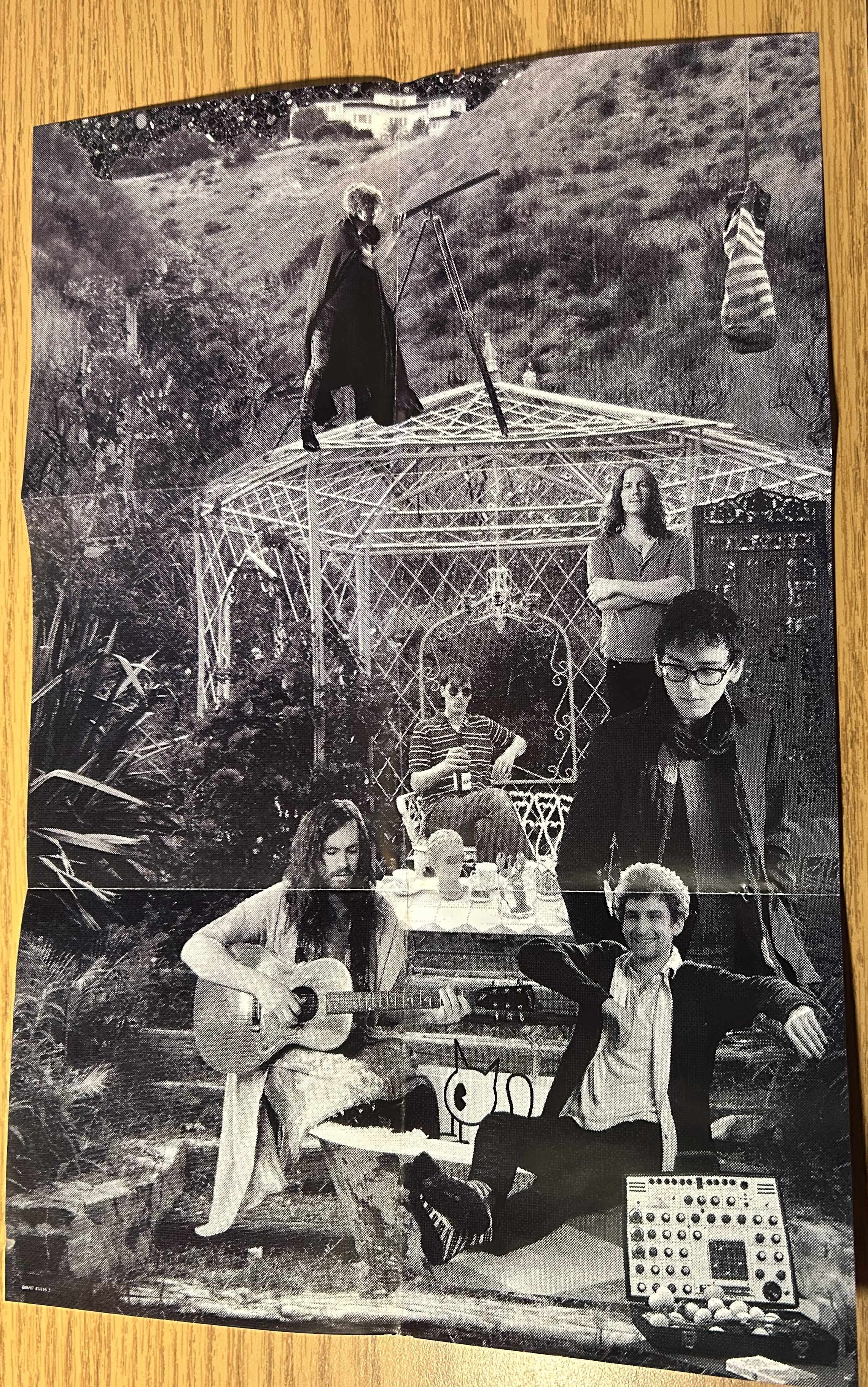
While the jewel case and compact disc make up the bulk material of the final product, it is the art that makes it unique. Starting with the front cover, Congratulations’ album art was created by Anthony Ausgang, a lowbrow artist living in Los Angeles whose primary subjects are cats. According to his personal blog, Ausgang stated that, “While painting the cover [he] was not allowed to hear any of the advance tracks, so [he] had to listen to Oracular Spectacular while working. Once [he] did hear the new tracks, [he] was extremely happy that the image worked so well with them.” The psychedelic, new-wave, synthesized sounds of the songs are situated with this album cover, which is just as equally trippy and colorful. The remaining artwork, photography, and design of the CD was led by Sony Music Entertainment’s art director, John Cheuse. This art fills in the transparent space of the jewel case and provides the consumer with additional paper material (lyrical content and a poster-size photograph of the band).
In doing research on this CD, my research has led me down many interesting rabbit holes regarding CD manufacturing, distribution, and the overall dismal truth that physical media is in decline. When looking at Congratulations in its disc form, I am implored to explore it beyond its audio purpose, to analyze the time, craft, and care that went into designing and producing every part of this product. Physical media as an object serves not only the purpose of archiving data, but representing multitudes of stories that come to create something you can hold in the palms of your hands.
 The Materials of History, Thought, and Art
It’s evident that you did lots of research for this piece! It’s fascinating that you were able to track down the exact origins of this particular CD. We are so disconnected from the production and manufacturing of our objects, that it’s difficult to imagine where they come from and how they are made. I think CDs are an interesting object because our generation witnessed the decline of the CD and the rise of the iPod and MP3 player. I would check out CDs from my local library when I was a kid and listen to them on my pink Disney Princess CD player. Just a couple years later, I was listening to songs downloaded from iTunes on my iPod nano.