For me, engagement with the analogue is not just a rejection of the digital, but taking back what is human—what is made for people by people.
My analogue journey in the realm of compact disc began in middle school when a friend of mine, who was a CD connoisseur, made me some mixtapes. Eight CDs stored in both plastic cases and paper sleeves he’d folded himself, these discs contained hours of music from our favorite bands: Weezer, My Chemical Romance, Muse, and Green Day (quite the taste). The last two CDs were compilations of songs he thought I’d like, basically a rip-off of every 70s rock compilation, but it was the sweetest thing anyone had ever done for me.
Later on, when that same friend and I started dating and made it to our first anniversary, I crossed paths with the compact disc again, as he handed me a compilation of all of Weezer’s B-Sides, only the obscurest of Rivers Cuomo & Co.’s jams all on one disc. These were songs only found on YouTube at the time, yet here they were, sitting in the palms of my hands.
It’s been nearly five years since I’ve last spoken to that friend, having gone our separate ways in life, but those CDs still sit in my milk crate. They exist among other CDs, officially licensed and produced by record labels, more durable and artistically impressive than the simple blank CDs scrawled with Sharpie. And yet, something drew me to those discs more and more over the years. So, when assigned the task of returning to analogue, I returned to the disc.
It’s worth mentioning that in the United States, burning discs does not infringe upon copyright law if they are being made for personal use. Selling these discs is where things get tricky, but these discs are made solely for my benefit and enjoyment. So, this week, I busted out the external DVD drive, the blank CDs, and a flimsy jewel case and got to work.
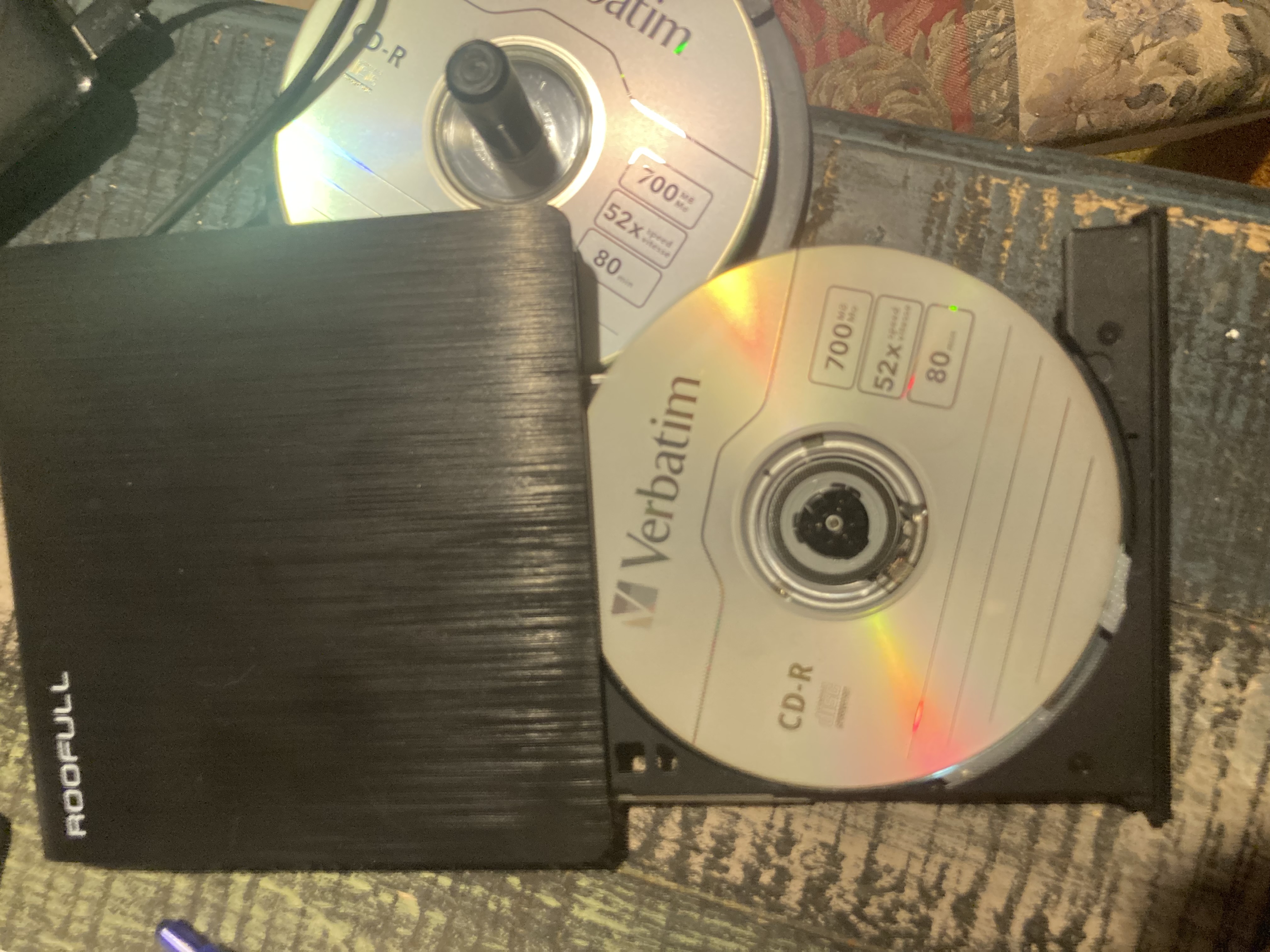
The process of burning a disc is relatively simple—converting mp4s to mp3s, transferring those files into a playlist (usually on iTunes), then converting it onto a blank disc inserted into the DVD drive, and in less than 5 minutes, the product is complete. Sure, it’s not the prettiest piece of art, but pop it into any CD player, and it works like a charm. For this week, I copied The Brobecks’ album Happiest Nuclear Winter onto a disc, an album that can only be found through YouTube reuploads nowadays. When I had some quiet moments alone in my room, I’d let the music play from my mini CD player, idly playing while I did chores or caught up on late assignments (such as this one). It was both an experience of nostalgia (having listened to that album since middle school) and rejuvenation (finding something new I loved about certain songs).
There are multiple arguments to be made in favor of CDs. For one, you’re limited by the capacity of the disc. Unlike music streaming apps like Spotify or Apple Music, which allow you to freely jump between genres, playlists, and songs, listening to a CD forces the listener to really focus on the 80-or-so minutes of music at their disposal, digesting it a lot better as opposed to just jumping from song to song. As someone who used to consume music album by album, CDs are optimal for my listening habits. In contrast to other forms of physical music media, CDs are a lot more accessible—easy to buy, easy to burn, easy to make mixtapes to your heart’s content. Vinyl records, though having an attractive vintage/nostalgic quality to them, are not as accessible to the public. While it’s common for big artists to sell LPs of their latest albums or for record shops to offer wide access to many genres, you cannot go out and make your own vinyl record without paying an egregious price through third-party companies. Customization is lost in this realm, whereas CDs do not require as much work and money.
The biggest argument in favor of the disc, in my opinion, is its defiance against the streaming world. It hands the authority back into the hands of the listener to forge their own playlists without needing to pay a monthly subscription, be inundated with advertisements, or be worried that their favorite music may be wiped from their streaming platforms. It allows for the consumer to remix and create music for themselves, to take back an artform meant for humans to enjoy. And don’t get me wrong, if an artist is selling CDs and I have the means, I will always be inclined to purchase those first, because supporting your favorite artists is what keeps their job afloat. But if I don’t have the means or the music is not widely available in physical form, then I think burning CDs is the way we can reclaim our media and relinquish the chokehold these corporations have over our entertainment. It is how we show our love for ourselves, for one another, and the media we value beyond monetary means.
For me, I bounce between both worlds, listening to music on my phone on the go, but when I’m alone in the comfort of my own home, I find myself much more inclined to pop in a disc and just enjoy the tunes.
 The Materials of History, Thought, and Art
Including the explanation of the process regarding burning CDs was helpful. I never really thought about that process until reading your post even though my parents have a box full of CDs. When I was younger, whenever I was in the car with my dad, he would only play music from his CDs. The simplicity of being able to just insert the CD into the CD player and have a full album playing rather than struggling with technology by making sure the phone is connected then going into Spotify and selecting the playlist makes listening to music more enjoyable.
Such a great piece Sara! This was really nostalgic for me, it really reminds me of when my father used to burn CDs for my brothers and when we were kids to play on our radios before bed. It really warms my heart that there are still folks out there coming back to CDs and in your case the process of buring them.
You’ve insipred me to possibly burn once again. As always great piece!
This might make me sound like a total grandpa but I really miss having a CD player in my car and I would do anything to get one again lol