Most books I buy now are usually used. I’ve found that it isn’t too difficult to find used books in great condition – Barner Books, right in town, has a huge selection – as well as even ordering used from Amazon and Barnes and Noble. I rarely buy new books now, especially if we’re talking those pesky, pricey textbooks. I love buying used because it’s nice to hold a book that could have been once cherished and is now once again up for grabs, looking for a new owner to make happy.
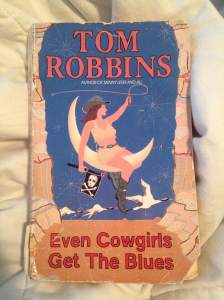
This particular book was purchased at Barner. It sits on my bookshelf beside my collection of other used books, and I think the last time I took it off the shelf was when it was sunny and I could lay in the grass by the pond on campus reading it. Even Cowgirls Get the Blues by Tom Robbins is one of my favorite books, which might be weird to say about a book I haven’t quite yet finished. There is a dog-eared page on page 261 and I think that’s where I left off. Creases on the corners of pages can be seen throughout the novel, indicating that I definitely took my time while reading Robbin’s writing. The book is in fairly good condition for a used book, and penciled in on the front page is the price whoever working at Barner set, a scribbled 8, which barely looks like a number and could easily fade away or be written over or erased. The novel must have been bought used by somebody before it was sold to Barner because it had a used barcode sticker on the back cover. The initial price of the book was $11.95, so I guess I didn’t save as much money as I probably could have on this used book. The binding is extremely creased and a little bit torn on the bottom. The front cover is actually missing it’s bottom right corner, almost like it was folded and then ripped off. Other than the slight tearing and creased pages, the pages aren’t too yellowed and I would still call this book “in good condition”. I will just be more careful when I decide to finish the story in hopes that the front cover doesn’t fall off.

The title page says it’s a “Bantam Trade Paperback”, and when I researched this publishing house I found out it’s entirely owned by Random House, a subsidiary of Penguin Random House. Basically, this book was printed by an American company that is owned by a larger American company. This book also includes a “Printing History” section on it’s copyright page. It’s printing history says that a portion of this book has appeared in the literary journal American Review in 1976, however the edition I have is from 1990. I think that from the printing history and title of the novel, as well as the tears, one can infer that this is an American tale that takes some time to read, but it’s definitely loved. 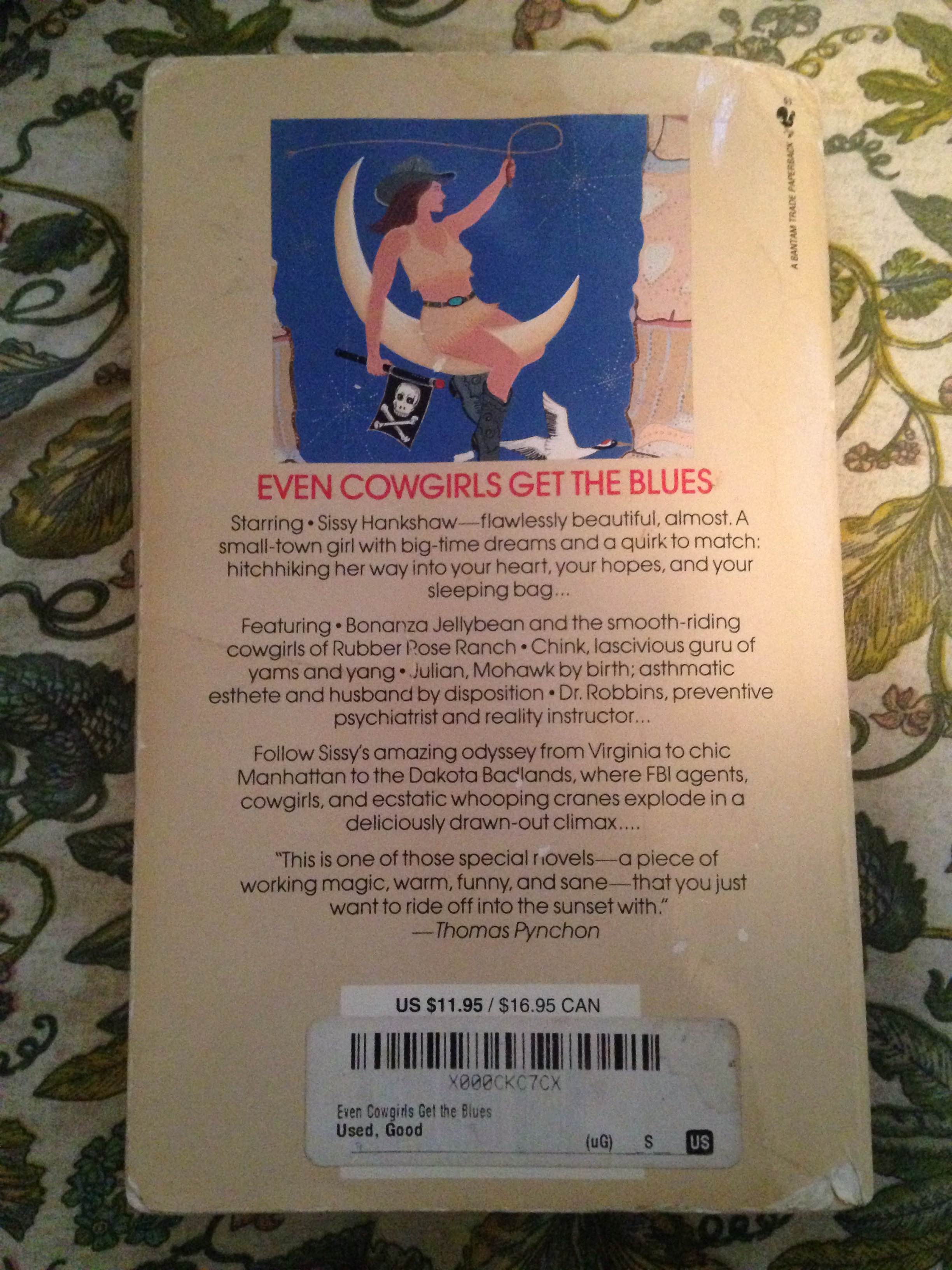
 The Materials of History, Thought, and Art
I don’t usually buy used books, probably because there are no used book stores in my town, but I also have not actively sought them out until recently when I needed to buy textbooks. I don’t think it would ever occur to me to buy a used novel, so I think it’s interesting that you prefer used books. I’ve never heard of this book before, and I wonder what demographic it is marketed to. I’m glad you’re enjoying it and I hope you get a chance to finish it!
I love how you can denote the minimal amount of owners by used bar codes and multiple price stickers or places where different stores have marked it as being worth a certain amount of money. You tie this in quite well through the remark about not getting as good of a deal as you might have been able to. One of the best parts of used books are the hidden values, the things that someone at an Amazon warehouse will look over but we will find as we go through the book, page by page. The worn features are always neat, too. I like how you describe the torn corner of the cover in relation to how you will be careful when finishing the book – I got a very vivid sensory image of rough, beige pages that the fibers are almost jumping off of. I wonder if the pages are actually like this? Has the book passed through other small book stores like the one in town, or was the other price sticker from a larger corporation?