I had some fun this week with my Norton Anthology of Shakespeare’s works. Inside this 3,417 page book, each play has a preface, and every preface holds some juicy treasures. The introduction to Hamlet explains how there are such differences between the First Quarto (Q1) the Second Quarto (Q2) and the First Folio (F).
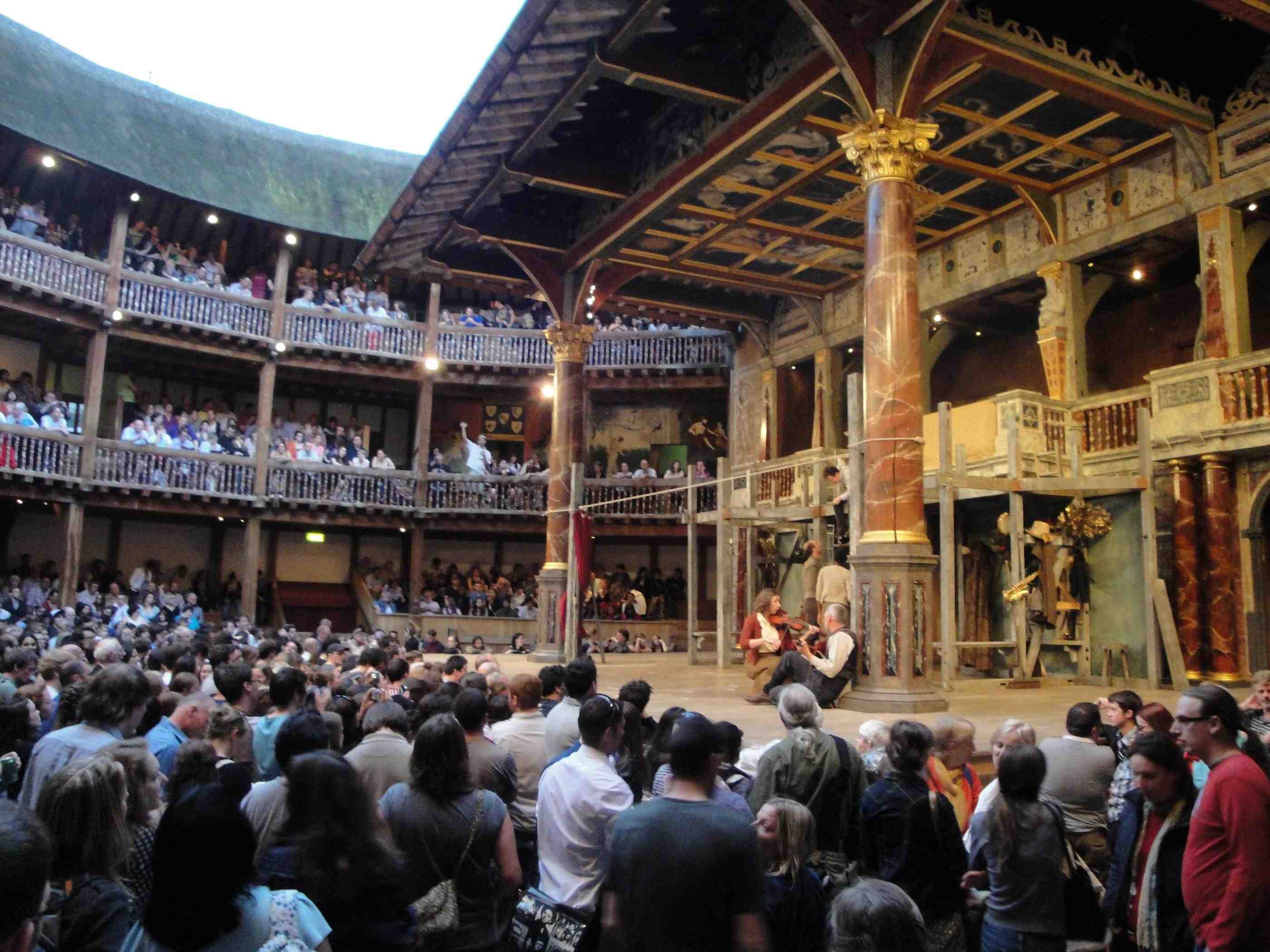
Deciphering the differences and similarities between the First Quarto and the First Folio is one of the most exciting things you can ask me to do. I love how we still have access to some of the different versions of Shakespeare’s work. Studying these variations can give us more clues to make a hypothesis of why some changes exist from play to play within different editions — or they can add to the mystery! But I absolutely love jumping into the growing unknown.
The First Quarto is also known as the “Bad” Quarto. Q1 has 2,200 lines while Q2 (printed just a year later) has 3,800 lines. What’s in a name… would this Quarto by any other name still be so “Bad?” The first thing we know is that lines are being added, which means that some sort of purposeful addition is going on.
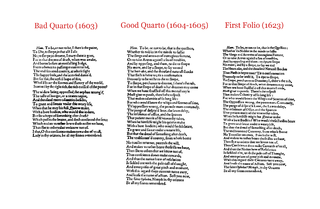
So what exactly is going on? What is being added and why? What is being added from memory of an actor or from the writings contained in someone’s commonplace book? What is possibly more accurate in the first recording of Hamlet (Q1)? With the knowledge of the Common Place books I start to realize the “Bad” Quarto could possibly (a very quirky “possibly”) have some poignant accuracy. Q1 contains the true and raw way plays were recorded and to that there is beauty!
Scholars have proposed that Q1 is constructed from memory. Actors recited their lines to a scribe and the scribe recorded them. This method seems vulnerable to the many different interpretation a memory can have. I was under the impression that the “Bad” Quarto had some distinctiveness because Q1 was the first published and closer to the ways these plays were really recorded. Q1 may be unique; however, the First Folio is thought to more closely capture the way the play was actually performed. The First Folio is hypothesized to be constructed from promptbooks. A promptbook is a scribal transcript. The promptbook itself was probably constructed from foul papers — a soft of rough draft from the author — which editors then annotated.
Who truly knows if the foul papers of Shakespeare were annotated by editors. Who knows if the memories of his actors were picked by a scribe and recorded in the First Quarto. Who knows if Shakespeare himself had everything, nothing, or some to do with the changes between Q1, Q2, and the First Folio.
Scholars say the mystery is so complicated because Q1 and Q2 hold true to Shakespeare’s style — they both are equally authentic to truly being of Shakespeare’s own writing.
Then we get to the eighteenth century and the oxford edition breaks tradition. They hypothesized that Shakespeare did indeed hold responsibility for the changes in the foul papers in which the promptbook were composed from. That if the foul papers were different it was because they were deliberately revised by Shakespeare.
Whether from the memories of actors or from editors decisions or from Shakespeare’s own revisions, the source is not completely secure.
I chose to compare and contrast act 3 scene 2 from Hamlet in Q1 and the First Folio. It was pretty phenomenal to me because the only differences were of spelling, punctuation, and stage direction. Only a couple of revisions were made — very few words were added or deleted.
Since the message of both versions is predominantly the exact same; this shows just how important act 3 scene 2 is.
The biggest difference was the clear editing done to the clarity of stage direction. The entrances of certain characters were in slightly different places in Q1 as compared to the First Folio. In Q1 the Prologue enters after Hamlet and Ophelia are done exchanging increasingly inappropriate lines about shows and meaning. In the First Folio the Prologue enters between Hamlet and Ophelia’s lines and then delves into his plea for the audience to patiently watch the play. Q1 has Polonius enter after Hamlet is done with his monologue directed towards Rosencrantz and Guildenstern to understand he will not be played. In the First Folio Polonius enters and then Hamlet finishes his speech with “God bless you sir.” The stage direction of character action is more explicit in the First Folio. For example, the First Folio includes very specific direction for Hamlet to take Rosencrantz and Guildenstern aside when they come to tell him the Queen wants to see him, while Q1 does not contain this information. In Q1 all of the characters on stage say “Lights, lights, lights” while just the Courtiers say “Lights, lights, lights!” in the First Folio. The editing is focused on creating more specificity between the choreography of the characters in the sense of lines being interspersed with movement.
Other than the spelling revisions, the editing of the sentences were very subtle. One example of change is Hamlet’s line to Ophelia about husbands. In Q1 he says “so you mistake husbands” and in the First Folio he says “so you mistake your husbands.” I think the addition of the word “your” makes the line more direct and gives it more attitude. At the end of the scene Hamlet has a brilliant monologue directed towards Guildenstern. Hamlet lets Rosencrantz and Guildenstern know how acutely aware he is that they are playing him. The message is so fully the same in Q1 and the First Folio, but there are some small changes to word choice. In Q1 Hamlet says “… there is much music, excellent voice, in this little organ, yet cannot you make it.” In the First Folio Hamlet says “… there is much music, excellent voice, in this little organ, yet cannot you make it speak.” I think that this again is a change for the purpose of clarity. The addition of the word “speak” helps the audience understand Hamlet is comparing himself to a musical instrument. This particular section has one more word change — in Q1 Hamlet questions Rosencrantz and Guildenstern directly and says “Why do you think that I am easier to be played on than a pipe?” and in the First Folio Hamlet says “ ‘Sblood, do you think I am easier to be played on than a pipe?” So what is the meaning of the difference? Is there a meaning? Is it to use the vernacular of the people? I think there is a slight transition from being less overtly obvious to more clearly clever.
I believe punctuation to be very important because punctuation conveys voice. Punctuation helps the actors know the tone and in turn helps the audience get the message. Question marks and exclamation points were added to sentences in the First Folio. Examples include two of Hamlet’s lines; one being “If she should break now!” and the other “Why, look you now, how unworthy a thing you make of me!” This addition makes the ability to understand the meaning a lot easier.
It was a bit humorous to read that Q1 was so much shorter, yet the scene I picked had almost no difference to the First Folio. I am thankful for the changes to spelling and punctuation in the First Folio as compared to Q1. I understand why the characters enter when they do in the First Folio rather than Q1. The timing is more natural. In Q1 it seemed too staged to have one person done talking and the next person enter. Instead the flow from people talking to people entering mesh as one organic movement.
The differences were minimal, but with minimal change comes a greater meaning. The tempering of Q1 to Q2 to the First Folio was for greater clarity. The spelling, punctuation, slight syntax revision, and the stage direction changes were all for the purpose of making the scene more of a masterpiece. More — because it already was.
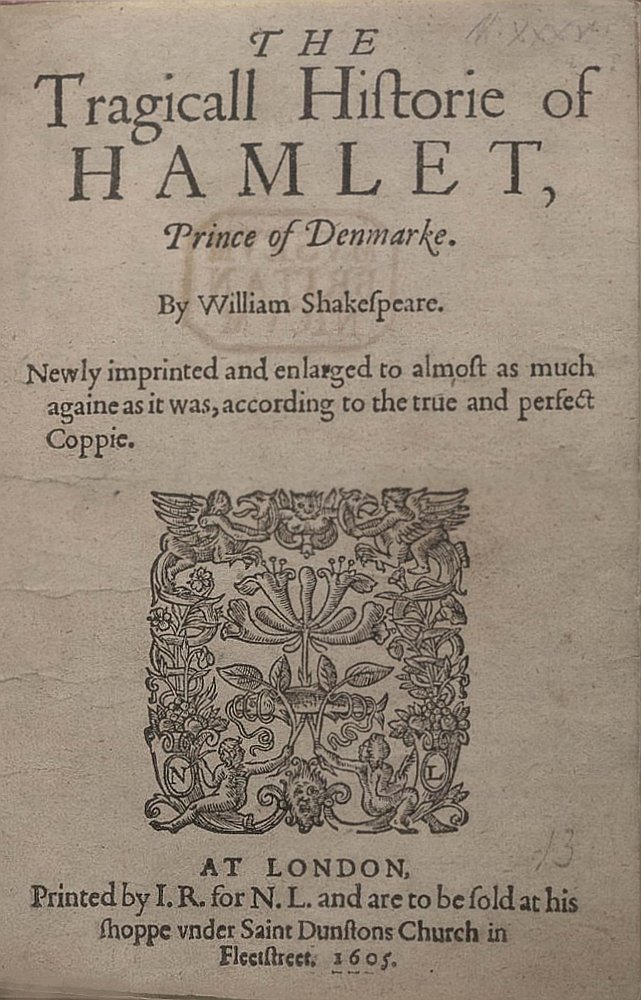
The comparison of act 3 scene 2 in Q1 and the First Folio was so impressive to me because with the chance to revise this scene, very little was actually changed. To me this shows how incredible this scene already was. It shows how much work went into this piece at the beginning of its creation.


I enjoyed reading your humorous and in depth explanation of the differences between the first Quarto and the first Folio. You added a voice and vibrancy to the topic of syntax and punctuation that made it interesting to read and understand the differences between manuscripts. If the first quarto was written from the actor’s memories, it makes me think that whatever was most important to them would of been remembered and written down, but that is highly subjective. Very cool topic!