Harry Potter and the Cultural Phenomenon

Front cover of Harry Potter and the Sorcerer's Stone, projected for re-publication Summer 2013.

Front cover of Harry Potter and the Sorcerer’s Stone, projected for re-publication Summer 2013.

Out of interest to extract as much content from one object as possible, I shall continue my observations of Harry Potter. In related news, following up from last week’s discussion of book covers, Scholastic just unveiled a new cover series in time for the 15th anniversary for the US publication of Sorcerer’s Stone. A few posters noted the darker tone induced by the cover, along with the complete scene shift, from the outside of Hogwarts to Diagon Alley. The detail of people and location heightens the wonder shared by both the reader and the protagonist, yet the image is also self-aware of the novel’s wonder, drawing that scene out from so many others. The article notes that the 1998 release, rather than 1997 in England, “really took the Potter craze to the next level.” In context of this week’s blog agenda—to reveal a historical route or trace of the object and its functionality—the separate publications and the fame of the book, despite its juvenile literary status, marks a shift in cultural use of Harry Potter and the Sorcerer’s Stone, and for juvenile literature as a whole. 

J.K. Rowling’s eclectic story about witches and wizards at boarding school marked a crucial point in modern literary history, especially in children’s and YA literature. Although authors such as Roald Dahl and E.B. White amassed novels of prolific and wondrous success prior to Rowling, Harry Potter contested stereotypes of juvenile novels. For one, children’s books no longer needed to be shorter than their older counterparts. At over three-hundred pages in the US paperback edition, Sorcerer’s Stone and its British counterpart contested repeated concern that children would not read such thick stories. It goes to show that my mother could finish reading The Giver and not the Sorcerer’s Stone, but many children, like me, were far from daunted by the page count. Secondly, juvenile novels could match more “sophisticated” work, receiving critical attention from scholarly sources and literary observers.Philosopher’s Stone mainly received children’s literary awards in the UK. However, as listed on the back cover, Sorcerer’s Stone received the following non-children-specific awards almost immediately after entering the US: New York Times Bestseller, Publishers Weekly Best Book of 1998, ALA Notable Book, and A New York Public Library Best Book of the Year 1998. Most notably, Sorcerer’s Stone stayed on top of the New York Times Bestseller list from August 1999 to July 2000, when a distinct, separate category was created for children’s literature, legitimizing the juvenile novels for critical acclaim. Without Sorcerer’s Stone, the multitude of different Bestseller categories would not exist today: “Children’s Middle Grade” and “Young Adult” were separated out of the general Children’s Chapter Books’ list this past December. Funny enough, at the time, many felt Scholastic was gypped by the new category. No one predicted the explosion of juvenile and YA literature in US popular culture after the newly-created category.

(The observation also adds temporal weight to my edition of Sorcerer’s Stone; the NYT Bestseller listing provided impetus to the September 1999 reprint in my hands. Barnes and Nobles likely marketed the NYT placing with the Harry Potter book at the storefront, and my mother picked up the novel at the onset of the literary revolution.)

Front cover for The Ultimate Harry Potter and Philosophy: Hogwarts for Muggles (2010)

Front cover for The Ultimate Harry Potter and Philosophy: Hogwarts for Muggles (2010)

As mentioned earlier, the book, originally intended as a simple children’s literary story, transformed into a universal novel and an academic source. Type “Harry Potter and the Sorcerer’s Stone” on JSTOR, Gale, or other library databases, and scholarly observations of character, religious context, and even an intriguing mirror theory in literary narratives will pop up amongst many, many others. Books exist to examine the world of Harry Potter in such a similar fashion (such as the one depicted to the right; I own a copy and enjoy it as a close, scholarly examination of themes and motifs prevalent through the series). At SUNY New Paltz, Sorcerer’s Stone is commonly used in the Classic Juvenile Fantasy Literature course. Similar models exist in famous schools such as Yale and Stanford (which observes good vs. evil in Philosopher’s Stone). Each explores not just the cultural status of the novel, but its relation to a child’s education, mindset, and as a study of the human condition. Rowling could have never guessed her work would be examined in universities.

When inspired on a train ride from Manchester to London in 1990, Rowling only thought of Harry Potter as one of her many writing ideas since six-years-old. After years struggling with poor economic means, hum-drum office work, a divorce, and single-motherhood, Harry provided a much needed outlet for her creative interests and a shed of hope to be published. Instead, she created an artifact of the late 20th and early 21st century, a literary movement, a fan culture, and a future for the advancement of juvenile fantasy in the marketplace, in academia, and in millions of children’s homes.

In class, we labeled the uniqueness and complexity of de Waals story by its thickness and its movement away from cliché or “other people’s stories.” Such notion of thinness, in this label, as a vice follows the narrow-minded perceptions we decided to abandon on day one. Does a collective story not entail a signature of awe? When millions of children experience a passion for reading from a single novel, a single story, could that “cliché,” or “thinness,” or shared story, really be so dulling and singular-minded? Isn’t there beauty and amazement when significance matches up to cultural phenomenon?

That is the story of Harry Potter, how one wizard boy with an unparalleled destiny unearthed the dreams and futures of so many children in the twentieth century. Sure, the copy of Harry Potter and the Sorcerer’s Stone in my hands remains solely in my care; the memories of reading the book around my home cannot be duplicated. Yet, strangely, they are; every time I read someone else’s experiences with the book, I remember my own, the stories fused and intertwined into a collective memory. Perhaps you experience that, too.

Wedding Rings for an Unmarried Woman

Image

Wedding Rings for an Unmarried Woman

My mom has always handed down jewelry to me. When I was 7, she had a tiny opal ring she had worn as a girl that she gifted me, and eventually took back when I outgrew it so I could give it to my child one day. She would let me dress myself up in her pearls, pull my hair back into sweeping updos held with gemstone-studded barrettes, and lovingly rearrange her jewelry box with my favorite pieces in the most noticeable, prominent positions. At the time, I felt like a princess; I didn’t realize that much of her jewelry was inexpensive, found at thrift shops or flea markets. Take these rings for example.

My mom gave me this set of rings when I was about 15 years old. They’re clearly a pair as the diamonds are the same size, set in silver, diamond shaped spaces with two raindrop-shaped details on each side. On the ring which I take to be the wedding band, there are three small diamonds; on the engagement band, there are two small diamonds on either side of a diamond in a larger, circular setting. When you look at the engagement ring from the side, there are spaces between the band itself and the settings in which the stones are placed. Both rings are a size six, made out of 14k gold, with either white gold or sterling silver inlays around the diamonds. On the inside of the wedding band are the numbers 65967 and some markings that may have been letters but are illegible now. On the inside of the engagement band are the numbers 65901 and the name D. Murphy.

My mom bought these rings in a thrift shop in Canada when she was in her 20’s, so I have no idea who D. Murphy is. I’ve looked for a ring company, but couldn’t find one, so I suppose the next logical conclusion is that D. Murphy was the owner of these rings. While I wear them because they remind me of my mom, the rings have a rich history, especially as they were wedding rings.

Wedding rings were first used in ancient Egyptian society. Unlike the fancy, expensive, jewel-encrusted rings we wear now, the Egyptians wove their rings out of reeds that grew along the Nile. The circle was the symbol of eternity; the space within it, the passageway to the new and unknown. As many, many years went by, people started to make wedding rings out of more durable substances, like ivory, leather, and eventually metal. As wedding rings became more valuable, giving them to another person showed trust and they served as a binding contract between a man and his betrothed. The rings were always worn on the third finger of the hand, or ring finger, because it was believed at the time that there was a vein connecting that finger directly to the heart. This website, http://www.weddingzone.net/px-pl078.htm, can give a more detailed insight into this practice.

I like to imagine that D. Murphy had a loving marriage and these rings only wound up in a thrift shop after she died of old age. Maybe she wore them during the Great Depression and they were her most prized possession; maybe her husband proposed to her with this engagement ring on a winter’s night, surrounded by candles and jazz music; or maybe she tragically lost her husband too young, and had to give away her rings because looking at them was too much to bear. I suppose I’ll never know. Whatever her story was, wearing them reminds me that true love does exist and hopefully, one day, these rings will be replaced with rings of my own. Who knows, maybe my little girl will dress up and place them in the most prominent place in my jewelry box.

Wooden Drawing Mannequin

Image

This is a 13.5 inch wooden drawing mannequin that I bought from IKEA in 2011. The mannequin is made completely out of wood and the individual pieces of the mannequin are put together with glue and screws that come in various sizes. The mannequin seems to be made out of twenty-eight wooden parts; the head, chest, hips, thighs, legs from the knee down, feet, upper arm, lower arm, and all the balls that connect to each limb allowing movement for the mannequin.

This mannequin has many purposes but the initial function and use of this mannequin is that it is used as a figure drawing aid. The mannequin allows for movement and therefore can be placed in different poses/ positions. Mannequins in general are often used by artists, tailors, designers, dressmakers, etc. and it is not uncommon for mannequins to be used to display clothing (as you would see in any type of clothing store). According to the American Heritage Dictionary of the English Language, a mannequin is “A life-size or partial representation of the human body, used for the fitting or displaying of clothes; a dummy. “ It is “a jointed model of the human body used by artists, especially to demonstrate the arrangement of drapery. Also called lay figure.”  The word originated form the Middle Dutch where it was called manikin or little man.

In another wordpress blog called “The Madness of Mannequins,” Emily and Per Ola dAulair go into the history of mannequins. Apparently, mannequins dated all the way back to 1350B.C. where it might have been the world’s first dress form. In the tomb of King Tut, an armless, legless, wooden torso is found exactly in the pharaoh’s measurements and it stands next to a chest full of the pharaoh’s clothing. The blog article states that although these “fake people” have been around in children’s toys, artist’s figures, wax figures, and tailor dummies, the European fashion doll was actually the original version of the modern mannequin. “In 1391, Charles IV of Spain shipped a life-sized doll, dressed in the style of the French court, to the Queen of England as part of ongoing peace negotiations. Henry IV dispatched miniature, elegantly-attired dolls to the de Medici women to update them on British trends. And Marie Antoinette kept her mother and sisters apprised of the latest vogues at Versailles with the elaborately clothed figures she regularly sent them.”http://mannequinmadness.wordpress.com/the-history-of-mannequin/

Although I don’t know exactly when the wooden mannequin I have was made, the sticker on the bottom of the mannequin indicates it was made in China.

For me, the uses of this mannequin have been plentiful, although I have yet to use it as a drawing model.  Its main use for me is as a form of entertainment for friends who visit my room. Since dormitory rooms are quite small the only place guests can sit on is my bed. My table happens to be right at the foot of my bed and so my mannequin is easily accessible to anyone sitting on my bed. The mannequin is perfect to play with during idle conversation and it can strangely be a good way to express emotion. You can make it seem like it is jumping with joy, it can be hunched over with depression, you can make it dance, and kick, sit, and it can strike incredible poses that defy gravity. It can also be a hanger for my jewelry, it can hold my bag of chocolates or snacks, and it can even hold bottled drinks.

The mannequin has been manipulated so much that I no longer have any idea what position each piece was in when I bought it. The chest and the hips have a flat surface to indicate the back and front, but I no longer know which is which. The joints are also a bit off and it takes a bit of jiggling for the limbs to move in the correct direction.

The Convenience and Burden of A City Dweller’s Necessity

nimagebn vn

“That damn thing didn’t work again!”. This obnoxious statement of frustration is one I hear oh too often during the phone conversations with my well-mannered and (usually) exceptionally patient mother. Ironically that “damn thing” she refers to is the golden ticket for arriving and leaving from any place in New York City.  The Metropolitan Transit Authority’s little Metrocard is a necessity in any city dweller’s life and serves as both a treasure and a burden. According to the Metrocard’s Wikipedia page:” It was introduced to enhance the technology of the transit system and eliminate the burden of carrying and collecting tokens”.  Overall that statement does hold much truth to it even though it may be arguable for some of New York’s natives (such as my Mommy).

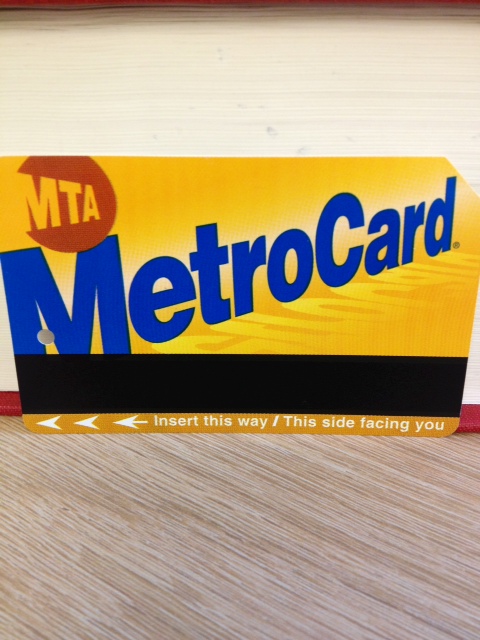
The Metrocard is thinner than any paper card and made from a smooth and shiny plastic material. It is rougly 4.5 inches wide with a length of 2.5 inches tall; matching up to the size of a credit card. It fits comfortably within anyone’s wallet and is composed of two detailed sides. The first side has remained the same over the years of my being and recognizable to people all over the world. It states: MTA Metrocard and in a much smaller font states: < < <- Insert this way / This side facing you. It is a wonder how these clear directions always seem to be escape eyes of the thousands of tourists that scatter the city. The card is a dark, mustard color and the Metrocard logo is written in royal blue. There is a thick black stripe vertically crossing the card and this is where the power of the card comes in. If any bending occurs around that area the card most likely will not be readable by the bus and train machines.

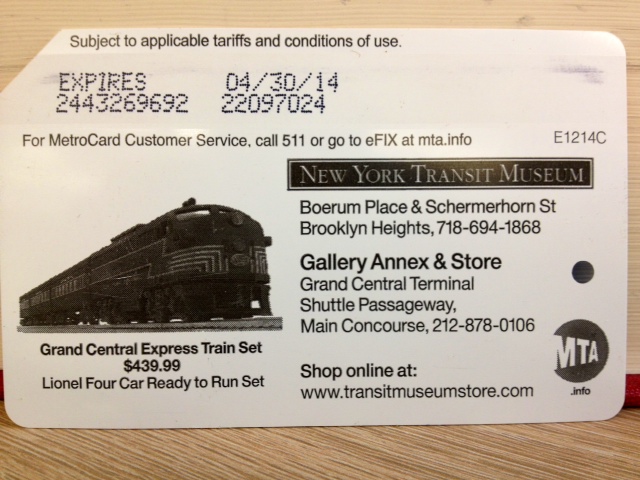
The back of the card is black and white and always displays the card’s expiration date, and the extensive card number at the top left corner. Despite those details, the back of a Metrocard is always different and can display quotes, words, advertisements, information about the MTA and all other sorts of interesting tidbits. The back of my card has an ad for the New York Transit Museum  with an address, picture of a train set and a website title. Now that I think of it, that would be a great place for me to have ventured to before writing this post and perhaps I will go there in the future if this card continues to significantly hold my interest.

The Metrocard was created by a division within the MTA known as: Metrocard Operations and is manufactured by Cubic Transportation Systems Inc. The tiny card serves a simple purpose:  since 2003, it is the only method of payment (besides quarters) taken for public transportation among the five boroughs and some parts of Long Island. It caters to every form of public transportation system in New York City making it incredibly dependable for the millions of commuters of the city. The card was first introduced in 1993 and was a blue card that is now a collector’s item. The card replaced tokens in the late 1990s and its usage has been growing ever since.  As the Metrocard’s popularity grew, the benefits such as the free bus to train, bus to bus transfer, grew with it and have dramatically changed New York City’s public transportation system. According to a NY Times article: “It was not until free MetroCard transfers between subways and buses were instituted in 1997 and the unlimited-ride cards were introduced on July 4, 1998, that the passes fully realized their power to transform the transit system”.  Indeed  the card changed the way commuters go about getting from one place to another and  usually this card is reliable and fairly straight forward to work. However when the words: “Just used”, “Please swipe again” or “See agent”  pop up on a bus or train’s transportation machine, it can throw one’s entire day off and be the biggest inconvenience imaginable.

The history of the Metrocard is extraordinary and the technological advances that has come with it over the years displays the tremendous progress of the transportation system that makes up the industrial and greatest city of the world. Yet, as with any piece of technology, the card has its on and off days and can play a major role in influencing a traveler’s punctuality. Financially, the Metrocard is costly, as the pay-per-ride fare has increased from $1.50 to $2.00 to $2.25 over the last decade. The unlimited weekly and monthly cost of Metrocards have rose as well and increases in cost are currently under discussion and will probably be issued within the next months. In conclusion this little card plays a noteworthy role in possibly every single New Yorker’s life and though I currently live upstate, my wallet seems to naturally always carry a Metrocard which I use for my visits to my home. Whether this one decides to work will be my pleasant (or unpleasant) surprise.

The Keeper of the Cat Whiskers

This urn really is a fascinating mystery. It appeared in an antique shop in Angus, Scotland in the 70’s. And yes, when I say “appeared,” that’s really what I mean. The shop owner walked into his store one day and there it was, sitting on the counter as though somebody had snuck in at night and left it as a present. It was hand painted, because on one side there are several little flaws in the brush strokes. It appeared delicate and precious, so the store owner decided to keep it in the store to see what would happen to it and if he could figure out where it came from. Its true origins are unknown to this day.

A week later, my mum was not very happy. The family was taking a day trip to Glamis castle and she couldn’t go because she had to take her O-Level exams that day at school. Her mum, Dorothy, felt bad for her and decided to get her a gift while in the town up by the castle. Dorothy came across the antique shop and went inside to take a look.

She bought the urn, without noticing that inscribed on its underside was “McLeish”— which happens to be my family’s last name. It’s almost like the urn was a “lost thing” trying its best to come back to a McLeish owner.

Although urns are usually associated with holding ashes, they are often used for decoration as well. My mum placed the urn on her bedside table and it lived there in Dundee for over twenty years. It made the cut for the move down to England and claimed a spot on the kitchen counter. It held Tetley tea bags.

Many of our possessions couldn’t come with us when we came to America. For some reason, this urn was chosen to accompany us. It traveled across the ocean by boat, along with our other possessions, while we flew to New York. I claimed it as mine, even though it wasn’t given to me. I didn’t actually do anything with it— it just sat in my kitchen by our table. But it was mine.

 Then it accidentally became a jello bowl.

I had my first bone graft done and I couldn’t eat anything solid. I was very out of it and wanted jello. Somehow, I thought I had grabbed a regular bowl to make my jello in… but I had grabbed the urn instead. It made a marvelous jello bowl because my cats (Smokie and Smirnoff) will eat anything, and if I leave any food uncovered, they will lick it and stick their paws in it and get it everywhere. This was the perfect jello bowl because I could eat it on the couch, then when I wanted to fall asleep, I could simply put on the lid and save it for later, without having to worry about my troublesome cats getting into it. The urn remained a jello bowl for three years and served faithfully through several more face surgeries.

Now, the urn looks like a proper urn, sitting on a table in my living room, in between two plants, with a picture of my grandmother Dorothy in front of it. If you look at it, you’d assume that her ashes were inside. But the urn holds something much, much different.

I used to try to keep my cats out of the urn to keep my jello safe. But now, the urn holds their fallen whiskers. Have you ever felt a cat whisker? They’re fascinating. They’re thick at one end, almost like plastic, and then taper to a thin, delicate point. When I first found one, I didn’t think I’d find another. I wanted a good place to keep it, so I put it in the urn. Now, it holds a whole collection of over forty whiskers, all from Smokie and Smirnoff. I don’t know why I keep them. It’s a little weird. I’ll definitely be a crazy cat lady when I’m older.

But the urn story gets even weirder. We now have two urns that look like this. The second one came in the mail. My grandad had found it on his doorstep. This one also has “McLeish” written on the bottom. So the McLeish urns remain a mystery. I don’t think we’ll ever know where they came from or how they were made. If only I knew an urn maker- maybe he could help figure out when and where it came from. It’s surprisingly hard to find out urn manufacture information on google! However, I think this makes the urns even more fascinating. Sometimes it’s nice for objects to come with a lot of mystery. Image

Evolution of the Needle Case

This post will focus on the needle case as an example of a shift in our culture. My original object was a handmade needle case dated 1898, which was a cherished object. The stitching was meticulous, the materials special and it was significant enough to the maker for her to bequeath it to her grandneice.
Victorian roll up
The photo above is a “roll-up” needle case from the same Victorian era. This case was sewn by machine out of fine silk, velvet and leather, with hand-embroidered embellishment. The velvet ends serve as pin cushions; pin heads are visible in the photo. The unknown maker of this object took pride in her sewing skills, as did Ruth Broadwell. She made a practical item to hold pins and needles, but one that would be beautiful and a pleasure to hold and handle.
Victorian bone

Victorian silver
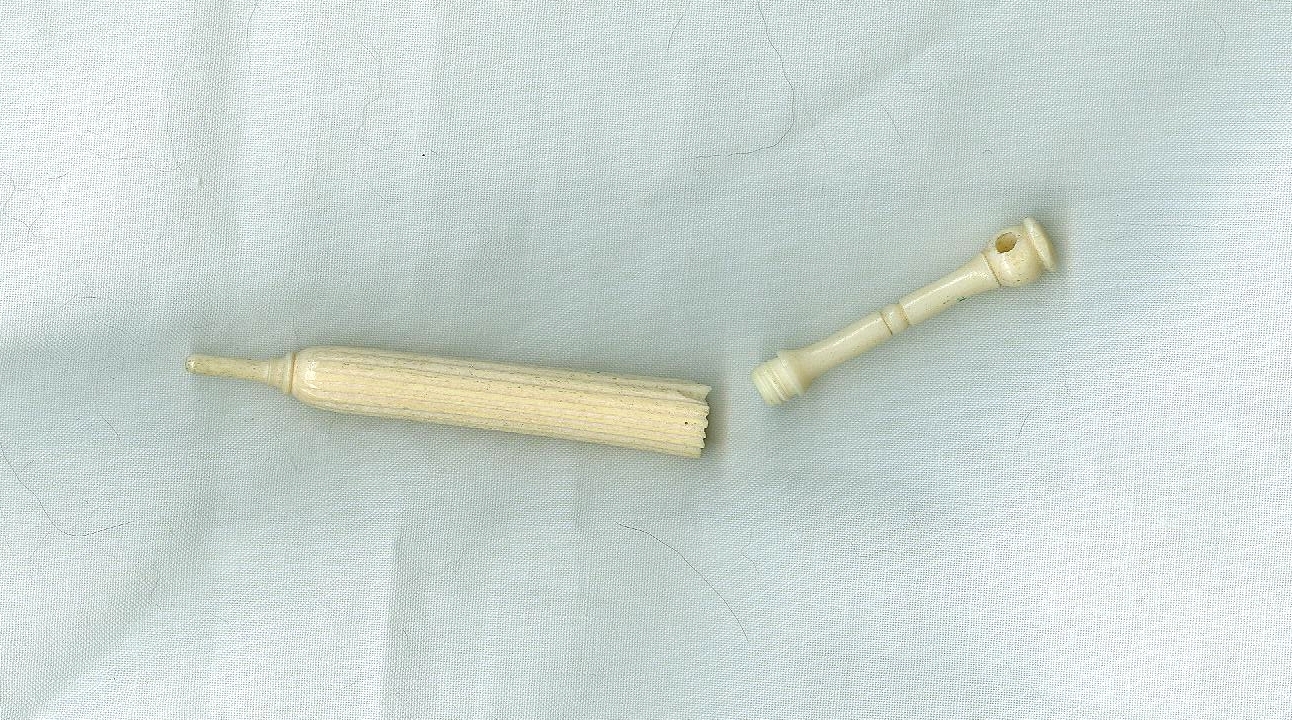
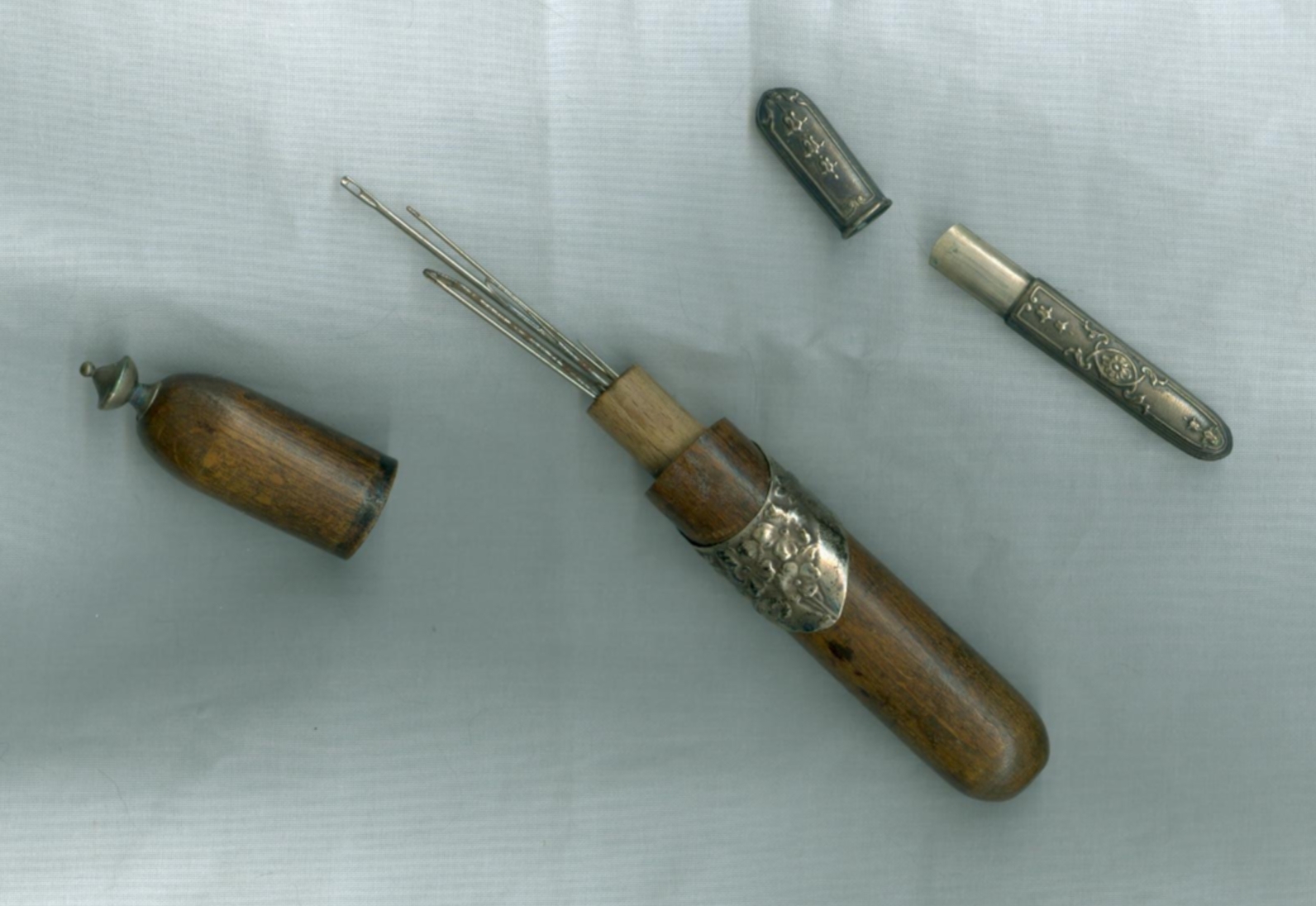
Some women could afford to purchase sewing tools, as the 19th century industrial age ushered in a manufacturing boom. The two photos above show needle cases from the same time period as the homemade ones. Wood, silver and bone are the materials used; the beauty of the items are as significant as the function. I had thought that the hole in the bone needle case was for hanging on a cord, but found out while researching for this assignment that it originally housed a “stanhope,” unfortunately now missing. A stanhope is a miniature magnifying glass with an image inside. While fetching a needle for her project, the seamstress could pause and enjoy the image, wondering at it’s miniscule size, stopping to smell the roses.
1950s
The photo above is a 20th century paper needle book c. 1950. Needles were purchased in these, and they replaced the earlier elaborate needle cases to store needles in the home. I found images online of paper needle books with advertising and commemoration of special events. These objects would not have been considered precious in their day, but purely functional. They are now collected as examples of “retro” advertising art.

All of the above needle cases originated as practical tools to hold sewing needles for everyday use, but their function has changed to that of collector’s items. Today, I keep them in a drawer, occasionally to handle and admire. I am a sewer, but don’t use these antiques to house my own needles because I consider them too precious.
todays
Finally, above is the needle case I use today; it is made from cardboard and plastic. The plastic cover has an opening on the edge which allows a needle to be removed by rotating it, keeping the other needles in place. When it is empty, it will promptly be thrown in the trash. The evolution of the needle case from precious and beautiful, to cheap and functional, to ugly and disposable (sadly) represents a corresponding shift in our culture. It makes me think of a shift in communication from the handwritten letter, in beautiful flowing penmanship, to the telephone call, to the text message. Progress.

Curious Curiosities

Screen Shot 2013-02-14 at 7.27.32 PM


It’s a lamp. Believe it or not, its a lamp. It has sat beside the floral printed arm chair in my Gramma’s living room for as long as I can possibly remember. I called her to brain storm objects to write about for this assignment, she suggested the lamp and told me about it. And although I have seen, touched, turned on, and pondered about this lamp the entirety of my short life my reaction was “Oh thats what that thing is?!?”

This lamp has had a long and eventful life. So long in fact, that it wasn’t even born a lamp! It was originally a saddle makers bench. The two clamp like protrusions at the top were used to hold the leather for the saddle as it was hand stitched. Often times the saddle maker or even a farrier would build the bench themselves. This one in particular doesn’t have a known origin or creator. But after it served its time as a saddle makers bench, it fell into the world of antiques. The bench was purchased by a Marianne Secore, referred to by her maiden name Miss. Mitchell. Miss. Mitchell worked at my Grandpa’s food distribution company, Nichols Distributing, as a secretary accountant. The bench was in her care for some time, and during that time her husband converted the bench to a lamp. The reason for which survives only within his mind I am afraid.

In1963, Miss. Mitchell gave the now electrically illuminated bench to to Gramma and Grampa as a Christmas gift. I would foresee that as being an odd gift to receive from your secretary, but they must have liked it in some strange way because it hasn’t left their house since. Despite the fact that its ancient clamps are now being held together with a rubber band. They must have loved that thing so much that when Miss. Mitchell died, my grandparents adopted several more of her antiques from her estate sale. Perhaps they thought the bench needed company that reminds it of its previous owners, they ones that gave it light.

Screen Shot 2013-02-14 at 7.27.50 PM

(above: my uncle Nick at 10 at Nichols Distributing with Miss. Mitchell)

That bench has done something that no human being can. It has transformed from one thing to another. Taken on tasks that in its former life were unimaginable. And its transformation was not out of necessity, the bench did not become a lamp because it was obsolete. Although about 80% of saddles today are made by machine, 20% are still hand sewn. And many craftsmen from that 20% still work on a saddle makers bench just like this one. So why change it, why alter an object from its intended purpose? Maybe Mr. Secore just needed a lamp. Maybe he was trying to find a way to justify keeping the old thing. Or maybe he say that deep down, that bench was destined to be a lamp.

A Large, Music-Making, Decoration Displaying Wooden Box

Image

This is a Rudolph Wurlitzer piano. The Rudolph Wurlitzer Company, more commonly referred to as “Wurlitzer”, was established in 1856, with the intention of manufacturing stringed instruments, woodwinds, brass, and many other types of instruments. Over the years, they decided to produce only pianos, organs, and jukeboxes. The company continued doing so until 1988, when Gibson Guitars purchased it. This particular instrument happened to be purchased while the company was still in existence in 1976.

 This piano, like any other instrument, was manufactured with the intention of creating a pleasingly harmonious sound. Each key was designed to make a hammer hit a string, and each string was designed to vibrate in such a way as to create an invigorating sound. It was constructed in the hopes that someone, either beginner or expert, would place their fingers on the keys in a pattern, a rhythm, to create an arrangement of tones. Its intended purpose was to make music.

 For many years, this object did just that. My grandmother originally purchased it because my aunt was taking piano lessons and wanted to be able to practice at home. So, its first few years were dedicated to helping a young girl improve her music-making abilities. Throughout this time, my grandmother also gave it a function that it was not originally intended for. She used the flat wooden surface on top as a place to display her statue of the Virgin Mary. And from that day on, this piano was not just an outlet for music, but was also aesthetic. For many more years, it continued to serve its dual function as items were displayed on top and other children of the household began learning to play music.

Eventually, my grandmother sold her house and no longer had room for the large music box. No one being willing to let the instrument go, my mother took it and it found a new home in our living room. Although my brother took lessons for a few years, no one ever really pursued the art of playing piano. In this new home, the piano continued to serve a function by acting as a place for other objects to be displayed. It has held family photos, Christmas decorations, and other trinkets. Today, it ironically displays a new sound system, which produces high quality sound waves to evoke the feelings of a live performance.

 In my home, this instrument was hardly played with the intention of making music, it has acted as somewhat of a toy for the children growing up around it. As a child, I would play silly songs such as “Chopsticks” or “Mary Had a Little Lamb”. It would attract the attention of my friends, who would want to touch it; to feel the keys depress so that a sound could rise out. And now, my nephew of nearly three years enjoys smashing against the keys and swaying as if he were producing the grandest symphony.

I am somewhat sad to admit that this piano is soon to be a memory in my home. The lack of moisture and excessive heat that the wood-burning stove creates is a very poor environment for this thirty-seven year old wooden music box. It never stays in tune, and some of its keys have gone dead. It requires constant maintenance and has become more of a burden than a pleasure. However, it is to be donated to an organization that might be able to take better care of it, and use it for its intended purpose. Perhaps in the future, young children or elderly folk will have the opportunity to create music that they otherwise would have been unable to do. I believe this music-making object would be proud to have served so many functions, and end its days doing what it was always meant to do.

Thick and Thin

Since there were a few members of our seminar unable to make it to class this morning, I wanted to give a summary of a key part of our discussion. I hope this will be useful for the rest of us, as well, and please feel free to add your thoughts in the comments below!

We discussed a section from de Waal’s Prologue in which he describes a story he remembers his grandmother, Elisabeth, once told him about Charles Ephrussi, the art collector who first collected the netsuke. He imagines one version of the story he could write, one with “stitched-together wistful anecdotes” and “some clippings from Google on ballrooms in the Belle Époque” (15). But that narrative, he says, “would come out as nostalgic. And thin.” de Waal tells us, “I am not interested in thin” (15).

So we considered what it meant for a narrative to be “thin” or “thick.” Here are some summarizing points of that discussion:

Thin Narratives:

-Are nostalgic and melancholic–based on hindsight and the writer’s feelings about the past.

-Are therefore self-centered (literally)–mainly about the writer.

-Are clichéd, and tend to tell stories that are the same as other people’s stories (see de Waal on p. 151 discussing a moment where his narrative almost “thins” out).

Thick Narratives:

-Are full of “exactitude” (de Waal 16) and based on careful details.

-Reconstruct the places, things, and experience of a time: “I want to be able to reach to the handle of the door and turn it and feel it open. I want to walk into each room where this object has lived, to feel the volume of the space, to know what pictures were on the walls, how the light fell from the windows” (de Waal 16).

-Create an experience constructed out of multidisciplinary knowledge of the past. For instance, de Waal draws upon:

    • Architecture
    • Urban history and planning
    • Psychology and sociology
    • Art and Art History
    • Literature
    • Photography
    • Fashion
    • Intellectual History

-Are based on discovery and trying to find something new about the subject or history (rather than re-telling familiar stories)

-Are Connected to other stories and histories–move beyond the “self”

-Develop/Have an Arc

In summary, The Hare with Amber Eyes offers us a model for telling historical narratives both with and through objects. The text invites us to touch the netsuke and experience their history by placing them in a rich (“thick”) cultural history.

1939

100_4470

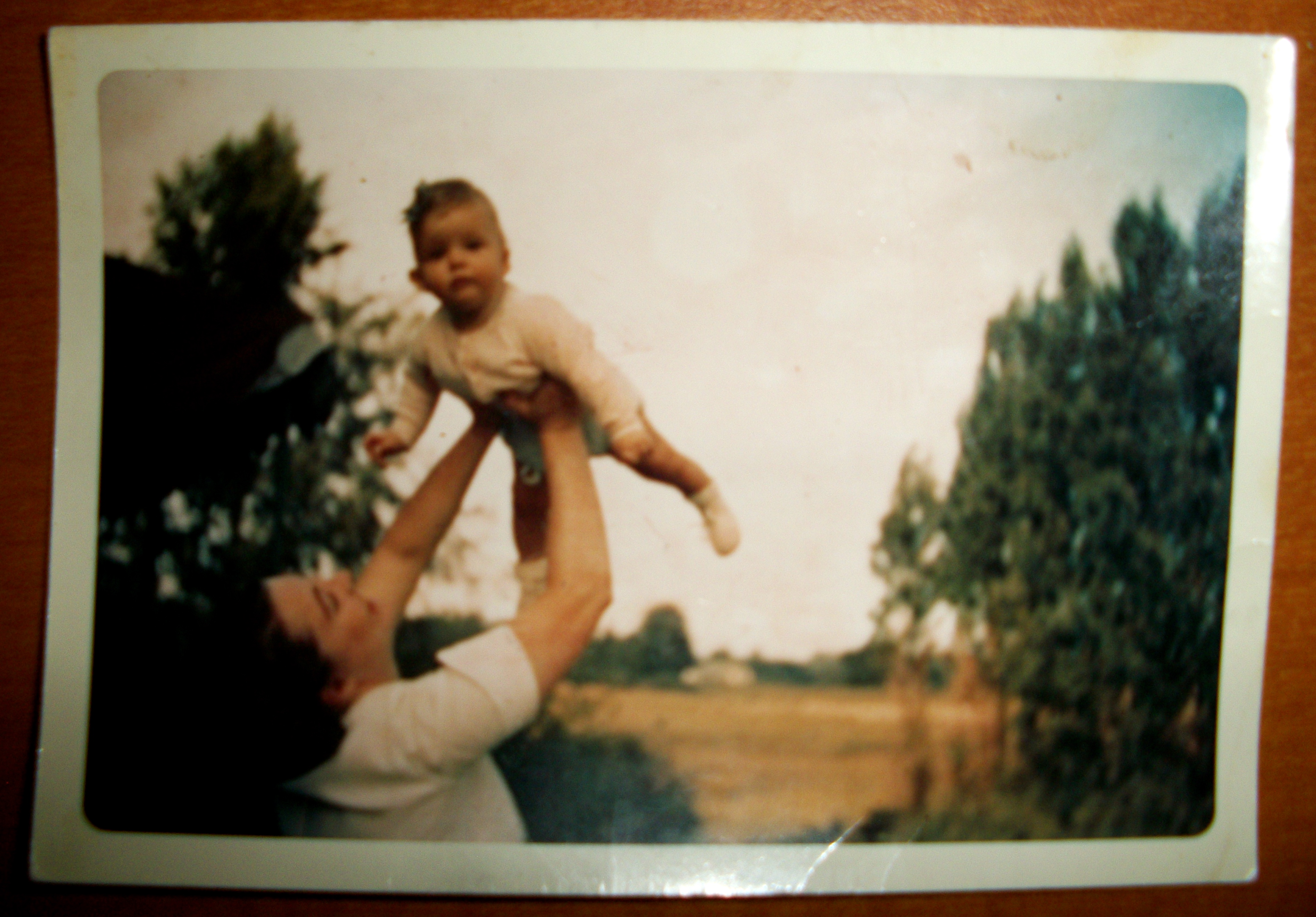
They say a picture says a thousand words…but this one seemed to have very little to say for quite some time. It was silent, sitting in a drawer, waiting for its moment to speak. I found this photo one day while I was rummaging through my Gramma’s boxes of photos looking for inspiration for an art project. I didn’t end up using it and I haven’t thought too much about it since that day. But this photo peaked my interest for this assignment, I had a sudden desire to end its silence.

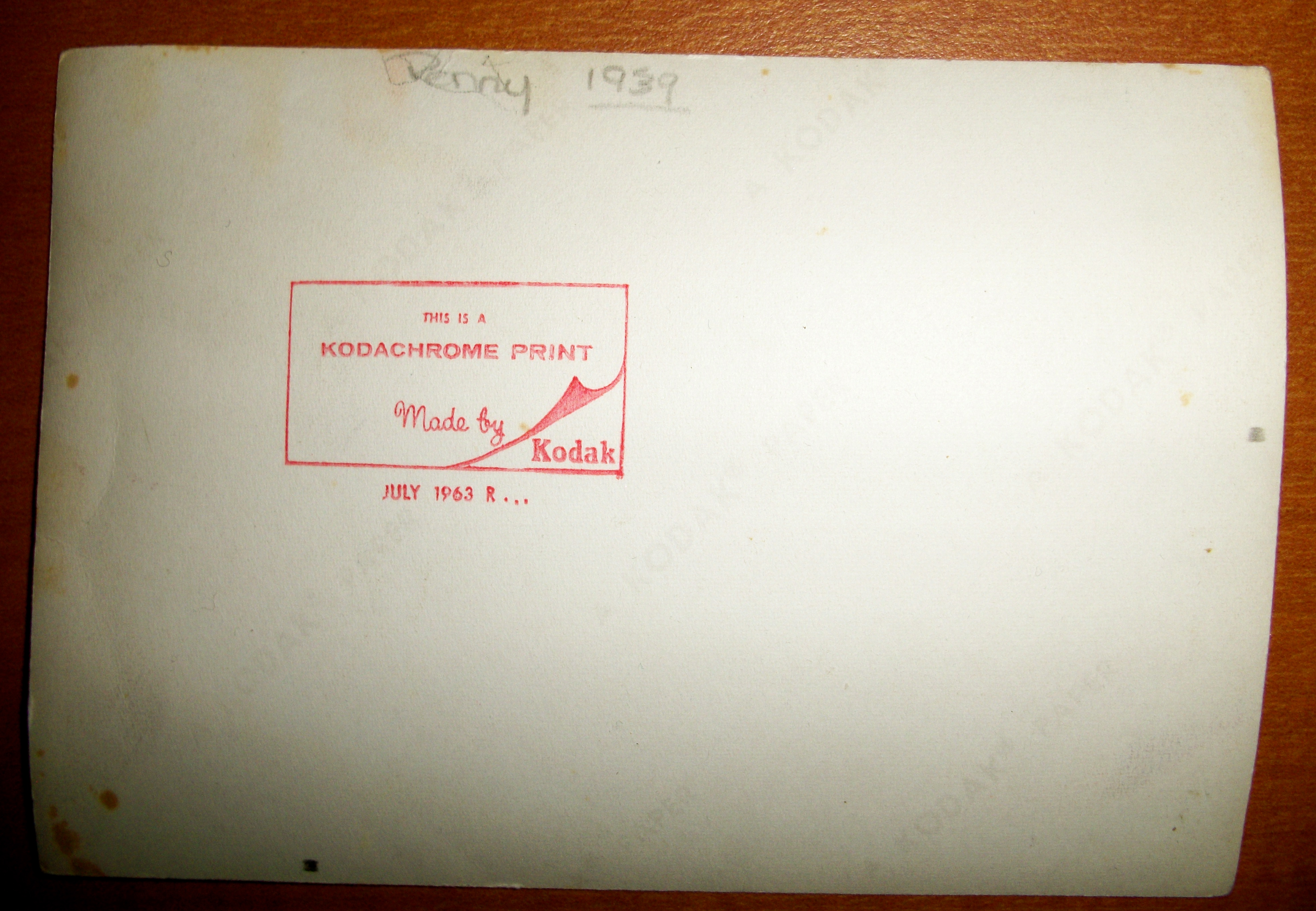
I began to develop my own theories about this photo, and scoured it for information . My Gramma had written “Penny 1939” lightly in pencil on the back. This was my first clue, the baby in the photo must be her. My Gramma was born in 1939, so this picture must have been taken before she was a year old. The back of the photo also reveals that this is a Kodak print, a “Kodachrome Print” to be specific. The Kodak company was founded in 1889 in Rochester New York, where my Gramma has lived her entire life. And a Kodachrome is a color reversal film that was introduced by the company in 1935, becoming one of the first successful color materials used for both cinematography and still photography. Its amazing to me that this technology was fairly recent at the time the photo was taken. Ironically Kodachrome was prohibited in the United States in 1954, the same year my Gramma got married. This photo holds some of Kodak’s history inside it I think. It represents how much has changed; not only the technology but also the status of the company. When this photo was taken, the Kodak company were innovators, the front runners of the industry, and now they are struggling to keep up the changing times. Perhaps this parallels a fate that befalls many people as we grow older.

100_4468

However, what truly intrigues me about this photo in not its association with Kodak. This photo is a window into a rarely discussed portion of my families history, and I had no idea about it until very recently. While studying this photo I naturally assumed that the women hoisting my Gramma up into the air must be her mother. Like most I have never met my Great Grandmother so I had no evidence to support my theory. But the joyousness of the scene and the love I saw in the women’s face seemed like an irrefutable claim to motherhood. But I was wrong, and when I learned the truth I watched the picture change before my eyes.

I asked my Gramma about this photo and she told me that the women holding her was not her mother, it was her nanny. It was certainly not uncommon for well off families like my Gramma’s to have nannies, so that did not shock me. Here’s what did…there are no pictures of my Gramma’s mother at all…anywhere. My Gramma’s biological mother has been intentionally erased from our families history. According to my Gramma she had an affair and despite the threat that she would never see her children again, ran off with the other man. Its amazing how an object as simple as a picture can show so much change. Somewhere between my Gramma’s birth and the moment captured in this photo, my families history changed forever. Just like the photo changes for me when I became privy to the truth of its story. What does that mean about my poor little photo? Is the love I say in it initially a falsehood? Does this photo mean betrayal and resentment in the eyes of someone else. I have had this photo for years, and now it means something so different then it once did. The meaning you feel for an object affects the entire way you preserve it. And when that meaning changes so does the object. The photo feels different between my fingers now, it looks different to my eyes that know so much. But my interest in the photo dramatically increased with the presence of this new mystery.

The thought of a mysterious Great Grandmother intrigued me. What kind of women was she and do I have any of her in me? But research is an amazing thing. My Gramma told me that years ago when I was young she found her mother and they began e-mailing. She won’t say much about it, in fact there is only one thing that stands out in my mind. My little brother has bright red hair, and for his entire life we had no idea where he got it from. As it turns out my mysterious biological Great Grandmother had bright red hair.

100_4265